IHG (InterContinental Hotel Group) has opened the InterContinental Phuket Resort on Kamala Beach.
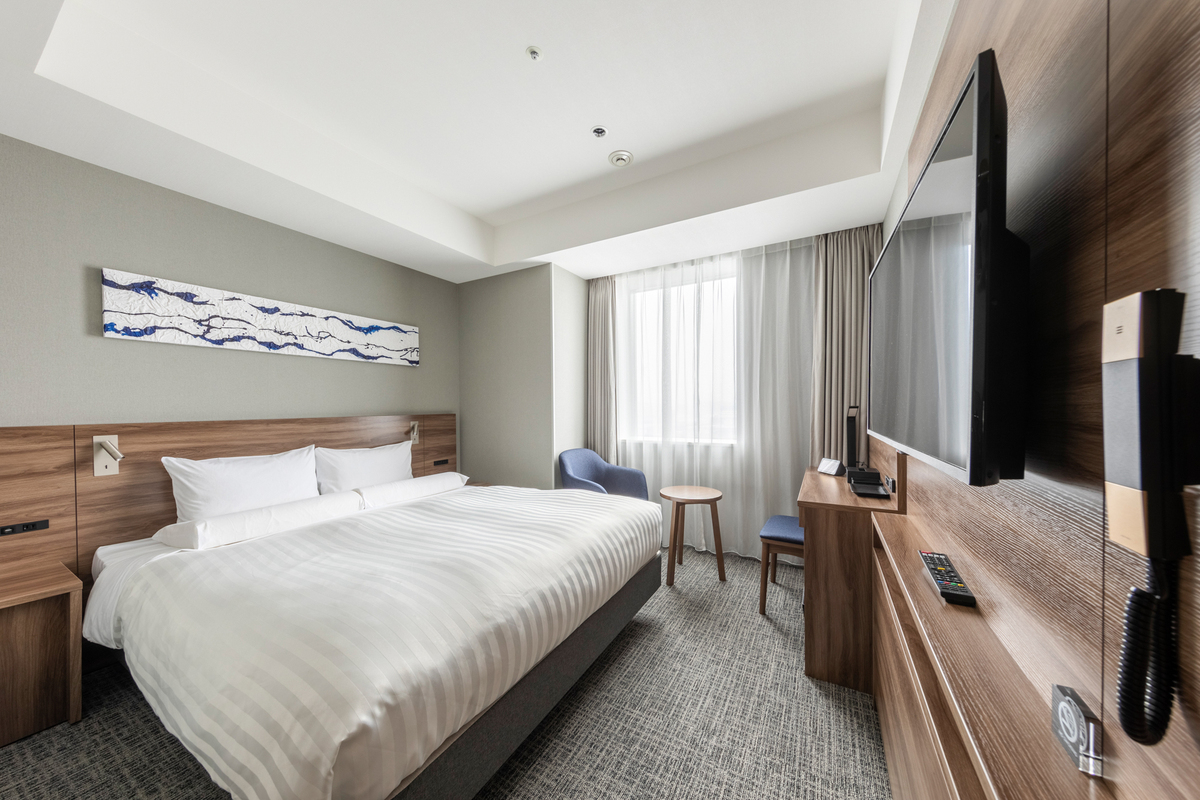
The beachfront resort on the western coast of Phuket features 221 rooms and villas with panoramic views of the Andaman Sea. Club guests will be able to access the second-floor lounge complete with its own private sundeck and infinity pool.
InterContinental Phuket Resort
1 of 7
Lobby
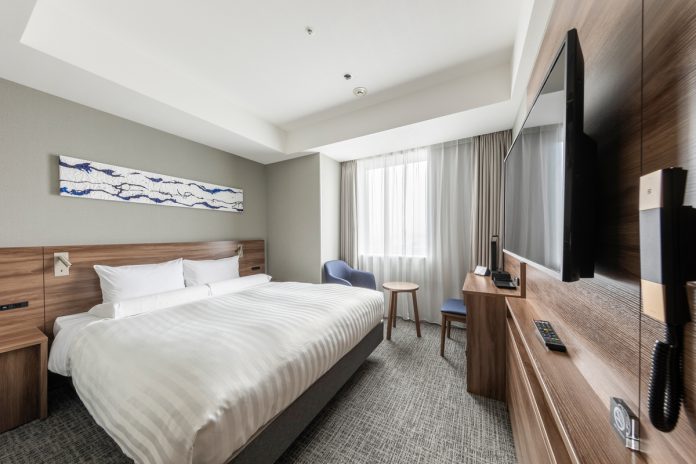
Club Ocean View
Club Lagoon Villa
Lagoon Pool
Jaras
Sawan Heavenly Pavilion
Event planners may avail the five meeting spaces, which includes a ballroom good for 200 pax banquet-style.
F&B options are numerous, ranging from the modern Thai Jaras and international cuisine restaurant Pinto. There is also a beach bar and lounge, as well as a Sawan Beans and Leaves Bar serving handpicked teas from Chiang Mai and single-origin roasted coffee from local farmers.
Other resort facilities include five swimming pools, a fitness centre, tennis court, Planet Trekkers Kids Club, and a spa with eight treatment rooms and a full-service nail salon.
What are your recollections of SARS?
I lived through SARS (Severe acute respiratory syndrome) when it emerged in November 2002 and ended in July 2003.
Those were certainly challenging times, as many events were postponed or cancelled. We (Conference and Exhibition Management Services) were affected, but I can no longer remember which of our events were impacted.
In terms of tourism performance, hotel room occupancy rate (in Singapore) stood at just 20 per cent and many hotels closed off their rooms because nobody was using them.
It was an anxious time for the survival of businesses and for personal survival; everyone was worried about being infected ourselves.
How did industry players respond to it?
As SARS started to recede, the Singapore Tourism Board called for a small meeting that involved some 20 captains of the industry, to brainstorm the best ways forward to overcome business challenges and bring tourists back to Singapore. I recall distinctly that it was chaired by Gerald Lee (then chief of business operations).
At that time, I proposed that we should march right into China and promote Singapore, instead of waiting for the Chinese to be ready to start travelling again and come back to us.
Subsequently, I made a trip to Beijing to meet with local tourism officers, and I secured their approval for the inaugural Beijing International Tourism Expo (BITE) in 2004.
In a big way, the event eventually helped to bring many Chinese tourists back to Singapore, and opened up the Beijing market for Singapore. Till today, it is still one of the leading Chinese outbound tourism shows in Beijing.
Between SARS and Novel Coronavirus, what is the one difference that worries you most, from a business perspective?
With SARS, the symptoms were clear. With Novel Coronavirus, symptoms may sometimes only appear after two weeks. This has created uncertainty among people – should they continue to travel for leisure or work?
What can event planners learn from the SARS epidemic to better cope with business fallout now due to the novel coronavirus?
It is still early days with the Novel Coronavirus. Health authorities are still trying to understand the characteristic of the virus. As event players, we can only remain vigilant and have crisis contingency plans in place.
I suspect many events in China may be postponed or cancelled. Perhaps the first casualty from the outbreak is the Guangzhou International Travel Fair 2020, which has just announced that it will be suspended due to the spread of the virus. That is understandable, because it was due to take place very soon in February and there are now many travel advisories against non-essential travel to China.
Several event owners and organisers in Greater China are taking a wait-and-see approach for their upcoming activities. At what point should event planners decide whether or not to proceed with their event?
At this point, I do not see a need for event planners to abort their events, unless the events are imminent and taking place in China.
Event planners (elsewhere) need to consider the profile of their event – who the participants are and where will they come from.
If the event attracts many people from countries affected by the outbreak, then heightened precautions must be taken. If this is an exhibition that is attended by mostly Chinese sellers, the organiser must consider eventual turnout because many of them may not even be able to leave the country due to the Chinese government’s ban on travel.
Conversely, an event with minimal Chinese attendees will have far lower risks, and should carry on.
What sort of precautions should be bare-minimum?
Surgical masks should be worn, and thermal screening should be carried out. However, access to such equipment may not come easy. Where possible, work closely with the local health ministry to have all the right precautionary measures in place. The key is to be prepared and to not overreact.
Today, besides traditional channels, news are spread through social media, something that the world did not have during the SARS epidemic. Do you see the headlines, be it real or fake, impacting business travel sentiment? Should event owners and organisers have communication procedures to deal with this?
I invited a friend from Canada to come speak at my event in Singapore, but he has rejected me. From the news, he knows that Asia is being inflicted by the Novel Coronavirus and he has concerns.
Invariably, people will make a personal assessment of the situation.
Yes, there is fake news around the outbreak, so we have to be careful to sieve out the real news by assessing multiple sources of information and form our own judgements.
For our own events, we send out updates to our partners and attendees that reference information from top-level agencies – the government and health ministry.
It is important to be calm and clear about the situation.
Editor’s note: Singapore’s first SARS patient was detected on February 2003. The virus was spread to 238 people, 33 of whom died, by the time it was finally contained in May 2003. In the ongoing Novel Coronavirus outbreak, Singapore has seven confirmed cases as of January 28, 2020.
must evolve in order to lure attendees to their events
China’s meetings industry is bracing itself for a tough two months ahead and sentiment is that 1H2020 could be a write-off due to cancelled and postponed events because of the Novel Coronavirus outbreak, first reported in Wuhan a few weeks ago and which has since spread outside the country.
Many meetings and events scheduled in China for 1H2020 have been cancelled or postponed
However, industry players TTGmice contacted are confident the controls and measures which have since been put in place to stem its spread will be effective and are optimistic business can start to return to normal after 2Q2020.
Now in the midst of a week-long Spring Festival break, which has been extended to early-February, regional governments in the country have closed scenic spots and touristic activity is at a minimum.
A PCO director said the company needed time “to make an official announcement and there is nothing else I can say at this moment”.
“I am treating the situation seriously. Personally I think the MICE industry will be badly impacted in 1H2020,” she added.
A regional corporate travel manager shared that “all large gatherings have stopped”, in accordance with the government’s travel ban on travel in and out of China.
He added: “The start-work date for the Spring Festival break has been extended to early-February to give businesses time to put in place measures to handle the situation like disinfecting offices, setting up temperature checks at the entry, distributing masks, allowing staff to self-quarantine after returning from a trip, work from home, etc.
“We are also making plans for expatriates and families in the event the situation escalates.”
Shu: China’s MICE business could begin recovery in 2Q2020 if the spread of the virus is curtailed
Even though Patrick Chen, director of marketing & promotion, Shanghai Municipal Administration of Culture & Tourism, said it was difficult to comment on how things will pan out, he believed the situation would be controlled soon.
“Most of us in Shanghai have already stopped moving about and are staying at home for two weeks to stop the spread of the virus.”
Commenting on the short-term outlook, Roger Shu, deputy general manager, Hangzhou Convention Exhibition & Travel, forecast the industry could start recovering in the second-quarter if the spread of the virus is curtailed.
But because China’s economy is facing “growth pressure”, there could be uncertainty.
Shu noted that if the impact was worse than expected, fiscal policy relief for the industry in the form of government funds and taxes might be needed.
Catering mainly to a western clientele, Sarah Keenlyside, founder and managing director, The Bespoke Travel Company, said: “A number of clients – mostly from the US and one booking from Israel – coming in February and March have decided to postpone until they have a clearer picture of what is going on.”
Keenlyside added that a corporate group of about 30 people had cancelled, but “clients planning to come in April have decided to keep their original plans so far”.
She continued: “Some clients are unfazed, but some don’t want to take the risk. For us, the bigger problem now is logistics. The fact that all tourists sights have been closed down leaves little for visitors to do.
“But we are pleased by the severity of the response. We are all hoping that it is short-term pain for long-term gain. The sooner the government can get the virus under control, the sooner things can go back to normal, and they are doing an impressive job so far.
“On the ground it feels as though everyone is really pulling together. There is a sense of solidarity among locals and foreigners; employers and employees; those in the travel industry – everyone – to work together to stamp this thing out as soon as possible.
“You won’t be surprised to hear that the main source of communication is WeChat, with all numerous group chats everyone is part of, which has proven invaluable.”
Founder of China Star Liu Ping shared the same optimism.
She said the PCO and DMC with events booked in March are giving clients the option to cancel, while those with dates further out were still mulling over what to do.
Even though the industry is facing a tough time now, she was confident of its resilience and did not foresee the current situation causing businesses to fold.
She added that the Chinese government was demonstrating the political will and capability to put in controls and measures to effectively tackle the situation.
Liu opined: “Compared to battling SARS, I am more optimistic, and that we won’t repeat the same mistakes.”
At press time, Liu was in Vancouver for a SITE meeting, said she shared with fellow participants her belief the outbreak could be controlled within the next two months and the spread reduced thereafter.
Even though she anticipated 1H2020 losses, Liu said China Star was in good shape and would not need to retrench staff, noting that the current crisis provided a good learning experience for her younger team members.
“The meetings industry is big and valuable and I am confident the tourism authorities will introduce the necessary support for its recovery,” she commented.
An emergence of cultural tour operators in Macau in recent years is paving the way for more quality and insightful destination experiences for visitors, and providing greater opportunities for planners to satisfy their delegates’ desire for unique and memorable destination experiences during business events.
One of the pioneers in this specialisation is CoForte Organisation Development, which started offering cultural tours focusing on art, history and culture for special groups since 2016.
General ye Ting’s Former Residence offers a peek into his life and old Macau
Brian Yau, the company’s vice president for creative strategy, sustainability and CSR, told TTGmice that the demand for cultural tour inclusions is on the rise among his corporate clients.
“More than 60 per cent of our clients would choose cultural tours when they select Macau as their event destination. They favour indoor activities such as azulejos (Portuguese ceramic tiles) painting as well as art and music jams,” he said.
CoForte works with DMCs by designing and offering experiential activities for the corporate client, leaving the DMC to take care of supporting logistics.
Yau thinks that unique, experiential activities are growing on the back of “homogeneous MICE products”, forcing planners and event attendees to crave “more special and in-depth tours”.
Another player that is leading the cultural experiences revolution in Macau is Macau Explorer Cultural Travel, established in 2014. Its managing director, Manuel Wu, was an urban planner before he made a career switch to the travel industry and took a chance at specialising in walking tours that spotlighted Macau’s 400-year history. He never looked back, and today offers cultural experiences to corporate and association groups.
Despite the presence of these cultural tour specialists, Macau’s ability to offer truly immersive destination experiences for event delegates is hampered by capacity limitations and a lack of variety.
Wu said traditional facilities in Macau tend not to be able to accommodate large corporate and association groups.
“For instance, a Portuguese baking class in a local cake shop will not be able to take more than 70 people at once,” he explained.
Olinto Oliveira, director for live communications with MCI Group, added that “the local market has yet to offer a wide variety (of authentic local content) from multiple suppliers”.
“Our clients do not want a standard tour, they prefer something that is organically embedded into their programme, such as classes on baking Portuguese egg tarts, Asian tea ceremony masterclasses and azulejo painting workshops,” he added.
A vague understanding of what experiential tours mean has also led travel agents to offer the usual sightseeing tour around a heritage area of Macau plus a narration of its historical background, and nothing else.
Industry leaders acknowledged that such tours were not experiential at all, might be of poor standards, and would put the destination’s image at risk.
To tackle this challenge, the Macau government, through the Macau Government Tourism Office (MGTO), has curated the Step Out, Experience Macao’s Communities walking tour series. Eight walking tour routes are available, with details on the route and featured attractions for each captured on its website and a dedicated mobile app. The latter guides visitors down the routes, allowing for independent exploration and is perfect for business event attendees looking to extend their trip in Macau for leisure.
The walking tours vary in duration, from 25 minutes to 40 minutes, and tell different stories of Macau’s culture and heritage.
For instance, the Crossroads of China and Portugal route takes 24 minutes to complete and introduces the participant to eight sights such as Senado Square, Mandarin’s House. It focuses on architecture and districts with a strong Chinese and Portuguese influence.
“MGTO has been doing a good job (in this aspect), but it is not enough,” opined Bruno Simões, president of the Macau Meetings, Incentives and Special Events Association.
“Macau has limited alternative programmes and experiences to offer. This is clear to see when you compare Macau with other destinations listed on TripAdvisor. Much more must be done to develop these programmes and support companies and individuals that work in this area.”
Yau sees an opportunity for MGTO to work closely with tour specialists like CoForte to expand the destination’s portfolio of experiential tours.
He said: “We could develop the tours together while MGTO could exercise quality control and promote good quality tours.”
It remains to be seen if the Wuhan flu outbreak will affect Chinese tradeshows
Two event organisers with upcoming projects in Greater China are keeping close tabs on the rapid development of the Novel Coronavirus which has spread beyond origin Wuhan city in Hubei province to other provinces and countries, saying that they will, for now, maintain status quo.
It remains to be seen if the Wuhan flu outbreak will affect business events in China
Kai Hattendorf, managing director and CEO of UFI, told TTGmice that UFI Asia-Pacific Conference 2020 and the preceding Digital Innovation Forum will proceed as planned in Macau from March 5 to 6 and March 4 respectively.
The main event, which is still open for registration, typically attracts around 300 exhibition industry leaders from organisers, venues, associations, service providers and government bodies.
Having said that, Hattendorf recognised that the outbreak “is a fluid, evolving situation” and emphasised that “the health and safety of our delegates and staff (will come) first”.
While UFI’s plan is to proceed with both events, an assessment will be conducted after the Chinese New Year holiday.
The Novel Coronavirus erupted just before the Chinese New Year, a time of massive Chinese migration within and beyond China for family reunions and holidays. The festive travel is expected to expedite the spread of the virus, which has as of this evening infected 830 and killed 26 people in China.
According to various news sources, Chinese authorities are said to be examining 1,072 suspected cases of the virus.
Beyond China, there are confirmed cases in Singapore, Japan, Thailand, South Korea, Taiwan, Vietnam and the US.
ICCA, which on January 17 announced Xiamen as the host city for its second Asia Pacific Chapter Summit from July 23 to 24, 2020, has declined to comment on the status of the event as well as whether registration numbers will be affected by fears of infection.
Registration for the Summit will open mid-February.
Noor: ICCA’s top concern presently is of the well-being of its China members
Noor Ahmad Hamid, regional director Asia Pacific with ICCA, said: “Our concern right now is for the safety of our members and their families, in particular those in Wuhan and China. ICCA currently has six members in Wuhan. We know that the authorities are doing their best to handle this outbreak.”
Informa Markets, a major events organiser in China, has four concurrent tradeshows in Shenzhen from February 24 to 26, 2020 – Digital Signage, Sign China, Commercial Integration and Retail China, as well as China Window Door Façade Expo in Guangzhou from March 5 to 7. An email enquiry on the status of these events this morning failed to get a response by press time.
Julien Delerue, founder and CEO of 1000meetings, an RFP technology platform with a database of hotels across China, remarked that “at this stage it is too early to evaluate if it (the outbreak) will translate into cancellations/postponement or relocation of some corporate events”.
He said decisions on event continuity will likely be held back until the end of the Chinese New Year break.
“The outbreak and travel ban (imposed by the Chinese government on Wuhan and 11 nearby cities in Hubei province) to restrict the spread of infection) practically happened while the majority of corporate event organisers were already on leave. As a consequence, we have not received any coronavirus related cancellation notice and will not (see any) before everyone resumes work in early February,” Delerue said.
**
Update, January 27, 11.53am: Informa Markets has responded to say that its regional headquarters in Hong Kong and major offices in China are closely monitoring developments of the coronavirus.
Its spokesperson said: “The safety of our staff and customers is always our top priority. As such, we are taking precautions and safety measures as recommended by the local Departments of Health in Hong Kong and China as well as the World Health Organisation seriously. As the developments of the coronavirus further materialise, rest assured we shall also update our plans and communications with stakeholders.”
Over the Chinese New Year holidays which started on Friday, Chinese authorities have reported more than 2,300 confirmed cases of Novel Coronavirus infections and more than 80 related deaths as of this morning.
The government said most deaths involved the elderly or people with pre-existing health conditions.
Asian airports and health authorities are on high alert as the number of people infected with the Novel Coronavirus grows in China, spreading beyond ground zero in Wuhan where 17 has died to other major Chinese cities including Beijing, Shanghai and Guangdong as well as other countries.
As of today, six cases have been confirmed abroad – two in Thailand, one each in Japan, South Korea, Hong Kong and Singapore – all of them involving people who are either from Wuhan or have visited the city.
The World Health Organization has labelled the new strain, 2019-nCoV, and advised that signs of infection include respiratory symptoms, fever, cough, shortness of breath and breathing difficulties.
Passengers at Singapore Changi Airport
With the infections occurring close to the Chinese New Year period, a time when the Chinese travel in massive numbers within China and beyond its borders for holidays, immigration and health authorities in destinations popular with the Chinese are taking precautionary measures.
Indonesia
All airports with direct flights from China, including Soekarno Hatta International Airport and Halim Perdanakusuma International Airport, have activated thermal scanners. The government has provided 135 thermal scanners at entry points across Indonesia.
All airlines serving direct or transit flights from China and Hong Kong are advised to immediately provide health documents in the form of general declarations as well as passenger manifests to the Indonesian Health Ministry.
Passengers coming from countries with reported cases will be screened by thermal scanner as well as syndromic surveillance.
Malaysia
The Health Ministry has directed the use of thermal scanners at Malaysian airports and other international entry points.
Malaysia Airlines is abiding by aviation health procedures placed by the World Health Organization (WHO) and International Civil Aviation Organization (ICAO) when interacting with a potentially infectious traveller. The airline is implementing certain control measures such as pre-departure screening for travellers who are unwell and providing medical communicable disease kit in every aircraft.
Singapore
The Ministry of Health (MOH) will expand temperature screening at Changi Airport and issue Health Advisory Notices for all inbound travellers on flights arriving from China from January 22, 2020.
Individuals with pneumonia and travel history to Wuhan within 14 days before onset of symptoms will be isolated in hospital as a precautionary measure to prevent transmission, and investigated.
These measures follow other precautionary measures that were put in place since the start of January 2020. From the evening of January 3, temperature screening has been implemented at Changi Airport for inbound travellers arriving on flights from Wuhan, and suspect cases have been referred to hospitals for further assessment. Health Advisory Posters have also been installed at Changi Airport to advise all travellers on the precautionary measures to take when travelling to or arriving from Wuhan.
Thailand
Thailand, which receives an average of 10 direct flights daily from Wuhan, China, via Suvarnabhumi, Don Mueang, Phuket, Chiang Mai and Krabi, has implemented strict monitoring procedures.
Flights direct from Wuhan are being disembarked at specific ramps equipped with disease control checkpoints at the six airports operated by Thailand’s AOT. Additionally, all passengers arriving from south-east China must pass thermal scanning pre-immigration.
Measures are in place to screen passengers with fevers including all accompanying passengers on the same flight; passengers arriving from risk areas presenting with fever will be immediately taken via ambulance to the hospital and quarantined. AOT has stated its bathrooms will also be cleaned more frequently.
Meanwhile, destination specialists with a focus on the Chinese market told TTG Asia they will remain welcoming to their Chinese guests who are due to arrive over the festive period, starting this Friday.
Eddy Sunyoto, owner of Terimakasih Indonesia Tour, trusts the immigration officers to be Indonesia’s first line of defence, as they will “reject infected passengers”.
Zhang Lei, CEO of Fun Doing International, a Phuket-based company that is one of the largest providers of Thai tour packages to Chinese OTAs and travel agencies, said: “The impact of the coronavirus is not significant at present; I’m not worried. My past experience dealing with outbreaks and their impact on the travel industry taught me that epidemics like SARS will always pass. If it is very serious, it will affect all industries in the short term, but just like in any cycle, there will always be valleys and peaks.”
Reporting by Kurniawan Ulung, S Puvaneswary, Pamela Chow and Anne Somanas
Authorities clamp down on travel in and from the Chinese city; a railway station in Wuhan pictured
Chinese authorities have closed off the Chinese city of Wuhan, which is home to more than 11 million people, as it struggles to contain the deadly coronavirus outbreak, according to a report by The New York Times (NYT).
From Thursday, all public transport, including trains, buses and ferries, in Wuhan have been shut down, while all flights and trains leaving the city has been stopped.
Authorities clamp down on travel in and from the Chinese city; a railway station in Wuhan pictured
The sudden restrictions, which was announced on Chinese state media hours prior to it being implemented, comes as the virus’ death toll reaches 17, with nearly 600 confirmed cases in Taiwan, Japan, Thailand, South Korea and the US, according to China’s National Health Commission.
All the fatalities have been in Hubei, the province around Wuhan.
The report quoted the Chinese authorities as saying that the measures in Wuhan were needed to “effectively cut off the transmission of the virus, resolutely curb the spread of the epidemic, and ensure the safety and health of the people”.
They further said that an end date to the restrictions would be announced at a later time, added the report.
The fast-spreading virus, which first emerged at the end of December, has stoked fears that it would burgeon to the scale of the SARS epidemic, which broke out in China in 2002 and 2003, and spread rapidly, resulting in more than 800 deaths worldwide.
As the number of victims grow, governments around the world have implemented entry screening measures at ports of entry, and the World Health Organization is weighing the declaration of a global emergency over the new virus, said the report. Similarly, immigration and health authorities are on high alert and taking precautionary measures.
Given the massive scale of the shutdown in Wuhan, medical experts have voiced concerns over the potential fallout, the NYT reported.
Tom Inglesby, director of the Johns Hopkins Center for Health Security, was quoted by the report as saying that a city the size of Wuhan has “tens of thousands of connections with the outside world that are coming and going all the time, bringing food and medicine” and that “the complexity and downside cost of (the lockdown) will be potentially very high”.
The shutdown occurs at a time when millions of Chinese citizens travel within China and beyond its borders for the Lunar New Year holidays.
An estimated 30,000 people fly out of Wuhan on an average day, according to air traffic data. The city is the hub of industry and commerce in central China, home to the region’s biggest airport and deepwater port.
Louis T Collection has appointed Shane Lee as hotel manager to lead its first Taiwan property, CESVI.
Lee joins the team this month in preparation for the March opening of the 28-room boutique hotel – made entirely of shipping containers in Taiwan’s port city of Kaohsiung.
Having spent most of her hospitality career between Bali and Taiwan, Lee was most recently the executive assistant manager to the general manager at Westin Yilan Resort in Taiwan. Prior to that, she was the general manager at Bali Graha Asia, where she ran the company’s two different private villa properties in Canggu, a popular beachtown area on the island.
She has also served at various properties including W Hotel Taipei, Silks Place Taroko Resort, in Taiwan’s Taroko National Park, and ClubMed Bali.
Komodo International Airport – the gateway to Labuan Bajo and the Komodo National Park – is slated to be upgraded and expanded
Indonesia is planning to host the G20 and ASEAN summits in Labuan Bajo in East Nusa Tenggara province when she takes over the presidency of the world economic grouping and chairmanship of the South-east Asian association in 2023.
In preparation for the two high-level events, efforts are being accelerated to develop the tourism facilities in Labuan Bajo, including the expansion of Komodo Airport to give it a larger terminal and longer runway with capacity for more international flights.
Komodo International Airport – the gateway to Labuan Bajo and the Komodo National Park – is slated for expansion and upgrades
“We need to improve everything in Labuan Bajo, including the infrastructure and the landscape. There are also waste problems and clean water issues that we should tackle. We should work hard so that the destination is ready to host international events in the years to come,” Indonesian president Joko Widodo (Jokowi) said in a statement released by the State Palace.
Last year, Jokowi’s administration had named Labuan Bajo as one of the government’s five super-priority destinations to be developed in line with overall efforts to establish the tourism industry as one of the country’s new drivers of economic growth.
Developments outlined for Labuan Bajo include an integrated tourism complex in the Marina area, which will house the 147-key Hotel Inaya Bay Komodo, a ballroom for up to 1,000 people, commercial spaces, a marina, and a flight deck; a creative hub in Puncak Waringin, which will comprise an amphitheatre, green open spaces and an observation deck.
Eager industry players have offered suggestions for other aspects that needed attention for Labuan Bajo to be ready to host the events.
Reza Abdullah, president director of Royalindo Convention International, said the destination needed to tackle the current lack of five-star hotels.
“There are sufficient three- and four-star hotel rooms in Labuan Bajo for summit participants, but the heads of state will need presidential suites or at least the largest suite in a five-star hotel,” opined Reza.
According to the Indonesia Hotel and Restaurant Association, there are only 102 star-rated hotels in Labuan Bajo with a combined inventory of 2,150 rooms. The 205-key Ayana Komodo Resort is the only five-star hotel in the destination.
Reza believes there is ample time for Labuan Bajo to expand its upscale hotel offerings.
Susilowani Daud, president director of Pacto Convex, shares Reza’s sentiments, saying that president Jokowi has a good track record in making good his infrastructure development promises.
“(Three years is sufficient time for) Labuan Bajo to be ready for the G20 and ASEAN summits in 2023,” Susilowani said.
Jokowi’s big plans for Labuan Bajo have attracted investors.
“As a destination, the popularity of Labuan Bajo has been rising in recent years. Plans for the G20 and the ASEAN summits could trigger more incoming investments,” said Susilowani.
Besides infrastructure development, Wisnu Budi Sulaeman, CEO of Puntama Convex, also urged for attention on electricity, clean water issues and food supply management.
Not many know that activities like riding a hot air balloon can be done in Goa
Goa is looking to promote its rich and diversified tourism products and offerings beyond beach holidays, as the Indian state seeks to stem the continued haemorrhage of visitors in the wake of the collapse of Thomas Cook UK which used to bring around 50,000 tourists to the destination.
The UK is the second-largest source market for Goa, after Russia.
Not many know that activities like riding a hot air balloon can be done in Goa
As part of its marketing efforts, the Goa Tourism Development Corporation (GTDC) recently organised a fam trip for inbound tour operators across the globe to showcase the state’s various tourism offerings beyond beaches.
The GTDC also plans to launch a marketing campaign spotlighting its diverse offerings, on top of participating in domestic and international trade shows to promote Goa as a destination for adventure, eco-tourism, MICE, heritage, and medical tourism activities.
“Goa has been a preferred destination for domestic and international tourists. However, some tourists have the perception that Goa is just about the sun, sea, and sand. We want to dispel such notions and assert that Goa has much more to offer than beaches,” said Nikhil Desai, managing director, GTDC.
“Goa has a lot to offer for adventure tourism, like hot air ballooning, bungy jumping, and scuba diving. One can also enjoy white water rafting during the monsoon season. We are also strengthening our offerings on the wellness and MICE front.”
A new promotional video showcasing the diversity of tourism products in Goa was launched on the sidelines of the three-day Goa International Travel Mart 2019 that took place in October last year.
As well, the state will be developing an Ayurveda cum Yoga centre in Farmagudi under the public-private partnership model. A tender in this regard seeking expressions of interest from private players has already been floated. To cater to corporate travellers, discussions are ongoing for a new state-of-the-art convention centre in Dona Paula.
“We are also looking to introduce heli tourism in the state. We will be organising media fam trips and utilising social media platforms to create awareness about the richness and diversity of tourism experiences in Goa. Our focus is on attracting high-quality visitors to Goa,” said Desai.
A polished urban retreat designed for business travellers, Hyatt Regency Kuala Lumpur at KL Midtown combines thoughtful design, seamless service, and exceptional facilities.
The five-star property excels in backing its expansive facilities with seamless service and personalised attention, setting the benchmark for luxury in Bangkok.