Asia/Singapore Friday, 3rd April 2026
Page 576

Built to purpose

0

Hot idea
Create opportunities for low-pressure buyer/seller interactions when the subject of a trade event is challenging to comprehend

Brief
The second edition of Industrial Transformation Asia-Pacific (ITAP) carried on the Learning Journey concept of the inaugural edition in 2018, persisting in its objective to ramp up Industry 4.0 (I4.0) adoption across Asia-Pacific so as to help companies in the manufacturing and related industries overcome low labour productivity.

Whereas the 2018 edition focused on introducing digital revolution to visitors, the 2019 edition intended to push companies into action.

Highlights
Realising that the concept of I4.0 can be “overwhelming” for visitors new to digital transformation, the organisers created new zones – Collaboration Lab, Learning Lab and Robotics Experiential Zone – to close the gap between exhibitors and visitors, and encourage interaction that will bust myths surrounding innovation.

James Boey, executive director, SingEx Exhibitions, said: “We realised that many visitors to ITAP 2018 ended up wondering how all the various components and technologies they saw at the show would fit into their business or their factory. They thought that adopting them would be a five-million-dollar investment.

“We wanted to break that mindset and show them that there is innovation that can fit their budget. To do that, we knew we had to make ITAP 2019 very open with its learning approach. We didn’t want our visitors to stay away from the big booths and pick up a brochure to study later on.”

Boey explained that with Collaboration Lab, organisations like Microsoft and Emerson came together to co-create by test bedding and retrofitting solutions, and “told their stories on how users could innovate in bite-size”.

At the Learning Lab, live demonstrations on the capabilities and applications of autonomous solutions in the intralogistics environment were presented.

The Robotics Experiential Zone, curated with Singapore Industrial Automation Association, featured robotics displays and interactive exhibits, and provided opportunities for “people to see, build their own robots, ask questions, and learn”.

Another worthy highlight of ITAP 2019 is its approach to making digital transformation more palatable for workers and supervisors who worry that their employer’s automation would cost them their job.

“While innovation must come from the top, we recognise that it is also important to engage the middle-level and lower-level workers. Hence we worked with the National Trades Union Congress to engage union workers and reached out to all the trade associations,” explained Boey.

Guided tours for each industry specialisation was curated. For instance, there was a track just for F&B workers.

“We made it easy for the workers to digest, to convince them that they can work alongside automation, and to encourage them to see the value of upskilling themselves,” he added.

Challenges
While the new interactive zones brought attendees closer to exhibitors, Boey said they also competed for attendees’ limited time on the showfloor.

“We need to improve on this, perhaps by creating a Disneyland concept where we recommend different line-up of activities that are suitable for three hours at the show and for full days across three days,” reflected Boey.

Convincing people from across Asia-Pacific to fly to Singapore for the event was also a challenge, recalled Boey.

“Most people are reluctant to reinvent the wheel – to innovate their business – if it works,” he said.

To build attendance, Boey’s team spent five months in key regional markets, such as Vietnam, the Philippines, Myanmar and Indonesia, to “sing about the value proposition of ITAP, emphasising that ITAP is not yet another manufacturing show, that it has rich learning and networking opportunities, it inspires new solutions, and identifies trends that will impact businesses that do not change”.

To get participants from emerging South-east Asia markets, ITAP 2019 worked with Singapore Airlines to offer an all-in-one package that came with a conference pass, lodging, flight and food, priced under S$1,000 (US$689).

By the end of the show, attendance records showed a presence of 3,255 unique foreign attendees – 18 per cent of total attendees and a 67 per cent increase from the 2018 edition. There were also 200 hosted buyers from the region.

Event Industrial Transformation Asia-Pacific 2019
Organisers SingEx Exhibitions and Deutsche Messe
Venue Singapore EXPO & MAX Atria
Dates October 22-24, 2019
Attendance 23,000 people from 77 countries

Japanese firms increasingly seeking online solutions

0

Japanese organisations are moving their business events online in a bid to keep staff, stakeholders and customers engaged following the cancellation of events due to Covid-19.

Facing uncertainty about when the situation may return to normal, coupled with several prefecture lockdowns, previously technology-shy companies are increasingly embracing technology to hold conferences, seminars, product launches, training sessions and other events.

A webinar in progress at BCCJ

Tokyo-based visual production company Life. 14 inc. is among the specialists supporting Japanese organisations to host events online. Its newly created webinar event package features shooting with multiple cameras, mixing digital content like pictures and presentations with live streaming and coordinating interactive content. The company also captures highlights of events in short videos for clients’ archives or PR.

“We think the demand will grow and grow,” Antony Tran, president of Life.14, told TTGmice, adding that the company’s next step is to provide wireless Internet for organisations that don’t have it but want to hold events online.

Companies that have been unable to travel for in-person events have also been reaching out to tech companies for support.

“We have had more demand to assist our clients with setting up webinars that can be recorded and bridged to a number of teams in different locations,” said Richard Johns, country manager of Vega Project, a Tokyo-based audiovisual and video conference system integrator.

The British Chamber of Commerce in Japan (BCCJ), which hosted 40 in-person business seminars in 2019, launched a Default to Action Webinar Series featuring a variety of sessions on how businesses can cope in the current climate in March.

“Our webinar series offers practical advice and information on business continuity tools as well as being a support network,” Sarah Backley, BCCJ associate director. “Our goal is to go across all industries so we can be of use to all members.”

As part of these efforts, the BCCJ is collaborating with chambers of commerce in other parts of Asia, to host webinars that offer international insights about coping with the Covid-19 crisis.

Shows are going digital, too. The annual Asia’s 50 Best Restaurants awards ceremony, which was due to be held in Saga Prefecture in Kyushu, was reformatted into a live virtual event. And, following the cancellation of Japan’s biggest style showcase, Rakuten Fashion Week Tokyo, in its current format, the event moved online. The runway shows of collections were livestreamed on the organisation’s website.

Philippines’ MICE venues transformed into Covid-19 care facilities

0
World Trade Center Metro Manila's facade; the venue, like many venues around the world, are doubling up as Covid-19 care centres

Two of the Philippines’ largest and most prominent business event venues – the World Trade Center Metro Manila (WTCMM) and Philippine International Convention Center (PICC) – are the latest in the region to be refitted as quarantine centres.

While PICC has yet to give the details of its temporary transformation, April 11 is the target date for activating WTCMM as a healthcare centre, to address the gap in facilities for Covid-19 patients.

World Trade Center Metro Manila’s facade; the venue, like many venues around the world, are doubling up as Covid-19 care centres

Once activated, the WTC Center for Covid-19 will have 502 beds separated by privacy panels for use by mild asymptomatic patients, complete with unlimited Wi-Fi, to be provided by privately-owned Globe and Smart telecommunications companies.

It will also have a nurses’ station, shower cubicles, portable toilets outside the building in addition to the existing restrooms in the venue.

WTCMM’s owning company, Manila Exposition Complex (MEC), has also offered the facilities rent-free to the Philippine government, paving the way for a genuine private sector-government collaboration.

“We are proud to be given this chance to do this for the country,” said WTCMM president and CEO Pamela D Pascual.

“Prior to the declaration of a public health emergency and Enhanced Community Quarantine (in mid-March), exhibition and event organisers were already ambivalent whether to cancel or push through with their events. The decision to cancel is difficult on their part as it takes a lot of investment to put up an exhibition,” Pascual told TTGmice.

The ongoing refitting is being handled by Ayala Corp., one of the country’s biggest business conglomerates and its construction arm, Makati Development Corp., in collaboration with Investment and Capital Corporation of the Philippines (ICCP Group), of which WTCMM’s owning company is an affiliate.

Pascual said: “The Manila Electric Co. and Ayala Corp. will foot the electricity bill, while Maynilad will take care of the water bill for the period. Some hotels have also come forward to donate beddings, linens and pillows.”

The Armed Forces of the Philippines’ medical team will handle the operations, including equipment provisions.

Post-Covid-19, MEC will undertake massive disinfecting and sanitation of the entire building ascribing to Department of Health guidelines, to include even air-conditioning ducts, all halls, function rooms, and common areas.

WTCMM will start to host exhibitions and events as soon as the general situation normalises and when the public feel safe to attend exhibitions and events.

As confirmed Covid-19 cases continue to rise in the Philippines, affecting 3,764 people as at press time, the government is addressing the shortage of facilities for them by converting various venues into quarantine centres. These include the Ninoy Aquino Stadium at the Rizal Memorial Complex, Quezon Institute, and Philsports Complex in metro Manila; Philippine Arena in Bulacan; and the 2019 Southeast Asian Games venues in Clark, Pampanga.

Philippines waives participation fees for international tradeshows

0
The Philippines booth at ITB Berlin. Photo: The Philippine Embassy in Berlin

Philippines’ Department of Tourism (DoT) and its marketing arm, Tourism Promotions Board (TPB), have waived the participation fees of companies attending international travel tradeshows, missions and roadshows for this year and the next in support of the beleaguered industry amid the Covid-19 pandemic.

The DoT has also imposed a moratorium on the collection of the 6,000 pesos (US$112) accreditation fee for new and renewing applicants this year.

The Philippines booth at ITB Berlin. Photo: The Philippine Embassy in Berlin

While the travel trade welcomed the announcement, they said that it has limited upside for business events companies.

PACEOS (Philippine Association of Convention/Exhibition Organizers and Suppliers) board member Orly Ballesteros told TTGmice that waiving the participation fee means a saving of US$400 upwards for a company joining the DoT/TPB booths at a business events roadshow abroad but it still has to pay airfares, hotel and related expenses.

“It will be beneficial to those who are already joining shows abroad but for those who are not joining, which are the majority, there is no impact,” explained Ballesteros, pointing out that a financial subsidy for business events organisers in the current climate would be a better option.

Ballesteros also noted that while ideally, Philippine companies do want to participate in joint shows abroad, slots are usually limited as the DoT/TPB typically gets smaller booths due to expensive space, compared with other Asian NTOs that have the means to pay for 30 to 50 business events companies.

Tourism Congress of the Philippines president Jojo Clemente said that the impact of the waived participation fees depends on the number of shows a company attends as well.

“For some companies that attend one or two shows, it might be minimal, but for others who attend many shows, it might be significant savings, depending on their propensity to attend.”

While the 6,000 pesos accreditation fee seems minimal, Clemente opined that it adds up to a substantial sum. He said: “If you take it as a whole, it will total millions of pesos, a big savings for the industry.”

Malaysia’s fresh stimulus gives little boost to tourism sector, says trade

0
Malaysia’s month-long lockdown would amount to more than RM1 billion in loss of revenue for hotels

Malaysia’s hotels and tour operators are lamenting the limited assistance offered by the government’s latest economic stimulus package, which has dedicated an additional RM10 billion (US$2.3 billion) to lift SMEs impacted by the country’s movement control order (MCO).

The latest stimulus package is the third of its kind introduced by the government, following a RM250 billion package announced on March 27, and a RM20 billion stimulus rolled out in February.

Malaysia’s month-long lockdown would amount to more than RM1 billion in loss of revenue for hotels

In a special broadcast on April 6, prime minister Muhyiddin Yassin said SMEs and micro-businesses contributed 40 per cent to the nation’s economy and made up two-thirds of the country’s workforce.

He said the government will increase the allocation for the wage subsidy programme to RM13.8 billion, from the previously announced RM5.9 billion – an addition of RM7.9 billion. Those who will stand to benefit from the scheme are companies with local workers earning RM4,000 and below.

Providing a breakdown, he said that for companies that employ more than 200 people, the number of workers who will be eligible for the subsidy is 200, an increase from 100 previously.

For companies that employ between 76-200 employees, the company will receive a wage subsidy of RM800 for each worker. For companies that employ between 1-76 employees, the company will receive a wage subsidy of RM1,200 for each worker.

The aid comes with a condition that employers must retain their staff for at least six months.

Muhyiddin also urged money-lending institutions to offer a six-month moratorium on loan repayments starting this month, in the same move as local banks. Since April 1, local banks have been offering a moratorium or postponement of repayment up to six months to individuals and SMEs.

Industry chiefs have responded with calls for more precise help for their sectors.

Yap Lip Seng, CEO of Malaysian Association of Hotels (MAH), said the blanket subsidy does not address the needs of industries hardest hit by the coronavirus pandemic and that a stimulus package specifically aimed at tourism stakeholders is needed.

Yap said: “Tourism has been hit twice, if not, thrice as hard (by Covid-19) as compared to any other industry. A generic economic stimulus package that helps all is obviously not enough to keep tourism afloat.”

Yap shared that Malaysia’s hotel industry had lost nearly RM76 million in cancellation of bookings to date. In addition, the month-long MCO would amount to more than RM1 billion in loss of revenue for hotels.

He said: “Our survey shows average occupancy levels dropping to 25 per cent and less in the coming months, and we do not expect it to improve for at least another six months.

“In general, hotels are not expecting to make any profits with (current) occupancy rates lower than 40 per cent, depending on its business model; and Malaysia’s hotel industry is not on track to even reach 30 per cent (in occupancy levels) for 2020 if the (Covid-19) situation persists.

“In the past two weeks, the industry has already received reports of hotels closing down permanently due to economic pressure, and more might be forced to do the same over the next few months.”

MAH had earlier submitted its proposals to finance minister Zafrul Aziz, among others, suggesting a wage subsidy of minimum RM1,000 per employee with a monthly wage of less than RM4,000, or 50-80 per cent subsidy of whatever the employee is earning – a scheme implemented in the UK and Canada. For employees with monthly wages of RM4,000 to RM8,000, MAH proposed a 30 per cent subsidy for up to six months.

MAH had met with both the finance minister and the minister of tourism, arts and culture on March 31 to discuss aid needed to revive the tourism and hospitality industry.

Malaysian Association of Tour and Travel Agents president, Tan Kok Liang, has also called for more assistance, including the suspension of mandatory contributions to the Employees Provident Fund for six months as well as deferment of taxes for 2019 and 2020 for individuals and companies.

Tan added that the government would need to do more to ensure leasing companies do their part. “Based on feedback, these leasing companies are reluctant to follow the moratorium as provided by financial institutions,” he said.

As the the tourism industry will take a longer period to recover, Tan hopes the government would “reassess the programme in six months or more”.

AVM repurposes kitchens to help community and keep jobs

0
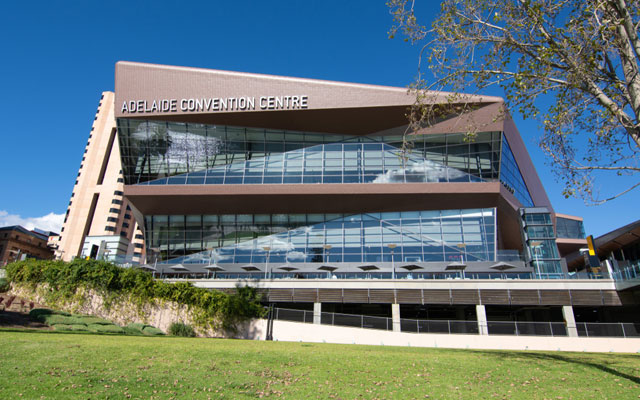
produce up to 10,000 meals a day to support community catering organisations facing unprecedented demand; Adelaide Convention Centre's Gavin Robinson and team pictured

Adelaide Venue Management (AVM) – operators of the Adelaide Convention Centre, Adelaide Entertainment Centre and Coopers Stadium – will repurpose their venues and make use of their commercial kitchens to make meals for organisations including Meals on Wheels SA, as demand for their services soars during the Covid-19 crisis.

All meals will be prepared by AVM’s dedicated kitchen teams and made in accordance with current vulnerable persons guidelines, ensuring the food is nutritious and healthy. The organisation’s goodwill will also help to keep about 60 people in jobs that may otherwise be on Jobseeker Centrelink payments.

AVM’s kitchens are helping to produce up to 10,000 meals a day to support community catering organisations facing unprecedented demand; Adelaide Convention Centre’s Gavin Robinson and team pictured

Next, Foodbank SA will use their refrigerated vehicles to collect meals from AVM and transport to them to Meals on Wheels SA’s main distribution points.

“We have a responsibility to support the South Australian community and make the best use of our considerable resources,” said AVM’s CEO Anthony Kirchner.

“We are reaching out to various companies and community groups where we have identified a possible need to see if we can lend them a hand in these challenging times.

“We’ll transition back to our regular business activities when the appropriate time comes, but for now we’re focused on repurposing our venues to support the community and look after the wellbeing of our employees,” Kirchner said.

From this month, AVM will provide up to 18,000 three-course meals each week to help Meals on Wheels SA bridge their supply gap – and is urging other community organisations to contact them if they need meal preparation support.

Meals on Wheels SA’s CEO Sharyn Broer said the new partnership strengthens the existing food supply chain so local communities can continue to be supported at this challenging time.

“In the past two weeks we’ve seen a 250 per cent increase in new customer registrations and South Australians are registering every day as the full impacts of Covid-19 take hold. This partnership also allows us to deliver more frozen meals, and fewer hot meals, to reduce the frequency of home visits in the interests of public health and safety,” noted Broer.

Foodbank SA’s CEO Greg Pattinson added: “The Foodbank SA team we will be collecting the pre-prepared meals from AVM and delivering to Meals on Wheels distribution points across the state. Following our call out, some of our amazing Foodbank chef’s and ambassadors have offered their support to Meals on Wheels during this time.”

“The Meals on Wheels volunteers will then in turn support Foodbank SA to distribute thousands of Foodbank food hampers to families in need each week.

“If we all work together we will be able to ensure no vulnerable South Australian goes without during this unprecedented time.”

Events housekeeping tasks to maximise during this time

0

The events industry is undoubtedly experiencing its biggest challenge to date. In Australia, the term ‘two’s company, three’s a crowd’ has never been more apt, with the Federal Government banning all social gatherings of more than two people for the current time.

For events professionals, working from home is the new normal and many across the country are now looking to find a fresh routine to tackle the day-to-day.

1. Level up: Upskill (or learn a new skill) during downtime
With the events industry currently taking an extended siesta, event professionals from all over Australia may have been experiencing reduced hours and changes to their work environment. Undoubtedly, the current climate is proving difficult, but there are still ways to maximise this newly available time.

This could include filling-in any gaps in skills for your existing role, developing new work-related skills and engaging in a passion project that could help elevate your business.

A great option to consider is a Business Chicks upcoming event called All Stars. They usually hold face-to-face conferences and Q&As with industry leaders, but are taking their show online with an impressive lineup, including New York Times bestselling author of The Subtle Art of Not Giving a F**k Mark Manson. They’ll be talking about how to cope, upskill and thrive during these uncertain times – certainly one to watch out for.

2. Review (and revamp) processes
Take the time to review your workplace’s current processes, so that when you do go back into work (physically), you’re as prepared as possible to tackle what’s ahead.

Begin by mind-mapping each task procedure based on what’s working, what’s not, and what can be built-on or improved upon. For my team, we’re using this time to review our databases, update sales CRM activities and improve our system processes.

We’re also looking at how we can revamp meeting procedures to apply them to virtual meetings, as individual ideas can often be missed without a structured format. To improve this, we’ve developed a framework for our Zoom and Google Hangout brainstorm sessions. We set up by having one staff member lead as the organiser to guide the virtual meeting and discussion, allowing us to creatively ideate in an orderly manner.

3. Update marketing collateral and social content
Now is a perfect time to review your online presence and marketing collateral.

For my team, we’re looking at updating our website copy, reviewing and updating our SEO and revamping our e-newsletters for a more engaging customer experience. Whether it’s online content, staff biographies or business cards, spend time reviewing and looking at how you can update and improve areas that you might not get to tackle in your usual day-to-day.

Now is also prime time to update your social media pages and to get creative. Spend time looking at your industry counterparts and what they’re doing well, analyse the trends of today, and explore new ways to boost your page engagement. Whether this is done sitting on the couch or watching Netflix, immerse yourself in social media to get inspired!

4. Research and innovate
Research, research, research.

There are so many available source providers that can open windows of opportunity to learn about new ideas, projects and production techniques.

Whether it’s learnings from a key opinion leader or innovations inside or outside your industry, consider how you can incorporate these ideas into your events, venues, businesses or products.

Particularly now, it’s really interesting to see so many brands launch innovative products to adapt and support the local market. A couple of good examples that come to mind are Melbourne-based florists Flowers Vasette, and Victoria Whitelaw Florists, once strictly specialising in flowers, they are now extending their services to create flower deliveries with fresh produce – dropped off at your doorstep, including make your own soup boxes and boxes with Easter goodies. This is the time to start thinking differently and innovating.

When we come out the other end of all this, so many industries will be congested and you will need something new that sets your business apart from the rest.

5. Check in on your team – and industry partners
Physical and social distancing does not have to mean complete isolation. Check in on your team regularly – whether professionally or personally. This could include a direct team member, industry colleague or event partner. Remember that this is a unique and challenging time for most, especially those in the events and hospitality industry.

Stay connected by arranging regular team catch-ups via video calls, put a call in to a supplier or arrange an open chat forum via Zoom for your industry colleagues to drop in to say ‘Hi’. Also, keep close to Business Events Industry Professionals for advice and updates, such as BEA Australia, Melbourne Convention Bureau (or your relevant bureau), PCOA, EEAA, MEA.

On a deeper level, checking in with your team is also important for mental health. For those doing it tough, make sure there are resources available, such as Beyond Blue. Subscriptions to mindful apps like Headspace or Breethe will assist you in learning how to take a moment for yourself and separate your work from personal life, when your home is now the location for both.

To the business events community, I’d also like to extend that our lines are also always open, to discuss any challenges or just to have a chat or a check-in.

Beyond Asia: Meet North Wales; Monaco CVB; ICCA and SAACI partnership

0
A screenshot from the Go North Wales website

North Wales’ MICE sector gets a boost
Go North Wales has unveiled a dedicated business events unit Meet North Wales to maximise the opportunities created by Visit Wales’ investment in business events, after receiving £50,000 (US$61,622) funding from the Regional Tourism Engagement Fund.

Meet North Wales aims to promote and target relevant business events products, venues and experiences across the region to work together to offer relevant ideas, itineraries and suggestions for event professionals and buyers. The group comprises a range of businesses in both the corporate and incentive markets including Bangor University, Venue Cymru, Portmeirion and Adventure Parc Snowdonia.

The Welsh Government’s investment in North Wales is part of a new approach to attract business events to North Wales and throughout the country, which could achieve an estimated economic benefit of up to £24 million per annum.

Monaco CVB and partners waive cancellation fees
Grimaldi Forum and many hotels in Monaco have waived cancellation fees and postponement deposits for event organisers struggling with the effects of the Covid-19 outbreak.

Monaco CVB and it partners have also been working to propose new dates for clients, while guaranteeing the most suitable solutions according to the format of each event, especially for those who have been bringing their events to Monaco for several years.

A few days ago, the 2020 Formula 1 Grand Prix was also cancelled.

ICCA and SAACI extend collaboration
ICCA and the Southern African Association for the Conference Industry (SAACI) have announced an extension of their partnership.

The partnership will bring strategic collaboration and will mutually benefit both associations through the exchange of information, creating awareness through affiliation and working together to create new education and training opportunities for the benefit of the Business Events Industry in Africa.

Kim Roberts, SAACI’s national chairperson, said in a statement: “It is important for SAACI to work with ICCA in the drive of knowledge sharing that makes this partnership so relevant and important for the business events industry within Africa.

“We are looking forward to the exchange of critical information on events held across the continent which will allow for sharing of crucial information to the bidding process for future events such as contacts, budgets, and the decision-making process. This will start an aggressive process in how we want to increase business events and association meetings to Africa.”

Mövenpick opens outpost in Phu Quoc

0

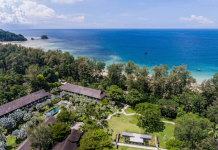
Mövenpick Hotels & Resorts has opened the Mövenpick Resort Waverly Phu Quoc, a rising destination for incentives and meetings in Vietnam.

The resort is the first international resort to open along Phu Quoc’s Ong Lang Beach, where outdoor teambuilding sessions can be arranged. Event planners can hold meetings and functions in the 720m2 pillarless Coral Ballroom, complete with 6.8m-high ceilings and a 324m2 foyer. It can hold up to 860 guests, or divided into four smaller spaces for breakout sessions.

An aerial view of Mövenpick Resort Waverly Phu Quoc & Mövenpick Residences Phu Quoc

Accommodation options include 305 guestrooms in the hotel, as well as 329 apartment-style residences and 79 pool villas in the adjacent Mövenpick Residences Phu Quoc.

Rooms range from 35m2 to 72m2 for a Junior Suite. Modern in-room comforts include complimentary high-speed Wi-Fi, a pillow menu, and a fully-stocked minibar. For long-term stays, Mövenpick Residences Phu Quoc features studios and family rooms, each equipped with a kitchenette.

The resort complex also features 66 two-bedroom and three-bedroom pool villas around the lake, while the 12 three-bedroom pool villas and the Presidential Villa offer beachfront views.

Bleisure guests with their families in tow are also assured of a Mövenpick Family programme ensures the needs of younger guests are met. Younger travellers can also be kept entertained at the Little Birds Club and M Lounge teen club.

Other amenities include five F&B venues, six swimming pools, including two kids’ pools, fitness centre, yoga studio, and the Elements Spa & Salon with 15 treatment rooms, a sauna and a jacuzzi.

SG gov’t rolls out Solidarity Budget to tide businesses, employees through month-long shutdown

0
Singapore Merlion devoid of both tourists and locals as Covid-19 brings the economy to a standstill

The Singapore government will extend more financial support to help businesses and employees ride out the city-state’s month-long closure of non-essential workplaces – a “circuit breaker” measure which takes effect from April 7 until May 4, 2020.

The S$5.1 billion (US$3.6 billion) Solidarity Budget was announced by deputy prime minister and finance minister Heng Swee Keat in a parliament session today.

Singapore Merlion devoid of both tourists and locals as Covid-19 brings the economy to a standstill

In an unprecedented step, this marks the third round of measures the government has rolled out in under two months, following the S$6.4 billion Unity Budget in February, and the S$48.4 billion Resilience Budget last month.

The three stimulus packages comprise a stream of waivers and subsidies for businesses and employees to cushion the impact of Covid-19.

The Solidarity Budget includes increased wage subsidy for all companies in all sectors to 75 per cent of gross monthly wages, for the first S$4,600 of wages paid in April, for each employee. This overwrites the range of 25-75 per cent in the previously announced Resilience Budget, under which the aviation and tourism sectors were provided the highest tier of wage subsidies.

“I expect firms to make use of this Jobs Support Scheme to continue paying your workers and refrain from putting workers on no-pay leave during this period, or worse, retrenching them,” urged Heng.

Companies that hire foreign workers on work permits and S-passes will also have their monthly foreign worker levy due in April waived. Employers will soon also receive a foreign worker levy rebate of S$750 for each work permit or S-pass holder.

Singapore’s Ministry of Law will introduce a Bill on April 7 to allow businesses and individuals to temporarily defer certain contractual obligations such as paying rent, repaying loans or completing work. The Bill will also ensure property owners pass on the property tax rebate in full to tenants.

In addition, the government will bring forward the S$300 Care and Support Cash package announced earlier, and provide an additional S$300, bringing the total to S$600 for every Singaporean adult above the age of 21. Singaporeans can expect a payout from as early as April 14.

Heng wrote in a Facebook post on Sunday: “The Covid-19 situation has taken a very sharp turn, both globally and locally. Strong measures have to be taken to protect lives, but the economy has taken a hit as a result.”

Singapore’s overall GDP growth will dive further amid stricter restrictions to fight the pandemic, projected Heng. He shared that the government’s response to Covid-19 will ring up to S$59.9 billion, or about 12 per cent of Singapore’s GDP. The overall budget deficit for FY2020 will increase to S$44.3 billion, or 8.9 per cent of the GDP.

As of April 5, the number of infection cases in Singapore stood at 1,309, including 116 new local cases and four new imported cases.

Reviews

The Ritz-Carlton, Bangkok

The newly-opened Ritz-Carlton, Bangkok anchors the One Bangkok development with cosmopolitan elegance. Featuring the city's largest ballroom and a spectacular new penthouse suite, it delivers exceptional hardware and deeply authentic, soulful service for business and leisure travellers alike

Mama Shelter Zurich

Behind the imposing, Brutalist concrete that defines Zurich’s Oerlikon district lies a surprising secret. While its exterior honours the neighbourhood’s industrial roots, stepping inside Mama Shelter reveals a vibrant, neon-soaked world that is a far cry from its rigid shell

Hyatt Regency Kuala Lumpur at KL Midtown

A polished urban retreat designed for business travellers, Hyatt Regency Kuala Lumpur at KL Midtown combines thoughtful design, seamless service, and exceptional facilities.