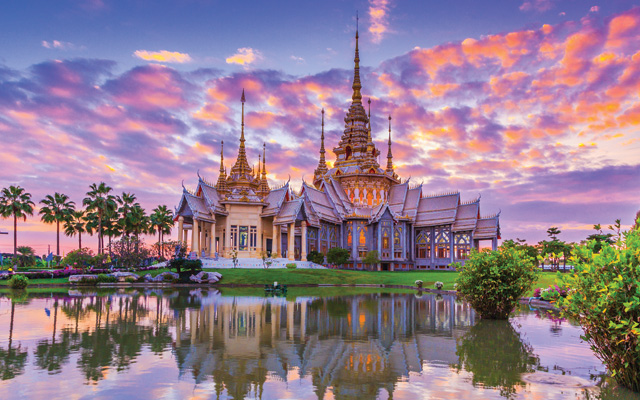
Tākina Wellington Convention & Exhibition Centre (pictured) will be the conference venue
Wellington, New Zealand, will host the Asian-Australasian Congress of Neurological Surgeons in 2028 with the objective of improving neurosurgery access in New Zealand and the Pacific.
The congress is expected to attract up to 1,000 delegates to Tākina Wellington Convention & Exhibition Centre, and deliver more than NZ$3.4 million (US$2 million) in delegate spending to the city and beyond.
Tākina Wellington Convention & Exhibition Centre (pictured) will be the conference venue
The conference bid was led by the Wellington members of Aotearoa Neurosurgeons New Zealand, with support from Business Events Wellington, and Tourism New Zealand Business Events.
New Zealand’s strong history in neurosurgery, and state-of-the-art venue Tākina Wellington Convention & Exhibition Centre were important factors in winning the bid against competition from Perth and Singapore. New Zealand’s strategic funding support, and the potential for positive outcomes from hosting this event in Wellington were also instrumental in the decision.
Kelvin Woon and Agadha Wickremesekera, the two co-conveners of the conference, said: “… This event presents a valuable opportunity to share knowledge, foster collaboration, and address common challenges in the global neurosurgical community.”
Members of the organising committee added that the congress will showcase New Zealand’s neuroscience capability, and provide a platform to attract neurosurgeons and other health workers in the neurosciences to New Zealand.
New Zealand has 0.49 neurosurgeons per 100,000 population, compared to approximately one neurosurgeon per 100,000 people in countries such as the US or Australia.
Additionally, the congress will address the lack of neurosurgery services in the Pacific Islands and explore solutions to the region’s current infrastructure limitations.
Wellington, New Zealand
Wellington has placed sustainability at the forefront of its urban agenda, setting a goal to become a carbon-zero city by 2050, in accordance with Wellington City Council’s Te Atakura – First to Zero plan.
This blueprint outlines key activities to reduce emissions in areas such as transport, building energy, and urban form. The plan emphasises the importance of collective action, with 82 per cent of residents wanting immediate action to reduce emissions.
Switched on Bikes rents out a range of bikes to explore Wellington on two wheels. Picture by WellingtonNZ
Early progress indicates a positive trajectory, with the city achieving a 10 per cent reduction in total gross emissions between 2020 and 2023.
Major business events venues and companies have also gained recognition for their sustainable efforts. For instance, Takina Wellington Convention and Exhibition Centre has achieved the 5-Star Green Star design certification, where its green features include water-efficient fittings, rainwater harvesting systems, enhanced thermal insulation, high-performance double glazing, and efficient LED lighting. These features contribute to a 66 per cent reduction in carbon emissions compared to a comparable new build.
Venues Wellington – a company that manages and provides services for civic venues on behalf of the Wellington City Council – has also achieved EarthCheck certification, the only global benchmarking and certification programme for sustainable travel, tourism and events.
Business Events Wellington actively supports event planners in the execution of environmentally responsible events. Their sustainability guide offers advice and support throughout the entire event lifecycle, provides clients with recommendations for local suppliers, and highlights the best practices to facilitate the hosting of sustainable events in the city.
Wellington has joined cities from around the world in the Cities Race to Zero, a collective pledge to halve carbon emissions by 2030. It was also one of 15 cities worldwide to win the Bloomberg Mayors Challenge for a digital re-creation of Wellington. This re-creation aims to educate people about climate change and will assist in better decision-making on how the city grows.
The Economist’s Safe Cities Index has also named Wellington as the number one city worldwide for environmental security in 2021. This index considers Wellington’s world-leading environmental restoration work. It also considers how the city has incorporated sustainability into urban planning to reduce carbon emissions and manage climate risks.
Sydney, Australia
Sustainable Sydney 2030-2050 is the City of Sydney’s vision for a green, global and connected city.
The Australian city is forging ahead with a sense of urgency on climate action, where Sydney has reduced carbon emissions by 70 per cent, with the aim to achieve net-zero emissions by 2035. The city has also converted more than 6,000 streetlights to LED, installed more than 7,000 solar panels atop 45 city buildings, switched to 100 per cent renewable energy in 2020 while also procuring the nation’s largest hybrid and electric vehicle fleet, including trialling electric garbage and street sweeping trucks.
View of Sydney’s cityscape from Vaucluse, an eastern suburb of Sydney. Picture by James Horan
Further bolstering its environmental efforts, Sydney has also installed a recycling plant to treat up to 900 litres of storm water daily to provide residents and services with recycled water and 20 rainwater harvesting systems in parks to keep the city’s parklands green.
Critical to this is the City of Sydney’s Sustainable Destination Partnership – a collaboration of hotels, cultural institutions, entertainment venues and industry influencers working together to make Sydney a sustainable destination.
Since 2011, the City of Sydney has been Climate Active certified carbon neutral, with BESydney becoming the only Australian convention bureau to achieve Climate Active Carbon Neutral Certification since 2022. Climate Active is an ongoing partnership between the Australian Government and Australian businesses to drive voluntary climate action by becoming climate neutral.
Major venues like ICC Sydney have also implemented environmental management systems adhering to international standards ISO14001 and EarthCheck criteria, achieving EarthCheck Silver certification.
In addition, the Sydney Opera House, a UNESCO World Heritage Site, has been awarded a 6-star Green Star performance rating by the Green Building Council of Australia, representing world leadership in environmental and social sustainability operations. Key sustainability achievements include reducing emissions by 26 per cent, moving to 100 per cent renewable energy and diverting over 90 per cent of event waste from landfill.
For the past three years, BESydney has been proactive in offering limited invitation-only matched funding opportunities to encourage international association organisers to use to take climate action by using sustainably certified suppliers and reducing, measuring and offsetting their carbon footprint.
The bureau actively facilitates the seamless integration of sustainability into the delegate experience. In February 2025, BESydney partnered with Sinyi Realty to create a Sinyi Walkathon, a sustainable and engaging delegate experience showcasing Sydney’s landmarks. Participants walked part of the Sydney Marathon track from Luna Park over the Sydney Harbour Bridge to the Botanic Garden Tarpein Lawn.
BESydney will soon launch its Social Impact Strategy, a guide for conference and meetings organisers to measure their social impact before, during and after their conference takes place in the destination. This will include partaking in socially-sustainable initiatives, working with third-sector organisations and leveraging their international influence to create meaningful connections and advocate for change within their industry.
Tourism New Zealand’s Penelope Ryan within the Hobbiton set-up
New Zealand’s business events sector is well-positioned for growth, fuelled by funding boosts, the soon-to-open New Zealand International Convention Centre (NZICC) in early 2026, and unique cultural and experiential appeal.
Penelope Ryan, global manager for Business Events at Tourism New Zealand, told TTGmice at IMEX Frankfurt 2025 that the “NZ$3 million boost (US$1.8 million) was an amazing opportunity, because it meant that we had more funds to put towards bids”.
Tourism New Zealand’s Penelope Ryan within the Hobbiton set-up
The fund’s immediate impact is evident, with Ryan sharing that they are targeting 110 bids for FY25, which ends in July 2025. “This is 20 more bids than we had previously. We’re also maintaining a win rate of around 60 to 65 per cent, which is great.”
Adding to this momentum is the long-awaited opening of the NZICC in Auckland, scheduled for February 2026, which Ryan pointed out will “give us the ability to cater for larger conferences up to 4,000 people, which is significantly more than what we’ve been able to cater”.
But while functional purpose-built venues like NZICC, Takina Wellington Convention and Exhibition Centre, and Te Pae Christchurch Convention Centre are important, New Zealand’s appeal lies in its “softer elements”, she emphasised.
For example, Māori culture is well integrated into event design, offering delegates an authentic and enriching experience beyond mere entertainment.
Moreover, exhibiting at the Tourism New Zealand stand at IMEX Frankfurt for the first time this year Hobbiton Movie Set Tours, which brought with them a full-scale Hobbit Hole exhibit hobbit door, complete with a living room and real garden set-up.
The attraction’s general manager of tourism, Shayne Forrest, told TTGmice that business events currently constitutes “five per cent” of its business, and he believes there is “so much more room to grow, which is why we’re here this year”.
New Zealand is also leveraging its strong industry innovation and academic community in sectors like agriculture, geothermal energy, and medical sciences to create relevant and engaging business events.
“The country excels in providing experiential learning opportunities, allowing delegates to connect with their subject matter through hands-on experiences. For instance, delegates attending a conference in Auckland can easily take a day trip to Hamilton to experience agricultural practices first-hand,” Ryan elaborated.
When asked about how Tourism New Zealand is aiming to attract more business events from Asia, Ryan shared that the focus is on in-market engagement and education to showcase New Zealand’s business event ecosystem, as “Asia is a key market we are actively working to develop”.
One aspect of attracting the Asian market involves easing visa processing for delegates from several countries, which is an area currently being worked on by Business Events Industry Aotearoa.
From left: Zurich Topas Life's Jauhari, Bank Indonesia's Arief Hartawan, Telkomsel's Novera Maharani, Singapore Tourism Board's Mohamed Hafez Marican, and moderator Harry Nugraha
Despite government-wide budget tightening and economic caution, events remain a strategic channel for Indonesia’s corporate and institutional businesses.
Speakers at the recent Indonesia Event Industry Association (IVENDO) National Congress in Jakarta revealed that spending has not completely stopped but expectations have evolved, and therefore event organisers needed to adapt.
From left: Zurich Topas Life’s Jauhari, Bank Indonesia’s Arief Hartawan, Telkomsel’s Novera Maharani, Singapore Tourism Board’s Mohamed Hafez Marican, and moderator Harry Nugraha; photo by Tiara Maharani
At the event, Bank Indonesia (BI) reaffirmed its commitment to event-based outreach, even as it scales down activities for 2025. From 800 planned events, only 300 will proceed.
Arief Hartawan, head of regional department at BI, said: “We are not eliminating events, but we are recalibrating. Proposals focused on financial literacy, MSME development, and inclusive engagement still have our attention. If the value is clear, we are open to sponsorship, even if this means more than the 300 events limit.”
Meanwhile, Indonesia’s telecommunication provider, Telkomsel, recognises creativity as an essential tool for delivering meaningful impact in today’s events.
“We prioritise unique formats that deliver real value to internal teams and public audiences,” said Novera Maharani, manager of people communications at Telkomsel. “It’s not about venue prestige, but about storytelling and experience.”
Recently, Telkomsel swapped luxury ballrooms for unconventional spaces like basketball halls, creating distinctive atmospheres through bold design. According to Novera, what matters most now is meaningful interaction, not scale.
“Big or small organisers – it does not matter. What we look for is concept originality and audience impact,” she added.
Jauhari, Zurich Topas Life’s procurement manager, shared a similar perspective: “The need to engage stakeholders has not changed, but the approach has. Events need to be sharper, more strategic, and better justified.”
This shift in expectations calls on local event organisers to step up, not just as executors of client briefs, but as innovators creating original events. By developing their own concepts and intellectual property, organisers can better meet evolving demands and secure more sustainable opportunities, according to Irvan Sumamto, CEO of Gemalindo Kreasi Indonesia PEO.
“We’re pushing event organisers to move beyond technical execution,” said Irvan, who is also the newly-elected chairman of IVENDO. “Creating your own event IP is not just a survival strategy, it is a way to build long-term value. If your concept is strong, sponsors like BI are willing to back you.”
Irvan explained that owning an event allows organisers to control audience targeting, content, branding, and revenue streams, such as ticketing and partnerships.
As part of his long-term vision as IVENDO’s new chairman, Irvan plans to support members in developing strong concepts and connecting them with potential funders to help them thrive.
For bigger opportunities, event organisers should look to the global market, advised Mulkan Kamaluddin, CEO of Intro Event Solution. But to compete, he said, they must level up.
“To succeed internationally, organisers need to sharpen their skills and earn certifications that align with South-east Asian standards. It is the only way to stay competitive on the regional stage,” said Mulkan.
Singapore (pictured) reaffirms its continued dominance in the region's business events landscape
For the seventh time since 2016, Singapore has secured the top spot in Cvent’s list of the Top 10 Meeting Destinations in Asia-Pacific for 2025.
Bangkok and Sydney took the second and third spots, followed by Tokyo , Melbourne, Kuala Lumpur, Bali, Seoul, Shanghai, and Beijing respectively.
Singapore (pictured) reaffirms its continued dominance in the region’s business events landscape
Kuala Lumpur, Bali and Shanghai each improved their position from last year, moving up one spot each, while Beijing moved up two spots to break into the Top 10 this year.
As for the Top Meeting Hotels in Asia Pacific, Bangkok Marriott Marquis Queen’s Park rose in the rankings to secure this year’s top spot, with Hyatt Regency Sydney as the runner up.
Hilton Singapore Orchard rose seven spots to #3, while Hilton Tokyo Bay (#5) and The Westin Tokyo (#8) each made leaps, moving up 19 and 14 spots respectively. Hilton Sydney and the InterContinental Singapore are also Top 10 newcomers.
Other Singapore hotels in the Top 10 Meeting Hotels list include Fairmont Singapore (#4) voco Orchard Singapore, an IHG Hotel (#6), and Shangri-La Singapore (#7).
The destination and hotel rankings are determined based on insights gleaned from the more than US$18 billion of global sourcing and request-for-proposal (RFP) activity through Cvent’s sourcing platforms in 2024, including a record-breaking US$16.5 billion through the Cvent Supplier Network. This trend is further supported by Cvent’s 2025 Planner Sourcing Report: Asia Edition, which found that nearly 79 per cent of planners expect the number of in-person meetings to increase in 2025.
Cvent’s annual lists are also issued regionally for North America, Europe, the Middle East & Africa, and for the first time this year, Latin America & Caribbean. Cvent also unveiled a new Top Lists category, the Top Venues and Vendors, which analyses data from the Cvent Vendor Marketplace.
The global exhibitions industry has seen a strong recovery
A newly released report from UFI, the UFI Global Exhibition Industry Statistics report, revealed that in 2024, 4.7 million exhibiting companies hosted 318 million visitors, resulting in €368 billion (US$398 billion) in economic impact.
The report estimates that 32,000 exhibitions were held worldwide in 2024, a similar number to pre-pandemic. Their activity, measured by the space rented by exhibiting companies, is close to the level of 2019: 138 million square metres against 143.7 million square metres, showing a slight decrease of -0.8% per year on average.
The global exhibitions industry has seen a strong recovery
Additional research from the Global Exhibitors and Visitors Insights / Net Promoter Score report produced by Explori shows that satisfaction from participants has improved post-pandemic, between +10 and +31 points for visitors, and +20 and +29 points for exhibiting companies, depending on the region of the world.
In a separate and newly-released Global Economic Impact of Exhibitions (2024) report, produced by UFI in collaboration with Oxford Economics, the focus shifts to evaluating the broader economic consequences generated by the exhibition industry.
This first level of impact, which includes inflation, benefits not just the exhibition industry, but all related sectors, such as accommodation, restaurants and transport, and it has increased by 3.8% per year on average since 2019.
Adding on the indirect and induced impacts generated in the economy, the total global economic impact of exhibitions on hosting territories reaches €368 billion in total output and €215 billion in total GDP, corresponding to 4.3 million full-time equivalent jobs.
Europe was the largest market in terms of visitors, welcoming 102 million in 2024 (32% of the total worldwide). North America ranked second, with 89 million visitors, followed by the Asia-Pacific with 84 million visitors.
Since 2019, the total space rented by exhibitors has performed differently across regions, with average annual trends varying from -1.4% in Europe to -0.9% in Asia-Pacific, -0.4% in Central and South America, -0.3% in North America, stable in Africa, and +0.9 % in the Middle East.
Direct spending related to exhibitions (including organiser operations, exhibitor investments, and visitor expenditure) totalled €150 billion. When accounting for indirect and induced effects across supply chains and local economies, the sector’s total contribution reached €368 billion in total output: €175 billion in North America, €108 billion in Europe, and €73 billion in Asia-Pacific.
Overall, exhibitions globally generated a total output of €78,800 per exhibiting company and €8,500 per square metre of venue gross indoor exhibition space.
The Global Economic Impact of Exhibitions report shows the far-reaching impact of the exhibition sector, which generates €215 billion of total GDP supported by exhibitions globally would rank the sector as the 57th largest economy globally, larger than the economies of countries such as Hungary, Qatar, Nigeria, and Ecuador.
The report was produced by UFI in collaboration with Oxford Economics and is based on comprehensive industry data and econometric modeling covering more than 180 countries.
Both reports are available free of charge on the UFI website.
Twenty-five years after its founding in Hong Kong by Paul Woodward, Business Strategies Group (BSG), a consultancy focused on the Asian business events and exhibitions industry, will transition to new ownership.
An agreement has been reached for the current managing director, Mark Cochrane, to acquire the company.
Mark Cochrane
Since its inception in 2000, BSG has provided specialised research and advisory services to over 200 international businesses and government organisations within the region. The firm also manages the Asia-Pacific office for UFI, the Global Association of the Exhibition Industry, a role Cochrane currently holds as regional director.
The transfer of ownership will be a phased process, with completion expected in March 2027. Woodward will remain actively involved with BSG as chairman and senior advisor.
Cochrane joined BSG as a consultant in 2006 and assumed the role of managing director in 2010 when Woodward moved to Paris to serve as CEO of UFI, a position he held until the end of 2015.
BSG’s clientele includes a diverse range of stakeholders in the business events sector, such as exhibition organisers, venues, private equity funds, and government bodies like convention and visitor bureaus (CVBs) and tourism boards. The consultancy offers a comprehensive suite of services, including business development strategy, competitive intelligence, portfolio analysis, feasibility studies, launch planning, and commercial due diligence. Additionally, BSG provides representation services.
Beyond its consultancy work, BSG has managed the Asia-Pacific office of UFI since 2004 and maintained a continuous partnership with the Thailand Convention and Exhibition Bureau since 2006, overseeing TCEB’s exhibition-related activities in Greater China.
The platform showcases the country’s amenities in the meetings and incentives sector, providing a comprehensive guide for global event professionals
Türkiye has launched a new digital platform, MeetinginTurkey, under the overarching brand of MeetTurkiye, at IMEX Frankfurt 2025.
The user-friendly and content-rich platform presents comprehensive, up-to-date information about the country’s hosting opportunities and key advantages, including its destinations and innovations. It also features an integrated congress support system, providing essential resources to help event professionals to plan, promote, and organise their events in Türkiye.
The platform (screenshot pictured) showcases the country’s amenities in the meetings and incentives sector, providing a comprehensive guide for global event professionals
Türkiye is intensifying efforts to enhance its global standing in the business events sector, with Istanbul taking a leading role.
A new initiative uniting key public and private stakeholders, spearheaded by the Ministry of Culture and Tourism and the Türkiye Tourism Promotion and Development Agency, aims to elevate Istanbul’s competitiveness as a premier global congress destination. The collaboration will streamline bidding processes, increase delegate engagement, and provide comprehensive support for international congresses.
The new online form, accessible via the MeetinginTurkey platform, provides a user-friendly interface for international associations and conference organisers.
A key highlight of this initiative is the upcoming Public-Private Sector Industry Declaration, a formal commitment by all partners to actively welcome, support, and facilitate major international congresses in İstanbul.
This new model of collaboration is set to be extended to other major business events cities across Türkiye, including Antalya, and İzmir.
Purpose-built for business travel, the Carbon Strategy Planner gives travel managers clarity on emissions scenarios, and carbon budgeting
Advito, the consulting division of BCD Travel, has introduced a carbon forecasting and budgeting tool called Carbon Strategy Planner.
Developed in response to a rising demand for clarity, accountability, and strategic planning in corporate travel, the tool enables travel managers to forecast carbon emissions and spend, compare reduction strategies, and build actionable carbon budgets at both company and divisional levels to achieve sustainability targets.
Purpose-built for business travel, the Carbon Strategy Planner gives travel managers clarity on emissions scenarios, and carbon budgeting
Built on Advito’s ISO Certified GATE4 methodology, and compatible with any emissions standard, Carbon Strategy Planner enables travel managers to forecast future emissions by modelling a wide range of decarbonisation levers that all clients can implement.
The standard set of scenarios include reducing travel demand, future staffing projections, shifting modes of transportation, investing in sustainable aviation fuel (SAF), or choosing more efficient aircraft and hotels, among others. Clients can either work toward an existing target or use the tool to set a realistic target based on the levers that would make the most impact in their travel programme.
Advito’s tool was built specifically to help travel managers and sustainability leaders model a variety of carbon strategies. Unlike other carbon calculators, the tool transforms the forecast into carbon budgets that can guide real-world travel decisions. These budgets provide a framework for internal goal-setting, performance tracking, and aligning with an organisation’s broader business operations, answering questions like: “What if we shift 10 per form of our flights to rail?” or “Can we afford to send a team to New York without exceeding our sales division’s carbon budget?”
The Carbon Strategy Planner can be integrated directly into Advito’s Sustainability Consulting analytics suite – a centralised platform that allows clients to forecast, budget, and track emissions all in one place.
The two-year partnership will amplify BestCities’ offerings for the global meetings community
BestCities Global Alliance has entered into a two-year partnership with Snapsight, an artificial intelligence platform that generates summaries and analyses of event content in real-time.
Through the partnership, Snapsight will provide BestCities with instant insights, takeaways, and idea clouds from its events and online information sessions. Snapsight’s technology can generate summaries of presentations or sessions in multiple languages; identify and deliver the most important elements of a live session in real time; and generate visual representations of content.
The two-year partnership will amplify BestCities’ offerings for the global meetings community
By leveraging Snapsight’s technology, BestCities can further enhance the learning experience of attendees to the annual Global Forum, online Community Cafés, and other alliance events.
Attendees will benefit from immediate, personalised insights supported by technology that analyses speech patterns, extracts main themes, and summarises discussions as they happen. Summaries can also be shared with anyone unable to attend a session, helping to keep colleagues and team members updated with accurate, well-organised insights.
A polished urban retreat designed for business travellers, Hyatt Regency Kuala Lumpur at KL Midtown combines thoughtful design, seamless service, and exceptional facilities.
The five-star property excels in backing its expansive facilities with seamless service and personalised attention, setting the benchmark for luxury in Bangkok.