The World Seafood Congress (WSC) swims into Asia for the first time, with the event kicking off this morning in Penang at Setia SPICE Convention Centre.
Bearing the theme Seafood Supply Chains of the Future, the event is attended by 350 delegates with 11 keynote speakers and 40 exhibitors from the international seafood industry and research fraternity.
Officiating the welcoming ceremony were Chow Kon Yeow, chief minister of Penang (pictured with a hefty fish in hand) and Sim Tze Tzin, deputy minister of Agriculture and Agro-based Industry, Malaysia (third from right)
WSC 2019 is owned by the International Association of Fish Inspectors, and co-organised by Penang Institute and The Centre for Marine & Coastal Studies, Universiti Sains Malaysia.
Trade fair industry in Asia looks well-positioned for continued growth
UFI, the Global Association of the Exhibition Industry, released the 15th edition of the Trade Fair Industry in Asia annual report, which provides complete data on the development of trade fairs and supporting facilities in these regions up to December 31, 2018, with additional figures and commentary on likely trends for the following year.
One key finding is that net space sold at Asian trade fairs reached 23.4 million square metres, which represents an average growth rate of 4.8% across 17 Asian trade fair markets.
Trade fair industry in Asia looks well-positioned for continued growth
Research shows that 23.4 million square metres of space was sold by exhibition organisers to their clients in Asia in 2018 – up from 22.3 million square metres in 2017. More than half of the total (59%) was sold in China – totalling 13.7 million square metres in net space, which is well over six times the space sold in Asia’s second-largest trade fair market, Japan (2.15 million square metres).
By the end of 2019, venue capacity in Asia will be over 9.6 million square metres, and the number of purpose-built exhibition venues operating in Asia will reach 232. The region’s total venue capacity will increase significantly following the opening of a new mega venue in Shenzhen (China), adding 400,000m2 of gross indoor capacity to the regional total.
China, Asia’s largest market, exceeded the regional average as it grew by 5.5% in 2018, adding approximately 700,000m2 of space, and totalling 13.73 million square metres. However, this was notably lower than the 8% recorded in 2017. Several large markets reported less significant growth last year. Net space sold in Thailand increased by 3.8% in 2018; Australia and South Korea both expanded by 3%; while the market in Taiwan grew by just under 2%.
Cambodia was the fastest-growing trade fair market in the region in 2018 as space sold jumped by over 40%. Once again, India was the fastest-growing large market as net space sold jumped by 10%, rising from 1.18 million square metres to 1.3 million square metres.
Other South-east Asian markets that outperformed the regional average included Malaysia (7.7%), Vietnam (6.4%) and Singapore (5.4%). Thailand, the Philippines and Indonesia posted growth lower than the regional average in 2018.
At the low end of the table, growth in Japan slowed to 1.2% in 2018, down from 2.9% in the previous year, while space-constrained Hong Kong recorded growth of just 1.1%, the lowest in the region.
UFI Asia/Pacific regional manager and Business Strategies Group (BSG) managing director, Mark Cochrane, stated: “Growth in the Asian trade fair industry eased to 4.8% in 2018, down from the robust 7.0% recorded in 2017. Once again, India was a particularly strong performer in 2018, with net space sold increasing by 10.0% to 1.3 million square metres. China, the region’s largest trade fair market, remained strong with growth of 5.5% in 2018.
“There are some clear macro-economic challenges ahead in 2019, but the trade fair industry in Asia looks well-positioned to continue to grow.”
The research was undertaken for UFI, The Global Association of the Exhibition Industry, by BSG in Hong Kong, and the report covered 17 locales including Greater China and South-east Asian markets, Australia, Cambodia, Japan, South Korea, India, Myanmar and Pakistan.
Thirayuth: Centara is looking into opportunities beyond the traditional hotel and resorts core
What have been the biggest changes in the hotel business since you started in the industry? There has been a huge increase in the number of travellers coming to and travelling within South-east Asia. For example, there was virtually no outbound travel from China a few decades ago; now 10 million Chinese a year travel to Thailand. Consumer preferences have also evolved over time. Today’s travel consumers are not simply looking for a hotel room; they are looking for an experience.
What is your overarching vision for Centara? Centara’s vision is to be the leading global hospitality group of Thai origin. We will accomplish that by providing locally-relevant, Thai-inspired experiences in each of our global destinations, delighting guests through a blend of innovation, authentic family values and the unique passion of Centara’s people, while maintaining a commitment to sustainability. Our imminent entry into new markets and further development in existing markets, including China, Cambodia, Laos, Indonesia, the Maldives, Qatar, the UAE and, of course, Thailand, are indicative of our commitment and path to realising our vision.
How do you see the business developing into the future? Centara will continue to expand its international footprint beyond the company’s current portfolio of 68 properties in operation or under development. In addition to adding new properties, the company will identify and pursue new business opportunities outside its historic hotel and resort core. We will also expand into new territories, with the luxury segment being an important focus.
We continue to look for innovative ways to better serve our customers and grow our business. Most recently, the company introduced a travel health and wellness programme, Staying Well, featuring innovative products and services designed to improve exercise, nutrition and sleep experiences for our guests.
Our recently launched New Agenda: Meetings Redesigned programme represents an innovative approach to achieve more effective corporate meetings, conventions and off-site events, while taking full advantage of Centara’s unique destinations, venues and MICE-industry expertise.
How can Centara retain its edge in an increasingly competitive industry? The challenge for us is to preserve the best aspects of our company culture while ensuring that during our current growth phase, we focus attention on making sure the company invests in our internal infrastructure to ensure it grows along with the top line.
We continue to invest in technology to stay at the forefront of the industry, bringing in new systems for people management, revenue management and central reservations. We are also revamping our online capabilities with brand new websites across desktop and mobile platforms to support our drive toward becoming best-in-class among leading hotel operators.
What trends will drive Asia’s hotel business into 2020? The growth in Chinese outbound travel, which nearly tripled during the past decade, continues to be a significant driver for Asia’s hotel industry going forward. And one of South-east Asia’s prominent emerging markets, Laos, appears serious about developing its tourism sector, further adding to regional demand.
Meanwhile, personalisation will continue to become more and more important. The younger generation expects a highly personalised experience and offering, so we continue to align our services with our customers’ lifestyles.
What are the major challenges Asia’s hotels face in the modern age? The industry has always been competitive, but the modern age has accelerated the pace of change, bringing with it new business models such as Airbnb that are disrupting the traditional hotel business. Additionally, hotels will have to make environmental sustainability a priority and push governments to do more. Infrastructure is another area which can have a lasting impact, positive and otherwise, on the hotel business.
The five-star Sofitel brand has opened its 23rd property in China, located in the heart of Beijing’s civic and diplomatic area, near the Jianguomen subway station.
The Sofitel Beijing Central offers 345 luxury rooms and suites, with Sofitel Club floors providing circular bathtubs and access to the Club Millésime Lounge.
Recreational facilities include a day spa, fitness centre and indoor pool, while F&B options include an all-day dining restaurant, a signature Chinese restaurant, and a lobby lounge.
Event planners may make use of the hotel’s 1,500m2 of event space, comprising nine flexible, state-of the-art meeting rooms for up to 400 delegates.
Grand Hyatt Erawan Bangkok has unveiled its latest package for event planners.
Up for grabs are 25,000 World of Hyatt Points; up to five per cent credit towards master bill; complimentary Wi-Fi in all event spaces; one complimentary room upgrade to next room category for every 15 paid room nights; reduced cancellation fees; and waived attrition.
The Campus Lecture Hall
This offer is valid for qualifying meetings with 75 or fewer paid guestrooms on peak night.
Bookings must be made by September 30, 2019, and held by December 31, 2019. Full terms and conditions apply.
The property offers three unique event spaces – the Grand Ballroom that can accommodate up to 1,500 for receptions; the Residence with a 7m-high ceiling and open kitchen; and The Campus with its seven multifunction rooms.
CWT Meetings & Events has appointed Cristina Scott as vice president of global operations.
She will report to Derek Sharp, CWT Meetings & Events’ senior vice president and managing director, and will be based in Southlake, Texas.
Scott has extensive knowledge of the industry, and joins CWT Meetings & Events from Sabre, where she held many commercial management and sales operations roles for the past 24 years.
Avis Budget Group has appointed Keith Rankin as president of the international region, which includes Europe, the Middle East, Africa (EMEA), Asia, Australia and New Zealand.
In his new role, Rankin will be working towards digitising Avis Budget Group’s business and revolutionising the future of mobility.
“The world of mobility is changing, heightened by advancing technology and the consumer need for a more on-demand and personalised experience. Across the international region – and globally – we are transforming as a business to not only be a part of this shift, but to be a leading voice in the future of mobility,” said Rankin.
He added: “We’re making the overall customer journey more transparent, convenient, personalised and seamless. From our Avis and Zipcar mobile apps to connected cars and new offers and processes, we’re focused on providing mobility on-demand where and when you need it.”
Prior to his new role, Keith was CEO for the automotive division at Barloworld in South Africa – a licensee partner of Avis Budget Group.
Keith started his career at Avis in 1998 where he led the financial planning department. In 2000, Keith was involved in the purchase of Avis businesses in Norway and Sweden. He was later appointed as CEO of Avis Car Rental Southern Africa in 2004.
There was a recent change in TCEB’s status as an official government body. Tell me about this.
In the beginning, TCEB was set up by the government to bring positive economic impact to the country using business events as a marketing tool. We acted as the facilitator and promoter, which meant we needed a local host to bring any event into the country.
A new government decree has fast-tracked TCEB’s work. On top of working together with local hosts, we can now act as the host ourselves and bid for events directly. It gives us a lot of freedom, especially in acting as the official bidder for events relating to the 12 key industries identified by the government’s Thailand 4.0 economy policy.
Because of global competition for good business events, TCEB needs speed to market. If we miss this turn on a convention, we may have to wait five or 10 years for it to rotate back to the region. So, the autonomy is good for TCEB.
I do not think there are other Asian CVBs with the same level of autonomy as ours, being legally authorised to bid independently.
How does the ‘Thailand Redefine Your Business Events’ brand fit into this new environment?
I launched this new brand, replacing Thailand Connect, to convey three layers of messages: to the customers, to local operators and to TCEB itself.
To customers, it is a promise to them that whatever business event they bring to Thailand, they will get a refreshing experience and engagement, and that their event will be very successful.
To local operators, the message is that they must be able to better themselves and be very creative in order to accommodate international events and leave a lasting impression.
And to TCEB, we need to step up. We are a very good facilitator but it is a safe role to play. I came from Reed, the private sector, so I don’t like playing safe. We must be a co-creator, a thought leader, a good promoter and collaborator.
We need to raise the local capability to bring Thailand to the next level. We have been working hard with local MICE associations, which also have to step up. TICA (Thailand Incentive and Convention Association) has been a great voice for the MIC segments, just as TEA (Thai Exhibition Association) is for exhibitions. TICA, TEA and TCEB together can allow Thailand to be a solid destination when we go out and pitch.
How are you faring at capability development?
We have been doing a very fine job. Thailand has the highest number of certified professionals in the exhibitions, meetings and incentives sectors. They are certified through international programmes. We also have the highest number of ISO certified venues.
Using these standards to raise the profile of Thailand and Thai MICE players is critical.
As well, TCEB has a close relationship with local universities. TCEB initiated the MICE Academy, and worked with MICE associations to develop curriculum built on international content with local applications. There are more than 200 local universities and vocational schools that teach these programmes. Graduates have basic MICE knowledge and understand the value chain of the industry, allowing them to fast-track into proper operations the moment they step into their job.
I believe that Thailand is the only country (in Asia) with the most number of schools that teach MICE.
Do you think enough foreign organisers know about these strengths of Thailand?
We are not so good at promoting ourselves. That is one of Thailand’s weak points. Customers want a peace of mind and standards can help achieve that, but they ultimately want to work with an operator that not only boasts of global standards but also knows their needs.
Thailand now ranks fifth on ICCA’s charts (2018 country rankings for Asia-Pacific, released June 2019), which is great (in demonstrating our capability).
This year, we managed to attract 17 new exhibitions. Usually, we get only five or six new ones. The leap in new wins is due to Thailand 4.0, which has given us a very clear focus on the type of shows we need to go for. With that focus, we are able to design a precise campaign and incentives to help organisers bring their shows to Thailand.
Speaking of incentives – or subventions as they are also known, how relevant are they for foreign organisers?
They are very important for certain industries, and especially for SMEs. We have different sets of incentives – financial and non-financial – to offer events of various sizes and purposes.
For instance, L and XL (in reference to size of events) operators do not need financial support. They need ease of doing business, access to relevant government agencies, and delegate boosting.
As well, different events have different needs. For exhibitions, TCEB’s 360 Degree Exhibition Success provides support right from the start. That means subsidy for site inspection, setting up meetings with government bodies and local operators, and more to help them discover Thailand as a possible event destination. Once they decide on Thailand, we bring on the next stage of incentives.
Do you think TCEB’s generosity with subventions has helped to make Thailand this successful?
Yes, I think so! We want local operators to step up and be ready for global competition. Their prime concern is always, if they invest this much (in attracting overseas events), what will be their returns.
As a government body looking after local operators, we need to help them invest. We invest by providing programmes that convince overseas shows to come here. Once they bite, local operators can focus on developing quality programmes that will engage the audience and show them the best of Thailand.
This isn’t unconditional support. Their activities in Thailand must result in legacy for the local community. For example, conventions getting TCEB’s support must announce certain collaborations or set up certain operations in Thailand, at the end of the event. Global exhibitions getting our support must work with local businesses, run at least three editions here, and partner Thai organisers.
When SITE Global Conference came (to Bangkok, from January 11-13, 2019), their promise was to set up SITE Thailand Chapter at the end of the event.
This ensures that money invested in attracting business events to Thailand will create a meaningful return for our local players. They cannot simply come here, make a profit and leave.
Regional competition for MICE is so hot now. Is it keeping you awake?
I see it as healthy competition which forces us to look carefully at what we can do better. But at the same time, we need to work as a team. TCEB has been talking with some ASEAN members about the possibility of bringing meeting groups in Thailand to other South-east Asian destinations for pre- or post-tours. We could rotate the programme, of course.
This idea was once discussed at the first ASEAN MICE Forum at IT&CMA, but it has been slow to take off.
I’d imagine that this would be very hard to execute across Singapore, Malaysia and Thailand because we compete like crazy. (Laughs)
TCEB is working with CLMV (Cambodia, Laos, Myanmar and Vietnam). Travelling to and from these countries are easier for delegates attending events in Thailand, and these destinations offer something very different from what Thailand has.
We are testing this concept. We have started a visitorship programme – the ASEAN+6 Privilege where all regional visitors attending an event in Thailand can be partially subsidised. If this is successful, we can organise trade mission extensions to nearby countries for groups bound first for Thailand.
So far, TCEB has organised roadshows for certain PCOs and PEOs to go onwards to CLMV cities.
Down the road, if Singapore or Malaysia likes this model and wants to work with Thailand the same way, great. Customers today want new ideas and variety, and there’s nothing to stop us (South-east Asian countries) from working together to offer different experiences.
Sunil Narang has been appointed general manager of Four Seasons Hotel Mumbai.
With a career in hotels spanning over 20 years, Narang first started out as a front desk receptionist at Four Seasons in Boston before moving through various departments within the rooms division.
Sunil Narang
Narang’s career has taken him to Four Seasons in Maldives, Toronto and subsequently, Scottsdale, where he was promoted to director of rooms. In the same role, he relocated to Maui before a promotion to hotel manager took him to Four Seasons Hotel Las Vegas.
Previously, Narang has also taken up the mantle of hotel manager in Singapore and a leading role in the region’s rooms council, as well as general manager of Four Seasons Hotel Shenzhen.
Ayutthaya City Park shopping mall now boasts a convention centre
Phra Nakhon Si Ayutthaya province – better known as Ayutthaya – was cast into the limelight in 2012 when the Thai government approved the destination’s bid to host World Expo 2020. Although Ayutthaya lost the bid, the global media had done its job and the former capital of the Kingdom of Siam was impressed into the minds of both local and international visitors.
Besides ancient allures at the Ayutthaya Historical Park, an archaeological site, the province boasts the Rojana Industrial Estate where high-tech productions reside. Ongoing urbanisation works are also helping to reinforce Ayutthaya’s readiness for business events.
Ayutthaya City Park shopping mall now boasts a convention centre
Ayutthaya City Park, the destination’s largest shopping mall in operation the past two decades, expanded recently with a large convention centre. Simply named The Hall Convention Centre, the venue is about to begin courting international business events.
Somphon Rattchathapimolchai, CEO of Klong Suam Plu Co., operator of Ayutthaya City Park, said: “We are the first and only to operate a hybrid lifestyle centre in the province. Our new 2,000m2 convention hall can accommodate hundreds of guests. We also offer four meeting rooms, as well as a large outdoor space for up to 10,000 attendees.”
The Hall Convention Centre aims to capitalise on the province’s rising popularity among business event planners. So far it has been serving the domestic market, with events coming from neighbouring cities such as Ang Thong, Saraburi, Pathum Thani and Bangkok.
Although new, The Hall Convention Centre has earned its outdoor events space a Thailand Mice Venue Standard certification from the Thailand Convention and Exhibition Bureau. With this, the venue can expect to see more business event enquiries, especially from overseas markets.
Somphon believes that the new convention centre will be a game-changer for the province. He noted that Ayutthaya presently draws mostly small and medium-sized events through the Ayutthaya City Park, where 80 events were held in 2018. Those events included concerts, product launches, consumer fairs and seasonal events. With the new venue, the province will be able to gun for more large and international events.
It has a conservative target of increasing events business by 20 per cent this year, which translates to hosting at least five international events. Within the next three to five years, Ayutthaya City Park aims to become one of the busiest convention centres in Thailand’s central region, based on traffic and number of events.
Klong Suam Plu Co claims that Ayutthaya’s location and transportation convenience are major factors that will attract multinational companies to use Ayutthaya City Park as a venue for their product showcases. It argued that Ayutthaya does not have the same traffic congestions that plague capital city Bangkok.
Business travellers landing at Don Mueang Airport and Suvarnavhumi Airport are able to reach The Hall Convention Centre within an hour by car.
Besides, with the closure of Queen Sirikit National Convention Centre for major renovations and Bangkok venues typically being overbooked, event planners can consider moving their shows to Ayutthaya.
Rinyaphat Chaiaukkarawitt, managing director of Neramit Event Co, observed that more events are spreading into the provinces, especially favouring popular shopping malls. Such events are mostly marketing activations aimed at consumers.
As such, Rinyaphat believes that a mall and convention centre combination is the way to go for future event venues.
Sumate Sudasna, managing director of Conference and Destination Management Co, expressed confidence in Ayutthaya rising up in Thailand’s business events arena, largely due to its close proximity to Bangkok. Both cities are linked by highways.
Sumate opined that a single day meeting in Ayutthaya would be a viable option for companies based in Bangkok.
As Ayutthaya also offers many attractions and recreational facilities, planners have the flexibility to plan a programme as fun or as solemn as they wish.
An appealing way to bring groups to Ayutthaya is to cruise them over from Bangkok.
Fun additions to Ayutthaya include the Krunsri Night Market where one could don a traditional Thai costume for just 100 baht (US$3) and enjoy local food and beers.
The Ayutthaya Retreat may be favoured by hurried business event delegates. Built in Thai architectural style and boasting a soothing garden, Ayutthaya Retreat offers hotel rooms and a cafe that serves up healthy cuisine. It welcomes private social events too.
For staff retreats that include accompanying family, planners can consider the Rabbit Water Park. Foam parties can be arranged at this new theme park.
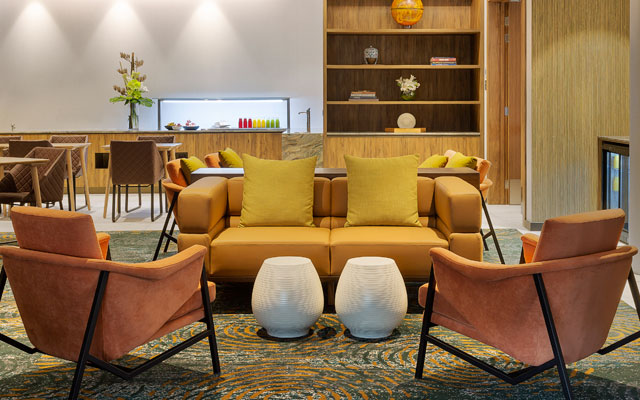
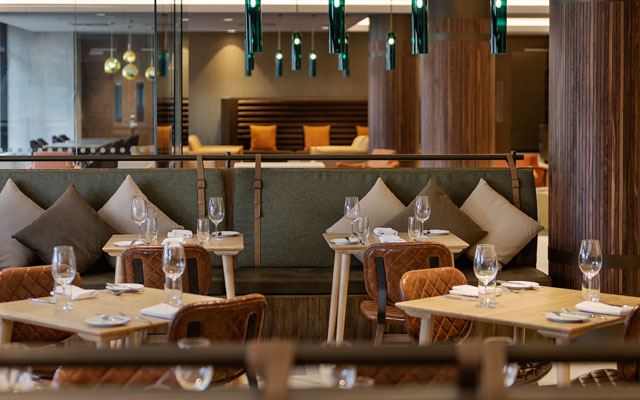
A polished urban retreat designed for business travellers, Hyatt Regency Kuala Lumpur at KL Midtown combines thoughtful design, seamless service, and exceptional facilities.
The five-star property excels in backing its expansive facilities with seamless service and personalised attention, setting the benchmark for luxury in Bangkok.