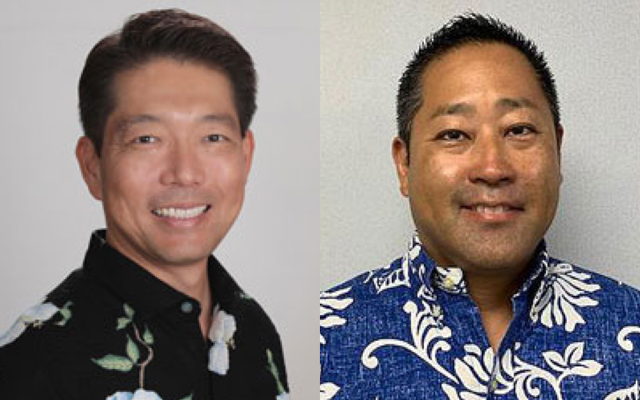
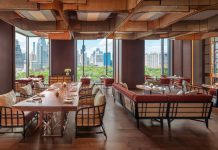
Outrigger Hospitality Group has appointed two new additions to its sales team at the all-new Waikiki Beachcomber by Outrigger.
Marcus Ito has been named director of sales and marketing, where he will be responsible for driving revenue to the Waikiki Beachcomber by Outrigger through sales and promotional activities by maximising prospective business opportunities from various business channels.
Ito will also work closely with key property partners, including Maui Brewing Company, Hawaii’s largest craft brewery; Hawaiian Aroma Caffe, one of Hawaii’s most Instagrammable coffee shops; and Magic of Polynesia. He will further drive brand fame with promotions surrounding the Beachcomber Originals, a collection of local artists and tastemakers who have helped shape Outrigger’s first lifestyle hotel.
Before joining Outrigger, Ito served at various properties such as G.Lion Hawaii; Trump International Hotel Waikiki; Wyndham Vacation Resorts; PacRim Marketing Group; and The Ritz-Carlton, Kapalua.
Meanwhile, Taro Sawabe has been appointed assistant director-market development with a focus on Asia and Japan.
In his new role, Sawabe is tasked with developing and facilitating progressive business flow with Outrigger’s Asia and Japan accounts through effective communication and account management.
Previously, Sawabe has held positions at Kahala Resort, Ritz Carlton Okinawa, Sheraton Grande Tokyo Bay, and Westin Resort Guam.
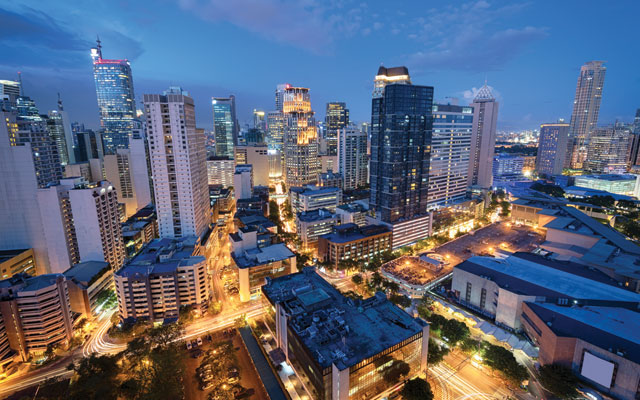
Makati, the business district of Metro Manila, lights up at night
While the Philippines has not kept abreast with its Asian neighbours in drawing international business events, milestones over the past decade are lifting it closer to its aspiration of reclaiming its place as one of the region’s premier destinations.
As an archipelago of 7,641 islands, the Philippine challenge is to make them accessible and connected by air, land and sea domestically and at least regionally, which is gradually taking place.
Makati, the business district of Metro Manila, lights up at night
Another milepost is the private sector efforts in building convention centres not just in metro Manila but in other urban destinations too, in the absence of government investment. SMX Convention Centre, for example, has invested in eight convention centres all over the country and more are forthcoming while the Iloilo Convention Centre and the Marriott Grand Ballroom are also birthed from private sector money.
Agnes Pacis, vice president-sales and marketing, SMX Convention Center, explained: “We would like to place the Philippines in the global market, as most of the events happening in the Philippines are still local”.
The shortage of accommodation is also being addressed as inbound traffic grows, with more homegrown hotel brands being developed and proving to be steady competitors of international brands.
For one of the most successful homegrown hotel brands, Seda, the strongest business events markets are mainly from Asia – Japan, South Korea, Singapore and Taiwan, according to Seda Hotels group director of sales and marketing, Melissa Carlos. The US is a strong source market too, outside of this region.
Carlos said “healthy economies which mean more disposable income that creates opportunities for MICE, cooperation among countries in the region, intellectual development, and IT accessibility” can expand Asia-Pacific’s business events potential.
While the Philippines has a yoyo love-hate relationship with China, Duterte administration has cast a rosy light on the two since 2016. China’s former ban on its citizens travelling to the Philippines has been replaced by an open season, with both business and group travellers from the mainland becoming the Philippines’ second biggest source market.
The business events sector has not fully taken advantage of this coy relationship that is shoring up the real estate markets and hotel occupancies, but the industry is starting to see events coming from China.
Another milepost is Boracay’s six-month closure last year for its continued rehabilitation, stalling business events particularly incentive trips and corporate meetings. However, the bold move demonstrates the government’s commitment to cleaning up destinations. Hopefully, lessons learned from Boracay will not be lost on other areas including Bohol and Palawan.
Meanwhile, the biggest development in the country’s business event community is the comprehensive MICE roadmap 2030, detailing how the Philippines can attract more corporate gatherings from Asia and the Middle East a decade from now.
For Tourism Promotions Board (TPB) COO, Marie Venus Tan, the “battle cry is Bid! Bid! Bid!” for international events, create and develop MICE cities including Iloilo and Bacolod, and being in international MICE shows, among other things.
Presently, there is an urgent need for the creation of a national convention and visitors bureau. Right now, there is just a small department within the TPB that takes care of business events; TPB is the marketing arm of the Department of Tourism.
The defunct Philippine Visitors and Convention Bureau was successful in attracting business events, recalled Renato Padilla, general manager of the Philippine Convention and Exhibition Center (PICC). In other countries, cities have their own convention bureau while the Philippines has none, he lamented.
Another tricky issue is the Philippines’ lack of big convention and exhibition centres, which keeps it from taking advantage of the international trend for mega events. The country’s largest convention centres, SMX Manila and PICC, dwarf in comparison with those in other Asian countries but they could no longer expand, said Marisa Nallana, president of PETCO.
“To be more competitive in Asia, we will have to build bigger spaces to accommodate the demand of international events,” she said.
Veteran hotelier Chikako Shimizu has been appointed general manager of Andaz Macau, which is set to open in 1H2021.
In her new role, Shimizu will serve as brand ambassador to bring the lifestyle hotel’s culture to life. She will also proactively promote the Andaz philosophy of providing each guest with an authentic local experience.
With more than 25 years of experience in hospitality leadership positions around the world, Shimizu most recently served as director of operations at Andaz Singapore where she was involved in the hotel’s successful opening.
Most recently the general manager of the Four Points by Sheraton Bangkok, the industry veteran started his career with Marriott International back in 2000 in Le Meridien Dubai Complex, and has over the past 19 years moved across a variety of sales & marketing and operations roles within the company.
Volschenk’s earlier assignments include the opening of the Four Points by Sheraton Complex in Dubai; the renovation of the Sheraton Oman; remodelling of the Plaza Athenee Bangkok, A Royal Meridien; as well as hotel manager in Le Meridien Bangkok.
Calendar of mega events indicative of continued business confidence in 2020
Business adaptability will enable event players to come up victorious
Collaboration is key to survival
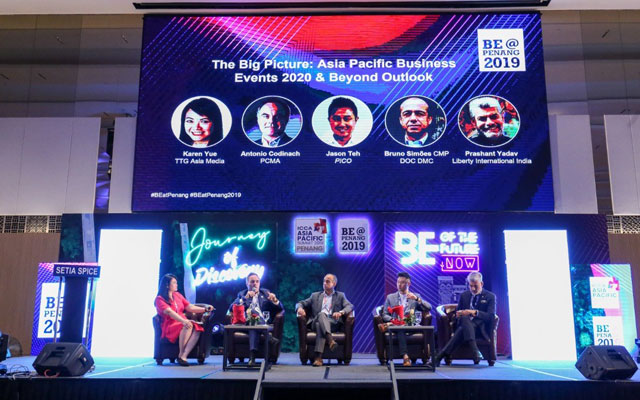
From left: TTG Asia Media’s Karen Yue; PCMA’s Antonio Codinach; PICO Group’s Jason Teh; DOC DMC’s Bruno Simoes; and Liberty International India’s Prashant Yadav discussing the outlook for 2020
Asian business event leaders are remaining positive about 2020 despite the global economic slowdown, saying that an ability to adapt quickly to challenges and see opportunities in obstacles will tide businesses through.
These leaders were on a four-person panel session, The Big Picture: Asia Pacific Business Events 2020 & Beyond Outlook, at last week’s BE@Penang annual conference organised by Penang Convention & Exhibition Bureau.
Speaker Antonio Codinach, regional business director Asia Pacific, at Professional Convention Management Association (PCMA), encouraged optimism among his industry peers, saying: “We all in this room should feel honoured and lucky. We are the most agile, fastest-growing region in the world. This is also a region that is the most stable and where opportunities are.”
Codinach said one’s attitude will shape one’s reaction to the projected future. “How our attitude is towards (the future) is important. So, I choose to see the future with positive eyes. We need to be agile and adaptable to changes, and make a commitment to the industry or the destination we represent.”
Also upbeat about the future is Bruno Simões, managing director of DOC DMC Macau & Hong Kong, despite describing his business as being “in a situation” now, hurt by the social unrest in Hong Kong and soft event spend in major market China which is “locked in a trade stand-off with the US”.
His confidence is fuelled by his observation that “most corporate clients are ready for events and many professional associations are ready to grow (in this region)”.
Simões added: “Across the years, Asia’s business events industry has proven to be (strong in the face of technology disruption) and crisis-resilient. In the case of Hong Kong, I’m sure she will recover very quickly, as she has done in previous crises.”
Pointing to the calendar of mega events taking place around the world in 2020 and which Pico Group is involved in, Jason Teh, managing director of Pico Malaysia, also expressed positivity in the year ahead.
“We are also seeing that most of our corporate clients are spending a bit more in the coming months. Business events is part of marketing, which is a business activity that will go on no matter the state of the economy. When business is bad, marketing is even more essential,” explained Teh.
When asked by panel moderator, Karen Yue, group editor of TTG Asia Media and title editor of TTGmice and TTGassociations, how were business leaders planning to ride through the tough times, speakers were unanimous is the belief that the ability to turn a challenge into an opportunity will allow businesses to come up victorious.
Citing an example, Prashant Yadav, CEO, Liberty International India, said his company – which typically delivers outbound Indian events – moved swiftly to support Indian companies that have chosen to keep their events on home ground against a backdrop of a soft Indian economic growth.
“Many business events did not leave the country this year (due to budget constraints) and stayed in India instead. At least five companies that usually do annual incentives for 600 to 1,000 people to longhaul destinations such as Europe, have chosen to stay in the country. We turned the reluctance to leave India into a business opportunity for us and for India,” shared Yadav.
He added that some clients were also quick to capitalise on destinations in turmoil, when tourism products are offered at the best value for money. Yadav said Asians, used to the diverse and dynamic conditions of this region, are masters of adaptability.
For Simões, a business slowdown presents the opportunity to “do things we never had time to do because work in events is intensive”.
“So, now is the time for us to sharpen our weapons. There are constant challenges to business – technology disruption, talent crunch, etc. When you are busy delivering events, you barely have time to stop and think about how to deal with these problems. This is now the best time to stop, look at what competitors and peers are doing, draw up an agenda to take the business forward, and learn,” he elaborated.
India’s Ministry of Tourism is hedging on the bleisure trend among incoming MICE travellers to promote longer stays and travel to attractions surrounding the primary cities.
“For example, if you’re coming to Mumbai for a business meeting, you could take an hour’s flight to Jodhpur and visit the beautiful palaces,” said Rupinder Brar, additional director general, Ministry of Tourism, Government of India.
Mehrangarh Fort and the Blue City of Jodhpur
However, the primary challenge that the country is grappling with is the lack of awareness of its numerous attractions, opined Brar. She said: “Travellers who want to visit India (tend to) feel at a loss of where to start and where to go. The feedback that we get from a lot of people is that one time is not enough. The challenge is how to strategically pitch the right products for the right customers.”
Local tour operators are well aware though, and are jumping at the opportunity to build up greater awareness in South-east Asian markets, with several joining forces with the tourism ministry to promote lesser-known activities in the destination.
For instance, Swagatam Tours is hawking unique group experiences such as village visits and dining with a local family, and religious tourism specialist Lotus Trans Travel is diversifying into arranging group travel via luxury sleeper trains that traverse India.
To extend their outreach to South-east Asian agencies, these tour operators are participating in an Incredible India roadshow that is making its rounds in Singapore, Kuala Lumpur and Bangkok this month. The roadshow, Brar said, is part of the ministry’s strategy to bring about better destination awareness in South-east Asia.
Brar: lack of awareness about India’s many attractions
Moreover, next year will bring big plans for the destination, with the International Buddhist Conclave in late-September to early-October set to become a ripe bleisure opportunity. Brar revealed that local operators are working to “try some mixing of itineraries” with the event.
This bleisure push is a timely move, after India relaxed its visa requirements for business travellers, explained Brar. She said: “MICE is a growing segment for India, and to encourage more business, the government has introduced electronic visas not only for participants of government conferences, but also private conferences.
India extended its e-visa coverage from 30 days to 60 days in 2017, whereupon e-visas were also subdivided into three categories: tourist, business and medical. The government also reduced its visa registration fees this year; dropping tourist visa fees to US$40 from US$80.
As a result, India’s cities have risen in popularity. In a recent report by UK-based global market research company Euromonitor International that ranked the top 100 cities by tourist arrivals in 2019, Delhi and Mumbai rose by three places and one place to rank eighth and 13th respectively. Five other Indian cities – Agra (18th), Chennai (31st), Jaipur (34th), Kolkata (74th) and Bengaluru (93rd) – also rose in rankings from 2018 to make the 2019 list.
“Goods and services tax rates have also recently been lowered, and we believe that is providing a huge boost given the growing demand for MICE tourism to India,” said Brar.
Once said to be too European, the International Congress and Convention Association’s (ICCA) largest global chapter is now in Asia-Pacific, with the region making up 25 per cent of the 1,100-strong worldwide membership pool.
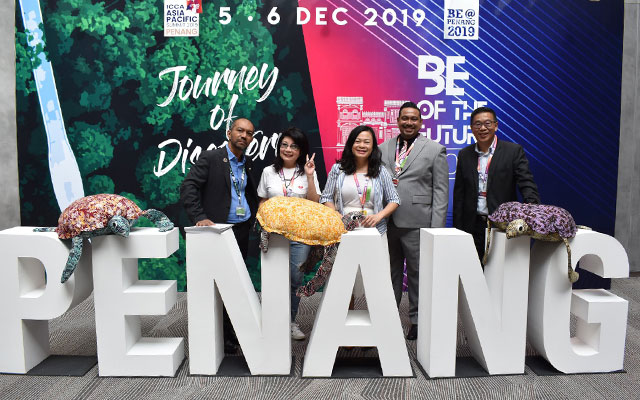
During the opening address at the inaugural ICCA Asia Pacific Summit 2019 in Penang on December 5, Jason Yeh, a member of ICCA Board of Directors and chair of the Asia Pacific Chapter, described his chapter as “a big Asia-Pacific tribe”.
From left: ICCA’s Noor Ahmad Hamid; K&A International’s Kitty Wong; Business Events Sarawak’s Amelia Roziman; PCEB’s Ashwin Gunasekeran; and Anderes Fourdy’s Fu Kei Cheong
Since the birth of ICCA Asia Pacific Chapter in 1995 with 97 members, there are now 291 members from across 16 countries and territories. According to Yeh, numbers are climbing steadily.
To take the ICCA Asia Pacific Chapter forward, the Summit created two sessions for members to discuss how they could work together to leverage their expertise and diversity for business opportunities; how they had benefitted from their membership; and what else they hoped the larger association, as well as the local chapter could do to remain relevant and strong.
Members identified rich networking opportunities, access to meetings experts and congress database, and business development among the many benefits they have enjoyed through their ICCA membership.
At the same time, members have also expressed strong desire to see various structural improvements, such as the creation of a multi-tier membership to suit different industry segments, the appointment of multiple directors to support the large and diverse Asia-Pacific region, and an end to chapters working in silo.
Another popular request was the launch of an ICCA-driven congress management education programme built with regional professionals in mind.
Speaking to TTGmice on the sidelines, Noor Ahmad Hamid, ICCA’s regional director Asia Pacific, said: “With this Summit, a new president, a new CEO and 80 per cent of new faces on the Board, ICCA has a huge opportunity to start new things. The two sessions have given us a long list of things our Asia-Pacific members want. We will have to go back and look very carefully into what we can make happen.”
When asked which items on the wishlist were mostly likely to be fulfilled, Noor said: “Greater collaboration among members, enhancements to our future summit to provide the networking and business development opportunities our members seek, and education.”
Noor revealed that a Board working group has been formed to look into developing an ICCA-led certification programme.
“ICCA has been running many training seminars and workshops, but they are not certification or accreditation programmes. The Board working group is seriously considering the possibility of creating a certification programme, but this isn’t so easily done because we need to create a complete module, identify trainers and then train them so they are ready to teach the programme,” he said.
“ICCA was never an organisation that sells education. Our forte is our database and intelligence but if education is in demand, we will look into it,” he added.
As creating a certification or accreditation programme “is a complex process”, Noor was unable to offer a timeline as to when it would materialise.
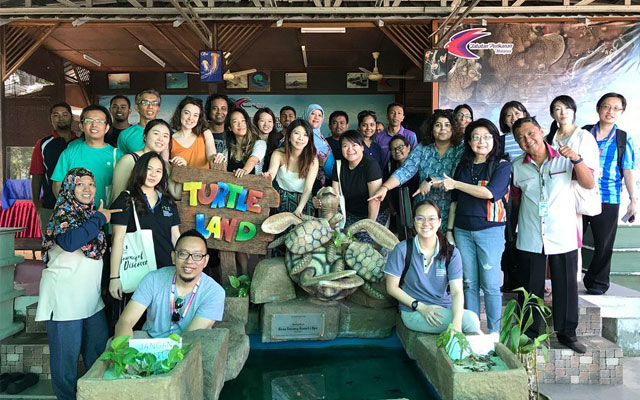
Delegates at Penang Turtle Conservation & Information Centre. Photo credit: PCEB Facebook
The Penang Convention & Exhibition Bureau (PCEB) carried out its first Corporate Social Responsibility (CSR) programme by donating US$5 of the registration fee collected from every paying participant at the recently-concluded ICCA Asia Pacific Summit and 4th edition of BE@Penang to the Penang Turtle Conservation and Information Centre.
Proceeds will be topped up further by PCEB, and funds will be used to purchase essential items needed by the centre for their turtle conservation efforts in the Malaysian city – home to Green and Olive Ridley Turtles.
Delegates at Penang Turtle Conservation & Information Centre. Photo credit: PCEB Facebook
Earlier in July, PCEB unveiled the Penang Turtle Cares CSR programme in conjunction with its Penang 2020: BE Unfiltered campaign.
MICE organisers interested in holding CSR programmes at the Penang Turtle Conservation and Information Centre on Kerachut Beach can consider a few options. For instance, groups can make contributions in kind; conduct study tours or beach clean-up activities; or participate in the planting of Ambung-ambung trees, which provide shelter for turtles to lay their eggs under.
An officer at the centre shared with TTGmice that most CSR participants to date were from local companies.
Event organisers may also propose CSR activities or programmes they would like to conduct at the centre with PCEB, who will then check with the centre if they are appropriate, said Ashwin Gunasekeran, CEO at PCEB.
Cindy Chiang, assistant manager, MICE department, Asian Trails Malaysia shared that European clients were increasingly showing interest in CSR programmes and due to time limitations, preferred one-day CSR programmes over city tours.
Chiang was among summit delegates and media who visited the Penang Turtle Conservation and Information Centre as part of a post-tour programme organised by PCEB after the ICCA Asia Pacific Summit and BE@Penang event.
Hong Kong-headquartered Travelux has joined Travel Leaders Network – North America’s largest travel agency organisation with more than 42,000 travel advisors – as part of the latter’s major international expansion plans.
Travelux is one of the several dozen travel management firms around the world that have signed on as a Travel Leaders Network affiliate. Travelux will remain locally-owned and continue to service existing clients while seeking new growth opportunities internationally.
A screenshot from Travelux’s website
Meanwhile, Travel Leaders’ suite of programmes includes online booking tools, marketing tools, hotel programmes such as SELECT Hotels & Resorts and Worldwide Hotel, an international DMC network, and an array of education and training resources. In addition, an end-to-end technology suite will support both international corporate accounts and local customers, including profile management, online trip authorisation, data consolidation and analytics, meetings technology and customer reporting.
“This expansion allows us to offer a highly-personalised service model to our international travellers with the backing of a leading travel industry company,” said Eddie Tsang, general manager of Travelux. He added that the Travel Leaders Network affiliation “will provide our customers with a proven level of unparalleled travel industry experience and relationships that will further increase the array of travel options available to them”.
Roger E Block, president of Travel Leaders Network, said he is “excited” about the new partnership and “the opportunity to expand its services to travellers in Hong Kong”.
Travel Leaders Network and Travel Leaders Corporate are part of Travel Leaders Group.
FCM Travel Solutions and parent company Flight Centre Travel Group have become the first global TMC to achieve NDC Level 4 certification by the International Air Transport Association (IATA).
Currently the highest level of IATA’s NDC certification programme, Level 4 NDC certification confirms that FCM can provide ‘Full Offer and Order Management’. This means in addition to booking NDC airline content, the company’s travel consultants can also support changes in travellers NDC bookings and flight disruption, which FCM said were “key elements of servicing clients in the corporate sector”.
FCM is first global TMC to achieve IATA NDC Level 4 Certification
Jason Toothman, executive general manager – global air distribution for Flight Centre Travel Group, said in a statement: “This is another significant milestone on our NDC roadmap. We have been able to search and book NDC content with selected partner airlines via our preferred technology aggregators in each of the markets where FCM operates for several months.
“However, the ongoing issue around implementing NDC has been the ability to handle bookings which have been disrupted – this applies not only to FCM, but any other TMC or agency capable of making live NDC bookings. Disruption handling is a key element of corporate travel management and is often time critical; receiving a disruption notification, assessing the suitability or proposed alternates and actioning subsequent changes.”
Nicola Ping, FCM’s manager air content & distribution EMEA, added: “There is still work to be done industry-wide to ensure that NDC standards are completely business travel ready… The industry ecosystem needs to continue to work together to ensure progress, especially in the corporate environment.”
Although several airlines such as United Airlines, American Airlines and Lufthansa have also achieved Level 4 status, to date no other global TMC has reached this level of NDC capability.
Just 10 minutes from Phuket International Airport on the serene northern coast, this 178-key, Bill Bensley-designed resort offers delegates a quiet, tropical paradise steeped in Phuket’s tin-mining heritage
The newly-opened Ritz-Carlton, Bangkok anchors the One Bangkok development with cosmopolitan elegance. Featuring the city's largest ballroom and a spectacular new penthouse suite, it delivers exceptional hardware and deeply authentic, soulful service for business and leisure travellers alike
Behind the imposing, Brutalist concrete that defines Zurich’s Oerlikon district lies a surprising secret. While its exterior honours the neighbourhood’s industrial roots, stepping inside Mama Shelter reveals a vibrant, neon-soaked world that is a far cry from its rigid shell