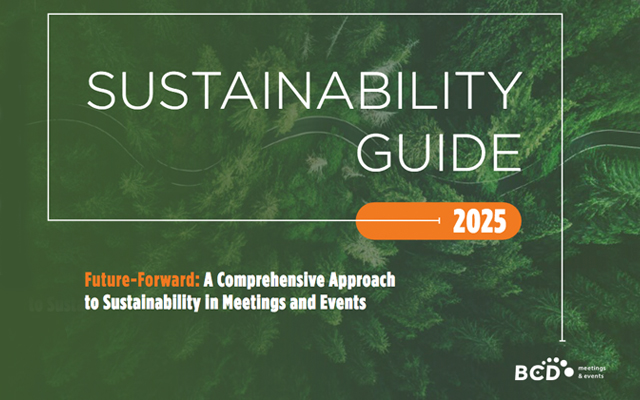
The cover page of the recently-released Sustainability Guide
BCD Meetings & Events (BCD M&E) has published its annual Sustainability Guide, a new resource which offers practical insights into both benchmarking sustainability efforts and adopting greener practices.
The 2025 guide provides a comprehensive framework for organisations, meeting planners, suppliers, and destinations, helping them make more informed and responsible choices. It emphasises key sustainable practices, including circular economy principles and carbon reduction strategies, offering straightforward approaches to sourcing sustainable events.
The cover page of the recently-released Sustainability Guide
Beyond strategic guidance, the guide also spotlights sustainable destinations, hotels, and suppliers.
“Sustainability continues to shape conversations around how we plan and deliver meetings and events,” said Bruce Morgan, global president, BCD Meetings & Events.
“In today’s evolving political and economic environment, the topic of sustainability is complex, but embracing practical solutions and creating smart partnerships opens the door to positive change and lasting impact.”
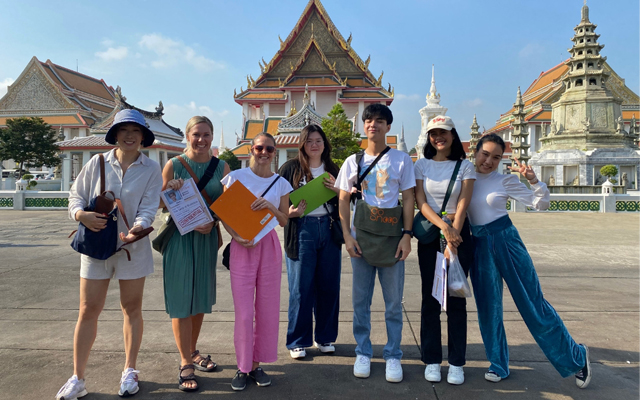
GoSnoop's Lady of Kudichin redefines corporate teambuilding in Bangkok
GoSnoop has launched The Lady of Kudichin, a new teambuilding experience set in Bangkok’s historic Kudichin neighbourhood.
The Lady of Kudichin combines mystery-solving with exploration of Kudichin, a district rich in Portuguese, Chinese, and Thai influences. The 3.5-hour game was developed with input from local artisans, historians, and residents, and focuses on strengthening trust, adaptive leadership, and collaboration.
GoSnoop’s Lady of Kudichin redefines corporate teambuilding in Bangkok
The Lady of Kudichin accommodates up to 50 participants, priced at 2,200 baht (US$67.30) per person. Teams typically consist of five to six people.
In addition, the programme can be customised for either leadership training or pure team bonding, and includes a reflection session designed to provide actionable takeaways. Optional add-ons like local dining, transportation, and photography are also available.
This new offering follows GoSnoop’s previous game The Golden Mountain’s Eclipse, which was praised for its design and cultural depth. In comparison, The Golden Mountain’s Eclipse can handle up to 200 participants at 2,100 baht per person.
Supawan Teerarat has been appointed president of the Thailand Convention and Exhibition Bureau (TCEB), effective August 1, 2025.
With over 39 years of experience in the hospitality and tourism sectors, Supawan brings extensive knowledge of the business events industry to her new role. She spent 16 years at TCEB, holding various positions, including director of exhibitions; vice president of strategic business development; and senior vice president. Her expertise includes organisational management, event management, bidding for major events, and destination management.
Prior to her return, she served as the president of the Thailand’s National Food Institute, where she focused on developing the food industry through innovation, R&D, and training.
The Association Specialists (TAS) has appointed Emma Hayes as its new managing director.
Her priorities include strengthening the team, building capability, developing service offerings, and continuing to provide the reliable, professional support that clients rely on.
Emma Hayes
A new strategic direction outlining TAS’ key priorities fwill be released soon, providing a transparent view of goals and focus areas.
TAS continues to work alongside more than 75 associations, societies and not-for-profit organisations across Australia. Each year, it delivers over 200 events, including more than 20 large-scale conferences. Its services span full-service association management, event design and delivery, financial management, membership support, and strategic consultancy.
Ken Orr has been appointed general manager of Millennium Hotel Queenstown by Millennium & Copthorne Hotels New Zealand Limited.
With more than 20 years of experience at the company, Orr has held a range of managerial and operational roles across Auckland, Wellington, Christchurch and Queenstown.
He stepped down from his previous position as vice president of operations in June 2025 to relocate to the South Island.
American Express Global Business Travel (Amex GBT), has made two new strategic leadership appointments to drive growth in its SME division in Asia-Pacific (APAC).
Elizabeth Georgopoulos has been promoted to sales director for APAC, where she will lead the region’s Enterprise and Midmarket sales team, reporting into Jason Geall, executive vice president, global SME.
Chris Andony has been promoted to senior director, client management APAC SME. He will lead the APAC client management team, reporting into recently-appointed vice president & general manager, global client management SME Becky Power.
Andony brings extensive regional expertise from his previous role as director of mining and resources.
Both Georgopoulos and Andony will work closely with Amex GBT’s senior leaders in APAC, including Australia-based Nigel Rowe, vice president global business partnerships, and Sanghamitra Bose, vice president traveller care, in Singapore.
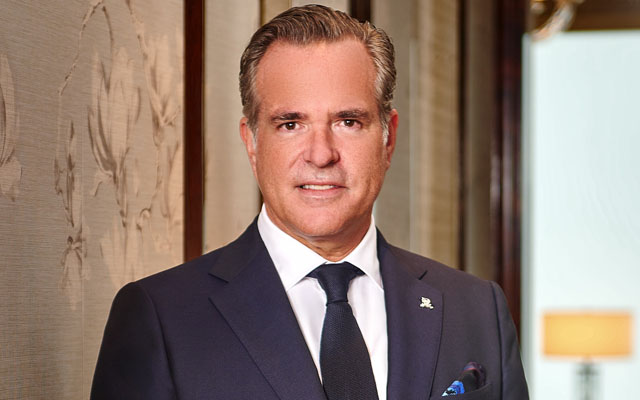
The St Regis Singapore has appointed Nick Heath as its new general manager. He will oversee the hotel’s ongoing transformation, drawing on his strategic leadership and international expertise.
He brings nearly 30 years of hospitality experience to the role, having most recently served as general manager at JW Marriott Hotel Singapore South Beach.
Heath began his career with Hyatt and has worked across Asia, the Middle East, and the US.
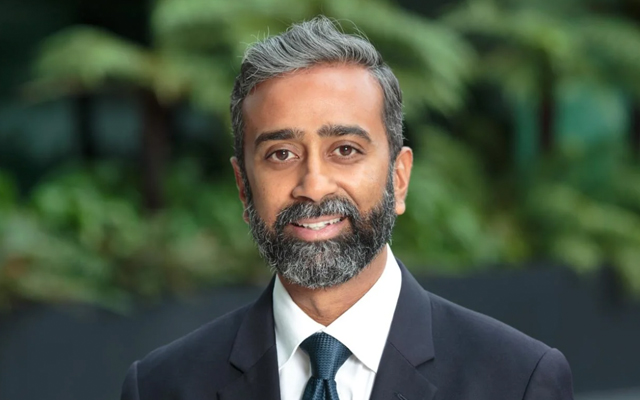
Air New Zealand has appointed Nikhil Ravishankar as its next CEO, effective from October 20, 2025.
He will replace Greg Foran, who is stepping down after nearly six years in the role.
Ravishankar is currently Air New Zealand’s chief digital officer and has been with the airline for almost five years. In that time, he has led improvements across the airline’s technology systems, loyalty programme, and customer experience.
Before joining Air New Zealand, Ravishankar held senior roles at Vector and Accenture.
Feria Kazemi has been named director of communications at The Peninsula Hotels.
She joined the company’s global headquarters in Hong Kong earlier this year after relocating from the UK. In her new role, she will lead global communications efforts, including earned media, content development and brand partnerships, while also serving as a representative of the nearly 100-year-old hospitality group.
Kazemi brings more than 12 years of international communications experience across the travel and technology sectors. She was most recently reputation and industry relations manager, EMEA, at Google in London.
Globally, around one-third of companies expect the space rented in their domestic market to increase in 2025 compared to 2024
UFI, The Global Association of the Exhibition Industry, has released the latest 35th edition of its flagship Global Exhibition Barometer report, which captures the current status and outlook of the exhibition industry worldwide.
The results indicate expected growth of activity in different markets for 2025, following a year 2024 where operating profits were stable for a majority of companies: on average globally, 34% of respondents anticipate an increase of more than 5% of the space rented in their country, and 36% expect this for their company. Most businesses expected to increase by more than 5% in Brazil, India, Malaysia, Mexico, Saudi Arabia and the UAE. But this does not apply to the three largest markets, where most respondents anticipate either stability (in US and Germany) or decrease (China).
Globally, around one-third of companies expect the space rented in their domestic market to increase in 2025 compared to 2024
In parallel, increases by more than 5% of other revenues channels are expected by 39% for services, and 26% for sponsoring opportunities.
“Global economic developments”, “Geopolitical challenges” and “State of the economy in the home market” are listed by businesses as the top issues for both short and mid-terms, preceding “Sustainability / Climate” (12% of global answers for mid-term), “Competition from within the exhibition industry” (12%), “Impact of digitalisation”, “Competition with other media” and “Internal management challenges” (all 8%) and “Regulatory / Stakeholders issues” (7%).
Still, development is underway at different levels: eight companies out of 10 plan new activities either in the classic range of exhibition industry activities, outside of the current product portfolios, or in both areas, more than six companies out of 10 declare using AI tools on a regular basis, and four companies out of 10 plan to recruit in the coming six months.
Rented space at country level Globally, 34% of respondents expect an increase in activity of more than 5% in their country, while 48% believe it will remain stable (+/-5%). This leaves only 12% expecting a decrease of more than 5%, and 6% are uncertain. However, detailed results highlight significant differences in most regions:
In North America, around six respondents out of 10 forecast an increase of more than 5% in Mexico, while the same proportion foresees a stable situation (+/- 5%) in the US.
In Central and South America, around seven respondents out of 10 forecast an increase of more than 5% in Brazil, while five out of 10 in Argentina and six out of 10 in Colombia foresee a stable situation.
In Asia/Pacific, the contrast is even wider. Out of the five markets detailed in the report, there are two where a majority of respondents foresee an increase of activity of more than 5%: India and Malaysia (for respectively seven and six companies out of 10); one with a stable status forecast (Australia, four participants out of 10) and two where the majority of respondents plan a decrease of more than 5%: China (55%) and Thailand (40%).
Revenues Global results indicate that most companies foresee:
An increase of more than 5% of their revenues in 2025 compared to 2024 for “Renting space” (36% of respondents) and “Selling services” (39%).
A stable evolution (of +/- 5%) for “Selling sponsoring opportunities” (32% of respondents, while 27% of respondents mention that this revenue stream is not relevant for their company).
54% of respondents do not consider “receiving subsidies” relevant to their company. When it is, most anticipate a stable evolution (+/- 5%) of this revenue stream.
Similarly to the previous question related to country revenue forecast, country results to this question indicate significant differences. Countries where most companies anticipate an increase of more than 5% of their 2025 revenues compared to 2024 are: Saudi Arabia (80%), the UAE (67%), India (62%), Mexico (61%), Argentina (58%) and Colombia (55%) for “Renting space”; Saudi Arabia (70%), the UAE (67%), India (62%), Malaysia (60%), Argentina (58%), Brazil (57%) and Colombia (54%) for “Selling services”.
The results by type of activity highlight different forecasts by revenue stream:
For “Renting space”, most organisers (49%) anticipate an increase of more than 5% while most venues or “venues and organisers” anticipate a stable trend (51% for both).
For “Selling services”, most service providers/suppliers (42%) anticipate an increase of more than 5% while most organisers, venues or “venues and organisers” anticipate a stable trend (42%, 44%, 38% respectively).
For “Selling sponsoring opportunities”, most organisers and “organisers and venues” anticipate a stable trend (respectively 39% and 48%), while this revenue channel is “not relevant” for most venues and service providers/suppliers (respectively 55% and 73% of respondents).
Operating profit For 2024, 40% of the companies report an annual increase of more than 10%, and 51% declare a stable result (between -10% and +10%). For 2025, 30% of the companies report an annual increase of more than 10%, and 53% report a stable profit.
Country results show significant differences, and the 5 top markets with the highest proportions of respondents reporting an increase in their operating profit by more than 10% are: Mexico (63%), Germany (61%), the UK (53%), the UAE and India (both 50%) for 2024; and India (64%), the UAE (58%), Brazil (43%), Colombia (42%), and Malaysia (40%) for 2025.
Results by type of activity do not show significant differences, and a majority of respondents from all segments anticipate stable profits (between -10% and +10%) for both 2024 and 2025: 50% of organisers, 48% of “venues & organisers”, 53% of venues and 53% of service providers/suppliers for 2024; 53% of organisers, 56% of “venues & organisers”, 63% of venues and 47% of service providers/suppliers for 2025.
Workforce development Globally, 40% of companies declare that they plan to increase their staff numbers, while another 56% declare that they will keep current staff numbers stable. The highest proportion of companies planning to add staff is identified in Saudi Arabia (80%), Malaysia (70%), Spain (62%), the UAE (58%), and India (57%).
At segment level, on average, organisers and service providers/suppliers are more likely to recruit than venues: 43% of both organisers and service providers/suppliers plan to add additional staff, while 54% of organisers and 48% of service providers/suppliers will keep current staff numbers stable; 17% of venues plan to add additional staff and 83% to keep current staff numbers stable.
Most important business issues For the short term:
The most pressing business issue remains “State of the economy in home market” (19% of answers globally, against 23% six months ago), and it is the main issue in all regions, except the Middle East and Africa, where it ranks second.
“Geopolitical challenges” (16% of answers, same as six months ago, and the top issue with 18% of answers for the Middle East and Africa) and “Global economic developments” (15%, same as six months ago) come in as the second and third most important issues globally.
“Internal management challenges” (13%), “Competition from within the exhibition industry” (10%), followed by “Impact of digitalisation”, “Regulatory / Stakeholders issues” (respectively 9% and 7%, both +2% compared to six months ago), “Competition with other media” and “Sustainability / Climate” (both 6%) follow.
Current strategic priorities In all regions, a large majority of companies intend to develop new activities, either in the classic range of exhibition industry activities (venue/organiser/services), outside of the current product portfolios, or in both areas: 78% in Europe, 79% for both Asia-Pacific and the Middle East & Africa, 83% in Central and South America, and 84% in North America.
The analysis by industry segment (organiser, venue and service provider/supplier) shows that:
Organisers are the ones who primarily plan to develop their activities in line with their current product portfolio (40% of their answers) or consider both developments, also including new activities outside their current product portfolio (22%).
Service providers are the ones who primarily plan to develop new activities outside their current product portfolio (36%).
In terms of geographic expansion, half of companies report an intention to develop operations in new countries and regions. Half of organisers (51%) report this, while it is higher for service providers/suppliers (62%) and lower for venues (19%).
At the country level, international development is on the agenda of a majority of companies in 10 of the 19 markets analysed: Germany (87%), Colombia (73%), South Africa (71%), the UAE (70%), Saudi Arabia (63%), France (56%), Italy (54%), the UK (53%), China (53%) and Mexico (51%).
Generative AI applications Globally, 63% of companies indicate that they currently use standard AI tools (such as ChatGPT, Google Gemini, or similar) in at least some of their business functions. In addition, 17% have AI-powered tools integrated into their existing systems, and 3% have already developed proprietary algorithms trained on internal data. In parallel, 17% of respondents declare having no or almost no use of AI at this stage.
The five countries with the highest proportion of respondents who reached either of the last two levels of advancement (implemented their own algorithms trained with company data or AI-powered tools integrated into their platforms) are Thailand (44%), the UK (39%), the UAE (38%), the USA (33%) and Saudi Arabia (30%).
At segment level, on average, organisers appear more advanced than service providers or venues: 12% of organisers, 21% of service providers/suppliers and 34% of venues declare a low or non-existent level of implementation; 24% of organisers, 19% of service providers/suppliers and 17% of venues declare already reaching either implementation of their own algorithms trained with company data or AI-powered tools integrated into their platforms.
In terms of their level of maturity, most companies are still researching or testing solutions in the 3 domains surveyed: 72% towards “improving company and process efficiency”; 68% towards “improving customer experience”; 54% towards “generating revenues using AI-powered products”.
The five countries with the highest rates of companies declaring either testing or implementing AI solutions are: Thailand (88%), Germany (74%), Malaysia (70%), Brazil (64%) and France (64%) for “improving company and process efficiency”; China (68%), Argentina (64%), Thailand (63%), the UAE (61%) and France (58%) for “improving customer experience”; Colombia (45%), the UAE (39%), Thailand (38%), China (37%) and France (36%) for “generating revenues using AI-powered products”.
At segment level, the proportion of companies declaring either testing or implementing AI solutions is: 61% for service providers/suppliers, 56% for organisers, and 30% for venues towards “improving company and process efficiency”; 58% for organisers, 37% for service providers/suppliers and 21% for venues towards “improving customer experience”; 28% for organisers, 19% for service providers/suppliers and 0% for venues towards “generating revenues using AI-powered products”.
The 35thGlobal Exhibition Barometer report, concluded in July 2025, provides insights from 386 companies across 58 countries and regions.
The next UFI Global Exhibition Barometer survey will be conducted in December 2025.
The newly-opened Ritz-Carlton, Bangkok anchors the One Bangkok development with cosmopolitan elegance. Featuring the city's largest ballroom and a spectacular new penthouse suite, it delivers exceptional hardware and deeply authentic, soulful service for business and leisure travellers alike
Behind the imposing, Brutalist concrete that defines Zurich’s Oerlikon district lies a surprising secret. While its exterior honours the neighbourhood’s industrial roots, stepping inside Mama Shelter reveals a vibrant, neon-soaked world that is a far cry from its rigid shell
A polished urban retreat designed for business travellers, Hyatt Regency Kuala Lumpur at KL Midtown combines thoughtful design, seamless service, and exceptional facilities.







 He stepped down from his previous position as vice president of operations in June 2025 to relocate to the South Island.
 Heath began his career with Hyatt and has worked across Asia, the Middle East, and the US.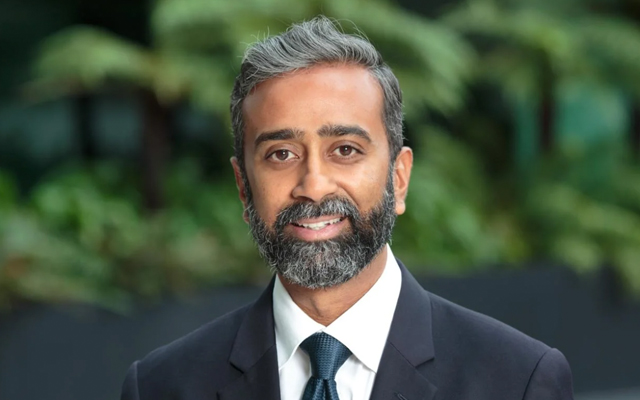
 Ravishankar is currently Air New Zealand’s chief digital officer and has been with the airline for almost five years. In that time, he has led improvements across the airline’s technology systems, loyalty programme, and customer experience.
 Kazemi brings more than 12 years of international communications experience across the travel and technology sectors. She was most recently reputation and industry relations manager, EMEA, at Google in London.