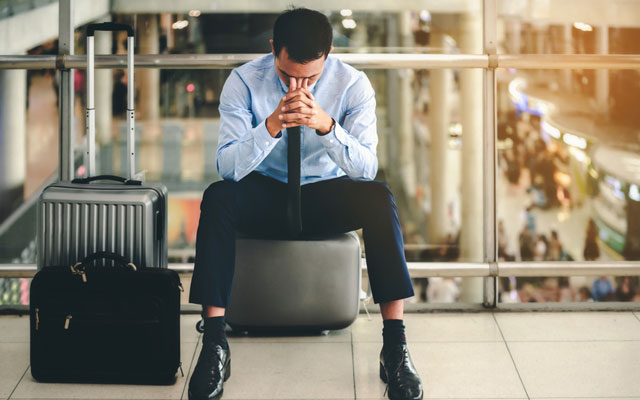
recent security concerns with terrorism and the migrant crisis have called for a better management of who is entering EU borders
The European Travel Information and Authorisation System (ETIAS), a visa waiver pre-screening programme for visa-exempt visitors visiting the EU starting January 1, 2020, received mixed reaction from buyers who attended IT&CMA last week.
Some buyers are concerned that the additional security clearance and mandatory fee of €7 (US$7.70) required under the new ETIAS system, not unlike the US ESTA, will make Europe less appealing.
Recent security concerns have called for a better management of who is entering EU borders
Bobby Eng, director of sales and marketing at Sunflower Holidays Malaysia, said: “We foresee that it would be more difficult to promote the European countries in the Schengen Zone to MICE clients. We will absorb the seven euros cost for ETIAS instead of charging it to the client.”
Tee Yih Fung, chief strategy officer at Malaysian property developer Geleri Tropika, foresees that the additional fee of the ETIAS would affect the decision to organise incentives trips in Europe, and other destinations such as South Korea and Japan, which also has the advantage of being closer to home, would be considered as alternatives.
On the other hand, Gerardo Hernandez, director at Story Planner, an incentive travel house based in Mexico, believes the nominal cost for ETIAS is unlikely to affect business. He said: “A visa to China for Mexicans costs more about US$150 per person. Countries like France and Germany are popular as incentive destinations for Mexicans because of their heritage and culture.”
Mauro Lazzari, business development manager of H.T.M.S. International based in the Czech Republic, also said that the fee is not significant enough to influence planners’ decision to change destinations.
Crowne Plaza Hotels & Resorts has revealed its new public space design – comprising a transformed lobby and public spaces called Plaza Workspace – at the Crowne Plaza Paris Republique in France.
Plaza Workspace is a new take on the traditional hotel lobby space, offering inspiring surroundings where hotel guests and locals can feel comfortable to do some work, enjoy a coffee over a business meeting or socialise with friends. Throughout the Plaza Workspace, there is an abundance of access to power, wireless phone chargers integrated in tables, and access to high-speed Wi-Fi, designed to answer the growing trend in flexible work and life preferences, and people’s desire to work from anywhere.
Plaza Workspace at Crowne Plaza Hotels & Resorts
1 of 6
The modern, design-led spaces have been crafted to be suitable for solo work, team huddles or meetings with friends, as well as offering noise-reducing booths for more private meetings. The new designs also include a bookable-by-the-hour Studio which offers a more relaxed approach to meetings, moving away from the typical hotel boardroom.
Then newly-launched spaces are the future direction for the brand globally, and were designed in collaboration with design studio Conran + Partners.
Alongside the newly-designed spaces, the Crowne Plaza brand has developed a new food and drink offering that fits with the preferences of today’s travellers. The new menu now focuses on natural plant-based ingredients with dishes designed to be restorative and inspirational. Power up items, such as matcha, chia and kombucha will be offered at the start of the day, while sleep inducing components like Jersey Milk with valerian feature towards the end.
In addition, a new approach to guest service, entitled Dare to Connect, will also be rolled out. The Crowne Plaza partnership with The School of Life has ensured that hotel teams are equipped with emotional intelligence training so that whether staff are connecting with each other or with guests, it’s about ensuring the approach is mindful, intuitive and generous.
The completion of the Plaza Workspace at Crowne Plaza Paris – Republique is the latest milestone in the brand’s flagship strategy. Five other Crowne Plaza showcase hotels in the US, Europe and China will launch by early 2020. These include:
Crowne Plaza Atlanta Perimeter at Ravinia (reopened in April 2019)
Crowne Plaza Hamburg – City Alster (opening Autumn 2019)
Crowne Plaza Wuzhen (opening late 2019)
Crowne Plaza Shenzhen WECC (opening late 2019)
Crowne Plaza London – Heathrow (opening early 2020)
There are currently more than 500 hotel properties with the Crowne Plaza brand around the world that are already open, or in the pipeline.
Ensconced within the top 39 floors of the 108-storey CTF Finance Centre – the seventh tallest building in the world in Guangzhou’s Tianhe District – is the latest Rosewood hotel to open.
The ultra-luxury Rosewood Guangzhou features 251 guestrooms, including 31 suites and four duplex suites, which start from 55m2 in size. One of the hotel’s signature suites, the Rosewood Terrace Suite is the only suite in the city with its own private terrace.
Rosewood Guangzhou
1 of 5
Deluxe Room
One-bedroom Living Room
Residences Lounge
Lingnan House Entrance
Patina Living Room
Meanwhile, The Canton House, akin to a Presidential Suite, is a duplex with two bathrooms, an open kitchen, Jacuzzi and foyer. Suite guests enjoy exclusive services throughout the stay, including access to the Manor Club executive lounge on the 108th floor and personal butler service.
In addition to the hotel’s guestrooms, the property will also introduce Rosewood Residences Guangzhou – which feature 355 serviced apartments spanning from studios (76), one- and two-bedroom apartments (160 and 96, respectively) to luxurious duplexes (23). Designed with long-term stays in mind, each Residence includes amenities such as in-room washing machines, as well as a full kitchen with an oven and dishwasher.
Dining options include seven F&B venues ranging from Lingnan House, the hotel’s Chinese restaurant on the fifth floor, to Brick Iron, the highest restaurant and bar in mainland China on the 107th floor which serves Japanese cuisine prepared at six show kitchens.
Meanwhile, recreational options include the two-level Sense, A Rosewood Spa with three spa treatment suites, a health club complete with yoga studio and fitness centre, and a 25m-long indoor pool.
Lastly, meeting spaces within the Rosewood Guangzho include The Pavilion, a residential-style function space that can accommodate up to 420; a 958m2 Grand Ballroom; three function rooms; two VIP rooms; and a Sky Mansion on the 108th floor featuring a show kitchen terrace.
Onyx Hospitality Group has appointed Jenni Hartatik as the new general manager of Oriental Residence Bangkok.
Hartatik previously held the title of general manager at established hotels across China, including the Radisson Blu Forest Manor Shanghai Hongqiao and the Hilton Dali Resort & Spa. Since 2008, she has been based in China, and first took on a general manager role at the Maritim Hotel Changzhou in 2012.
Hartatik first started her hospitality career of over 20 years in reception and guest services at five-star resorts in Bali. In 1996, she moved into sales as an account manager for the ITT Sheraton Bali Nusa Dua’s Japanese market, then becoming director of sales at the Intercontinental Resort Bali in 2001 before moving to the InterContinental Phnom Penh in 2006.
Swire Hotels has appointed Simon McHendry as general manager of The Temple House in Chengdu.
The former general manager of East, Beijing, McHendry began his life in Asia over a decade ago in 2004 when he relocated from London to Hong Kong and then later to Beijing.
McHendry first joined Swire Hotels as executive assistant manager – sales & marketing at The Opposite House, then later in 2016 moved over to East, Beijing, taking on the role of general manager. He has since been a part of the Swire Hotels family for over four years.
Muslim tourists on their way to visit Himeji Castle in Japan; Japan is widely perceived as a Muslim-friendly destination
Event planners from countries with a majority Muslim population are urging destinations and event suppliers to quickly broaden their understanding of Muslim travellers if they wish to benefit from the burgeoning segment.
According to the Mastercard-CrescentRating Global Muslim Travel Index 2018, South-east Asia will welcome more than 18 million Muslim visitors by 2020 – accounting for 15 per cent of total visitor arrivals in the region.
Muslim tourists on their way to visit Himeji Castle in Japan; Japan is widely perceived as a Muslim-friendly destination
Buyers at the recently-concluded IT&CMA 2019 told TTGmice that necessities for Muslim MICE groups go beyond halal-certified food.
A buyer from Dubai who has requested anonymity, said a place to pray in between meetings, and a meeting or conference programme that provisions for prayer breaks on Friday are important as well.
These needs are echoed by Willy Sihombing, CEO of Sedona Holidays Touri & Travel based in Medan, Indonesia. He added that some Indonesian Muslims even prefer staying in a Syariah hotel should there be such an option in the event destination.
“Otherwise, the minimum requirements are halal food and guestrooms with the Qibla sign (indicating the direction to pray),” Willy said.
While hotels are generally more aware of Muslim needs, convention centres (in non-Muslim destinations) have some catching up to do, opined Andre Christian, managing director of Talenta Tour, Malang, Indonesia.
When asked which destinations have done well in welcoming events with majority Muslim participants, Willy and Christian named Japan and South Korea. Willy added that both destinations have been “very serious” about attracting Muslim travellers.
“There are more and more halal-certified restaurants and you can easily find prayer rooms at public places such as the airport as well as mosques in the city,” he said.
Muslims currently make up of about 20 per cent of Japan’s total arrivals, and most tend to visit for leisure. Regardless, Susan Maria Ong, MICE director, Asia-Pacific, Japan National Tourism Organization, said Japan’s keenness on capturing the Muslim MICE segment is evident, having opened an office in Kuala Lumpur in March 2017. That office also handles the publication of a Muslim guidebook detailing restaurants and hotels in commonly visited locations in the country.
Taiwan, which has stepped up efforts to draw Muslim travellers, was recently ranked top three non-Muslim country in the world for being Muslim friendly, up from the fifth position in 2017.
Jerchin Lee, executive director, Taiwan External Trade Development Council, said: “Taiwan has done a lot to promote itself as a Muslim-friendly country; we have everything from restaurants and halal vending machines to prayer rooms in convention centres.”
Lee shared that Taiwan welcomed 60 per cent more Muslim leisure and MICE travellers in 2018 than the previous year. Recently, a 1,300-pax incentive group from an auto parts company in Indonesia visited Taiwan, and Lee said they felt “very comfortable” when travelling around the island.
“Muslims make up about one-fifth of the global population, and we are keen to capture the market, especially the outbound from Indonesia, Malaysia and the Middle East,” he noted.
Another destination that has made significant progress in this capability is Thailand, according to Christian. He found Thailand to be a convenient destination for his travellers and one where Muslim-friendly hotels can be found in the popular downtown Pratunam area.
This year, Thailand’s Ministry of Sports and Tourism hosted a series of halal-tourism training sessions with tour operators, tourism-related government and private agencies. The Institute of Asian Studies at Chulalongkorn University has also been recruited to research on specific market demands.
Senior lecturer Ismah Osman of Malaysia’s Universiti Teknologi Mara pointed to Chiang Mai as an example of how a destination can become more Muslim-friendly. The province is preening itself as a prime Muslim MICE hub, and offers 12 Muslim-owned hotels.
The Thailand Halal Tourism Association is carrying out training with a range of tourism-related organisations. Halal food advisors are also on hand to concoct more creative menus at events and conferences. – Additional reporting by Rachel AJ Lee
Indian SMEs starting to see value in relying on TMCs for more complex services
Promising investment policies established by the Indian government have led to a significant growth in the local Small and Medium-sized Enterprises (SMEs), causing both local and international TMCs to do more to capture this market.
These policies include Startup India, which was launched in January 2016 to support entrepreneurs, build a robust startup ecosystem and transform India into a country of job creators instead of job seekers. Make In India, another initiative credited for helping to boost the formation of more SMEs in India, was birthed in 2014 to encourage companies to manufacture their products in India.
Indian SMEs are starting to see value in relying on TMCs for more complex travel services
Gaurav Luthra, chief operating officer, FCM Travel Solutions – Indian Subsidiary of Flight Centre Travel Group, noted that these policies have “resulted in some astonishing unicorn startup stories”.
Luthra said: “The Indian SME segment has maintained an average growth rate of over 10 per cent year-on-year. A few years back, large global customers kept global TMCs’ growth rate steady but with the entry of more players, the pace has slowed down. Hence, the focus has now shifted towards SME customers.”
Despite the trend, Luthra said domestic TMCs were to the first to identify the business potential of this huge market.
Recent studies have projected India’s US$40 billion business travel market to grow at a rate of 12 per cent in the financial year 2019/2020. SMEs are expected to play an important role in that rising demand, opined industry players.
To capture the market, both domestic and international TMCs have developed products with the Indian SME in mind.
MakeMyTrip, one of India’s leading online travel companies, launched MyBusiness for the growing corporate travel segment in the country in 2017. In that same year, CWT rolled out CWT For You, a state-of-the-art business travel solution designed for Indian SMEs.
Vishal Sinha, CEO of CWT India, said: “It is estimated that India has close to 50 million SMEs, contributing nearly 40 per cent of the country’s GDP. These SMEs are looking for cost-effective business travel solutions that can help them to grow their businesses.”
However, courting Indian SMEs is no easy task, major TMCs note, as they are used to being serviced by small agencies that have a knack for delivering personalised services. Indian SMEs are also price sensitive and are willing to move their business from one TMC to another just to score a marginal saving.
Luthra added that the Indian SMEs market is “highly unstructured with no clear regulations, policies and expectations defined”. Adding to the challenge of penetrating this market is the high risk attached to extending credit facility to SME customers.
On the bright side, Luthra said there is an increasing number of Indian SMEs starting to see value in relying on TMCs for more complex services, and there are also SMEs that have grown to a “reasonable size and look to TMCs for help in drawing up corporate travel policies, policing compliance, tracking of their internal travellers for security”.
SICC believes it can attract convention and expo industry players from all over the region
Sabah International Convention Centre (SICC) in Kota Kinabalu, the state capital of Sabah, will host its first event, a national Quran recital competition, from February 14-21, 2020.
“An estimated 5,000 people are expected to attend this event,” shared Marie Mansuet, assistant director of sales at SICC, when interviewed at IT&CM Asia last week. SICC was exhibiting at the recently-concluded tradeshow to create more awareness about the centre and the destination.
SICC believes it can attract convention and expo industry players from all over the region
At press time, there were more than 10 confirmed bookings for next year, made up of local and international corporate gatherings and association meetings.
Scheduled to open in early January 2020, SICC will be the only purpose-built convention centre in the Malaysian state. Developed by Yayasan Sabah Group, the premises will be managed by Accor.
It offers a 5,300m2 column-free convention hall, 5,300m2 exhibition hall alongside 20 meeting rooms, four VIP meeting rooms and three VVIP lounges as well as a performing arts hall with permanent two-tier seating for 1,250 people.
The convention hall can take up to 4,500 people in banquet seating or 5,400 pax in theatre-style. Both the convention and exhibition halls offer modern retractable partition systems to ensure space flexibility, and can be further divided into smaller halls.
Three five-star business class hotels are being built opposite SICC and they are expected to open from 2024 onwards, added Mansuet. Presently, there are more than 15 star-rated hotels within a five-kilometre radius of the convention centre.
Georgina Jinu, MICE manager at Sabah Tourism Board, said a dedicated convention centre will enable the state to bid for bigger MICE groups of up to 5,000 pax moving forward.
TTG Asia Media's Karen Yue; Angie Stephen, Managing Director – Asia Pacific, Royal Caribbean Cruises
Bernie Ye, VP Sales & Commercial, Greater China and Southeast Asia, Costa Cruises
Michael Goh, President, Dream Cruises, and Head of International Sales, Genting Cruise Lines
Cruise industry leaders featured on the first panel session, Fun and Frivolous, at the Asian MICE Cruise Conference last week, emphasised the advantages of convenience and cost savings cruises can offer corporate event planners.
Angie Stephen, managing director – Asia Pacific, Royal Caribbean Cruises, pointed to cost savings of about 30 per cent when events are held onboard a cruise ship as compared to a traditional hotel and land programme with the same extent of entertainment, as well as the convenience of being able to conduct meetings and leisure activities under one roof.
From left: TTG Asia Media’s Karen Yue; Royal Caribbean Cruises’ Angie Stephen; Costa Cruises’ Bernie Ye; and Genting Cruise Lines Michael Goh addressing a question from the audience
Citing an example, Stephen said: “We offer innovations that hotel ballrooms can never do, such as having a DJ booth hovering over the audience from where the managing director or CEO can address delegates, or having teambuilding activities such as rock climbing and surfing within a single venue.”
She added that planners could snag greater savings should they confirm their event 12 to 18 months ahead, especially before the next season’s prices are published.
Michael Goh, president, Dream Cruises and head of international sales, Genting Cruise Lines, observed that most corporate clients prefer to work with a single point of contact throughout the planning and execution process, which is something cruise companies can offer.
Another advantage planners have when taking a corporate event onboard a cruise ship, according to Bernie Ye, vice president sales & commercial for Greater China and Southeast Asia with Costa Cruises, is a captured audience since there are little opportunities for distraction when the ship is out at sea.
The three speakers also pointed out that the seamless process for planners and event attendees begins on the curbside, with technology put in place to speed up immigration clearance and boarding procedures.
That convenience extends onboard, with apps that allow planners to provide meeting agenda and itinerary to their attendees, and for attendees to access products and services – such as ordering a beverage – from wherever they are on the ship. – Additional reporting by Karen Yue
The capital of the Philippines will be hosting the 14th annual general meeting of AFECA (Asian Federation of Exhibition and Convention Associations) for the first time later this year.
Held from October 9-11, the general meeting in Manila will be graced by up to 170 business events experts from 18 countries.
Manila (pictured) is hosting its first AFECA
AFECA treasurer Marisa Nallana revealed one of the highlights this year is the AFECA Asian Awards, which will have a total of seven categories including a new category for Outstanding Technology Solutions, and Service Award, in recognition of achievements in creating new and innovative technology solutions in the industry.
Moreover, the Asian MICE Youth Challenge is expected to be bigger this year than last, with more interest from students of accredited universities and colleges to come up with a novel event that showcases why their country is the best MICE destination in Asia.
Nallana added that PACEOS (Philippine Association of Convention/Exhibition Suppliers) will be holding the Philippine MICE Forum on October 10 on the sidelines of the general meetings. Topics to be discussed include country branding, the future of global MICE, and the Internet of things in relation to MICE.
AFECA will be jointly hosted by the Philippine Department of Tourism and its marketing arm – Tourism Promotions Board – and PACEOS.
The newly-opened Ritz-Carlton, Bangkok anchors the One Bangkok development with cosmopolitan elegance. Featuring the city's largest ballroom and a spectacular new penthouse suite, it delivers exceptional hardware and deeply authentic, soulful service for business and leisure travellers alike
Behind the imposing, Brutalist concrete that defines Zurich’s Oerlikon district lies a surprising secret. While its exterior honours the neighbourhood’s industrial roots, stepping inside Mama Shelter reveals a vibrant, neon-soaked world that is a far cry from its rigid shell
A polished urban retreat designed for business travellers, Hyatt Regency Kuala Lumpur at KL Midtown combines thoughtful design, seamless service, and exceptional facilities.