Imaginatricks n uproarious fusion of acrobatics, dance and comedy in this latest action-packed show.
Malaysian integrated resort Resorts World Genting (RWG) is looking to expand its MICE earnings through curated corporate incentive programmes, which it believes will yield more revenue than the current majority of rewards that follow standard itineraries.
Rocky Too, senior vice president, sales and marketing at RWG, told TTGmice in an interview that the massive complex “has the tools” to deliver tailor-made experiences for corporate incentive programmes.
The Imaginatricks show is a fusion of acrobatics, dance and comedy; which could be an idea for event planners to make use of should they choose Resorts World Genting
Too pointed to RWG’s collection of over 10,000 guestrooms, a 4,000-seat ballroom, the 5,000-seat Arena of Stars that where numerous performances are presented, an indoor theme park, a soon-to-come outdoor theme park, two cable car systems, SkyAvenue shopping mall, Genting Highlands Premium Outlet, and more, as being lures for planners who desire unique programmes.
Too said: “We are targeting corporate groups that are looking to organise a different kind of convention – perhaps something that combines intensive meetings and fun activities.”
Too revealed that many corporate incentive programmes at RWG today follow a standard itinerary, where the main event is hosted in a hotel or restaurant. He hopes that RWG will be a trendsetter and change the way such events are held.
To inspire event planners, RWG has brought potential buyers from key Asian markets – China, India and South-east Asia – for fam trips last month, and will continue this effort into 2020.
Citing some examples of unique event ideas that can be produced at RWG, Too said: “We can have Imaginatricks performers featured as a headline act at a private welcome party or gala dinner; reserve a cable car line for a private group; host a cocktail party at Snow World where temperatures are minus six degrees Celcius; close off our theme parks exclusively for corporate groups. We can even fly in any foreign artistes that the organiser may want.”
Arokia Das Anthony, director, Luxury Tours Malaysia, believes that RWG’s latest direction may well succeed, as he is seeing a rise in corporate incentive buyers from Asia who are ready to increase their event budget to ensure a memorable experience for their top achievers.
Describing RWG’s decision to court the high-yield corporate incentive segment as a “step in the right direction”, Presanth Chandra, CEO, Apollo Asia Travel Group, hopes other destinations in the country will also follow suit.
“Malaysia, on the whole, is a value-for-money destination. We are reasonably priced as compared with neighbouring Singapore. Destinations here need to do more to profile their uniqueness offerings in order to stand out,” he urged.
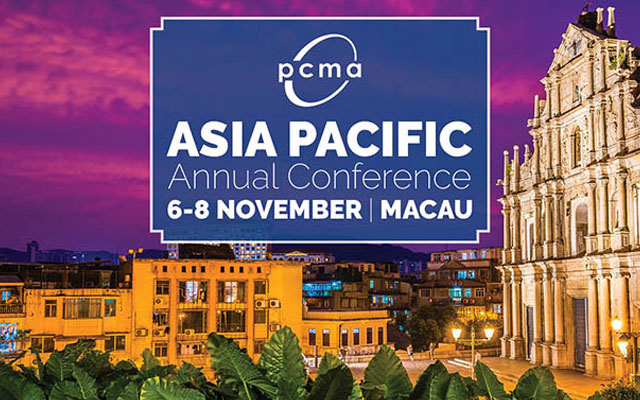
The three-day long conference will be held at The Parisian Macao
This year’s PCMA (Professional Convention Management Association) Asia-Pacific Annual Conference will take place from November 6-8, with the overarching aim to support Asia-Pacific’s burgeoning MICE industry.
Held at The Parisian Macao, the conference will provide executive-level education, face-to-face networking, and business intelligence opportunities in addition to demonstrating how MICE events are the platform for global economic and social transformation.
The three-day long conference will be held at The Parisian Macao
“This year’s conference will deliver a tactical programme on event design, sustainability and inclusive event experiences and strategic sessions on leadership, collaboration, talent management and navigating geo-political shifts in the region,” said Antonio Codinach, PCMA’s regional business director in Asia-Pacific.
Keynote presenters include creativity expert and author Fredrik Haren, leadership and networking expert Janine Garner, and social entrepreneur Jimmy Pham. Additional speakers include leaders from KPMG LLP, Schneider Electric and Bank of America Merrill Lynch.
Meanwhile, educational sessions will explore how to design inclusive events experiences for Muslim participants, incorporating feng shui principles in venues, and what’s trending in the industry. There will also be invite-only roundtables, that will allow event delegates to build new business relationships in a more casual environment.
The Australian city of Melbourne will be hosting 2,000 international eye health professionals in two years time, as the city has won a bid for the World Congress of Optometry 2021 (WCO 2021).
To be held in September 2021, the three-day congress will bring the world’s best professionals in optometry to Australia and provide local optometrists exposure to global knowledge, experience and approaches to practice.
Melbourne will be the host for the next World Congress of Optometry
The event will also see leading manufacturers and equipment suppliers from all over the world converge at the Melbourne Convention and Exhibition Centre to share in the latest technological and patient care advances.
The bid, secured by the Melbourne Convention Bureau in partnership with Optometry Victoria South Australia and the Optical Distributors and Manufacturers Association with support from the Victorian State Government and Tourism Australia’s Business Events Bid Fund Program, is anticipated to generate almost A$12 million (US$8.1 million) in economic impact for the state of Victoria.
Federal tourism minister Simon Birmingham said this was a major win for Melbourne and reinforced the city’s standing as a business events destination of choice.
“Business events are extremely valuable to our economy, with the average business events visitor spending at least twice as much as a leisure visitor,” Birmingham said.
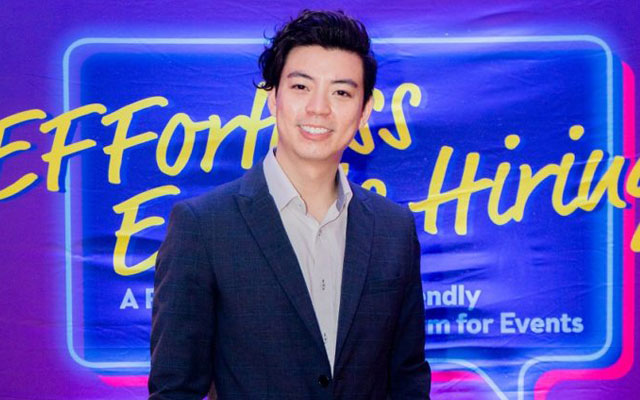
How did the idea for Effro come about?
When I started my own events company back in 2011, I had problems searching for resources such as venues and talents. After speaking to my brothers who were in the entertainment industry, I realised that a significant gap exists. Without a consolidated marketplace, it was difficult for event planners to get in touch with venues and talents who are, similarly, looking for ad hoc event jobs.
How does Effro work?
Effro connects clients with the best talents and services for their events, such as emcees, singers and magicians. The current platform has 300 registered clients, and over 1,200 talents listed on the Singapore platform.
Its end goal is to create an effortless event management experience for event organisers. As event organisers ourselves, we understand the arduous process of finding the right resources for the right event. To solve this major pain point, Effro was created as a marketplace for the events industry and we want to revolutionise how transactions are carried out.
Our one-stop platform consolidates information on event resources and talents which is made easily accessible to event organisers, who can then reach out to them directly for a quotation through our chat feature.
With this element, communication between event organisers and event vendors is enhanced, allowing the former party to request for customised packages and obtain quotations more efficiently. Furthermore, our platform has the unique feature of remembering quotations, hires and reviews as well as customisable to-do list for each event for the organisers’ easy reference.
These project management tools and processes incorporated within Effro aim to, ultimately, contribute to the effortless planning experience for the event organiser.
How is it different from what’s out there?
Currently, the events landscape is filled with solutions that are not integrated.
Companies such as Japan’s Space Market and GigSalad in the US only provide solutions for certain verticals. On the other hand, integrated marketplaces such as HoneyBook do not hold a strong focus in the South-east Asian region.
The South-east Asian market is unique due to the cultural nuances of our region and therefore a different approach is required. As a local brand with established networks around the region, Effro has a keen understanding of the South-east Asian market as well as the capability to close this gap.
Can you give some examples of how the platform will benefit MICE planners?
MICE planners value quality and efficiency. Effro 2.0 was improved based on these needs. As a B2B platform, event organisers and resources are matched based on the specific needs of each event, doing away with the need for event organisers to reach out to multiple vendors who might not even have the necessary expertise.
On top of that, we have a sales team that closely assists MICE planners to ensure that they are able to shortlist the right hires for their events. With Effro 2.0 as a multinational platform, our resources span Singapore, Malaysia and Thailand, making international event planning a breeze.
What are your future plans for Effro?
Following our successful expansion into Malaysia and Thailand (its recent partnership in Malaysia and Thailand comprised over 1,800 event vendors and 50 clients), we are now looking to establish ourselves in Indonesia, the Philippines and Vietnam.
South-east Asian markets hold huge potential with many unrepresented talents and through our platform, we aim to close this gap. By 2020, we hope to achieve a full reach in South-east Asia, while potentially penetrating Asia-Pacific should opportunities arise.
Are there visions of a global reach?
We are definitely open to exploring opportunities that will allow our platform to reach a network of global users.
With the industry’s rapid development in technology, we are constantly improving our platform to meet the needs of our regional and international audiences.
Norwegian Cruise Line Holdings (NCLH) – comprising Norwegian Cruise Line (NCL), Oceania Cruises (OCI) and Regent Seven Seas Cruises (RSSC) – has announced a new organisational realignment in the Asia-Pacific region.
The strategic move will provide a more distinct focus for each respective brand under the NCLH banner, and will be in alignment with the head office in Miami, following the recent appointment of Harry Sommer as president and CEO of NCL.
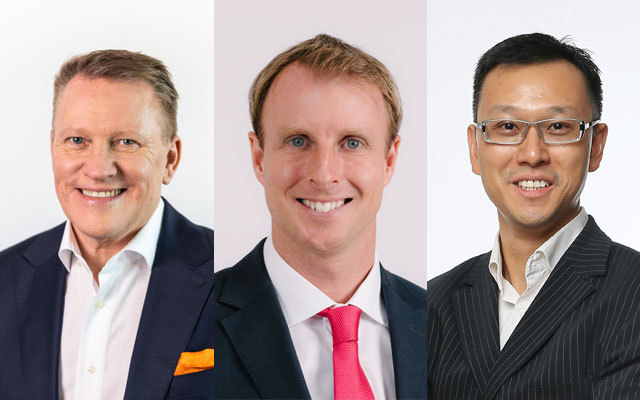
From left: Steve Odell, Ben Angell and Felix Chan
The new direction will see Steve Odell spearhead the company’s upper-premium and luxury brands as senior vice president and managing director OCI and RSSC APAC, with Ben Angell as vice president and managing director NCL APAC.
Angell’s new appointment means that he will be overseeing the sales, marketing and passenger services functions for NCL across the APAC region. Reporting to Angell will be Felix Chan, vice president and general manager NCL Asia.
Meanwhile, Odell will oversee the sales, marketing and passenger services functions for OCI and RSSC across Asia-Pacific.
Odell has over 20 years of experience working with luxury brands across the Asia region. He was instrumental in establishing the luxury cruise business in Asia from his first tenure in the region in 2001 and has worked with travel partners in all the key regional markets. He was a founding board member of the Asia Cruise Association, prior to the establishment of CLIA in the region.
Reporting to Odell in Asia will be Constance Seck, director of sales OCI & RSSC South-east Asia and India; Chisato Morita, general manager OCI & RSSC Japan; and Holly Kong, director of sales OCI & RSSC North-east Asia.
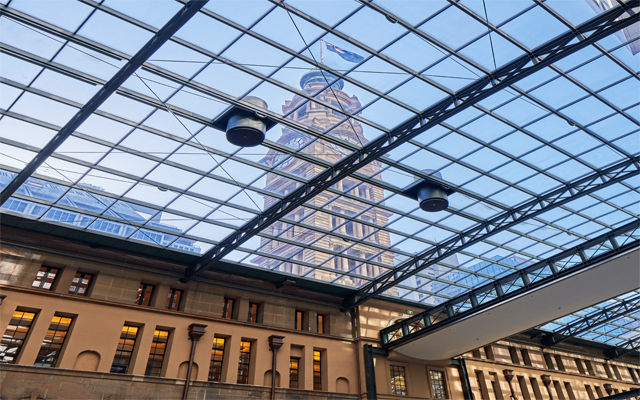
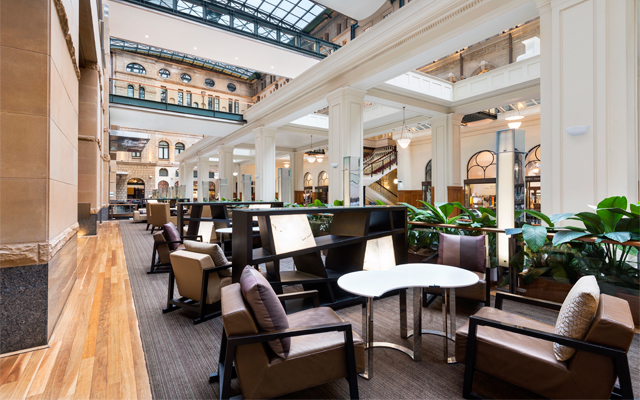
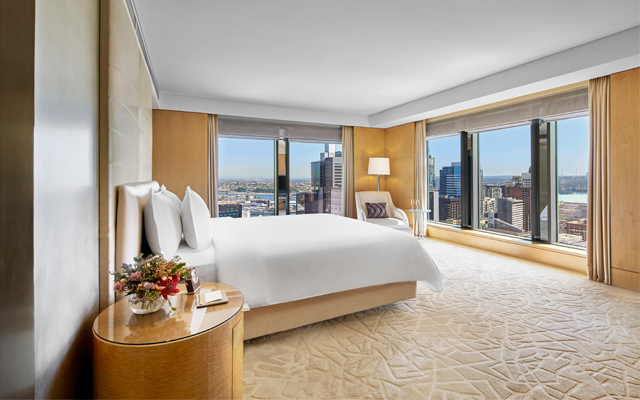
The Fullerton Hotels and Resorts has expanded overseas with its first non-Singapore property – the 416-key The Fullerton Hotel Sydney.
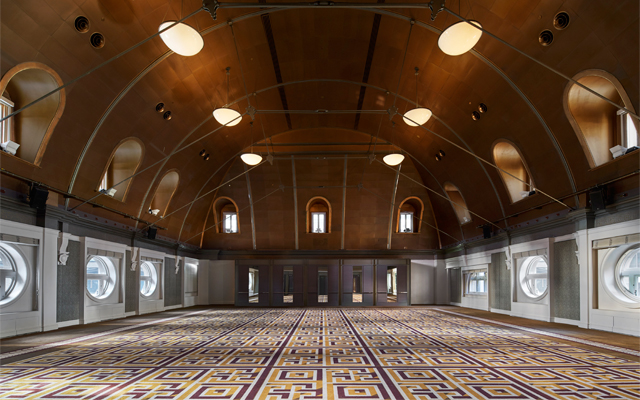
Occupying the former General Post Office building at No. 1 Martin Place, the luxury hotel in Sydney’s CBD offers Fullerton Experiences, a bespoke programme featuring complimentary heritage tours and events, two F&B options and five event spaces.
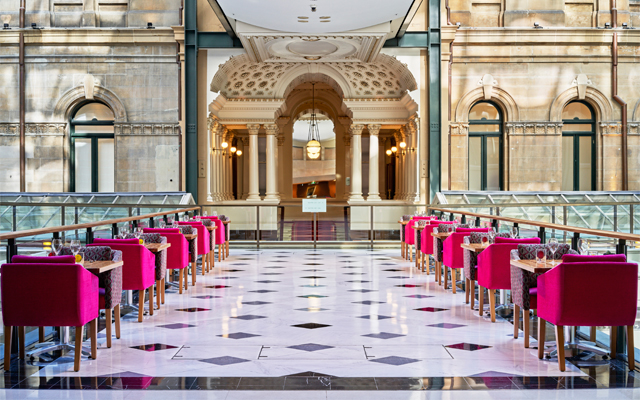
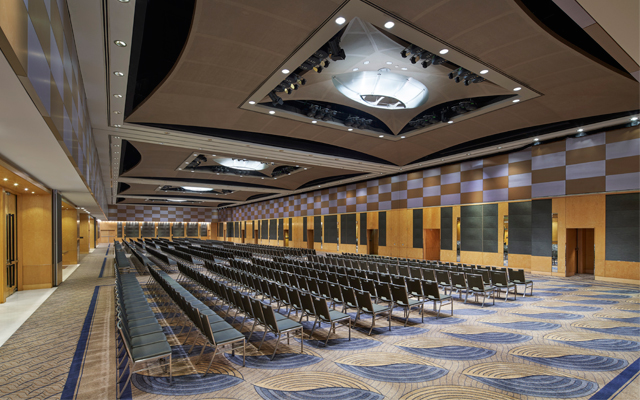
The Fullerton Hotel Sydney
1 of 8
Atrium
The Place
The Bar
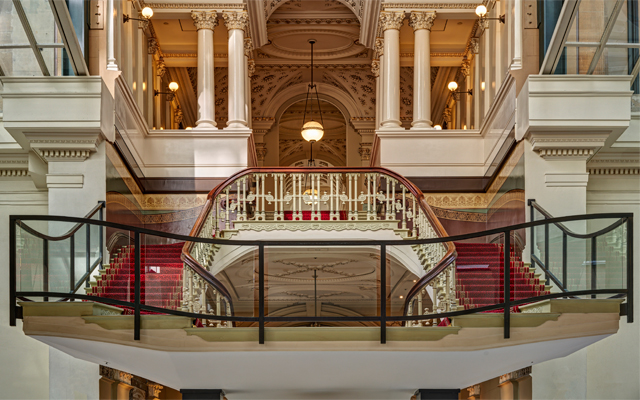
Grand Staircase
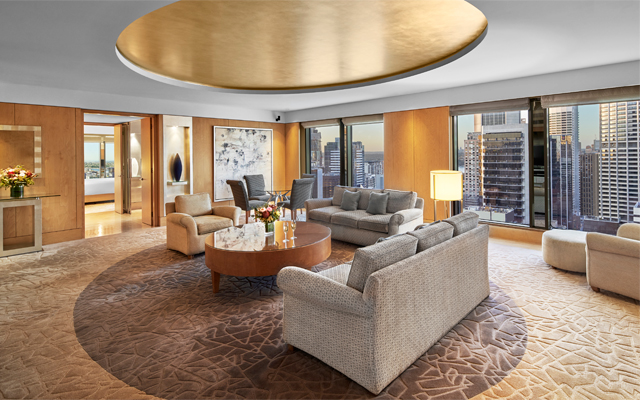
Martin Place Suite Living Room
Martin Place Suite Bedroom
Heritage Ballroom
Grand Ballroom
All guestrooms are furnished with Harman Kardon Bluetooth speakers, Nespresso machines, TWG teas from Singapore, and a pillow menu. Atkinson amenities have been introduced in standard room categories, with Balmain amenities making a debut in club rooms and suites.
Guests can fill their bellies at The Place, which serves modern Australian cuisine and South-east Asian dishes; and The Bar which comprises The Lounge and The Room.
For event planners, the pillarless Grand Ballroom is the hotel’s largest function venue, capable of hosting a 1,000-pax banquet.
The building’s rich history, dating back to 1874, can be appreciated through Fullerton Experiences’s complimentary heritage tours. Open to hotel guests and the general public, these tours will be launched on November 1, 2019. Docents will share stories of those who have worked at the General Post Office building, which has connected Sydney to the wider world through letters, telegrams and phone exchanges.
The 90-minute heritage tours will also showcase the intricate stonework and reveal little-known facts of bygone years. Exclusive tours for hotel guests will run on Fridays and Saturdays at 10.00, while members of the public are invited to join the tours on Fridays and Saturdays at 11.45. Each session can accommodate 15 guests.
The other property in the The Fullerton Hotels and Resorts family is The Fullerton Heritage by Marina Bay in Singapore, which comprises The Fullerton Hotel Singapore and The Fullerton Bay Hotel Singapore.
Indonesia’s travel trade embraces the government’s plan to move country’s capital to East Kalimantan
Indonesian president Joko Widodo surprised many when he announced his plans to crown the little-known Kutai Kartanegara and North Penajam Paser regencies in East Kalimantan as the new capital of the country.
With the move, Indonesia’s centre of administration will exit Jakarta, leaving the current capital city to function as an economic and commercial hub.
Indonesia’s travel trade embraces the government’s plan to move country’s capital to East Kalimantan
The move will cost the Indonesian government a hefty 466 trillion rupiah (US$33 billion), which will also fund the construction of a 2,000-hectare administration complex that will house the state palace, ministries, house of representatives, Bank Indonesia, and a cultural park and botanical garden.
The National Development Planning Agency also revealed plans to erect a convention centre once the administration complex is complete. The convention centre will be part of a 40,000-hectare zone that will also boast a sports centre, museums, shopping malls, diplomatic compound and universities. Surrounding this zone will be a 200,000-hectare plot of land earmarked for a national park, an orangutan conservation centre and residential areas.
The president’s plans for the new capital city have inspired big dreams among some of Indonesia’s hospitality and business event leaders.
Hosea Andreas Runkat, chairperson of Indonesian Exhibition Companies Association (IECA), hopes that the Kutai Kartanegara and North Penajam Paser regencies will be home to a new MICE city which will contain South-east Asia’s largest convention centre, hotels and other facilities for business event groups. He has conveyed this dream in a proposal to the government.
Hosea believes that the future city will cater to a boom in inbound business travel and MICE events once the new capital city is established.
Local hotel companies are eager to leap in with property investments too.
Vivi Herlambang, director of business development, sales & marketing of Sahid Hotel & Resorts, said her company is scouting for ideal locations for a future hotel which will be able to accommodate business events. During her recent site visit to the two regencies, she observed the presence of only small hotels with rooms for just 20 to 30 guests.
Meanwhile, Santika Indonesia Hotel and Resorts also has plans for a new hotel in East Kalimantan, revealed Sudarsana, general manager of business development, but the company is keeping the location under wraps as the project is still under discussion.
However, for new hotel investments to materialise, hoteliers want to first see infrastructure improvements in the two regencies.
Vivi, who is already in talks with investors, also expects president Widodo to improve the local investment climate and remove potential red tape around business permits not only in East Kalimantan, but also the surrounding Central Kalimantan area and neighbouring provinces.
As leisure travel and MICE are two sides of the same coin for Pauline Suharno, managing director of Elok Tour, she has urged the government to improve East Kalimantan’s tourist appeal. She explained that business travellers and meeting attendees usually extend their work trips for pleasure, so East Kalimantan should be able to cater to this need.
She warned that the capital city status alone, without business and leisure infrastructure improvements, will not guarantee higher arrivals.
“Naypyitaw became the capital of Myanmar (in November 2005) but it is like a ghost town, and not attractive for tourists. Restaurants and hotels are quiet unless the country welcomes a state visit,” she said.
Despite the heightened attention placed on Indonesia’s future capital city, industry players continue to watch Jakarta with keen interest.
With the exit of administrative facilities, Hosea predicts that Jakarta will become less congested, less prone to political protests, and therefore, more welcoming for businesses.
Wisnu Budi Sulaeman, CEO of Pintamas Convex, also believes Jakarta will continue to be favoured for tradeshows because “almost all factories are there”.
As it would take five or 10 years for the two regencies to have adequate accessibility, facilities and amenities, Jakarta will continue to welcome most of the country’s inbound business events. After that, conferences and meetings in Greater Jakarta may decline, but the industry can shift their focus to exhibitions and sports events, Wisnu ventured.
Agreeing with Wisnu, I Ketut Salam, vice president director of Pacto Convex, said: “Business events do not have to be conducted in a capital city.”
He pointed to Rio de Janeiro and Sao Paulo as examples, saying that more business events are conducted there than Brasilia, the capital of Brazil.
Destination Singapore Beach Road has appointed Steven Tang as its general manager.
Bringing nearly 30 years of hospitality experience to the table, Tang started his career as a regional marketing manager in a travel agency before he joined the sales teams at various established hotels in Singapore.
He was later chosen to be in a leadership development programme and held several hotel operation management roles while being groomed to become a general manager.
Health and wellness hospitality company Sangha Retreat by Octave Institute has appointed John Reed as COO.
Reporting to chairman and founder of Octave Institute, Frederick Chavalit Tsao, Reed has been placed in charge of the business performance of Octave Institute and developing a sales-driven culture throughout the organisation.
The American brings more than 35 years of experience in the hospitality industry to the table, having worked in various destinations around the globe such as the US, Australia, Thailand, Myanmar, Bali and Bhutan. Reed has a deep knowledge and understanding of the markets in South Asia and Indochina, especially Bhutan, where he spent a significant part of his career building the Aman brand.
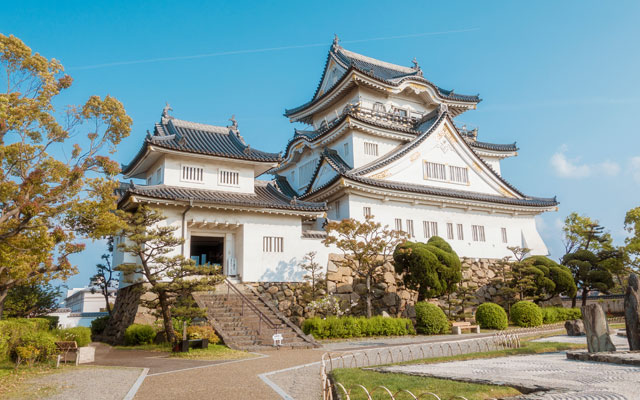
Groups can now hold events on the grounds of Kishiwada Castle
Fresh off the boat after a successful hosting of the 14th edition of the G20 summit earlier in June 2019 – the first G20 summit to be hosted by Japan – Osaka Prefecture is leveraging its improved status to attract more business events.
Asako Shiomi, manager MICE promotion department, Osaka Convention & Tourism Bureau (CVB), told TTGmice that the high-profile economic meeting administers a jab of confidence to event planners considering the city.
Groups can now hold events on the grounds of Kishiwada Castle
“The international market now has confidence in us, after seeing that we can handle such a high-level meeting,” Shiomi said. “We are working to increase the percentage of international MICE business here, to especially attract groups that bring about a large economic impact.”
While she acknowledges that Tokyo has traditionally been the leading city of choice among business event planners, based on its economic scale, that perception may change with Osaka’s track record in hosting the G20 summit.
Currently, the domestic MICE market is very strong for Osaka, especially for the 70,000m2 INTEX Osaka facility, according to its chief sales division, Takako Saito. But she too, is keen to reach out to the international market by shouting about the venue’s experience in delivering the G20 summit.
To strengthen the messaging, INTEX Osaka joined forces with three other private entities – ATC Hall, Hyatt Regency Osaka and Hotel Fukuracia Osaka Bay – to create an informal alliance, Osaka Bay Area MICE, in September 2018. Alliance partners boast a combined inventory of over 70 halls and conference spaces of varying sizes, 1,400 keys, F&B and retail outlets, all situated within walking distance from each other.
Yuji Inoue, business department deputy manager of ATC Hall and the spokesperson for Osaka Bay Area MICE, said: “Our facilities support each other, and we have combined our efforts in sales and marketing to develop international markets such as Singapore, China and Thailand.”
He believes that the formation of the alliance is a “step in the correct direction” and that the partnership enables them “to be bigger” on the back of G20.
In addition to promoting Osaka, a highly urbanised prefecture with 33 cities, Shiomi revealed that the secretariat of G20 also highlighted satellite cities such as Sakai, Kishiwada, Izumisano and Hannan, as the “city centre is already quite popular”.
That is why pilot projects are afoot, where several local governments are working towards renting out unique venues to international groups, such as the Japanese Garden in Sakai City’s Daisen Park, and Kishiwada Castle.
“There are so many castles in Japan, but not many are open for venue hire. For example, Kishiwada Castle grounds can hold 200 pax, and there’s a dojo in front of the castle where a kendo class and demonstration can be conducted for groups,” elaborated Nishikawa Tetsuji, Kishiwada City government’s section chief.
Just next to Kishiwada Castle stands Gofuso, a restaurant which can cater food for events at the castle, or introduce overseas delegates to a traditional kaiseki meal. Dining at the restaurant is also available, as it has 18 private rooms, the largest of which can hold 60 pax, up to a total of 220 pax.
Meanwhile, upcoming business event infrastructure include a soon-to-be-built integrated resort (IR) on Yumeshima Island, and the Setia Izumisano City Center (SICC) mixed development in Izumisano (see sidebar Developments to Watch).
In addition, the opening of the Sakai Performing Arts Center on October 1, 2019, will help address the shortage of business event facilities in Osaka, and help it compete against Tokyo for international gatherings, shared Koji Matsushita, the facility’s section chief.
Shiomi added: “We have very limited space in Osaka, and it’s difficult to find a slot for international groups. We’re very happy to have a new IR and the SICC. We hope to build Osaka’s MICE sector on Setia’s reputation, as our target is Asia. Setia is from Malaysia, and they have good connections in the region.”
But the industry is not without its challenges. For instance, English is still not widely spoken in the sector.
“Sometimes, when I have a potential international lead that I relay (to the other cities in the prefecture), I find that it is hard to communicate. We need more English speakers to welcome and assist these international groups,” Shiomi said.
This is reinforced by Sakai City co-ordinator Sakaguchi Munetsugu, who works for EXSA (Exciting Sakai), a non-profit organisation under the Sakai government.
“We are encouraging companies to translate menus and signs to English to court more foreign visitors, as well as liaising with Osaka Tourism Bureau to improve activities (for MICE groups) in the city,” he added.
For INTEX Osaka’s Saito, she also acknowledged that although the language barrier is a problem, she will usually hire translators to help with international groups.
With the numerous developments and improvements in the MICE space, there is no doubt the kinks will be ironed out in good time.
“We believe we have a bright future ahead. It will all come together in 2025, and I think it’ll be a different atmosphere by then,” Shiomi concluded.
Just 10 minutes from Phuket International Airport on the serene northern coast, this 178-key, Bill Bensley-designed resort offers delegates a quiet, tropical paradise steeped in Phuket’s tin-mining heritage
The newly-opened Ritz-Carlton, Bangkok anchors the One Bangkok development with cosmopolitan elegance. Featuring the city's largest ballroom and a spectacular new penthouse suite, it delivers exceptional hardware and deeply authentic, soulful service for business and leisure travellers alike
Behind the imposing, Brutalist concrete that defines Zurich’s Oerlikon district lies a surprising secret. While its exterior honours the neighbourhood’s industrial roots, stepping inside Mama Shelter reveals a vibrant, neon-soaked world that is a far cry from its rigid shell