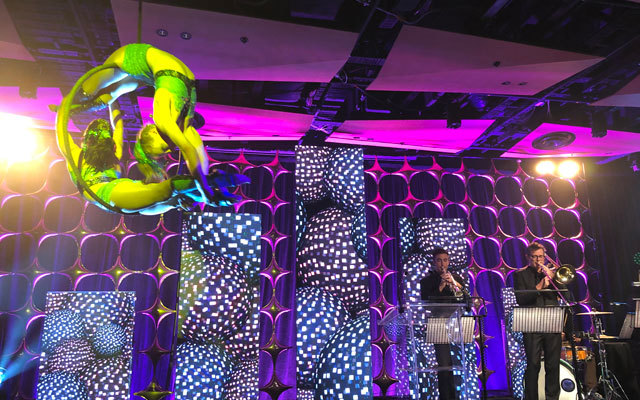
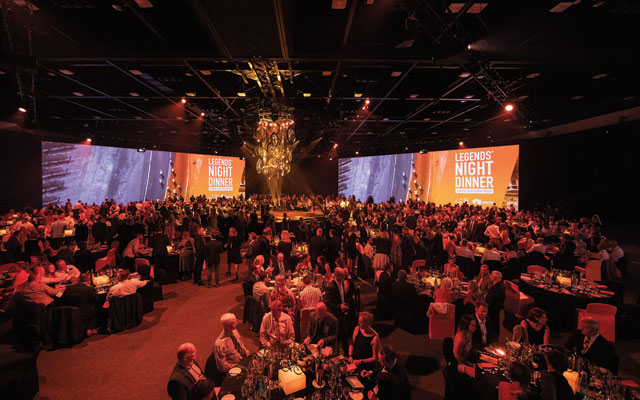
New Zealand’s aerial and cirque entertainment company, The Dust Palace, performed some of their bespoke showpieces alongside musicians at the opening night of CINZ (Conventions and Incentives New Zealand) MEETINGS 2019 on May 28.
Held at Auckland’s Aotea Centre, more than 650 business event specialists were in attendance. This event signalled the opening of the two-day annual showcase, which officially started yesterday (Wednesday) at the ASB Showgrounds.
Other local suppliers included visuals from Big Picture; sound and lighting from Auckland Live; and catering from the Kitchen at SkyCity.
Over 190 exhibitors and 500 buyers are expected to gather for some 6,000 meetings during the two days of pre-scheduled appointments and social networking events.
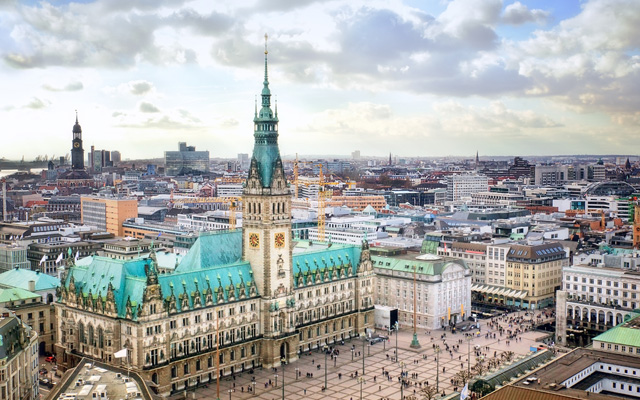
The city of Hamburg (pictured) will welcome more than 25,000 Rotary members
The city of Hamburg (pictured) will welcome more than 25,000 Rotary members
Germany: Rotary 110th convention brings world to Hamburg
Hamburg will be transformed into a “Rotary City” as more than 25,000 Rotary members from 170 countries around the globe will be getting together in the German city for their annual international meeting.
Held from June 1 to 5, Rotary members attending the Hamburg convention will initiate projects, engage in exchange, and work together for a better world.
In addition to the convention in the exhibition halls of Hamburg-Messe, Rotary members will be enjoying activities throughout the city such as bicycle tours, an opening party at the Chamber of Commerce, a sailing trip on the Alster-Lake, as well as exclusive Rotary concerts in the Elbphilharmonie concert hall.
UK: ICC Birmingham secures five association contracts
The ICC Birmingham team has secured five association contracts in three weeks, marking the team’s most successful year for medical events.
The record end to the financial year saw the team secure The Royal College of Physicians (April 2020), Psychological Society (July 2021), Association of Surgeons in Training (March 2020), British Orthodontic Society (October 2021) and the UK Interdisciplinary Breast Cancer Symposium (January 2020).
Medical continues to be an important sector for the ICC, as it has the ability to host large association congresses of up to 4,000 delegates.
Last year, the venue welcomed the 2,000-strong British Orthopaedic Association Centenary Congress. This year, Birmingham will be playing host to several other medical events, such as the British Society for Rheumatology, and British Association of Oral and Maxillofacial Surgeons.
Switzerland: Virtual Educa joins hands with Kenes Group Spain
Virtual Educa, an organisation set to promote innovation in education, and Kenes Group, a PCO and AMC, have signed a framework agreement outlining the collaboration on multiple projects for the next four years.
The framework addresses the projects of the European Union Virtual Educa Association, including partial conference management of the XXI International Meeting Virtual Educa Peru 2019, and the full PCO support for the XXII International Meeting Virtual Educa 2020. The agreement extends to 2022 and includes the provision of association management services.
The Virtual Educa International Symposium is made of a multilateral forum, an international conference, and a commercial exhibition.
A number of Holiday Inn Express hotels in Singapore, Thailand, Indonesia and South Korea, have launched a Meet For Free booking.
From now till March 1, 2020, event planners will be able to enjoy a complimentary meeting venue when they book a minimum of 10 guestrooms as part of the stay (booked between now and March 1, 2020).
Participating Holiday Inn properites
1 of 3
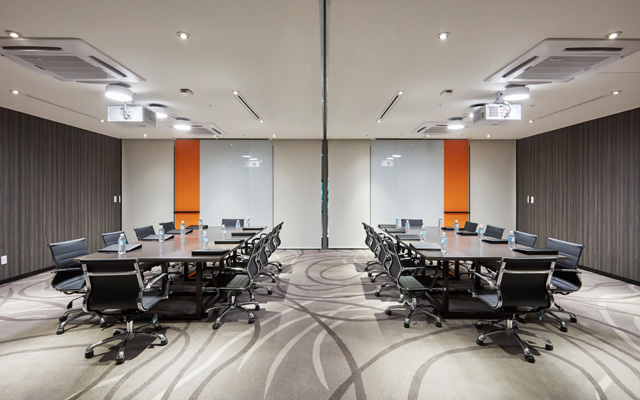
Holiday Inn Express Bangkok Siam Meeting Room
Holiday Inn Express Bangkok Siam Meeting Room
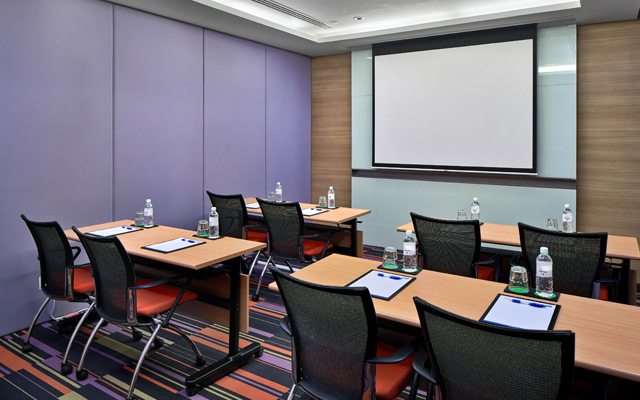
Holiday Inn Express Singapore Orchard Road Meeting Room Classroom Set Up
Holiday Inn Express Singapore Orchard Road Meeting Room Classroom Set Up
Holiday Inn Express Seoul Hongdae Meeting Room
Holiday Inn Express Seoul Hongdae Meeting Room
Additionally, event planners will be able to avail following perks such as assistance from an on-site team; complimentary breakfast and lunch; complimentary use of meeting collaterals such as whiteboards and flipcharts; a morning welcome reception; free-flow coffee and tea; and two meeting breaks with three snack items.
Bookers who are also IHG Business Rewards members stand to earn double IHG Rewards Club points for every qualified booking made from now until August 1, 2019 for rooms, meetings and events (up to US$20,000 per event) taking place before August 31, 2019.
Additionally, travellers can earn three IHG points for every US$1 spent from now until September 30, 2019 for rooms, meetings and events taking place between now and March 1, 2020.
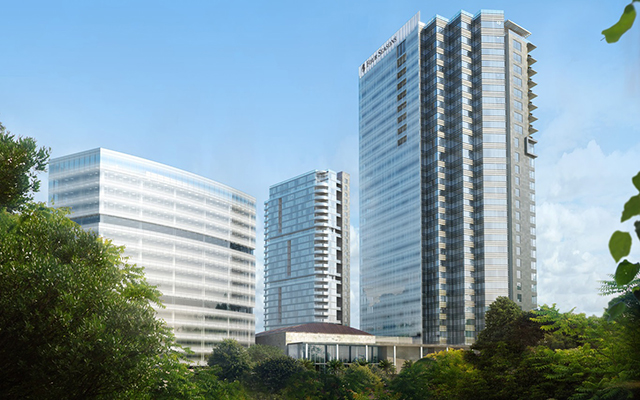
The second Four Seasons hotel in India, the Four Seasons Hotel Bengaluru at Embassy ONE, has opened in the capital of India’s southern Karnataka state.
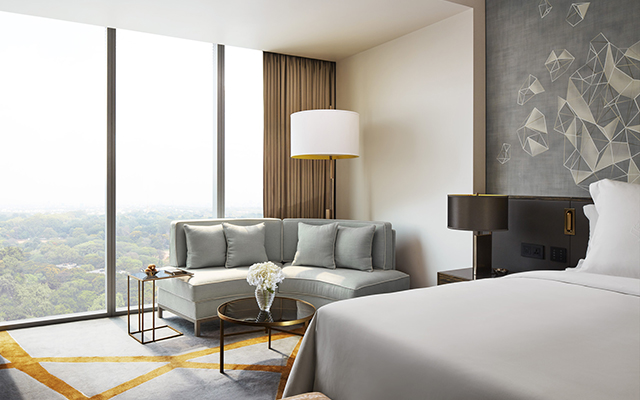
Set amid 2.3 hectares of land, the property offers 191 rooms and 39 suites, some of which offer views of the Palace Grounds. Meanwhile, the Garden Suites come with a living and dining area, as well as a private terrace, bedroom, large bathroom and double closets. Regardless of category, all accommodation feature the fully-customisable Four Seasons Bed with a mattress topper.
Four Seasons Hotel Bengaluru at Embassy ONE
1 of 4
Embassy ONE is also home to 105 Four Seasons Private Residences, the first of its kind in India.
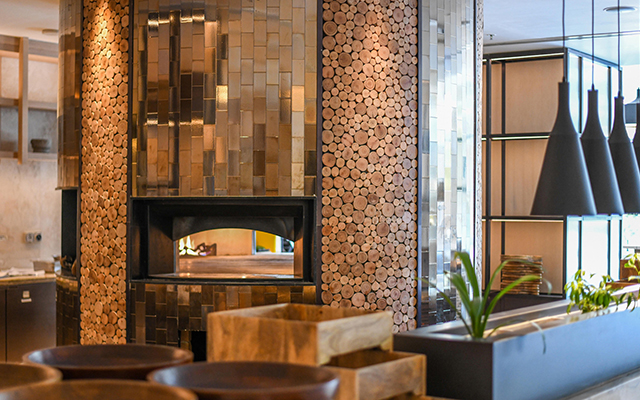
Facilities on-site include an outdoor pool, the Infuse Spa with 11 treatment rooms, and no less than five F&B options ranging from a cocktail bar to the Far & East restaurant serving Chinese, Japanese and Thai cuisines.
Event planners may avail the 1,540m2 event spaces ranging from the Grand Ballroom and open terrace, the largest of which can accommodate up to 1,000 guests.
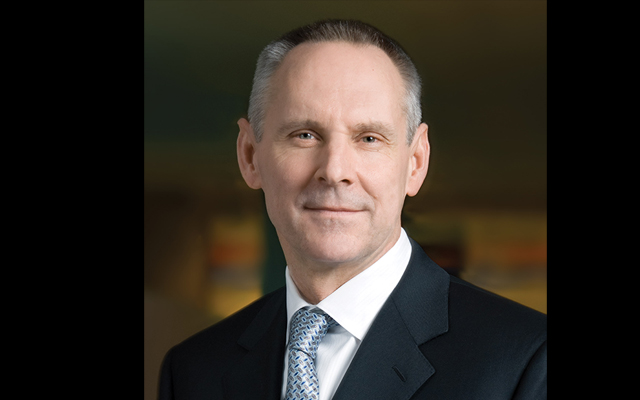
Four Seasons Hotels and Resorts has named CFO John Davison as its president and CEO effective immediately.
An 18-year veteran of Four Seasons, Davison had been serving as interim CEO since the end of 2018.
Davison, 60, joined Four Seasons’ executive ranks in 2002 and has served as CFO since 2005, with oversight of corporate finance, operations finance, and information systems and technology.
With more than 30 years of entertainment industry and luxury brand experience, Davison also previously oversaw Four Seasons global residential business, which has grown to include 42 branded residential projects worldwide.
Prior to Four Seasons, Davison worked for 14 years at IMAX Corporation, in various capacities such as president, COO and CFO, and for four years as a member of the Audit and Business Investigations Practices at KPMG in Toronto. Davison also currently serves on the Board of Directors of Canada Goose Holdings, and IMAX China Holding.
Davison will retain his duties as Four Seasons CFO on an interim basis as the company undertakes a search for a permanent replacement.
ACC’s use of their new Christie X80 Spyder image processor to create four 27-metre wide projection walls for the Santos Tour Down Under earlier this year
Adelaide Convention Centre Technology Prowess: Adelaide Convention Centre (ACC) has indicated that with its investment of more than A$15 million (US$10.5 million) into technology over the past three years, it is now one of the world’s most modern and technologically advanced meetings and events venues, with significant redevelopment in Audiovisual Technology.
ACC’s use of their new Christie X80 Spyder image processor to create four 27-metre wide projection walls for the Santos Tour Down Under earlier this year
Key upgrades have been made to the venue’s audio, lighting, visual and signal distribution systems to enhance events as immersive experiences. This includes larger HD screens to a cutting-edge X80 Spyder image processor, the first-of-its-kind to be fitted to an Australian venue, and LED lighting.
An expert in-house technology planning team is also on hand to customise solutions for individual clients. This team continuously monitors industry trends and new technologies to ensure the venue remains at the forefront of the industry. The ACC has also invested heavily in its tech team over the past year, growing its staff by about 20 per cent, and employing a dedicated technology innovation & planning manager.
Spacial flexibility is another significant feature. The combination of hinged seating, operable walls and the world’s largest rotating drums (two revolving auditoriums) enable the venue’s main Plenary Hall to be arranged into more than 15 different configurations.
ICC Sydney Technology Prowess: As a revitalised building, ICC Sydney has prioritised investments to provide technologically enhanced meetings, supported by a dedicated on-site technology team. A Digital Media Suite provides sophisticated production opportunities from content creation, still and full motion graphics and visual displays, to video and audio recording and editing.
The centre also boasts a high density wireless network designed to support transient user patterns, allowing for the creation of event experiences that meet inspired imagination. There’s also a Speaker Preparation Centre which provides optimal technical facilities for event preparation and a hub where speakers can familiarise themselves with the venue’s meeting room ICT infrastructure.
Digital infrastructure comes complete with a comprehensive cybersecurity management platform, plus dedicated bandwidth options to scale from a single user connection to group packages with unlimited data use and personalised support for attendees. The high-speed connectivity supports thousands of simultaneous users. As an example, the recent Sibos event had 7,000 concurrent Wi-Fi users – all with 100 per cent up time connectivity and the exhibition featured multiple interactive zones with live activations, which included custom audiovisual setups that catered for each individual stage.
There’s also complimentary high-speed public Wi-Fi with 980 access points throughout the venue. – Adelaine Ng
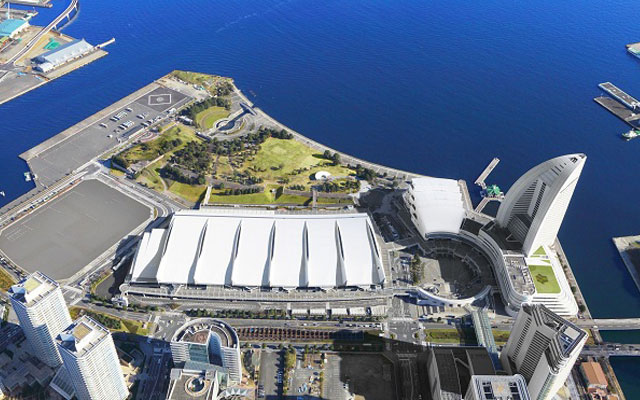
Pacifico Yokohama Technology prowess: Pacifico Yokohama in Nishi-ku, Yokohama, is consistently named as the best business events facility in Japan.
Aerial view of Pacifico Yokohama
The convention centre has placed the highest priority on delivering a cutting-edge communication environment that includes easy-access Wi-Fi and a high-speed communications network. This will be extended into the adjacent Pacifico Yokohama North wing when it opens in the spring of 2020. The latest addition to the facility will cover approximately 47,000m² and include the largest multipurpose hall in Japan, with capacity for 6,000 people. Other levels on the new six-floor facility will have 42 conference and meeting rooms.
For users, Pacifico has the most modern video and visual equipment available, as well as digital signage. The security of delegates is a high priority, with an advanced surveillance system monitoring the entire area and IC card keys in use throughout the facility. Pacifico is also proud of its green credentials and has LED lighting and a system that recycles fully 93 per cent of the industrial waste generated at the site.
On the horizon: Pacifico is planning to increase the high-speed communications capabilities within its facilities, including seamless links with Pacifico Yokohama North, but is also committed to limiting its environmental footprint through reducing material costs and efficient use of energy, including through a co-generation system that recycles and makes effective use of waste heat.
Osaka International Business Center Technology prowess: With nearly 73,000m² of exhibition space, Osaka International Business Center (INTEX Osaka) is the third-largest facility of its kind in Japan and has been selected to host a two-day summit in late June that is the culmination of the first Group of 20 nations’ meetings to be held in Japan.
The latest addition to the exhibition centre’s facilities is the VIP Finder, a support solution created with the business events sector in mind that provides access control, navigation within a facility, improved accuracy of business matching and evaluation reporting throughout the duration of the event. Based on the Genavis positioning platform, VIP Finder takes its location cues from numerous positioning sensors located throughout the venue, giving it an accuracy within a couple of dozen centimetres. One of the features of the system is in-house navigation that allows individuals to find each other on a plan of the exhibition centre and meet each other.
The system also enables users to search for other visitors’ locations and, using mapping technology, will guide a user to the location of another individual. It increases efficiency and reduces the time it takes to locate other people, while also providing extensive feedback to organisers in the form of heat maps that identify where visitors to an event spent the most time, bar charts that show how long visitors spent in specific areas of the event, and visual diagrams of the relationships between different areas of the event based on the movement of delegates.
On the horizon: In cooperation with the Osaka Convention and Tourism Bureau, INTEX Osaka will launch the Osaka Free Wi-Fi service for foreign visitors who are not signed up for Japanese Wi-Fi providers in August. The unlimited and free internet access service will be available at approximately 5,000 locations throughout the city, including major stations, while a “lite” version will limit access to four hours a day. – Julian Ryall
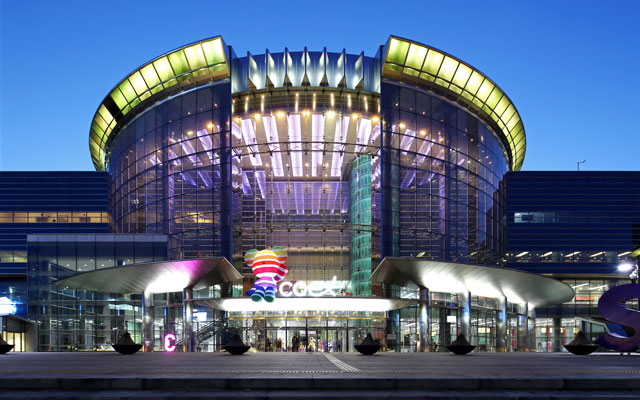
COEX Convention & Exhibition Center Technology prowess: With connectivity now a must for events, Coex in Seoul offers free public Wi-Fi for visitors and event attendees. For events that require a more sophisticated high-tech touch, the venue also houses a dedicated in-house technology service provider.
South Korea’s COEX Convention & Exhibition Center
Last year, Coex worked with the Korea Tourism Organization to shoot and launch a virtual reality (VR) simulation of the centre and its surroundings, enabling planners to remotely view and tour specific event spaces in Coex. The VR tour explores all four exhibition halls and 55 meeting rooms, the entire internal layout of the centre, as well as its surrounding cluster facilities, such as Coex’s hotels.
Also enhanced last year were 15 meeting rooms in the Conference Room North section, which were fitted with features such as programmable digital information displays, fingerprint scanning door locks for registered event organisers and door cameras that allow clients to view if the room is occupied.
And, as part of its green initiative to promote sustainable practices, Coex has installed charging stations for electric vehicles on its rooftop parking lot. – Pamela Chow
You were a foreign service graduate, cum laude. Why did you take a different career path?
I graduated from college at 20 years old. I really wanted to take the Foreign Service Officers exams immediately after, but the rule then was that the candidate must be at least 21 years old. I had to wait another year.
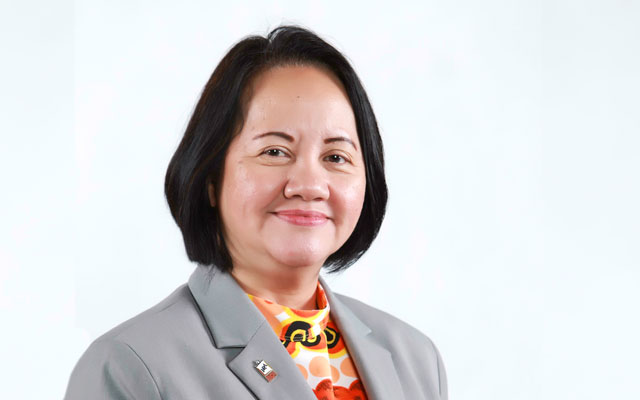
Evelyn Salire
Meanwhile, I was offered a job immediately after graduation. I took the job as international officer at the Kabataang Barangay, a Philippine semi non-government organisation geared towards promoting youth leadership and grooming future leaders. I really enjoyed the job and the responsibilities that went with it.
Before I knew it, I was already three years into the job and I didn’t miss the opportunity to work in the foreign service corps anymore. Since then all my professional life has been dedicated to working for not-for-profit organisations, particularly trade or business organisations. I find that working with this kind of volunteer organisations is more enriching because what we do can help and affect the lives of many people, if not a whole sector.
You have a long, illustrious career (eight years with the Philippine Chamber of Commerce and Industry and 23 years so far with the Philippine Retailers Association [PRA]) yet you chose to complete a course with the Philippine Council of Associations and Association Executives (PCAAE) to become a Certified Professional Association Executive (CPAE). Was that necessary?
Association management is not yet a recognised profession in the Philippines. Very few volunteer trade organisations have full-time professional staff. Often, the association secretariat is seen as performing only secretarial functions – not a management and leadership role which I have in my present job.
One of my long-time advocacies is to help professionalise the association management function and turn it into a fulfilling career. I am very fortunate that my board recognises my role in the association, and their trust encourages me to accomplish more. But I’m afraid many other association executives like me are still struggling for that recognition.
The CPAE is the badge that will help elevate association management into a professional career and I wanted to be an example of that to the rest of the association community.
You’re PCAAE’s first Association Executive of the Year for your transformational leadership. How did you transform PRA from what it was 23 years ago?
I did not do it single-handedly. The fact that my board had given me the trust and confidence to do what I do best – i.e. manage the association – was a critical impetus that helped me accomplish more for my association.
I am honoured that what I have accomplished at PRA can be deemed as “transformational”. But I think the transformational part would be my succeeding to win my board’s trust and confidence in my capabilities that they let me expand my horizons in terms of serving our members and coming up with various programmes to help our members grow and by extension, promote our industry.
A person cannot improve himself if he has only himself to benchmark on. While retail is generally a domestic trade, I wanted to help our members benchmark against the more advanced countries in retail, so we initiated an International Study Tour to Tokyo, Japan through the help of our counterpart, the Japan Retail Association.
Japan’s retail industry is more advanced in many ways, especially in technology. But at the same time, it still has a dominant traditional trade, e.g. mom and pop stores – very much like ours. It was interesting to study and observe both sides of the retail trade in Japan.
At the same time, we know that retail-specific programmes are not readily accessible, especially to retailers in the provinces. For this we launched our Regional Retail Excellence Roadshow seminars. SME retailers in the provinces will not come to Manila to attend training programmes. So, if David cannot go to the mountain, let the mountain go to David.
In cooperation with the Department of Trade and Industry in the regions as well as the Department of Tourism, we conducted seminars on store operations, loss prevention and customer experience all over the country. We were able to help over 2,000 SME retailers. This project also won for the PRA the PCAAE Industry Development Award in 2015.
PRA is also self-sustaining. How did you do it?
I think an overriding issue that must be pointed out is that without funds, no organisation can survive and thrive. Membership fees cannot sustain a trade organisation’s projects and operations. More often than not, payment of dues cannot be assured at 100 per cent. We need to have other sources of income to sustain the organisation.
We have made practically all our programmes self-sustaining through sponsorships and we have been able to raise sponsorships for our annual National Retailers Conference and Expo (NRCE) – our bread and butter – which helped sustain our operations and various programmes and advocacies.
Future-proofing Retail was the theme of NRCE 2017. What does it mean?
This came about because of the various challenges facing brick-and-mortar stores which are our members; challenges such as (the growing reach of) Amazon and the onslaught of online retailing. We needed to help them find ways to cope and compete.
The NRCE programme covered topics that addressed these concerns. It is our mission to help our members in any way we can, either through educational and informative programmes or by connecting them with other organisations and businesses that can help them.
What are the other challenges and opportunities facing PRA members?
Before the year 2000, the Philippine retail industry was closed to foreign investors. In fact, we fought attempts to open up the industry to foreigners for five years, from 1995 to 2000. (At the end) then-president Joseph Estrada signed into law the Retail Trade Liberalization Act (RA 8762).
During those five years, my board was at the forefront of the battle, from congressional hearings to marching the streets to make our voices heard.
Although the battle was lost, we did not lose the war altogether. Through the PRA’s efforts, we were able to at least ensure that small- and medium-sized retailers have a level playing field. Hence, the law included safeguards as well as higher investment requirements from foreign retailers, especially if they are coming in at 100 per cent ownership.
Fast forward to today, there are hundreds of foreign brands in the Philippines, mostly on franchising or joint venture arrangements. In recent years, big foreign brands like H&M have opened in the Philippines at 100 per cent ownership. IKEA is scheduled to open in three years time. These developments are good for the customers but challenging for local retailers who now have to compete for shoppers as well as retail locations.
E-commerce or online retailing is another growing challenge for brick-and-mortar stores. While it is not e-commerce per se that is the challenge, it is the global marketplace that is threatening. Amazon and Alibaba – with their huge inventory and efficient supply chain and payment systems – hang like a sword of Damocles over the heads of mainstream retailers. So what to do? Philippine retailers have to innovate and adopt to the new technologies that will make them competitive vis-à-vis large foreign marketplaces.
Salire joins the Executive Directors meeting of the Federation of Asia Pacific Retailers Association
On the part of PRA, we will come up with new programmes that will help them along this line; be the bridge to connect them to suppliers and technologies that can help them meet the challenges head on and succeed.
Can PRA member events be part of the solution?
As their trade organisation, members look up to us for news, updates on the latest trends and developments in retailing around the world. Through our annual convention, we are able to bring in knowledgeable speakers and experts who can share their expertise and experiences in addressing these concerns. Rather than look for these information on their own, they know that PRA will be at the forefront of getting these information.
Through our regional connection in the Federation of Asia Pacific Retailers Associations (FAPRA), composed of 18 member economies in Asia-Pacific, we are able to organise study tours and missions that can help them learn and experience retailing in other countries.
Through our Retail Excellence Seminars, we help train their people in various aspects of retailing. Through our Job Fairs we are able to help them source their manpower requirements.
I came up with PRA’s motto: our only business is helping your business grow. With our programme and advocacies, we are able to do that.
What are the other things PRA is doing to advance itself and members?
My advocacy is to help professionalizs the secretariat and to champion association management into a career.
To actualise this, I encourage all my staff to take the CPAE programme. This year, three more staff are graduating as a CPAE.
At the same time, we are proud to report that since its inception in the PCAAE last year, the Board Member of the Year honor has been won twice in a row by PRA – vice chairman Alegria Limjoco in 2016 and chairman Lorenzo Formoso in 2017.
All in all, we are proud that we are one of the very few trade organisations in the Philippines to be led and managed by recognised association leaders and certified professional staff. This will reflect well with our members and the retail community here and abroad.
How else is PRA planning to go global apart from its international study tours and international business missions?
We are also on the lookout for new markets to introduce to our members as potential areas for expansion abroad. Hence this year, we did a Retail Business Mission to Yangon, Myanmar where our counterpart, the Myanmar Retailers Association, briefed our delegates on the Myanmar retail sector and toured us around various malls and retail locations.
We have been invited to do a Retail Business Mission to Sri Lanka in 2018.
We are proud of our network in the Federation of Asia Pacific Retailers Associations (FAPRA) because they are the ones who paved the way for these international programmes.
Again, we wanted to spread our wings globally and the Federation of International Retail Association Executives (FIRAE) is composed of the recognised retail associations in the US and Europe. It was a natural next step and with our membership in the FIRAE, PRA has come full circle in terms of expansion.
PRA won the bid to host the Asia Pacific Retailers Convention and Exhibition (APRCE) in 2015. What lessons did you learn from that?
It took the Philippines 22 years to bring APRCE back to Manila. This biennial event is won through competitive bidding. The last time the Philippines hosted it was in 1993 – at the height of full-day blackouts in the Philippines. Yet the PRA (I wasn’t in the PRA yet, having joined in 1994) was able to stage a highly successful APRCE in Manila, which eventually won the Department of Tourism’s Kalakbay Award for Event of the Year. Naturally, it was a tough act to follow.
The bid to host APRCE is like bidding for the Olympics. We had to convince FAPRA members that the Philippines was the best bet to host it from various angles – the prospects of the retail sector, tourism, ease and accessibility of flights, hotels, and programmes, etc.
It took PRA two years to prepare for the 2015 edition, and the FAPRA Heads of Delegations representing the other 17 members visited the host country the year before to check on our preparations.
Organising our annual conferences gave us enough experience to deliver a regional event. The only difference was the number of attendees and the many nationalities and cultures we had to cater to. The scope was bigger, hence more challenging.
That we had the support of our Department of Tourism and the Tourism Promotions Board greatly helped in facilitating our coordination with the various government agencies concerned, from airport arrangements to security and visa coordination.
Another challenge for PRA then was how to take APRCE 2015 a notch higher than APRCE 1993. The answer was in the welcome and gala dinners where we had more leeway to do extraordinary things. We left no stone unturned to stage a grand production number that wowed the delegates and made them see why “It’s More Fun in the Philippines” (the destination’s marketing slogan).
One of the biggest challenges we had was bringing more than 2,000 foreign delegates in more than 40 buses from the SMX Convention Center to another venue, the Marriot Grand Ballroom, which was about eight kilometres away. Adding to the stress was the heavy rush hour traffic in Manila. To do this, we sought the help of our Philippine National Police that deployed escorts for all the buses to safely and speedily bring them to the venue and back to their respective hotels.
Any upcoming international conferences that PRA is bidding for and hosting?
This year we are focusing on our annual NRCE. While it is a local event, we are planning to invite more foreign speakers as well as invite international attendees, particularly from our regional counterparts. This is where our regional and global connections come into play.
This article was first published in TTGassociations April 2018, a sister publication of TTGmice
Hannah Loughlin has been appointed managing director of the Le Relais de Chhlong, Cambodia’s oldest colonial hotel in Cambodia built in 1916 in Kratie Province.
Formerly the general manager of Trails of Indochina, Loughlin has over 20 years of experience in luxury hotels, having worked with companies such as the Savoy London, Relais & Chateau and InterContinental Hotels Group.
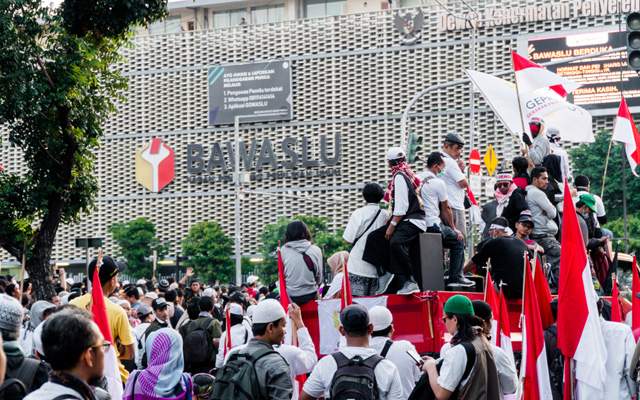
Protestors outside the Elections Supervisory Agency (Bawaslu) office in Jakarta on May 22
The post-election riots that took place in Central Jakarta last week has brought about business events cancellations in some Ring One hotels, but business seems usual in other parts of the Indonesian capital.
The protests broke out in Jalan Thamrin, near the office of the Election Supervisory Body, before spreading to the neighbouring Tanah Abang, Petamburan, Wahid Hasyim and Sabang.
Protestors outside the Elections Supervisory Agency (Bawaslu) office in Jakarta on May 22
Elsa Amalo, marketing communication manager for Millennium Hotel Sirih Jakarta – located in the Tanah Abang area – revealed that there were three event cancellations on May 22.
“It was mostly because guests were not sure which routes were open and if it was safe to get to the hotel,” she said.
Likewise, Pirantie Basa, director of sales Harris Vertu Yello Harmoni – which is located nearby the Presidential Palace and a few blocks away from the riot’s ground zero – said that her clients started calling for cancellations on May 22, a day after the first riots erupted.
“On May 21, all meeting and business events were as per normal. Cancellations started happening on May 22, with a total of seven cancelled. There was only one that ran,” Pirantie shared.
Pirantie added that some events have been tentatively postponed to June, but final decisions would only be made after the situation is back to normal.
In the meantime, hotels away from the riot locations, such as the Senayan area, have indicated that there was little impact.
Felicia Setiawan, director of marketing communications of Fairmont Jakarta, reported that most events were still on schedule, and participants kept coming, even though numbers were less than expected.
She shared that one small event organised by an international company with 30 participants was however, placed on hold.
“The event was cancelled due to heightened travel advisory by several countries, such as the UK, US, Canada, Singapore, and Malaysia,” she elaborated.
Indira Puliraja marketing communications manager of The Sultan Hotel & Residence claimed that the impact on their business was low as the riot erupted took place during the Ramadan, a traditionally low season for the hotel.
Although the riots are contained in an area in Central Jakarta, Krishnadi, chairman of the Association of Indonesian Hotels and Restaurants Jakarta Chapter acknowledged that the disruption could impact occupancy of hotels in the city, as well as tourism.
He said: “It depends on how long the protests continue for, how the government reacts, the efforts of the security forces in securing Jakarta, and the apprehension of the riot masterminds.”
But Krishnadi is confident that Jakarta will recover quickly given that the city has experienced worse previously.
“I think nowadays people realise (riots) can happen anywhere. People do not want to be intimidated, and most visitors to Jakarta are business travellers. So they will need to travel back to the city as soon as the situation is back to normal,” he concluded.
BEAM leverages a portfolio of sources to provide a comprehensive view of the MICE industry
PCMA, in partnership with Dallas-headquartered intelligence and marketing company Infogroup, released BEAM (Business Events Analytics/Metrics) at IMEX Frankfurt last week, a new product that provides market intelligence and data analytics for the business events industry.
BEAM will provide a comprehensive view of the business events industry by leveraging a portfolio of data sources to better understand individuals, organisations and face-to-face events. The data will help predict behaviours of business events participants to help professionals deliver a more strategic, engaging and relevant experience.
BEAM leverages a portfolio of sources to provide a comprehensive view of the MICE industry
The product will serve multidimensional purposes and levels of interest including managing big data by organising large, unstructured amounts of data that reveal patterns and trends, especially relating to human behaviour and interactions; events insights from all industries that participate in business events, including technology, hospitality, venues and destinations; and industry insights that can be tailored to each BEAM participant’s needs.
BEAM will also provide a data-hygiene process, allowing participants to ensure their CRM data is not outdated, erroneous or redundant.
“We wanted to create a unique product unlike any other in the marketplace to unleash the extraordinary power of data to advance research, identify industry trends and create predictive analytics that will guide business event professionals to make informed and strategic business decisions,” said Sherrif Karamat, president and CEO of PCMA.
“This customised analytics engine is unique as it draws information from multiple data sources to provide the business events industry with exclusive insights and capabilities to explore data,” added Robert Haas, PCMA’s chief administrative officer, who is spearheading BEAM.
Destinations International, a Washington, DC-based international resource for destination marketing professionals, will be PCMA’s marketing partner for BEAM.
Access to BEAM intelligence is granted on a 12-month rolling license. The PCMA product is in pre-sales mode and will launch later this year.
Infogroup will independently manage the data and analytics process to ensure the service meets data security and privacy standards. BEAM participants will only have access to their own proprietary data, and PCMA will not have access to any data portfolio other than its own. Any data intelligence or analytics generated by BEAM will not identify individual information.
Just 10 minutes from Phuket International Airport on the serene northern coast, this 178-key, Bill Bensley-designed resort offers delegates a quiet, tropical paradise steeped in Phuket’s tin-mining heritage
The newly-opened Ritz-Carlton, Bangkok anchors the One Bangkok development with cosmopolitan elegance. Featuring the city's largest ballroom and a spectacular new penthouse suite, it delivers exceptional hardware and deeply authentic, soulful service for business and leisure travellers alike
Behind the imposing, Brutalist concrete that defines Zurich’s Oerlikon district lies a surprising secret. While its exterior honours the neighbourhood’s industrial roots, stepping inside Mama Shelter reveals a vibrant, neon-soaked world that is a far cry from its rigid shell