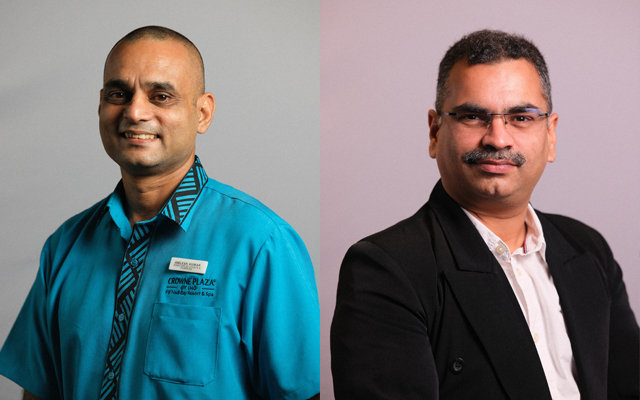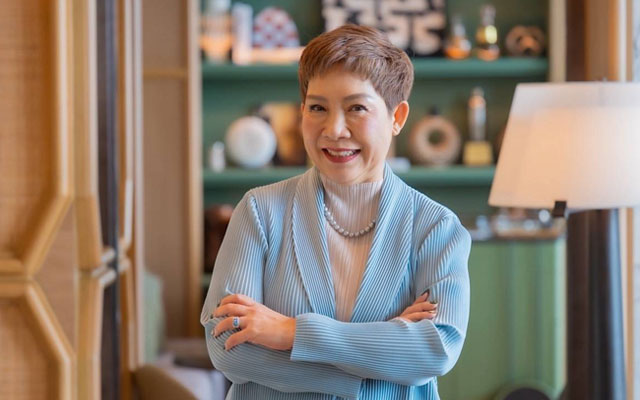
Pawan Chahar has been appointed as the general manager of Jim Corbett Marriott Resort & Spa, where he will be responsible for spearheading the resort’s launch, managing operations, guest engagement and relationships.
A seasoned hotelier, Chahar brings extensive experience in luxury hotels and residences, having held key roles at top hotels like The Oberoi New Delhi and The Ritz-Carlton, Bangalore. He also holds certifications in Residential and Hotel Leadership.
Prior to joining Jim Corbett Marriott Resort & Spa, he was the pre-opening leader of Marriott’s first managed residence in South Asia, Three Sixty West – The Ritz-Carlton Residences, Mumbai.
The online toolkit has been designed around industry best practices to help travel managers and suppliers implement more accessible business travel programmes
The ongoing trade war between the US and China, as well as the US’ blanket tariff hikes on all countries, are keeping Asian companies on high alert, but business events and travel professionals in South-east Asia are not seeing any major impact on activities yet.
Peter Koh, chairperson of the APAC Advisory Board with the Global Business Travel Association, said companies are still “watching” how the tariff issue continues to unfold, and so there has been “very little impact on business travel”.
Asian businesses are not yet adjusting their travel and event plans to respond to trade upsets
While Koh said the Asian economy is “very much dependent on China”, which bears the brunt of the US’s Liberation Day tariffs, many businesses in the region “are built around Asia-Pacific” and serve diverse markets.
“There is a lot of trade going on within Asia. If one market falls, companies have opportunities in others. As such, I expect business travel in Asia not to be very much affected by the US-China tariff war,” opined Koh.
According to the GBTA Business Travel Index Report published in mid-2024, Asia-Pacific was the fastest-growing region in 2023, followed by Western Europe and North America. In Asia-Pacific. An earlier GBTA study in 2022 placed China as the world’s largest business travel market, accounting for nearly 25 per cent of global business travel spend, up from a five per cent share just two years before.
An indicator of faltering business travel sentiments, according to Koh, would be how airlines approach their transatlantic flight schedules going forward.
“Thai Airways is expected to resume its direct US flights this year, so let’s stay tuned to that,” he remarked.
When asked if frustrations with US tariffs could discourage Asian business owners from making trips to the US, Koh said companies cannot afford to be sentimental. “If there are clients to service in the US, Asian businessmen will have to make that trip,” said Koh.
“What could change that is the next executive order on restricted travellers coming into the US that president Trump intends to sign.”
A Reuters report said China is not among the 41 countries being considered for a US travel ban; Laos, Myanmar, Cambodia, Bhutan and Pakistan in Asia are.
However, China has responded to US trade restrictions with its own travel advisory against trips to the US. The Chinese Ministry of Culture and Tourism on April 9 reminded its citizens to assess travel risks amid “deterioration of Sino-US economic and trade relations and the domestic security situation in the US”.
Offering another bird’s-eye view on the tariff impact on Asian business travel and events, Ashwin Gunasekeran, CEO of Penang Convention & Exhibition Bureau, said association meetings and heavy machinery exhibitions could first see changes – specifically in reconsidering the US as a host destination.
“Association meetings that are scheduled to take place in the US over next few years may revisit plans should the tariff war get out of hand. Associations may choose to move their meetings to destinations in Asia-Pacific or Europe due to cost concerns and negative sentiments,” he said.
“The tariff, if reinstated after the 90-day pause, will have a greater impact on exhibitions serving heavy industries. Equipment being sent into the US for exhibitions, where they may be sold, will attract a heavier levy now, so destinations without such restrictive tariffs would seem a more welcoming place for industrial exhibitions,” Gunasekeran continued, adding that Asian destinations could stand to benefit as global trade relations evolve.
While Roger Ong, director, client management and M&I, travel services with Singapore-based Plover Trip, also agrees that Asian businesses are staying calm and observant for now, he told TTGmice that some clients have “asked for more flexible arrangements or contingency options, just in case the trade environment gets more turbulent”.
So, while there has not been a “major pull-back in forward event planning from clients”, event owners are certainly conscious of disruption possibilities and are stretching their decision-making timelines.
Opportunities beckon in Asia, Europe, and Middle East for China outbound groups amid trade tensions
Despite the recent stock market turmoil following the US tariff announcements, China pundits say Asia, the Middle East and Europe have opportunities to tap Chinese outbound business groups.
Although it is “still too early” to comment on the impact of the Trump tariffs on the industry, Julien Delerue, founder and managing partner of business events sourcing platform 1000meetings, believes there are “lots of opportunities in Asia and it is in a good position to continue to develop”.
Opportunities beckon in Asia, Europe, and the Middle East for China outbound groups amid trade tensions
“South-east Asia is extremely friendly towards China, and with companies like EV maker BYD wanting to expand abroad, comes with it meetings, events and promotional trips.
“After lockdown, Singapore was among the first to open and was seen as safest. Now Chinese companies are going to Malaysia as they are getting morning leverage and clients see Kuala Lumpur as a good option,” he explained.
Delerue noted that its recent Kuala Lumpur showcase, organised in partnership with the Malaysia Inbound Chinese Association, attracted three to four times the number of attendees than expected and a high number of corporates and associations.
For 1000meetings, the China market is shifting with fewer incentives, and more outbound groups are “prospecting markets”.
Alexander Glos, CEO China i2i Group, told TTGmice, pre-Liberation Day, that many international brands now host events in China instead of taking Chinese delegates abroad, particularly in industries such as luxury, finance, and technology.
Chinese companies, he added, still actively participate in international trade fairs, especially in Europe.
“Germany remains a key destination, with strong Chinese participation in fairs such as ITB Berlin (travel), IAA Mobility (automotive), and Hannover Messe (industrial technology).
“Italy is another major player, particularly in fashion, manufacturing, and industrial trade fairs. Chinese exhibitors at Milan Fashion Week or Salone del Mobile (design fair) often combine business trips with luxury leisure travel. France sees similar trends, particularly around VivaTech (tech expo) and Cannes Film Festival, where Chinese companies invest in sponsorships and film industry networking events,” Glos observed.
China i2i Group is seeing rapid growth in incentive travel and a rise in high-end incentive travel, particularly to the Middle East and Europe.
Glos pointed out: “Four Seasons Madrid has reported a surge in Chinese corporate incentive groups, particularly from luxury retail, tech, and real estate companies.”
Barcelona and Catalonia Tourism have confirmed that Chinese incentive travel is growing steadily, with strong demand for luxury experiences, VIP shopping and gastronomy tours.
In the Middle East, Dubai and Abu Dhabi have seen an influx of Chinese incentive groups, particularly in luxury retail, automotive, and financial services sectors, while Saudi Arabia is aggressively marketing itself to Chinese corporations, offering business incentives and exclusive travel experiences.
As for corporate meetings and product launches, Chinese brands, particularly in tech and automotive, are hosting global product launches and sales meetings in key international markets.
Glos observed: “Chinese EV brands like BYD, NIO, and XPeng have hosted major product launches in Germany, France, and the UK, where they are expanding sales. Luxury automotive events are increasingly held in the UAE and Saudi Arabia, reflecting China’s growing presence in the Middle East market.”
On the technology and AI front, Alibaba Cloud, Huawei, and TikTok parent company ByteDance have all hosted major events in Europe and the Middle East in the past year, he pointed out.
Wolfgang Arlt, founder and CEO of COTRI China Outbound Tourism Research Institute observed that exhibitions are getting less relevant, and what works better is a conference-plus format.
“Everything with real-body networking will go up,” he added.
He opined that Chinese businesses that are facing less enthusiastic business partners abroad, higher costs and geopolitics, should “downsize”.
STB's Melissa Ow unveils the Tourism 2040 vision that aims to achieve S$50 billion in tourism receipts
Singapore’s business events sector played a pivotal role in a “landmark year” for the nation’s tourism in 2024, contributing to a record S$29.8 billion (US$22.5 billion) in tourism receipts and a 21 per cent increase in international visitor arrivals to 16.5 million.
This was highlighted by minister for sustainability and the environment and minister-in-charge of trade relations, Grace Fu, during her address at the Tourism Industry Conference 2025 on April 11, 2025.
STB’s Melissa Ow unveils the Tourism 2040 vision that aims to achieve S$50 billion in tourism receipts
She added that the “MICE sector had a strong showing, with over 30,000 delegates attending major events like the Asia Tech x Singapore and the Rotary International Convention”. Moreover, Singapore also achieved its best-ever position on the International Congress and Convention (ICCA) Worldwide City Rankings, securing second place globally.
Building on this momentum, the Singapore Tourism Board (STB) has set an ambitious target to triple tourism receipts from business events by 2040, with STB’s chief executive Melissa Ow noting that collective efforts towards this goal are already “bearing fruit”.
This year, major business events that will be held in Singapore include the inaugural World Sleep Congress 2025; LSI Asia 2025, the first edition of this medtech conference in Asia; the World Robot Olympiad International Finals, which returns to Singapore after two decades; and the 30th edition of SEMICON South-east Asia, with over 18,000 delegates expected.
Looking ahead to 2026, the city-state is set to host the Herbalife Extravaganza 2026 with an anticipated 25,000 visitor arrivals. Meanwhile, the first Asia-Pacific edition of the Passenger Terminal Expo Asia 2026 is expected to bring 3,500 aviation leaders; while Sibos 2027, a major banking and finance conference, is estimated to attract 7,000 delegates.
Messe Berlin, a German trade fair organiser with its Asia Pacific Headquarters in Singapore, will be launching a new tradeshow, Smart Health Asia 2026, targeted at health and tech executives seeking to revolutionise healthcare through digital innovation.
Farther out, Singapore has also won hosting rights for the AIDA World Insurance Congress in 2031; and the 22nd World Conference for Non-Destructive Testing in 2032.
Events hosting in Singapore will benefit from the country’s significant push towards sustainability. Ong Huey Hong, assistant chief executive, industry development group, STB, shared with TTGmice that Singapore is making “good progress” in its commitment to environmental responsibility.
As of March 2025, 100 per cent of all purpose-built MICE venues (such as Resorts World Convention Centre, Sands Expo and Convention Centres, and Singapore Expo); 80 per cent of members in the Singapore Association of Convention and Exhibition Organizers and Suppliers; and 60 per cent of hotel rooms are on track to attain sustainability certifications by the end of the year.
Aside from certifications, STB also encourages event organisers to incorporate sustainable materials in their booths. For instance, Ong shared that ReXtore, a Singapore-based company that offers flexible and zero-waste spaces for events and exhibitions, utilised STB’s Business Improvement Fund to develop a product called Staxx.
“It’s like giant Lego blocks that are used to build up a booth, which can be recycled (for the next event). This was actually used at the recent Singapore FinTech Festival,” said Ong.
A Decarbonisation Playbook for Tourism Businesses was also introduced in March this year to support the industry in making this green transition. This is in addition to STB pioneering a MICE Venue Carbon Baseline last year to minimise carbon emissions for business events.
A rendering of the APEC Multifunctional Complex in Phu Quoc
The island city of Phu Quoc has been selected as the host destination for the 2027 Asia-Pacific Economic Cooperation (APEC) Economic Leaders’ Week.
This marks the third time Vietnam will host the regional forum, following successful events in Hanoi in 2006 and Danang in 2017.
A rendering of the APEC Multifunctional Complex in Phu Quoc
In anticipation of this international event, Kien Giang Province, where Phu Quoc is located, has launched an accelerated investment drive in infrastructure. Key projects include substantial upgrades and expansion of Phu Quoc International Airport, the An Thoi International Port, and the development of an APEC Multifunctional Complex.
The Phu Quoc International Airport will be expanded to a total area of 1,073 hectares. This will involve extending the existing runway to 3.5km and constructing a second 3.3km runway. A brand-new T2 international terminal will be developed, boosting passenger capacity to 20 million annually. The expansion will also include a dedicated VIP terminal, an apron capable of handling up to 70 aircraft, hangars, and modern cargo warehouses.
Beyond air travel, upgrades are also planned for the An Thoi International Port. The port will be expanded to a 100-hectare scale, enabling it to accommodate the world’s largest cruise ships, including vessels like the Icon of the Seas, which can carry between 7,000 and 10,000 passengers.
To facilitate efficient transportation between Phu Quoc International Airport and the central APEC Summit Convention Centre within the APEC Multifunctional Complex, the city will undertake the expansion of Provincial Road 975 and develop a new urban rail line. Meanwhile, the APEC Avenue project will serve as an east-west connector, linking existing provincial highways to the APEC Multifunctional Complex.
The government has also invested in reservoirs, advanced water treatment plants, the renovation of the Duong Dong River, and the construction of modern wastewater treatment and waste management facilities.
The centrepiece of the hosting infrastructure will be the state-of-the-art APEC Multifunctional Complex, designed to accommodate nearly 15,000 people. The complex will feature a 10,000m2 conference and exhibition centre with a seating capacity ranging from 3,000 to 3,500. It will also house a multifunctional auditorium, the APEC Square, and a dedicated international press centre capable of accommodating 3,000 to 4,000 journalists.
The complex will also include a high-rise mixed-use area featuring hotels, a duty-free shopping centre, and a multifunctional cultural and arts hub with a seating capacity of 3,000 to 3,500, equipped with cutting-edge facilities for hosting performances and global entertainment. The complex will also feature a large dining area capable of serving 3,000 to 4,000 guests simultaneously.
From left: ABEA’s Melissa Brown; and IAPCO’s Sissi Lignou
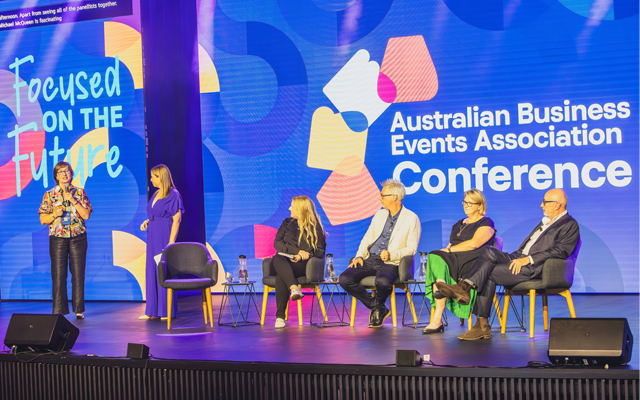
The Australian Business Events Association (ABEA) and the International Association of Professional Congress Organisers (IAPCO) have announced a three-year Strategic Partnership, formalised through a recently-signed Memorandum of Understanding (MoU).
Key elements of the strategic alliance will focus on enhancing membership value, fostering knowledge sharing, and producing collaborative industry research.
From left: ABEA’s Melissa Brown; and IAPCO’s Sissi Lignou
Members of both ABEA and IAPCO will gain access to collaborative engagement opportunities, including joint meetups at major industry trade shows like IMEX, IBTM, FIEXPO, and AIME, designed to cultivate new connections and potential business opportunities.
Furthermore, the partnership will prioritise ongoing knowledge sharing through joint industry and online education initiatives, featuring expert panel discussions, co-delivered educational sessions, and discounted professional development courses for members.
To further benefit their respective memberships and the wider business events sector, ABEA and IAPCO will also collaborate on the creation of a White Paper and the sharing of relevant research and studies to deepen industry insights.
Sissi Lignou, president of IAPCO, said the ongoing success and growth of the global meetings and events industry relies on collaboration between like-minded organisations and different stakeholders more than ever before.
“As we navigate an ever-evolving industry landscape, fostering collaboration between organisations who stand for the same values, is crucial for the ongoing success and growth of the global meetings and events industry…” said Lignou.
Melissa Brown, CEO of ABEA, added: “…Our collective efforts will provide our members with exceptional value, critical industry knowledge, and the ability to connect on a global scale. There is so much knowledge to be shared. The more efficiently we can share experience and knowledge across the globe, the easier it will be for our members to keep up to date with the latest developments.”
The Singapore Association of Convention & Exhibition Organisers & Suppliers (SACEOS) announced the election of its 46th Executive Committee at the 45th Annual General Meeting held on April 8, 2025, at Resorts World Sentosa.
46th Executive Committee
The following individuals who will form the new Executive Committee include Anthea Tan, executive director, sales, tradeshow and associations, Marina Bay Sands; Daniel Tjan, managing director, globalsign.in; Dylan Sharma, co-Founder & director, TRICOM Events; Jasmine Ho, founder & managing partner, The MasterPlan; Jay Yeo, co-founder of Variety Communications & CEO of Huone Singapore; Jenny Wang, acting vice president, resort sales, regional marketing, MICE & partnerships, Resorts World Sentosa; Khoo Yew Jin, vice president, brand & customer experience, Constellar Group; and Patricia Cheong, managing director, Comexposium Singapore.
The newly-elected committee members will serve the Association for the term of 2025–2026.
The Singapore Tourism Board (STB) has set an ambitious goal to triple the tourism receipts generated by business events by 2040, aiming for the sector to contribute around 10 per cent of its targeted S$47 billion (US$35.6 billion) to S$50 billion in overall tourism revenue.
This represents a significant increase from the 2019 pre-Covid figure of four per cent, which amounted to S$1.4 billion.
Rendering of the MICE Hub
“MICE visitors spend twice as much as a leisure visitor, making it an exceptionally valuable segment for Singapore,” said Grace Fu, minister for sustainability and the environment and minister-in-charge of trade relations, during her speech at the Tourism Industry Conference 2025 this morning.
To achieve this triple-fold goal, several initiatives to build Singapore’s future pipeline of business events are underway. This includes exploring the feasibility of a MICE Hub in the downtown area, launching a new Business Events Inspired pilot programme with Singapore Association of Convention & Exhibition Organisers & Suppliers (SACEOS); and enhancing partnerships with Singapore Business Federation (SBF).
Melissa Ow, chief executive, STB, shared that the tourism board is currently “in talks” with various parties about the viability of the MICE Hub.
“With the global MICE industry set to grow, and Singapore already a leader in global MICE events, we want to have a much bigger share of the pie as it expands. The infrastructure we build for the future needs to accommodate different (business events) formats,” she explained.
When asked about the difference between the MICE Hub, and venues such as Marina Bay Sands and Suntec City Convention Centre which already exist next to lifestyle offerings, Ong Huey Hong, assistant chief executive, industry development group, STB, indicated that Singapore “needs to continue to look at expanding its MICE capacity”.
“We want to triple our MICE contribution to tourism receipts, so we definitely need to have the capacity. We have also observed that MICE travellers do not just visit Singapore for a business event. They are also interested in bleisure offerings, such as F&B and lifestyle experiences, hence we are looking into the development of this MICE Hub,” added Ong.
Together with SACEOS, STB will also be introducing a new Business Events Inspired pilot programme to catalyse and grow the pipeline of business events in Singapore. This will be officially launched at the Singapore MICE Forum in July, Ong told TTGmice.
Under this pilot programme, event organisers will have access to mentorship, events consultancy services, and seed funding to develop quality events, with the goal of incubating them into impactful international events.
When queried on how STB will support smaller event players, Ong pointed to the Kickstart Fund.
“We want to identify home-grown events and grow them over time. This fund will help provide marketing and production support for up to four years (up from three). It was mainly used for leisure events previously,” she told TTGmice.
STB also wants to encourage local stakeholders to collaborate more closely as Team Singapore. Ow stated: “To do so, STB will help defray their business development costs to pursue MICE leads under our Business Event in Singapore (BEiS) Build Foundation incentive scheme.”
Finally, STB has signed a two-year MoU with SBF to expand the pool of local hosts for association conferences. This multi-year partnership will see both organisations develop the Trade Associations and Chambers Summit as Asia’s premier business association event; identify and support local trade associations to bid for and host international or home-grown business events; and strengthen the capability of local associations through content collaboration with local and foreign association partners.
In 2024, tourism receipts reached S$29.8 billion, setting a new record, while international visitor arrivals reached 16.5 million. Based on last year’s strong performance, STB is projecting tourism receipts to reach between S$29 billion and S$30.5 billion, while international visitor arrivals are expected to hit 17 million to 18.5 million in 2025.
Embraer has named Patrick Peng as managing director and senior vice president sales and marketing, commercial aviation, Embraer China.
Peng will lead Embraer’s operations in China and report to Martyn Holmes, chief commercial officer of Embraer Commercial Aviation.
With over 20 years of experience, he has held key roles at Airbus, GE Aviation/CFM, Thales, and Safran. His track record includes strategic sales leadership, billion-dollar service contract negotiations, and building long-term partnerships with airlines, OEMs, and regulators in China.
Hong Kong’s business events industry is roaring back to life, fuelled by over 140 major events already booked for 2025.
Among these, the city will host several significant “firsts” for the region. Events that have taken place include Consensus Hong Kong 2025 (February 18-20), and Sports Law Mega Event 2025 (February 20-23), while Connect Marketplace will take place from March 19-21.
The Hong Kong skyline from Victoria Peak
Later in the year, the city will welcome major aviation shows like Routes World 2025 (September 24-26), and Airspace Asia Pacific 2025 (December 9-11), as well as large-scale meetings such as the Asia Pacific Herbalife Extravaganza (June 16-18).
To maintain this growth momentum, Hong Kong is driving a wave of significant hardware developments and upgrades.
For instance, the Kai Tak Sports Park – which opened in March 2025 – will be a key site for the 15th National Games.The newly-opened Go Park Sai Sha, a 120,903m2 complex designed by Zaha Hadid Architects, offers a mix of indoor and outdoor sports, entertainment, dining, and leisure experiences.The East Kowloon Cultural Centre is another significant addition.
Other upcoming venues include the WestK Performing Arts Centre, set to open in 2026 within the West Kowloon Cultural District; and the Skytopia development that will include Phase 2 of AsiaWorld-Expo, set to be Hong Kong’s largest indoor purpose-built performance venue with a capacity of 20,000 spectators.
This optimism extends to Hong Kong’s hotels, which are also experiencing a surge in business-related bookings and enquiries.
Following a successful year for group business, driven by the resurgence of business events, the Four Seasons Hotel Hong Kong is optimistic about 2025, as it is already seeing strong interest in group bookings.
The property’s commercial director, Anna Wong, plans to leverage citywide events, and the new Kai Tak Sports Park, to attract entertainment and sports-related groups, diversifying the hotel’s target industries beyond banking and finance.
“We plan to broaden our market appeal by reaching out to Indian social groups for weddings and celebrations, entertainment and family groups from South-east Asia, and government delegations from the Middle East,” she explained.
Shangri-La Hotels & Resorts has also taken proactive steps to attract key business events, including strategic initiatives to adapt to changing market conditions and a focus on developing opportunities in the sports and entertainment industries.
The spokesperson stated: “Over the next year, our Hong Kong business hotels (Island Shangri-La, Kowloon Shangri-La, and Kerry Hotel Hong Kong) will target key markets, including Singapore, Malaysia, China, India, and the Middle East, to attract corporate clients and business events.
“We will leverage our newly-renovated grand ballroom at Island Shangri-La, Hong Kong, to cater to the sophisticated needs of our clients; as well as Kowloon Shangri-La’s prestigious 5 Crescent Rating (the first in Hong Kong), to cater to the growing Muslim market segment.”
The spokesperson agreed with Wong’s assessment of the opportunities in the sports and entertainment sectors, and is planning to “capitalise on infrastructure developments such as the Kai Tak Sports Park”, and the expansion of Hong Kong International Airport.
“These enhancements will increase Hong Kong’s capacity to host large-scale events and improve international accessibility, making our hotels more attractive to global event organisers and business travellers,” the spokesperson said.
Also keen on targeting the Middle East market is Momentous Asia Travel & Events’ general manager Doris Lam.
Kai Tak Sports Park
“Initial enquiries have been primarily for small meetings, typically involving 10 to 20 attendees. We are also pursuing opportunities with international associations for larger events, targeting gatherings of several hundred participants for 2026 and beyond,” she added.
On the accommodation front, the 1,000-room Hopewell Hotel, which soft-opened in late 2024, has added over 6,500m2 of column-free function space.
“New venues like the Hopewell Hotel really help, bridging the gap of hotel ballrooms not big enough, and when the Hong Kong Convention and Exhibition Centre can’t offer any space,” shared Lam.
Lanson Place has also recently reopened its flagship 188-key Causeway Bay property following a 16-month-long refurbishment, catering primarily to corporate and bleisure travellers working in the commercial districts of Causeway Bay, Central, Admiralty, and Quarry Bay.
“The Hong Kong government has been unwavering in its efforts to promote Hong Kong as a leading MICE destination. For example, relocating the Rugby Sevens event to the larger Kai Tak Sports Park will effectively demonstrate Hong Kong’s ability to host high-profile events.
“Through collaborative initiatives between the tourism industry and the government, the city’s reputation as a prominent MICE hub is anticipated to be further solidified,” Danny Tse, area general manager of Lanson Place Causeway Bay, told TTGmice. – additional reporting by Rachel AJ Lee
A polished urban retreat designed for business travellers, Hyatt Regency Kuala Lumpur at KL Midtown combines thoughtful design, seamless service, and exceptional facilities.
The five-star property excels in backing its expansive facilities with seamless service and personalised attention, setting the benchmark for luxury in Bangkok.