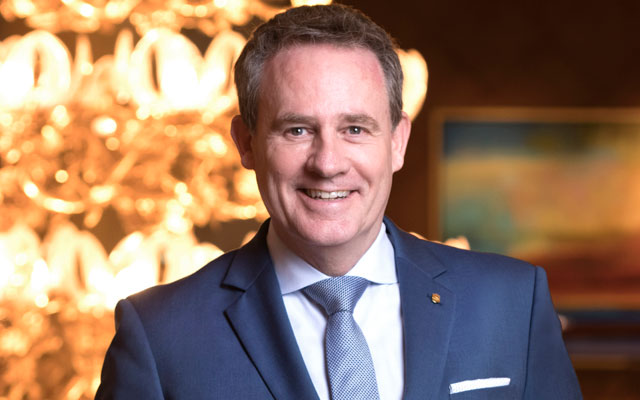
Greg Findlay has joined Makati Shangri-La, Manila as general manager.
Findlay brings with him over 18 years of extensive experience in hotel general management, having led five-star luxury properties and worked in countries throughout Asia Pacific.
Prior to joining the Shangri-La group, Findlay was the general manager of The Westin Bund Center in Shanghai.
Host an impressive gathering at Two70, a venue unique to Royal Caribbean’s Quantum class ships
Royal Caribbean International Studio B ice skating rink
Voyager of the Seas features an iconic ice skating rink where performances by professional skaters from around the world are held. On top of that, the rink can support teambuilding activities and be used as a unique venue for casual meetings for up to 800 pax.
Skypad Spectrum of the Seas and Quantum of the Seas offer some of the world’s most innovative activities at sea, which are perfect for teambuilding. The Skypad, in particular, is a gem. It promises an out-of-this-world bungee trampoline experience but with a virtual reality spin. Participants strap on a headset and are at once transported to another time, place or planet. This virtual adventure launches them high into the stratosphere and let their imagination soar.
Host an impressive gathering at Two70, a venue unique to Royal Caribbean’s Quantum class ships
Two70
Unique to the Quantum class of ships, Two70 is an entertainment hub which offers guests multiple experiences throughout the day. Ordinarily, Two70’s giant windows offer sweeping views of the ocean, but become massive screens that show any scene, real or imagined, with Vistarama. Naturally, it is the perfect venue for meetings and seminars, especially events that require impressive visuals to complement messages.
Dream Cruises Rope course and zipline
The rope course and zipline onboard Dream Cruises ships is perfect for team bonding. Participants first tackle a tricky rope course before gliding down the 35m zipline, set 18 decks above the ocean. What a rush!
Dream Night
Unique to Dream Cruises, Dream Night is the grand finale to any cruise experience. As a spectacular fireworks display takes off against the night sky, guests are invited onto the main pool deck where they get to indulge in champagne and cocktails.
Rest and relax in a Dream Cruises Executive Suite
Dream Palace
While Dream Cruises ships are a luxurious experience, Dream Palace takes things up several notches. It is in a class of its own, a regal “ship-within-a-ship” enclave with 142 suites and private VIP facilities including its own swimming pool, spa, gym and dining venues. Guests are pampered by meticulous Dream Butlers who promise personalised attention.
Star Cruises Galaxy of the Stars
Offering panoramic views of the ocean from a glass-fronted observatory area, this lounge in Star Pisces and SuperStar Virgo is ideal for presentations and product launches. With a seating capacity of up to 292 guests, it also serves as a popular dance spot where delegates can unwind to popular music after a day of conferences.
Zodiac Theatre
The Zodiac Theatre in SuperStar Virgo is a performing arts space for musicals, dance performances and magic shows. With its 830-seat capacity, the theatre is equipped with state-of-the-art lighting, rigging and sound systems. The audience is assured of a comfortable and enjoyable experience, thanks to plush seats and good acoustics.
Princess Cruises
Catch a movie under the stars onboard Princess Cruises ships
Movies Under The Stars
This open-air poolside amphitheatre brings back the romance of movies under the stars. Blockbusters are screened every evening at this top deck attraction, and complimentary fresh-popped popcorn and hotdogs are dished out. Movies Under The Stars makes a delightful addition to any corporate programme onboard the cruise ship.
Luxury beds
Touted as the first bed onboard a cruise line that is designed by a board certified sleep expert, Princess Cruises’ luxury beds provide delegates the ultimate sleep experience out at sea. Ultra-premium features including a plush nine-inch single-sided medium firm mattress with two-inch thick pillow top for enhanced support as well as luxurious Jacquard-woven cotton linens. Delegates are refreshed and ready for the day’s programme, and will return home from their event all rejuvenated.
24-hour room service
Complimentary 24-hour room service ensures delegates are never hungry throughout their programme at sea, no matter the time of the day. The all-day room service menu includes hand-tossed pizzas to dazzling multi-course gourmet dinners.
Norwegian Cruise Line
Norwegian Bliss feature the largest race track at sea
Race track
Both Norwegian Joy or Norwegian Bliss feature the largest race track at sea – the first ships to lay claim to offering this entertainment option. The race track is large enough to support up to 10 go-karts racing at the same time at up to 60kmh. Perfect as a teambuilding activity, the competitive track features many twists and turns while the go-karts come with four speed settings to accommodate novice, intermediate and advanced drivers. Thrillseekers should watch out for the special ‘turbo boost’ on each lap.
The Haven
Hidden away at the top of the ship is The Haven by Norwegian, home to the most luxurious, well-appointed and spacious accommodation. Not only will VIP delegates have access to all the ship has to offer, they will also enjoy the personal attention of a concierge and 24-hour butler.
Oceania Cruises The Culinary Center Oceania Riviera and Oceania Marina offer the first custom-designed and hands-on cooking school at sea, where guests learn how to prepare a variety of exquisite dishes in a fully-equipped teaching kitchen. Classes are led by master chefs from around the world.
Stay connected
Oceania Cruises is rolling out its new Wavenet high-speed Internet service fleet wide, available to all guests at no extra charge. For businessmen out on a programme at sea, this invaluable service ensures they remain connected.
Silversea Cruises
Top-class butler service
Signature butler service
A Silversea cruise experience is never without a top-class butler service which begins the moment guests come onboard. Upon arrival, the butler welcomes guests personally, orientating them to their suites and even offering to unpack their bags. The butlers remain attentive throughout the voyage.
Professional event planning services
Silversea’s team of corporate and incentive planning professionals provides creative solutions to ensure that corporate events take off successfully. The extensive host of event planning resources available onboard will ensure that all special activities and services are well customised and arranged, promising delegates an unforgettable experience.
This article is part of – Events of the high seas, first published in TTGmice October 2018
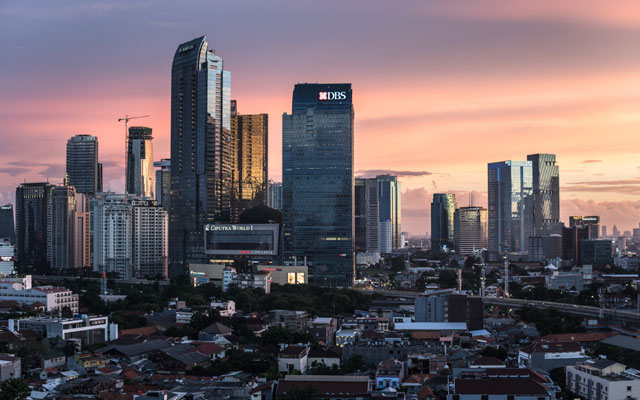
Aside from Bali, Jakarta (pictured) is the only other MICE-ready Indonesian city
Indonesia’s Ministry of Tourism will be creating a US$1 million bid fund next year, as part of the government’s efforts to boost the country’s business events sector.
The funds will be used mainly for the bidding of international events.
Aside from Bali, Jakarta (pictured) is the only other MICE-ready Indonesian city
When interviewed on the sidelines of the Ministry of Tourism’s National Coordinating Workshop, Arief Yahya, Indonesia’s minister of tourism, said: “Business events are a (high-yielding) sector, and we encourage the industry to bid for events, while the government provides the funding.”
Aside from the creation of the fund, the government is looking into developing and promoting MICE-ready destinations like Batam and Bintan. Currently, only Bali and Jakarta are considered ready.
Arief continued: “We will not be able to win Singapore if we compete heads on. What we can do is pair Singapore with Batam and Bintam (for side events, and pre- and post-programmes. This is our intention.”
The above actions are important as it will help to boost both the number of arrivals and the country’s revenue, as the government is accelerating foreign exchange earnings to lower the current account deficit.
Also speaking at the same workshop was Bambang Brodjonegoro, minister of national development planning of Indonesia. He pointed out that Indonesia’s tourism sector needed to go beyond achieving tourists arrivals, and should focus on raising yields by attracting business events.
“We should not be content at seeing long queues at the immigration counters anymore, but instead how to make travellers stay longer and spend more. This is more important,” Bambang remarked.
Bambang citied the upcoming 2018 IMF-World Bank Annual Meeting in Bali (October 12-14, 2018) as an example. His ministry estimates that the meeting will yield about 5.9 trillion rupiah (US$3.3 million), and that the estimated spending from participants during their stay will hit 1.1 trillion rupiah. The event will also create jobs.
Bambang believes that as major events contribute to higher tourist spend, the tourism sector can help to strengthen the value of the rupiah.
“This will be a quick way to improve Indonesia’s economy,” he concluded.
Hosea Andreas Runkat, chairman of the MICE Acceleration Team under the Ministry of Tourism, said the IMF-World Bank Meeting would herald the revival of business events in Indonesia and prove that the destination is capable of hosting events with more than 15,000 participants.
Hosea said: “We are now formulating a MICE development strategy that will become a reference for our working plan for 2019-2020. Our goal is to bid for seven (international) events.”
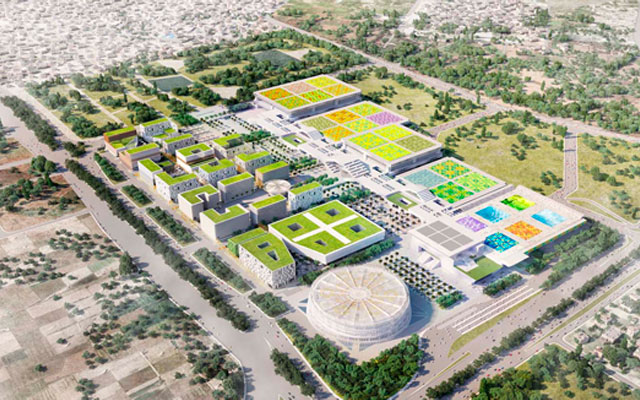
A rendering of the upcoming IICC compound. Photo: www.idom.com
Delhi New Capital Region (NCR) in India is all set to get a new integrated complex, providing a boost to the country’s meetings and corporate events capabilities.
Named the India International Convention and Expo Centre (IICC), India’s prime minister Narender Modi recently laid the foundation stone that signified the start of the project. The project will cost an estimated 26,000 crore rupees (US$3.5 billion)
A rendering of the upcoming IICC compound. Photo: www.idom.com
Located in New Delhi’s Dwarka subcity, IICC will be able to accommodate 11,000 pax, and the venue will boast five exhibition halls, a one-kilometre-long foyer, and a multipurpose arena with a retractable roof. There will also be mixed-use commercial spaces like hotels, retail services and high-end offices.
IICC will be developed in two phases, with Phase 1 slated to complete by December 2019, while Phase 2 will be completed by December 2024.
The project, planned over an area of 89 hectares, once fully operational is expected to hold more than 100 major international and local exhibitions annually. As well, the delegate attendance is expected to cross 1.5 million annually after the second phase of the project is completed.
Stakeholders interviewed have voiced their support for the IICC project.
“There is a need for purpose-built MICE venues in the country and IICC will fill that vacuum. It being located in the national capital and (near the) international airport will give it an edge over other MICE facilities in the region,” said Chander Mansharamani, managing director, Alpcord Network Travel & Conferences.
Sanzeev Bhatia, general manager, The Metropolitan Hotel & Spa, added: “Big conferences in New Delhi (are currently) restricted to Pragati Maidan, but with this new venue, MICE planners and corporates will have more options to organise their events.”
Raini Hamdi, senior editor of TTG Asia Publishing division, is leaving the company to pursue a new opportunity effective November 5.
Raini has served TTG Asia Media for more than two decades.
Raini Hamdi
Said Darren Ng, the company’s managing director: “We are sad to see Raini leave us, as she has contributed a lot to the company all these years. But we do understand her aspirations at this stage and we wish her all the success she deserves in her next journey.”
Raini said: “TTG has been my home all these years and will forever have a special place in my heart. I am so privileged to have worked with professionals who have a lot of passion in the business, in particular Darren and my whole team of editors and correspondents led by group editor Karen Yue, whom I know I will miss.”
According to the 2019 Meetings & Events Future Trends report – published by Carlson Wagonlit Travel’s Meetings & Events (CWT M&E) division – the demand for meetings and events is set to grow between five per cent to 10% next year, and the average size of meetings will rise in nearly every region.
“The global meetings and events industry can look forward to a buoyant 2019,” said Kurt Ekert, president and CEO of CWT. “On top of growing demand worldwide, we also expect global hotel rates to rise 3.7%, and flight prices 2.6%.”
CWT predicts that meetings will be held in more unconventional spaces, and content will experience a major shift
As well as cost projections and a run-down on regional differences, the report also ranks the top meeting destinations in each region, and gives an overview of the latest industry trends.
In the Asia Pacific, a strong growth in the region expected to continue in 2019 with the average meeting size up 3% and China seeing consistent expansion year-on-year.
Vietnam, Myanmar and the Philippines are buzzing as multinational companies establish their presence, with more inbound and outbound travel in these markets predicted for the coming year.
Asia Pacific is expected to lead the way for global growth in 2019. CWT is predicting that airfares will rise by 3.2% in 2019 with hotel rates set to go up by 5.1%.
With such strong growth throughout the region, there is an increased willingness by organisations to spend on meetings and events.
In addition, the report found that the best time for booking meetings and events activity for small groups is 30+ days out, while for large groups the sweet spot is 75+ days. Outside of these booking windows, buyers are giving up five per cent to 10% in potential savings.
Strategic Meetings Management (SMM) is also set to gain traction in regions outside North America, where it is more mature. The data show that SMM can cut the time spent on sourcing by 22% and deliver an average 19% additional savings on room nights.
“SMM tips the scales back in favour of clients by shifting sales towards preferred suppliers and analysing demand to work out the optimum times to secure the best venues, hotels and flights – and lock in the best prices,” said Cindy Fisher, senior vice president and global head, CWT M&E.
Technology will also play a major part next year. Rapid innovation in this space is helping to create more engaging experiences and more targeted learning, while enabling greater data capture and analysis. Augmented reality, virtual reality, artificial intelligence, social media to drive engagement, ad-hoc apps and microsites are some of the technologies that will proliferate across the meetings and events industry.
New technology also creates smarter ways of monitoring ROI and ROE: for example, using data to fine-tune the value around meetings programs, and booking group transport with apps and online booking tools.
These platforms can be integrated into the event’s registration process, giving attendees access to preferred flights and hotels in one place. Managing bookings online, as with general business travel, will also help reduce costs for clients. Another trend for group transportation will be to use suppliers with global reach.
As well as better technology, there will be a growing demand for unorthodox spaces and activities, particularly in the mature incentive markets in the US and Europe. Suppliers want to make the experience more memorable. Hotels are investing in their meetings and events capabilities. The use of unusual outdoor spaces like treehouses, rooftops and even islands, along with “festivalization,” will be key trends for 2019.
Content will also experience a major shift. 2019 will see further development of new formats: engaging attendees in content creation through questionnaires, and involving them in the identification of topics and choice of speakers. In 2019, those will be less likely to be chosen on the strength of their celebrity status. TED Talks has sparked a whole new way of presenting information, emphasising knowledge, business insight and emotional connection to the audience.
Brisbane has won the hosting rights to the 145th International Air Transport Association (IATA) Slot Conference from November 12-15, 2019.
More than 1,200 delegates from over 230 airlines across the world are expected to attend the biannual conference held at Brisbane Convention & Exhibition Centre. The event brings airlines and airports together to negotiate slots that will give them the best possible schedule to offer their passengers.
Queensland lands major global aviation conference for Brisbane
A consortium of tourism advocates, including Brisbane Airport Corporation (BAC), Brisbane Marketing, Tourism Australia, Tourism and Events Queensland, and Brisbane Convention & Exhibition Centre, combined forces to bring this conference to Queensland.
Minister for Innovation and Tourism Industry Development Kate Jones said that the conference would help pump more than A$2.3 million (US$1.6 million) into the Queensland economy.
Tourism Australia’s managing director, John O’Sullivan, said that the IATA Slot Conference had been secured with support from its Business Events Bid Fund and was another great opportunity to showcase Australia’s impressive capabilities in event delivery.
“Sustainable aviation capacity is crucial to Australia’s visitor economy and a key focus of Tourism Australia’s work. Securing next year’s IATA Slot Conference is part of a broader strategy for aviation development, alongside Routes Asia and World Routes,” he added.
Registration for the event will open in August next year.
Concept
After three decades, the two-Michelin-star Yan Toh Heen in the InterContinental Hong Kong property has relocated from the far end of the hotel’s shopping arcade to the Lower Level, just opposite Harbourside Restaurant.
The new Yan Toh Heen preserves the restaurant’s rich heritage and elegant jade theme, but the new space boasts a larger dining area, as well as a stunning, panoramic view of Victoria Harbour.
Wok-seared Chilean Sea Bass with Yuzu Sauce, one of executive chef Lau’s new dishes. Photo: Facebook/InterContinental Hong Kong
Food
Executive chef Lau Yiu Fai has created a new range of exquisite Cantonese dishes that blend tradition with modern flair. New items include the Lobster Trio – a steamed Lobster dumpling with homemade XO chili sauce) – and wok-fried Kagoshima Wagyu beef with white fungus and sansho pepper. Fret not, his signature dishes are still present.
Meanwhile, in a dedicated glass-enclosed tea corner is tea sommelier Kelvin Ng, who is able to chat with guests about traditional tea culture, introduce new flavours, as well as how to better appreciate the drink.
I tried the decade-old Tieguanyin Supreme grown in Anxi County in China’s Fujian Province, and was enthralled when Ng brewed the tea on a charcoal stove. He even used natural glacial mineral water bottled from a source at about 5,100 metres above sea level in the Nyenchen Tanglha Mountains range in Tibet.
The refreshed restaurant interiors. Photo: Facebook/InterContinental Hong Kong
MICE application
Now bigger than before, the restaurant provides about 140 seats with three private rooms.
There is a 10-seat room that is attached to the 96-seat main dining area, and two separate rooms near the reception. The latter can be combined into one larger space for three 12-seat tables. There is also a flatscreen TV, ideal for presentations or special celebrations.
Event planners will be able to select from several set menus, including a business set lunch and chef Lau’s tasting menu. Tailor-made menus are also available upon request.
Buyouts are possible and come with a minimum spend of HK$250,000 (US$31,910), excluding a 10 per cent surcharge.
Service
Staff are attentive and smiley. I enjoyed the educational and entertaining interaction with the tea sommelier during the tea appreciation session.
Contact Address Lower Level, InterContinental Hong Kong, 18 Salisbury Road Tel (852) 2313-2323 E-mail fb.hongkong@ihg.com
Opening hours
Monday to Saturday: 12.00 to 14.30 (lunch) and 18.00 to 23.00 (dinner)
Sunday and public holiday: 11.30 to 15.00 (lunch) and 18.00 to 23.00 (dinner)
The first Pullman to open in Japan stands in Tamachi, an up-and-coming business district in Tokyo.
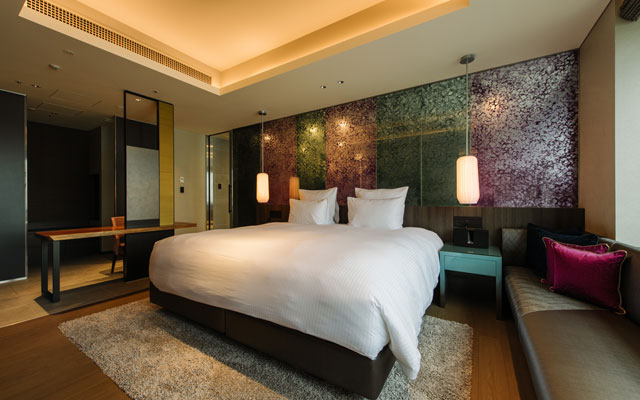
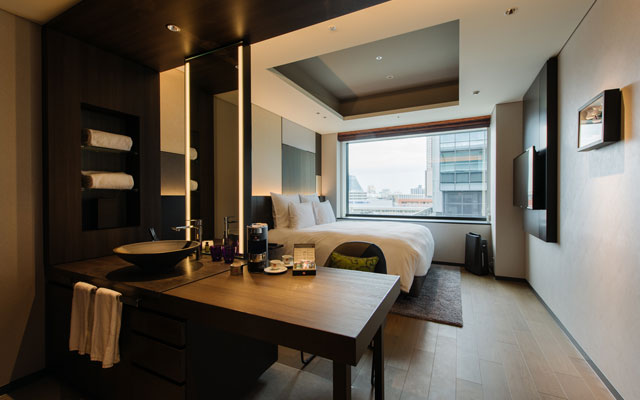
Pullman Tokyo offers 143 rooms including suites across six categories. Room sizes start from 29m2, and go up to the 81m2 Pullman Suite. All spaces come furnished with mod cons such as a Pullman bed from Takumi Otsuka, LCD TV, blackout shades, complimentary Wi-Fi, minibar, coffee machine and Bose wireless speaker.
1 of 10
Pullman Tokyo
Pullman Tokyo
Pullman Tokyo
Pullman Tokyo
Pullman Tokyo
Pullman Tokyo
Pullman Tokyo
Pullman Tokyo
Pullman Tokyo
Pullman Tokyo
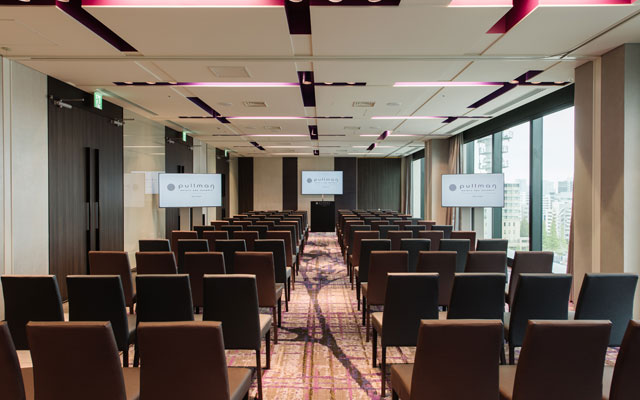
For functions, there are four banquet rooms on the ninth floor, the largest of which can take up to 64 pax banquet-style. There’s also a meeting room on the second floor that can take 15 pax in boardroom configuration.
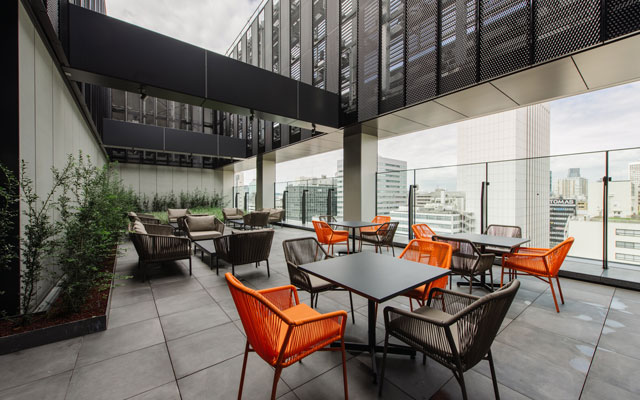
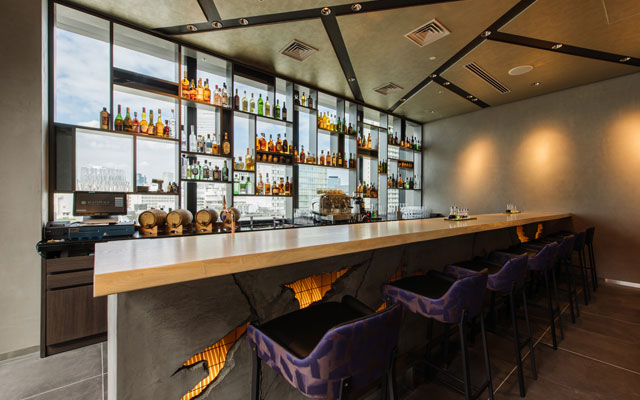
Other facilities include the Platform 9 rooftop bar, all-day dining restaurant Kasa and fitness centre.
Sheraton Grand Danang Resort, Vietnam has introduced two new meeting packages – Celebrate Your Way and Meet & Be Rewarded.
The Celebrate Your Way package offers a choice of three benefits: a complimentary one-hour welcome reception; one free attendee for every 10 confirmed; and double points. The package is available for bookings from now till May 31, 2019, and events have to be held by the same date.
Sheraton Grand Ballroom in a banquet setup
Next, the Meet & Be Rewarded package allows corporate event planners to pick from three benefits: a free one-hour welcome reception, five per cent off master-billed rooms, or double points. This package is valid for bookings made from between now and December 31, 2018, for meetings that take place by December 31, 2019.
In addition, the resort has introduced a variety of creative meeting breaks. Organisers can choose standard or deluxe meeting packages for their event, both of which include half- or full-day options. All packages include a selection of themed coffee or tea breaks. Attendees can enjoy options such as yoga breaks, pastry kitchen tours, or a Vietnamese coffee break which heads onto the streets of Danang.
Just 10 minutes from Phuket International Airport on the serene northern coast, this 178-key, Bill Bensley-designed resort offers delegates a quiet, tropical paradise steeped in Phuket’s tin-mining heritage
The newly-opened Ritz-Carlton, Bangkok anchors the One Bangkok development with cosmopolitan elegance. Featuring the city's largest ballroom and a spectacular new penthouse suite, it delivers exceptional hardware and deeply authentic, soulful service for business and leisure travellers alike
Behind the imposing, Brutalist concrete that defines Zurich’s Oerlikon district lies a surprising secret. While its exterior honours the neighbourhood’s industrial roots, stepping inside Mama Shelter reveals a vibrant, neon-soaked world that is a far cry from its rigid shell