Asia/Singapore Thursday, 7th May 2026
Page 755

Fare fluctuations more likely with further liberalisation on Chinese air routes

0
Chinese airlines allowed to set price on significantly more routes now

As Chinese authorities further loosen controls on airfares, travel industry players are expecting greater fluctuations on popular domestic routes as early as this summer.

Last December, the Civil Aviation Administration of China and the National Development and Reform Commission allowed Chinese carriers to set their own prices on a significantly larger number of routes.
Chinese airlines allowed to set price on significantly more routes now

According to BCD Travel, only 31 China air routes operated without price control in 2013. After the new ruling kicked in, the number jumped to 724 in 2017 and 1,030 this year

Historically, such measures tend to precede changes in airfares in either direction. After the Beijing to Hangzhou route became “unrestricted” in 2015, for example, the full economy fare increased from 1,540 yuan (US$225) to 2,200 yuan, a hike of over 40 per cent. On the other hand, after controls on the Shanghai to Zhengzhou route were relaxed in 2016, prices decreased by 17 per cent.

More than giving airlines pricing control, a greater implication of the reform is that prices become subject to free market forces, BCD Greater China, managing director, Jonathan Kao, stressed.

Changes in airfare hence become “the result of many different factors including competition between different carriers flying the route, competition with high speed rail, and behavior changes – travellers booking earlier, choosing cheaper flights”, Kao explained.

Yet, Kao expects that airfare in China will continue to increase modestly in the near future, “consistent with the rise in prices in most categories of products/services in China”.

Kao noted that TMCs will play a role in procuring options most beneficial for his corporate travellers. “There is no evidence so far that the price reform will affect the demand for business and leisure travel. However, we do feel that forward-planning and travel policy controls will become more important.”

On the leisure front, Century Holiday International Travel Group, Shanghai branch, vice general manager, Frank Kao said the market has already been regulating itself by supply and demand without much government control. While pricing varies between low and peak travel seasons, Century Holiday’s Kao said he has never encountered airlines charge above the ceiling of published rates.

“It’s hard to tell whether airfare will rise as it relates greatly to China’s economy. Based on big data and online websites (however), it seems economic prospects are not optimistic so there will be downward trend.”

A leisure travel agent in Beijing who spoke to TTGmice on the condition of anonymity also expected lower airfares from Chinese carriers in the future as high-speed trains are increasingly seen as alternatives to flying.

The source remarked: “If one takes the train between Xi’an and Chengdu or through Guangxi area, the view from the window will be super nice! While if taking a flight, you worry about the airflow bumps all the time.”

CWT Meetings & Events, JTB join forces SMM adoption

0

CWT Meetings & Events, Carlson Wagonlit Travel’s meeting & events division, has partnered with JTB Communication Design, the meeting & events arm of the JTB Group, to provide Strategic Meetings Management (SMM) services to companies in Japan.

The partnership will create SMM solutions tailored to Japan’s unique transportation, accommodation, venue management and regulatory environment.

From left: JTB Communication Design’s Tadashi Machida; and CWT Meetings & Events’ Kari Wendel

Strategic Meetings Management (SMM) is the enterprise-wide management of meetings and events. It’s a strategic approach to managing a company’s meetings and event processes, suppliers and data to create substantial efficiencies. The benefits include greater transparency of spend, cost reductions, improved compliance, risk mitigation and improved effectiveness of the company’s meetings and events.

“We’re seeing a lot of interest from our clients to include their operations in Japan as part of their global SMM programmes,” said Kari Wendel, vice president, global SMM strategy & solutions, CWT Meetings & Events. “However, the nuances of Japan’s meetings and events landscape mean that SMM solutions which work well in other parts of the world can’t be applied wholesale in this market.”

“We have created, for the first time, a real centre of excellence for enterprise meeting strategies within the Japanese market. The partnership will support the continued advancement of our global capabilities as well as our clients’ strategies,” added Wendel.

The implementation of SMM programmes by European and American companies with global operations in sectors such as IT, pharmaceutical, energy, and insurance has accelerated in recent years.

Asia-Pacific remains among the least mature regions when it comes to SMM adoption, primarily because processes tend to be highly manual. This is a result of local market nuances which may not fit a global framework on which most technology is engineered. Still, Japan is one of the markets in the region where interest in SMM programmes is quickly gaining traction.

In a 2016 study by CWT, more than half of meeting and event planning professionals surveyed said their companies had achieved savings of 10 per cent from their SMM programme, with a further 17 per cent of respondents saying they had saved more than 15 per cent.

AMEX GBT reports complex pricing landscape ahead for buyers

0
XXX

The Hotel Monitor 2019, published by American Express Global Business Travel (GBT), finds that geopolitical factors along with global, regional and local economics driving a diverse range of conditions for those negotiating hotel rates in key business destinations.

The first in a series of Monitor reports, Hotel Monitor 2019 was created by the Global Business Consulting team at GBT to support buyers ahead of the RFP season.

The report includes a 2019 pricing forecast for 150 key cities around the world, plus a white paper on accommodations programme optimisation.

The report forecasts a wide range of hotel rate fluctuations across regions in 2019, as buyers prepare for RFP season

Here are Asia-Pacific highlights:

Asia-Pacific economies are expected to grow by around 5.6% in 2018 and 2019, accounting for nearly two-thirds of global growth.

Demand continues to rise across the Asia-Pacific region, in particular India and China. This is creating a changing travel dynamic across the region, and room availability can be a challenge in popular locations such as Singapore, Hong Kong, Sydney, Tokyo and Bangkok.

New hotel builds are keeping pace with increased demand, meaning rates remain favourable to buyers in most locations. Overall, room rates should continue to increase moderately through 2018, although this will vary city by city.

Meanwhile, these are the report’s global highlights:

Global uncertainty impacting travel policies and demand
Traveller security and political unrest are expected to be catalysts for significant rate fluctuations globally, and demand for more security-compliant properties is growing – particularly in upscale hotels. Global policy trends, such as the impending Brexit, and changes to the NAFTA trade agreement, are also expected to impact trade and travel activities.

Hotel rates rising alongside flourishing regional economies
The Asia-Pacific region is anticipated to account for nearly two-thirds of global growth, with around 5.6% GDP growth in 2018 and 2019. This is reflected in projected hotel rate increases, and the Monitor finds similarly moderate rises in Latin America where the economy continues to improve.

Hoteliers striving to keep pace with increased demand
Globally, growing demand for hotel supply often outpaces room availability. Limited supply growth combined with steady demand is boosting rates in many European destinations.

However, in the Middle East, oversupply and other factors are pushing prices down in some Gulf states. North American hoteliers report increases in bookings and revenues, partly driven by strong business travel and group growth; rates are predicted to rise across the continent.

“As we enter hotel RFP season, overarching global and market tendencies will play a critical role in the operational and financial success of travel programmes,” said Harris Manlutac, head of global business consulting APAC, American Express GBT.

“Reviewing how others have adapted to changing business conditions provides an important opportunity to identify best strategies and ensure time and resources are utilised in the most cost-efficient way possible.”

The Hotel Monitor 2019 is the first of a regular Monitor series: future editions will analyse air and ground transport, starting later this year and in 2019.

Comprehensive details and analysis of factors impacting hotel rates at a national, regional and local level in 150 key cities can be found in the 2019 Hotel Monitor report and the 2019 Cities Forecast.

The shape of things to come

0

Tell us more about Radisson’s five-year global demand exercise.
In the next five years, Radisson Hotel Group aims to be one of the top three hotel companies in the world (through) a five-year operating plan that will deliver an aligned brand architecture, creative hospitality solutions, more streamlined operations and an integrated global platform. Our vision is to become the company of choice for guests, owners, investors and talent.

The rebranding of the umbrella brand, Radisson Hotel Group, leverages the powerful brand equity of the Radisson name, drive awareness and increase marketing efficiencies. Moreover, we have defined a new feeder market strategy coupled with a global integrated digital strategy.

We anticipate healthy underlying business performance, coupled with strong growth trajectory, in all of our brands.

With core expansion priorities in anchor Asia-Pacific markets and well-placed dedicated resources, we are in a prime position to double our portfolio size.

Highlighting China as a key growth market, we intend to build on our existing strengths in key cities while targeting aggressive growth in second-tier cities. We are looking to expand our mid-, upscale and lifestyle segment with the Radisson, Park Inn by Radisson and Radisson RED brands.

How does the Radisson rebranding impact the business events market?
Radisson Hotel Group’s global launch included a new global brand architecture supported by a refreshed loyalty programme Radisson Rewards, with a focus on business events.

We created Radisson Meetings by placing people at the heart of the process and treating every meeting or event as more than just a date on the calendar.

Radisson Meetings is built around three strong service commitments Professional, Personal and Memorable, while delivering on the brilliant basics and our signature “Yes I Can!” service spirit. Radisson Meetings provides a suite of bespoke services, professional planning tools, easy-to-use technologies, unique experiences, and more.

To top it all and reward loyalty, our Radisson Rewards earn valuable points toward rewards for all meeting bookings at all Radisson Hotel Group hotels. With Radisson Meetings, we are offering a fully integrated, holistic delivery of genuine hospitality and helping make every moment matter for our planners, event organisers and delegates.

Tell me more about Radisson’s expansion and development plans in this region.
The Group aims to double its Asia-Pacific portfolio, adding 20,000 rooms in the mid-term.

With emerging economies driving the business events industry’s growth, businesses in the region are responding to this market segment. Business events properties continue to be a key focus for us. As China is also seen to be a market that holds the gravitas of major economic activity, we see excellent potential in secondary cities.

To cater to these markets, new hotels such as Radisson Blu Wuhan ETD Zone which is set to open in 2019 will provide a full range of facilities, including space for corporate conferences and large-scale events. Being one of the largest cities in Central China, it has attracted many major Chinese and international companies to the city. The hotel is set to meet these corporate needs with the various signature meeting programmes which the brand has in place.

How do you view the future of the business events market in Asia-Pacific?
It is looking strong as it is expected to reach US$1.24 billion globally by 2023, which encompasses various aspects of business events including venues, accommodation, and the planning and execution of an event.

Looking ahead, more specifically in Asia-Pacific, one of the fastest developing regions in the world, there will be a long future for the business events industry.

According to Allied Market research, Asia-Pacific is expected to witness the highest growth rate of 8.6 per cent during the forecast period. (The business events market in) Asia-Pacific is driven by emerging countries. The growth of the Asia-Pacific business events industry is fuelled by the ease of visa restrictions, investments in better infrastructure, and high demand in commercial aviation.

Today, there is more demand for meetings, exhibitions and events for brainstorming ideas, showcasing the latest innovations or simply for networking and attracting clients.

What interesting observations have you made of the business events market here?
Rapid globalisation, and the continuous evolution of scientific and technological innovations, have contributed to the exponential growth of the business events market.

The digital landscape is evolving rapidly as new technologies are introduced and strong developments in artificial intelligence and virtual reality are seen. Technology will no doubt change the future of the business events industry. Virtual reality will change the market by offering experiences through interactive 360-degree technology.

Social media is also a key marketing tool for the business events industry as it influences the way people read and search, behave, meet and travel today. Social media is therefore changing the way the business events and travel industries market their events, services and destinations.

First Capri by Fraser in Japan to open in Ginza

0

Capri by Fraser is debuting in Japan with an opening in the Ginza district of Tokyo.

In line with the brand’s design centricity and millennial focus, Frasers Hospitality has partnered Japanese architect Kengo Kuma – whose work includes the upcoming Tokyo 2020 Olympic National Stadium – for the development of the property.

Spaces on the ground floor to facilitate play and social interaction

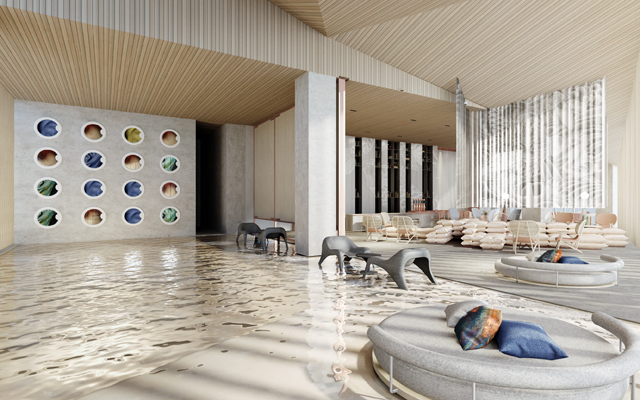
According to a statement from Frasers Hospitality, Kuma will channel his vision of challenging traditional urban spaces towards reinventing the concept of a hotel lobby, which will include social spaces on the street level connected to the pool, bar and Spin & Play, the brand’s innovative launderette offering.

Another highlight of Kuma’s design will be an origami roof at the entrance which regulates light entering the building.

Wardrobe space in the guestroom

The 190-room Capri by Fraser, Ginza / Tokyo will also feature meeting and conference facilities, as well as model after the digital core offering of Capri by Fraser, China Square / Singapore, which serves as a testbed for brand experiences.

Since its launch in 2012, Capri by Fraser has grown to become Frasers Hospitality’s fastest-growing brand with 16 properties in 14 cities with over 3,500 rooms, owing to rising demand from millennial travellers.

Capri by Fraser, Ginza / Tokyo will join Fraser Suites Akasaka, which is due to open in 2020 and Fraser Residence Nankai, Osaka, which opened in 2010 as the hospitality company’s debuting property in the country.

Onyx inks dual-property deal for Amari brand in Malaysia

0
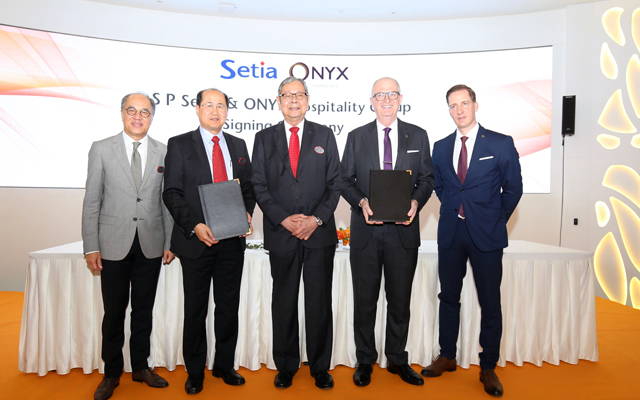
From left: SP Setia’s Wong Tuck Wai, Khor Chap Jen and Mohd Zahid with Onyx Hospitality Group’s Douglas Martell and Markus Aklin

Onyx Hospitality Group has signed agreements with Malaysian developer SP Setia Berhad to launch Amari hotels in Kuala Lumpur and Penang.

Set to open within the upcoming KL Eco City mixed-use development in the capital’s Mid Valley district in early 2021, the 252-room Amari Kuala Lumpur will enjoy direct access to corporate office buildings, residential towers, a retail mall and integrated rail hub with inter-city and inter-state rail connections.

From left: SP Setia’s Wong Tuck Wai, Khor Chap Jen and Mohd Zahid with Onyx Hospitality Group’s Douglas Martell and Markus Aklin

Amari Penang, scheduled to open in late 2020, will offer direct connectivity to the Setia SPICE Convention Centre. The world’s first hybrid solar powered convention centre incorporates a 10,000-seat events arena, aquatic and sports centre, and a lifestyle and retail village.

The hotel is located in the Bayan Lepas district of Penang island, close to multinational corporate offices, Penang Golf Club, shopping malls and places of interest.

Both hotels will feature key Amari brand signatures including service from Amari Hosts, the street market-style Amaya Food Gallery, Cascade lounge, meetings facilities and gathering spaces. Other facilities include pools and terraces, as well as a fully equipped fitness centre.

Amari Kuala Lumpur and Amari Penang will join Amari Johor Bahru, which opened last year as the brand’s first in the country.

Onyx said it has five properties in the pipeline in Malaysia.

Euromic appoints new executive director

0
Huw Tuckett

Non-profit association Euromic’s long-standing executive director, Christophe Verstraete, has left the organisation, and Huw Tuckett has been appointed as his successor.

Based in London, Euromic’s operational centre, Tuckett has over 20 years of global experience in the incentive travel and performance improvement industry.

Huw Tuckett

Welsh by birth, Tuckett has been providing consultancy services and was previously the chief operating officer of Uwin and Iwin International South Africa. Prior to that was an inbound incentives manager for Abercrombie & Kent Southern Africa. He also has experience to the cruise and aviation industries.

Euromic represents DMCs in 54 countries.

Happy 53rd birthday Singapore!

0
XXXX Photo credit: Pamela Chow
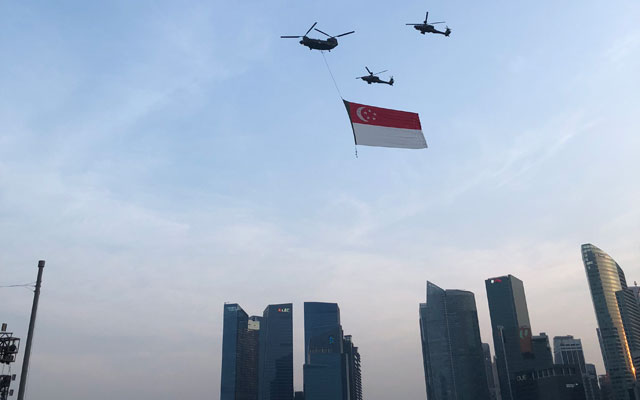
Flying the Singapore flag high. Photo credit: Pamela Chow

TTGmice, with its editorial headquarters in Singapore, will be taking a break for the public holiday on Thursday, August 9, in recognition of the country’s 53rd National Day.

TTGmice news will resume on Tuesday, August 14.

Happy National Day in advance to all Singaporean readers!

There’s now an events venue on the Great Barrier Reef

0
XXX

The first dedicated events venue on the Great Barrier Reef has been launched in Cairns, Australia, offering events and functions in the middle of the Coral Sea.

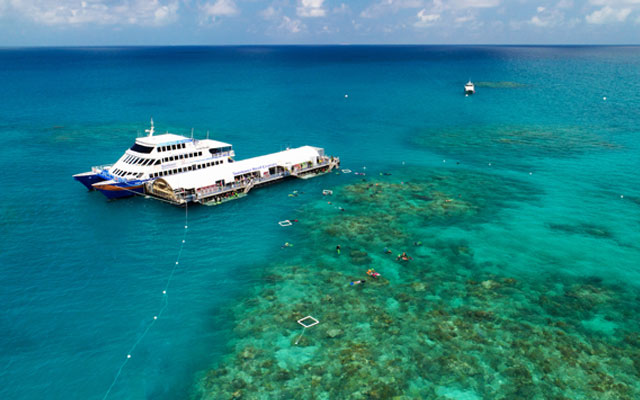
Sunlover Funlover is an innovative event and entertainment product incorporating a high-speed catamaran and outer Great Barrier Reef pontoon which can be customised for any function. It can cater for more than 300 guests, and operates all-year-round.

The catamaran and its attached pontoon

Sunlover Reef Cruises and Hides Hotel Cairns group general manager Sharon Sheldrake said the unique offsite venue was the only tourism infrastructure at Arlington Reef so guests would feel like they had the Great Barrier Reef to themselves.

Entertainment options include starting the event with a comedian doing a live set, or learn about the reef from in-house marine experts, as the boat leaves Cairns and sails for 90 minutes to the Great Barrier Reef.

Once the boat anchors, activities includes snorkelling, glass-bottom boat tours, visiting the underwater observatory, fish feeding can be arranged and are included in the fee, while extras such as diving and scenic helicopter rides can be added.

Kota Kinabalu Marriott welcomes guests to Sabah

0

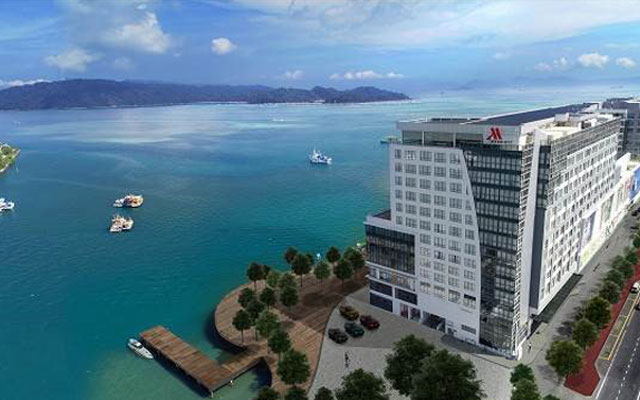
The Kota Kinabalu Marriott Hotel in Sabah, has opened along Jalan Tun Fuad Stephens on the Malaysian city’s waterfront.

The property offers 332 guestrooms and suites decked out in a contemporary design that pays homage to the rich heritage of Borneo’s Kadazandusun tribe.

Kota Kinabalu Marriott

Recreational facilities include an outdoor infinity pool with views of the South China Sea, a 24-hour gym, and a spa. There are also five F&B options, ranging from the Japanese teppanyaki dining room to the rooftop bar.

The property has also been designed to meet the needs of Malaysia’s growing business events market, offering some 1,300m2 of versatile event space. Function space include five rooms, and a Grand Ballroom that can accommodate up to 650 guests.

Reviews

The Ritz-Carlton, Bangkok

The newly-opened Ritz-Carlton, Bangkok anchors the One Bangkok development with cosmopolitan elegance. Featuring the city's largest ballroom and a spectacular new penthouse suite, it delivers exceptional hardware and deeply authentic, soulful service for business and leisure travellers alike

Mama Shelter Zurich

Behind the imposing, Brutalist concrete that defines Zurich’s Oerlikon district lies a surprising secret. While its exterior honours the neighbourhood’s industrial roots, stepping inside Mama Shelter reveals a vibrant, neon-soaked world that is a far cry from its rigid shell

Hyatt Regency Kuala Lumpur at KL Midtown

A polished urban retreat designed for business travellers, Hyatt Regency Kuala Lumpur at KL Midtown combines thoughtful design, seamless service, and exceptional facilities.