Asia/Singapore Saturday, 27th June 2026
Page 755

Longhaul buyers look beyond mainstream Asian destinations

0
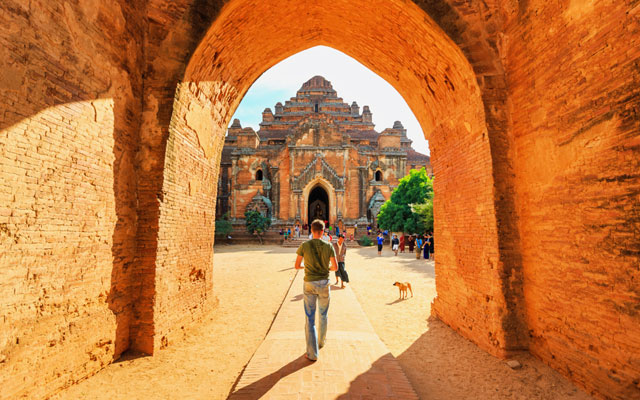
Myanmar is rising in popularity as an incentive destination for Dhammayangyi Temple in Bagan pictured

Longhaul demand for Asian incentive holidays is spreading beyond the usual favourites to destinations such as Vietnam and Myanmar, according to buyers at IT&CM Asia.

Ben Gosman, managing director of Netherlands-based FreeStyle Incentives, said Vietnam is becoming an increasingly attractive alternative to the long-popular Thailand.
Myanmar is rising in popularity as an incentive destination for buyers from Europe; Dhammayangyi Temple in Bagan pictured

“The euro is weak compared to the dollar. It used to be at 1.5 dollar per euro, now it’s 1.1 – we lost 40 per cent,” he said. “Compared to the Thai baht we also lost 40 per cent in the last three years. With the euro down, Thailand gets more expensive, and Vietnam becomes very, very attractive.”

In Vietnam, Phu Quoc is an emerging destination for Gosman although mass tourism and construction on this island are becoming growing concerns.

This is also one of the reasons behind the change in FreeStyle Incentives’ Thailand programmes in recent years, with Hua Hin now offered as the beach leg in place of Phuket and Koh Samui.

“We used to offer Phuket and Koh Samui, but two or three years ago, we cut those out. It saves us a flight, and these areas are too crowded. We try to stay away from mainstream destinations.”

Meanwhile, Vietnam and Myanmar are also rising in popularity at Italy’s Ita Events, although Thailand remains the main South-east Asian destination for incentive tours, said Sandro Saccocio, senior project manager.

“Clients like South-east Asia for the food experience. They also like to (get hands on), so local cultural activities such as painting, fruit sculpting and weaving keep clients interested,” he said.

Udo Landow from Show D’Vision Germany is on the lookout for destinations with the “wow appeal”. He added: “In Malaysia, we look for lesser-known islands that are not so commercialised but have good convention facilities to support corporate groups.”

Nevertheless, classic destinations like Bali and Bangkok still rank highly on meeting and incentive planners’ radar.

“I am interested particularly in Bali because there is a new flight that will directly connect with (Moscow). I am also exploring Phuket and Pattaya to see if there are new hotels and activities for me to bring incentives and meetings over.” – additional reporting by Paige Lee Pei Qi
Corporate groups look to Japan as a learning destination

0
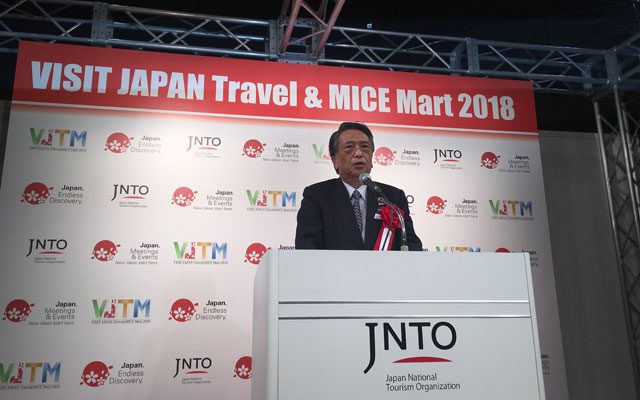
Kiyono Satoshi, JNTO's president, addressing the crowd the opening ceremony, where making Japan appealing for learning was noted

A rising number of unique learning opportunities for business groups is stimulating interest in Japan as an international business events destination.

Industry officials and corporate buyers at Visit Japan Travel & MICE Mart, held over 20-22 September at Tokyo’s Big Site, shared that the country is increasingly seen as a place where corporate visitors can grow professionally.

JNTO’s president Satoshi Seino addressing the crowd at VJTM’s 2018 opening ceremony, where the making of Japan appealing for learning was highlighted. Photo credit: Kathryn Wortley

According to Etsuko Kawasaki, executive director of the Japan Convention and Visitors Bureau, a 2016 study on why people chose Japan as a business events destination shows that the ability to “gain flashes of insight”, and its location as a place “where knowledge and talent meet”, were two of the top responses. Others were its safe, clean cites and track record in providing quality experiences.

In 2018, Japan is adding more centres for learning to its portfolio of unique venues, including Yamagata Museum of Art, which opened in February 2018, and Aichi Museum of Flight, which showcases airplanes made in Japan.

Officials are hopeful that these venues will be successful, due to the growing number of business visitors to other museums nationwide.

For example, the Toyota Commemorative Museum of Industry and Technology in Aichi Prefecture welcomed 460,000 visitors in 2017, up from 420,000 in 2016. About 20 per cent of visitors were from overseas, from companies in South-east Asia that are Japan-owned.

Toshihide Narita, deputy director and curator of the museum, said South-east Asia is a growing market for the museum because more Japanese companies are establishing operations there and want their staff to have an understanding of Japanese industry and technology. The museum tour is usually part of their staff training.

“Our museum promotes the spirit of studiousness and creativity,” he said, adding that it “shows how challenges have been overcome through R&D”.

Meanwhile, Tokyo-based tour operator Hanatour Japan began offering tours of hospitals for business groups from the Philippines in March 2018. According to Lo King Yin of the company’s international business department, most attendees are doctors or nurses seeking first-hand insight into Japan’s medical practices and hospital management.

Travel managers come up with solutions to tighten belts

0
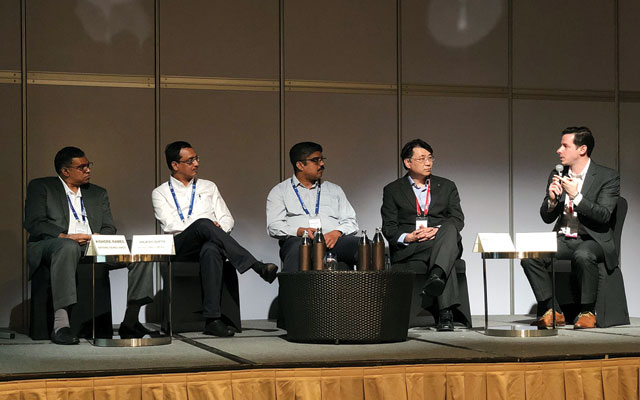
From left: National Oilwell Varco's Kishore Rames; Eli Lilly and Company's Rajesh Gupta; Accenture's Manjunath Shetty; Japan Airlines's Derek Ho; and CWT Asia Pacific's Michael Valkevich

In the face of rising airfares and room costs, travel managers are turning to consolidators and digital tools to tighten corporate travel spend, revealed speakers at the CTW Asia-Pacific Keynote and Forum, part of IT&CM Asia.

Airfare prices are expected to rise by an average of 3.2 per cent and room rates by 5.1 per cent per annum, shared Michael Valkevich, vice-president global sales and programme management, Asia Pacific, Carlson Wagonlit Travel.

From left: National Oilwell Varco’s Kishore Rames; Eli Lilly and Company’s Rajesh Gupta; Accenture’s Manjunath Shetty; Japan Airlines’s Derek Ho; and CWT Asia Pacific’s Michael Valkevich

In response, companies such as Accenture are looking at “new and innovative ways to negotiate and tweak policies to optimise” internal spending, said Manjunath Shetty, its associate manager – travel management.

For example, the company is working with its consolidator to achieve better hotel prices, such as negotiating for a city rate on hotels within certain geographical parameters, as well as funnelling all corporate travel claims to a single TMC or booking tool for successful reimbursement. It has also mandated the lowest airfare available for a route, but allow separate baggage add-ons.

Rajesh Gupta, consultant – global travel and meeting services for Eli Lilly and Company India, said his company has implemented technological solutions such as Yapta’s Room IQ and Fare IQ to control flight and room spend.

Tightening measures are also in place for the booking of sharing economy and other standalone accommodation, as cheaper options surface with the rise of Airbnb and independent boutique hotels.

“We do take bookings for standalone properties, but with caution. The first level of auditing is done by our consolidator based on our given parameters. We zero in on a few (accommodations) and leverage our global security teams to conduct hidden random audits for safety, especially for our female employees,” explained Shetty.

Meanwhile, other companies like National Oilwell Varco are remaining strictly against shared or gig economy spend “due to security and safety” concerns, said Kishore Rames, its travel manager Asia Pacific.

Business events a catalyst to quicken Kamaishi’s recovery

0
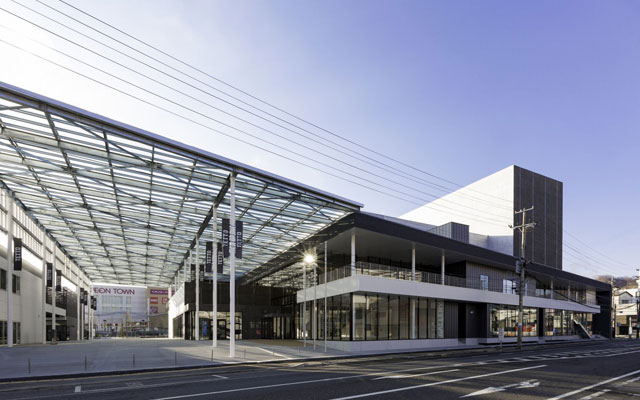
Kamaishi Civic Hall. Photo credit: Aat+Makoto Yokomizo Architects

Iwate Prefecture’s Kamaishi, which was devastated by the Great East Japan Earthquake and Tsunami of 2011, is looking towards the business events market as part of its ongoing recovery.

In the port town, where 30 per cent of homes and 60 per cent of businesses were damaged or destroyed, facilities for meetings and activities for incentive groups are rising in attractiveness.

Kamaishi Civic Hall. Photo credit: Aat+Makoto Yokomizo Architects

For example, Cosmos Park – a repurposed municipal park that housed the homeless following the disaster – was transformed from an old factory and wasteland into a play park, garden, activity centre and restaurant. The facility now welcomes about 10 incentive groups, numbering 20 pax each, per year.

“Our pizza-making experience is our most popular experience because it’s a great teambuilding activity that connects people and nature; some members pick the tomatoes from the garden, while others tend to our on-site pizza oven,” shared owner Satoru Fuji.

Meanwhile, Osaki 100 Nengakusha, a local organisation aiming to preserve nature, culture and fishing jobs in the area for 100 years, set up eco tours to showcase the coexistence of people and the marine environment. The fishing boat ride around the bay, barbecue lunch of oysters – which were wiped out in 2011 – and beach litter pick package has attracted repeat incentive groups, mostly from Tokyo and Taiwan.

“Participants enjoy eating fresh seafood with views of the ocean it came from, and giving back to the community,” said tour leader Shinya Kubo.

As well, Tetto or Kamaishi Civic Hall opened in April 2018, complete with two halls, a gallery, seven meeting rooms, three studios, two Japanese tatami mat rooms, and a lobby suitable for indoor and outdoor events. Next door, the newly-opened Pit boasts a stage and standing or seating suitable for product launches, shows and conferences.

The Ryokan Yakume also added banquet and meeting rooms for business groups as part of its refurbishment of its first and second floors, which were inundated by the tsunami.

As Kamaishi is a host town of the Rugby World Cup 2019, facility and activity providers are expecting further growth, as corporate groups add local activities to their fixtures’ corporate hospitality packages.

Agents devise alternative solutions to deal with peso depreciation

0
The Philippine peso is feeling the heat from the rising greenback

As the Philippine currency sinks in value to 54.1 pesos against the greenback – the weakest in nearly 13 years and eight per cent lower than at the start of the year – the business events sector is rethinking its strategies, and reining in outbound travel in favour of domestic and shorthaul destinations.

Angel Ramos Bognot, owner of Afro Asian World Events, said the peso’s reduced value has already spelt “disaster” for outbound business.

The Philippine peso is feeling the heat from the rising greenback

“Travellers are spending more and their money is of less value, which will result in delays or suspensions of their international trips, and they may opt to hold MICE domestically.”

For those going ahead with MICE abroad, “a shorthaul trip is advised as it’s more affordable”, Bognot pointed out.

Since this year, Canon Marketing Philippines has been limiting overseas trips in favour of rewarding its champions with local trips or a combination of domestic meetings, cash incentives, and non-cash products like raffling off luxury cars and Rolex watches.

With the peso’s depreciation, a trip abroad would exceed the company’s “fixed budget”, so Canon would opt for a domestic trip or host a business meeting locally combined with other perks, said Grace Obeya, sales and marketing manager, consumable group, consumer systems products division.

Such flexibility will enable the company to “still attain business objectives” although foreign trips combining business and relaxation are still booked in cases of special events, such as the launch of a new product or prototype, Obeya said.

While Tradewings Tours and Travel Corp has yet to experience any direct impacts of a weaker peso, general manager Feliz Axalan expects “to minimise our margins” for MICE business in 2019 when bids are awarded around October to November this year.

The effects of the peso’s depreciation will likely be more acutely felt next year, he added.

Furthermore, Axalan expressed worries about outbound demand next year not only due to exchange rate fluctuation – with some experts predicting a further drop to 55 pesos to the US dollar by year-end – but also the impending hike in fuel surcharge for airlines and the general election next May.

On the other hand, industry players expect the peso’s depreciation will make the Philippines a more attractive destination for inbound business.

“However, there is a negative impression overseas on the economic perspective of the country, linking the weak peso with high prices and instability in commodity pricing,” Bognot said.

New 2019 masterplan in the works for Thai cities with MICE potential

0

Come 2019, Thailand Convention & Exhibition Bureau (TCEB) will launch a new masterplan for several MICE cities in the country to focus more on their designation management, marketing and development.

The city profiles of Chiang Rai, Udon Thani, Phitsanulok, Songkhla, Surat Thani, Phetchaburi-Hua Hin-Cha-am and Nakhon Ratchasima have already been studied, according to Supawan Teerarat, senior vice president, strategic business development & innovation with TCEB.

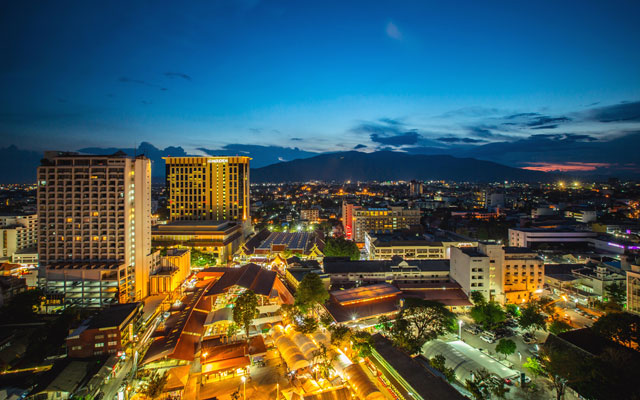
Chiang Mai (pictured) has now allocated a budget to run MICE-related activities every year

The bureau will be “setting up a meeting and public hearing with private and public stakeholders in each of these cities” to assist them in the upgrading to become MICE-ready, Supawan revealed.

The strategy to increase the number of MICE-designated cities will be based on their level of readiness. There will be three classifications: International MICE City, Regional MICE City and Domestic MICE City.

Said Supawan: “Our goal is to groom them all to become International MICE Cities.”

When asked for an update on the five designated MICE cities, Supawan shared: “We are proud to say that after more than five years of engaging with these cities, they now understand how the MICE sector generates revenue to the destination, and some cities – Chiang Mai and Phuket – have included MICE activities in their strategic plan.

“For instance, Chiang Mai has allocated a budget to run MICE activities every year, and we are hoping other cities follow suit as this will confirm their long-term commitment to the MICE industry and TCEB.”

Last year, Chiang Mai welcomed 50,881 business events visitors, which generated a revenue of 4.7 billion baht (US$144 million). Meanwhile, the domestic market brought in 2.1 million visitors and generated 4.9 billion baht in revenue.

As Thailand is gifted with diverse destinations offering myriad attractions and strengths, TCEB hopes to designate more cities for business events. Aside from the aforementioned cities, others being assessed include Rayong and Prachuab Khiri Khan.

“Three more cities will be looked at next year – Ubon Ratchani, Nakorn Srithammarat and Kanchanaburi,” added Supawan. – additional reporting by Rachel AJ Lee

MICE groups do not eschew Japan, still keen to visit

0
It’s all well in Sapporo (pictured) as the cities quickly recover from the recent space of natural disasters

Several Japanese convention and tourism bureaus that participated at last week’s IT&CM Asia have reported that there has been a minimal impact from the business events sector despite being on the receiving end of a typhoon (September 4) and earthquake (September 14).

Asako Shiomi, deputy manager, Osaka Convention & Tourism Bureau, told TTGmice: “We did not receive many cancellations from the business events groups, most simply rescheduled their visit.”

It’s all well in Sapporo (pictured) as it quickly recovers from the recent spate of natural disasters

For instance, one group from the Philippines was supposed to arrive on September 5 but they have rescheduled to the end of this month. There is another 100 pax group scheduled to visit in October.

Shiomi’s concern however, was regarding the bid for association meetings that usually took place years later.

“The event may take place four years later, but they have to make the decision now. This will need extra efforts from our side to convince organisers to choose our destination,” she shared.

Ayako Kurosawa, incentive coordinator, of Sapporo Convention Bureau, reinforced the fact that Sapporo is operating normally shortly after the earthquake which caused a city-wide blackout. Moreover, the bridge between the airport and downtown has also been repaired.

Kurosawa said: “There was a group of about 70 participants from Indonesia scheduled to arrive two days after the earthquake. We suggested to postpone, but they decided to cancel and chose another destination instead. However, another group from China of about 400 people, have decided to postpone the trip for a month.”

For Junichi Kito, senior manager business development, JTB Thailand, he said that the company lost a significant chunk of business due to the natural disasters.

He said: “Apart from the damage caused, the Kansai Airport was closed. Now that the airport is back in operation and is operating at 50 per cent, we are expecting business to pick up again.”

What the destination needs now, according to Kito, was support from the prefectures to keep on with the accurate updates and continue promoting their destinations to clients.

CWT Meetings & Events makes three appointments

0
From left: Michelle Sargent; Heather Lawson; and Ben Ogden

CWT Meetings & Events, Carlson Wagonlit Travel’s meeting & events division, has strengthened its presence in Australia and New Zealand with three new appointments.

From left: Michelle Sargent; Heather Lawson; and Ben Ogden

The three senior executives are Michelle Sargent, director & commercial leader, Australia and New Zealand; Heather Lawson, national operations manager; and Ben Ogden, senior event manager.

Sargent has over two decades of experience in the tourism and events industries. Prior to joining CWT Meetings & Events, she was general manager for Sydney-based Platinum Event Solutions.

Tinidee Ranong releases new meeting package

0
Meeting Room

Tinidee Hotel@Ranong, in Thailand’s south, has launched a new meeting package.

The package includes a full-day meeting venue, two coffee breaks, one lunch and one night’s stay in a Superior room with daily breakfast. Included in the rate are an LCD Projector with screen, standard audio system, flipchart,, notepads and pencils for delegates.

Meeting Room

Prices start at 1,700 baht (US$52) nett per room per night for single occupancy or 2,400 baht nett per room per night for twin rooms. For every 30 rooms booked and occupied, one complimentary room will be given, and one room will get an upgrade to the next category.

Contact (66) 2 048 7093 for more information.

Rosewood announces slews of promotions, MD hires

0
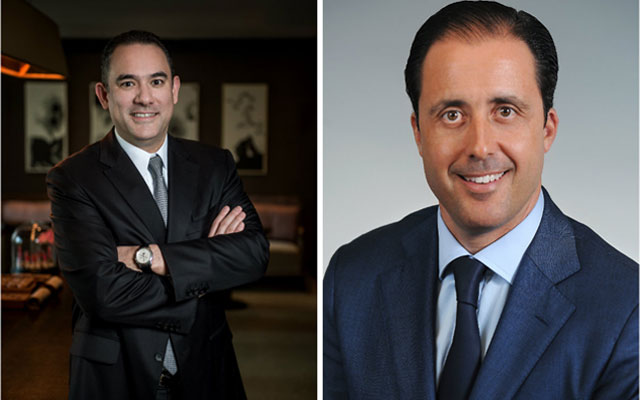
From left: Marc Handl_and Andrew Turner

Rosewood Hotel Group has promoted the respective managing directors of its Beijing and Phuket properties Marc Handl and Andrew Turner to regional vice presidents, in addition to the appointment of new general managers for properties launching in the region soon.

From left: Marc Handl and Andrew Turner

With his promotion to regional vice president, Handl will additionally support Rosewood Sanya and the upcoming opening of Rosewood Guangzhou. Handl joined Rosewood in 2017 as area managing director of Rosewood Beijing, where he has been overseeing the group’s properties in Beijing, Shenyang and Langfang across its brands.

Handl has considerable luxury experience in East Asia, joining from Aman Group in Japan, where he was regional director based at its Tokyo property for almost two years. He previously held positions at Grand Hyatt and BC Fine Living in Beijing, as well as previous general manager posts at The Ritz-Carlton hotels in Osaka and Seoul.

Turner, following his promotion to regional vice president, will support existing Rosewood properties including Luang Prabang and Phnom Penh, as well as guide the upcoming Rosewood openings in Bangkok and Yangon.

The Australian joined Rosewood in 2016 as managing director of Rosewood Phuket. Turner has 22 years’ experience managing both city hotels and resorts across Asia, Middle East, Europe and the US, most recently at Baccarat Hotel & Residences in New York.

As well, three new managing directors have been appointed for Rosewood’s trio of upcoming properties in the region.

From left: Thomas Harlander, Stephan Tschuppik, and Ed Brea

Thomas Harlander has been appointed managing director of Rosewood Bangkok (opening winter 2018). Bringing more than 18 years’ experience in the luxury hospitality industry, the German will manage and oversee all aspects of Bangkok property. Harlander’s career has taken him around the world to cities such as London, Washington DC, Los Angeles, Buenos Aires, Tokyo and most recently Seoul where he was general manager of the Park Hyatt hotel. Prior to joining Rosewood, his career extended throughout the Park Hyatt brand where he held hotel general manager and senior F&B management roles.

Stephan Tschuppik has been appointed managing director of Rosewood Guangzhou, which will be opening in Spring 2019. An Austrian native, Tschuppik’s hotel journey has taken him from his home country to the UAE, Oman, Vietnam, South Korea, Taiwan and China. He has over 25 years of industry experience, 16 years primarily across the Hyatt group in different destinations which includes Park Hyatt Saigon, Grand Hyatt Seoul, as well as a wealth of experience in pre-opening and opening China hotels, such as Grand Hyatt Shenyang and the Park Hyatt in Hangzhou.

Ed Brea has been appointed managing director of Rosewood Yangon, scheduled to open within 2018. With more than 30 years of experience in the luxury hospitality industry, Hawaii-born Brea has managed prestigious properties in Asia, most recently for Kempinski Hotels, as well as for Hyatt Hotels Corporation, Shangri-La Hotels & Resorts and One&Only Resorts.

Reviews

The Slate Phuket

Just 10 minutes from Phuket International Airport on the serene northern coast, this 178-key, Bill Bensley-designed resort offers delegates a quiet, tropical paradise steeped in Phuket’s tin-mining heritage

The Ritz-Carlton, Bangkok

The newly-opened Ritz-Carlton, Bangkok anchors the One Bangkok development with cosmopolitan elegance. Featuring the city's largest ballroom and a spectacular new penthouse suite, it delivers exceptional hardware and deeply authentic, soulful service for business and leisure travellers alike

Mama Shelter Zurich

Behind the imposing, Brutalist concrete that defines Zurich’s Oerlikon district lies a surprising secret. While its exterior honours the neighbourhood’s industrial roots, stepping inside Mama Shelter reveals a vibrant, neon-soaked world that is a far cry from its rigid shell