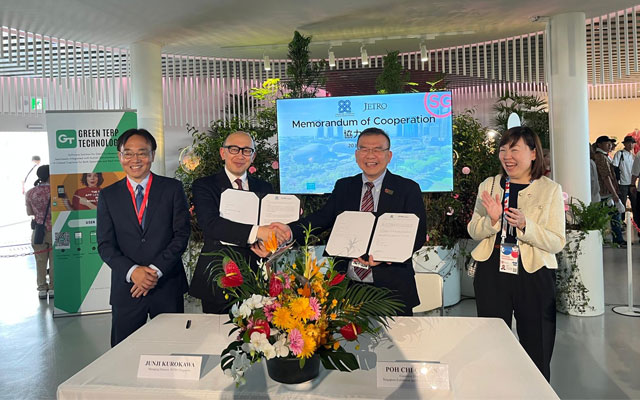
From left: JETRO’s Katsunori Nakazawa and Junji Kurokawa; SECB’s Poh Chi Chuan; and Embassy of Singapore (Tokyo)'s Liew Li Lin at the signing ceremony
The Singapore Exhibition and Convention Bureau (SECB) and Japan External Trade Organisation (JETRO) Singapore have signed a three-year Memorandum of Cooperation to catalyse business events growth and create new gateways for economic collaboration between Singapore and Japan.
From left: JETRO’s Katsunori Nakazawa and Junji Kurokawa; SECB’s Poh Chi Chuan; and Embassy of Singapore (Tokyo)’s Liew Li Lin at the signing ceremony
Globally, the business events industry is projected to continue growing at a compound annual growth rate (CAGR) of 7.2 per cent from 2024 to 2032. The Asia-Pacific (APAC) business events sector is expected to lead this expansion, driven by robust regional economies, rising business travel, and improved infrastructure.
Capitalising on this trend, Singapore continues to build a strong pipeline of business events across advanced manufacturing, financial services, green economy, life sciences and technology. Singapore’s key attributes of innovation, trust and safety, combined with JETRO’s deep connections to Japanese industry leaders, creates powerful synergies and unlocks new opportunities for business growth across the APAC region.
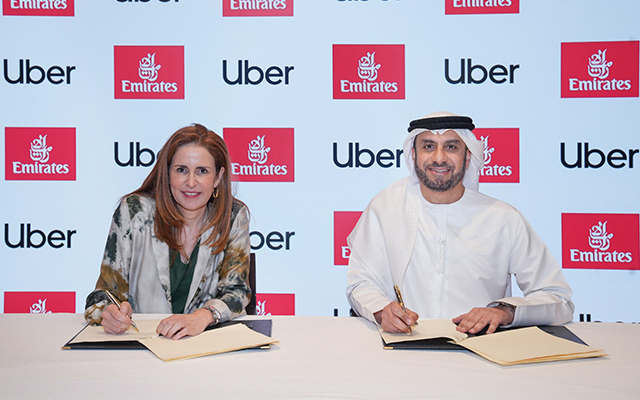
Emirates and Uber have entered a strategic partnership to explore ways to enhance on-ground mobility experience for Emirates customers, while offering Skywards members loyalty benefits when using the Uber platform across select markets within the Emirates network.
Through this partnership, the two companies will work towards introducing several initiatives, including an integrated booking experience that combines Uber Rides Vouchers with flight bookings for easier airport transfers or in-city rides. Additionally, Emirates and Uber will explore offering Uber rides to and from the airport for select Emirates customers, supporting a complete door-to-destination experience.
Uber’s Anabel Diaz Calderon (left) and Emirates’ Adnan Kazim ink an MoU to signal the start of a new partnership
The partnership will explore strategic opportunities to closely collaborate on offering Skywards members in the UAE the opportunity to earn on rides or redeem their miles for Uber app credits or vouchers. Emirates Skywards will also explore ways for members in the UAE to benefit from earning Miles on Uber rides across select markets in the Emirates network.
To maximise awareness around the rollout of initiatives under the partnership, Emirates and Uber will explore leveraging cross promotional marketing campaigns across the airline’s network.
Melbourne is cementing its place as a sustainability trailblazer in business events, with a deliberate focus on environmental and social leadership shaping its forward-looking strategy.
That focus is translating into results. The city’s calendar is filled with high-profile events that prioritise sustainability and align with the United Nations Sustainable Development Goals.
Melbourne skyline at twilight
Among them are the Wind Energy Summit in July, the World Sustainable Built Environment Conference, and the Women Deliver Conference, both scheduled for 2026.
“Our mission extends beyond economic impacts. We are keen to relay the profound social and community benefits that accompany these events,” said Julia Swanson, CEO of the Melbourne Convention Bureau (MCB).
At Melbourne Airport, sustainability is being integrated into core operations, despite the complexity of balancing ambitious targets with daily operations.
“We are the first capital city airport in Australia to commit to net zero for Scope 1 and 2 emissions by 2025. And I’m proud to say we are on track,” said Gigi Yuen, the airport’s head of sustainability and environment.
The airport’s on-site solar farm – already producing 40 megawatts with an additional seven megawatts due this year –is complemented by wind energy to support its embedded renewable network. Other initiatives include investments in electric vehicles and charging infrastructure, ban on single-use plastics introduced ahead of state mandates, and an organic processing unit that converts food waste into fertiliser.
Meanwhile, the Melbourne Convention and Exhibition Centre (MCEC) recently released its net zero roadmap, with plans to achieve net zero by 2050. The venue has embraced a triple bottom line approach – balancing social, environmental, and economic outcomes in a way that supports client goals, according to chief strategy and governance officer Rohan Astley.
Across the city, a growing list of pioneering suppliers and partners have made sustainability a core operational tenet. MCB partner Dann Event Hire, for example, offers products designed to be reused, repurposed or donated to minimise waste.
Business events with the Royal Botanic Gardens Victoria help preserve natural and cultural legacies, while event management companies like NatureBoss promote a direct relationship between business and the natural environment.
“We know from internal research with our clients that sustainability is a must-have, not a nice-to-have. So we really need to over-index,” Swanson told TTGmice.
Melbourne’s pedestrian-friendly city centre infrastructure and efficient public transport also help reduce event-related carbon emissions. Importantly, sustainability does not necessarily come at a premium. As Swanson noted, many venues already incorporate food recycling and waste minimisation as part of their standard offerings.
“Events in Melbourne are not just about large groups visiting and leaving; they are about creating a powerful force for meaningful impact,” she said.
These values are resonating across the Asia-Pacific market. Melbourne is seeing a “leaps and bounds” resurgence in interest from China, signalling a return of large incentive groups. In April, the city welcomed 16,000 delegates for the Amway China Leadership Seminar – the largest incentive group ever hosted in Australia, surpassing Melbourne’s previous record of 12,000. That single event is expected to generate A$100 million (US$64.2 million) in economic impact.
Interestingly, while total visitation numbers from China were down 23 per cent on pre-pandemic levels, expenditure rose by 65 per cent last year, indicating the return of high-yield leisure travellers and corporate incentive groups.
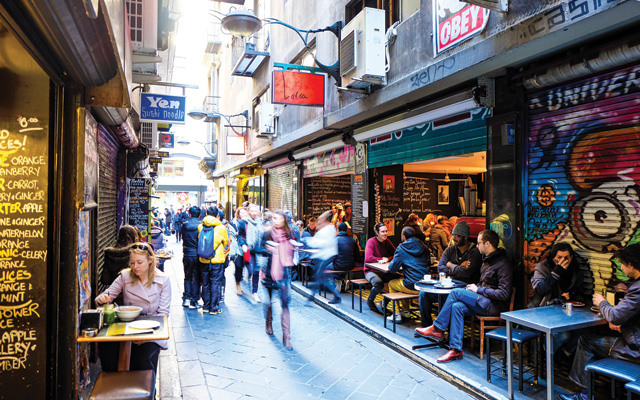
A laneway in Melbourne’s CBD
Improved connectivity is also fuelling growth. With new direct routes from Hangzhou and Seoul, and a 300 per cent increase in aviation services from India compared to pre-pandemic levels, Melbourne is strengthening its ties with key Asian markets.
“We’re really seeing growth across all of Asia,” said Swanson. “South-east Asia remains a core market with Malaysia, Indonesia, and Singapore always strong performers for us. Some markets, like Vietnam, are also starting to grow. There’s now a new trade investment office in Vietnam and increased flight connections between us, so that is certainly one market to watch.”
Last year was also a significant year for new hotel openings, pushing the number of total rooms to over 26,000 rooms in the city centre, more than any other Australian city.
MCB’s latest update in February 2025 had 114 confirmed events through to 2028, representing A$613 million in projected economic impact and nearly 108,000 delegates.
Cambodia Airways will commence twice weekly direct flights between Phnom Penh and Penang from June 26, becoming the only airline to serve this route. It is expected to boost inbound tourism to Malaysia’s northern region, particularly benefitting Penang and neighbouring states.
Malaysia Inbound Tourism Association (MITA) president, Mint Leong, welcomes the new service, noting that it will significantly improve connectivity between Malaysia’s northern region and Cambodia, opening up fresh opportunities for two-way leisure and business travel.
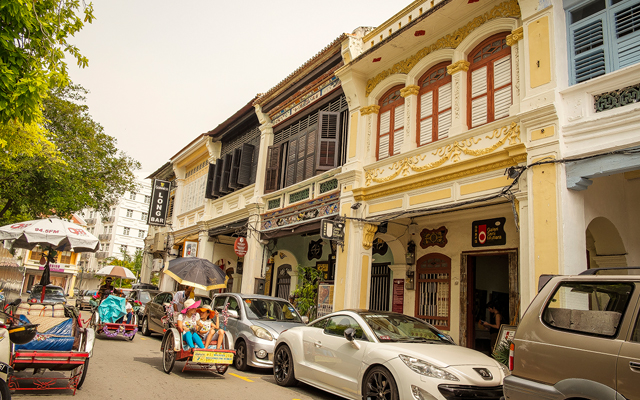
New direct flights from Phnom Penh will lift leisure, business and medical tourism business in Penang; Penang’s historic Armenian Street pictured
She said: “Penang hospitals will also benefit as it becomes easier for Cambodian patients to seek specialised medical treatment here. Many of our private healthcare facilities here already have a strong reputation for affordability and high-quality care.”
Leong said MITA is eager to collaborate with outbound agents from Cambodia to further stimulate travel demand and promote Malaysia’s northern region as a multifaceted destination.
She added: “We are willing to host fam trips to give them first hand experience of Penang and the northern region’s tourism offerings, thus making it easier for them to develop compelling travel packages.”
In support of the new service, Penang Convention & Exhibition Bureau’s CEO Ashwin Gunasekeran led his team on a courtesy visit to Cambodia Airways headquarters in Phnom Penh on June 17.
Discussions focused on potential marketing collaboration, joint initiatives to raise awareness of the new connection, and opportunities to foster deeper ties between Penang and Cambodia. These efforts are designed to support the long-term viability of the route and encourage stronger two-way engagement.
Japan plans to introduce pre-arrival screening for travel to Japan in 2028 as part of wider efforts to boost inbound tourism while enhancing border security and streamlining entry procedures.
The system, which will be named JESTA (Japan Electronic System for Travel Authorization), is being modelled on the US Electronic System for Travel Authorization (ESTA).
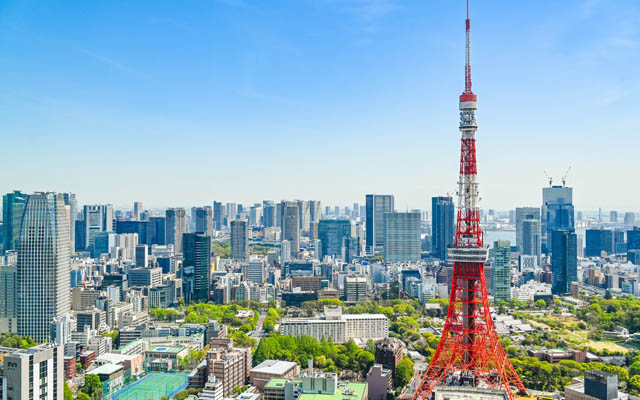
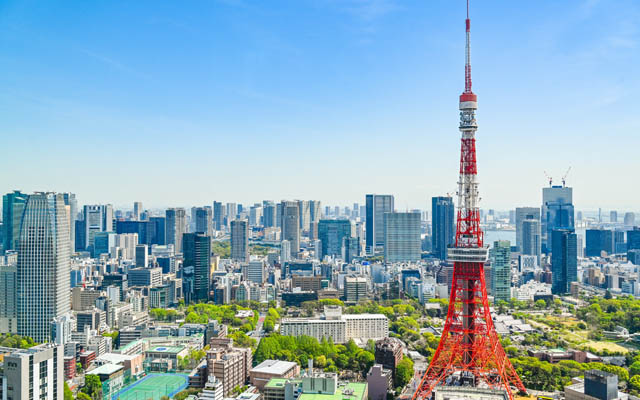
Travellers from countries with visa exemptions for short-term stays in Japan may soon get pre-arrival screening done ahead of their trip; Tokyo Tower pictured
“As we roll out the system, we will work to raise awareness among foreign nationals wishing to enter to Japan, using the abbreviation JESTA,” said justice minister Keisuke Suzuki. “With the rising number of visitors to Japan, speeding up immigration procedures is an urgent task.”
Japan welcomed 36.9 million international visitors in 2024, a record high and a 47.1 per cent increase year-on-year. With the government aiming for 60 million inbound tourists by 2030, the Justice Ministry considers JESTA one way to improve visitor convenience and safety by utilising advanced technology. Use of digital technologies and the elimination of in-person procedures is also being considered for more efficient screening.
Under JESTA, travellers from countries with visa exemptions for short-term stays in Japan will be required to provide travel and personal information, such as their names, purposes of stay and locations, at least several days before arrival.
The 71 countries and regions exempt from obtaining visas for short-term stays in Japan include South Korea, Hong Kong, Malaysia, Singapore, Australia, New Zealand, the US, Canada, the UK, and most of Europe. Their nationals will be required to apply for travel authorisation via JESTA before departing for Japan.
Legends ASM Global’s (APAC & MENA) chairman and CEO Harvey Lister has revealed that Darren Burden will become Suncorp Stadium’s general manager, replacing retiring general manager Alan Graham.
Burden is currently executive director at Hong Kong’s Kai Tak Sports Park which recently opened in March.
The industry veteran has delivered over 4,000 events during his long career in stadium management including Rugby World Cups, Rugby League World Cups, FIFA U20, International Cricket and the Hong Kong Sevens.
In addition, his venue experience includes driving the development of the 30,000-seat capacity Forsyth Barr Stadium for the Carisbrook Stadium Trust in Dunedin, and Dunedin Venues Management as chief executive. Burden has also led New Zealand’s Vbase (now Venues Otautahi) chief executive.
From left: TCEB's Nitin Sachdeva (moderator); Area Corporate’s John Wee Tom; TCEB’s Pamela Laite; and HCG International Travel Group’s Tony Ong
Unpredictable global dynamics have forced longhaul events planners to prioritise flexibility, strong relationships, and input cost efficiency.
Amid these evolving demands, Thailand consistently proves its enduring appeal, a sentiment strongly shared by panellists during the Making Sense Out of the Era of Geopolitics Uncertainty session at the Thailand Innovative Meetings Exchange 2025.
From left: TCEB’s Nitin Sachdeva (moderator); Area Corporate’s John Wee Tom; TCEB’s Pamela Laite; and HCG International Travel Group’s Tony Ong; photo by TCEB
Pamela Laite, Thailand Conventions and Exhibitions Bureau’s (TCEB) North America representative, highlighted: “Despite the doom and gloom of global news, business to Thailand is strong. The White Lotus effect really put Thailand on the radar for North American planners – finally differentiating it from a monolithic view of South-east Asia.”
Thailand’s value proposition was repeatedly affirmed by other speakers, particularly when compared to soaring rates in the US and Europe.
“Hotel rates in Thailand remain incredibly competitive. And service, something often taken for granted here, is now a serious concern in North America due to the immigration crunch. Many are shocked by how well-staffed Thai hotels are in comparison, Laite noted.
Tony Ong, chief business officer, HCG International Travel Group, underscored that while volume may be lower, the value is higher as Chinese corporates are prioritising authenticity and long-term partnerships.
“We’re seeing signs of recovery, due to the strong diplomatic ties between Thailand and China, marked by the 50th anniversary celebrations this year,” Ong said, adding that recent MoUs suggest more recurring MICE business from Chinese corporates choosing Thailand as a yearly destination.
Laite further emphasised the importance of soft infrastructure, such as VIP arrival services after a longhaul flight. “Those are the touchpoints that matter. And at the end of the day, it’s about relationships,” she elaborated.
She encouraged Thai suppliers to invest in outreach, particularly to first-time North American planners.
First-time visitor John Wee Tom, managing director, Area Corporate, praised Thailand’s cultural depth and perceived safety compared to more politically sensitive destinations. He cautioned, however, that infrastructure and city walkability remain considerations.
On CSR, he observed a fatigue around inauthentic teambuilding: “What clients want now is something real. Luckily, Thailand’s sense of purpose is already woven into its DNA.”
Mahidol University International College’s Malinvisa Sakdiyakorn addressing the audience during the TIME 2025 in Bangkok
In an increasingly dynamic business events landscape, designing across generations is no longer just a commendable diversity initiative, but a critical business imperative.
This was the compelling message delivered by Malinvisa Sakdiyakorn, assistant professor and academic practitioner at the Business Administration Division of Mahidol University International College, at this Thailand Innovative Meetings Exchange (TIME) 2025, during the Knowledge Exchange segment titled Bridging the Gap: Turning Age Diversity of Generation X, Y & Z into a MICE Advantage.
Mahidol University International College’s Malinvisa Sakdiyakorn addressing the audience during the TIME 2025 in Bangkok; photo by TCEB
Malinvisa issued a call to action for the business events industry, urging a holistic approach that reimagines event strategies to accommodate generational diversity with empathy, awareness, and intentional design.
Citing VUCA (Volatility, Uncertainty, Complexity, Ambiguity) and BANI (Brittle, Anxious, Non-linear, Incomprehensible) as frameworks that shape how all generations experience the world today, she said: “We need to design MICE experiences that meet people in the world they’re navigating now.”
“Regardless of age, we’re all experiencing today a VUCA and BANI world driven by rising cost of living, financial insecurity, struggles with work-life balance, mental and physical health pressures, escalating climate change concerns, and keeping up with technological literacy,” she added.
Drawing from her experience and research in Human Resource and Organisational Development (HROD), Malinvisa explained that Gen Z in particular craves environments where they feel psychologically safe, have room to grow, and can find meaning in their contributions.
However, she suggested that Gen Z’s passion has helped surface a deeper, shared longing that exists across all generations. For example, she pointed out that she has started seeing more “mindful events” that are “co-created, community-based, and designed around clear values”.
“A lot of events now realise that in order to create meaning, you need to be really objective about the audience that you want to work with – and the deeper you can dig into the pain points of each customer segment, the better you can answer to what they’re looking for. [The key shift is that] the event organisers now have to think about values. They have to decide how they want to design the event to deliver the specific message to their audience,” she summarised.
But generational inclusion is not one-way.
“There is so much young people can learn from older generations,” she noted. The real barrier, she argued, is not age but the lack of time and space for mutual understanding. As the tourism and hospitality sectors grapple with talent shortages and a less-than-attractive image among youth, leadership must move beyond touting perks and prestige.
“What younger professionals need is self-efficacy – the belief that they can contribute meaningfully and be authentic in the workplace,” she said. Hence, she suggested a shift in mindset from transactional HR practices to human-centred leadership.
“Coaching, mentorship, and creating a sense of belonging are key. When young people feel seen, heard, and guided, they stay and thrive,” she concluded.
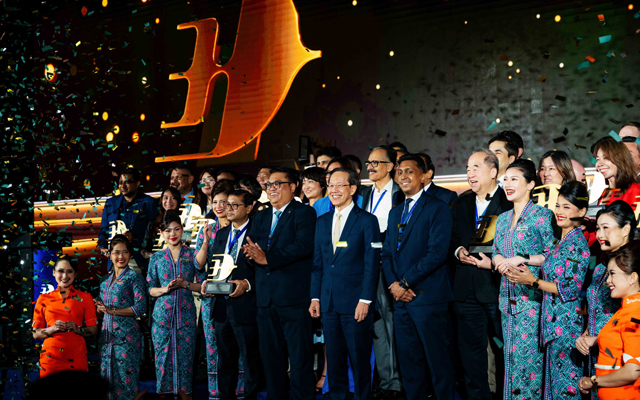
Malaysia Airlines' Trade Elevation Summit 2025; photo by Sunlee Khan
Malaysia Airlines, in strategic collaboration with the Malaysia Convention and Exhibition Bureau and the Langkawi Development Authority, recently hosted the second edition of its flagship Trade Elevation Summit (TES) from June 10-12.
As the largest airline trade event in Malaysia, TES 2025 brought together key industry stakeholders to Langkawi Island, a UNESCO Global Geopark in the state of Kedah.
Malaysia Airlines’ Trade Elevation Summit 2025; photo by Sunlee Khan
TES 2025 attracted over 300 delegates, comprising airline representatives, trade partners and key stakeholders from 68 cities across the globe. The summit featured product showcases, B2B networking sessions, and forward-looking discussions on aviation growth, connectivity, and destination marketing.
The recently concluded summit also served as a timely and strategic catalyst in the lead-up to Visit Malaysia Year 2026 (VMY2026), reinforcing Malaysia Airlines’ role as a national flagbearer and global connector.
Malaysia Aviation Group chief commercial officer of airlines, Dersenish Aresandiran, stated in a press release: “Hosting the Trade Elevation Summit here reflects our long-standing commitment to uplifting Malaysia’s key tourism hubs and aligning our efforts with national goals.
“Through initiatives like the Bonus Side Trip, and ongoing investments in connectivity, product innovation, digital platforms, and customer experience, we are strengthening our foundations and positioning Malaysia Airlines as the top-of-mind carrier in the region. This summit is a strategic milestone in our journey towards Visit Malaysia Year 2026 – where we will continue to champion Malaysia as premier global destination.”
As the annual flagship initiative by Malaysia Airlines, TES reinforces the airline’s mission to champion Malaysia as a preferred travel destination, drive innovation in aviation, and foster closer cooperation between international stakeholders, and local industry players.
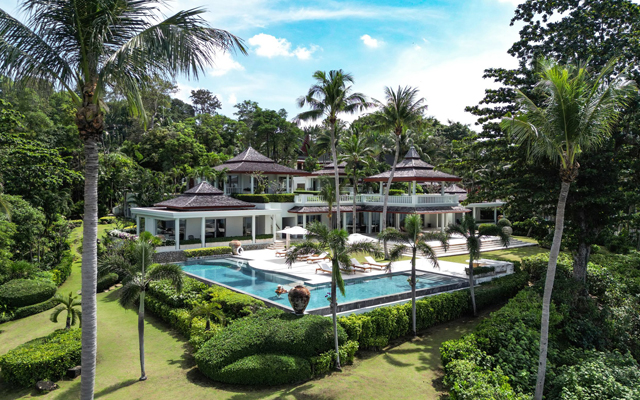
Thai luxury resort Trisara in Phuket has unveiled a new nine-bedroom residential villa, as well as five new F&B concepts. Altogether, these are expected to the property’s appeal among organisers of high-end events.
The 9,711m2 residential villa, which comprises spacious master suites, an infinity pool and manicured lawns, is able to welcome corporate groups looking to gather for strategic retreats, teambuilding activities, executive meetings, and more.
The new nine-bedroom residential villa in Trisara
Panjama Leamsuwan, vice president of sales & marketing at Montara Hospitality Group, the parent company of Trisara, told TTGmice that Trisara’s event team would support event organisers with opportunities to tailor their event experience and provide access to flexible event spaces, personalised catering, and customised activities that best meet the needs of their corporate brand identity.
The nine-bedroom residential villa joins Trisara’s extensive villa collection, which is popular with event organisers.
Panjama shared that residential villas, particularly those with five to nine bedrooms, are regularly used for private events, including weddings. These residential villas would attract approximately one booking every quarter for corporate meetings and events fronted by high-end brands.
“Trisara has gained recognition as a preferred venue for high-end product launches, particularly by luxury global brands that require privacy, elegance, and a highly personalised setting. Events at Trisara can be hosted in a variety of spaces, including Trisara’s larger residential villas. The four- to nine-bedroom residence villas are increasingly chosen as venues for exclusive, intimate events, such as new collection previews and brand experiences,” she added.
Elite events requiring a gastronomic specialisation tend to gravitate towards Trisara’s signature Michelin-star restaurant, Pru, and Michelin Green Star-awarded Jampa restaurant, according to Panjama.
Pru offers a private dining room, where brands can host private tastings or media dinners in an elegant setting that also showcases the restaurant’s commitment to sustainability and zero-waste philosophy. Pru welcomes full venue buyouts, where chef Jimmy Ophorst will develop a personalised menu for the event.
Over at Jampa, guests can enjoy a farm-to-table dining experience and combine it with a tour of the sustainable Jampa farm.
“This (farm tour) is ideal for corporate groups or events seeking innovative and meaningful experiences that align with values of sustainability and local sourcing. It offers both a hands-on, educational experience and the opportunity to enjoy exceptional, environmentally conscious cuisine,” she remarked.
Now that Trisara has five new dining concepts, each promising a distinctive gastronomic journey, ranging from the flavours of the French Riviera to the rich traditions of Southern Thai cuisine and Silk Road-inspired creations, Panjama believes that event organisers will gain even more room to play with various event themes and preferences.
The newly-opened Ritz-Carlton, Bangkok anchors the One Bangkok development with cosmopolitan elegance. Featuring the city's largest ballroom and a spectacular new penthouse suite, it delivers exceptional hardware and deeply authentic, soulful service for business and leisure travellers alike
Behind the imposing, Brutalist concrete that defines Zurich’s Oerlikon district lies a surprising secret. While its exterior honours the neighbourhood’s industrial roots, stepping inside Mama Shelter reveals a vibrant, neon-soaked world that is a far cry from its rigid shell
A polished urban retreat designed for business travellers, Hyatt Regency Kuala Lumpur at KL Midtown combines thoughtful design, seamless service, and exceptional facilities.