Asia/Singapore Tuesday, 28th April 2026
Page 781

Mövenpick appoints Hairul Maharis to manage new KLIA outpost

0

Hairul Maharis has been named general manager of Mövenpick Hotel & Convention Centre KLIA, a Sharia-compliant property scheduled to open in mid-2018 near the Kuala Lumpur International Airport (KLIA).

A Malaysian native, Maharis boasts a strong background in the management of airport hotels, having previously overseen the Tune Hotel klia2 and, most recently, ISG Airport Hotel in Istanbul.

Over the course of his 25-year-long career, the seasoned hospitality professional has also worked with brands including Le Méridien, Sheraton and Best Western.

No rain on Amway’s parade

0
Welcome reception at 32 Mansion

Event brief
Local DMC Discovery Overland Holidays (DOH) was given 1.5 years lead time to organise an incentive programme in Penang, Malaysia, for 265 of Amway of Australia & New Zealand’s top achievers.

Welcome reception at 32 Mansion

The DMC was to create a seamless experience, from meet and greet at the airport up until the group’s departure. The programme had to include sightseeing tours, meals, entertainment and various workshops.

Challenges
The event was to be held two weeks after Penang experienced flash floods in early November, no thanks to a 17-hour non-stop downpour. The event organiser was concerned about the safety of the delegates and considered cancelling the event.

Another challenge was helping the 60-odd delegates who arrived on the 17.10 flight from Singapore to clear immigration quickly so that they would have time to freshen up in their rooms at the Eastern & Oriental Hotel, Penang, and still be on time for the welcome reception at 19.30. There were other international flights arriving at the same time which created a queue at the Immigration counters.

Another challenge was to ensure that on day four, the branded Achievers Dine-around went smoothly. This fine-dining experience involved seating 265 delegates at eight different restaurants, in various locations around the city.

Delegates had to be shuttled to the various dining experiences from Leong San Tong Khoo Kongsi, where pre-dinner drinks were served along with cultural entertainment. DOH also only had 20 minutes to get all 265 delegates moving.

The challenge was to coordinate the transfers to ensure everyone arrived at the different venues around the same time, as the first course was to be served at around 20.00, and the entire meal was to be completed in 2.5 hours later. DOH also had to ensure that the dietary requirements of all delegates were met.

Solution
Lex Lam, director of sales at Discovery Overland Holidays, recalled: “To reassure the organiser after the flash floods, our staff sent daily weather updates, as well as pictures of clear skies and street scenes to show that things were normal and it was safe to proceed with the event.”

While there was heavy rain during the welcome reception, it did not dampen the mood at 32 Mansion, which had photos of Penang landmarks and attractions projected onto the front of the building, supplied by the Penang Convention & Exhibition Bureau.

“Upon arrival at the airport, we had staff waiting at the aerobridge to greet delegates as they entered the airport terminal. Noticing a long queue at the immigration counters when the third batch of participants arrived, our quick thinking staff requested for two special counters that was opened only for Amway delegates. This helped to create a special arrival experience,” Lam said.

“Prior to the group’s arrival, we received a list of dietary requirements from all delegates, as well as their choice of restaurant for the Dine-Around dinner experience. We trained the waiting staff in all of the eight restaurants on how to greet delegates, and how we wanted to have the food served,” he added.

As serving staff would have to take a delegate’s order for their choice of main course, different coloured stickers were placed on their chairs to help waiters serve main courses correctly. This also helped to adhere to the various dietary requirements.

Delegates left in batches for the various restaurants from Leong San Tong Khoo Kongsi, with those travelling furthest leaving first. This was done so that everyone could arrive at their designated restaurant at around the same time.

Key takeaways
Lam recalled that having a back-up plan was important. For instance, the sightseeing itinerary to Penang Hill had to be scrapped as the road leading to Penang Hill was closed due to road maintenance after the flash flood. Instead, delegates were taken to Tropical Fruit Farm, Tropical Spice Garden and Entopia by Penang Butterfly Farm.

Another takeaway was the need to work closely with the organiser to further enhance the delegate experience.

Event:Amway Achievers Penang 2017
Organiser: Amway of Australia & New Zealand
Destination: Penang
Date: November 21-25, 2017
Number of participants: 265

Meet in Malaysia’s capital with Mandarin Oriental

0

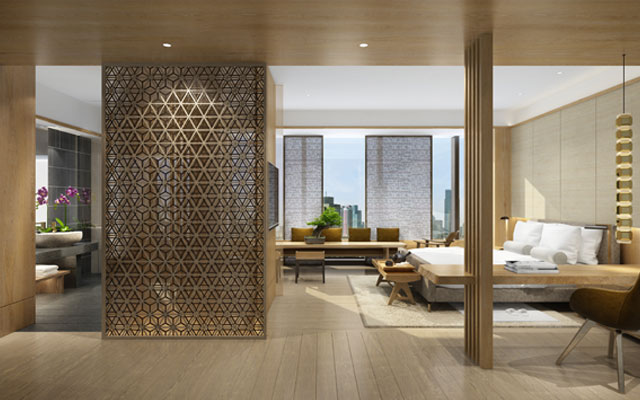
Mandarin Oriental, Kuala Lumpur has recently unveiled a meetings and accommodation package, priced at MYR625++ (US$159++) per delegate.

Available until December 29, 2018, the Essential Meetings package includes one night’s accommodation in a deluxe room and a full-day meeting package, including light breakfast, lunch, two coffee breaks and use of a meeting venue from 09.00 to 17.00.

The Topaz Room on Level 2

The package also comprises the free use of standard audiovisual equipment and LCD projector, Wireless Internet access, one complimentary breakout room, and one room upgrade to the next category for every 15 rooms booked, or a Park Suite upgrade for every 30 rooms booked.

The package is valid for single occupancy only, and is subject to availability. A 10 per cent service charge, six per cent GST and RM10 (US$2.50) Tourism Tax for non-Malaysian guests will apply.

For reservations, email mokul-sales@mohg.com.

Two new appointments at UFI

0

In order to effectively manage a constantly growing portfolio of events, UFI has reorganised roles and responsibilities within the Paris headquarters.

Jana Hofmann has moved from the events manager role, and is now UFI’s programme manager. In her new role, Hofmann will focus on event content and production and will be the main project lead for the UFI Global Congress.

From left: Karen Cohen; Jana Hofmann

Karen Cohen has joined the UFI team as events manager. She takes over from Hofmann and will manage UFI’s event activities.

Cohen brings to the team her broad experience in event management and operations, notably in the hospitality industry. Prior to joining UFI, for the past 10 years, she was responsible for the events department at the Paris Marriott Champs Elysees Hotel. She was also a member of the Advisory Board Event Management Marriott Europe.

Industry veteran sets up new PCO business

0

Once the general manager of Putrajaya International Convention Centre, Oh Kin Tat is now the owner of his own PCO business, KT Conference & Events, in Malaysia.

Oh, who has a local partner, said the company is currently working on the bidding documents for two Asia-Pacific medical conferences in 2019, and an international environmental conference in 2020.

Oh: aims to be a hands-on company 

On why he decided to set up his own company, Oh said: “Malaysia has an average of 150 conferences annually, comprising national, regional and international conferences. At the same time, there is a shortage of PCOs.”

He believes the future of Malaysia’s conference industry is bright, hence his business as well.

KT Conference & Events will be a “hands-on” company that “gets into areas” most local PCOs shy away from, according to Oh.

“Many local PCOs do not get involved in (areas such as) sponsorship management, abstract reviews, and exhibition booth seeking and allocations,” he explained.

“I am willing to work closely with clients on these areas and go into sponsorship management, programme design, abstract reviews, vendor management, and liaising with the national and state convention bureaus to obtain their support for the conference. We will also assist the local host with marketing activities.”

Oh has more than two decades of experience – 13 of which were spent in hospitality, while seven were spent with two local convention centres. He was Kuala Lumpur Convention Centre’s convention & conference manager from 2012 to 2016, before becoming the general manager, sales operation at Putrajaya International Convention Centre.

In 2016, in his first year with Putrajaya International Convention Centre, he managed to achieve a surplus of RM4 million (US$1.02 million). He was then promoted to the role of general manager, where he was tasked with overseeing operational standards, and sales and marketing.

Changi Airport Terminal 1 gets bigger arrival hall, garden

0
T1's Arrival Hall Garden

A new arrival hall opened in Terminal 1 (T1) of Singapore’s Changi Airport on April 24, increasing the terminal’s floor area by 35 per cent to 8,500m2.

The new hall is part of a larger expansion plan for T1, estimated to boost the terminal’s handling capacity to 24 million passenger movements per annum. The terminal served about 3.2 million passengers in 1Q2018.

The garden in T1’s Arrival Hall

Within the arrival hall, a 460m2 garden has also opened, featuring palm trees of up to 15m in height, a feature pool and a diversity of flora incorporated with dragonfly topiaries and sculptures.

This is the airport’s first garden situated in the public area. It also offers a glimpse of the upcoming Jewel Changi Airport, which when open will be directly connected to the arrival hall.

Coming up, the floor area in the baggage claim hall will also be expanded by 90 per cent, with an increase from the current eight belts to 10.

A water feature in the garden

Upgrades are currently being made to T1’s departure, arrival and baggage claim halls, with works including the replacement of check-in counters, implementation of Fast and Seamless Travel (FAST), interior design fit-outs and an expansion in floor space.

T1’s baggage handling system will also become fully automated with sortation capability to support automated check-in and automated bag-drop functions. An automated early baggage storage facility will also be implemented.

Amex GBT unveils ground transport platform

0

American Express Global Business Travel (GBT) has made a multi-channel ground transportation platform available to travel managers.

The new platform offers access to more than 750 ground operators in more than 2,000 cities in 18 countries. Integrated options include black cars, taxis, limos, airport express trains and shuttles, plus ridesharing via a recently announced partnership with Lyft – the first integration of its kind between a ride-sharing company and a travel management company.

The multi-channel ground transportation platform aims to give travel managers and travellers expanded flexibility, choice and control

The company has indicated that the platform is GDS-agnostic and helps travel managers capture ground transportation bookings in one place, regardless of whether the booking was made online, offline or via the Amex GBT mobile app. The system is customisable at both the manager and traveller level, and can integrate changes in company policy and individual preferences.

The platform also connects to Global Trip Record, GBT’s single source of trip data, and its Expert Care disruption and risk management platform for additional corporate duty of care.

Other features include 24/7 global customer support, negotiated supplier discounts, real-time flight status monitoring to ensure smooth transfers, attachment of ground bookings so they appear on one itinerary with air and hotel reservations, secure data and privacy standards, access to reporting and benchmarking data, the ability for travel managers to edit bookings on behalf of the traveller, and advice on programme optimisation.

Michael Qualantone, executive vice president of global supplier for AMEX GBT, said: “Traditionally, ground spend has been a blind spot for travel managers. GBT clients saw around 95 per cent leakage through out-of-policy booking channels for ground bookings in 2017, resulting in lost opportunities for our clients to negotiate on that spend and ensure traveller compliance.”

The platform is currently in a pilot stage with select clients in North America and EMEA. GBT clients can contact their client managers for more information about the GBT ground platform.

Scoot joins SIA’s frequent-flyer scheme for SMEs

0

Singapore Airlines (SIA) has added its LCC brand, Scoot, to the HighFlyer programme – the flag carrier’s frequent-flyer programme for small- and medium-sized enterprises (SMEs).

From May 2, corporate members of SIA’s HighFlyer programme will be able to earn five HighFlyer points for every S$1 (US$0.75) spent on tickets if their SIA or SilkAir travel itineraries include a Scoot-operated flight segment and are booked through SIA’s corporate booking platform or an appointed travel agent, for eligible booking classes and destinations.

A Scoot Plane at Changi Airport

These points may be used as full payment, or part payment for SIA and SilkAir tickets, upgrades, and selected ancillaries.

Highflyer members will also have the option to redeem HighFlyer points for travel on Scoot-operated flights later this year.

“Scoot offers many products and services suitable for the business traveller, such as our premium ScootBiz cabin on our 787 Dreamliner fleet, with in-seat power and Wi-Fi connectivity. Coupled with our expansive and growing network spanning 63 destinations, including longhaul points like Athens, Honolulu and soon, Berlin, Scoot’s inclusion will provide greater choice and connectivity to corporates in the HighFlyer programme,” said Scoot’s CEO, Lee Lik Hsin, in a press statement.

Earlier in April, SIA announced that it was adding Lufthansa and Swiss as partner airlines to the HighFlyer programme, where SMEs could obtain points on eligible sectors flown by the carriers.

A new horizon in hotel sourcing

0

Hotel sourcing processes are undergoing seismic shifts, discover ACTE Research and HRS in a joint study published this month.

Hotel sourcing is one of the most important and time-consuming tasks that corporate travel managers do. In an effort to understand strategies and challenges in this fraught arena, ACTE members around the world were surveyed from February 20 to March 5, 2018, for their insights on strategies, challenges and solutions.

Changes in negotiations
Change is challenging. In hotel sourcing, it requires time and effort to evaluate the process, research various options, obtain internal buy in, and implement the change.

Results suggest the investment is worthwhile.

Of the 51% of travel executives who had changed their negotiation process in the last three years, most of them reported saving money and other intangibles, regardless of which way the business moved. The most common change was to begin working with a third-party hotel focused specialist or consultancy services (48%), or a TMC (31%) (Figure 1).

The size of a company’s hotel programme influenced the type of change implemented. Companies with large hotel spends (US$10 million or more annually) were more likely to have started working with a consultancy service or third-party hotel focused specialist. Companies with mid-sized hotel programmes (US$5 million to US$10 million) primarily moved hotel sourcing in-house. Those with small hotel programmes (under US$5 million) often started working with a TMC.

Travel executives who started working with a consultancy service or third-party hotel-focused specialist saved an average of 7% on hotel costs, and those who introduced a TMC saved 4% (Figure 2). Firms that moved hotel sourcing in-house report an average savings of 8%, though it is possible that increased time and labour costs counteract some of these hotel savings.

The top non-financial benefits of changing strategies were similar across approaches, ranging from increased bookings with preferred properties, increased bookings via self-booking tools to improved communication with travellers and administrative assistants, and fewer preferred hotels in key markets.

In a review of the last two charts, it’s clear that the 51% of programmes that have implemented some change in their hotel sourcing process are – for the most part – reporting cost savings and other benefits. Those travel managers who have not considered adjusting their sourcing process can be encouraged to explore proven alternatives that support improvement efforts in both fiscal performance and traveller satisfaction.

Hotel sourcing today
Travel executives employ a variety of strategies to manage their hotel sourcing. More than half (59%) handle hotel negotiations internally, and about one-third (30%) outsource the process (Figure 3).

Depending on the size of their hotel programme, companies will use different strategies to negotiate sourcing. Those with small and mid-size hotel programmes are more likely to handle negotiations internally — 70% for small companies with an annual hotel spend of less than US$5 million; 80% for mid-sized companies with a spend of US$5 million to US$10 million. Among companies with large hotel programmes (annual spend of US$10 million or more), only 44% manage negotiations internally.

Today, about one-third of executives are highly satisfied with their current negotiation approach, and the majority is only somewhat satisfied (Figure 4).

Executives who handle hotel negotiations solo are most satisfied with their approach (41% highly satisfied), followed by those who work with an internal team (34% highly satisfied). This satisfaction could stem from their hands-on approach where they know exactly what is going on and can act on it immediately; travel executives who outsource their negotiations are most concerned about data transparency.

Challenges with hotel sourcing
For large programmes, the top issues are market fragmentation (40%), high expenditure of time and labour (40%), and increasing hotel prices (39%). Mid-size programmes are struggling most with market fragmentation (34%) and increasing hotel costs (31%), while small programmes face challenges with hotel prices (40%) and data transparency (33%).

To remedy the situation, travel executives need solutions that reduce costs, save them time, provide access to data, and provide benchmarking information to set goals and evaluate performance.

In addition to these challenges and unmet needs, executives are looking hard at their own resources. Do they have the right in-house staff to address these issues? If they outsource, is their TMC and/or third party properly engaged? For international programmes, which have all of these issues but in different magnitudes in different regions, are they properly weighted to meet the company’s global sourcing goals?

Monitoring the programme and auditing rates
Before switching things up, travel executives need to understand how their program is performing and whether travellers book at the negotiated rates.

It is recommended that internal teams audit rates at least quarterly. For companies with large programmes and those who outsource, monthly audits are recommended. Currently, the majority of programmes report auditing less than quarterly (Figure 6).

Travel executives also are tasked with staying abreast of business changes that could affect their hotel programme, such as an emerging need in a new geographical market or an increase in room nights. It is noteworthy that one-fifth of travel executives say they do not consider these changes unless it’s RFP season. The most common monitoring methods are through a TMC (49%) or preferred hotel supplier (45%) (Figure 7). Continuous Sourcing may help address these challenges, allowing travellers and travel executives to have a more transparent view of rate trends and how they impact evolving hotel programme goals year-round.

Travel managers and procurement leaders should consider what sources they currently rely on to stay on top of hotel-related issues that impact their programmes. Do those sources offer two-way communication? Are they able to parse developments with evolving travel goals in mind?

Continuous Sourcing: benefits and barriers
To make the most of their travel programmes, a small but increasing number of executives have completely upended how they source. They’ve launched a Continuous Sourcing process, in which they audit rates and hotel programme needs year-round, not just once a year.

Continuous Sourcing is a relatively new concept in hotel procurement. Twelve months is a long time for hotel prices to remain stagnant. Like in the consumer market, many factors can cause hotel rates to spike or drop. Early adopters of Continuous Sourcing find they can snag savings with more frequent negotiations, whereas the traditional once-a-year RFP process allows too many savings opportunities to slip by.

However, there are many reasons companies have not implemented Continuous Sourcing. The primary barrier is lack of familiarity with the approach; four in 10 (42%) travel executives who have not implemented Continuous Sourcing are not familiar with it (Figure 10).

About one third (31%) cite lack of time or resources. Since few travel executives (10%) believe Continuous Sourcing would not reduce their workload, it is likely that those who experience lack of time and resources as a barrier to implementing this new approach haven’t had time to investigate the options, not that they believe Continuous Sourcing would increase their workload. In fact, when implemented correctly, Continuous Sourcing disperses sourcing efforts across a longer period of time, resulting in a potentially less intense workload.

Obtaining buy-in from senior leadership or from partner properties is not an issue for many. Just one in 10 executives credit lack of internal support or external cooperation.

As programmes look for incremental hotel savings and happier travellers, travel executives and suppliers, including hotel solutions providers, consultancy services and TMCs, should make education about Continuous Sourcing a priority for the remainder of the decade.

There’s room for a fourth

0
Sammy Carolus

Reviews

The Ritz-Carlton, Bangkok

The newly-opened Ritz-Carlton, Bangkok anchors the One Bangkok development with cosmopolitan elegance. Featuring the city's largest ballroom and a spectacular new penthouse suite, it delivers exceptional hardware and deeply authentic, soulful service for business and leisure travellers alike

Mama Shelter Zurich

Behind the imposing, Brutalist concrete that defines Zurich’s Oerlikon district lies a surprising secret. While its exterior honours the neighbourhood’s industrial roots, stepping inside Mama Shelter reveals a vibrant, neon-soaked world that is a far cry from its rigid shell

Hyatt Regency Kuala Lumpur at KL Midtown

A polished urban retreat designed for business travellers, Hyatt Regency Kuala Lumpur at KL Midtown combines thoughtful design, seamless service, and exceptional facilities.