Asia/Singapore Wednesday, 14th January 2026
Page 841

Orchestrating a global undertaking

0
Go Give, Team building event

Event brief
Catalyst Global partners – the largest international network of corporate teambuilding professionals – joined in from 42 countries on a 24-hour corporate treasure hunt, an event that is the first of its kind worldwide. Go Give, a corporate social responsibility event, saw 50 teams completing checkpoint activities including video and photo challenges that benefitted projects under Buy1GIVE1, a global business giving initiative.

The event kicked off at sunrise in Auckland, New Zealand and concluded 24 hours later in Mount Maunganui, New Zealand.

Go Give, Team building event

Challenges
Given the global scale of the event, deciding on even a date and time when each of Catalyst Global’s 42 partners could participate proved to be difficult.
“Invariably there would be one team that wouldn’t be able to attend during work hours because of an event,” said Catalyst Global’s spokesperson, Esther Daniel.
Apart from the four set checkpoint activities, unique tasks had to be created for each team in locations of their choice, with activation codes having to be distributed the night before.

A further challenge was collating videos streaming in from the different countries where the teams were located, after the event due to delays, which included the Turkey team’s cameras being confiscated by police for safety checks.

Solutions
Catalyst Global had to compromise and settle on a date that excluded three partners. The decision was also made to have the event at sunrise in the respective countries, with certain exceptions as “it was far too cold and dark in some countries to do right on sunrise, whereas in others like South Africa, sunrise was at 04.00,” explained Daniel.

Communication with each of the teams was made easier through the appointment of a ‘Go Give Go To’ person who was also responsible for watching deadlines. The team leaders coordinated activity locations, collaborated with teammates to create a task related to their country that another team would have to go through, and distributed activation codes.

Each team also appointed videographers who took charge of sending videos back to Daniel and her team of two, who collated and compiled them.

“I was so tired but the excitement and joy of watching all the videos and photos of the teams coming in kept me going. It was like an addictive online game,” said Daniel.

Key takeaways
Looking back on Go Give, Daniel said: “The benefits go beyond the joy of giving. When employees participate in an organised giving programme, there is usually a process of learning and engagement as a group.

“Appointing key people in each team enabled coordinated communication. (I’m) glad we set strict deadlines, (as) they helped us to complete the project.”.

Event: Go Give
Organiser: Catalyst Global
Venue: Worldwide in 42 countries
Date: December 12, 2016
Number of participants: 313 participants split into 50 teams

Floating Island Convention Centre, Seoul

0
Floating Island Convention Centre

The addition of a water taxi terminus alongside the Floating Island Convention Centre lends a new dimension to getting to and from Seoul’s most eye-catching and unique event location.

Concept The convention centre occupies the lion’s share of one of three man-made islands in Seoul’s Han River, with impressive views to the east and west, particularly at sunset. Since opening in 2014, the convention centre has become a local landmark and a key component of the Han River Renaissance Project, which is designed to make the most of recreational areas along the river banks.

Floating Island Convention Centre

As well as convention facilities, the islands include an entertainment hall, a marina, restaurants, bars, shops and the floating Media Art Stage that incorporates a huge LED screen. The cutting-edge design of the centre, as well as the clever use of exterior lighting at sunset, have helped make the Floating Island Convention Centre the most quirky in the city.

MICE application Designed to host banquets, conventions, international symposiums, product launches and performances, the second floor Main Convention Hall has a capacity of 600 people. It is equipped with an under-floor lift large enough to hoist a car into the auditorium.

The domed roof can be used as a vast screen for light shows or video presentations, while the stage is backed by a window overlooking the river.

It has hosted events such as the 3rd Women Economic Forum and the local launch of Ferrari 486.

Villa de Noche European restaurant has a private balcony that is perfect for social events. Vista Pub wraps around the second floor of the venue and is ideal for events of up to 350 people. Rive Gauche is a hall for as many as 150 people.
The building is topped by a spectacular open space that is tailor-made for social parties.

Service Comprehensive.

Contact
Website: ficonvention.com
Tel: (82) 82 2 537 2440

A determined soul

0
Skyline of downtown Seoul, South Korea

There is little disguising the fact that South Korea’s travel industry has been affected by deteriorating relations between Seoul and Beijing over the deployment of the US Army’s THAAD anti-missile system in South Korea. The nation’s MICE sector, however, is determined that temporary political impasses will not hamper its long-term development and growth.

The number of Chinese incentive travellers to Seoul climbed 33 per cent in 2016 on the previous year, surpassing 123,000 arrivals. Given the state of bilateral relations, however, that figure is likely to fall significantly this year, along with Chinese attendees at meetings, conventions and exhibitions.

Skyline of downtown Seoul, South Korea

“Seoul jumped to third spot on UIA’s charts last year and we are working to build on that momentum for the business events sector this year,” said Park Jinhyeok, director of the Seoul Convention Bureau.

“We have just returned from a successful roadshow in Mumbai and New Delhi – coordinated together with the Korea Tourism Organization, Incheon Tourism and Gyeonggi Tourism Organization – in March, which was a first for us.

“We are also planning similar roadshows and marketing efforts in other markets, such as South-east Asia, throughout 2017,” Park added.

The Seoul Metropolitan Government has also stepped up its support for the sector, announcing in March an extra 10 billion won (US$8.74 million) in funding for 2017 and devising a five-point plan to make the capital city a more attractive business event destination.

The effort includes making more exhibitions and conventions eligible for financial support, developing a new range of promotion packages, and devising new programmes to provide delegates with hands-on experience of Korean culture, arts and entertainment.

That coincides with ambitious plans to develop the district around COEX, Seoul’s largest convention facility, and Jamsil Sports Complex into an “international exchange complex.” The city has announced that it intends to create a global MICE hub “where exhibitions, conventions, sports, entertainment and waterside cultural leisure will exist in harmony”.
Work on the project, which will include at least two hotels and a skyscraper that will be the tallest in the country and has been tentatively named the Global Business Centre, will start in 2019, with construction due to be completed in 2025.

Additional infrastructure is also coming online, with a 1.7km stretch of the Seoul Station Overpass – once a key artery through the centre of the city – reopening on May 20 as a park that is also available for event usage. Titled Seoullo 7017, the project is the first in a series designed to make the city more pedestrian-friendly.

Seoul is also experiencing a surge in the number of luxury, international hotel chains opening new properties or expanding their existing facilities.

The Signiel Seoul – the city’s first six-star hotel – occupying the 76th to 101st floors of the Lotte World Tower, opened in April to offer 235 guestrooms

In the same month, the former W Seoul Walker Hill reopened as the drastically remodeled Vista Walker Hill.

Come September, Seoul will welcome yet another high-end property by both Ambassador Hotel and AccorHotels, in the Yongsan district. A Four Points by Sheraton property will also rise in the up-market Gangnam area in November.

“I believe South Korea in general and Seoul in particular has developed into a very desirable destination for all travel sectors, but going forward I see that as being particularly applicable for the (business events) sector,” said Lubosh Barta, general manager of Four Seasons Hotel Seoul.

Barta pointed to the country’s safety, developed infrastructure and public transport system, and thriving history, cuisine, pop culture, music, shopping, fashion and design scenes as strong lures for business event groups.

The 317-room Four Seasons Hotel Seoul, located between City Hall and Gyeongbokgung Palace, is itself among the city’s newer hotels, having opened in September 2015.
Housing two ballrooms and six meeting rooms across 2,196m2 of space, the hotel targets smaller, high-end corporate groups.

Barta is not fazed by the influx of new luxury hotels in the city, and welcomes them instead. He insists that the hotel boom underlines his belief that the destination is gaining popularity, while the added competition ensures that properties be constantly innovative in their business events offerings and deliver a consistently high level of service.

Enticing the dragon

0
View of Bangkok business district at twilight

Thailand Convention & Exhibition Bureau (TCEB) has recently intensified its marketing efforts, via the launch of campaigns, in China’s second- and third-tier cities.

Traditionally, TCEB’s marketing efforts were concentrated on first-tier cities such as Beijing, Shanghai and Guangzhou, but Nooch Homrossukhon, director of meeting and incentive promotion department at TCEB, said that she has seen a growing interest from other cities.
Citing examples, she said Thailand attracts direct selling companies from Shenzhen and Qingdao, and IT and finance companies from Hangzhou. As well, businesses in China, from third-tier cities including Suzhou, Xi’an, Chengdu and Nanjing, are growing tremendously and companies have travel budgets for incentives.

View of Bangkok business district at twilight

“Over the years, we have developed a Chinese client base and (cultivated) a good relationship with Chinese intermediaries, and this helps to bring back repeat business. (One example is) Infinitus (China) Company, a health firm focused on traditional Chinese medicine. The company will return to Thailand for the 14th time this year, and hold their event in Bangkok and Pattaya in May,” said Nooch. Around 8,000 delegates are expected, and as of press time, it will be China’s largest outbound incentive group to Thailand.
Aside from TCEB, the trade is putting in relevant efforts. For instance, Chiang Mai International Exhibition and Convention Centre’s marketing development and research manager, Kantarath Jirakittirath, said the four-year-old convention centre is targeting businesses from Beijing, Shanghai and Hangzhou due to direct air accessibility. She added that the facility was “planning to organise a fam trip for MICE organisers to Chiang Mai this year”.

On March 31, 2017, TCEB, together with allied Thai partners, kicked off Thailand’s MICE United IV campaign in Beijing, as well as launched the country’s brand campaign, Thailand CONNECT: Your Vibrant Journey to Business Success. Both campaigns were presented to more than 150 business event players at the Thailand CONNECT: China Business Events Road Show 2017.

Thailand’s MICE United IV, now in its fourth edition, features 10 alliances, two of which are new – Airport of Thailand Public Company (AOT) and King Power International Company. The two new partners contribute to the Thailand CONNECT Welcome Packages, through discounts and perks for business event delegates.

Another campaign, Thailand Big Thanks, which runs until December 31, 2017, is particularly popular with Chinese direct selling and multi-level marketing companies as it provides a financial subsidy of up to two million baht (US$58,055) for group sizes of at least 2,000 delegates and a minimum stay of three nights.

Nooch said: “The subsidy allows organisers to use the money to upgrade menus, or enhance the entertainment.”

Another campaign running until December 30, 2017, is the Meet Double Cities which offers a subvention of 100,000 baht per group of at least 200, and staying at least four nights in more than one destination.

“This campaign is to encourage groups to extend their events beyond Bangkok, for economic distribution to the regional level,” said Nooch.

Meanwhile, the Meet the Sustainable Way campaign provides a financial subsidy of up to 100,000 baht for events held at venues in Thailand that have been certified as Thailand MICE Venue Standard and/or meetings that incorporate CSR activities.

Caiyan Qin, assistant sales manager at Royal Cliff Hotels Group and Pattaya Exhibition and Convention Hall, said: “Subventions offered are important as MICE organisers are always asking for support. As other countries offer it, we stand to lose the group if there isn’t.”
Benjamin Krieg, general manager at Novotel Bangkok Sukhumvit 20, added: “Subventions will help attract repeat business. Thailand is good value. It is favoured by overseas business events organisers because you get good experiences for very good value.”
Sydney Yang, sales representative (China) for Sukosol Hotels said many corporate companies in China have been cutting their budgets since 2015 as company profits have dipped.

Regardless, he said: “Thailand is seen as an affordable and accessible destination. Subvention support makes the destination even more appealing. There are many beach destinations such as Pattaya, Phuket and Samui which interest the Chinese.”
Through these efforts, the bureau is targeting to grow Chinese business event arrivals by five per cent this year.

China has been the top international business events market for Thailand ever since it overtook India in 2013.

The rise of design hotels

0

The millenial generation has been credited – or blamed, depending on which side you take – for many new business travel and event trends today, including the growing acceptance and demand for venues in design-driven hotels, properties that were often not built with events in mind.

Cvent, Inc. has reported a “marked increase in the number of planners looking to use design or boutique hotels – up 15 per cent in 2016 compared to 2015”, said Kevin Fliess, vice president of marketing for Cvent’s Hospitality Cloud.

“Gone are the days when traditional mass hotels won all the corporate business,” remarked Fliess, adding that clients use design hotels for various types of events such as meetings, conferences, conventions and educational seminars and workshops.

“Our data also reveals that 33 per cent of these bookings are for a duration of three days, and 26 per cent for one day,” he added.

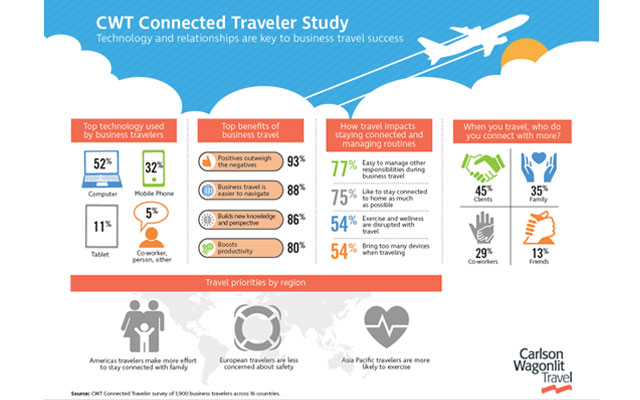
Although Carlson Wagonlit Travel (CWT) does not track the use of design hotels by its clients – at least for now, due to the lack of sufficient critical mass to warrant such an effort, senior director, meeting and events for Asia-Pacific, Michael Chiay, told TTGmice that the trend is worth watching.

“There is definitely a rise in the use of design hotels for business events, and I believe this is a result of the growing presence of millenials in the workplace. They have a different motivation when attending meetings and events. And as a generation that will dominate the workforce demographic in the next few years and take on leadership roles in buying positions, you can expect to see them drive even greater use of quirky venues for business events,” said Chiay.

Joost de Meyer, chairman and CEO of US-based First Incentive Travel, agrees.
“The clientele is getting younger and this group does not want the big, corporate hotels. They prefer the smaller, trendy hotels that allow them to feel at home. This is why you will find that lobbies (of such hotels) resemble living rooms where guests can meet fellow guests,” said de Meyer.

A well-travelled society is also influencing the acceptance of design hotels as event venues. Gerhad Aicher, general manager of The Mira Hong Kong – a member of Design Hotels, a global network of properties with thought-provoking design and architecture, among other features – said: “As travellers get more experienced they become attracted to design-driven hotels, each with a unique identity reflecting their location which is often widely recognised as a hip and happening destination.”

Caitlin Flynn, director of sales and marketing with The Warehouse Hotel, Singapore – also a member of Design Hotels – said she is seeing “big demand” in non-traditional, creative industries such as media, fashion and technology, and clients are hosting product launches, industry networking parties and influencer marketing events at the hotel which was once a spice warehouse.

Another contributing factor, according to Chiay, is the growing popularity of lifestyle events. “Lifestyle and luxury events conducted by businesses that emphasise on experience and service are more likely to use design hotels, as their event objectives are in line with the promise and forte of such hotels.”

A serious matter
Can quirky hotels work for serious corporate events? Definitely, according to Chiay.
Citing an example, he said a client had chosen to launch his new London property at The Upper House in Hong Kong because the design hotel has a luxury, British vibe that resonated with the product. The event was conducted in the hotel lounge which had indoor and outdoor spaces, something Chiay said few other traditional hotels in Hong Kong offered.

Further driving home his point that “serious events can be delivered in a not too serious manner to encourage interaction” and to emphasise key messages, Chiay shared that a recent financial technology conference held at the Singapore Expo’s Max Atria turned a traditional conference room into “a very cool and laidback space with beanbags and other lively setups”.

“Now, I understand that the venue is not a design hotel, but this shows that how a serious event is presented depends on the attendee profile. In this case, the attendees were young entrpreneurs who needed to be engaged differently,” Chiay explained.

The allure of small, beautiful hotels
The flexibility and exclusivity of design hotels, made possible by their often smaller-than-usual size and independent management, have come up repeatedly as winning factors.
Fliess opined: “Design hotels have the advantage of being able to offer a very personal and dedicated service. At the same time, they can offer the wow factor when it comes to setting, aesthetics and ambience.”

It is easier to do a property buy-out with a smaller hotel, according to de Meyer who has also found that small-sized, high-end incentive groups take well to design hotels.
“It is typically small, luxury incentive groups that (go for design hotels) to reward their staff, not so much business (meetings),” observed Rosanna Leung, head of MICE & business development with Towa Tours Hong Kong.

The location of such hotels is a draw too. “Design hotels tend to be in upcoming new districts which could be undergoing (an exciting) revival programme, such as in areas like New York’s Meatpacking District,” de Meyer said.

Chiay agrees. “They are often in a less commercialised neighbourhood which is rich in local culture and history. This adds flavour to events,” he said.

He added: “Design hotels tend to offer facilities that set them apart from traditional hotels. For instance, in space-starved cities, new-age hotels have to find unique ways to present their facilities and thus you are more likely to find chic rooftop bars in a design hotel. They make great venues for corporate gatherings. Hong Kong, perhaps for this reason, is at the forefront in design hotel offerings.”

China, according to Chiay, said is now seeing a design hotel revolution, especially in the city fringes.

“Shanghai’s quieter, less developed Northern Bund is becoming rather hot for designer properties, like The Water House,” said Chiay, adding that attractive design hotels opening in cities unusual for business events will lead to a rise in corporate demand for such locations.

There is also cost savings to be had.

Jezz Goh, head of meeting and events with Pacific World Singapore, said: “Instead of going for luxury hotels, clients are now more inclined to (use) less expensive boutique-style properties that can enhance delegate experience through their unique (interiors and funishings). The small size of design hotels also often bring about a more exclusive experience.”

Chiay added that “design hotels are almost always luxurious but are priced competitively against similar high-end traditional hotels of international brands”.

When it is not a good fit
Of course, design hotels are not for everyone. Companies that take a more traditional view on meetings and events are unlikely to venture out with a quirky property, while space limitations in terms of guestroom inventory and meeting room capacity can cause planners with a more complex programme or larger group to turn away.

“Events with more intricate requirements and need careful setup are unlikely to go for a design hotel. A designer space can be restrictive, as opposed to blank canvases that are the typical hotel ballrooms,” said Goh.

Hotel policies play a part too, opined Fliess. “Some companies will stipulate use of hotels that satisfy a certain budget or grade, or are a certain distance from the city centre. Design hotels need to recognise that in these circumstances, they cannot compete with traditional business hotels,” he said.

The misperception that design hotels are pricey and “troublesome to manage in a normal contract” is also a hurdle, added Chiay.

Read the full story subscribe to TTGmice or download the ebook

Mandarin Oriental, Macau

0
Mandarin Oriental, Macau Ocean Ballroom

The hotel has launched Meetings with More, which bundles meetings with pampering breaks and room perks.

Mandarin Oriental, Macau Ocean Ballroom

Highlights for the full-day package include local-themed coffee breaks and massages or stretching sessions during breaks.

Planners also get to enjoy room rates from MOP1,500 (US$187.50) per room night including breakfast, Internet access and complimentary room upgrade to the Waterfront Suite for every 10 paid rooms per day (maximum of three suites per day).

Promotion is valid until December 29, 2017 for bookings of minimum 10 rooms per night. Other terms apply. Email momac-sales@mohg.com

Pacific World gets emotional

0
Myanmar craft dolls

Foreseeing that emotional engagement will be a significant factor to consider when planning events for 2017, Pacific World has created new products and designed experiences to stir emotional engagement to enhance the effectiveness of meetings, incentives and event programmes.

Myanmar craft dolls

Meeting and event planners can look forward to experiences such as meeting with local craftsmen and artisans, engaging with local entrepreneurs, as well as becoming part of an eco-label community at an organic farm.

The company has also linked up with local small NGOs in destinations like Myanmar and Dominican Republic, allowing planners to work on tailored projects that help with sustainable development.

And to generate emotional engagement between guests and the brands/companies, and also between the guests and the destination, Pacific World product developers in each country and region will collaborate with their creative and marketing team to monitor industry needs.

KTO’s new incentive group perks to galvanise Philippine movements

0

Korea Tourism Organization’s (KTO) new perks for both incentive groups and corporate meetings bode well for the Philippines considering that nearly all business events from the market to South Korea are incentive programmes.

The new offer takes the place of the support programme released in March wherein corporate meetings were supposed to get more perks than incentive trips.


At last week’s road show

KTO Manila assistant manager John Christopher Bonifacio said during the Korea MICE roadshow last week that incentive groups from the Philippines are expected to more than double this year, from last year’s excess of 2,500 pax from 29 companies.

Travellers from the Philippines – now South Korea’s top market in South-east Asia – are undaunted by North Korea’s recent posturing about armament.

In January to April alone, South Korea welcomed 1,500 pax from over 19 companies in the Philippines, excluding those that were not reported by travel agencies.

Bonifacio shared that many incentive groups are small but there also are a growing number of bigger groups from 200 to 300 pax, and incentive movements from the Philippines peak around Christmastime.

Asked why there are fewer corporate meetings from the Philippines, Bonifacio explained that there is the misconception that “it is expensive to hold conferences in South Korea”,

But that is about to change as there are now enquiries on attending beauty, technology and other expositions in South Korea.

“They don’t hold the conferences, but they are attending conferences there”, he said.

Most of the business events come from Manila but Bonifacio said KTO Manila plans to campaign in Cebu, its second biggest source market in the Philippines, in the second quarter of this year.

CWT crafts unique business travel solution just for India

0

Carlson Wagonlit Travel (CWT) has launched CWT For You, a state-of-the-art business travel solution specially designed for SMEs in India, particularly those without a managed travel programme.

Geeta Jain, CEO, India, CWT, said: “Indian SMEs and start-ups have seen tremendous growth in recent years, with many expanding nationwide and some even venturing into international markets. Yet most of these companies have very little control over what they spend on business travel – a significant chunk of their total spend.”

It is estimated that India has close to 50 million SMEs, accounting for nearly 40 per cent of the gross domestic product.


Geeta: getting SMEs on track for managed travel

With no minimum spend threshold or applicable transaction fees, this new service is available through a simple web-based registration and is focused on giving these growing businesses access to some of the benefits of managed travel that larger corporations enjoy. It is available both as a mobile app and an online booking tool.

Benefits for users include access to CWT’s specially negotiated airfares and hotel rates as well as added benefits like in-flight meals, preferred seat selection, redirection to the appropriate websites for visas and travel insurance, and support from CWT’s experienced travel counsellors for complex itineraries.

After bookings have been made, travellers can access their complete itinerary online.

Users will also have access to the CWT AnalytIQs business intelligence tool, which provides real time data allowing companies to monitor their overall travel spend and discover savings opportunities, and track all their travellers.

Companies can register for CWT For You at https://cwtforyou.carlsonwagonlit.com/.

NEPCON China 2017 to raise event ROI with new Reed Connect app

0

NEPCON China, the trade exhibition for surface mount technology and electronics manufacturing automation, will utilise the new Reed Connect mobile app at its 2017 edition this week in Shanghai.

Through a blend of face-to-face and digital technology integrations, the app allows visitors and exhibitors to get full details of suppliers and buyers they are looking to connect with and activate the sales or procurement cycle with the push of a button.

This puts valuable real-time insights related to exhibitor and visitor in-show behaviour right at participants’ fingertips, and allows participant to better track their event ROI.

Josephine Lee, COO of Reed Exhibitions Greater China, said: “We’re thrilled for NEPCON China to be the first event in China’s exhibition industry to introduce a mobile app with this type of scan-and-prioritise functionality to enhance customers’ experience.”

Lee added: “The app allows exhibitors to easily scan through potential customers and store the details of hot and warm sales prospects on their devices. From there, they can take the appropriate follow-up action to advance the buyer-seller relationship, which is what taking part in a tradeshow is all about.”

The Reed Connect mobile app is part of the company’s on-going commitment to innovation and is a solution to help clients maximise their marketing dollar and make conducting business easier at Reed China’s events, according to Lee.

Reviews

Mama Shelter Zurich

Behind the imposing, Brutalist concrete that defines Zurich’s Oerlikon district lies a surprising secret. While its exterior honours the neighbourhood’s industrial roots, stepping inside Mama Shelter reveals a vibrant, neon-soaked world that is a far cry from its rigid shell

Hyatt Regency Kuala Lumpur at KL Midtown

A polished urban retreat designed for business travellers, Hyatt Regency Kuala Lumpur at KL Midtown combines thoughtful design, seamless service, and exceptional facilities.

A versatile powerhouse

Arena @ Expo, a multipurpose concert hall at the Singapore Expo is a flexible space for high octane concerts and lifestyle events.