LUX* Bodrum is the latest addition to LUX* Resorts & Hotels’ portfolio and to Turkey’s Aegean Riviera.
The new resort lies on the south-western coastline, on a private peninsula with its own exclusive bay, where the Aegean is at its bluest. It takes in 91 guest rooms, 19 private residences and an exclusive beach house with its own private yacht anchorage.
Facilities include a swimming pool, Beach Rouge beach club for nightly revelries, the LUX* ME Wellness Centre with five treatment rooms, and various F&B outlets.
A curated calendar of expert-led work-shops inspires curious minds throughout the year.
New branding for US’ DuPage CVB
DuPage Convention and Visitors Bureau (DCVB) has undergone its most significant rebrand in 16 years, one that is designed to unify the tourism industry, differentiate DuPage and position the county in Illinois, US as a national player.
The new identity, with its tagline, DuMore in DuPage, showcases the endless possibilities of engaging body, mind and budget in DuPage County. Most notably, the new brand differentiates DuPage from the greater Chicagoland market by no longer emphasising its proximity to the city. It instead focuses on the unique benefits of the DuPage experience by highlighting the stories of its diverse communities and by paying close attention to content, collaboration and community.
In the new way forward, DCVB is prioritising strategic collaboration with DuPage businesses and industry leaders. These collaborations will provide a foundation on which greater needs can be met and symbiotic relationships formed to help planners and visitors alike to understand the wide variety of resources in DuPage County.
The brand’s launch will be supported by a new visitor’s guide and a comprehensive ad campaign that includes digital, transit, and billboard components and more.
The UK’s Dewsall Court opens for early corporate Christmas parties
The sprawling estate of Dewsall Court in the UK’s West Midlands will open its doors to private groups for a week leading up to its annual Furs, Fire and Ice party.
The same theme can be executed for these private bookings, with the programme kicking off with an impressive arrival at the country manor where fire torches light up the pathway to the Wainhouse Barn. Exposed beams, wintery table settings and a crown fire pit set the perfect mood for the festive gathering. Guests are treated to lavish cocktails and a feast of seasonally inspired canapés and three-course meal, followed by dancing through the night.
Corporate groups can also book Dewsall Court as an exclusive celebration house over the Christmas period. There are 10 individually decorated bedrooms complete with designer bathrooms.
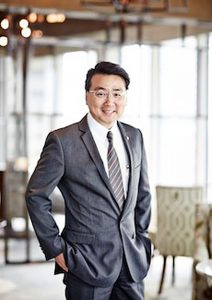
Gino Tan, Pan Pacific Hotels Group’s area general manager, Singapore and Pan Pacific Singapore’s general manager, speaks with Karen Yue about his group’s commitment to make food work for all
Gino Tan
Pan Pacific Hotels Group (PPHG) has something up its sleeves in support of World Food Day. Can you tell me about it?
World Food Day, which falls on October 16 each year, is a global day of action against hunger. Last year, PPHG initiated a food donation campaign around World Food Day which combines our passion for all things culinary and our desire to give back to the community we operate in. We raised more than S$30,000 (US$22,034) to purchase food items for needy households in Singapore, and the food bundles were so well-received we decided to make this food donation drive the signature event for our CSR efforts.
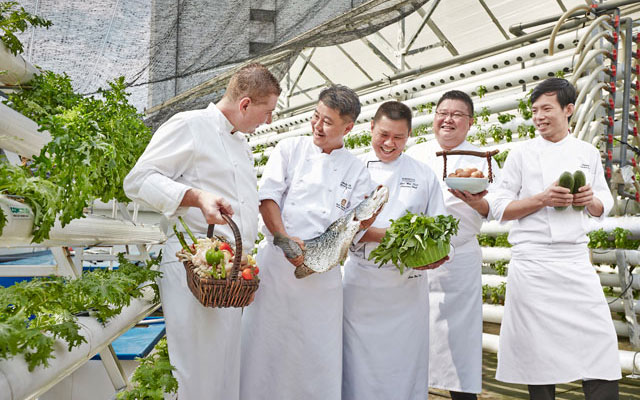
We are happy to have the support of our like-minded partner, The Food Bank Singapore, again this year. They also introduced us to urban farm Comcrop, which will supply the fresh produce in our food bundles.
For this year’s campaign, the senior chefs from our five Singapore hotels come together to create dishes using local produce to show our support for sustainable eating. A portion of the dinner proceeds during the month-long campaign (July 15 to August 15) will be used to purchase food bundles for the needy.
Why is this initiative available only in PPHG hotels in Singapore? Why does supporting local farmers matter so much to PPHG?
Being a Singapore-based hospitality company we naturally loved the idea of being able to support Singapore farmers too, so it made sense for us to partner Comcrop. In land-scarce Singapore, where only 10 per cent of food is produced locally, we’re doing our part to promote a very important message on sustainability.
We certainly hope this can be an inspiration to other hotels outside of Singapore, even though food sustainability is not new to PPHG. We have close to 40 properties globally which have in place programmes to achieve that goal in their respective markets. For example, Pan Pacific Seattle, which is Green Globe-certified, donates unpresented banquet food to Food Lifeline, a Seattle-based non-profit organisation for hunger relief, and repurposes food waste from restaurants and meetings as fertiliser.
Will this commitment to support local farmers continue even after World Food Day?
We love supporting local farmers and have been doing that for a while. Many items used for dishes on our buffet and catering menus are sourced locally.
(For example), at Pan Pacific Orchard, Singapore, the barramundi in its signature dish, Penang Assam Laksa with Barramundi Fillet, has always been sourced locally and we will continue to do so.
Working with Comcrop has opened up more avenues for us to work together in new creative ways. Our culinary team from Parkroyal on Pickering is visiting Comcrop’s rooftop farm at SCAPE to learn some of their best practices to enhance the hotel’s own community herb garden. The team is also exploring the use of Comcrop’s produce for buffet dishes offered at Lime all-day dining restaurant, complementing the hotel’s DNA as one of Singapore’s leading green hotels.
Hotels and events are known to generate vast amount of food waste (through food preparation and leftovers). What procedures does PPHG have in place to minimise that and ensure maximum use of food resources?
The “forward-planning” of menus is critical not just to our operations but to minimising waste and reducing our carbon footprint. Parkroyal on Beach Road has a system which monitors reservations and the availability of its F&B outlets in real-time. The culinary team has access to the system and aligns their market list according to demand, which helps us better manage our food inventory.
In a similar fashion, food preparation is closely tailored to the reservation covers received daily at Pan Pacific Orchard, Singapore, where food for the buffet counters are cooked when requested and replenished according to demand.
Parkroyal on Kitchener Road recycles food in creative ways. For instance, unconsumed bread from the breakfast buffet can used for to make bread butter pudding as a dessert item for dinner. The hotel’s executive chef Low Hoe Kiat had famously created the signature slow-braised pumpkin crab in claypot with pumpkin used as decoration for Halloween! To minimise wastage from food (prepared in advance), the hotel’s dinner buffet allows diners to take their pick from raw ingredients on display for a la minute cooking at live stations.
We ensure we order according to the size of the event as far as possible. At Pan Pacific Singapore, we channel unconsumed pastries from events to the associates’ cafeteria. We are looking to better manage food waste at our hotels in various ways, such as using food waste digester machines to convert solid food waste materials into either liquid nutrient or reusable water. Parkroyal on Beach Road is currently piloting such a machine and we’re looking at how this can work for the rest of our hotels in Singapore, in particular for our largest, the 790-room Pan Pacific Singapore.
Can this initiative bring value to dining events or F&B arrangements during corporate meetings?
There’s more demand for sustainable meeting packages as planners (and delegates) become more socially conscious. The sustainable dishes we launched to support our food donation drive were very well-received because people loved the idea of eating well and doing good at the same time. So I think there’s definitely value in promoting sustainability for our corporate meeting packages… because of its strong element of giving back to the local community.
What other social projects does PPHG have in Singapore or other destinations where it has hotels?
PPHG has made our passion for all things culinary the heart of our CSR efforts by leveraging the culinary skills of our hotel chefs. Since the launch of our Eat Well With Us culinary initiative in 2015, our chefs have been making regular visits to a number of adopted charities – which have grown from four to 10 homes for the elderly, children, and those with mental disabilities – to impart healthy and tasty recipes to their resident cooks.
As a natural extension of these culinary visits, award-winning executive chef Andy Oh from Parkroyal on Beach Road is also consulting for Bakery Hearts, a social enterprise which provides employment opportunities for less privileged women, to help equip them with the necessary skills as they enhance their business model and expand their operational capabilities.
The number of declared corporate incentive arrivals from Malaysia to Japan had grown by 50 per cent last year over 2015 to 12,615 visitors, according to data collected by Japan National Tourism Organisation (JNTO) from Malaysian outbound travel agents, but industry players have observed simpler programmes being purchased by clients disabled by the weak ringgit.
Speaking to TTGmice during a JNTO travel incentive seminar in Kuala Lumpur last week, Jennifer Tan, director of AISC, said: “There is an increasing demand for three-star properties especially from small- and medium-sized enterprises. Another way organisers are (dealing with a smaller budget) is to offer a free day to delegates but giving them a food allowance for the day.”
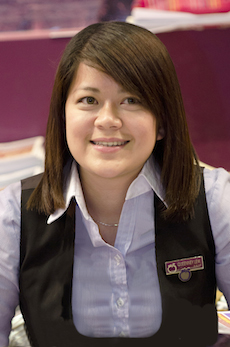
Queenney Lew
Tan is based in Kuala Lumpur, but does sales and marketing for a Tokyo-headquartered DMC.
Queenney Lew, head of department, MICE, Apple Vacations & Conventions, agreed that aside from the downgrading of hotels, Malaysian organisers are reducing the number of nights. Previously, five-night trips used to be popular, and combined regions such as Honshu with Hokkaido.
Lew said: “But now we are getting requests for two or three nights, and to mono destinations such as Osaka or Tokyo only.”
To maximise client budgets, Lew watches out for “good offers from airlines” while taking groups out of the pricier main cities to interesting towns on the outskirts such as Hakone outside of Tokyo and Ineno Funaya outside of Honshu.
When asked about this, Japanese convention bureaux representatives at the seminar told TTGmice that special support programmes – such as hosting site inspections, meet and greet services at the airport, and complimentary entertainment during gala dinners – are available for budget-conscious companies hoping to take an event to Japan.
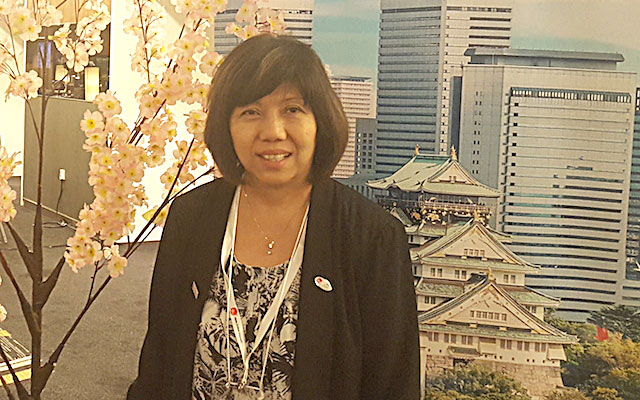
Susan Maria Ong, MICE director, Asia Pacific with JNTO, shared: “JNTO has recently compiled a subsidies support list, and it is on the japanmeetings.org website. Such support will defray the costs for organisers who are looking to hold an event in Japan.”
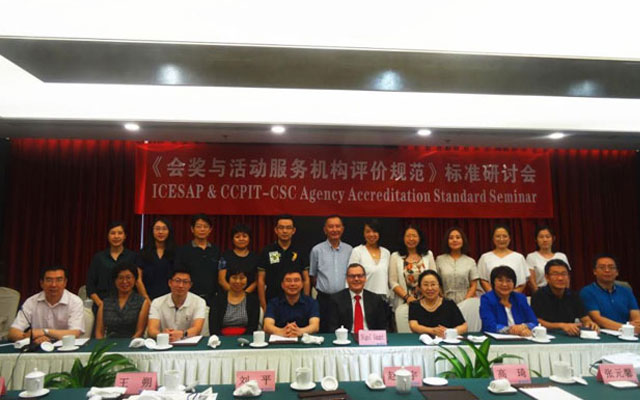
China is ready to roll out ICESAP’s (Incentive, Conference & Event Society Asia Pacific) accreditation scheme, following its Asia-Pacific debut earlier this year, as the Chinese translation of the 42-page application document has been completed.
According to ICESAP’s Beijing-based regional vice-president, Alicia Yao, the programme will be ready to launch within a month once some terms and conditions – like currency conversions and Chinese corporate practices – are “fine tuned”.
The accreditation scheme is open to open to all agencies, not just those owned or managed by ICESAP members, that manage corporate events, corporate meetings and corporate incentives.
In a press statement, Jack Yao, secretary general of China Council for the Promotion of International Trade (CCPIT) Commercial Sub Council, said there are in excess of 30,000 intermediary agencies in China working in the incentive travel, association conferences, corporate meetings, business events, and trade exhibitions sector. It is estimated within two years at least 6,000 of these will be accredited under the CCPIT-ICESAP scheme.
Yao told TTGmice that there are some 90-plus China members out of ICESAP’s 600 total in the Asia-Pacific.
The China rollout will be further boosted during the 4th ICESAP Annual Conference in Shanghai in early-September, where agencies will receive “training” and earn points towards their accreditation, she added.
About half of the 250-plus conference delegates are expected to come from China.
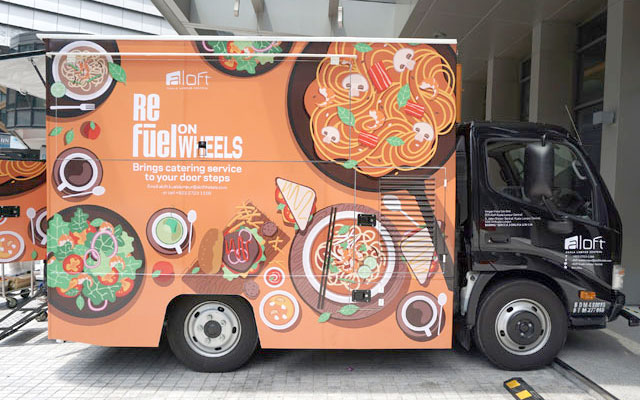
Aloft Kuala Lumpur Sentral has recently introduced its own food truck to cater to its own private outdoor events, as well as to the corporate crowd in the vicinity.
Called Re:Fuel On Wheels, this is the first food truck to be offered by a hotel in Kuala Lumpur.
ReFuel on Wheels by Aloft
Greg Gubiani, general manager of Aloft Kuala Lumpur Sentral, said the food truck and crew can be rented for outdoor catering services and private functions. He said: “We can tailor-make the menu and food, which is always served fresh as it is prepared in the truck.”
He further explained that the idea of the food truck came about as there was no such offerings from hotels in the city. He added: “It was very well received by event organisers, as they are assured that the hygiene and food standards are the same as that offered by the hotel.”
Just a day after the launch on July 18, a request came for a 1,000 pax request from a nearby mall. At press time, it was currently the truck’s largest catering event.
Within Earth Holidays’ executive director, Saini Vermeulen, shared: “The food truck gives us the flexibility to offer quick bites and lunches when we conduct outdoor events in areas where it is difficult to get good quality food. Aloft’s newest offering is very much welcomed because it brings an international branded chain’s food right to you, wherever that may be.”
Re:Fuel On Wheels is a derivation from the hotel’s 24-hour grab and go concept store, Re:Fuel, which offers self-serve gourmet eats.
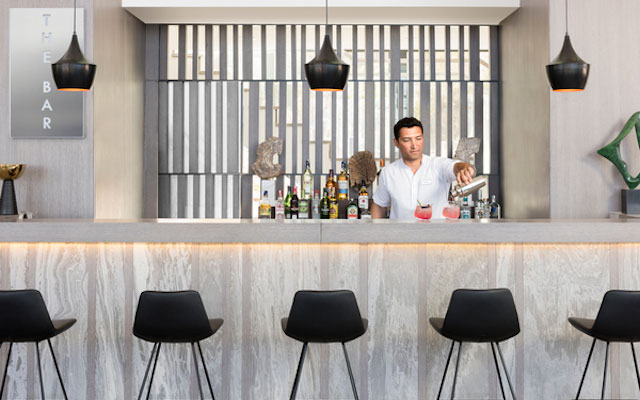
Aloft Kuala Lumpur Sentral is also maximising its location, within the city’s transportation hub of Kuala Lumpur Sentral and surrounded by corporate offices, to draw in meetings. Its bar, W XYZ was been revamped recently to make it more comfortable for dining and discussions.
“It used to be more like a lounge in the past,” said Gubiani.
The rooftop bar area which initially had a cigar room has been turned into a multifunctional room with natural daylight, and is equipped with meeting facilities such as a projector.
FCM Travel Solutions strengthened its reach in Asia-Pacific with a recent partnership forged with Yangon-based Oway Travels and Tours, Myanmar.
Oway Travels is a venture-capital backed, IATA approved company with over 250 employees.
“This new partnership for FCM will increase our already-established presence in Asia and is a valuable addition to our growing global network. A presence in Myanmar strengthens FCM’s service offering for current clients and prospects operating in the region – we are implementing several new clients at present with the Oway Travels team,” said Caroline Kerr, general manager for FCM’s Asia Pacific Partner Network.
Nay Aung, CEO and founder of Oway Travels and Tours, said in a statement: “Our dynamic market is seeing more travel demand as investments pour in and it is a great opportunity for us to partner a global company like FCM.”
The new Crystal Bus food tour on wheels presents a fun way for corporate groups to appreciate Hong Kong’s sights while feasting on some of the best food in the country.
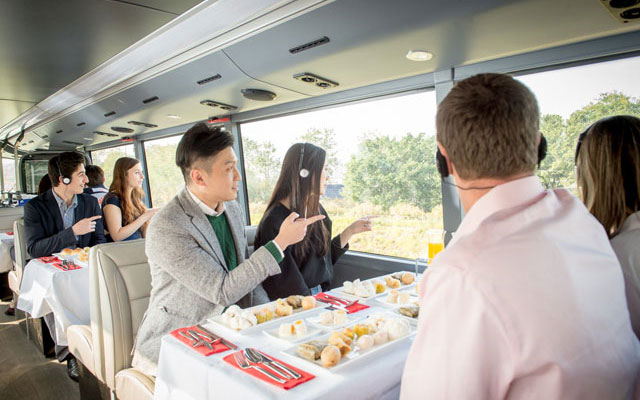
Concept Launched in March, the double-decker Crystal Bus offers sightseeing tours around Hong Kong while travellers dine on Michelin-star dishes. The company is currently the first and only operator to serve food supplied by Michelin-star restaurants onboard.
The 47-seater vehicle has an interior that is blinged out with 200,000 pieces of crystal and is equipped with quality audio equipment, an LED TV, a PlayStation 4 and karaoke system.
The bus also has audio guide devices that provide guests with a history of each attraction in five languages – Japanese, Korean, Cantonese, Mandarin and English.
Delivery Day tours last 2.5 hours and take place twice daily. Pick-up and drop-off points are in Tsim Sha Tsui. I picked Day Tour B which departs in the afternoon and visits 21 spots in Kowloon, Tsing Yi and Lantau Island.
Although I have lived in Hong Kong all my life, I was excited to visit places like Lantau Link View Point and Sunny Bay for the first time.
Upon boarding the bus, I was escorted to the upper deck and offered a choice of non-alcoholic drinks. It turns out that the bus doesn’t have a licence to sell alcoholic drinks, though guests may bring their own.
The bus departed on time and food was served 30 minutes later. Day tour tickets include a Michelin-star dim sum set, and I received a platter of eight items such as shrimp dumpling, turnip cake, crispy spring roll and barbecue pork buns. For that day, food was supplied by the one-Michelin-star One Dim Sum.
The only stop where I could alight was Lantau Link View Point, where we had a stay of 20 minutes. The staff guided us for a short distance and there wasn’t time to check out the nearby visitor centre and park. Dessert was then served when we were back onboard.
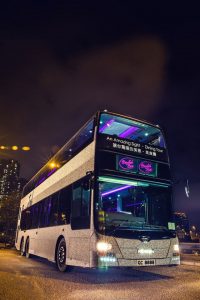
MICE application The operator provides charter services for groups, parties or business events for up to 47 guests. The five-hour night tour “attractions-on-demand” journey features Michelin-starred dishes for dinner including seafood, Chinese and Western cuisine.
Moreover, business meetings for small groups can be arranged and free pickup location is offered. A breakfast tour is also available upon request.
For night book-outs from Monday to Thursday, planners can expect to pay HK$8,800 (US$1,126), or HK$12,800 for charters on Fridays and weekends, public holidays and the eve of public holidays. Rates include drinks and snacks.
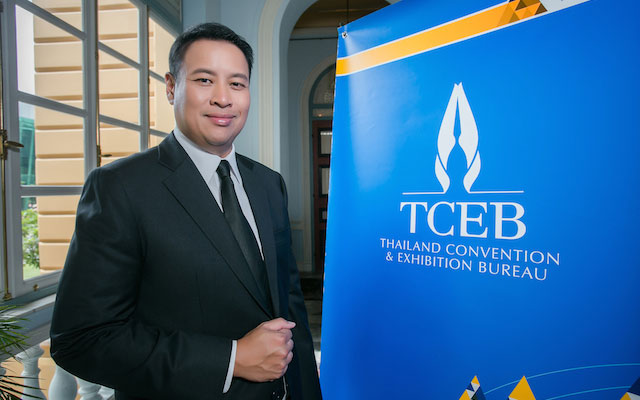
Thailand Convention and Exhibition Bureau’s (TCEB) newest president, Chiruit Isarangkun Na Ayuthaya, is keen to use the business events industry to play a larger part in developing Thailand.
“It is expected that in the 2017 budget year, there will be a total of 27.1 million MICE travellers in Thailand, generating revenue of 155 billion baht (US$4.6 billion), separated into 1.1 million international MICE visitors, generating a revenue of 101 billion baht, and 26 million domestic MICE travellers, generating 54 billion baht in revenue,” Chiruit pointed out.
Chiruit Isarangkun Na Ayuthaya
Chiruit added: “To build MICE into a key sector in developing the country requires the use of four directions for enhancing the MICE industry to create more stability.”
The four steps he indicated are:
Growing in parallel with the development of the country, which focuses on keeping the current market and finding new markets by placing business events in parallel with the development of the country’s economy, pulling the industry into other target industries, such as those covered by Thailand 4.0, as well as into special economic areas
Growing in a high potential market, focusing on the regions with high growth and strong connection with the development of Thailand’s economy, such as South-east Asia, Greater Mekong Subregion, East Asia/South Asia and Australia/New Zealand
Growing with equality, by increasing the opportunities for business events industry growth in provinces with potential, such as Chiang Mai, Khon Kaen, Pattaya/Chonburi and Songkhla
Growing strongly, which involves the development of an internal system to meet the needs of the market, developing the organisation and regulations to better support the industry in the future
Five strategies will be undertaken to achieve the four directions. They include developing and enhancing the capabilities of local business event operators through certification; integrating public and private sectors to attract more world-class events into Thailand; distributing economic development to other regions through the business events industry; driving the use of innovations and building business events Intelligence to support and enhance competitive capabilities; and improving TCEB as an organisation with good governance.
Meanwhile, Chiruit also shared that Thailand will play host to a number of international conferences this year, such as the 2017 PCMA Global Professional Conference – Asia Pacific, UIA’s Associations Roundtable Asia-Pacific 2017, IT&CM Asia & CTW Asia Pacific, and SIGGRAPH Asia. In 2019, the country will also play host to UFI The Global Association of the Exhibition Industry and SITE Global Conference 2019.
Now into its second year of operations, the Singapore-based Japan MICE Bureau of both the Japan Convention Bureau (JCB) and Japan National Tourism Organization (JNTO) has intensified its focus on association meetings from Asia-Pacific.
Speaking to TTGmice, Susan Maria Ong, deputy director of JNTO Singapore, who leads the business events foray, explained that as many advancements have been made in the corporate meetings and incentives space, it was now time for her office to do more to win over association meetings.
Susan Maria Ong
“We are taking a big step forward to do something new this year, and that is to fly Asia-Pacific-based association executives of global organisations to Singapore for a seminar we are running on October 24, a day ahead of ITB Asia. They will get to meet with 10 Japanese convention bureaux and learn how these cities can support their future meetings,” shared Ong.
“We are also participating in the Singapore MICE Forum’s B2B MICE exchange next week. JNTO will exhibit on its own this time, but we will study the potential benefits Singapore MICE Forum can bring to Japan and perhaps then encourage our city-level stakeholders to join us in future editions,” Ong said.
These exposures come in addition to JNTO’s annual Meet Japan event for association event planners, and regular seminars to educate Japanese hoteliers, venue and attraction managers, ground handlers and other tourism industry suppliers on the benefits hosting association meetings can bring to their business and Japan, as well as things that must be done to deliver successful association meeting bids.
“We are also bringing to their attention the existence of important associations that can support our efforts, such as ICCA and IAPCO, and are encouraging them to participate in activities run by these associations,” Ong said. She added that if Yokohama succeeds in its bid for ICCA Congress 2020, Japan’s MICE stakeholders will get a boost in association education.
Japan’s heightened efforts to establish itself as a desirable destination for association meetings will be supplemented by the recent establishment of a Japan MICE Bureau in Paris. With this, both JCB and JNTO have five international MICE bureaux worldwide, including London, New York, Seoul and Singapore.
The International Society for Professional Innovation Management (ISPIM) has confirmed its 5th ISPIM Asia-Pacific Innovation Forum 2018 in Fukuoka, Japan, after being impressed by the city CVB’s clear understanding of the needs of the association and its ability to round up support from the local innovation community.
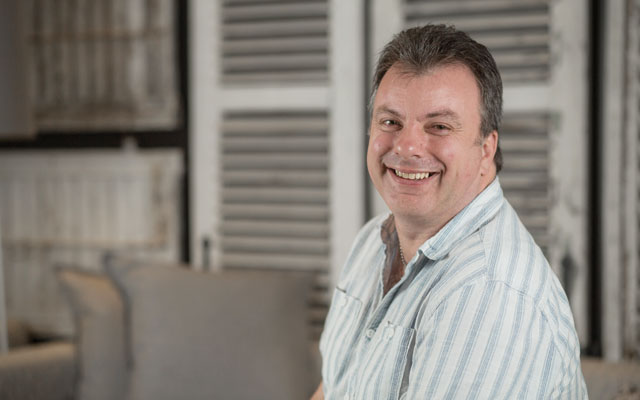
Iain Bitran, executive director of ISPIM, told TTGmice that his first contact with Fukuoka Convention & Visitors Bureau representatives at IT&CM Asia-Pacific in 2015 had left a deep and positive impression on him.
Iain Bitran
“They came to our meeting with all the information that I’ve always wanted – a report on business innovation in Fukuoka, a list of industries in the city, names of all the universities in the city, etc,” said Bitran.
While Bitran had in mind to consider Fukuoka for an event in 2019 or 2020, his decision was “accelerated” when he had an earlier chance to visit the city for the ICCA Associations Meetings Programme held from June 29 to July 1, 2017.
“(Fukuoka Convention & Visitors Bureau) arranged eight meetings for me while I was in Fukuoka and I was convinced after the meetings that there was sufficient local interest for us to be able to put together a really good programme,” Bitran explained. He added that the bureau also made an effort to meet with ISPIM members in Japan to understand the style, needs and objectives of the summit.
Bitran underlined the importance of a well-prepared CVB that is committed to helping the association achieve its goals and leave behind a legacy of knowledge.
He remarked: “Some CVBs will give you only maps, while others will give you money. At ISPIM, we see the CVB as the first port of call whenever we consider taking an event to a city. The CVB has to become our partner.
“We know that every city has hotels, venues and attractions. What we lack is the connection to the local innovation community and relevant government agencies, and knowledge about innovation incubators in the city, and the state of the local start-up scene. If the CVB cannot make these connections for us… we’d just be tourists in a destination and nothing more will happen after the meeting ends.”
The 2018 ISPIM Asia-Pacific Innovation Forum will be held at Hilton Fukuoka Sea Hawk. Some 200 attendees from 30 countries are expected, but Bitran hopes to grow the number closer to date with more delegates from Japan and Asia-Pacific.
The newly-opened Ritz-Carlton, Bangkok anchors the One Bangkok development with cosmopolitan elegance. Featuring the city's largest ballroom and a spectacular new penthouse suite, it delivers exceptional hardware and deeply authentic, soulful service for business and leisure travellers alike
Behind the imposing, Brutalist concrete that defines Zurich’s Oerlikon district lies a surprising secret. While its exterior honours the neighbourhood’s industrial roots, stepping inside Mama Shelter reveals a vibrant, neon-soaked world that is a far cry from its rigid shell
A polished urban retreat designed for business travellers, Hyatt Regency Kuala Lumpur at KL Midtown combines thoughtful design, seamless service, and exceptional facilities.






 Concept Launched in March, the double-decker Crystal Bus offers sightseeing tours around Hong Kong while travellers dine on Michelin-star dishes. The company is currently the first and only operator to serve food supplied by Michelin-star restaurants onboard.
 MICE application The operator provides charter services for groups, parties or business events for up to 47 guests. The five-hour night tour “attractions-on-demand” journey features Michelin-starred dishes for dinner including seafood, Chinese and Western cuisine.