Asia/Singapore Friday, 2nd January 2026
Page 878

Grand Hyatt Tokyo preps for Olympics with upgraded event spaces

0

grand-hyatt-tokyo

THE Grand Hyatt Tokyo, in the Roppongi district of central Tokyo, has completed a major renovation of its events venues.

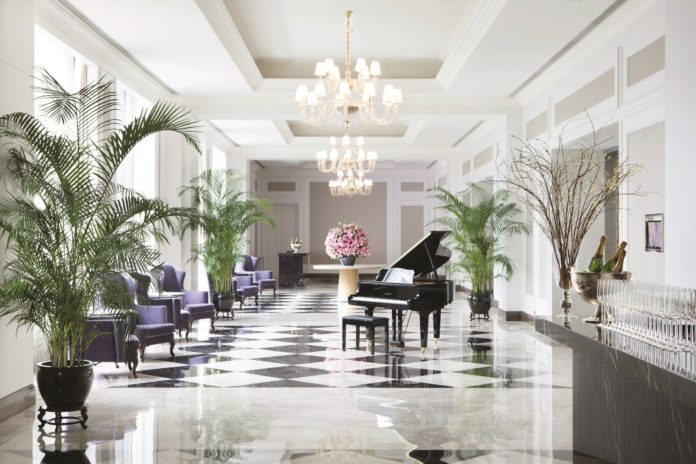
Part of a broader drive by the hotel chain to enhance its MICE capabilities throughout Asia, Grand Hyatt Tokyo’s renovation focused on unifying the second floor of the hotel with a cohesive residential design, and expanding and enhancing the Thyme banquet room on the fourth floor. A Poggenpohl show kitchen was also added.

Moreover, there is now direct access to the property’s outdoor garden, while facilities have been spruced up with new technology such as SiliconCore’s high-resolution 192-inch LED display screens. This cutting-edge technology prevents day-time screen glare, making the Coriander room an ideal venue for day-time events and meetings.

“As the host country of the 2020 Olympics and Paralympics, Japan will draw attention from around the world and international visitors will continue to increase,” said Hiroyuki Yamada, director of event sales.

“This means that as we get closer to the Olympics, demand for leisure, MICE and onsite visits of corporations will increase as well,” he told TTmice e-Weekly.

“This is a great opportunity and we hope to see a positive impact on the hotel business and the overall economy.”

The Grand Hyatt Tokyo has hosted events ranging from large-scale movie premieres and financial conferences to luxury car shows and press events.

“Hyatt as a group has a tremendous commitment to MICE. In the past 13 years that we have been in the business, we have been able to consistently renovate our facilities to adapt to the trends and ever-changing demands,” Yamada said, stressing that the hotel intends to “aggressively grow MICE bookings” in the future.

“Our team travels strategically to different parts of the world to generate new business, and we work with Roppongi Hills and local organisations – such as Destination Marketing Roppongi – to achieve a common goal of increasing our MICE business on a larger scale,” he added.

Yamada concluded: “We have had a lot of interest from companies coming to Japan and we would like to establish our position as a leading hotel that can constantly offer creative, innovative and unique personal experiences.”

Asia sees rise in Western show clones

0

CONVENTION and exhibition specialists in Asia have continued to note a growing presence of western tradeshows making landfall in the region.

Executive vice president of Taiwan External Trade Development Council, Walter Yeh, said more exhibition firms from Europe and the US are branching out into Taiwan, China, India, Japan, the Philippines, Thailand, Singapore and Malaysia, encouraged by a growing number of event venues and an attractive market potential.

Rosalind Ng, managing director of Globe International Events Consultancy, told TTGmice e-Weekly that Asia is attractive as “its size is as big as the other side of the world” and its “economy is certainly more positive than Europe’s or the US’ at the moment”.

Ng said: “We have seen major international firms cloning their large-scale events in Asia. For example, international food exhibition SIAL (based in Paris) by COMEXPOSIUM Group has gone into China and the Philippines. The world’s largest building construction show in Munich BAUMA has also cloned a version in Shanghai.”

Besides cloned shows in Asia, newly launched events are coming to town too, added Ng.

China is a natural magnet for Western show owners, thanks to its massive population and strong purchasing power.

Sungoal Exhibition and Convention Co’s former executive president, Daben Mao, said western tradeshows had started to enter China since 2001, soon after the establishment of Shanghai New International Expo Center.

Mao said: “Some German organisers have been aggressively transplanting their brands into China over the past 15 years, and now run many trade fairs in the country.”

UFI’s managing director/CEO, Kai Hattendorf pointed out that Asia’s market appeal is also attracting delegates keen on making contact with partners in this part of the world. He shared that UFI’s events in Asia-Pacific draw people from all over the world.

Indonesia, which witnessed the budding of the trend two years ago, is expected to catch up with China in the next decade, remarked International Energy Credit Association’s chair, Effi Setiabudi.

“And in another 20 years, foreign show organisers may move to Vietnam,” Effi added.

Over coffee with… Marco Baccanti

0

The chief executive of Health Industries South Australia tells Karen Yue why the Adelaide BioMed City can lead the city to MICE success

MarcoBaccantiWhy does the development of the Adelaide BioMed City precinct matter to the city’s business events sector?

Adelaide has recently improved its status as an attractive city for the biomedical sector. This is a consequence of an important government strategy (to diversify) local economic development (and) an understanding that knowledge intensive sectors (are more sustainable).

(To build a successful biomedical sector) we need an infrastructure that will achieve critical mass (by bringing) about a combination of academic and clinical research, academic training, therapy for patients and business activities, etc.

This is what the Adelaide BioMed City will do. It is an investment of A$3.6 billion (US$2.7 billion), which for the first time, gives us functions of the full value chain, starting from research at SAHMRI (South Australian Health and Medical Research Institute) and other new buildings that are under construction now.

(It gives us) what we need to raise Adelaide’s global visibility. When it comes to organising a global convention, people prefer to go to a place that is (well known) and now Adelaide is that place.

The government also established Health Industries South Australia which courts global companies that are keen to have operations in Adelaide or in South Australia for…research, clinical trials and commercial activities in Australia and the rest of Asia-Pacific, with Adelaide as the headquarters.

Adelaide scored 45 medical conventions that will be held between 2015 and 2016. Did Health Industries South Australia have a hand in that?

We were involved, in some cases, by approaching the local community of scientists and entrepreneurs. Health Industries South Australia started 1.5 years ago and the first six months was spent contacting and creating awareness among the local community about the opportunities to invest in the city.

Part of our message was this: if you intend to conduct events for your community of companies, researchers and scientists etc, now is the time to do it in Adelaide. For many, it seems like a novel thing. Even people in leadership positions did not think of Adelaide as an attractive place for conventions. That perception has changed.

How is the Adelaide BioMed City different from other biomedical cities?

This industry is multi-disciplinary. In the past, a city will have a big hospital with some clinical research facility inside, a big university and another research centre – and they are not well connected. This is a problem because research today is no longer vertically specialised. Some of the biggest innovations today are generated by  interconnections in different vertical expertise, when scientists and researchers from different disciplines come together and share knowledge.

From the infrastructure point of view, the future must drive maximum permeability between different silos. When you put all the buildings together, people will start meeting, talking and innovating.

Around the world you will find cities with far larger critical mass, but they are not located together as they are here in the Adelaide BioMed City.

What parallels are there between Adelaide BioMed City and Dubai Biotechnology City, where you once led as executive director?

They are very different environment and ecosystems. Adelaide has a strong expertise in research, while Dubai is attractive because of its position as a hub for companies looking to expand their commercial operations in the region.

The one important thing in common is that they are both city-states. For our industry which is highly regulated, this is a big advantage because investors coming into this type of environment enjoy the proximity to government leaders and the opportunity to discuss their growth strategy with the minister. This is the case in Adelaide, but not the rest of Australia.

Let’s do another comparison. Dubai is luring global associations over to open offices there for regional growth. That has resulted in a spike in association meetings in Dubai. Is Health Industries South Australia doing the same?

Yes, this is something that may happen here. Organisations that are based in Europe or the US are now wanting to grow in Asia-Pacific. In the past, they had only the option of Singapore where they can established their headquarters. Now, they have options in Australia – not just Adelaide. Being European or American, companies will feel at home in Australia because the language, culture, infrastructure, education system and legislation are the same.

But why Adelaide specifically? Before, associations looking to expand through a presence in Australia would think of Sydney and maybe Melbourne. Now, because of the Adelaide BioMed City and actions to create a critical mass (in biosciences), Adelaide is in the club of attractive cities.

And they will discover that Adelaide is far more cost-effective than Sydney for instance. Real estate is 40 to 50 per cent cheaper than Sydney, which means great savings for associations looking to rent or purchase office space. Salary in Adelaide is 30 per cent lower than in Sydney for the same type of talent but people here have a stronger purchasing power.

My answer to you is that this is already happening, we are already seeing major associations in Europe and the US chanelling their resources to Adelaide for the establishment of future headquarters.

OverCoffee

Customised content, meaningful participation are key for future events: industry leaders

0

ceo%e7%85%a7%e7%89%87-21

BUSINESS events of the future will need to be highly customised to satisfy delegates’ desire for active and meaningful participation, concluded industry leaders speaking on a panel during the 11th Asian MICE Forum which kicked off yesterday in Taipei.

The CEO Discussion: The Future of MICE in 2025 panel sought to understand how the MICE industry would be in 2025.

Talley Management Group, president and CEO, Gregg Talley, opined that one of the earliest trends to emerge and affect event management two to three years from now would be “move towards customisation of everything, including (event) experience”.

Talley said: “Our job is to create experiences and content, so this is (a huge impact) on how we think about events from an organiser’s standpoint. Given clients’ rising expectations, it is vital for destinations to present their assets and align them with what is expected.”

Authentic experiences are also noted as a critical requirement future events must satisfy.

Maritz Travel Co., vice president of experiential design, Greg Bogue, said “authentic experience is the new status symbol and personal value will drive decision and behaviour”.

Bogue explained: “There is a value shift in future event design. It’s no longer an experience-based design but value-based and personalised. It’s not B2B or B2C but B2me.”

He added that the push for personalisation in event design is already happening today.

Adam Charles, senior vice president, Asia-Pacific with Freeman XP, also pointed to the growing emphasis on authentic creativity in events.

Said Charles: “People are no longer passive (when participating in events). They want to participate and be part of the (content) creation, part of the change. Meaningful experience cannot be copied and it’s vital to make sure the experience touches delegates’ heart.”

Meanwhile, UFI’s managing director/CEO, Kai Hattendorf, shared that the confex model – a blending of conferences and exhibitions – will continue to be adopted by more event owners and organisers as they come to realise that delegates increasingly expect to listen to and learn from industry thought leaders at events.

Hattendorf said: “Tradeshows are no longer just about product/branding presentation but increasingly have content (to present). Though the traditional show floor will remain, the confex model will (grow in prominence) as more conference content finds its way into the exhibition space and vice versa. We’ll see some kind of merging between conferences and exhibitions.”

Fast-growing SEA in Switzerland’s crosshairs

0

SWITZERLAND has developed new initiatives to grow its MICE numbers from South-east Asia, a market that grew by 20 per cent in 2015.

This strong growth, noted Dominique Oi, Switzerland Tourism’s MICE manager South-east Asia, helped cover for the slowdown in business from the US and Europe last year, following the revaluation of the Swiss franc which made inbound pricier.

Oi said the new initiatives included sending MICE information directly to companies including pharmaceuticals and direct sellers, and conducting webinars for travel agents every other month starting from March.

The workshop component of Switzerland Tourism’s South-east Asia MICE roadshow, which will be attended by up to 30 Swiss companies next month, will also be more interactive unlike the previous ones.

Other tourism regions have their own value added offerings. VAUD Lake Geneva Region, for instance, is lining up something for implementation next year. Francois Michel, vice president and marketing director, said the plan is to offer one complimentary product out of five on offer to groups that satisfy a size requirement.

She shared that South-east Asian groups tend to be “pretty large”. The smallest could comprise 70 to 80 delegates, while the largest can go up to 200 to 300 people.

Singapore has a “fixed” frequency, she added, with one big MICE group every two to three years.

From the Philippines, Switzerland welcomed 66 delegates from Westmont Pharmaceuticals and 400 delegates from Unilab this year.

SACEOS offers sustainability cert for MICE industry

0

THE Singapore Association of Convention and Exhibition Organisers (SACEOS) is offering sustainability certification for MICE industry members to encourage greater adoption of the Singapore Tourism Board’s (STB) sustainability guidelines.

The STB guidelines were developed based on feedback from those within the MICE sector who were at a loss over how to start pursuing environmental sustainability practices, according to a SACEOS statement.

“SACEOS, in collaboration with the STB, encourages its members, partners and the broader event supplier community to embrace (sustainable) meeting practices and become stalwart managers of carbon emission and model business ethics that protect the environment,” SACEOS president, Janet Tan-Collis, said.

The association offers a sustainability masterclass, which has generated “strong interest (from) the state’s events industry”, Tan-Collis added.

Two organisations have successfully attained MICE Sustainability Certification (MSC) as of July 2016 and their efforts were recognised at the Singapore MICE Forum 2016 Dinner held on July 28.

Marina Bay Sands received certification at the Intermediate level under the category of Venue while Globibo Singapore gained Basic certification as Audio-Visual Provider.

Categories of certification include Audio-Visual, Event Activity Organiser, Exhibition/Conference Organiser, F&B, Hotel, Stand Builder, Freight Forwarder, Transport and Venue.

Sri Lanka’s Indian MICE campaign has borne fruit

0

A DESTINATION marketing campaign by the Sri Lanka Convention Bureau (SLCB) earlier this year that covered seven cities in India has resulted in several wins.

According to the SLCB, at least four incentive groups of various sizes have been scheduled for August and September. They are: Ambuja Cement, 660 pax; JK Ansell (Raymond), 55 pax; Bombay Chartered Accountants Society, 150 pax; and Kesari Tours Pune, 400 pax.

Some of the recent promotions by the bureau were directed at southern India, specifically Hyderabad, Chennai and Bangalore, as these cities are merely a few hours of flight time away from Colombo.

“The south is India’s economic dynamo and this is where the action is,” said SLCB’s chairman Prema Cooray, who had also earlier told TTGmice e-Weekly that the bureau’s focus in 2016 is “simply to concentrate on India”.

He opined that there is good connectivity thanks to SriLankan Airlines’ 100 weekly flights to various Indian cities.

Moreover, the scheduled March 2017 removal of minimum rates in five-star hotels, in Colombo and the suburbs, will also be helpful in boosting MICE visitor numbers. Previously, several DMCs have complained that these rates at more than US$125++ per room were too high to attract MICE visitors from India.

ibtm world debuts new Hotel Pavilion

0

IBTM world has introduced a turn-key hotel space for individual properties that wish to exhibit.

The Hotel Pavilion is a dedicated area on the show floor and provides everything that is needed to exhibit including an individual stand space, electricity and furniture as well as a hosted buyer diary of appointments over the three-day show.

Exhibitors will also be able to join in the networking, education sessions and functions.

Graeme Barnett, senior exhibition director of ibtm world, said: “This is a fantastic solution for smaller hotels or individual properties. We have had lots of requests and feel that this is the best stress-free alternative. This area has been specifically created to meet the demands of the hosted buyers and trade visitors attending the show who want to see new and different hotel properties.”

The tradeshow will be held in Barcelona from November 29 to December 1, and 17,000 participants are expected to attend.

Newly independent China MICE Committee seeks new members to aid inbound promotion

0

CHINA MICE Committee (CMC), which acts as the country’s de factor CVB, is looking to expand its membership categories to include venues, convention hotels, cruise companies and other suppliers that support the industry.

Alica Yao, deputy secretary-general CMC, told TTGmice e-Weekly the association, now with 56 member companies primarily providing MICE travel services in each of China’s provinces, wants to target a grouping of 100 members.

“Apart from Tibet and Xinjiang, CMC is well represented in all of China’s provinces. CMC used to be an association under the China National Tourism Administration (CNTA), but with the policy change regarding associations, it is now separate but still functions as a MICE promotion entity.

“We are also looking for members that provide audiovisual products and services, event companies as well as PR companies that can support the MICE industry,” she added.

For the last three years, CMC has been organising courses to train employees on the event business and how to attract business.

Yao commented: “As our association members so far are companies that provide travel services, we have been helping them stay one step ahead of the end-user.

“With the separation from CNTA in the middle of the year, we now have a bigger challenge to promote China. Of our members, only about 10 per cent are involved in inbound MICE.

“It will be challenging for CMC to continue to do the job of a CVB but a wider category of members, like the international chains, will be able to help promote the destination for incentives and other MICE events.”

Big City Draws

0

Asia-Pacific’s top MICE cities are always evolving, with new and refreshed infrastructure to give events a new flavour and for delegates, a more fascinating experience.   TTGmice finds out what have emerged in the past year

Thailand’s capital city is poised to take advantage of growth in the MICE sector as recovery continues, with several new properties putting the focus firmly on business travellers and the events market.

Avani Riverside Bangkok is the first new hotel to open on the Chao Phraya river in several years, and features some of the city’s largest meeting and event facilities. The Grand Ballroom alone spans 4,500m2and can accommodate up to 1,500 people. There are 11 other meeting and event spaces.

The global flagship for the Minor Group hotel brand, the Avani Riverside has been in a soft opening phase and is due to start full operation this month. It is also expected to exploit connections to the adjacent Anantara sister hotel and the Riverside mall.

A surprising recent entry to the MICE sector came from Mövenpick, whose presence in Thailand until now has been confined to beachside luxury resorts. Its five-star hotel on Sukhumvit Soi 15 features three conference/meeting spaces as well as facilities for business travellers.

Bill Barnett, managing director of hospitality consultancy C9 Hotelworks, praised the work of the Thailand Convention and Exhibition Bureau for helping to revive the MICE sector over the past 18 months.

“I think this year we’ve seen a defined return of the MICE segment and I think that’s important,” Barnett said.

He added that while the Tourism Authority of Thailand had “made the right noises”, it was the TCEB campaign that was an example of “what government’s doing right”.

He believes that the government’s partnership with the private sector is paying off.

Looking forward, Bangkok will soon see the result of BITEC Phase II, a doubling of the 20-year-old conference centre which will bring the total exhibition space to 70,000m2, moves to renovate and update the Queen Sirikit National Convention Center after two decades of indecision, and upcoming hotels that should appeal to business travellers.

What’s coming up?

Park Hyatt Bangkok: October 2016
Mercure Bangkok Sukhumvit 11: December 2016
BITEC Phase II: 4Q2016
Waldorf Astoria Bangkok: 2017
Hyatt Regency Bangkok: 4Q2017


Avani Riverside Bangkok


Although Beijing has not seen much changes to its convention centre inventory since the opening of the China National Convention Center in 2009, it is quite the opposite with the hotel landscape.

The Chinese capital continues to see an expansion of its hotel inventory, with the opening of the 300-room InterContinental Sanlitun this year and the 438-room NUO Hotel in 2015.

InterContinental Sanlitun is the only large, international five-star hotel in Sanlitun, Beijing’s most popular shopping and nightlife district that is also adjacent to embassy and CBD areas. The hotel is expected to fill a major gap in terms of what’s available for MICE groups, according to Kaci McAllister, deputy general manager Destination Asia (China). The hotel has 1,500m2 of meeting space.

The flagship of a Chinese luxury brand, NUO Hotel’s concept is “modern Ming Dynasty” and everything from the priceless artwork to the architecture to the furniture reflects this, McAllister said, adding that feedback from clients has been outstanding.

Located near the 798 Art District in between the CBD and the airport, it is ideal for accessing the Wangjing business zone and Beijing’s north-east embassy area.

The hotel offers 2,500m2 of function space iseven F&B outlets.

And as new properties emerge, existing ones are keeping themselves up to date with refurbishments. Peninsula Beijing, for instance, unveiled a new look in June 2016. It slashed its 525 rooms to just 230 spacious suites. China World Hotel, too, had presented refreshed rooms and meeting spaces in April.

Beijing has also welcomed new activities for corporate groups. Travel company Faces of China recently rolled out helicopter tours and yoga tours that run for one to three days.

What’s coming up?

Mandarin Oriental Wangfujing, Beijing: 2017
Beijing Marriott Changping Theme Park: 2017
Bulgari Hotel Beijing: 2017


New World Millennium Hong Kong Hotel

The Hong Kong Sport Institute (HKSI) Redevelopment Phase 3 was launched in early 2015, and its facilities are expected to boost Hong Kong’s appeal as a destination for corporate teambuilding programmes and sports events.

HKSI will house a 1,400-seat lecture theater, four fully-equipped meeting and activity rooms, restaurants and a 74-key accommodation facility, as well as indoor and outdoor sports facilities built to international standards.

A Hong Kong Tourism Board spokesperson told TTGmice that several new venues will be launched in 2016 and 2017, and they will “enrich the city’s venues portfolio and lure different kinds of conferences and meetings to Hong Kong”.

Several hotels opening this year and the next will feature event spaces.

The 545-key Kerry Hotel, scheduled to open in December 2016, will offer the destination’s largest event facility in a hotel. It will house a Grand Ballroom that can seat a 1,030-pax banquet and 17 flexible meeting rooms for 30 to 660 guests, plus indoor and outdoor event spaces.

Hong Kong Disneyland Resort’s 750-room Disney Explorers Lodge, opening next year, will provide themed settings for memorable events. Rival attraction, Ocean Park, will also debut its first hotel – a Marriott brand, no less – come 2017.

There is a spate of hotel renovations too. New World Millennium Hong Kong Hotel has unveiled refurbished rooms, event venues and other public spaces this summer, while Courtyard by Marriott Hong Kong Sha Tin has transformed 12 rooms on the 30th floor into a collection of meeting suites and the LEVELthirty Lounge & Bar.

What’s coming up?

Hong Kong Ocean Park Marriott Hotel: 2017
iclub To Kwa Wan Hotel: 2017
Rosewood Hong Kong: 2017


Hong Kong Sport Institute’s lecture theater

Westin Jakarta

Jakarta’s transformation into a cosmopolitan city that will meet the growing demands of business events today is in progress.

Last year, Greater Jakarta welcomed the opening of the country’s newest and largest convention and exhibition centre. The Indonesia Convention and Exhibition (ICE) in BSD City, a satellite city in Tangerang, houses a 50,000m2 exhibition hall, a 50,000m2 outdoor exhibition area, a 4,000m2convention hall and 33 meeting rooms. Hotels, a golf course and shopping malls are springing up around ICE, bringing more life to the industrial and manufacturing hub that Tangerang currently is.

Meanwhile, luxury properties with sizable meeting and event venues have popped up last year in the city centre.

The 173-room Raffles Jakarta opened in 2015 with a 2,500m2 ballroom, three meeting rooms with capacity for up to 80 people, a boardroom and a library.

The 350-room Fairmont Hotel also made its debut last year, adding event facilities for up to 500 people to the city’s inventory.

Joining the high-end block this year are Four Seasons Jakarta and Westin Jakarta. Both come with extensive function spaces.

Increased competition among hotels for business events has driven existing properties to spruce up their hardware.

The 994-key Hotel Mulia Senayan recently revamped its event venues on the fifth floor, two medium size function rooms in the Business Centre and the Gerbera Room on the mezzanine floor.

Grand Hyatt Jakarta last year launched The Residence ONFIVE. Located on level five and overlooking a lagoon-shaped swimming pool and Balinese gardens, The Residence ONFIVE is a residential-style facility that features four meeting rooms with natural daylight, a communal area with a show kitchen where coffee breaks and meals are freshly prepared, a living room, two multipurpose cabanas, a patio and three terraces with panoramic views of Jakarta, especially at sunset.

Event planners desiring a non-hotel venue can consider the new Teras Dharmawangsa Restaurant by Plataran. The four-storey, trendy restaurant in the up-market Darmawangsa Square City Walk, South Jakarta boasts a different concept for each floor and serves Indonesian and Asian cuisine. The top floor is available for private event hire and can accommodate 30 to 40 guests.

What’s coming up?

Aloft Jakarta Kebon Jeruk: 2017


Westin Jakarta


New event venues and accommodation have come into operations in Kuala Lumpur.

UOA Hospitality had in May expanded its Connexion Conference and Event Centre (CCEC) at Bangsar South City, adding 4,645m2 of event space to its existing collection. New to the venue include two new ballrooms, 11 function rooms and a banquet hall. With these, CCEC now offers 18,580m2 of event space.

Anita Khoo, UOA Hospitality’s head of hospitality, said the bigger CCEC has allowed the compay to expand its clientele to include regional business from Asia-Pacific and international congresses for up to 2,000 delegates.

CCEC recently hosted the Hubei Administration of Press from China with 24 exhibitors and 24thCongress of The Obstetrical & Gynaecological Society of Malaysia meeting in June.

Accommodation support for events held at CCEC comes in the form of VE Hotel & Residence, a four-star property that soft opened in May with 126 rooms. When fully opened in 4Q2016, it will offer 337 rooms and 90 fully-furnished serviced residences.

Elsewhere in the city, The St Regis Kuala Lumpur made waves in the local tourism sector when it opened in May as the latest luxury property in Kuala Lumpur. It also stands out for having the largest standard guestrooms in the city at 63m2 and a grand ballroom that offers a 270-degree immersive multi-sensory LED digital canvas wall which is made up of 47 LED screen panels.

Ally Bhoonee, executive director of World Avenues, said: “This new luxury brand has improved the image of the city and makes it easier to promote Kuala Lumpur as an upmarket destination to high-end Middle Eastern travellers.”

Faced with new competition, 19-year-old The Ritz-Carlton Hotel, Kuala Lumpur underwent its first major makeover and relaunched in April with brighter, fresher and a modern look and feel through plush fabrics, clever lighting, luxurious marble and stylish accessories.

The hotel’s director of sales and marketing, Yannick Mauchle, said the renovations are to “keep up with the times and to make the property memorable to guests with a Wow effect”.

What remains is The Ritz-Carlton Hotel’s signature butler service which is available to all guests, regardless of their room type.

Another new hotel with MICE capability is the Pullman Kuala Lumpur City Centre Hotel and Residences, which opened in August 2015. Suitable for meetings, the hotel has a large, pillarless ballroom for 800 people in a theatre setting, and nine function rooms with natural lighting. Residential meetings can be supported by the hotel’s 445 rooms and 157 fully furnished apartments.

What’s coming up?

Setia City Convention Centre expansion: November 2016
W Hotel Kuala Lumpur: 1Q2017
Pavilion Banyan Tree Signatures Kuala Lumpur: 1Q2017
Royale Pavilion Hotel Kuala Lumpur: 2017
Dorsett Hartamas Kuala Lumpur: 2017
Sri Jati Hotel Kuala Lumpur: 2017


Manila is fast-catching up with its South-east Asian neighbours in ramping up its MICE infrastructure. The past two years have seen the rise of some of the most modern and luxurious hardware in the city’s skyline.

The indomitable star is the Marriott Grand Ballroom (MGB) at Resorts World Manila which raises the bar for luxury, quality and technology in local convention centres. The metro’s fourth convention centre, MGB was launched in 2015 with a maximum capacity of over 5,000 pax; Sky Fold technology for seamlessly dividing spaces; light-sound-technical effects that can change into hundreds of hues. It also its own restaurants, not catered like the rest of convention centres in Manila.

Entering the marketplace last year too was City of Dreams Manila. The integrated resort boasts three hotels – Crown Towers, Hyatt and Nobu – and a collection of event venues including the Grand Ballroom for up to 800 pax and two world-class nightclubs, Pangaea and Chaos.

One-year-old Makati Diamond Residences provides 418 full serviced apartments and event venues for up to 400 pax in its function rooms, boardrooms and banquet areas.

Shangri-La at The Fort opened its gilded doors early this year, providing 576 keys with a minimum size of 45m2, 97 residences, Grand Ballroom for up to 1,200 pax, junior ballroom for up to 715 pax, and 19 flexible multifunction rooms.

Also making its debut early this year is Araneta Novotel in Quezon City, boasting 401 keys and several event venues: grand ballroom for up to 1,100 pax, seven meeting spaces, outdoor events garden, Premiere Lounge, and executive sky lounge with a full view of the metropolis.

A unique venue on offer in Manila is KidZania, an 8,000m2 indoor play city for kids which turned a year-old this year. When the attraction shuts its doors to the young ones after regular hours, it is transformed into a fun venue for product launches, teambuilding games, special corporate parties, and more.

Another fun attraction that is available for corporate hire is DreamPlay by DreamWorks, an interactive educational theme park in City of Dreams Manila. It has a dedicated schedule for MICE delegates and can accommodate a maximum of 1,200 pax. It is perfect for teambuilding programmes, meetings, workshops, focus groups and product launches.

What’s coming up?

Marriott Manila’s expansion: September 2016
Okada Manila: 4Q2016
Conrad Manila’s full opening: 4Q2016
Grand Hyatt Manila: 1Q2017


The Glasshouse

According to Melbourne Convention Bureau’s CEO, Karen Bolinger, Melbourne has led the way in infrastructure development in Australia as far as business events is concerned and will continue to do so.

Some may say that’s a bold statement, given Sydney will be home to a brand new convention centre in a matter of months, but the statistics speak for themselves. Bolinger said that over 2016 and 2017, seven new hotels will open in Melbourne, increasing room capacity in the city by seven per cent.

One such hotel that opened earlier in the year is the 89-room Peppers Docklands, the first five-star hotel in the Docklands. While it doesn’t have any meeting facilities of its own, it is adjacent to the multipurpose venue Etihad Stadium and within walking distance of the Melbourne Convention and Exhibition Centre, which recently commenced its 20,000m2 expansion, due for completion in 2018.

In terms of events spaces, Melbourne’s sporting precinct continues to expand with the opening of The Glasshouse last October. Overlooking Olympic Park and operated by The Big Group, the venue features floor-to-ceiling windows as its name suggests, capacity for 1,000 guests cocktail-style and 500 seated, and a 150-seat auditorium. 

And new to the city’s retail scene is St. Collins Lane, an upscale shopping destination with luxury international brands filing in to take up residency by the day.

What’s coming up?

Hyatt Place Melbourne: early 2017
Four Points by Sheraton Melbourne Docklands: March 2017
Melbourne Convention and Exhibition Centre expansion: early 2018


Garden Oriental Osaka

Event space that is open, airy and yet still in the heart of Japan’s second busiest city is at a premium, so the Osaka Convention and Tourism Bureau was delighted when the Garden Oriental Osaka decided to reopen as a venue.

Originally opened in 1959 as an official residence for prime ministers and other high-ranking visitors to Osaka, Garden Oriental Osaka sits amid parkland that is awash with cherry blossoms in spring and overlooks one of the city’s waterways and the National Mint on one side and Osaka Castle on the other.

The Western-style structure designed by Kenzo Takekoshi is listed as a historic building, as are the surrounding 13,000m2 of Japanese gardens. As an added touch, a traditional tea house stands alongside one of the nearby ponds.

The entire facility underwent major renovations and now boasts an expansive rooftop area that is accessible for events.Other venues here include a ballroom for 120 people in a theatre configuration, two event rooms and a garden pavilion, while the lawns are ideal for summer parties.

A more recent addition to the city’s MICE options is the Geihinkan, the Osaka Government Guest House which was originally built to host delegates attending the APEC Forum in 1995, on the grounds of Osaka Castle.

Since end-April 2016, Geihinkan has been made available to special receptions and parties. Its Nishi-no-Maru Teien Garden is renown. As the most impressive area of the castle, it houses more than 600 cherry trees, no fewer than 1,270 of the early-blooming plum trees, a tea house and a private tea plantation.

Even though the building is new, the copper-sheeted roof, antique supporting pillars and extensive use of traditional lacquer give it the appearance of being hundreds of years old.

Convention and meetings at the facility are organised by Kyoto-based Value Management Co., which operates a number of unique venues across Japan.

What’s coming up?

Conrad Osaka: Summer 2017
Hotel Keihan Yodobashi: Summer 2017
Candeo Hotel: June 2017


Seoul’s tourism infrastructure development has been lively in the past year. Already a growing darling destination in Asia for leisure travel and business events, the South Korean capital is set to charm event planners further with new hotels, attractions with venue hire opportunities, and shopping centres that have emerged in 2015 and so far this year.

Three business traveller-centric hotels have opened in Seoul. They are Lotte City Hotel Myeongdong, a premium property with 430 keys, a meeting room for up to 12 people, an all-day buffet restaurant and other facilities; Shilla Stay Gwanghwamun, a stylish hotel with 339 luxuriously appointed guestrooms, four function rooms for up to 80 people and a buffet-style eatery, among others; and Courtyard By Marriott Seoul Namdaemun, which offers modern guestrooms with views of either the city skyline or Seoul Tower, seven meeting spaces, two dining outlets and other facilities.

New design focused hotels have also emerged in the marketplace, such as L7 Myeongdong which spots Korean design touches throughout the property as well as chic venues for gatherings such as a rooftop bar and a lounge/bar on the third floor.

Also new to Seoul is Hotel Cappuccino, a minimalist-chic 141-key property with three function rooms for eight to 30 people in a classroom configuration, a 100-pax rooftop terrace with views of Gangnam’s cityscape, and work stations in the lobby, among other facilties.

Meanwhile, much attention in recent times has been paid to Lotte World Tower, said to be one of the tallest skyscraper in the world, standing 555m high with 123 floors. Opening progressively, Lotte World Tower’s tenants that are in operations today include a movie theater, aquarium, restaurants and Hard Rock Café Seoul which welcomes private event hires for up to 350 people seated or 550 people standing. When it is fully completed by end of this year, Lotte World Tower will also house a hotel, private office space, an observation deck, concert hall and more.

Seoul’s shopping attractions have also been expanded with SM Duty Free in Insadong (opened February 2016), HDC Shilla Duty Free in Hyundai I’Park Mall, Yongsan (March 2016) and Galleria Duty Free 63 in Yeongdeungpo (July 2016). 

What’s coming up?

Seoul Station 7017 Project: 2017

Both large and intimate meeting spaces have opened in Shanghai and more are on the way, giving event planners fresh options in the Chinese gateway city.

Opened on June 16 to long lines of visitors, Shanghai Disney Resort is also gaining favour among event planners. Local DMC Bespoke Shanghai reports that clients which have used the Shanghai Disneyland Hotel gave it high marks for living up to expectations and for being efficient. The resort’s state-of-the-art conference centre houses the Cinderella Ballroom, Rose Garden, Dreams Meeting Room and Crown Room hospitality suite.

Shanghai Tower, another new city icon, is opening in phases this year from April. Bespoke Shanghai has started looking at using its 119th floor observation deck for corporate dinners and events, capitalising on its floor-to-ceiling windows and 360° views of the Lujiazui CBD in Pudong.

Michael Assef, director, corporate meetings & events,
Destination Asia (China), added the 128-storey and 632m high Shanghai Tower, is not only the new symbol of modern Shanghai but is the hottest venue in Asia to hold an event with a panoramic view over the Shanghai megalopolis.

Currently open to VIPs with special access, Shanghai Tower offers the most breathtaking views and some of the best facilities in Shanghai. The Shanghai Tower Grand Ballroom has over 2,000m2 of pillar-free space and high-tech meeting facilities including a 100m2 built-in LED screen. The 1,200m2 Shanghai Tower Garden Ballroom is semi-arc shaped with a 33m2 LED screen and a terrace garden.

Yet another high-end hotel that has come online in Shanghai is Wanda Reign on the Bund, which promises high-tech amenities, a diversity of fine dining options, and spectacular views of the Bund, Huangpu River and Pudong skyline. Opened in June, the hotel offers 193 guestrooms including 14 suites and 1,100m2 of meeting venues. An exclusive meeting director offers 24-hour service to ensure events run flawlessly.

Jin Jiang International Hotel’s Shanghai Tower J-Hotel, touted as the world’s highest luxury hotel in the world, is likely to open in 2H2016.

For event planners seeking a non-hotel venue, Lost Heaven Silk Road will satisfy. Part of the group that created Lost Heaven and Coconut Paradise, this restaurant occupies a one-time electronics factory at 758 Julu Lu and draws its interior décor inspiration from the cave paintings and temples of Dunhuang, a UNESCO World Heritage Site. It spans two floors and can seat 330 people. Silk Road cuisine, a blend of styles from western China, central Asia, India and the Middle East, take centre stage here.

What’s coming up?

W Shanghai-The Bund: January 2017
Bulgari Shanghai: 2017

Beyond the traditional convention facilities, Singapore has been brandishing compelling new facilities to transport meetings into an unorthodox setting.

The latest such unique venue is the Secret Life of Trees, a new event area carved out in Gardens by the Bay. Launched in July, the Secret Life of Trees boasts unrivalled views of the Supertree Grove and is ideal for private events with up to 120 pax in a standing cocktail setting.

Barely a year old, The South Beach hotel has drawn plenty of interest among event planners with its extravagant ballroom. The space has a high ceiling which is adorned with a Forest of Lights – a 11,520-light installation – which brings about a dreamy ambience. It seats 370 guests banquet-style, and another 50 on the mezzanine level which overlooks the entire ballroom below.

In June, however, the visual stunner – a creation of Philippe Starck – announced its rebranding to JW Marriott Hotel Singapore South Beach. The 634-room hotel will undergo a refurbishment to make it a fit with the JW Marriott brand.

While these are happening, traditional meeting facilities are taking steps to keep up with Singapore’s changing MICE landscape.

Suntec Singapore Convention and Exhibition Centre, for instance, unveiled new projection equipment and technology in June. The Panorama105, one of the two products that form the new ImmersiveAV Suite, is a wide-format projection screen spanning up to 105m by 5m and powered by high-end 20,000 lumen projectors.

Completing the suite, The Float3D uses holographic projection technology to present still images with a depth of field. Suspended at 4.5m above ground, the display could become the illuminated centrepiece in an event.

What’s coming up?

The Sofitel Singapore City Centre: 2H2016
InterContinental Robertson Quay: 2H2016
The Patina, Capitol Singapore: 2Q2016


Suntec Singapore

While much of the attention has been focused on the highly anticipated opening of the International Convention Centre (ICC) Sydney this coming December, there has been a number of significant openings in the Harbour city in recent times.

Four Points by Sheraton Sydney, Darling Harbour unveiled 3,700m2 of conference space in June, comprising of 21 meeting and breakout rooms, two pillar-less ballrooms with capacity for 1,800 pax, theatre-style and an open air rooftop bar for outdoor events. Later this year, the hotel will welcome its first guests to its new 25-storey tower with 222 keys, taking the hotel’s total room inventory to 892.

Further change is in store for the hotel too; come November 30 it will be rebranded to Hyatt Regency Sydney.

AccorHotels added Australia’s 14th Pullman property to its portfolio in June with the opening of Pullman Sydney Airport. The 229-room hotel features an Executive Club Lounge and conference space for up to 280 delegates.

Barangaroo, located on the north-western tip of the city centre, continues its AU$6 billion-plus (US$4.5 billion) transformation, and as of September 2015, is home to an expansive event space that has quite literally been carved into the ground. With capacity for 5,000 guests, the venue is as long as the Sydney Cricket Ground and is set against the backdrop of an imposing sandstone wall, a nod to the area’s maritime history.

Once home to the Sydney Water Board headquarters, the five-star Primus Hotel Sydney opened its doors in December 2015. Self-proclaimed as one of Sydney’s “finest examples of art deco glamour”, the hotel features 172 rooms and suites, meeting space for up to 290 delegates and a New York-style rooftop event space for 100 people.

What’s coming up?

Sofitel Sydney Darling Harbour: November 2017


Four Points by Sheraton Sydney, Darling Harbour

Taipei has seen a wave of new international hotel openings between 2015 and 2016, both in the high-end and mid-tier categories.

In December last year, Courtyard Taipei and Aloft Taipei Zhongshan welcomed their first guests. Both hotels are equipped with event spaces; Courtyard Taipei has five meeting rooms while Aloft Taipei Zhongshan has one.

But it was the Taipei Marriott Hotel opening last year that hogged local industry headlines, as it is home to the city’s largest pillar-less ballroom. The 3,000m2 venue can host a 2,000-pax banquet.

Meanwhile, two convention centres in Taipei have invested in upgrading works.

Taipei International Convention Centre renovated its North Lounge and South Lounge, and released an upgraded app in April that boasts new, useful functions such as a 3D virtual tour and a seat searcher for the plenary hall.   

TWTC Nangang’s expansion is progressing towards a completion in 2018.

The venue is already more accessible now, thanks to the new Nangang Station which opened in July. Sitting on the Taiwan High Speed Rail line, event delegates can now get to TWTC Nangang directly from Taiwan Taoyuan International Airport.

What’s coming up?

TWTC Nangang’s expansion: 2018

Reviews

Hyatt Regency Kuala Lumpur at KL Midtown

A polished urban retreat designed for business travellers, Hyatt Regency Kuala Lumpur at KL Midtown combines thoughtful design, seamless service, and exceptional facilities.

A versatile powerhouse

Arena @ Expo, a multipurpose concert hall at the Singapore Expo is a flexible space for high octane concerts and lifestyle events.

Amari Bangkok

The five-star property excels in backing its expansive facilities with seamless service and personalised attention, setting the benchmark for luxury in Bangkok.