A 2015 landmark study places the industry’s worth at US$110 billion in 2014, and a double-digit growth has been forecasted. International hotel chains are eager to sink a bite into a larger slice of the pie, reports Caroline Boey
According to the Market Assessment of MICE Business Travel In China study conducted by the Global Business Travel Association’s (GBTA) GBTA Foundation, top MICE spend in China is dominated by manufacturing which accounts for US$59 billion, followed by utilities with US$13 billion, and agriculture and forestry with US$5 billion.
In terms of MICE spend per sales dollar, the study states that US$0.39 is spent for every US$100 in company sales. As for MICE intensity by sector, total MICE spend as a percentage of sales is highest in the utilities sector at 1.29%, compared to manufacturing at 0.39%.
These figures explain why major international hotel chains in China, despite the country’s economic slowdown, are ramping up expansion plans to cater to the growing Chinese MICE demand. Many developments are now being designed with a mega exhibition and convention centre attached, coupled with CSR considerations.
For example, Sheraton Harbin Xiangfang Hotel, with more than 20,000m2 of meeting space, is the largest facility in north-east China. It can accommodate up to 5,000 people and features a car elevator that provides direct access to the banquet hall.
Meanwhile, the Starwood Sustainable Meeting Practices Programme supports and reinforces Starwood Hotels and Resorts corporate commitment of reducing energy and water consumption by 30% and 20% respectively by 2020. Starwood currently has 161 hotels in operation and more than 160 in the pipeline across its nine lifestyle brands.
In 2015, Starwood opened Element Suzhou, the group’s first MICE-friendly hotel in the Asia-Pacific with carbon dioxide detectors in its meeting spaces. Once the limits of carbon dioxide are exceeded, the windows automatically open.
To grow market share, Starwood is strengthening its SPG Pro loyalty programme for meeting and travel professionals. They also recently launched a SPG Pro campaign targeting executive assistants.
Wendy Huang, Starwood Hotels & Resorts’ vice president, sales & marketing, Greater China, said government support for China MICE is strong.
In April 2015, China’s State Council announced its policy to improve MICE development in China. In September, they announced that the service industry – including the MICE industry – should be a development priority in future years.
Huang said: “The government aims to improve urban infrastructure to increase MICE competitiveness and the policies show the great potential of the Chinese MICE market in 2016.”
The shape of MICE in China is also evolving and Huang said new types of MICE business other than traditional industry and government events are emerging.
“There were more training and exhibition events, and association and non-governmental organisation meetings in 2015,” Huang said.
On the uptrend were MICE events related to IT, banking, finance, pharmaceuticals and automotive.
At InterContinental Hotel Group, which operate 250 hotels in nearly 100 Chinese cities, Kenneth Macpherson, chief executive, Greater China, observed that not only is the Chinese government promoting the MICE industry, exhibition and convention demand from various industries is also emerging.
“We’re very optimistic about MICE in China. The fast rate of growth in China’s exhibition industry stems from strong domestic demand for convention and exhibition services as well as the large volume of international trade,” he said.
“Together with some powerful local partners, we firmly believe that we can take advantage of a golden opportunity to integrate our rich resources in the MICE industry.
“For example, our InterContinental Shanghai National Exhibition and Convention Center is scheduled to open in July 2016. It will be the only hotel in the National Exhibition And Convention Center (NECC), one of the world’s biggest exhibition centres.”
Pointing to the China Council for the Promotion of International Trade and the China MICE Economy Development Report in 2016, Macpherson added that “structural readjustment” and online innovations will power the development of the MICE industry.
He elaborated: “Mobile is the most important trend in China’s future development, possibly in every industry. IHG is the first in China to embrace new technologies and platforms. We utilise an advanced digital ecosystem to connect the guest journey through digital platforms, enhancing customers’ experience, which in return contributes to a robust 23% of revenue uplift.”
While first-tier cities such as Beijing, Shanghai and Guangzhou are the first to attach great importance to the development of the MICE industry, Macpherson said the development pace of second-tier and third-tier cities is quickening and cities, such as Chengdu in south-west China, have great potential to develop the MICE industry.
Equally optimistic is AccorHotels’ vice president sales, distribution, marketing and loyalty, Greater China, Bobby Ong, said that despite the slowdown in the economy, he does not expect to see a reduction in the meetings segment, where its China hotels count pharmaceuticals, IT and manufacturing as its top three industries.
Ong added: “Chinese companies see meetings as an investment to doing business and more opportunities are forecasted for secondary cities due to business development opportunities at a lower cost.
“We relaunched our Le Club Meeting Planners programme and this year, we will continue to drive membership to grow higher loyalty in this segment. We will continue to drive business internally by cross selling programmes among our hotels. As part of AccorHotels digital plan, we hope to launch the capability for our meeting planners to book small meetings via our AccorHotels website before the end of this year.
“In 2016, the MICE outlook for Shanghai, Beijing and Guangzhou – which offer state-of-the-art facilities comparable to any major city in the world – will continue to grow with the availability of space and flights. Also, the slight devaluation of the yuan against the US dollar will make meetings in China more competitive.”
China’s mega MICE figures
The Market Assessment of MICE Business Travel in China is a study based on the GBTA Business Travel Index (GBTA BTI) – the survey of 1,500 Chinese business travellers and macroeconomic data. It is the first in-depth look at China’s domestic meetings spend. Here are the key findings:
• In 2014, China’s MICE spend was US$110 billion or 45% of total business travel spend with a volume of 138.5 million or 42% of business travellers. Business travel spend in China is estimated to reach US$299 billion in 2015 and increase to US$335 billion in 2016.
• China’s domestic MICE sector will continue to grow with a potential net increase of 20% based on respondents forecasting the number of meetings they expect to attend in the next 12 months compared to the previous year.
• Three locations are responsible for 76% of China’s MICE activity. The cities of Shanghai, Beijing and Guangzhou contributed 27%, 25% and 24% respectively.
• In China, MICE spend is dominated by manufacturing, which accounts for a spending of US$59 billion, far ahead of utilities in second place with US$13 billion, and agriculture and forestry in third place with US$5 billion.
Profile of Chinese MICE delegates The Market Assessment of MICE Business Travel in China study also revealed the following:
• Of the 1,500 business travellers surveyed, 86% said they had attended a MICE meeting with 10 or more people, and where they had to travel 80km or more in the last 12 months.
• A “typical” MICE event had between 50 and 100 people attending a convention or conference, a training course, a seminar or some other group meeting.
•As for the type of venue the MICE event was held in, 38% were in a conference or convention centre, 33% were on site at company offices and 21% in training centres.
• The average length of stay was 2.9 nights, where 59% stayed between two and four nights, while 25% only stayed one night. The average spend per trip was US$829 with air transportation taking up 32%, lodging 20% and F&B 15%.
• Hotels reaped a large benefit when a meeting is held at the same property with a designated room block, where 88% of delegates stay at the hotel.
• The top reason for choosing a hotel is the location (62%), followed by hotel service and amenities (51%), and brand (37%).
• Airlines also benefitted greatly with 64% of attendees flying to the MICE event, compared to 18% who took the train and 14% who drove a rental or personal car.
• The most common reason for taking the trip for 53% of business travellers is to attend a training course or to attend a seminar.
•There are different reasons for attending different MICE events but the most important reasons were for business development, followed by training.
• The median age of a MICE delegate is 37. Majority (48%) of delegates were aged 35 and 44. An overwhelming 72% of meeting attendees were male.
Starwood offers a reef rehabilitation programme for corporate groups at its property, The Andaman in Langkawi
Starwood Asia Pacific Hotels & Resorts rolled out in March a programme that encourages planners to do more for the planet during their corporate gatherings.
The Sustainable Meeting Practices programme rewards meeting planners and organisers who are Starwood Preferred Guest and SPG Pro members with 2,000 bonus Starpoints for every event booked at nearly 300 participating hotels across the region. The offer is valid up to October 31 for arrivals by December 31, 2016, and a minimum spend of US$10,000 is required.
As part of the programme, participating hotels offer a comprehensive range of options that are environmentally friendly and socially responsible, and these promise to enhance the delegate experience. Steps taken towards this end include featuring locally sourced produce and sustainable seafood on the menu, doing away with table coverings or using reusable ones, and having recycling bins in all meeting spaces.
The Andaman A Luxury Collection Resort in Langkawi, for example, uses its unique location close to an 8,000-year-old fringing coral reef in Datai Bay to offer corporate clients a unique teambuilding programme that involves coral transplanting activities to help restore The Andaman Reef which had thousands of coral colonies destroyed by the 2004 tsunami.
The hotel holds The Andaman Reef especially dear, as it had helped to break the force of the destructive tsunami waves. Furthermore, the reef is home to a wide variety of marine life, which in turn helps the local fishermen earn a living.
At the heart of the reef rehabilitation programme is The Andaman’s Coral Nursery, a purpose-built facility where guests can get up close with different species of live corals and learn about the reef under the guidance of Gerry Goeden, head of marine environment at The Andaman, and his team. Delegates can snorkel in the pond, touch the corals and learn about its function in the underwater ecosystem.
Both the Coral Nursery and the reef rehabilitation programme are supported by the hotel’s Marine Life Laboratory, a multipurpose indoor space at the lobby.
Through the teambuilding exercise and visits to the Coral Nursery, delegates will play a direct role in conserving the marine environment at Datai Bay and in creating a more sustainable local fishing industry.
The Andaman’s general manager, Christian Metzner, said: “Multinational companies with headquarters in Kuala Lumpur and Singapore are increasingly looking for corporate social responsibility programmes involving meaningful projects which can be incorporated into the meeting and incentive programmes.
“It gives us an edge during the bidding process that we can offer this programme which is unique to Langkawi and I believe, the only one of its kind.”
Starwood also provides a free Meetings Impact Report (MIR) that assesses the environmental impact of individual events via indicators such as energy and water consumption, waste management and sustainable food choices. Once the MIR is calculated using the Hotel Carbon Measurement Initiative, meeting planners can offset the event’s carbon footprint through donation opportunities offered by South Pole Carbon, Starwood’s global carbon-offset partner.
Starwood vice president, sales – Asia Pacific, Nichlas Maratos, said: “We recognise that besides making sure that our internal operations and infrastructure are ecosystem friendly, our efforts should also include our customers and make it possible for them to actively participate in and be involved in this initiative.”
He added: “We see it as our ongoing efforts to educate our customers about how much they can do for the environment if they made sustainable options.” – S Puvaneswary
Pan Pacific Hotels Group
Pan Pacific Hotels Groups (PPHG) has an active community outreach programme in Singapore. Among them is a periodic activity that sees chefs from various properties in Singapore visiting Bakery Hearts, a local social enterprise that provides women from low-income families an opportunity to supplement their household income by making and selling baked goods, to teach the women how to bake tasty and beautiful pastries.
But PPHG takes its partnership with Bakery Hearts further by involving the organisation in three public fund-raising events held at the Parkroyal on Beach Road hotel in July and November 2015 and April 2016, during which guests were able to purchase baked goods.
The Singapore Cheshire Home is another beneficiary of PPHG’s corporate social responsibility programme, and the hotel company had featured handicraft created by the residents at an internal Chinese New Year function this year. More than 300 guests in attendance were invited to purchase the art pieces.
Ng Cuili, a spokesperson with PPHG, told TTGmice that the company is presently exploring opportunities to involve both beneficiaries in corporate events hosted at Pan Pacific and Parkroyal branded properties in Singapore.
Ng said: “The Singapore Cheshire Home is happy to work with us to make their handicraft available for sale at corporate events held at PPHG properties, and we are discussing how to make this a regular initiative.”
While such a collaboration is still being discussed with Bakery Hearts, Ng
said her team is ready and “happy” to connect interested corporate clients with the organisation.
To helps guests and meeting clients conserve the environment during their stay and events at the Pan Pacific Singapore, the hotel participates in Soap for Hope, a soap-recycling project which involves the collection and donation of unfinished soap bars in guestrooms, reprocessing and sterilising them, and then donating them to rural areas and communities in South-east Asia.
The hotel also re-distributes unconsumed food and pastries from events held on premises to the staff cafeteria and unused notepads to internal associates.
Throughout the hotel’s F&B outlets, condiments are provided in refillable containers instead of convenient packs to minimise packaging waste.
To reduce paper wastage, the hotel’s express checkout feature allows guests to view their bills from the in-room IPTV while soft copy invoices are emailed to registered guests’ emails, should these be required. – Karen Yue and Paige Lee Pei Qi
Food waste from events are minimised at Pan Pacific Singapore, as unconsumed food is redirected to the staff canteen
Hilton Worldwide
Last May, Hilton Worldwide announced an expanded carbon emissions solution, the Clean Air Program, which aims to reduce the environmental impact of meetings and events held at more than 90 hotels and resorts in Asia-Pacific.
Under this programme, event planners are given a free analysis of the carbon emissions of their event. Hilton uses LightStay, its proprietary system to calculate environmental performance and track carbon emissions from every meeting and event. Its ‘meeting calculator’ feature takes into account the function room’s water and electricity usage, and the food consumed at the event.
Hilton then purchases the equivalent carbon credits to finance environmentally-friendly projects across the region in partnership with carbon offset solutions provider Climate Friendly.
Martin Rinck, president Asia Pacific, Hilton Worldwide, said: “The awareness of carbon production has been profiled especially over the past five years. It is at the forefront of everyone’s mind.
“As a responsible organisation, it is important to do the right thing than to do things right. When we come out with such a programme, it is about giving organisations who are planning events the ability to offset their carbon footprint on their behalf.”
Hilton has identified nine projects across Asia-Pacific to be funded under the Clean Air Program, including the Tasmanian Native Forest Protection Project in Australia, 45-Turbine Wind Project in Tamil Nadu India, Borneo Rainforest Rehabilitation Project in Sarawak, Malaysia, and the Siam Cement Biomass Project in Thailand. The programme covers all events held in participating hotels and resorts. – Paige Lee Pei Qi
InterContinental Hotels Group
InterContinental Hotels Group (IHG) properties are guided by the IHG Green Engage system in their operations by way of a checklist of actions that helps hotels monitor, reduce and manage energy, water, waste consumption and carbon emissions.
Such actions include the use of environmentally-friendly event materials, the avoidance of disposable dining ware, cutlery and single-serving containers, provision of restaurant menus that indicate the local origin of food and beverage options, and the display of bathroom signs to guide efficient use of water.
According to Michael Blanding, director, corporate responsibility, Asia, Middle East, Africa and Greater China, the checklist takes into account costs and guest experience.
Specific to meeting groups, IHG hotels “promote local sustainability initiatives such as low carbon alternative means of transport, and provide meeting delegates with feedback on their energy and resource usage”, said Blanding.
“We also promote each hotel’s participation in the IHG Green Engage system and their associated certification level on IHG booking sites to help meeting delegates make sustainable travel choices,” he added. – Paige Lee Pei Qi
Conrad Tokyo is among 90 properties under Hilton Worldwide that help clients offset carbon emissions of their events
Shangri-La Hotels and Resorts
Shangri-La Hotels and Resorts’ effort in sustainability can be traced back to 2013 when it launched the Experience It teambuilding philosophy to differentiate its meeting product as well as to engage and inspire guests through activities tied to hotels’ corporate social responsibility and sustainability initiatives.
Within this philosophy are three touchpoints: one, to partner with one of Shangri-La’s community engagement programmes; two, to participate in special biodiversity conservation projects and habitat-protection initiatives; three, to be involved in healthy, on-site activities and sustainability initiatives.
The Experience It programme is unique in the way that each Shangri-La property has the flexibility to develop its own offerings. Shangri-La’s Mactan Resort & Spa, for example, offers an Experience It programme that gets meeting delegates to build a fish house, plant corals and go on a Shangri-La Marine Sanctuary Discovery Tour.
Shangri-La Hotels and Resorts’ director of CSR and sustainability, Yui Ku, told TTGmice that event planners want opportunities to deliver memorable experiences.
“Through interaction with local children or participation in an eco-themed teambuilding exercise, (meeting delegates) can do things differently and for a purpose,” she said.
According to Yui, events often run on a tight schedule and planners, restricted by a limited budget, are normally unable to conduct an activity as impactful as an Experience It programme.
In addition to Experience It, Shangri-La properties also actively work to reduce the carbon footprint of events held on premises, such as by using water dispensers, substituting glass containers for bottled mineral water (its resorts have their own water bottling facility), using ingredients sourced locally, and re-purposing wine crates and boxes as food stands, litter bins or ornaments.
Yui added: “The reduction of carbon emissions is part of our overall efforts to reduce environmental impact across all our hotels. The group-wide target in 2015 was to reduce the carbon footprint intensity by 20 per cent from 2010 levels; specific targets were allocated to each hotel.” – Prudence Lui
Hyatt Hotels & Resorts
Since Hyatt first introduced sustainability in meetings across hotels in Asia, it has seen this commitment growing in importance and relevance. In the initial stage, the concept was to engage Hyatt hotels around the region to create custom opportunities for clients interested in hosting green meetings. For instance, Grand Hyatt Singapore encourages guests and planners to make green choices for their meetings through its Meet and Be Green programme.
Senior vice president for brand and commercial strategy, Asia Pacific, Carina Chorengel, said: “These initiatives become part of a larger sustainability effort that goes beyond green meetings and events, and is integrated into our global operations. Our current 2020 vision includes a set of measurable and actionable goals across three focus areas, namely using precious natural resources wisely, building smarter and greener hotels to meet the challenges of tomorrow, and inspiring innovation among our colleagues, suppliers and other stakeholders to develop more sustainable ways of doing business, today and in the future.”
She added: “Currently, we integrate sustainability into our daily hotel operations. Our efforts involve everyone from meeting delegates, associates and guests, to hotel owners as they all play a key role in these efforts.”
Hyatt’s internal drive for sustainability saw it removing shark fins from its event menus in 2012. By 2014, it established a complete ban on the item in all its restaurants and F&B outlets worldwide.
Meetings are also able to reduce their carbon footprint before they even begin, thanks to Hyatt hotel’s use of LED lighting, sustainable menus, recycling practices and reusable materials.
Participating Hyatt hotels around the region are also able to provide clients with an estimated carbon footprint of their meetings using the Hotel Carbon Management Initiative. – Prudence Lui
Grand Hyatt Singapore encourages clients to make sustainable choices for their events
AccorHotels
AccorHotels has made 21 commitments to sustainable development under its Planet 21 programme. These commitments include establishing 30 per cent less food waste, 100 per cent low-carbon new buildings and renovations for its owned and leased properties, and 1,000 urban vegetable gardens in its hotels, among others – all by 2020.
And under the guidance of Planet 21, AccorHotels is currently rolling out sustainable seminar packages under the Meeting 21 brand.
Gaynor Reid, AccorHotels vice president communications, Asia-Pacific, explained: “The Meeting 21 standard covers our offerings from amenities, equipment, furniture and floor coverings in meeting rooms to F&B packaging and menu.”
What this means is, meeting attendees at AccorHotels properties can expect to see more recycling bins, LED lighting and locally sourced furnishings being used in meeting rooms, and sustainable food options on the event menu, for instance.
Reid added that “sustainable experiences for participants” will also be available. Such experiences could be teambuilding programmes or group activities that are related to nature or the local community.
In Bangkok, seven hotels under AccorHotels came together in 2012 to start the Food for Thought initiative that collects unconsumed food at the hotels and transform them into nutritious dinners for people under the care of Fatima Centre.
“Unconsumed food from events (held at the hotels) are also donated towards this cause,” Reid said.
At Novotel Singapore Clarke Quay, meeting delegates get a stationery set that comprises of eco-pens which are made out of recycled paper by the Yayasan Peduli Tunas Bangsa foundation in Indonesia, established by the hotel giant to alleviate poverty by providing maximum education to underprivileged children while protecting the environment.
At the same time, AccorHotels provides the Carbon Optimizer, a tool that enables guests to measure and reduce their meetings’ environmental footprint and offers suggestions on what can be done to offset that impact.
However, Reid is cautious about projecting the results of Meeting 21, saying that the programme is optional for hotels and that it is still in its infancy.
Still, she said the company is “optimistic that (Meeting 21) will make a difference in the long run”. – Michael Mackey
Meeting delegates at Novotel Clarke Quay are supplied with pens made of recycled paper
Onyx Hospitality Group
Onyx Hospitality Group has a green meetings programme that is executed by its two properties in Thailand – Amari Watergate Bangkok and Amari Ocean Pattaya.
According to David Barrett, executive director of events, Amari Watergate Bangkok and Amari Pattaya, the Green Meetings Package allows “our MICE activities and delegates to become a part of our commitment to corporate responsibility while meeting our business objectives”.
Barrett pointed out that meetings create a “sizeable carbon footprint”, so the hotels’ Green Meetings Package “is the first step to reducing such negative impact on the environment”.
In line with the Green Meetings Package, meeting rooms in participating hotels are set up in a sustainable manner. Drinking water and stationery are supplied in a communal style to conserve resources,rooms use natural light and energy efficient equipment, coffee beans used for coffee service are sourced from certified producers, and set lunch is prepared with locally sourced produce.
In addition, through a partnership with Trees Trust (Asia), one tree will be planted for each delegate at an event held at the hotels. Delegates will receive photos of the tree being planted as well as regular photo updates to instil a long-term interest in the activity.
“We anticipate our Green Meetings Package will reduce the carbon footprint of a full-day or half-day meeting by 20 per cent,” said Barrett, although he admitted that “green meetings remain a niche segment, as most clients are driven by price and not environmental savings”. – Michael Mackey
Just like its sister Amari Watergate Bangkok, Amari Ocean Pattaya’s meeting rooms are set-up in a sustainable way and event F&B is prepared using locally souced produce to help clients minimise their carbon footprint
Carlson Rezidor Hotel Group
Carlson Rezidor Hotel Group hotels worldwide follow a sustainability policy that is built on three pillars: Think Planet – minimising its environmental footprint; Think People – taking care of the health and safety of guests and employees; Think Community – community action and business ethics.
In keeping its Think People promise, Carlson Rezidor hotels work on reducing their environmental footprint by certifying the hotel building, eco-labelling hotel operations, making specific Think Planet investments, and engaging staff and guests.
Inge Huijbrechts, vice president responsible business, Carlson Rezidor Hotel Group, told TTGmice: “In EMEA (Europe, the Middle East and Africa) Think Planet activities have reduced our hotels’ energy consumption by 22 per cent over the last four years, and in APAC (Asia-Pacific) the Earthcheck eco-label of our properties has reduced energy by 23 per cent.”
“This significantly reduced energy consumption in the hotels lowers the carbon footprint of the meeting for the corporate client,” she added.
Besides the company’s internal sustainability drive, meeting planners who are members of the Club Carlson for Planners loyalty programme can utilise the Meeting Minus Carbon carbon offsetting service. The free service uses the Hotel Carbon Measurement Initiative to calculate an event’s carbon footprint and Club Carlson will then purchase carbon credits to offset the impact. The service is managed by Carbon Footprint, which purchases and invests carbon credits in projects in India, Brazil and Kenya.
Huijbrechts said Carlson Rezidor’s sustainability programme for meetings stands out in the marketplace because each tonne of carbon generated is offset twice. She explained: “Once in Verified Carbon Standard wind energy projects in India, and again in a REDD certified (Reducing Emissions from Avoiding Planned Deforestation) forest conservation project in Brazil or in a tree-planting initiative in Kenya.”
Furthermore, Meeting Minus Carbon is “the only programme to consistently offset the meetings and events carbon footprint for all Carlson Rezidor hotels worldwide”, and its “reforestation and forest protection projects have a considerable local community benefit”.
Huijbrechts described the adoption of Meeting Minus Carbon as being “fantastic”, having offset 35,000 tons of carbon since its launch on Earth Day 2013.
“In addition, the Blu Planet towel reuse programme at Radisson Blu Hotels (one of the hotel brands in the Carlson Rezidor family) has helped to provide safe drinking water for life to over 5,000 children in just one year since its launch. Since we have introduced the connection to community water projects, the towel reuse take-up by stayover guests has increased on average from 20 per cent to 40,” she added.
Hotel brands under the Carlson Rezidor group take the green commitment further by weaving sustainable practices into their own meeting offerings.
Huijbrechts shared that an essential part of a responsible and sustainable meeting lies in the F&B offering.
One of the two features under Radisson Blu’s Experience Meetings concept is Brain Food which follows six principles including the use of primarily fresh, locally sourced ingredients, and pure ingredients with minimal industrial processing which therefore have minimal impact on the environment.
Park Inn by Radisson’s Smart Food makes using local ingredients a priority.
Radisson RED adopts a No Food Waste policy and abides by it by pricing breakfast by the item to encourage guests to take only what’s needed, providing RED merchandised containers to regulars to reduce waste, using only disposables that are made of responsible materials, and finding ingenious ways to incorporate misshapen fruits and veggies in its dishes.
Huijbrechts observed that large corporations with their own sustainability programmes tend to be more interested in Carlson Rezidor’s Responsible Business features in general and Think Planet activities at the hotels.
She said: “A number of key corporate clients – mainly in the Nordics and North America – want to have a detailed follow-up of the carbon footprint of their stays and events in Carlson Rezidor hotels. We provide this information based on the Hotel
Carbon Measurement Initiative tool and discuss with clients how we can help them further reduce their footprint by staying and meeting at our hotels.” – Karen Yue
Radisson Blu hotels’ Brain Food meeting concept sees the use of locally sourced, pure ingredients that have minimal impact on the environment while presenting maximum nutrition to event delegates
The desire to hone in on the MICE segment is shining through in Thailand. Pagodas on an Inthanon mountain, Chiang Mai, Thailand, pictured
MICE sellers in Thailand are trading in the exchange rate tunnel vision for more broadly-informed strategies, intent on taking control where the opportunities arise, Michael Mackey reports
While the silver lining around Thailand’s depreciating baht is plain to see for MICE sellers in the kingdom, players interviewed are careful not to turn a blind eye to other salient factors that weigh on inbound MICE travel.
Sanguine about the performance of the MICE sector is Nopparat Maythaveekulchai, president of the Thailand Convention and Exhibition Bureau, who said the bureau expects a 10 per cent increase in number of MICE travellers to Thailand next year, with “a lot of” demand from conventions and exhibitions.
Incoming MICE business will not be hurt by Thailand’s falling exports and flat GDP, he added, noting that the AEAN Economic Community, which supports more freedom of movement for people, will lend adequate support.
An issue which looms large in many Thai businesses concerns – the recent depreciation of the Thai baht – also presents possible upsides for the MICE sector.The baht has recently rallied but is still down from 2015 and could weaken further if the Thai economy fails to pick up.
Commenting on the gains that this could bring, Nopparat said: “The purchasing power of the foreigners would increase (with the weakening of the baht). Foreign MICE organisers (would enjoy) cheaper rental of facilities (in Thailand).”
Similarly, Max Jantasuwan, group managing director, Events Travel Asia, was positive that the MICE sector will “do great” in the coming months until 2017 amid currency movements.
Sumate Sudasna, president of Thailand Incentive and Convention Association, had a more modest forecast.
“We believe there will be moderate to small growth in all sectors.
“It hasn’t become apparent that the attractive exchange rate stimulates decisions to hold events here, as other factors (take priority) and exchange rate gain is just an added benefit,” Sumate said.
Others agree that a more broadly-informed view is needed, especially when dealing with specific markets.
For example, Max pointed out that prompt response and competitive deals are key to securing MICE business from Russian buyers.
“We have been winning quite a number of Russian MICE business in the past six months,” he said.
As well, rather than gunning for mass market leisure travellers from China, a massive emerging market, companies such as Events Travel Asia are decidedly focusing on premium MICE business from China.
“We do not want (to focus on) massive volumes of mass market leisure travel as we cannot compete in pricing,” Max explained.
He added that the company would be receiving a Chinese incentive group of 250 on their first trip to Bangkok later this month.
Other trends being watched by the industry include oil prices and national economies.
Politics also need to be factored in, with some of those interviewed highlighting Thailand’s turbulent politics hindering inbound travel and a possible upswing from the American market post-elections.
{Taking Numbers}
{Insider} Robert Rijnders, senior vice president and area general manager, Pattaya, ONYX Hospitality Group
Robert Rijnders, senior vice president and area general manager, Pattaya, ONYX Hospitality Group
Lap up the flavours of AsiaMantra is a one-stop fine dining haunt featuring multiple open kitchens serving cuisine from various parts of Asia – from Thai and Indian to Chinese and Japanese. Now in its 10th anniversary, it has become a favourite stop for Sunday brunches and catch up sessions with family and friends.
Let the kids play
Harbour Land Mall provides a world-class indoor playground space comprising an ice skating rink, a trampoline park, a slide zone, and an area for activities such as cooking and t-shirt painting for children. Parents can enjoy great coffee in the sea view café.
Take a moment for introspection
For relaxation and contemplation, I would recommend The Sanctuary of Truth. The architecture of its carved wooden facade and the surrounding views around sunset are a breathtaking sight. Being a space for quiet reflection is exactly what differentiates this oasis from the rest of Pattaya
{Spotlight} Amari packs a punch
Night of Champions, a Muay Thai (Thai kickboxing)-cum-dinner package offered by Amari Watergate Bangkok, provides a strong entertainment lineup and an experience of local themes.
Guests are first transferred 40 minutes away from the hotel to a Muay Thai stadium and training camp on the outskirts of Bangkok.
On arrival, guests are greeted with cocktails and a demonstration of Muay Thai moves on an outdoor terrace.
A lion dance troupe leads them into the stadium where they are then seated at tables around the ring. Here, dinner is served while the event moves into full-swing.
An acrobatic display leads up to the main Muay Thai fight event, which ends with some razzamatazz when the winning fighters practise the traditional Dance of Champions ritual.
What makes the evening different is not only the ease and convenience of watching a quintessentially Thai sport over dinner, but also some of the fringe elements in the mix.
For example, guests are offered a short meeting with the chef and given mini-boxing gloves as a souvenir.
More intriguing still is the option to train with the boxers, which for Muay Thai enthusiasts may be the most compelling part of the experience.
Winnie Choo Director of sales and marketing, Sheraton Imperial Kuala Lumpur Hotel
How long have you been in the business of corporate events?
I have been at it for 16 years, after graduating from a hotel management course at KDU College in Malaysia.
What do you love most about
your job?
I love not having a permanent office. I am constantly moving within the different departments in the hotel. I am required to work with everyone to achieve the ultimate goal, which is making events a success and keeping clients happy. I also enjoy meeting new people from various industries.
What is your one most memorable job-related incident?
I had an organiser who made a full payment of RM50,000 (US$11,958) for a meeting that never took place because he got his dates mixed up and the delegates didn’t arrive. I thought that was quite funny.
What advice would you give to someone looking to join the business events sector?
You have to love what you do, otherwise you will constantly complain about the long hours and find it difficult to keep up the momentum.
Carlson Wagonlit Travel has appointed Wong to the role of vice president, global supplier management, Asia Pacific. She has been a key member of CWT’s global supplier management team since 2012 and has over 22 years of experience in the travel industry.
Kaohsiung’s Asian New Bay Area Redevelopment project will transform the city’s waterfront precinct
Kaohsiung’s city government has been building new infrastructure and setting up MICE alliances, reports Prudence Lui
The success of the 2009 World Games in Kaohsiung, Taiwan has proven the port city’s capability in organising international events and led to a slew of major international events for the destination.
In 2013 Kaohsiung welcomed the Asia-Pacific Cities Summit, followed by Taiwan International Fastener Show, Taiwan Boat Show and AIESEC International Congress in 2014. Last year it hosted the 2015 International Harbor Cities Conference, while the Global Harbor Cities Forum will sail into town this September.
Recognising the value of the business events sector, the Kaohsiung city government has established the Kaohsiung MICE Alliance to put up a stronger fight with rival MICE destinations. This alliance not only covers the resources of southern Taiwan (comprising the cities of Kaohsiung, Tainan, Pingtung and Penghu), but it also combines resources from the industry, government and academia. Currently, there are 10 conference ambassadors and 138 members in the alliance.
The city government has also initiated the Asian New Bay Area Redevelopment project which features four major building projects – the existing Kaohsiung Exhibition Centre (KEC), Kaohsiung Main Public Library as well as the soon-to-be-built Maritime Cultural and Popular Music Center and Kaohsiung Port Terminal. The Asian New Bay Area will be supported by a light rail system for greater accessibility.
Kaohsiung’s stand in the global MICE scene will get a further boost with national MICE body Meet Taiwan’s recent efforts to promote second- and third-tier cities in Taiwan for business events.
Kaohsiung Meeting & Event Promotion Office now enjoys help and support from Meet Taiwan. Meet Taiwan’s deputy executive director, Lily Su, said: “We no longer rely just on Taipei (to attract international events). Kaohsiung is an ideal option as its infrastructure is taking shape. For instance, the KEC and the Kaohsiung Main Public Library are stylish spaces that enhance the venue options in the city.”
The Kaohsiung Main Public Library offers a 182m2 multifunction conference room and a 1,375m2 auditorium, while the waterfront KEC has 13 meeting rooms and two main halls that have capacity for 1,424 exhibition booths.
KEC vice president, Robert Campbell, said 70 per cent of business at the centre comes from exhibitions while conferences make up 30 per cent. However, the latter has been “expanding quite nicely”.
Campbell said: “Since (KEC’s) inception, occupancy has grown from 17 per cent to 22 per cent last year. Hopefully, it will exceed 30 per cent this year.”
However, venues alone are not enough to make a destination attractive for events. Local industry players are hoping for more opportunities to inject creativity into event programmes.
Lion Travel’s director of exhibition & convention travel service department, Joy Tsai, said: “I hope to see more vibrant elements that can excite delegates. For instance, The Pier-2 Art Center could be (a unique) venue for teambuilding and themed events. Also, (planners should be able to work) with yacht clubs (to organise) cruises (on luxury yachts) or waterfront parties for small-sized, high-end groups.”
Illustrating the opportunities to deliver creative events in Kaohsiung, Tsai told TTGmice that his company had recently hosted an outdoor dinner for 200 guests at the Confucius Temple in Kaohsiung. The meal was prepared by a team of private chefs who whipped up Taiwanese favourites, while live Chinese music entertained the crowd.
Ably Conference and Exhibition, project manager, Paul Chuang, added that Kaohsiung could make available opportunities for visiting event delegates to do good for the local community.
“In the last two years, we have seen a growing need (for such activities), beyond doing the usual sightseeing spots,” Chuang said.
Citing an example, Chuang said a group of 600 delegates from a cosmetic firm in Shanghai had asked to work with a primary school in Kaohsiung to sell the students’ handicraft to raise funds for charity.
Patti Tang, director with Taiwan-based PCO Willy Event Consultant, opined that Kaohsiung is often perceived as “an industrial hub without much history”, so spotlighting its arts and culture would help improve its appeal among event planners.
There is also a need for the city to expand its inventory of five-star hotels to do well among incentive event planners, according to Ambassador Hotel Kaohsiung’s director of sales, Paul Hsu.
Hsu, who hopes to court a larger number of incentive business, said more rooms in the city are needed to accommodate huge incentive groups but there are only a limited number of five-star hotels.
The waterfront Kaohsiung Exhibition Centre
opened in 2014
{Taking Numbers}
{Insider} Pairry Chiang, Asia Concentrate Corporation’s marketing manager
Pairry Chiang, Asia Concentrate Corporation’s marketing manager, recommends three must-dos in the massive port city
Walk around Yancheng district
Take a stroll along the boardwalk and enjoy the sunset against a backdrop of restaurants. Also, check out The Pier-2 Art Center, old warehouses that have been converted into art galleries and museums.
Go on a harbour cruise
A leisurely cruise around the Kaohsiung harbour is a must. You can sail the Golden Triangle, which makes stops at the British Consulate, The Pier-2 Art Center and Hongmaogang.
Get actively involved in local culture
The Song-Jiang Jhen Battle Array,held in Kaohsiung’s Neimen district, is an annual festival that features martial arts displays, lion dances, Chinese cultural music and dance, and more. This festival was portrayed in the movie, Din Tao: Leader of the Parade. The Pier-2 Art Center was once a warehouse
area but it has undergone a revamp and is now a
creative and cultural hub
{Spotlight} Moving to the beat of your drum
From left:
A teambuilding session on site; the park’s iconic chimney
A wave of cultural and creative concepts have swept across Taiwan in the last decade and historical industrial sites have been revitalised into creative parks.
For example, a former sugar refinery site built circa 1902 was transformed in 2010 by the renowned Ten Drum Art Percussion Group into the Ten Drum Ciaotou Creative Park.
Aside from an iconic old chimney towering over the three-hectare park, the venue has eight converted storage areas that are open to the public. These spaces have been turned into a restaurant, theatre, museum, conference hall and souvenir shops, with more room for further expansion.
The site also features a large outdoor space that includes grassland and an open-air concrete plaza – all of which are suitable for outdoor events.
According to business development team leader, Maggie Yang, the site can easily host 1,000 pax.
She elaborated: “Our 30-minute drum performance staged at the waterfall power chimney theatre can accommodate an audience of 470. We have one show each in the morning and afternoon so a large group may be split into smaller groups. While one group enjoys the thrilling performance, others may join the hour-long guided tour or drum lesson. Our space allows 200 people to practice drums simultaneously by breaking into small group of 25 to 30 pax each.
“For corporate meetings, we have two meeting rooms with a seating capacity of 150 to 200 and 20 to 30 people respectively. There is also a dedicated kitchen that caters to guests. Corporate buyout is possible with at least a six-month notice, while a three-month notice is necessary for ordinary corporate events.”
The Ten Drum Ciaotou Creative Park is a 30-minute drive from Kaohsiung. The park can also be accessed via the nearby Ciaotou Station of the Kaohsiung Rapid Transit System.
The soon-to-open Conrad Manila has appointed de Belen its director of business development. She brings to the table more than 15 years of hotel sales and business event experience.
Sauer is now executive chef at Four Points by Sheraton Sydney, Darling Harbour.He has over 20 years of culinary experience from working across the globe.
Manthe has been appointed general manager of Chatrium Hotel Riverside Bangkok and Chatrium Residence Riverside Bangkok. He joins from U Sathorn Bangkok where he was general manager.
Upcoming Queen’s Wharf Brisbane integrated resort, which will
sit slong the Brisbane River (pictured), is expected to serve as a
conversation starter to elevate Brisbane’s visibility
Supporting tourism infrastructure and branding intelligence may be the driving forces to finally put Brisbane’s overlooked incentive products on the map, Rebecca Elliott reports
It’s the capital city of arguably Australia’s most popular state for hosting incentive programmes, yet Brisbane, just an hour’s drive north of the Gold Coast, rarely appears on the itinerary.
But that’s all about to change, according to the Brisbane Marketing’s general manager of conventions and business events, Rob Nelson, who admitted that the agency, as the city’s conventions bureau, had long had a more associations-focused strategy.
“We want to explore our capabilities in the incentives space and are doing work now to look at what that market potential might be,” he remarked.
Hosting the G20 Leaders’ Summit in 2014 was a pivotal point for Brisbane, said Nelson. In addition to providing unprecedented exposure for the city, he said it also enhanced its reputation for hosting world-class business events, which led to greater confidence in the sector and improvements in infrastructure.
On the hotel front, 900 rooms have been added to the city’s inventory in the last two years with the likes of TRYP, Hotel Jen, Four Points by Sheraton and NEXT Hotels among the new entrants. They will be joined by new Mantra, Holiday Inn Express, Pullman, ibis, Emporium, W and Westin offerings over the next few years.
Yet these projects pale in comparison to the AU$3 billion (US$2.2 billion) development of integrated resort, Queen’s Wharf Brisbane by the Destination Brisbane Consortium.
Announcing the development at AIME in February, Consortium partner The Star Entertainment Group’s Queensland managing director, Geoff Hogg, said the project would restore and reactivate nine heritage buildings in the precinct and upon completion in 2022, would feature 3,100 hotel rooms and apartments, 50 bars and restaurants, a pedestrian bridge to South Bank, a mixture of retail offerings and, “12 football fields of public realm space that will accommodate up to 60,000 people”.
“Situated along the Brisbane River, it will transform a (largely underutilised) heritage area of the city into a world-class and iconic multi-use precinct,” he said.
Increased air access to Brisbane will also assist Nelson’s cause, with Qantas, Etihad, Air Canada, China Eastern all upgrading or introducing new routes to the city.
As well, Brisbane Airport is constructing a new parallel runway which will double the airport’s capacity to handle flights coming from Singapore and Hong Kong.
The bureau is currently working with Business Events Australia on a new market segmentation project and marketing assets to shape their brand, which could tackle the lack of awareness and visibility where Brisbane’s offerings are concerned.
Nelson said: “We look at itineraries of other destinations and we think you can do all that in Brisbane, but perhaps we’re not telling the story well enough through the right distribution channels.
“You can do the Australian bucket list in Brisbane – feed the dolphins in Moreton Island, go to the Lone Pine Koala Sanctuary, do all the Australian things under beautiful sky. We need to get that message across, particularly for the Asian market.”
And with the supporting infrastructure now in place, “we’ve got the capacity now”, Nelson expressed.
Moreton Island makes an interesting post-show tour destination;
G20 Leaders Summit 2014 delivered unprecedented exposure for Brisbane
{Taking Numbers}
{Spotlight} Making waves at events
Brand new to the business events product offering in Brisbane is Pop Up Radio Australia, an online station that provides live radio streams and podcasts on event-related content to conference participants at the venue, in regional locations or anywhere in the world.
The brainchild of Anthony Frangi, who’s been facilitating conferences for over 25 years, Pop Up Radio was launched in October 2015 at the Business Innovation & Improvement in Government Conference in Brisbane.
“Podcasting and streaming is very much a way of life today,” said Frangi, “We wanted to build a business that not only captures a permanent record of the extraordinary people who present at events, but also to celebrate the highly successful conference market.”
To date, Pop Up Radio has secured more than 12 events within the health, planning, community, government, university and innovation sectors.
As its name suggests, the Pop Up Radio station is set up at the conference venue and inclusions are customised to the needs of the event such as on-air branding, sponsorship opportunities, panel discussions and more.
{Insider}
Mat Finch, general manager, Ibis Styles Brisbane Elizabeth Street
Discover homegrown produce
A visit to the weekly Jan Powers Farmers Markets make for a feel good, grassroots experience right in the heart of the city. With a social and community slant, the markets are a great place to explore exotic products sourced from local growers and producers. It is a big, bustling, open-air food market that sells all the most interesting food and plants, kitchen goods and wine, breads, meat, fish and fowl under the sun.
Immerse in contemporary art
Housing over 16,000 works, the combined Queensland Art Gallery and Gallery of Modern Art (GOMA) is the centrepiece of Brisbane’s South Bank cultural precinct. GOMA is home to a unique interactive Children’s Art Centre and the Australian Cinémathèque, the only dedicated cinema facility in an Australian art museum.
Get a taste of street food where it meets urban vibes
Brisbane’s urban food scene comes alive in a disused container wharf a stone’s throw from the city each Friday and Saturday night. Wander through the Eat Street Markets bazaar and sample everything from aromatic international cuisine to boutique beers.
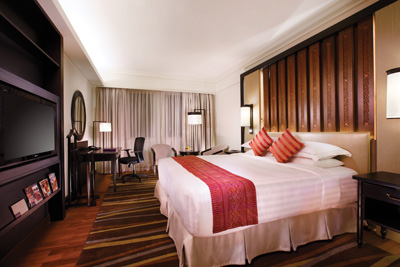
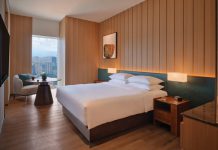
A polished urban retreat designed for business travellers, Hyatt Regency Kuala Lumpur at KL Midtown combines thoughtful design, seamless service, and exceptional facilities.
The five-star property excels in backing its expansive facilities with seamless service and personalised attention, setting the benchmark for luxury in Bangkok.