


Martin has been appointed to the dual role of general manager of InterContinental Singapore and regional general manager, InterContinental Hotels Group (IHG) Singapore, Malaysia and Batam. He brings with him over 30 years of experience in the hospitality industry.
Marc Sittl
Sittl now leads Mövenpick Siam Hotel Pattaya as general manager, having left his last role as general manager of Lebua at State Tower and Tower Club at Lebua in Bangkok
Laura Tan
Tan now leads The Settlement Hotel Melaka as general manager. Prior to this, she was the general manager of Hotel Grand Continental Kuching.
Joanna Patterson
Patterson has joined FCM Travel Solutions as director of account management, Southeast Asia. She joins from China Eastern Airlines, where she led the Global Corporate Sales Department.
Indra Budiman
Budiman is now general manager of the luxury hotel, Shinta Mani Siem Reap. He joins from Hansar Hotels, where he held the dual role of CEO/general manager for six years.
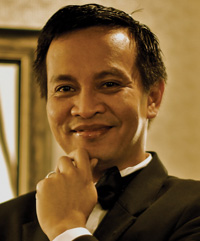
Ahmet Antepli
Dusit International has appointed Antepli as general manager of the upcoming Dusit Hotel & Suites Doha. He has over 18 years of experience working in various hospitality positions for well-known hotel chains across the Middle East and Eastern Europe.

Carlo Bezoari
FCM Travel Solutions has appointed Bezoari as director of sales, South-east Asia. He joins FCM from Rosetta Stone, where he was responsible for the corporate sales division across EMEA and Japan.
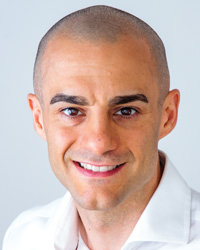
Over coffee with… Geoff Donaghy

The CEO of International Convention Centre (ICC) Sydney tells Rebecca Elliott why the venue is pivitol to the city’s success in the MICE business
ICC Sydney opened to the public on October 22. What was the vibe among your staff in the lead up to the big day?
There was sheer excitement. All three years of planning and preparation had obviously paid off for us. They realised, even those new to the industry and that are very early on in their career, that it was an incredible privilege to be involved in the opening of one of the world’s major projects in our business.
How is the business pipeline looking?
We have around about 45 international conventions locked in from now till 2022. Some are as large as 8,000 and across all fields and industries. Working with our Bureau in Sydney, we have a pipeline of about 100 bids and expressions of interest.
International business is very strong. We’ve been working on this since we commenced the project in 2014 because of the lead-time and the intense competition. We started establishing awareness, confidence and trust that this building would open on time, and right from day one we’d be a world-class venue.
National business is very strong, more than we had expected. There’s a lot of pent up demand among national rotational business to come back to Sydney.
What impact will your venue have on Sydney’s MICE performance?
The marketplace has told us in our international marketing that if ICC Sydney was not the most exciting project happening anywhere in the world at the moment, it was certainly among the top three. That’s for a number of reasons. We have the privileged position of being the (venue) with all the latest innovations and technologies and the opportunity to be right downtown on Sydney’s spectacular Harbour and within walking distance of 7,000 to 8,000 hotel rooms.
You recently said at an Australian Tourism Export Council event that a visitor shouldn’t be siloed into any one segment. What did you mean by that?
We went through a period in our industry where we tried to establish that (business events) wasn’t part of tourism. But I always felt that was a shallow and immature argument because we share a whole lot of things with visitors. While our delegates are with us, they consider themselves on business, but their accompanying partners and families are here as leisure visitors and quite often delegates participate in pre- and post-tours, so we’d be far better served in taking a (single) visitor industry approach to the interests we share.
So how can the two industries work better together to increase visitation and spend?
The very first thing is to eliminate constraints like visas, investment policy at a state and federal level, and aviation policy. All these things would potentially affect anyone coming to Sydney (whether as an event delegate or as a holidaymaker). I think the business event industry needs to work closely with the broader visitor industry in that regard. This is where we collaborate with Destination NSW (New South Wales); being able to offer all the activities that people can undertake before and after a visit here (ICC Sydney). That really drives the incremental spending and economic impact.

Is there a particular destination that does this well?
Singapore has always been up there. It has the enormous advantage of being a sovereign city-state and it does this seamless attraction of visitors effectively and strategically. Kuala Lumpur is probably learning from Singapore and is really successful in that area too. A couple of the European cities do it well but they tend to have older infrastructure.
But ask anyone in the world that same question in the first six months of 2017 and the name that will spring to their lips will be Sydney. We’re already getting that. We think the world will be very much looking to Sydney (for benchmarks) in the future.
What role can your venue play in this?
You can’t be serious in this business until you build proper convention and exhibition facilities. You can’t be partly in this business just as you can’t be partly pregnant. So we have built one of the leading venues in the world in terms of capacity, innovation and capabilities, and combined that with the fact that Sydney is already Australia’s global city and the major gateway.
How do you think the Australian MICE market is faring compared to the rest of the world?
Australia is well served with first class infrastructure and it has always had a good understanding of the need for collective and collaborative marketing, as well as individual competition. The best measure is the annual ICCA rankings. Australia’s ranking has gone down over the years but that’s not because we’ve been doing worse – most of the numbers are growing. It’s just that so many other places are doing much better.
So many emerging destinations in Asia, the Middle East and India have invested significantly in new-builds or expansions. Australia needs to maintain its competitiveness and its active and aggressive marketing efforts.
MACEOS wants to grow, set new industry standards

The Malaysian Association of Convention and Exhibition Organisers and Suppliers (MACEOS) is in discussions with the government to make it compulsory for new organisations to be members of MACEOS before they can be licensed to operate.
MACEOS CEO, Amos Wong, said: “This is to ensure that the companies are of good character and it will be a means to regulate the Business Events industry.”
Wong: MACEOS as gatekeeper
This could also serve as a means to grow membership. MACEOS currently has over 100 members, a majority of which are from the exhibitions sector.
“Growing our membership is one of our main focus as this will enable us to have a bigger voice in the business events industry in Malaysia. This is a continuous effort. Our subcommittee has expanded its wings in the northern region and Sarawak and soon we will expand further to the southern region and Sabah,” MACEOS president, Vincent Lim, said.
Meanwhile, MACEOS is also focusing on grooming the labour force, having recently rolled out its first Professional Exhibition Management and Professional Conference Management course in Kuala Lumpur and Kuching. Similar training programmes will soon be organised in Penang and Sabah.
Ong Hong Peng, secretary-general of the Ministry of Tourism and Culture Malaysia, said: “MACEOS’ keen focus on training and education is in line with the government’s Vision 2020 to enhance the capacity and capability of the industry to remain competitive. This way, we will be able to take on our regional competitors and boost the growth of the convention and exhibition industry in Malaysia.”
Corporate travel policies not addressing use of sharing economy services

An International SOS survey revealed that while sharing economy services are becoming more commonplace in corporate travel, 75 per cent of organisations lack policies that address their travellers’ use of such services.
According to the survey, which polled business travellers and travel managers, 40 per cent of respondents used services like Uber and Airbnb when travelling abroad for business and almost half of respondents anticipated their use of shared transport services would grow.

The study further found that 40 per cent of travellers did not know if their organisation considered such services to be safe.
Tim Daniel, executive vice president at International SOS, said: “While there are many benefits to using these types of services, it’s important that organisations realise that using sharing economy services for business-related travel creates new risks and challenges that need to be managed and mitigated.”
Meanwhile, more than half of the respondents indicated they didn’t know whether their organisation had considered the legality of sharing services in certain countries.
Steve Bell, partner Herbert Smith Freehills, said: “Employers sending workers overseas should understand the laws in their destination country, the relative risk profile of sharing economy services compared with traditional services, and above all be guided by their duty of care to their workers.”
Adding that sharing economy services may be more appropriate in some locations than others, Rob Walker of International SOS and Control Risks cautioned against a “a one-size-fits-all policy”, which he said is “unlikely to meet duty of care obligations to travellers”.
Reviews
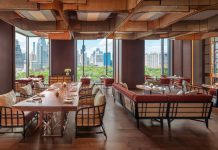
The Ritz-Carlton, Bangkok
The newly-opened Ritz-Carlton, Bangkok anchors the One Bangkok development with cosmopolitan elegance. Featuring the city's largest ballroom and a spectacular new penthouse suite, it delivers exceptional hardware and deeply authentic, soulful service for business and leisure travellers alike
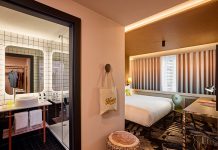
Mama Shelter Zurich
Behind the imposing, Brutalist concrete that defines Zurich’s Oerlikon district lies a surprising secret. While its exterior honours the neighbourhood’s industrial roots, stepping inside Mama Shelter reveals a vibrant, neon-soaked world that is a far cry from its rigid shell
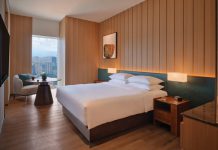
Hyatt Regency Kuala Lumpur at KL Midtown
A polished urban retreat designed for business travellers, Hyatt Regency Kuala Lumpur at KL Midtown combines thoughtful design, seamless service, and exceptional facilities.


