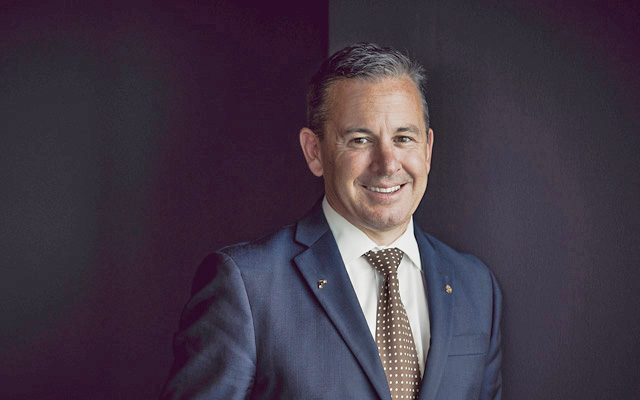
Accor has named Rob McIntyre as vice president operations for New Zealand & Fiji, effective April 13, 2026.
McIntyre brings extensive operational experience across New Zealand and internationally. Most recently based in Singapore, he led Accor operations including the flagship Pullman Singapore Orchard.
He previously served as general manager of Pullman Auckland Hotel & Apartments and held regional general manager and broader operational leadership roles across New Zealand.
APAC corporate travel managers are advised to strengthen risk management strategies for this year
The region’s corporate travel community is being urged to stay informed, adaptable, and prepared in the face of rising risk unpredictability and frequency caused by civil unrest, geopolitics, cyber attacks, and extreme weather events in the coming year.
Speakers on GBTA’s webinar, The Year Ahead: 2026 Global Risk Outlook (APAC), held on February 25, advised corporate travel managers to arm themselves with risk intelligence to make the right and timely decisions, and to use traveller-tracking tools to work towards proactive instead of reactive actions.
APAC corporate travel managers are advised to strengthen risk management strategies for this year
GBTA APAC Risk Committee member Victor Lim, global travel leader, Ingka Group (IKEA), said: “Stop travel to certain countries (deemed at risk) early rather than having to extract travellers.”’
Based on what was experienced in 2025, he recommended cancelling, rerouting, or postponing travel.
Lim added that geopolitical spillover effects – including tit-for-tat delays in visa approvals, sudden changes in entry requirements, and the rising imposition of Electronic Travel Authorisations – could disrupt travel policies and negatively impact travellers.
On the issue of cyber security and how to incorporate AI into a company’s daily operations, committee member Mamatha Basavaraju, global procurement travel category manager, Konecranes & Demag, shared: “Miscommunication can spread during a crisis and information has to come from a trusted source.
“As the risk also extends to suppliers, negotiate on how cyber resilient they are, the importance of transparency, the safety of the traveller if there is an outage, and their business contingency plan. Equally important is data resilience,” she added.
Addressing the increased frequency and unpredictability of extreme weather events, Bala Selvam, regional security manager at International SOS, advised travellers to remain flexible. He added that those booking back-to-back trips should build in a buffer for rest, and thoroughly understand their travel insurance coverage.
Destination and location resilience must be considered to determine if infrastructure is robust and travellers can access the airport, review the travel itinerary, and move out of accommodation in low-lying areas, for example in Manila, which was impacted by back-to-back typhoons.
As for traveler health, wellness, and workforce resilience, speakers said corporates need to consider the lowest logical fare for air bookings, give employees time off for being away from their families, and work with HR to manage travel-related stress.
The findings highlight a clear shift towards value-driven programmes, accelerated technology adoption and tighter governance
Thomas Cook (India) Limited, and its group company, SOTC Travel, have released the inaugural edition of their Business Travel Report 2026, offering insights into the evolving priorities, patterns and pressures shaping business travel across India.
The survey conducted over a two-month period, is based on responses received from 25+ leading enterprises across sectors including BFSI, manufacturing, hospitality, healthcare, conglomerates and professional services, along with insights from internal booking and transactional data. The report highlights a strong revival in business travel demand, alongside a heightened focus on cost optimisation, policy discipline, traveller experience and compliance.
The findings highlight a clear shift towards value-driven programmes, accelerated technology adoption and tighter governance
Key observations include:
Business travel demand remains resilient
Nearly 65% of corporates expect their business travel volumes to increase over the next 12 months, while 30% expect it to remain stable. Only five per cent anticipate a decline. This translates to 95% of respondents projecting stable-to-growth spend, underlining travel’s continued role in driving growth, client engagement and business continuity. Client meetings, sales-related travel and internal business-critical movement continue to dominate business travel demand.
Technology and data-led decision-making on the rise
More than 70% of corporates are increasing their reliance on digital tools for booking, approvals, expense management and MIS reporting, enabling improved visibility, policy compliance and data-backed decision-making across business travel programmes.
Shift towards value-driven travel management
While cost optimisation remains critical, over 62% of respondents highlighted a move towards value-led travel decisions – balancing cost efficiency with safety, reliability, compliance and traveller well-being. This has elevated the role of managed travel programmes and strategic travel partners.
Traveller experience, flexibility and duty of care gain prominence
Alongside business objectives, over 56% of respondents acknowledged the growing importance of traveller experience, flexibility and duty of care – particularly for frequent flyers and senior leadership. The findings point to a clear trade-off between traveller convenience and policy compliance, underscoring the need for smarter, more flexible travel policies supported by technology and data-led controls to reduce friction while maintaining governance.
Policy tightening and supplier renegotiations gain momentum
Close to 60% of corporates indicated that they have tightened or are in the process of revisiting their travel policies. Renegotiation of airline and hotel contracts, rationalisation of preferred suppliers and stricter approval workflows have emerged as key levers to offset rising costs and tax-related pressures.
Bleisure travel on the rise
Sixty-eight per cent of corporates report that employees are increasingly extending business trips to include personal leisure time — blending work and downtime. This growing shift is prompting organisations to reassess travel policies, clarify cost‑sharing norms and offer greater flexibility to support work‑plus‑leisure travel.
Domestic hubs dominate, with growth in international business travel
Seventy-two per cent of corporate travel continues to be domestic, led by key business hubs such as Mumbai, Delhi-NCR, Bengaluru, Chennai, Hyderabad and Pune. These cities remain critical for client meetings, internal reviews and project-based travel.
On the international front, Singapore, Thailand, Hong-Kong, Maldives, Dubai-Abu Dhabi, UK, Italy, Netherlands, US, South Africa and Australia remain preferred destinations for leadership meetings, supplier engagements and strategic business expansion – with China and Japan emerging strongly on the radar.
Rising airfares and costs driving sharper controls
A sharp 80% of respondents reported an increase in Average Ticket Prices over the past year – with over 36% witnessing a significant rise of more than 15%, and 45% reporting a moderate increase of five to 15%, highlighting tighter controls, advance booking mandates and closer monitoring of travel spends.
GST and input tax credit challenges add pressure to travel budgets
GST-related complexities continue to weigh on business travel programmes. Over 55% of respondents highlighted challenges around GST applicability, compliance and input tax credit (ITC) optimisation – particularly for air travel and hotel stays. This has led corporates to increasingly seek structured invoicing, compliant supplier ecosystems and expert support to minimise leakage and improve tax efficiency.
Executives representing TCEB, IPSF, FAPA, and AASP gather at the press conference at The Sukosol Hotel, Bangkok, and TCEB’s Supawan Teerarat (middle); photo by TCEB
The Thailand Convention and Exhibition Bureau (TCEB) has secured hosting rights for three international pharmaceutical conferences scheduled between 2026 and 2027.
These events are expected to attract more than 3,200 delegates and generate over 151 million baht (US$4.9 million) in revenue.
From July 29 to August 11, 2026, the 71st International Pharmaceutical Students’ Federation (IPSF) World Congress 2026 will take place at Chulalongkorn University. The event is expected to attract approximately 600 participants, including 500 international delegates from over 100 countries, generating around 33 million baht in revenue. Thailand previously hosted this congress in 2011 in Hat Yai.
Executives representing TCEB, IPSF, FAPA, and AASP gather at the press conference at The Sukosol Hotel, Bangkok, and TCEB’s Supawan Teerarat (middle); photo by TCEB
Following this, the 31st Congress of the Federation of Asian Pharmaceutical Associations (FAPA) will be held from November 3 to 7, 2026, at the IMPACT Exhibition and Convention Center, Muang Thong Thani. This congress is expected to draw 2,000 attendees, including 1,500 foreign delegates, and generate approximately 99 million baht in revenue.
This event will focus on digital innovation and artificial intelligence for healthcare safety, while highlighting Thai herbal medicine. This marks the sixth time Thailand has hosted the FAPA Congress, the highest hosting record among member countries.
Finally, the biennial Asian Association of Schools of Pharmacy (AASP) Conference 2027 will bring 600 participants to the Chiang Mai International Exhibition and Convention Centre from July 1 to 2, 2027. This marks the event’s second time in Thailand, returning 22 years after its 2005 debut.
“The strong professionalism of three Thai pharmaceutical bodies – including the Pharmacy Students’ Federation of Thailand – in their collaboration with TCEB as a national bidding government agency resulted in these successful wins, covering the entire pharmaceutical industry value chain – including students, schools, and organisations – for the first time,” TCEB’s president, Supawan Teerarat, said.
More than 320,000 visitors attended IHK 2025 at Ilsan Lake Park
The International Association of Horticultural Producers (AIPH) has formally approved International Horticulture Goyang Korea 2026 (IHK 2026), marking the third consecutive approval for the city’s flagship horticultural event.
The 17-day exhibition, organised by the Goyang International Flower Foundation, will run from April 24 to May 10, 2026, at Ilsan Lake Park.
More than 320,000 visitors attended IHK 2025 at Ilsan Lake Park
The event will utilise 280,000m2 for large-scale outdoor installations, paired with an expanded indoor environment consisting of the permanent Goyang Flower Exhibition Centre and two additional halls.
The exhibition aims to attract over 400,000 visitors, serving as a platform for industry professionals to showcase nursery stock, cut flowers, and foliage plants while facilitating trade exchange programmes.
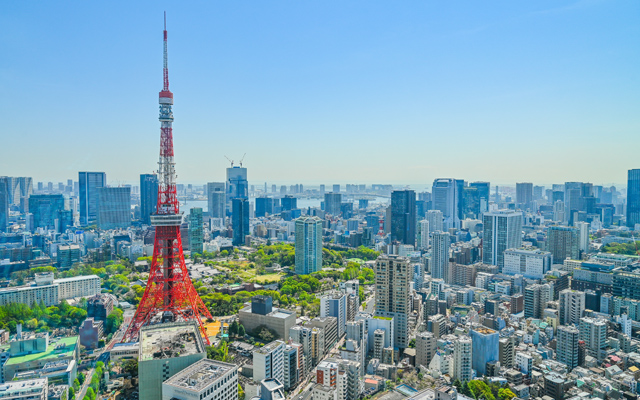
The event will serve a global platform for high-level exchange and professional development; Tokyo pictured
Business Events Tokyo has revealed that the city will host the 72nd UIA Congress, the flagship annual gathering of the Union Internationale des Avocats (International Association of Lawyers).
The event is scheduled to take place from November 1 to 4, 2028, at the Grand Nikko Tokyo Daiba.
The event will serve a global platform for high-level exchange and professional development; Tokyo pictured
The Congress is expected to draw approximately 1,500 legal professionals, including private practitioners, bar association representatives, judges, and academics from over 110 countries.
Selection committee members cited Tokyo’s robust convention infrastructure and its proven track record of managing large-scale international summits as primary factors for the win. The city’s position as a legal hub in Asia, supported by a highly active local academic and legal community, further solidified the bid.
The successful acquisition of the event was bolstered by a combination of financial and in-kind support from the Tokyo Convention & Visitors Bureau.
While the core dates and venue are confirmed, the UIA Secretariat will release specific programme themes and registration details as the event draws closer.
The Hannah St Hotel has officially opened in Melbourne’s Southbank, positioned as a design-led cultural clubhouse aimed at blending professional functions with social connection.
Located within walking distance of the Melbourne Convention and Exhibition Centre, the property was designed by Flack Studio to serve as a neighbourhood hub for the city’s arts and corporate sectors.
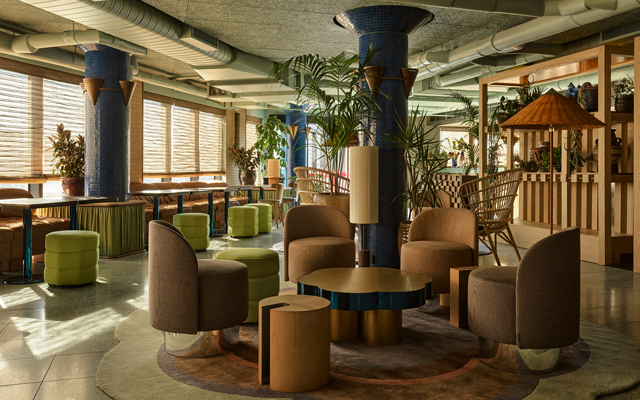
The rooftop Terrace Lounge; photo by Anson Smart
The hotel features a variety of purpose-built environments, including the Bridge Rooms – two architecturally designed event spaces equipped with high-definition projectors, beam-steering microphones, and hybrid-event technology. These rooms offer flexible configurations ranging from intimate 28m2 workshops to larger presentation formats.
Beyond traditional meeting rooms, the property also offers a soundproof podcast studio; co-working zones; the Carriage Lounge, an intimate space for casual meetings or private events; and the rooftop Terrace Lounge capable of hosting up to 200 guests.
The F&B programme for the property’s four outlets is managed by The Mulberry Group, the team behind noted Melbourne venues such as Higher Ground and Hazel.
In addition to its 188 guestrooms, the hotel provides a dedicated wellness floor on Level 9, which includes a 20-metre indoor pool, spa, sauna, and fitness studio.
The General Civil Aviation Authority (GCAA) of the United Arab Emirates (UAE) has activated measures to manage disrupted passenger traffic amid the US and Israel war on Iran, which has led to airspace closures in the Middle East since February 28.
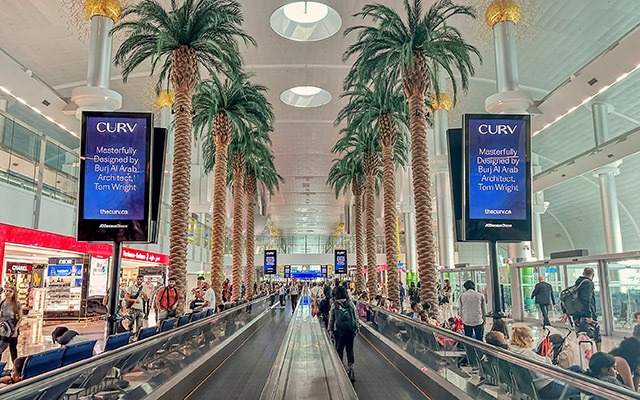
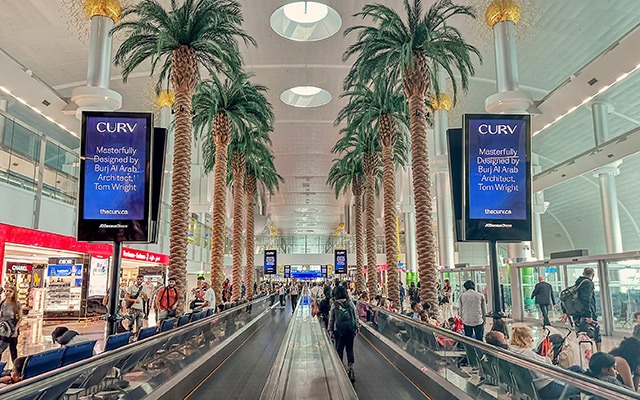
According to OAG’s 2025 Megahubs report, Dubai International Airport ranks 15th among the world’s Top 50 Global Airport Megahubs, operating more than 46,000 connections to 280 destinations worldwide. It is also the busiest airport in both the UAE and the Middle East.
Dubai International Airport is the busiest airport in the UAE, according to OAG’s 2025 Megahubs report, operating more than 46,000 connections worldwide
The GCAA has accelerated rescheduling processes, stepped up ground resources across passenger terminals to resolve congestions, and moved to provide affected passengers with welfare support.
News reports state that the GCAA is committed to shouldering the cost of assisting and accommodating affected travellers.
UAE carriers Emirates, Etihad and FlyDubai continue to maintain a flight suspension at press time, which impacts their services beyond the Middle East.
“Ongoing Middle East airport and airspace closures – particularly at Dubai, Doha and Abu Dhabi Airports, the region’s busiest hubs – are causing significant disruption to international travel,” said Mayur Patel, regional commercial and industry affairs leader, Asia Pacific, Middle East and Africa, OAG Aviation.
“As a critical east-west transit gateway linking Europe, Asia, Africa and the Americas, any suspension of operations at these hubs leads to widespread cancellations, longer rerouted flight paths, aircraft and crew displacement, and missed onward connections. The impact extends beyond passengers to cargo flows and airline economics, with higher operating costs and network instability likely to persist even after airspace reopens, as carriers work through the backlog and reposition assets across their global schedules.”
News reports as of March 1 morning stated that airports across the Middle East, including Dubai International Airport, Zayed International Airport in Abu Dhabi, and Kuwait International Airport, have suffered collateral damage from Iranian retaliatory attacks against US military bases in regional countries.
Editor’s note: This news brief has been updated with OAG Aviation’s observations.
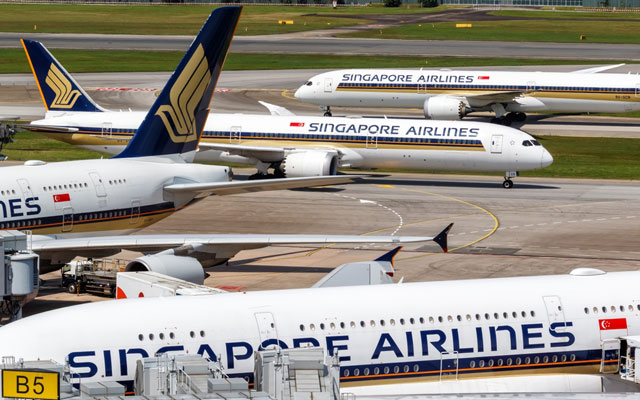
Singapore Airlines has put a pause on flights to the Middle East
Travellers across the Asia-Pacific region are facing disruptions as major airlines scramble to cancel or reroute flights to the Middle East, as the US and Israel launch a wake of strikes against targets in Iran.
Singapore’s national carrier, Singapore Airlines (SIA), and its low-cost subsidiary, Scoot, have cancelled six flights to date, as reported by The Business Times. Affected routes include SQ494 and SQ495 between Singapore and Dubai, as well as Scoot flights TR596 and TR597 serving Jeddah.
Singapore Airlines has temporarily suspended flights to the Middle East
SIA has urged passengers to update their contact details to receive real-time notifications, noting that they will continue to monitor the situation and adjust flight paths accordingly.
Malaysia Airlines took immediate action as the strikes began, with two Middle East-bound flights forced to divert following urgent mid-air advisories regarding heightened airspace risks. MH160, bound for Doha, returned to Kuala Lumpur International Airport, while MH156, bound for Jeddah, was diverted to Chennai, India.
Elsewhere in Asia-Pacific, Air India has suspended all flights to Middle Eastern destinations until further notice, and Japan Airlines cancelled its Tokyo-Doha service.
Meanwhile, European carriers like Lufthansa and Wizz Air have suspended services to major hubs including Abu Dhabi, and Dubai.
Disney Cruise Line appoints Tracy Wilson as senior vice president and general manager, Disney Cruise Line operations, succeeding Sharon Siskie.
Wilson brings more than 30 years of experience with The Walt Disney Company and most recently served as senior vice president, finance, Disney Signature Experiences, where she led strategic planning and negotiations supporting the expansion of the Disney Cruise Line fleet.
Her career spans leadership roles across Disney’s theme parks, consumer products, and studio operations, including involvement in the integration of Lucasfilm and Marvel.
The newly-opened Ritz-Carlton, Bangkok anchors the One Bangkok development with cosmopolitan elegance. Featuring the city's largest ballroom and a spectacular new penthouse suite, it delivers exceptional hardware and deeply authentic, soulful service for business and leisure travellers alike
Behind the imposing, Brutalist concrete that defines Zurich’s Oerlikon district lies a surprising secret. While its exterior honours the neighbourhood’s industrial roots, stepping inside Mama Shelter reveals a vibrant, neon-soaked world that is a far cry from its rigid shell
A polished urban retreat designed for business travellers, Hyatt Regency Kuala Lumpur at KL Midtown combines thoughtful design, seamless service, and exceptional facilities.



 He previously served as general manager of Pullman Auckland Hotel & Apartments and held regional general manager and broader operational leadership roles across New Zealand.




 Her career spans leadership roles across Disney’s theme parks, consumer products, and studio operations, including involvement in the integration of Lucasfilm and Marvel.