The Arinex Group has appointed Jessica Ferguson as CEO of its flagship brand, Arinex.
Ferguson takes on the role after having served as head of business development and marketing functions for Arinex, bringing more than 20 years’ experience across large-scale event management, professional conference, and incentive programme delivery and active contribution to the business events industry.
Her appointment follows a period of rapid growth and the launch of fieldstate, a new creative powerhouse dedicated to high-impact brand storytelling and experiential design for leading global brands.
Fieldstate joins a robust portfolio of specialist brands, including Arinex (professional conference organising and destination management), Arinex Live (technical production), Neoteq (technology innovation company). and evexus (event management software).
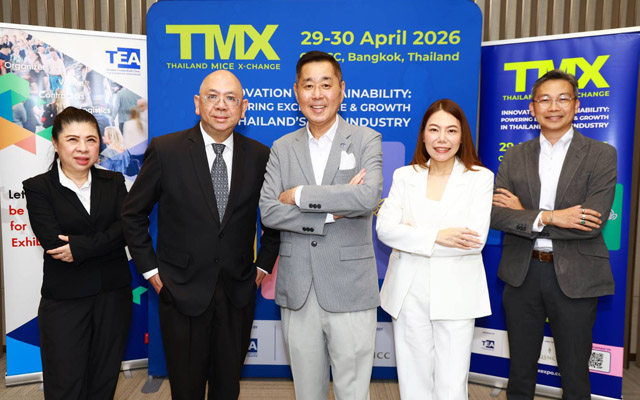
From left: N.C.C. Management & Development Co.'s Duangrat Udomsomporn; TCEB’s Duangdej Yuaikwarmdee; Thai Exhibition Association’s and Impact Exhibition Management Co.'s Loy Joon How; King Rice Oil Group’s Navaporn Santiwattana; and Expopass' Attaphon Thenthaisong
The Thai Exhibition Association (TEA) has revealed its MICE Masterplan 2026–2027, a strategic roadmap designed to bolster Thailand’s global standing through digital transformation and sustainability.
The framework will take centrestage at Thailand MICE X-Change 2026 (TMX 2026), scheduled for April 29 to 30 at the Queen Sirikit National Convention Centre. Now in its third edition, the expo expects to draw 4,000 delegates and 100 exhibitors, facilitating over 360 business meetings.
From left: N.C.C. Management & Development Co.’s Duangrat Udomsomporn; TCEB’s Duangdej Yuaikwarmdee; Thai Exhibition Association’s and Impact Exhibition Management Co.’s Loy Joon How; King Rice Oil Group’s Navaporn Santiwattana; and Expopass’ Attaphon Thenthaisong
The plan arrives on the heels of a significant growth spurt for the industry. Between 2024 and 2025, the number of exhibitions in Thailand climbed from 199 to 214, with the total exhibition space sold expanding from 25 million to over 27 million square metres.
According to TEA’s president Loy Joon How, the masterplan is less about annual gatherings and more about future-proofing the industry.
By prioritising digital innovation, artificial intelligence, and sustainable practices, the association aims to evolve beyond traditional tradeshows into a comprehensive business ecosystem.
“Face-to-face platforms remain essential drivers of trust, trade, and long-term business growth,” Loy noted, highlighting the move toward high-tech, high-touch experiences.
This shift is being supported by the Thailand Convention & Exhibition Bureau (TCEB), whose exhibitions director, Duangdej Yuaikwarmdee, views TMX 2026 as a flagship platform for this transformation.
Global travel management companies have activated emergency 24/7 protocols
Global Travel Management Companies (TMCs) have entered high-alert status following a significant military escalation involving Iran, Israel, and the US, affecting more than 1.5 million passengers worldwide.
In response to regional airspace closures and a surge in flight cancellations, BCD Travel and FCM have activated emergency protocols to protect thousands of business travellers in the region.
Global travel management companies have activated emergency 24/7 protocols
BCD Travel confirmed it is closely monitoring the fluid situation through its dedicated Global Crisis Management team. To manage the surge in traveller inquiries, the company has significantly increased staffing across its operations.
The TMC is currently using its travel risk and communication technology to help corporate clients navigate an environment where multiple airlines have announced cancellations and re-routings. BCD Travel added that its teams are working 24/7 to assess the potential impacts on air travel, lodging, and regional operations.
FCM has similarly up-scaled its 24/7 disruption teams, who have been working tirelessly to provide assistance as the conflict spreads. The company has placed a heavy emphasis on the welfare of its own regional staff, reaching out to ensure that employees in affected areas are safe and receiving the support they need.
The company’s strategy relies on strong partnerships with airlines and other suppliers to navigate the evolving situation effectively. FCM noted that their customers are being kept informed at every step through proactive communication channels.
Despite the immediate challenges, FCM has expressed optimism regarding the region’s long-term resilience and committed to providing the guidance needed as travellers wait for stability to return.
The scale of the disruption is underscored by the closure of critical flight corridors. Aviation authorities in the UAE, Qatar, and Kuwait have issued various restrictions, leaving once-busy skies largely empty. As of March 3, 2026, major carriers including Emirates, Qatar Airways, and Lufthansa have suspended or limited operations, while some European regulators have advised against flying in the Gulf region until at least March 6.
With flight cancellations of all travel intents surpassing 19,000 across the region, TMCs are now shifting focus toward repatriation and complex longhaul rerouting. Travel managers are being urged to utilise real-time tracking tools and prepare for cascading delays as airlines work to reposition crews and aircraft once airspace begins to reopen.
Ryan: targeting South-east Asia's high-value conference and incentive sectors
New Zealand is stepping up its pursuit of South-east Asia’s events sector, hitting Kuala Lumpur and Singapore in March with targeted roadshows to connect with high‑value conference and incentive buyers.
Members of the Tourism New Zealand Business Events team and 13 partners will host two sessions in each city, one for incentive planners, and one for association buyers.
Ryan: targeting South-east Asia’s high-value conference and incentive sectors
The events will include a presentation, then one-on-one appointments between invited buyers and New Zealand operators such as Air New Zealand, Auckland Convention Bureau, and Hobbiton Movie Set.
The in-market visit follows Tourism New Zealand engaging Esther Ng and Annie Tay as market support in October last year to grow South-east Asian incentive and association conference business, respectively. Both are team members of business events consultancy Gaining Edge with significant experience and contacts in the sector.
In the past year, Tourism New Zealand Business Events has supported six conference wins from the region with another six bids pending, and won 10 pieces of corporate or incentive business.
Tourism New Zealand’s global manager business events, Penelope Ryan, said: “New Zealand has seen an uptick in holiday visitors from South-east Asia. We’re now building on the work of Esther and Annie in-market to grow our share of conferences and incentives in the region through better awareness of our world-class convention centres, direct air connectivity and tailored funding and support.
“These events will be an opportunity for some of our partners to showcase what’s on offer, from excellent accommodation options to exploring New Zealand’s unique Māori culture and experiencing the country’s natural beauty.”
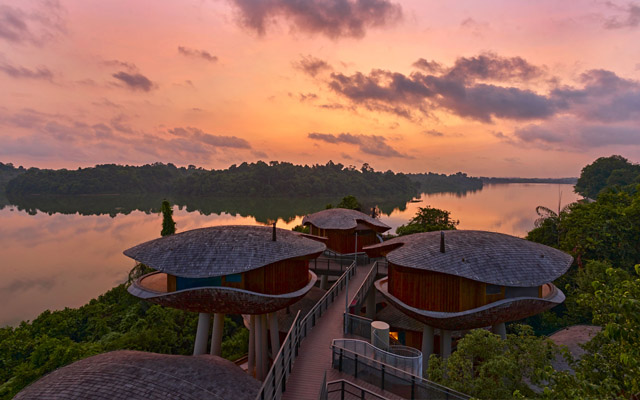
Mandai Rainforest Resort by Banyan Tree, the brand’s first property in Singapore and the 100th in its portfolio, has been pulling in sustainability-aligned events set within the 126-hectare Mandai Wildlife Reserve, a world-leading wildlife and nature destination.
Billed as Singapore’s first super low energy-certified resort and designed with regenerative principles and a low-impact footprint, general manager Glen Cook said the property is “in a unique position to attract high-end incentives, leadership retreats, board meetings, and nature-themed product launches”.
Mandai Rainforest Resort
1 of 4
Cook added meeting groups looking to stay at the resort can enjoy a restorative retreat in nature and enhanced wellness through the Banyan Tree Spa.
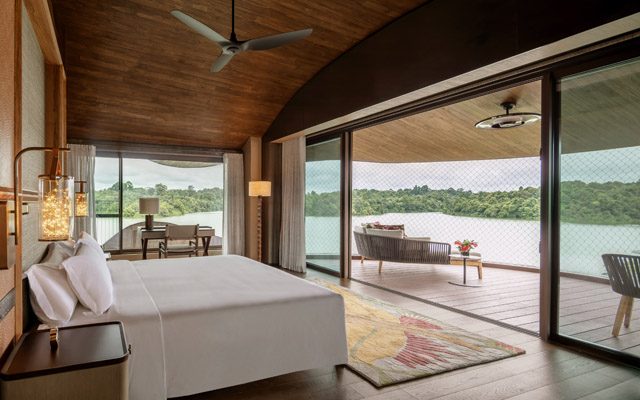
The resort, which has been operational for almost a year, features 338 guestrooms, including 24 elevated treehouses with private patios offering views of the surrounding rainforest and Upper Seletar Reservoir.
F&B facilities include “harvest-to-table” restaurant Forage and Planter’s Shed, the resort’s all-day dining outlet.
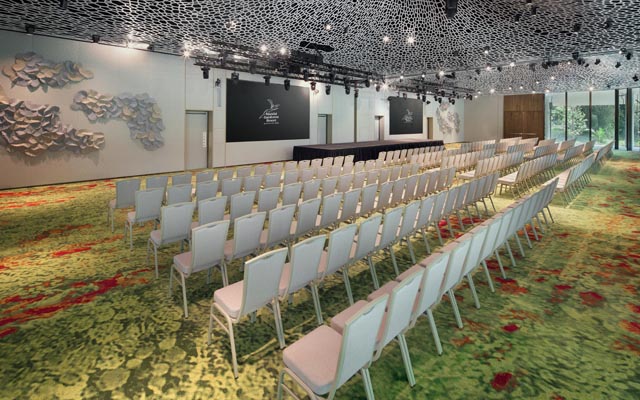
Small- to mid-scale corporate meetings have taken place in the modular Meranti Ballroom, and dedicated Kempas and Pulai meeting and function rooms, for groups ranging from 20 to 300 guests.
“We are seeing growing interest from lifestyle and eco-conscious brands looking to host intimate product launches in a unique biophilic setting,” noted Cook. This trend is reflected in the 2026 calendar, with bookings dominated by regional incentives seeking nature-themed experiences and exclusive stays in the treehouses.
For large-scale events, the resort collaborates with Mandai Wildlife Reserve to access the nearby Green Canvas, a new purpose-built event space.
Cook added that the partnership’s offering of a fresh alternative to conventional city venues has resulted in business from several major companies.
Following a record-breaking 2025, Business Events Sarawak (BESarawak) has launched a nationwide engagement series to align the industry with Malaysia’s long-term development goals.
The initiative, themed Satu Meja, Seribu Cerita, will span Kuching, Sibu, Miri, Bintulu, Kuala Lumpur, and Penang to foster collaboration between government, academia, and private sectors.
BESarawak’s Ramadan engagement night in Kuching
The move comes as Sarawak enters a critical phase of its Post Covid-19 Development Strategy 2030. Minister for tourism, creative industry and performing arts, Abdul Karim Rahman Hamzah, emphasised that the ministry will refine event concepts and innovation to ensure business gatherings deliver “measurable value” beyond simple tourism, contributing instead to the broader economy and local communities.
Sarawak’s strategic shift toward legacy impact is yielding significant returns. In 2025, the region secured 160 future business events through 2030, representing a projected economic value of RM483.5 million (US$122.5 million).
Additionally, Sarawak hosted 159 events in FY2025 alone, a 27 per cent year-on-year increase that generated RM491.4 million in total economic impact.
Moving forward, BESarawak chairman Hii Chang Kee stated the organisation will focus on three pillars: transformation and innovation, legacy and impact, and partnerships and people to maintain this momentum.
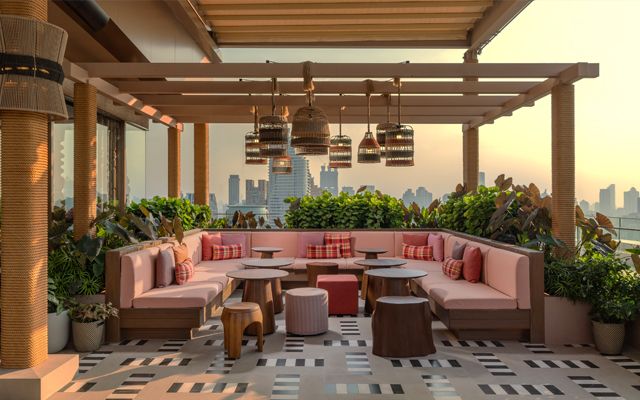
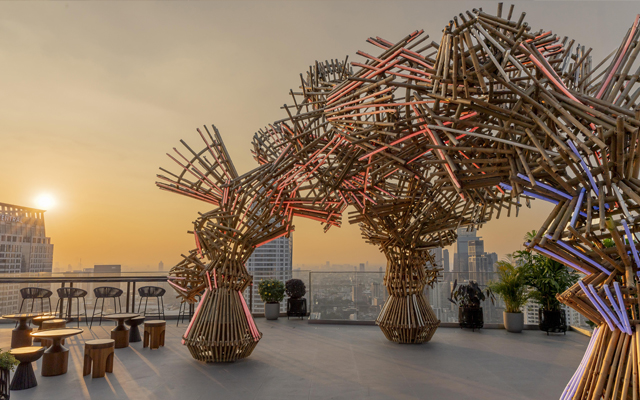
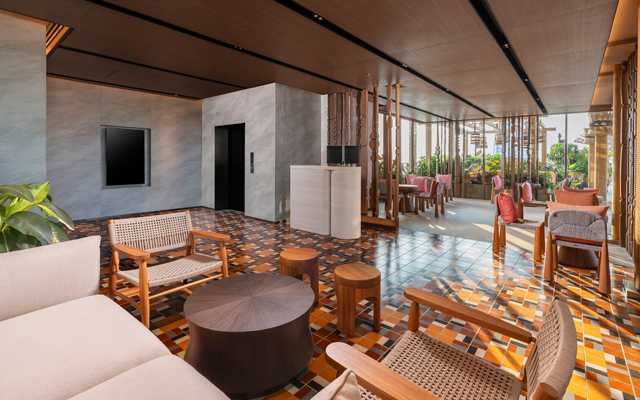
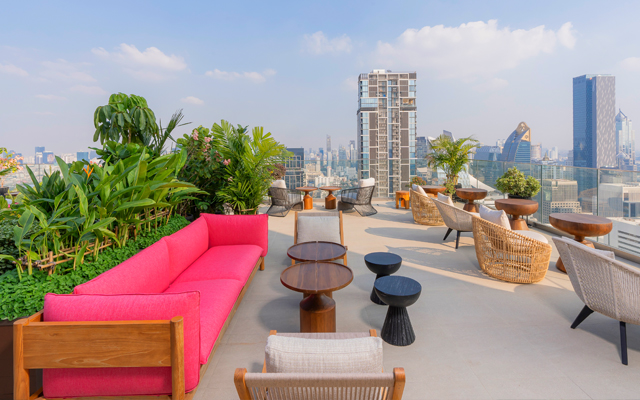
Moxy Bangkok Ratchaprasong has rolled out a new suite of event packages at its recently-opened Sato San Rooftop Bar.
Located on the 32nd floor, the venue features 360-degree views of the Bangkok skyline, blending a neon-lit indoor lounge with an open-air terrace.
Sato San Rooftop Bar
1 of 4
For smaller gatherings of 15 to 35 guests, the Sunset Starter offers a 90-minute golden hour experience at 1,500++ baht (US$47.55) per person, including free-flow highballs, beer, wine, and shared bar bites. Larger groups of up to 100 guests can book three-hour private sessions starting at 3,000 baht per person for the House Flow tier, with Signature and Reserve tiers available at 3,300 baht and 3,600 baht for those seeking premium spirits and cocktails.
For major celebrations, the venue offers exclusive buyouts for up to 250 guests. These three-hour full-rooftop experiences start at 3,200 baht per person, while all-day access from 18.00 to 02.00 begins at 4,500 baht per person. Reflecting Moxy’s social-first branding, these larger bookings can be customised with interactive add-ons such as silent discos, Sake Pong tournaments, and mixology sessions.
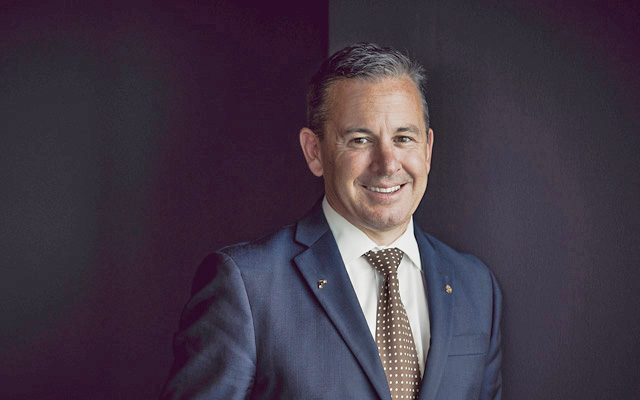
Accor has named Rob McIntyre as vice president operations for New Zealand & Fiji, effective April 13, 2026.
McIntyre brings extensive operational experience across New Zealand and internationally. Most recently based in Singapore, he led Accor operations including the flagship Pullman Singapore Orchard.
He previously served as general manager of Pullman Auckland Hotel & Apartments and held regional general manager and broader operational leadership roles across New Zealand.
APAC corporate travel managers are advised to strengthen risk management strategies for this year
The region’s corporate travel community is being urged to stay informed, adaptable, and prepared in the face of rising risk unpredictability and frequency caused by civil unrest, geopolitics, cyber attacks, and extreme weather events in the coming year.
Speakers on GBTA’s webinar, The Year Ahead: 2026 Global Risk Outlook (APAC), held on February 25, advised corporate travel managers to arm themselves with risk intelligence to make the right and timely decisions, and to use traveller-tracking tools to work towards proactive instead of reactive actions.
APAC corporate travel managers are advised to strengthen risk management strategies for this year
GBTA APAC Risk Committee member Victor Lim, global travel leader, Ingka Group (IKEA), said: “Stop travel to certain countries (deemed at risk) early rather than having to extract travellers.”’
Based on what was experienced in 2025, he recommended cancelling, rerouting, or postponing travel.
Lim added that geopolitical spillover effects – including tit-for-tat delays in visa approvals, sudden changes in entry requirements, and the rising imposition of Electronic Travel Authorisations – could disrupt travel policies and negatively impact travellers.
On the issue of cyber security and how to incorporate AI into a company’s daily operations, committee member Mamatha Basavaraju, global procurement travel category manager, Konecranes & Demag, shared: “Miscommunication can spread during a crisis and information has to come from a trusted source.
“As the risk also extends to suppliers, negotiate on how cyber resilient they are, the importance of transparency, the safety of the traveller if there is an outage, and their business contingency plan. Equally important is data resilience,” she added.
Addressing the increased frequency and unpredictability of extreme weather events, Bala Selvam, regional security manager at International SOS, advised travellers to remain flexible. He added that those booking back-to-back trips should build in a buffer for rest, and thoroughly understand their travel insurance coverage.
Destination and location resilience must be considered to determine if infrastructure is robust and travellers can access the airport, review the travel itinerary, and move out of accommodation in low-lying areas, for example in Manila, which was impacted by back-to-back typhoons.
As for traveler health, wellness, and workforce resilience, speakers said corporates need to consider the lowest logical fare for air bookings, give employees time off for being away from their families, and work with HR to manage travel-related stress.
The findings highlight a clear shift towards value-driven programmes, accelerated technology adoption and tighter governance
Thomas Cook (India) Limited, and its group company, SOTC Travel, have released the inaugural edition of their Business Travel Report 2026, offering insights into the evolving priorities, patterns and pressures shaping business travel across India.
The survey conducted over a two-month period, is based on responses received from 25+ leading enterprises across sectors including BFSI, manufacturing, hospitality, healthcare, conglomerates and professional services, along with insights from internal booking and transactional data. The report highlights a strong revival in business travel demand, alongside a heightened focus on cost optimisation, policy discipline, traveller experience and compliance.
The findings highlight a clear shift towards value-driven programmes, accelerated technology adoption and tighter governance
Key observations include:
Business travel demand remains resilient
Nearly 65% of corporates expect their business travel volumes to increase over the next 12 months, while 30% expect it to remain stable. Only five per cent anticipate a decline. This translates to 95% of respondents projecting stable-to-growth spend, underlining travel’s continued role in driving growth, client engagement and business continuity. Client meetings, sales-related travel and internal business-critical movement continue to dominate business travel demand.
Technology and data-led decision-making on the rise
More than 70% of corporates are increasing their reliance on digital tools for booking, approvals, expense management and MIS reporting, enabling improved visibility, policy compliance and data-backed decision-making across business travel programmes.
Shift towards value-driven travel management
While cost optimisation remains critical, over 62% of respondents highlighted a move towards value-led travel decisions – balancing cost efficiency with safety, reliability, compliance and traveller well-being. This has elevated the role of managed travel programmes and strategic travel partners.
Traveller experience, flexibility and duty of care gain prominence
Alongside business objectives, over 56% of respondents acknowledged the growing importance of traveller experience, flexibility and duty of care – particularly for frequent flyers and senior leadership. The findings point to a clear trade-off between traveller convenience and policy compliance, underscoring the need for smarter, more flexible travel policies supported by technology and data-led controls to reduce friction while maintaining governance.
Policy tightening and supplier renegotiations gain momentum
Close to 60% of corporates indicated that they have tightened or are in the process of revisiting their travel policies. Renegotiation of airline and hotel contracts, rationalisation of preferred suppliers and stricter approval workflows have emerged as key levers to offset rising costs and tax-related pressures.
Bleisure travel on the rise
Sixty-eight per cent of corporates report that employees are increasingly extending business trips to include personal leisure time — blending work and downtime. This growing shift is prompting organisations to reassess travel policies, clarify cost‑sharing norms and offer greater flexibility to support work‑plus‑leisure travel.
Domestic hubs dominate, with growth in international business travel
Seventy-two per cent of corporate travel continues to be domestic, led by key business hubs such as Mumbai, Delhi-NCR, Bengaluru, Chennai, Hyderabad and Pune. These cities remain critical for client meetings, internal reviews and project-based travel.
On the international front, Singapore, Thailand, Hong-Kong, Maldives, Dubai-Abu Dhabi, UK, Italy, Netherlands, US, South Africa and Australia remain preferred destinations for leadership meetings, supplier engagements and strategic business expansion – with China and Japan emerging strongly on the radar.
Rising airfares and costs driving sharper controls
A sharp 80% of respondents reported an increase in Average Ticket Prices over the past year – with over 36% witnessing a significant rise of more than 15%, and 45% reporting a moderate increase of five to 15%, highlighting tighter controls, advance booking mandates and closer monitoring of travel spends.
GST and input tax credit challenges add pressure to travel budgets
GST-related complexities continue to weigh on business travel programmes. Over 55% of respondents highlighted challenges around GST applicability, compliance and input tax credit (ITC) optimisation – particularly for air travel and hotel stays. This has led corporates to increasingly seek structured invoicing, compliant supplier ecosystems and expert support to minimise leakage and improve tax efficiency.
The newly-opened Ritz-Carlton, Bangkok anchors the One Bangkok development with cosmopolitan elegance. Featuring the city's largest ballroom and a spectacular new penthouse suite, it delivers exceptional hardware and deeply authentic, soulful service for business and leisure travellers alike
Behind the imposing, Brutalist concrete that defines Zurich’s Oerlikon district lies a surprising secret. While its exterior honours the neighbourhood’s industrial roots, stepping inside Mama Shelter reveals a vibrant, neon-soaked world that is a far cry from its rigid shell
A polished urban retreat designed for business travellers, Hyatt Regency Kuala Lumpur at KL Midtown combines thoughtful design, seamless service, and exceptional facilities.






 He previously served as general manager of Pullman Auckland Hotel & Apartments and held regional general manager and broader operational leadership roles across New Zealand.