AV1, an event production company in Australia, celebrated its 20th anniversary and showcased significant audiovisual upgrades at the Museum of Contemporary Art Australia’s (MCA Australia) Foundation Hall during its 10th annual Long Summer Lunch.
The event, themed Emerald Reflections, highlighted AV1’s two decades of achievements and served as the debut for Foundation Hall’s newly installed AV infrastructure.
Long Summer Lunch
These include adaptable drop-down screens for varied room configurations; L-Acoustics audio system with premium speakers; subwoofers, and amplifiers for superior sound distribution over 60 moving headlights, LED fixtures; and over 60 moving headlights, LED fixtures, and pin spots for immersive lighting effects.
A comprehensive Luminex digital backbone ensures seamless control of audio, visual, and lighting elements, while an installed truss system provides flexible and secure rigging options.
Nigel Mintern, managing director at AV1, said: “This investment reflects our commitment to raising the bar in event production and ensuring our clients have access to cutting-edge tools for their most important moments.”
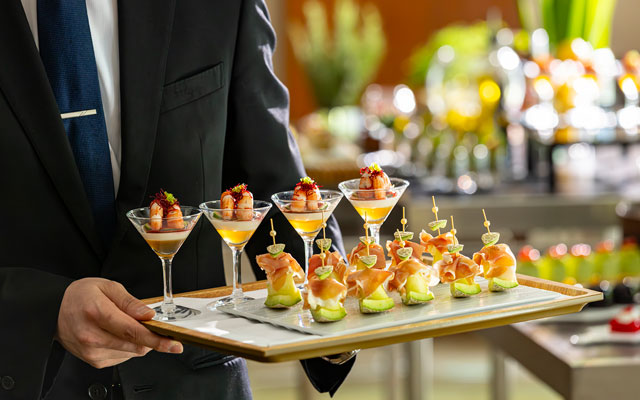
The event also celebrated AV1’s journey and client success stories, featuring a curated menu by The Big Group and signature cocktails. Interactive installations included a custom-built three-metre ring displaying AI-generated artwork based on attendee memories, and an emerald screen showcasing predictions for the future of events.
Guests also enjoyed performances by aerial singer Ms Bird and The Players Jazz Quartet, demonstrating the versatility of the new AV system.
The Long Summer Lunch was a collaborative effort, with contributions from DPLUSD Events (styling), Sprintr (event check-in), Oneill Photographics (photography), and AV1’s sister company, All Things All Creatures (theming and videography).
Looking ahead, AV1 anticipates a landmark 2025, with Mintern teasing an upcoming “game-changer” product set to revolutionise client productions.
PATA Annual Summit 2025 (PAS 2025) will open with the theme, Timeless Wisdom for a Sustainable Future, in Istanbul, Türkiye from April 21 to 23.
Scheduled to take place at the CVK Park Bosphorus Hotel İstanbul, the summit will explore principles that have shaped perspectives on culture, community, and conservation. Industry leaders will discuss how these insights can be applied to tackle current challenges and seize new opportunities.
PATA Annual Summit 2025 will include city tours of Istanbul; Galata Tower pictured
PATA CEO Noor Ahmad Hamid stated: “The PATA Annual Summit is a premier thought leadership event that brings together global players in the tourism industry to explore trends and address critical issues shaping the future of tourism. We take pride in uniting a diverse range of stakeholders – from public and private sectors to industry experts and young professionals – to foster meaningful, high-level discussions that drive the evolution of the industry.”
Aimed to inspire collaboration and innovation in tourism development, the summit provides a platform for delegates to “engage in critical conversations, exchange insights, and contribute to the advancement of an ever-evolving global tourism landscape”, he added.
The summit will feature a comprehensive programme, including PATA Executive Board & Board meetings, PATA Policy Forum, Government, Education & Industry Roundtables, and plenty of networking opportunities. The PATA Annual General Meeting will be a key element of the event.
Delegates will also have the opportunity to join complimentary half-day tours that take them to explore Istanbul’s cultural and heritage attractions.
Turkish Airlines is the official airline partner for the event and will offer flight discounts to delegates.
Marriott International has reported another record year of deals for 2024, following on from its stellar record-breaking year in 2023. This time, it scored 109 deals across 11 markets in the Asia Pacific excluding China (APEC) region – up from 80 in 2023. These deals add 21,439 rooms to the region’s development pipeline and close the year with 77,532 rooms in the pipeline – a 12 per cent increase over 2023.
Addressing journalists at a briefing in Singapore on February 6, Shawn Hill, chief development officer, APEC, Marriott International, said the company had achieved two milestones with 2024’s performance.
Marriott International’s Asia Pacific excluding China region leadership share the company’s performance report for 2024; from left: John Toomey, Shawn Hill, Oriol Montal, and Rajeev Menon
“This is the first time we have ever crossed 100 deals and 20,000 rooms in a single year,” said Hill.
Hill attributed the energetic signings to “trust and confidence” among owners and partners in Marriott International.
“Thirty-five per cent of our signings in 2024 were with existing owners and partners. They choose our brands, they believe in us, and choose us to grow with them.
“At the same time, 40 per cent of 2024 deals were conversions – owners taking their old flags and brands and converting them into Marriott brands and hotels,” he said, adding that the team was also proud of acquiring 7,000 rooms through portfolio or large multi-unit transactions.
India, Japan, and Indonesia were the biggest growth markets for the company in the region, comprising 72 per cent of the region’s deal signings in the year. These countries also saw “all-time record-high signings”.
Signings in India last year resulted in 7,000 additional rooms, followed by Japan with 5,000 rooms, and Indonesia with more than 2,000 rooms. Inventory in Vietnam (plus 2,000 rooms), Malaysia (plus 1,000 rooms) and Thailand (plus 1,000 rooms) also expanded on the back of fresh signings.
Marriott International has made growing its luxury portfolio a key focus in APEC, with 19 per cent of signed deals in 2024 belonging to this category. A record 21 agreements were signed, representing 4,600 rooms in the region across six Marriott International Luxury Group brands. These signings will result in debuts of the Edition brand in Jakarta, Indonesia, and Mumbai, India; The Ritz-Carlton in Jaipur and Udaipur, India; a second W Hotels in Singapore, and more.
Luxury properties in APEC now form a third of Marriott International’s global luxury pipeline.
Oriol Montal, managing director luxury, APEC, said the luxury travel outlook is bright due to strong spending intentions among Generation Z consumers, who have indicated in a Marriott International study that they would “put their savings on a luxury vacation before buying a luxury good”.
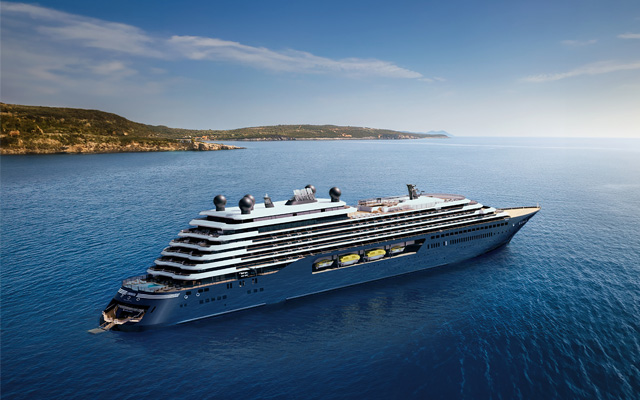
Montal added that Marriott International is in a leading position to respond to travel trends among high net worth individuals. These travellers are prioritising transformative adventures and experiences, and the company has gone into new areas of business that allow it to satiate these desires. Citing examples, he pointed to Marriott International’s first tented camp that opened in Kenya last year, expansion into luxury cruising with Luminara, and partnerships that bring “lifetime experiences” onto properties.
However, the hottest brand for 2024 signings was the midscale Four Points Flex by Sheraton. This was made possible by Marriott International’s portfolio deal with US private equity firm, KKR, which gave it 14 conversion projects across Japan. The first Four Points Flex by Sheraton in the deal opened in Osaka in November 2024.
“We have since gone on to sign “a few extras” with KKR, also for Japan,” Hill told TTG Asia, adding that Marriott International is looking to take the brand out of Japan and into South-east Asia, India and Australia.
“Four Points Flex by Sheraton is by far the number one brand for 2024 in terms of both hotel units and rooms. Number two is the Courtyard by Marriott brand, followed by Marriott, JW Marriott, and Sheraton in fifth place,” he shared.
In 2023 signings, the Fairfield by Marriott brand led the way among owners, followed by Marriott, Courtyard by Marriott, and JW Marriott; The Luxury Collection and Westin tied in fifth place.
The year 2024 also saw the company entering Papua New Guinea with Marriott Executive Apartments Port Moresby and bringing the lifestyle-focused Moxy Hotels brand to more cities in APEC.
Meanwhile, the company’s loyalty programme, Marriott Bonvoy, has acquired more than 219 million members worldwide – a 60 per cent growth since 2019. John Toomey, chief commercial officer, APEC, noted that more than 70 per cent of bookings originated from the Marriott Bonvoy app in 2024.
Toomey said the programme has evolved successfully from a traditional loyalty programme into a lifestyle platform with amazing partnerships, such as with Rakuten, Gojek, and more.
He later told TTG Asia that Marriott Bonvoy is able to secure such a high level of engagement and bookings by being functional and by offering benefits that members value.
Rounding up the performance briefing, Rajeev Menon, president, APEC, Marriott International, said 2025 would bring “really good growth opportunities across South-east Asia and South Asia” despite global geopolitical challenges. This is because US and western companies are following a China-plus-one diversification strategy while China itself is aggressively investing in “our part of the world”.
Also fuelling his confidence is a “shift” in spending priorities towards travel, where even though international arrivals are not yet back to 2019 levels for some countries, tourism receipts are “at an all-time high”.
From left: Patrick Delaney; Gráinne NíGhiollágain; Aoife McCrum; and Pádraic Gilligan
SoolNua, a specialist business events advisory firm based in Ireland, has announced Aoife McCrum and Gráinne Ní Ghiollagáin as its new joint owners and managing partners.
They succeed industry veterans Patrick Delaney and Pádraic Gilligan, who founded the company in 2014.
From left: Patrick Delaney; Gráinne Ní Ghiollágain; Aoife McCrum; and Pádraic Gilligan
McCrum and Ní Ghiollagáin assume leadership of SoolNua, which provides strategic, marketing, and training expertise to a global clientele of destinations, hotels, venues, business events agencies, and associations.
McCrum has been with SoolNua since its launch, playing a key role in developing the company’s brand. Ní Ghiollagáin, who joined SoolNua five years ago, brings a perspective gained from her background as a pharmacist and extensive experience on both the supply and demand sides of the industry.
Founders Delaney and Gilligan will remain connected to SoolNua. Delaney will serve in an advisory capacity, contributing to select projects, while Gilligan will continue to provide strategic direction and mentorship as part of the operational team.
The Ritz-Carlton Jakarta, Pacific Place has welcomed Giovanni Baietta as its new director of F&B.
With over a decade of experience in ultra-luxury hospitality, Giovanni brings a distinguished background in Michelin-star dining, five-star hotels, and globally renowned resorts across Europe, Asia, the Middle East, and Africa.
His expertise includes positions at Lh, Shangri-La Group, Hotel Splendide Royal in Switzerland, Aman Rosa Alpina, and the three-Michelin-star 8 1/2 Otto e Mezzo Bombana in Hong Kong, where he curated a 2,000+ reference wine cellar. He also worked aboard the Venice Simplon-Orient-Express.
Baietta was most recently director adjoint of F&B at La Mamounia, a five-star property in Marrakech.
The International Congress and Convention Association (ICCA) has made history by achieving the Zero Food Waste to Landfill Event Standard certification for its 63rd Congress, held in Abu Dhabi from October 20-23, 2024.
This marks the first time a global event has earned this recognition from The Pledge on Food Waste, setting a new benchmark for large-scale gatherings.
ICCA achieves The Pledge on Food Waste
Building on Bangkok Protocol on Sustainable Gastronomy – which was established at the 2023 ICCA Congress in Bangkok – ICCA partnered with ADNEC Centre, Capital Catering, and LightBlue Consulting to minimise food waste during the event. Over 200 staff members received training on best practices, 1,115kg of food were diverted from landfills, 37kg of food were saved, and 928 meals (928 kg CO2 equivalent) were redistributed through Ne’ma (UAE’s National Food Loss and Waste Initiative). LightBlue’s FIT Food Waste Tech tracked an average of just 163 grams of food waste per delegate per meal.
The rigorous certification process involved documenting, measuring, and auditing all waste-related efforts. While the Congress achieved an 87.5 per cent compliance score, some points were deducted in the separation, transformation, and monitoring sub-criteria due to operational challenges. The certification covered food operations at the ADNEC Centre exclusively.
Senthil Gopinath, CEO of ICCA, said: “Sustainability has become a cornerstone of ICCA’s mission, and achieving the Zero Food Waste to Landfill certification for the 63rd ICCA Congress is a proud moment for our community. This milestone reflects our dedication to innovation and raising the bar for the global events industry.”
Ben Lephilibert, co-founder of The Pledge on Food Waste, added that this certification “is a monumental step for the MICE industry”.
By transforming ambition into measurable impact, ICCA has proven that even large-scale events can lead the way in sustainability. We’re proud to have worked with ICCA, ADNEC, and Capital Catering to create a replicable framework that inspires other organizations to adopt similar commitments,” Lephilibert added.
Moving forward, ICCA plans to develop a practical toolkit for food waste prevention in partnership with LightBlue and aims to support the creation of an industry-wide benchmarking system.
Brisbane Convention & Exhibition Centre (BCEC) has appointed Karyn Sutton to the role of communications and marketing manager ahead of the Centre’s 30th anniversary this year.
An accomplished marketing professional, proficient in the field of corporate communication, Sutton’s experience stems from business development and PR roles in international five-star hotels, cruise lines, and more recently, in local government.
Gail Sawyer, the Centre’s marketing & communications manager, is now scaling to part-time at BCEC after 26 years at the helm.
From left: TTG Asia Media’s Karen Yue; Tourism Promotions Board Philippines’ Arnold T Gonzales; FCM Meetings & Events’ Jingwen Wong; and GainingEdge Asia’s Jane Vong-Holmes discuss the future of events at at IT&CM Asia and CTW APAC 2024; photo by Yingyong Unanongrak
As the events industry evolves, it is increasingly defined by three interconnected pillars: People, Planet, and Prosperity. This framework emphasises participant-centric experiences, environmental sustainability, and meaningful economic impact. The future of events lies in their ability to blend immersive engagement with purpose-driven outcomes that resonate on all three fronts.
Today’s events are centred on the participant, moving away from the rigid, compartmentalised formats of the past. Instead, they now embrace open, unconfined spaces that foster immersive, fluid experiences, allowing participants to engage more naturally and organically.
David Barrett, MICE consultant at The Slate and founder of DBC Group, explained: “Ten years ago, events were all content-driven. Today, the approach is participant-first: immersive, personalised, and engaging, with content evolving to meet the needs of the audience.”
Jingwen Wong, meetings & events leader for Southeast Asia and China at FCM Meetings & Events, noted that events are no longer a “one-way delivery”, as attendees now expect active participation and to be “part of the action”.
Modern audiences demand shorter, high-impact sessions that are like “TEDx talks on steroids”, observed Barrett.
“Digital technology has also built a greater community spirit within events, enabling instant updates, photo-sharing, and personalised communication through apps,” he said.
Expectations for wellness and flexibility have also reshaped event formats. Ravi Ganglani, general manager of Avani+ Hua Hin Resort, said: “Gone are the days of sitting for eight to nine hours straight with only a lunch break. We offer a physiotherapist during breaks to teach attendees how to maintain good posture and avoid fatigue throughout the day.”
Inclusive innovations such as decompression rooms featuring low-stimulation environments, flexible mealtimes, resting areas, and all-day snack stations with healthy options, as seen at mega-events like Devcon 7 in Bangkok, reflect the shift toward creating more holistic, participant-driven experiences.
Embracing localisation
Immersive storytelling and local culture are now vital components of event programming, observed business events veterans.
“Integrating storytelling and local culture into our events not only serves to forge a deeper connection with the destination for attendees; it also makes the experience more memorable,” said Arnold T Gonzales, acting head, MICE department, Philippines’ Tourism Promotions Board.
Employing heritage spaces, and showcasing local performances and local fare are no longer mere add-ons – they are an integral part of immersive and authentic business events.
Chiruit Isarangkun Na Ayuthaya, president, Thailand Convention and Exhibition Bureau (TCEB), said there is a focus on developing local experiences that are suitable for business events.
“We have a long list of local experience offerings throughout Thailand, some of which can be used for carbon offsetting,” he added.
Noor Ahmad Hamid, CEO of PATA, emphasised that as destinations compete for major events, the focus on legacy has evolved.
“Legacy now focuses on long-term benefits such as knowledge transfer, job creation, environmental sustainability, and social engagement,” Noor explained.
Peeradorn Kaewlai, associate professor of urban planning at Thammasat University, noted that event legacy needs to be considered from the outset, and integrated into the bidding and planning process.
The global push for sustainability has also revolutionised event management. Today’s events aim to minimise their environmental footprint through net-zero goals, waste reduction, and sustainable practices.
At Thailand Travel Mart Plus 2024, the Tourism Authority of Thailand (TAT) implemented a zero-waste initiative with sorting stations at all side events. Partnering with JW Marriott Khao Lak Resort, surplus food from the event was distributed to local schools.
Similarly, TAT’s Amazing Green Fest in Bangkok showcased innovative waste management practices, such as sorting stations for waste hosted in conjunction with local social enterprise The Geen.
TAT governor Thapanee Kiatpaiboon has also backed a push to elevate local sustainability standards in line with the values of longhaul markets such as Europe and the US.
Leveraging technology for sustainability
AI, virtual reality, and digital tools are now essential in delivering seamless, personalized event experiences, noted FCM Meetings & Events’ Wong. She said: “Today’s attendees expect everything at their fingertips – from the agenda to networking opportunities.”
AI-summary tools such as Gevme’s Snapsight, AI-MCs like those used at Thailand Innovative Meetings Exchange 2024, and AI concierges such as DevAI – integrated into Devcon 7’s event app to answer participant FAQs – demonstrate how technology is reshaping the industry.
Daniel Tjan, director of business innovation at Gevme, whose products include Snapsight, Spark AI, and the Sustainability Hub for Events to support net-zero event planning, said: “Gevme’s AI-driven solutions have transformed event planning and execution. By automating routine tasks and offering real-time insights, our tools allow event professionals to focus on strategic elements, enhancing both engagement and satisfaction. AI-powered content summarisation is setting new standards, delivering more personalised experiences for attendees.”
Tjan predicts that the future of events will increasingly be hybrid. “AI will play a pivotal role in personalising attendee journeys, predicting preferences, and enhancing onsite experiences. Sustainability and inclusivity will also be central, with technology broadening participation and reducing environmental impact,” he said.
Barrett also highlighted the shift from traditional printed signage and build-ups to inbuilt LED screens.
“Tech is here to stay,” he stated, noting how these innovations not only reduce waste but also enhance visual aesthetics.
According to Wong, businesses now prioritise time efficiency, which has resulted in a shift from Return on Investment (ROI) to Return on Time (RoT).
“Corporates are selecting events that truly deliver impactful outcomes. It’s no longer about the number of events but about their ability to deliver value in a short span,” Wong elaborated.
The fusion of business with leisure, or bleisure, is another driver of economic growth.
Wallapa Traisorat, CEO and president of Asset World Corporation (AWC), told TTGmice that the group has seen its F&B revenue in Bangkok surge 30 per cent post-Covid due to the growing trend of merging leisure and business. In response, AWC has invested in the new four-storey EA Rooftop complex, which features over 8,200m2 of casual chef’s table experiences for hundreds of guests at a time.
Festivalisation, seen at events like Money 20/20 FinTech or Devcon in Bangkok, combines cultural elements with traditional formats to attract diverse audiences and create memorable experiences.
According to Chiruit, TCEB’s MiceNext strategy aims to create a “festival economy.”
“We are witnessing a transformation in events, blending traditional formats like conferences, tradeshows, meetings, and incentives into dynamic hybrids. Festivals are becoming a cornerstone of the business events industry, redefining boundaries and emphasising experiential engagement. Even conventional exhibitions or business events can adopt a festival-like approach,” he observed.
Upskilling for the future
The digital age has led to industry disruptions; empowered corporate clients with destination knowledge are bypassing traditional intermediaries like local event planners. Direct communication between overseas corporates and DMCs is becoming more commonplace, forcing DMCs to enhance their offerings.
“Planners now expect more from DMCs, as clients arrive well-informed about destinations through online research and AI tools. The pandemic has also compressed event timelines, with 18-month preparations sometimes condensed to just six weeks, pushing planners to deliver quality under tight deadlines,” Barrett noted.
Far-sighted destination leadership knows work must have been done yesterday to prepare business events professionals for today, and have been investing in industry talent development.
Gonzales highlighted the Philippines’ efforts to train local communities: “We’re investing heavily in training programmes for the next generation of professionals, ensuring they can deliver the personalised, tech-enabled experiences that clients now expect.”
The St. Regis Macao has appointed Stuart-Wayne Douglas as general manager.
Douglas began his hotel career in 1996 at the Sheraton Airport Hotel in Fort Lauderdale, Florida. In 1999, he became director of rooms at the Hilton Longboat Key Resort in Florida. He later moved to The Ritz-Carlton Rose Hall in Jamaica, where he served as executive assistant manager starting in 2007. In 2017, he became resident manager of The Ritz-Carlton Jeddah.
Before moving to The St. Regis Macao, Douglas held the position of hotel manager at The St. Regis Shanghai Jingan in China.
South Korea’s Air Busan will no longer allow passengers to keep power banks in luggage stored in overhead cabins – a cautious move following a fire that devastated one of its airplanes last week.
Only bags cleared of power banks and tagged at the boarding gates will be allowed to be stored in overhead cabins
Starting this February 7, all passenger carry-on bags will be inspected at the boarding gates. Those not containing power banks will be tagged and allowed for storage in overhead cabins. This measure will begin on trial routes before being expanded to all flights.
The airline will require power banks to be kept with passengers so overheating, smoke or fire incidents can quickly be dealt with immediately.
Furthermore, crew will undergo additional fire training and aircraft will carry additional fire containment equipment.
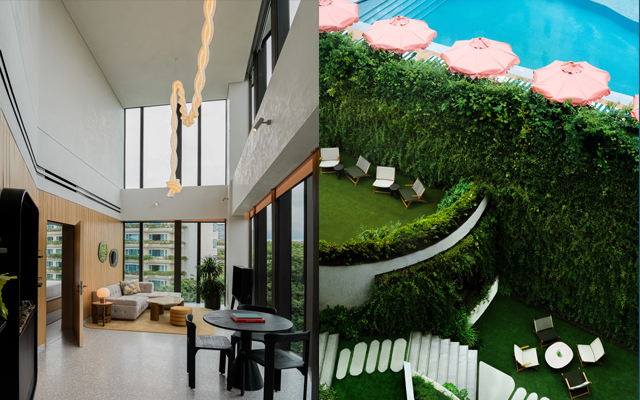
A polished urban retreat designed for business travellers, Hyatt Regency Kuala Lumpur at KL Midtown combines thoughtful design, seamless service, and exceptional facilities.
The five-star property excels in backing its expansive facilities with seamless service and personalised attention, setting the benchmark for luxury in Bangkok.