Asia/Singapore Friday, 10th April 2026
Page 945

[PERSPECTIVES] More emphasis on business traveller security is needed

0

IN LIGHT of recent worldwide events, Hotel Reservation Service’s Todd Arthur urges companies to place more emphasis on business traveller security as part of the business’ duty of care.

Back in 2015, reports of terrorist threats and attacks dominated global headlines. Back in August, Bangkok experienced its worst ever bombing and then in November, terrorists struck multiple locations across Paris, triggering the US government to issue a worldwide travel warning. In both of these attacks, victims came from all over the world – locals, expats, tourists and business travellers. As the year ended, several capital cities were on high alert. Beijing was under partial lockdown and Austrian authorities stepped up security across Vienna.

The UK Foreign Office currently ranks 30 countries as having a high risk of terrorism. These include popular business travel destinations including Australia, Indonesia, India and several countries in Western Europe. However, this high-risk environment has not weakened demand for business travel. The Global Business Travel Association forecasts an 11 per cent increase in business travel between 2015-2016, with business travel in India and China projected to grow at double digit rates.

Individuals inherently face increased risk when abroad – whether it is simply not speaking the same language, or being unfamiliar with the location, customs, or laws. Though terrorism tends to be top of mind, results from a 2015 survey by YouGov revealed that the top risks to business travellers were road traffic accidents, crime and data theft.

Unsurprisingly, natural disasters also present an imminent threat of major travel disruption, particularly in Asia. According to the UN, a person living in Asia-Pacific is twice as likely to be affected by a natural disaster compared to a person in Africa, almost six times as likely as compared to someone from Latin America, and 30 times more likely to suffer from a disaster as compared to someone in North America or Europe.

Regardless of the risk scenario, companies should have in place robust travel risk management policies that enable them to provide urgent assistance in a crisis. At the forefront of any business’ effective travel risk mitigation strategy, is a recognised legal duty of care to employees inclusive of clear procedures to respond rapidly in a risky situation. A company’s failure to provide an employee with the necessary assistance – be it emergency medical care, a timely evacuation, or even providing a regular flow of information – could create legal liability and reputational damage, ultimately impacting profits.

Fortunately, there are sufficient tools to help companies manage travel risk. Apart from allowing a company to assess trips in accordance with its risk appetite, these tools provide an instant snapshot of every executive travelling to a certain city, all of their onward movements via real-time traveller tracking using GPS, the hotels they reside in and specialist crisis services such as medical care or evacuation. By implementing these tools, leading businesses can demonstrate they take their duty of care seriously, and differentiate themselves from others.

Previously, a majority of established hotels in Asia were not found in designated corporate travel booking systems, which explained why employees arranged their travels independently. This gave rise to situations where businesses were unable to effectively track which flights its employees were taking, or which hotels they had chosen to stay in.

Ensuring employees book through designated booking channels allows for an accurate picture of their location, and having on hand data that can be pushed to the company’s emergency medical provider – which can eventually be used to rearrange transport alternatives for employees if flights are cancelled or airports closed.

The frequency of catastrophic events in recent years provides clear impetus for business leaders to be proactive about protecting their employees. Without adequate travel risk policies, employers are unable to fulfil their duty of care in time of crisis and only risk damaging consequences for their employees.


Todd Arthur is the managing director, Asia-Pacific of Hotel Reservation Service. HRS is a global hotel solutions provider with more than 40,000 corporate customers worldwide. His core responsibilities include setting the business direction, driving organic growth with new and existing customers across APAC markets, establishing strategic partnerships, and talent development. www.hrs.com

Article by Todd Arthur.

More emphasis on business traveller security is needed

0

IN LIGHT of recent worldwide events, Hotel Reservation Service’s Todd Arthur urges companies to place more emphasis on business traveller security as part of the business’ duty of care.

Back in 2015, reports of terrorist threats and attacks dominated global headlines. Back in August, Bangkok experienced its worst ever bombing and then in November, terrorists struck multiple locations across Paris, triggering the US government to issue a worldwide travel warning. In both of these attacks, victims came from all over the world – locals, expats, tourists and business travellers. As the year ended, several capital cities were on high alert. Beijing was under partial lockdown and Austrian authorities stepped up security across Vienna.

The UK Foreign Office currently ranks 30 countries as having a high risk of terrorism. These include popular business travel destinations including Australia, Indonesia, India and several countries in Western Europe. However, this high-risk environment has not weakened demand for business travel. The Global Business Travel Association forecasts an 11 per cent increase in business travel between 2015-2016, with business travel in India and China projected to grow at double digit rates.

Individuals inherently face increased risk when abroad – whether it is simply not speaking the same language, or being unfamiliar with the location, customs, or laws. Though terrorism tends to be top of mind, results from a 2015 survey by YouGov revealed that the top risks to business travellers were road traffic accidents, crime and data theft.

Unsurprisingly, natural disasters also present an imminent threat of major travel disruption, particularly in Asia. According to the UN, a person living in Asia-Pacific is twice as likely to be affected by a natural disaster compared to a person in Africa, almost six times as likely as compared to someone from Latin America, and 30 times more likely to suffer from a disaster as compared to someone in North America or Europe.

Regardless of the risk scenario, companies should have in place robust travel risk management policies that enable them to provide urgent assistance in a crisis. At the forefront of any business’ effective travel risk mitigation strategy, is a recognised legal duty of care to employees inclusive of clear procedures to respond rapidly in a risky situation. A company’s failure to provide an employee with the necessary assistance – be it emergency medical care, a timely evacuation, or even providing a regular flow of information – could create legal liability and reputational damage, ultimately impacting profits.

Fortunately, there are sufficient tools to help companies manage travel risk. Apart from allowing a company to assess trips in accordance with its risk appetite, these tools provide an instant snapshot of every executive travelling to a certain city, all of their onward movements via real-time traveller tracking using GPS, the hotels they reside in and specialist crisis services such as medical care or evacuation. By implementing these tools, leading businesses can demonstrate they take their duty of care seriously, and differentiate themselves from others.

Previously, a majority of established hotels in Asia were not found in designated corporate travel booking systems, which explained why employees arranged their travels independently. This gave rise to situations where businesses were unable to effectively track which flights its employees were taking, or which hotels they had chosen to stay in.

Ensuring employees book through designated booking channels allows for an accurate picture of their location, and having on hand data that can be pushed to the company’s emergency medical provider – which can eventually be used to rearrange transport alternatives for employees if flights are cancelled or airports closed.

The frequency of catastrophic events in recent years provides clear impetus for business leaders to be proactive about protecting their employees. Without adequate travel risk policies, employers are unable to fulfil their duty of care in time of crisis and only risk damaging consequences for their employees.

Todd Arthur is the managing director, Asia-Pacific of Hotel Reservation Service. HRS is a global hotel solutions provider with more than 40,000 corporate customers worldwide. His core responsibilities include setting the business direction, driving organic growth with new and existing customers across APAC markets, establishing strategic partnerships, and talent development. www.hrs.com

This article is written by Todd Arthur

Air China offers nonstop service on Chengdu-Paris route

0

AirChina
© Airbus S.A.S 2015- photo by master
films/A.Tchaikovski

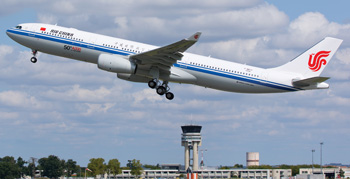
Air China has commenced nonstop service from Chengdu to Paris since December 12, 2015, using an Airbus 330-200 aircraft.

The service is offered every Monday, Wednesday, Thursday and Saturday, departing from Chengdu at 01.30 and arriving in Paris at 06.20. Return flights leave the French capital at 12.15 and land in Chengdu at 06.00 the following day.

Business Class seats can be turned into full-flat beds.

The service to Paris is Air China’s fifth European destination from Chengdu following Amsterdam, Frankfurt, London and Moscow.

PHG opens another hotel in Singapore

0

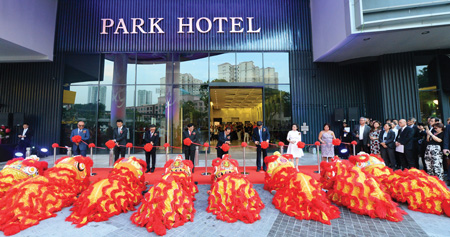
Park Hotel Group (PHG) has opened its fourth hotel in Singapore. The 442-room Park Hotel Alexandra, located in the southwestern part of Singapore, is also the first hotel for Chip Eng Seng Corporation, a Singapore-listed group whose business spans construction and property development and investment.

Park Hotel Alexandra is well-positioned to accommodate business and leisure, local and international travellers, being just 10 minutes to Orchard Road and Sentosa, and 30 minutes to Changi International Airport.

The hotel has six room types: Superior Room, Deluxe Room, Premier Room, Crystal Club Room, Executive Suite and Park Suite; the Crystal Club Lounge which commands stunning views of the city skyline; and three concept F&B outlets, among facilities.

Meanwhile, PHG is geared for another opening before the year is out, the Park Hotel Nusa Dua Bali. Its first hotel outside Asia, Park Hotel Adelaide, will open in 2018.
ParkHotel

Plaza Premium Group, China Eastern Airlines creates co-branded lounge

0

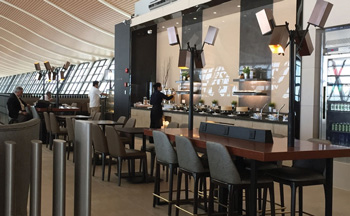
Plaza Premium Group and China Eastern Airlines Corporation (CEA) has joined hands to operate what is said to be the world’s first co-branded airport lounge in Shanghai Pudong International Airport’s Terminal 2.

Launched on November 2 and named No.77 China Eastern Plaza Premium Lounge, the facility sits near Gate 77 and can be accessed by all travellers.

Offering a 180-degree view of the airport runway, the new lounge measures over 1,800m2 and provides nearly 500 seats. Facilities include a leisure area, all-day Chinese and Western style buffet, bar, five Internet workstations, a nursing room, three shower rooms, a relaxation area, a smoking room as well as complimentary Wi-Fi.

Song Hoi-see, founder and CEO of Plaza Premium Group, said the co-branded lounge was the result of a strategic partnership between the group and CEA.

Tang Bing, director and vice president of CEA and party member of China Eastern Air Holding Company, remarked that the lounge is the first market-oriented flagship airport lounge of CEA, specifically designed for passengers of its airline partners.
plazapremium

Noku Roxy opens its doors in Kyoto

0

Roxy-Pacific Holdings has opened its first upscale boutique hotel, Noku Roxy, in Kyoto, Japan.

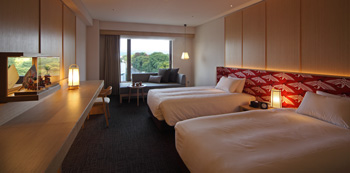
Located near the Kyoto Imperial Palace, key tourists spots and popular local restaurants, Noku Roxy features 81 rooms across six floors, with the upper floors offering scenic views of the Kyoto Imperial Garden.

The rooms, which range from 20m2 to 51m2 each, are furnished with the finest Kyoto craftsmanship and artwork, as well as a complimentary minibar filled with a range of local snacks and beverages.

Room prices start from JPY20,000 (US$163).
NokuRoxyKyoto

Apxara wants to kidnap corporate bosses

0

Malaysian conference organiser and team activity specialist is planning to kidnap corporate bosses – all in the name of fun.

Its new half-day teambuilding activity, Rush Hour, is a cat-and-mouse game that requires a team to piece together a puzzle and work against time with the ultimate goal of finding and rescuing their leader who has been kidnapped by some rogues. At the end, teams will be shown all the rights and wrongs that they have made along their way, and the “villains” will be revealed.

The activity magnifies the importance of team synergy, increases problem-solving skills and builds deeper relations among members.

Rush Hour can be done anywhere in and outside of Malaysia, and is suitable for group sizes of 50 to 300 people. Contact ivanlim@apxara.com.

Luxury expeditions down the Mekong River

0

Aqua Expeditions has unveiled “highly competitive” charter buy out rates in Asia-Pacific for its Aqua Mekong, a small luxury cruise on the Mekong River, in response to a surge in demand for private vessel hire.

Charter buy out guests are accommodated in 20 design suites on both the first and second deck of the Aqua Mekong, all of which feature panoramic views of the Mekong River through floor-to-ceiling windows. Aqua Mekong is equipped with a multimedia room that can be adapted into a boardroom style, Wi-Fi enabled, function room.

Guests will be hosted by an exclusive staff to guest ratio of 1:1 throughout their stay.

To make the most of an Aqua Mekong experience, guests are encouraged to enjoy the onboard facilities and riverbed activities. Exclusive to the Mekong River, Aqua Mekong owns a private fleet of four aluminum launch boats to transport guests on kayaking and biking excursions – ideal for teambuilding exercises. Onboard, guests can indulge in a treatment at the spa, relax with a movie in the private screening room (indoor and outdoor available) or unwind in the infinity plunge pool.

Aqua Mekong departs weekly from either Saigon, Siem Reap or Phnom Penh and itineraries are available for three, four and seven nights at charter rates from US$91,530 for a three-night package for up to 30 pax. Rates include transfers to and from boat, twice daily excursions, all meals and selected alcoholic beverages.

Francesco Galli Zugaro, CEO and Founder of Aqua Expeditions, said: “The launch of our highly competitive rates will entice regional MICE operators and key international MICE organisations to the undiscovered beauty of the Mekong.”

Shangri-La dons VR headsets as part of global sales strategy

0

VRheadsetHailed as the latest game-changing innovation in the video games and movie industries, virtual reality (VR) headsets have now entered the travel trade in a big way as Shangri-La Hotels and Resorts began the use of Samsung Gear VR across its 17 global sales offices.
According to a media statement, over a quarter of Shangri-La’s 94 properties already have 360-degree videos available for viewing on the headsets, with a full roll-out expected in 2016.

These devices, powered by VR technology company Oculus, are used primarily as promotional and education tools, allowing travel agents, meeting planners and potential clients the ability to virtually experience Shangri-La properties worldwide.

“Shangri-La is investing significantly in technology and the future of travel content, which is why we are embracing virtual reality on this scale,” said Steven Taylor, chief marketing officer of Shangri-La International Hotel Management.

“Travel experts play a critical role in their fields and the traveller’s decision-making process. This is why our first VR efforts are focused on them,” added Taylor.

“Their clients depend on them to ensure holidays, business trips and meetings are enjoyable and effective. Shangri-La’s VR experiences will enhance their knowledge about our hotels and their ability to sell with confidence to their clients.”

Those who have their own Oculus-compatible VR headset can also download and view the 360-degree videos from Shangri-La’s website.

Second Sofitel in Singapore ready for guests

0

KweeZeenRestaurant2Singapore’s second Sofitel property has opened on Sentosa island, armed with 211 rooms and suites, four villas, more than 1,300m2 of MICE facilities, four dining options (including Kwee Zeen pictured here) and what is said to be the world’s largest So SPA facility.


Sofitel Singapore Sentosa Resort & Spa spots a bold and elegant design that integrates the surrounding nature within the hotel’s various buildings, and boasts more than 27 acres of tropical woodlands, offering guests a sense of relaxed sophistication and urban resort living.

Offering a rich option for event planners, the hotel’s revamped Conference Centre houses two ballrooms, 15 pillarless meeting rooms, outdoor verandas and a bridal suite. All meeting rooms are illuminated with natural light and stretch out to the outdoor lawn, making them ideal venues for corporate brainstorming sessions, teambuilding, leadership training and cocktail receptions.

The hotel is also collaborating with DirectStreams, a long-standing technology partner of Sofitel, to offer the latest fully-connected innovative lifestyle technology through DirectStreams’ LG Smart TV Guest solution, providing guests with the best technology experience to meet the needs of a diverse audience.

Reviews

The Ritz-Carlton, Bangkok

The newly-opened Ritz-Carlton, Bangkok anchors the One Bangkok development with cosmopolitan elegance. Featuring the city's largest ballroom and a spectacular new penthouse suite, it delivers exceptional hardware and deeply authentic, soulful service for business and leisure travellers alike

Mama Shelter Zurich

Behind the imposing, Brutalist concrete that defines Zurich’s Oerlikon district lies a surprising secret. While its exterior honours the neighbourhood’s industrial roots, stepping inside Mama Shelter reveals a vibrant, neon-soaked world that is a far cry from its rigid shell

Hyatt Regency Kuala Lumpur at KL Midtown

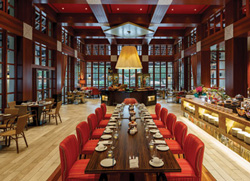
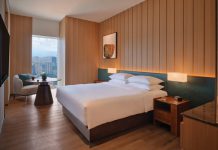
A polished urban retreat designed for business travellers, Hyatt Regency Kuala Lumpur at KL Midtown combines thoughtful design, seamless service, and exceptional facilities.