Asia/Singapore Sunday, 28th December 2025
Page 946

Build friendships at Angsana Laguna Phuket

0

A day spent with friends is a day well spent. Building its meeting experiences along those lines, Angsana Laguna Phuket has created a range of friendship meetings – activities that will add a dash of fun to corporate meetings.

Activities on offer include the half-day Cast Away session which takes delegates back in time. Participants travel to Rang Yai island where they are unable to use smartphones, Wi-Fi or any other form of modern technology, and must work together in teams to overcome the challenges presented.

Educational experiences can also be arranged, whether in the form of a massage workshop, cooking class, or cocktail-making session.

These friendship meetings are promoted along with nett-priced room rates. Meeting planners who book their next event at the resort can secure room rates of 3,200 baht (US$95) nett, with those chalking up bookings worth 500,000 baht to receive a free iPad.

Angsana Laguna Phuket features a range of event spaces including the XANA beach club for parties and function rooms for up to 400 guests, while a dedicated events team will ensure that each meeting proceeds without hiccup.

Over coffee with… Ryoichi Matsuyama

0

He became president of Japan National Tourism Organization in October 2011, months after the Tohoku earthquake and disaster, and led Japan to prominence. Watch him hit 20 million arrivals by 2020 with mega events in Japan’s pocket. But far from rushing headlong into things, Raini Hamdi finds Ryoichi Matsuyama a pragmatic leader with an eye for sustainability

Were the months after the tsunami the biggest challenge in your illustrious career?

It was one of the most difficult challenges. I have been in the private sector for some time now and there have been so many ups and downs (laughs). But the tsunami was very serious, because of the number of lives lost, and the nuclear radiation fears. Even when we had said Japan was safe to visit, no one believed us. But we kept giving only the facts and we invited 1,000 journalists and travel agency people to see Japan for themselves. As well, celebrities like Lady Gaga – she loves Japan and she was spreading the good message for us.

Eventually we were able to restore the confidence of visitors, including those from countries such as Singapore and Germany who were sensitive (about safety). Arrivals went up drastically and we hit 10 million in 2013. We had 8.6 million in 2010, 6.2 million in 2011 (disaster year), 8.3 million in 2012, 10 million in 2013 and 13.4 million in 2014.

Was visa easing the main reason why Japan rose to such prominence in the last couple of years?

It was a combination of factors, including our effort to restore the confidence of people to visit Japan; Abenomics, which saw the devaluation of the yen and made Japan cheaper for people to visit; a growing middle-class in Asia; visa facilitation on our part of course; but I believe a major driving force was that the private sector – airlines, hotels, meetings sector, etc – was eager to collaborate with one another to bring back arrivals. In the past they operated more on an individual basis; the disaster brought them closer together.

Regarding the visa easing, was that a government initiative or did you have to push for it?

We assessed the different visa requirements for different countries and tried to streamline them.

But of course we have always to work with other government departments and approach visa facilitation with the perspective of having a balance: ease visas on the one hand but maintain law and order on the other, making sure the ‘right’ people are coming in and they don’t stay longer than they should.

Singapore, Thailand and Malaysia now enjoy visa-free status and we are now seriously working to try and get this facility for Vietnam, Indonesia and the Philippines – but it will take time. India and China now have multiple-entry visa status, from single entry perviously.

We are also trying to speed up visa processing and are studying to implement electronic visas but again, this will take time.

So now your task is to double the 10 million to 20 million by 2020.

Yes, as you know, Japan is hosting the Olympic Games in Tokyo in 2020. We have also successfully bidded for the 2019 Rugby World Cup (which will be held in 12 venues across Japan)and, in 2021, we will host the World Masters Games (in Kansai – the event is an international multi-sport athletic competition which gives the middle-aged and older generation the opportunity to participate).

With the Olympics you can draw some 10 million visitors. With the World Masters, 26 million, sometimes even more.

So there is a chain of mega events and everyone can take this opportunity to visit Japan. We also believe these events will expand and strengthen the image of Japan as a place for meetings.

How so?

Actually right after we won the bid to host the Olympics, in September 2013, Japan secured four big events with more than 6,000 delegates, outbidding strong countries including Singapore.

I think such events demonstrate to planners our capability to host and organise meetings. For example, we took over the IMF/World Bank meetings in 2012 when they had to move from Cairo. Such meetings are huge and complicated; normally it takes four years of preparation but we did it in two years.

So track record, the ability to perform, is important for MICE.

Studies have shown it isn’t necessary that host countries of mega events actually benefit from them.

Yes, there is an argument that they require lots of investment in the construction of the necessary infrastructure, that afterwards the economy drops. Sometimes that happens, especially to emerging countries, but in the case of Japan, we hosted the Olympics in 1964 and there is some legacy remaining. Then, we had invested heavily in building freeways, bullet trains, stadiums, hotels, so for the Tokyo Olympics, apart from a new stadium, we will try to use the existing facilities as much as possible. Our Olympics investment isn’t huge, estimated at ¥340 billion (US$2.5 billion), compared with more than US$13 million for the London Olympics. Of the ¥340 billion, ¥150 billion will go towards building the new stadium.

Is your stadium as designy as the Bird’s Nest in Beijing?

(Laughs) It is designed by Zaha Hadid and at first it was so fabulous, but we found it cost too much! So we had to modify it. There are lessons from the past which we can learn from. For example, when Nagano hosted the winter Olympics (in 1998), it built huge facilities and faced serious financial trouble afterwards. Mega events create a good impact but the key is to pay attention to what happens after the event – how do we persuade people to come back as repeat visitors? This is what we are now seriously discussing with Visit Britain, with which we signed an MOU. London, which successfully hosted the Olympics in 2012, is also a mature city like Tokyo and there is much we can learn from it. London used the Olympics as a means to change the image of Great Britain as a friendlier destination. Los Angeles was so commercial, with lots of sponsorships. Barcelona used it to build a new city. We are discussing with the many stakeholders in Japan what legacy we want the Tokyo Olympics to leave behind. One is perhaps as the most handicapped-friendly Olympics. Another is as a model of how a mature city can successfully host the Games without the normal heavy investments that come with them, and one that is able to sustain the benefits after the event. 2020 is a milestone, it’s not the end.

There are not enough rooms as it is in Tokyo. What are you doing about it? 

We are persuading hotel developers to come in and build more hotels, especially more four-star hotels. We don’t give incentives; we present the facts and they can see for themselves how attractive it is to build. Price increase is a worry but presently Tokyo hotels are two-thirds of London prices, so they are fairly cheap.

Events will go paperless in 5 years: QuickMobile

0

WITH the advent of mobile apps for almost every aspect of life, mobile meeting and events app QuickMobile’s CEO anticipates meetings will go paperless within the next three to five years.

Speaking to TTGmice e-Weekly, CEO of QuickMobile, Craig Brennan, said: “Most companies will adopt apps (in five years) because apps are so much more powerful, engaging, efficient, and environmentally friendly. It just makes so much sense to do it.”

While conversion from paper to app is still an inhibiting factor, Brennan said it is a “mindset change” and once customers use the app they “don’t turn back”.

He said: “For the first time our customers may use app and paper together, but the second time they may cut out 60 to 80 per cent of paper use, and by the third time they will go completely without paper.”

While QuickMobile started in 2008, Brennan said the company has been experiencing “rapid growth” of 100 per cent year-on-year in take-up rate, especially over the past few years.

Brennan said QuickMobile differs from the competition because of its ability to customise the app’s look and feel to align with the company’s brand, ROI measurement and multi-language options including Chinese, Japanese and Korean.

Last year, QuickMobile was used in approximately 2,000 global meetings and events, ranging from intimate sit-downs of five delegates to gatherings of over 50,000 participants. According to Brennan, this resulted in about two million user downloads.

Brennan said: “In comparison to the Western markets, Asia is still in its earlier stage of adoption so we foresee a huge potential of growth here and Singapore will be a very fast follower.”

As such, QuickMobile this week set up a new regional office in Singapore to court the Asia-Pacific market. Brennan said: “We view Singapore as a key market for us to access the rest of the Asia-Pacific region, as well as a host country for world-class events.”

Brennan also revealed that QuickMobile is setting its sights on the Hong Kong, Beijing, and Shanghai markets.

Niccolo Chengdu introduces conference and meeting promotions

0

THE newly open Niccolo Chengdu has launched two new meeting and conference packages to attract MICE business – the Niccolo Conferences+ and Niccolo Meetings+.

Planners who take up Niccolo Conferences+ will receive welcome cocktails for all delegates in The Conservatory, free use of two breakout meeting rooms and a themed tea break.

Furthermore, the hotel will grant organisers one free room including breakfast for every 10 guestrooms booked.

On the other hand, Niccolo Meetings+ will include two tea breaks and a business lunch at the hotel’s Yue Hin Chinese Restaurant for full-day meetings. For a half-day meeting, the hotel will provide one tea break. Use of an LCD projector and high-speed Wi-Fi access will also be thrown in.

Organisers must have at least 10 delegates to take on the package.

Niccolo Chengdu opened in April this year and is located in Chengdu’s city centre, offering meeting planners 20 function rooms including the Niccolo Ballroom and The Conservatory.

FCm makes 2 new appointments

0

TRAVEL management company FCm Travel Solutions Singapore has welcomed two new faces to its team.

Bertrand Saillet is now general manager for Singapore and Crispian Lye has been named director of sales for South-east Asia.

As general manager, Saillet helms all aspects of the travel management business including sales and marketing, account management, operations and product development.

He was most recently head of TMC, specialty and networks APAC at Amadeus IT Group SA, and prior to that held management roles in the aeronautical and telcomms industry.

Newly appointed director of sales for South-east Asia Lye was heading up the Singapore Business Federation’s sustainable development business group and its commercial unit before joining FCm.

Lye had previously worked in conference research surrounding ICT, green telcomms, and oil and gas.

ICC Sydney welcomes 3 new faces

0

IN THE run-up to its opening in December 2016, the International Convention Centre Sydney (ICC Sydney) has named three new directors to its team.

Venue operator AEG Ogden has announced Malu Barrios as director of event services, Johnny Naofal as the director of building services and Ivan Sanhueza as director of technology services.

Barrios has spent over 20 years at director level in the Australian events industry, developing and implementing venue management strategies under AEG Ogden. She is also the general manager of Sydney Exhibition Centre@Glebe Island (SEC@GI), which is also managed by AEG Ogden, and had worked at the Darwin Convention Centre and The Sydney Showground previously.

Naofal has over 20 years’ experience as a facilities and operations manager in the service sector and is currently the facilities manager at SEC@GI. Before that, he was security manager at the Sydney Convention and Exhibition Centre for 13 years.

Both Barrios and Naofal will continue their roles at SEC@GI and ensure a seamless transition of events to ICC Sydney in December 2016.

Sanhueza has had 15 years of experience in the information and communications technology (ICT) space and joins ICC Sydney following his previous role as ICT manager for The Sydney Cricket & Sports Ground Trust.

Six Senses raises Chengdu’s incentives appeal

0

THE September 1 official opening of Six Senses Qing Cheng Mountain will bolster the incentive appeal of up-and-coming Chengdu.

General manager, Michael Murphy, said: “There is plenty of high-end incentives potential for Six Senses Qing Cheng Mountain due to its unique location and beautiful facilities as Sichuan and Chengdu are getting more and more fashionable.

“The resort offers amazing views of Qing Cheng Mountain, is a short stroll to temples and is only few minutes away from the Giant Pandas Conservation Center.”

Using only organic produce, the resort will feature local Sichuan, international and Thai cuisine, while the Six Senses Spa offers wellness-focused activities. MICE groups can go mountain trekking, play golf at Sichuan Qingcheng Mountain Golf Club, visit a fish farm with a culinary expert, learn the art of tea and the art of calligraphy, and attend cooking classes.

The resort is targeting domestic and international high-end incentives. MICE will contribute 20 per cent of the segment mix and corporate business, 10 per cent.

Murphy predicts that 75 per cent of overall business will come from China and the rest from international and regional markets, and the resort is targeting Europe via its Paris sales office and North America.

Domestically, Chengdu, an hour’s drive away, is expected to be a major market source. The resort has also mounted roadshows to Beijing, Shanghai, Dalian and Chongqing to entice local business.

Six Senses Qing Cheng Mountain is offering soft-opening packages that range from RMB1,915 (US$308) for a suite in the shoulder season to RMB17,779 for a two-bedroom courtyard pool villa in peak season.

Raising road safety awareness among biz travellers

0

A NEW eLearning module is attempting to educate business travellers about the often-underestimated risk of road accidents.

Road accidents were one of the top five causes of medical evacuations led by International SOS and a significant cause of injury and death for employees working abroad, according to its data.

To highlight the need for better road safety practices, International SOS and Control Risks has, in collaboration with NPO Global Road Safety Partnership, rolled out an online course Travel Risk: Road Safety.

Suzy Bell, group product training director for International SOS, commented in a press release: “We developed this eLearning training to bring road safety to the forefront of a traveller’s mind. Because road travel is such a common everyday activity, there is a tendency to underestimate the risks involved.

“Our goal is to provide travellers and organisations with the tools to reduce risks, while still being able to conduct their business. Twenty minutes of online learning can make a big difference in raising awareness and prepare the business traveller to reduce – and respond to – road accidents.”

The eLearning module features real-world scenarios and advice from Global Road Safety Partnership, as well as a traveller toolkit with journey management templates, checklists, best practices and links to additional travel information resources.

Grant Strudwick, regional security director, Asia-Pacific for International SOS and Control Risks, commented: “Road safety isn’t just about being a safer driver. Sometimes, the safest option is not to drive at all. If you don’t know the rules of the road, highway conditions, or local language, you may be better off arranging transportation with a trusted and vetted provider.”

Sunshine Coast to target South-east Asian MICE groups

0

BUSINESS Events Sunshine Coast has its sights firmly set on attracting MICE groups from South-east Asia, business events executive Tiffany Beal told TTGmice e-Weekly at the Australian Tourism Exchange (ATE) in Melbourne earlier this week.

“We have very few Asian groups coming to the Sunshine Coast for business events and we’re all wondering why that’s the case when we know they are going to the Gold Coast,” explained Beal.

The last 12 months have seen the organisation conduct market research and participate in various programmes including Tourism Australia’s Nature Coast Roadshow in March, which had nine travel consultants from Singapore, Malaysia and Indonesia visit the region over four days.

Beal shared: “I had a ‘light bulb’ moment when an Indonesian PCO told me he’s sending groups to Iceland for four days. If they do that then why can’t they come to the Sunshine Coast?”

During the four-day itinerary, the group participated in a chef-guided food trail, which had been especially designed by Business Events Sunshine Coast and is now in the process of being converted into an official tour by a local operator.

“They love the food and wine experiences,” said Beal. “I’ve had four clients from Singapore sit down at ATE who want something different. They’ve done Sydney, Melbourne and the Gold Coast and…the usual experiences of theme parks and shopping tours. Hands-on experiences in a natural environment are what they’re looking for.”

She added that she and her team will in the coming months construct a database of inbound tour operators – through whom research showed South-east Asian MICE groups book business events – and invite them to the Sunshine Coast, budget permitting.

“We need to give them the right tools and itineraries so they can go back and sell it.”

Switzerland sizzles more

0
Monte Brè in lesser-known Lugano, Ticino, is currently being pushed for pairing with key destinations

Secondary destinations are being paired with usual favourites like Zurich and Luzern to meet growing demand of the Asian MICE market. By Mimi Hudoyo

Switzerland is not only seeing arrivals from Asia pick up but also more repeat and longer-staying visitors from there.

India, China and South-east Asia are its main markets, with Indonesia, Malaysia and Thailand registering significant growth last year.

According to Switzerland Convention & Incentive Bureau (SCIB), South-east Asia alone contributed 500,000 hotel overnight stays in 2014 – a year-on-year 10 per cent increase – out of which MICE constituted between 15,000 and 20,000 overnight stays.

Data from SCIB India also showed growth in Indian overnight stays, from 467,967 in 2013 to 485,216 in 2014, out of which MICE contributed 19 per cent. Aishvarya Guhagarkar, director of MICE India, SCIB, said: “The hotel overnights did not include apartment stays, which can add another 200,000 overnights.

“Apartments in Switzerland are in high demand in the Indian market because some communities, for religious reasons, prefer a kitchen facility to cook vegetarian food.”

Guendalina Rampazzi, head of market development MICE, SCIB, said: “India and China are doing well for us, but South-east Asia has been growing significantly as well, following the appointment of a dedicated SCIB manager for the region, in January 2014.”

Rampazzi opined that the region, with its huge population, is a massive market that was previously untapped: “Having someone in the South-east Asia region has created a better understanding of the market for us. We have also convinced travel consultants in the market to change their programmes towards longer-staying ones in Switzerland.”

Dominique Oi, dedicated MICE manager South-east Asia, SCIB, said: “Leisure travellers now stay two to three nights on average while MICE travellers stay four to five.”

South-east Asian travellers, she added, are among the biggest spenders, with CHF350 (US$374) per night for MICE.

To grow the Asian market, SCIB does not only promote the well- known destinations like Zurich, Geneva or Luzern, but also the country’s “hidden gems”.

For example, the bureau recently invited corporate clients from South-east Asia and Indian travel consultants on a fam trip to Luzern and the lesser-known Ticino in southern Switzerland.

Rampazzi said: “More groups are coming to Switzerland for the second time, so people are ready to discover new destinations. We encourage travellers not only to visit the must-see, but also discover the hidden gems where they can experience something more authentic and traditional. MICE groups look for experiences more than leisure visitors.”

Lugano, the biggest city in Ticino, offers diverse experiences, according to Silvana Redemagni, director of  Lugano MICE Convention Bureau.

“In a very small area (bordering with Italy), you can have the best of Italian culture and cuisine, and also sightsee in a day mountains and valleys, rivers and lakes. Five to 10 minutes away from the city centre is the countryside. For those looking for nightlife, Milan is very near too,” she said.

Lugano now has 3,500 hotel rooms, with each hotel on average able to hold groups of up to 250 pax. Meeting facilities range from conference rooms in the hotels to  standalone convention centres.

Swiss Diamond Hotel, for example, has meeting facilities for 10 to 150 participants, while Palazzo dei Congressi’s auditorium can fit up to 1,130 theatre-style, along with several breakout rooms and smaller meeting rooms in the adjacent Villa Ciani.

The centuries-old Ristorante Grand Cafe Al Porto has a patio and a private room for small meetings of 20 to 30 pax, while the Swissminatur theme park is good for bigger meetings of up to 300 pax, combined with teambuilding activities or a gala dinner at a resident restaurant that serves international food, including Asian and halal options.

Dominique Vuigner, CEO of Swissminatur, said: “We had a group from Malaysia last year and we are going to host another from India later this year.”

Meanwhile, the new Lugano Art and Culture venue will open in September with a 1,000-seat theatre and concert hall, museum space for exhibitions and several multipurpose halls for meetings, gala dinners or product launches.

Redemagni said Lugano is also great for incentive programmes, which range from city life to nature, light activities to extreme sports. She added: “Groups can organise a dinner cruise on Lugano Lake, have games on board, or simply enjoy beautiful views of the city set against the Lugano Prealps.”

Anand Veerkar, general manager Sales (West) of Fountainhead Mumbai, said Ticino has an appeal, but not as a stand-alone destination. “Indians like Italian food and they can find it in Lugano. The city has MICE facilities so it can attract corporate meetings. But it needs to be combined with well-known destinations, such as Luzern, for the post-event tour,” he explained.

Meanwhile, Lugano will be welcoming a 500-pax group on a post-convention tour from another country later this year. Guhagarkar revealed: “Half of the group will have a one-day tour here, while the rest will stay two nights, attend a gala dinner, and partake in lake cruising and other activities.”


Ideas – Three-day teambuilding and incentive

Day 1
Zurich – Thun – Gruyères – Montreux

Upon arrival in Zurich, participants take a quiz related to the Swiss International Air Lines that has just flown them to the country. A second quiz on the Swiss Travel System is given when the group is on the way to Thun by train and boat.

At Thun, participants are divided into teams to play two traditional Swiss games – flag throwing and Talerschwingen (rolling a coin inside a bowl).

They then transfer by coach to Gruyères to visit a medieval village. Lunch follows, after which they visit the chocolate factory of Cailler. Teams then compete in yet two more games, shooting an apple with a bow and arrow, and hammering a nail into a piece of wood in as few blows as possible.

Participants then head to Montreux by overnight coach.

 Day 2
 Montreux – Vevey – Lavaux – Lausanne

Participants depart in the morning by coach to the village of Vevey for a walking tour and a visit to the Alementarium Museum of Nestle.

During the tour of Vevey, the teams have to sample some milk and guess which was cow, soya and almond milk. They then have to try to weigh some cacao beans, and the team that manages to weigh closest to the required 187 grams wins.

Next, participants take the coach to the vineyards of Lavaux, a UNESCO world heritage site. Here, they visit wine producer Domaine the Daley’s wine cellar, taste some wine, and after lunch, tour the vineyard.

At the wine cellar, teams will play a water game. They are each given an empty vessel marked to indicate a certain volume of liquid it should be filled up to, choosing five out of a number of bottles of different sizes, all filled with water.

Next, participants head to Lausanne by coach to visit the old town and taste local products. They again take a quiz about the city’s facilities, before enjoying an unforgettable evening at The Olympic Museum.

Day 3
Montreux – Gstaad – Glacier 3000 – Montreux

Participants take a train ride from Montreux to Gstaad on the Golden Pass Line. Upon arrival, they take a walking tour of the main street of Gstaad, enjoy the local specialties, and play the native instrument alphorn in the village.

Then, participants take the coach to Glacier 3000 to experience the new Peak Walk attraction. After lunch, four members from each team put on a pair of special skis designed for four people and race with other teams on a short course. Next is the five-hole snow golf for three members from each team.

Participants return to Montreux by coach. They take a boat ride to Chillion Castle for a gala dinner.

Itinerary by SCIB in collaboration with Kuoni Group Travel Expert

The historic centre of Laussane Picture by dacasdo/123RF.com


Need to Know

New convention centre to open in Bellinzona

Cast – Event Arena, a new congress centre will open in autumn this year in Castione-Arbedo, Bellinzona.

The new centre with modern equipment and design will accommodate up to 540 people in 1,525m2 of space. It will become the key location for hosting congresses, fashion shows, product launches and other events in the area.

The Ristorante located on the ground floor will also provide an additional 180m2 of space to accommodate 96 guests, suitable for breakfast gathering, business lunches and banquets.

Be adventurous with Swiss chocolate

The Swiss Chocolate Adventure is a new attraction at the Swiss Museum of Transport in Luzern. The 25-minute ride takes visitors to learn interesting facts about the discovery, origin, production and transport of Swiss chocolate.

Through the 10 stops of the tour, visitors learn the entire value creation and transport chains, from the cultivation of the cocoa bean and the transport to Switzerland up to the manufacture and sale of the finished chocolate product.

Throughout the ride, visitors will not only see pictures and films and listen to the explanation, but also smell, feel and taste the chocolate product.

The multimedia voyage is conducted in German, but visitors can listen to the translation in French, Italian, English, Spanish and Chinese through a multi-lingual translation device.

Lugano urban trail thrill

Companies that are interested in teambuilding activities can take part in Foxtrail, an urban travel hunt that also serves as an alternative way to discover the city.

The teams (from two to six people) have to “follow the trails of the fox”, on foot or by public transport. To reach the fox, participants must solve complicated missions and decipher coded messages.

Also known as Galileo Galilei, the trail has a duration of two and a half hours, but there is also a shorter 90-minute alternative.

The trail is not targeted only at travel enthusiasts and sun lovers. The teams will be able to soak in the culture and history of the city, complete with breathtaking views of Monte Brè and Monte San Salvatire.

Participants will need to decipher the meaning of ancient inscriptions, follow a ‘bloody’ trail and request for information via text messages.

The trail starts at the train station or city centre and concludes at Piazza Reformation.

Meet the Queen of the Mountains

Trekking Team AG has a hiking programme for adventurous groups to take on Mount Rigi, also known as Queen of the Mountains. The group will take off-the-beaten-tracks and, with the help of maps and compasses, try to find the most direct route to the defined destination.

In teams, the group also needs to solve creative, entertaining and challenging tasks along the way. All activities require strong teamwork.

The programme is available from May to October and requires a minimum of 12 participants.

Reviews

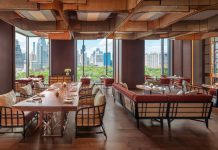
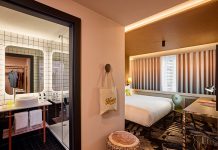
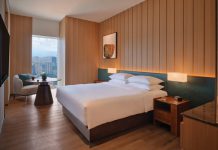
Hyatt Regency Kuala Lumpur at KL Midtown

A polished urban retreat designed for business travellers, Hyatt Regency Kuala Lumpur at KL Midtown combines thoughtful design, seamless service, and exceptional facilities.

A versatile powerhouse

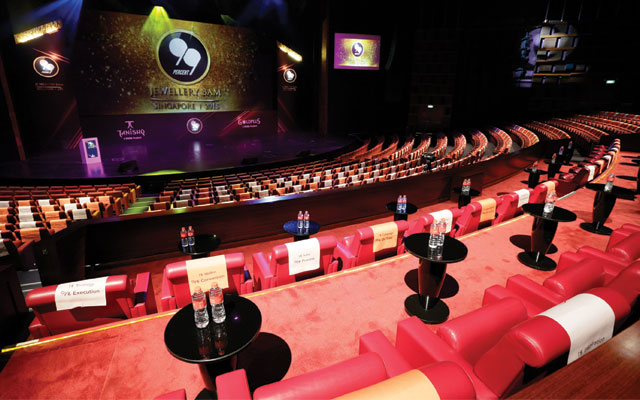
Arena @ Expo, a multipurpose concert hall at the Singapore Expo is a flexible space for high octane concerts and lifestyle events.

Amari Bangkok

The five-star property excels in backing its expansive facilities with seamless service and personalised attention, setting the benchmark for luxury in Bangkok.