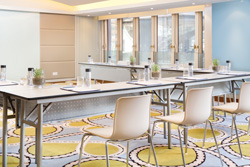
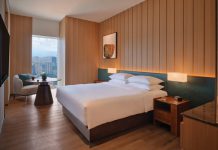
THE September 1 official opening of Six Senses Qing Cheng Mountain will bolster the incentive appeal of up-and-coming Chengdu.
General manager, Michael Murphy, said: “There is plenty of high-end incentives potential for Six Senses Qing Cheng Mountain due to its unique location and beautiful facilities as Sichuan and Chengdu are getting more and more fashionable.
“The resort offers amazing views of Qing Cheng Mountain, is a short stroll to temples and is only few minutes away from the Giant Pandas Conservation Center.”
Using only organic produce, the resort will feature local Sichuan, international and Thai cuisine, while the Six Senses Spa offers wellness-focused activities. MICE groups can go mountain trekking, play golf at Sichuan Qingcheng Mountain Golf Club, visit a fish farm with a culinary expert, learn the art of tea and the art of calligraphy, and attend cooking classes.
The resort is targeting domestic and international high-end incentives. MICE will contribute 20 per cent of the segment mix and corporate business, 10 per cent.
Murphy predicts that 75 per cent of overall business will come from China and the rest from international and regional markets, and the resort is targeting Europe via its Paris sales office and North America.
Domestically, Chengdu, an hour’s drive away, is expected to be a major market source. The resort has also mounted roadshows to Beijing, Shanghai, Dalian and Chongqing to entice local business.
Six Senses Qing Cheng Mountain is offering soft-opening packages that range from RMB1,915 (US$308) for a suite in the shoulder season to RMB17,779 for a two-bedroom courtyard pool villa in peak season.
A NEW eLearning module is attempting to educate business travellers about the often-underestimated risk of road accidents.
Road accidents were one of the top five causes of medical evacuations led by International SOS and a significant cause of injury and death for employees working abroad, according to its data.
To highlight the need for better road safety practices, International SOS and Control Risks has, in collaboration with NPO Global Road Safety Partnership, rolled out an online course Travel Risk: Road Safety.
Suzy Bell, group product training director for International SOS, commented in a press release: “We developed this eLearning training to bring road safety to the forefront of a traveller’s mind. Because road travel is such a common everyday activity, there is a tendency to underestimate the risks involved.
“Our goal is to provide travellers and organisations with the tools to reduce risks, while still being able to conduct their business. Twenty minutes of online learning can make a big difference in raising awareness and prepare the business traveller to reduce – and respond to – road accidents.”
The eLearning module features real-world scenarios and advice from Global Road Safety Partnership, as well as a traveller toolkit with journey management templates, checklists, best practices and links to additional travel information resources.
Grant Strudwick, regional security director, Asia-Pacific for International SOS and Control Risks, commented: “Road safety isn’t just about being a safer driver. Sometimes, the safest option is not to drive at all. If you don’t know the rules of the road, highway conditions, or local language, you may be better off arranging transportation with a trusted and vetted provider.”
BUSINESS Events Sunshine Coast has its sights firmly set on attracting MICE groups from South-east Asia, business events executive Tiffany Beal told TTGmice e-Weekly at the Australian Tourism Exchange (ATE) in Melbourne earlier this week.
“We have very few Asian groups coming to the Sunshine Coast for business events and we’re all wondering why that’s the case when we know they are going to the Gold Coast,” explained Beal.
The last 12 months have seen the organisation conduct market research and participate in various programmes including Tourism Australia’s Nature Coast Roadshow in March, which had nine travel consultants from Singapore, Malaysia and Indonesia visit the region over four days.
Beal shared: “I had a ‘light bulb’ moment when an Indonesian PCO told me he’s sending groups to Iceland for four days. If they do that then why can’t they come to the Sunshine Coast?”
During the four-day itinerary, the group participated in a chef-guided food trail, which had been especially designed by Business Events Sunshine Coast and is now in the process of being converted into an official tour by a local operator.
“They love the food and wine experiences,” said Beal. “I’ve had four clients from Singapore sit down at ATE who want something different. They’ve done Sydney, Melbourne and the Gold Coast and…the usual experiences of theme parks and shopping tours. Hands-on experiences in a natural environment are what they’re looking for.”
She added that she and her team will in the coming months construct a database of inbound tour operators – through whom research showed South-east Asian MICE groups book business events – and invite them to the Sunshine Coast, budget permitting.
“We need to give them the right tools and itineraries so they can go back and sell it.”
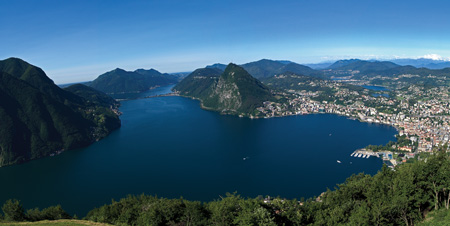
Monte Brè in lesser-known Lugano, Ticino, is currently being pushed for pairing with key destinations
Secondary destinations are being paired with usual favourites like Zurich and Luzern to meet growing demand of the Asian MICE market. By Mimi Hudoyo
Switzerland is not only seeing arrivals from Asia pick up but also more repeat and longer-staying visitors from there.
India, China and South-east Asia are its main markets, with Indonesia, Malaysia and Thailand registering significant growth last year.
According to Switzerland Convention & Incentive Bureau (SCIB), South-east Asia alone contributed 500,000 hotel overnight stays in 2014 – a year-on-year 10 per cent increase – out of which MICE constituted between 15,000 and 20,000 overnight stays.
Data from SCIB India also showed growth in Indian overnight stays, from 467,967 in 2013 to 485,216 in 2014, out of which MICE contributed 19 per cent. Aishvarya Guhagarkar, director of MICE India, SCIB, said: “The hotel overnights did not include apartment stays, which can add another 200,000 overnights.
“Apartments in Switzerland are in high demand in the Indian market because some communities, for religious reasons, prefer a kitchen facility to cook vegetarian food.”
Guendalina Rampazzi, head of market development MICE, SCIB, said: “India and China are doing well for us, but South-east Asia has been growing significantly as well, following the appointment of a dedicated SCIB manager for the region, in January 2014.”
Rampazzi opined that the region, with its huge population, is a massive market that was previously untapped: “Having someone in the South-east Asia region has created a better understanding of the market for us. We have also convinced travel consultants in the market to change their programmes towards longer-staying ones in Switzerland.”
Dominique Oi, dedicated MICE manager South-east Asia, SCIB, said: “Leisure travellers now stay two to three nights on average while MICE travellers stay four to five.”
South-east Asian travellers, she added, are among the biggest spenders, with CHF350 (US$374) per night for MICE.
To grow the Asian market, SCIB does not only promote the well- known destinations like Zurich, Geneva or Luzern, but also the country’s “hidden gems”.
For example, the bureau recently invited corporate clients from South-east Asia and Indian travel consultants on a fam trip to Luzern and the lesser-known Ticino in southern Switzerland.
Rampazzi said: “More groups are coming to Switzerland for the second time, so people are ready to discover new destinations. We encourage travellers not only to visit the must-see, but also discover the hidden gems where they can experience something more authentic and traditional. MICE groups look for experiences more than leisure visitors.”
Lugano, the biggest city in Ticino, offers diverse experiences, according to Silvana Redemagni, director of Lugano MICE Convention Bureau.
“In a very small area (bordering with Italy), you can have the best of Italian culture and cuisine, and also sightsee in a day mountains and valleys, rivers and lakes. Five to 10 minutes away from the city centre is the countryside. For those looking for nightlife, Milan is very near too,” she said.
Lugano now has 3,500 hotel rooms, with each hotel on average able to hold groups of up to 250 pax. Meeting facilities range from conference rooms in the hotels to standalone convention centres.
Swiss Diamond Hotel, for example, has meeting facilities for 10 to 150 participants, while Palazzo dei Congressi’s auditorium can fit up to 1,130 theatre-style, along with several breakout rooms and smaller meeting rooms in the adjacent Villa Ciani.
The centuries-old Ristorante Grand Cafe Al Porto has a patio and a private room for small meetings of 20 to 30 pax, while the Swissminatur theme park is good for bigger meetings of up to 300 pax, combined with teambuilding activities or a gala dinner at a resident restaurant that serves international food, including Asian and halal options.
Dominique Vuigner, CEO of Swissminatur, said: “We had a group from Malaysia last year and we are going to host another from India later this year.”
Meanwhile, the new Lugano Art and Culture venue will open in September with a 1,000-seat theatre and concert hall, museum space for exhibitions and several multipurpose halls for meetings, gala dinners or product launches.
Redemagni said Lugano is also great for incentive programmes, which range from city life to nature, light activities to extreme sports. She added: “Groups can organise a dinner cruise on Lugano Lake, have games on board, or simply enjoy beautiful views of the city set against the Lugano Prealps.”
Anand Veerkar, general manager Sales (West) of Fountainhead Mumbai, said Ticino has an appeal, but not as a stand-alone destination. “Indians like Italian food and they can find it in Lugano. The city has MICE facilities so it can attract corporate meetings. But it needs to be combined with well-known destinations, such as Luzern, for the post-event tour,” he explained.
Meanwhile, Lugano will be welcoming a 500-pax group on a post-convention tour from another country later this year. Guhagarkar revealed: “Half of the group will have a one-day tour here, while the rest will stay two nights, attend a gala dinner, and partake in lake cruising and other activities.”
Ideas – Three-day teambuilding and incentive
Day 1 Zurich – Thun – Gruyères – Montreux
Upon arrival in Zurich, participants take a quiz related to the Swiss International Air Lines that has just flown them to the country. A second quiz on the Swiss Travel System is given when the group is on the way to Thun by train and boat.
At Thun, participants are divided into teams to play two traditional Swiss games – flag throwing and Talerschwingen (rolling a coin inside a bowl).
They then transfer by coach to Gruyères to visit a medieval village. Lunch follows, after which they visit the chocolate factory of Cailler. Teams then compete in yet two more games, shooting an apple with a bow and arrow, and hammering a nail into a piece of wood in as few blows as possible.
Participants then head to Montreux by overnight coach.
Day 2 Montreux – Vevey – Lavaux – Lausanne
Participants depart in the morning by coach to the village of Vevey for a walking tour and a visit to the Alementarium Museum of Nestle.
During the tour of Vevey, the teams have to sample some milk and guess which was cow, soya and almond milk. They then have to try to weigh some cacao beans, and the team that manages to weigh closest to the required 187 grams wins.
Next, participants take the coach to the vineyards of Lavaux, a UNESCO world heritage site. Here, they visit wine producer Domaine the Daley’s wine cellar, taste some wine, and after lunch, tour the vineyard.
At the wine cellar, teams will play a water game. They are each given an empty vessel marked to indicate a certain volume of liquid it should be filled up to, choosing five out of a number of bottles of different sizes, all filled with water.
Next, participants head to Lausanne by coach to visit the old town and taste local products. They again take a quiz about the city’s facilities, before enjoying an unforgettable evening at The Olympic Museum.
Day 3 Montreux – Gstaad – Glacier 3000 – Montreux
Participants take a train ride from Montreux to Gstaad on the Golden Pass Line. Upon arrival, they take a walking tour of the main street of Gstaad, enjoy the local specialties, and play the native instrument alphorn in the village.
Then, participants take the coach to Glacier 3000 to experience the new Peak Walk attraction. After lunch, four members from each team put on a pair of special skis designed for four people and race with other teams on a short course. Next is the five-hole snow golf for three members from each team.
Participants return to Montreux by coach. They take a boat ride to Chillion Castle for a gala dinner.
Itinerary by SCIB in collaboration with Kuoni Group Travel Expert
The historic centre of Laussane Picture by dacasdo/123RF.com
Need to Know
New convention centre to open in Bellinzona
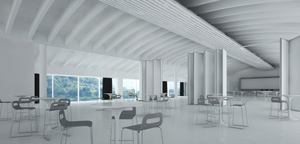
Cast – Event Arena, a new congress centre will open in autumn this year in Castione-Arbedo, Bellinzona.
The new centre with modern equipment and design will accommodate up to 540 people in 1,525m2 of space. It will become the key location for hosting congresses, fashion shows, product launches and other events in the area.
The Ristorante located on the ground floor will also provide an additional 180m2 of space to accommodate 96 guests, suitable for breakfast gathering, business lunches and banquets.
Be adventurous with Swiss chocolate
The Swiss Chocolate Adventure is a new attraction at the Swiss Museum of Transport in Luzern. The 25-minute ride takes visitors to learn interesting facts about the discovery, origin, production and transport of Swiss chocolate.
Through the 10 stops of the tour, visitors learn the entire value creation and transport chains, from the cultivation of the cocoa bean and the transport to Switzerland up to the manufacture and sale of the finished chocolate product.
Throughout the ride, visitors will not only see pictures and films and listen to the explanation, but also smell, feel and taste the chocolate product.
The multimedia voyage is conducted in German, but visitors can listen to the translation in French, Italian, English, Spanish and Chinese through a multi-lingual translation device.
Lugano urban trail thrill
Companies that are interested in teambuilding activities can take part in Foxtrail, an urban travel hunt that also serves as an alternative way to discover the city.
The teams (from two to six people) have to “follow the trails of the fox”, on foot or by public transport. To reach the fox, participants must solve complicated missions and decipher coded messages.
Also known as Galileo Galilei, the trail has a duration of two and a half hours, but there is also a shorter 90-minute alternative.
The trail is not targeted only at travel enthusiasts and sun lovers. The teams will be able to soak in the culture and history of the city, complete with breathtaking views of Monte Brè and Monte San Salvatire.
Participants will need to decipher the meaning of ancient inscriptions, follow a ‘bloody’ trail and request for information via text messages.
The trail starts at the train station or city centre and concludes at Piazza Reformation.
Meet the Queen of the Mountains
Trekking Team AG has a hiking programme for adventurous groups to take on Mount Rigi, also known as Queen of the Mountains. The group will take off-the-beaten-tracks and, with the help of maps and compasses, try to find the most direct route to the defined destination.
In teams, the group also needs to solve creative, entertaining and challenging tasks along the way. All activities require strong teamwork.
The programme is available from May to October and requires a minimum of 12 participants.
Dubai now offers more hardware to entice business visitors, especially those from Asia
Hotels, theme parks and other hardware are mushrooming in the emirate, making it ever more attractive for business events. By Feizal Samath
New infrastructure, facilities and entertainment options particularly targeting MICE visitors and their accompanying families is setting Dubai apart from competing destinations.
In the hotel arena, some 8,000 rooms were added to the city last year, contributing to the current total of 93,000 rooms. New mid-range properties are also springing up, with 15,000 to 20,000 rooms – mostly in the three- and four-star categories – in the pipeline and due to come on stream in 2015-2016.
Meanwhile, the four-star, Marriott-managed Lapita Hotel with 503 keys is expected to open alongside three new theme parks for the entertainment of business visitors. Legoland Dubai, Bollywood Parks Dubai and Motiongate Dubai all aim to woo more business from Asia and are located in the same site between Dubai Airport and Abu Dhabi Airport, with Phase One construction expected to complete in October 2016.
Also opening in 2015-2016 is the IMG Worlds of Adventure, expected to be the world’s largest indoor theme park. Home to four zones – Marvel, Lost Adventure, Dinosaur Adventures and Cartoon Network – this fantasy land is a US$1 billion investment.
The city will break another record when it opens the world’s largest airport – with a capacity of more than 200 million passengers – by 2030. Already it has excellent air connectivity with two international airports connecting hundreds of destinations across six continents.
The emirate is also planning to allow multiple-entry visas, especially for Asians seeking to make several visits.
Amorntheep Bhatia, managing director of Bangkok-based Orient Travels, said the multiple-entry visas would definitely encourage more visits and boost business for Dubai.
The UAE capital is targeting 20 million visitors by 2020, the year it will play host to the World Expo. Foreign visitors numbered 11.6 million in 2014.
One of the city’s goals is to treat today’s business visitor as tomorrow’s leisure tourist.
“To achieve that goal, we need strong branding and marketing, which are in the works, while infrastructure is already in place,” commented Steen Jakobsen, director for Dubai Business Events, the city’s official convention bureau.
He shared that significant measures have been taken to ensure hotels are available across all price points, and that there has been a steady increase in the number of business events taking place in Dubai.
Philippe Harb, COO of One to One Hotels and Resorts in Abu Dhabi, opined that dynamic markets such as Dubai do well when it comes to improving the performance of the tourism and MICE sectors.
He added that Dubai operators also adapt well to adverse market conditions, being able to cut expenses dramatically and maintain profitability.
He cited the example of the CIS economic slowdown, during which Chinese business travellers amply compensated for the decrease in CIS business visitors, with operators providing attractive options.
Shujaat Yyar, deputy general manager at the Le Meridien Dubai Hotel and Conference Centre, noted that Dubai’s vision to welcome 20 million visitors by 2020 is significantly accelerating the projects and infrastructural development of the city.
“The number of flights to and from Asia, the extensive choice and quality of hotels, event venues, indoor and outdoor incentive activities as well as the reassuring fact that Dubai is virtually crime-free, make this emirate a preferred choice for Asian countries,” he added.
Sharjah a magnet for Asian MICE
Alluring nightlife in Al Qasba, Sharjah
Sharjah, designated the capital of Arab tourism for 2015 and historical destination for art and Islamic culture, is aiming to welcome 10 million visitors by 2021. In 2014, there were two million hotel guests, up from 1.8 million the previous year.
To achieve the target, the Sharjah Commerce and Tourism Development Authority (SCTDA) is partnering with the tourism trade in several ways.
Investments are being made in the development of sophisticated convention and conference facilities, high-end hotels and shopping centres. About 30 new international-brand hotels or an estimated 4,000 additional rooms are expected to open in the emirate over the next few years. The city now has 10,000 hotel rooms.
Among the developments is the new five-star luxury beachfront hotel and resort, Majlis Grand Mercure Sharjah, to be managed by Accor.
Additionally, a new leisure cruise ship terminal is being built at Sharjah’s east coast, at Khorfakkan Port. Industry officials said the tourism sector is currently enjoying a successful 2014-2015 cruise season, expecting an estimated 36 international cruise ships to bring in more than 80,000 tourists.
Khamis Kazzaz, general manager of the Radisson Blu Resort, Sharjah, told TTGmice that Sharjah was the first emirate to have an expo centre, and that it has developed tremendously with world-class business facilities and infrastructure. “Our resort strongly supports Sharjah’s vision to receive 10 million tourists – we offer nine function rooms along with various activities such as fishing, boating and water sports,” he said.
Connectivity-wise, in February this year Sharjah-based Air Arabia became the first low-cost airline from the Middle East and Africa to connect the region with China, operating regular non-stop services to Urumqi, the largest city in western China.
The emirate has significant potential to attract Asian MICE visitors given its long-established trade and business relations with the region and growing public-private partnership.
A senior spokesperson for SCTDA said visitor numbers from Asia had registered sustained growth in the past few years, with hotels recording a 19 per cent year-on-year rise to more than 313,000 Asian guests in 2014.
“Sharjah draws Asians due to its safe and secure environment, wide selection of hotels and diverse tourism offerings. Business event planners will also find it a cost-effective choice offering advanced infrastructure and facilities as well as easy access to other markets in the region,” he added.
Need to Know
More room for meetings at Le Meridien
The 580-room Le Meridien Dubai Hotel & Conference Centre offers one of the newest and largest conference and banqueting facilities in Dubai. In line with the country’s vision to welcome 20 million visitors by 2020, it has almost doubled its meeting room capacity with the opening of The Great Ballroom in May. This state-of-the-art venue can accommodate up to 1,500 guests and is supported by 20 additional meeting venues within the hotel.
View cityscape from world’s highest point
An unforgettable experience awaits up on the 148th floor of the Burj Khalifa, supposedly the world’s tallest building. There, an observation deck called At The Top, Burj Khalifa Sky, stands 555m above ground level. It offers a breathtaking 360-degree view of Dubai city.
Fun activities on soft desert sand
The Desert Safari experience is a must for anyone visiting the UAE. Tours are held daily and participants depart in the afternoon dune-driving across Dubai’s desert, with several stops for photo-taking before reaching the first destination, a camel farm. Participants also get to watch the beautiful sunset before the drive ends at a campsite.
The experience includes a camel ride, belly dancing performance, henna painting, BBQ dinner, sand skiing, etc.
Experience Taj hospitality in Burj Khalifa
Visitors, especially Indians who prefer a ‘home away from home’, can check out the new Taj Dubai, which opened in March in the prestigious Burj Khalifa downtown area.
The 296-key hotel offers Taj Club Rooms, 16 Junior Suites and 15 Luxury Suites with panoramic views of Burj Khalifa, dancing fountains and Dubai Mall.
There are two especially lavish suites. The Maharaja Suite on the 33rd floor is inspired by opulent Maharaja’s palaces in Rajasthan and boasts a roof terrace. The 680m2 Presidential Suite, with its fine balance of understated elegance and opulence, occupies the entire 35th floor and boasts its own fitness suite and yoga room.
Tour the city on double-deckers
Jumeirah Mosque Picture by whitetag/123RF.com
Dubai’s hop-on, hop-off city tours on board modern double-decker buses, with a dozen language options, allow passengers to explore different areas of interest at their own pace.
Launched last October, the Blue Route with 12 stops takes visitors to Dubai Mall, Burj Khalifa, Jumeirah Mosque, Madinat Jumeirah, and the iconic Palm Jumeirah, among others. The Red Route with 16 stops goes to the Gold and Spice Souks, Al Fahidi, Dubai Museum and Old Souk, among others.
Alternative shopping in the open
Located in Jumeirah on Al Wasl Road, the BoxPark open-air shopping and leisure precinct is made up of 220 shipping and industrial containers of various colours on a 1,200m stretch. Featuring about 44 high-end F&B outlets and retail stores, BoxPark was developed by Meraas Holding as a refreshing alternative to large indoor malls.
On a board out at sea
Picture from www.searide-dubai.com
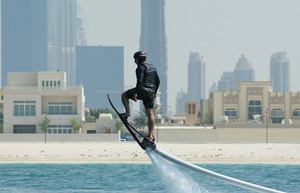
Flyboarding is the latest craze offered by SeaRide Dubai, based at Al Souq Harbour, Jumeirah, to hit the waters of Dubai.
A flyboard enables the rider to use water pressure to ‘fly’ above the sea. Clad in a life jacket and a helmet for safety, the rider stands strapped to a board connected to a jet-ski with a small pipe that pumps water into the board to propel it upwards. A good sense of balance is required.
Already seeing a rise in tradeshows coming from Jakarta, Surabaya is eager to grow business from the region and beyond. Mimi Hudoyo reports
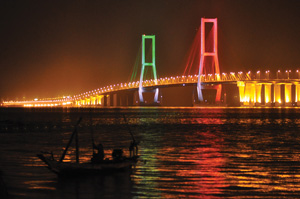
As Indonesia’s second business hub after Jakarta, Surabaya has a thriving MICE sector that is supported by purpose-built event centres and a plethora of hotels armed with business event facilities.
The port city in Java offers event organisers the Grand City Convex, a venue capable of accommodating up to 3,500 seats, theatre-style, and which has a 4,000m2 exhibition hall. The Dyandra Convention Center is another option for conventions and exhibitions. Its massive space can support large-scale banquet events with up to 5,000 guests.
Most hotels in the city, from economy ones to luxury properties, are fitted with meeting facilities to cater to the burgeoning MICE sector.
According to Handoyo, head of product development with the East Java Regional Culture and Tourism Office, MICE has been one of the significant contributors to the region’s economy.
“Tourism contributed 101 trillion rupiah (US$7.3 billion) to the East Java economy last year, and that came from hotels, restaurants and entertainment (sectors). While we do not have specific data on MICE, most hotels now have meeting facilities and this sector contributes 30 to 40 per cent (of total tourism revenue). So, (MICE) is a significant market for Surabaya and East Java in general,” Handoyo said.
B2B and B2C exhibitions are on the rise in Surabaya, and according to Boediono, director of Debondo Mitra Tama Surabaya, an event specialist, tradeshows for the machinery, mechanical and electrical, and building technology sectors are buzzing.
Boediono remarked: “We have seen more exhibitions moving from Jakarta to Surabaya to get closer to the market. We have also seen some international exhibitions, such as HOMEDEC from Malaysia, entering Surabaya this year.
“The growing number of international exhibition organisers setting up offices here in Indonesia has presented new opportunities for Surabaya to welcome more international events. Reed Panorama Exhibitions, for example, is bringing MEGA BUILD to Surabaya this November.”
MEGA BUILD, which has a version in the Indonesian capital city, is a premier event for the architecture, interior design and building industry.
Surabaya’s growing popularity among business event organisers has resulted in major venues being booked out for events.
Boediono noted that it has been a challenge to secure slots for exhibitions at the Grand City Convex and Jatim Expo International although the latter has nearly one hectar of exhibition space.
Still, the country’s tourism ministry is hungry for even more MICE business coming into Surabaya and is eager to promote the destination to regional and international markets.
Rizki Handayani, director of MICE and Special Interest Tourism Marketing, Indonesia Ministry of Tourism, told TTGmice: “Surabaya has the facilities…but like many other destinations in the country, it needs to go out and meet potential markets. I am inviting the trade to participate in tradeshows (led by the) ministry next time.”
As Surabaya is more accessible to international travellers than other Indonesian destinations besides Jakarta and Bali, Rizki believes the city is able to appeal to regional organisers. Major Indonesian airlines such as Garuda Indonesia, Lion Air and Citilink have made Juanda International Airport one of their hubs.
Surabaya is connected to the region by direct services operated by airlines such as Royal Brunei Airlines, Cathay Pacific and EVA Air. AirAsia flies to Surabaya from Kuala Lumpur, Penang and Johor Bahru, while Singapore Airlines and SilkAir flies over daily.
Monas Tjahjono, managing director of Monas Tours & Travel, urged the creation of a strong destination brand and earnest promotions in the region, especially in Singapore and Malaysia.
“It took me several years to bring a group of golfers from Singapore here…because there was lack of awareness about what the city had to offer,” he explained.
Ina Silas, general manager of House of Sampoerna, agrees, saying that the city’s myraid attractions only “needed packaging”.
To that end, the House of Sampoerna, part of the HM Sampoerna cigarette company and which operates a cigarette museum, created a series of heritage tours over the last few years. The Surabaya Heritage Track itineraries took participants around the older part of the city, visiting landmarks and attractions that were part of Surabaya’s past. Some of the tours are operated with a tour bus, while some take participants around on foot.
Ina noted that the programmes would interest corporate groups, giving them a deeper understanding of the destination they were meeting in.
However, some trade players opined that Surabaya’s weakness is that it does not have as many attractions to offer as compared to Bali and Jogjakarta, which are also popular with corporate clients. They felt that Bali and Jogjakarta offer plenty of cultural attractions.
Monas rejected the complaint, saying: “Travellers do not only look for traditional things. Surabaya offers great shopping. We have many shopping malls that feature big brands and products can be cheaper here.”
Handoyo added that meeting in Surabaya could also allow event organisers to plan pre- and post-show tours to neighbouring cities.
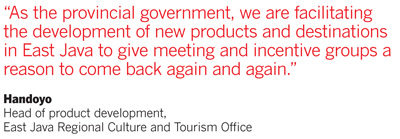
“As the provincial government, we are facilitating the development of new products and destinations in East Java to give meeting and incentive groups a reason to come back again and again,” said Handoyo.
Some of the work that has been done include the improvement of access to Ijen Crater, the introduction of Wurung Crater in Bondowoso, and the opening of a number of theme attractions around Malang, such as the Batu Night Spectacular and Museum Angkut + Movie Star Studio. Handoyo is confident that these attractions will appeal to MICE groups.
These efforts are paying off. At the recent Indonesia Corporate Meetings and Incentive Travel Mart in Surabaya, some corporate buyers told TTGmice they are keen to take their next company outing to the city and its neighbouring areas after learning about the surrounding attractions.
Susella Gustina, office administration Indonesia of JTI, said: “We are organising a company outing and family gathering for up to 100 people. Bromo is one of the destinations in East Java that we are considering, but we have now learnt that Malang has new attractions too.”
Ina Sinarsari, senior executive assistant at Fluor Daniel Indonesia, who is shortlisting several destinations for a 50-pax corporate event, said she would be considering Surabaya for its access to Ijen Crater and Merah Island.
Ideas Track the history of Surabaya
House of Sampoerna
15.00 After a morning meeting, the heritage tour of Surabaya begins at the colonial-style House of Sampoerna. A bus, modelled after the tram that once serviced the city in the past, will take your group to Kampung Kraton, which literally means the royal village. Kampung Kraton is believed to be the gateway to the palace, and the bus ride takes about 15 minutes.
Upon arrival at Kampung Kraton, participants will be guided through Kramat Gantung and Jalan Pahlawan, where traces of the ancient kingdom remain through villages named about the royal troops.
15.30 The Surabaya Heritage Track will now make a stop at the City Hall, where your group will learn about the city’s past, how the name Surabaya came about, and the different city emblems used over the years.
The City Hall itself is an interesting piece of history, as it was built in 1923 and started operations in 1927.
16.00 Next stop, Cak Durasim Performing Art Centre which was once part of the Surabaya Kanoman Palace. The centre is now named after a traditional performing artist, Cak Durasim, who pioneered the Ludruk performance in Surabaya. The performance depicts local legends.
16.15 The tour ends at the House of Sampoerna.
This itinerary is part of Surabaya Heritage Track, a series of history themed tours by the House of Sampoerna
Need to Know
Hotel Tentrem Yogyakarta offers new events venue
The five-star, 275-room Hotel Tentrem Yogyakarta has debuted a new ballroom that boasts a capacity for up to 2,000 guests.
Built next to the main building, the Tentrem Ballroom has a 15m high ceiling with adjustable rigging and it comes with sound-proof walls. It can be divided into three smaller meeting rooms.
The new facility adds to the hotel’s existing nine meeting rooms which are able to host events with 40 to 70 guests. These meeting venues are equipped with multimedia and Wi-Fi capability.
Move through time at a new transport museum
A new museum celebrating the evolution of transportation modes through the years has opened in Batu, a town some 20km from Malang, East Java.
Museum Angkut + Movie Star Studio displays more than 300 rides, some of them are rare and original, while others are replicas of models that date back to 1910. The museum is divided into zones such as Europe, Hollywood, and Batavia.
Visitors can also enjoy local dishes and shop for handicraft at the Floating Market.
Corporate groups can use the museum for themed events and teambuilding programmes.
Triple gastronomic delights
Bumi Surabaya City Resort has developed a three-in-one concept for its three adjacent restaurants: the outdoor Siti Inggil, the indoor Arum Manis, and the Kizahashi Japanese restaurant.
Dubbed Pasar Senggol, the concept will see all three dining outlets coming together as a single destination to tantalise diners with more than 100 dishes daily.
With a capacity of 300 seats, the restaurants are perfect for meeting groups and corporate gatherings.
Bumi Surabaya City Resort is also equipped with function rooms that can support events of various sizes.
Let’s meet in idyllic Ubud
The Sense Bali, a 97-room hotel in Ubud on Bali island, opened this February with facilities built to charm both business and leisure travellers.
It houses a ballroom that can be divided into two smaller spaces, good for 150 pax each, and a 14-seat boardroom. Fun activities can also be arranged for meeting groups, such as a competition to make traditional Balinese offerings or a bicycle tour around a village.
Located in Ubud city centre, the hotel offers guests easy access to local attractions.
Anyer gets a new hotel
Aston Anyer Beach Hotel has opened on the edge of the Sunda Strait, Cilegon, a coastal industrial city in Banten province, Indonesia. Anyer is now one of the most popular destinations for businessmen and pleasure seekers from Jakarta and West Java.
The 101-key beachfront property, some 90 minutes from Jakarta, is built with an inventory of meeting facilities, including a conference centre with three auxiliary meeting rooms located on the top floor to offer delegates spectacular ocean views. An outdoor terrace here offers a suitable venue for coffee breaks and sunset cocktail receptions.
The smallest of the three meeting rooms can accommodate up to 85 people, while the largest can take up to 400 guests.
The hotel also offers a cosy all-day dining restaurant that is great for casual gatherings, as well as recreational facilities such as an outdoor swimming pool, a private beach, a pool table, a table tennis table, a bonfire pit and a full-service spa.
The entire hotel is wired up for speedy broadband Internet.
Corporate groups can soon look forward to fun activities on site, such as paintball games.
Enhance the visual aspect of meetings with the use of an LED wall at Regal Kowloon Hotel
Hong Kong hotels are introducing more technology-driven services to help corporate clients deliver a more efficient, exciting event, writes Prudence Lui
As the competition for meetings business heats up among hotels in Hong Kong, an increasing number of properties are making technology investments to raise the appeal of their event facilities. Offers of high definition LED (Light Emitting Diode) walls in function rooms and event-friendly mobile apps created just for event delegates appear to be trending today.
The Langham, Hong Kong has installed a 7m by 3m LED wall in its Langham Place Ballroom, as part of an extensive hotel-wide renovation project. This piece of technology improves the visual appeal of presentations, and videos that are screened via the LED wall can be controlled by an app on the event organiser’s smartphone.
The hotel’s director of sales and marketing, David Fung, explained that the LED wall supports meeting planners’ constant search for “ways to better engage event attendees (through sharper) audiovisuals”.
In addition, a Cloud printing service is now offered.
An LED wall has made an appearance too at Regal Kowloon Hotel’s pillarless Versailles Ballroom. The installation allows organisers to showcase pictures, videos, graphics and live feeds on a big screen.
The hotel and its sister properties under the Regal Hotels International banner, have also created a multi-functional app to facilitate communications between the event organiser and delegates. Events details such as conference agenda, speaker’s profiles and pre-event news announcements can be hosted on the app, which also contains a QR code scanner that comes in handy during registration. The app can even support real-time polls.
The smart in-room tablet offered by The Peninsula Hong Kong allows guests to easily access available services
Regal Hotels International’s vice president of marketing, Lyllian Poon, commented: “Our aim is to make our customers’ lives easier with the help of technology which must also be fun to use. The ultimate benefit for the organiser and participants is instant, seamless and paperless (communication).”
Poon noted that the hotel company’s customers are “responsive to technology”, fuelling the need to “constantly bring in new services to enrich our guest experience”.
Over at The Ritz-Carlton, Hong Kong, the ((Chime)) mobile app was launched earlier this year to bring convenience to meeting planners. Said to be the first of its kind in the industry, ((Chime)) enables planners to connect in real-time with the hotel’s Meetings and Events Concierge and request for event services. The app can be used on smartphones, tablets or PCs.
Besides improving event technology, hotels are also making their guestrooms friendlier for modern business travellers.
Guests of The Langham, Hong Kong can now easily charge their mobile devices through USB ports located on the sides of the bed. They are also provided with a pocket Wi-Fi to stay connected even outside of their rooms.
Regal Hotels International’s new iclub Sheung Wan Hotel pioneered an innovative mobile key check-in capability. Guests may opt for this service or the traditional key card system – or both – to access their room. This service will soon be extended to iclub Fortress Hill Hotel and iclub Soho Hotel.
Leveraging technology to lift in-room guest experience is, however, not new to The Peninsula Hong Kong. Its parent company, Hongkong and Shanghai Hotels, has an in-house research and technology department for the last 30 years, which has developed a touch-screen tablet, powered by Intelity, that connects guests with available services offered by the hotel. Available in 11 languages, the tablet programme also includes room controls. Come this summer, free VOIP international calls will be offered.
While M.A.X. Event Management, event manager, Johnny Tse, felt that these products and services “deliver a sense of professionalism” and “add value to the hotel’s service quality”, he remarked that they do not factor in the venue selection process.
Ideas Post-meeting summer sights in 48 hours
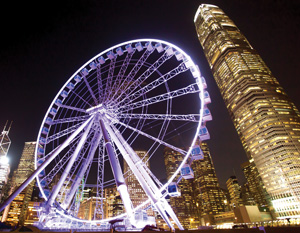
Hong Kong Observation Wheel offers glorious after-dark views
Day 1
After breakfast, pack your group off to the old districts of Sai Ying Pun and Kennedy where they can stroll around on foot and see how the locals live. Then, hop onto an iconic ding ding tram – an experience that must be had in Hong Kong – to Central.
Stop for a lunch of Cantonese delights at the elegant China Tang, 4F of Landmark Atrium, then escape the summer heat by spending the afternoon in the Hong Kong Maritime Museum in waterfront Central. The attraction brings to focus Hong Kong’s maritime heritage and tells the city’s seafaring story in local, regional and international contexts.
As evening approaches, head over to the Hong Kong Observation Wheel and pop into a cabin to take in panoramic views of the city as the sun begins to set.
End the day at PMQ, a heritage building that now functions as a creative and design hub. Offer free time for your group to explore the many studios and shops before regrouping for dinner at Michelin star chef Jason Atherton’s Aberdeen Street Social, which specialises in British cuisine.
Day 2
This is a day of action, beginning with the Wing Chun Kung Fu Experience Tour, led by disciples of master Ip Man. Start with a warm-up walk down the Avenue of Stars before learning some Wing Chun moves. Next, get better acquainted with master Ip’s famous disciple, Bruce Lee, through the Hong Kong Heritage Museum’s Bruce Lee: Kung Fu.Art.Life exhibition.
The action continues after lunch at Discovery Bay Pier, where your group will hike up to the Lookout Point for a panoramic view of Discovery Bay spanning from the Marina Club to Yi Pak Bay. Later, transfer back to Central by ferry.
Dinner tonight is at Wan Chai’s Tai Hang, where your group can break up and go in search of local eats in the neighbourhood.
Need to know
Come celebrate art and gastronomic delights
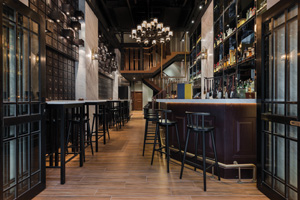
The new Tycoon Tann and Mod Bar on Wellington Street in Central is a dining destination that celebrates Hong Kong’s culture through food, drinks, design and art. Mod Bar on the ground floor offers Chinese-inspired cocktails and East-meets-West bar snacks, while the two-floor Tycoon Tann restaurant presents local classic dishes with an upmarket spin. Diners can sink their chops into signature dishes such as braised abalone with black truffle in a casserole, and baked crab shell stuffed with fresh crab meat, onion and cheese.
Tycoon Tann and Mod Bar are great for private events. Mod Bar seats 32 people, while Tycoon Tann has a 32-seat private dining room on each floor.
Visit www.tycoontann.com for more information.
Hands-on protein party
The Nose-to-Tail Butchery Class is a hands-on activity designed to teach this ancient skill that treats every part of the animal as sacred.
Led by one of The Butchers Club’s butchers or chefs, participants will learn how to butcher their own meat at home. The chef will butcher a whole lamb, after which participants will learn how to debone, roll and tie a lamb shoulder. There are also lessons on how to skin, score, stuff, roll, rewrap and tie a pork belly; and how to debone, butterfly and marinate a whole chicken.
Once the hard work is over, participants can sit down and enjoy a family-style meal prepared by the chefs. Free-flow wine and beer is included. Participants will later be given their deboned and butterflied chicken along with a jar of bourbon and maple glaze to take home in a cooler bag.
Each class can accommodate up to 10 pax and private classes for 6-12 guests are offered.
Email store@butchersclub.com.hk for details.
More access into Hong Kong
Flag carrier Cathay Pacific Airways launched new flights to Zurich on March 29 and will further grow its international network with a new service to Düsseldorf on September 1. Meanwhile, sister airline Dragonair has entered into a codeshare agreement with Shenzhen Airlines which had recently added Jinjiang in Fujian to its network. The Hong Kong-Jinjiang service is operated thrice daily.
Air access from the Philippines is boosted too, with the commencement of AirAsia Philippines’ new Manila-Hong Kong service on May 8. It departs from Ninoy Aquino International Airport Terminal 3 every Monday, Tuesday, Friday and Sunday.
Be a child again
Help event delegates relive their carefree childhood with a private party at Hong Kong Disneyland. The theme park offers buyout packages on specific dates in September, and a Frozen experience can be included.
After enjoying Disney’s Haunted Halloween preview and Disney in the Stars Fireworks, event guests will get an exclusive tour of the Frozen Village where a special performance will be held. Other activities include building a snowman, riding a toboggan, and meeting the movie’s loveable snowman, Olaf.
Mix-in buyout group size starts from 500 pax while park buyouts require at least 5,000 guests.
Much talk about Ozo Wesley’s new meeting offer
Event planners can look to take up Ozo Wesley Hong Kong’s new meeting packages when they book its cheekily named meeting venue Talk. The space allows a range of configurations from 12-pax boardroom meetings to cocktail functions and classroom-style seminars, or theatre seating of 40 guests.
A Full-Day Meeting Package comes with use of the venue from 09.00 to 18.00, two refreshment breaks with snacks, and one set lunch for HK$500 (US$64.50). A Half Day Meeting Package includes venue rental from 09.00 to 13.00 or from 14.00 to 18.00, as well as one refreshment break with snacks and one set lunch, priced at HK$400.
Prices are per person and subject to a 10 per cent service charge.
Furthermore, Ozo Wesley will throw in a 20 per cent discount for meeting packages if 20 or more room nights are booked.
POLITICAL fallout is pushing Paradise Garden Boracay Resort and Convention Centre, the first and only halal-certified resort in the Visayas since last month, towards the large Muslim MICE markets in the region and beyond.
Hannah Yulo, director of sales and marketing, said there is unmet demand from Muslim travellers in Malaysia, Singapore, Indonesia, Middle East, South Korea and Russia.
The push factor, however, has been the Scarborough Shoal dispute between China and the Philippines that has affected Boracay’s top market, China.
“We get small numbers now,” Yulo said, but added that the property is receiving many inquiries and expects to host several Muslim MICE groups this year.
Explaining how the resort got on board with halal cuisine, Yulo shared that a 28-pax incentive group from Malaysia had requested for a halal menu last November and that spurred it to acquire halal certification from the Islamic Da’Wah Council of the Philippines.
Since then, the resort’s main kitchen has been converted to a halal one while a separate and brand-new kitchen serves non-halal food. It has also prepared a prayer room and guestrooms with a Koran, qiblah and prayer mat.
Furthermore, the resort has Muslim members of staff and the general manager also has experience working in Brunei, a Muslim destination.
Yulo also said that the resort has set up a committee to oversee halal requests, needs and concerns, while staff have attended halal-related meetings including the World Halal Forum in Manila last November and the recent Philippine Halal Assembly in Manila, and were invited to a halal summit in South Korea in August.
FOLLOWING a NZ$2.4 million (US$1.7 million) facelift that finished in April, The Langham Auckland is ready to flaunt its shiny new meeting facilities.
The former Waitemata Room is now enjoying a new lease of life as the Crystal Room. Furbished with four new crystal chandeliers, the venue can take up to 180 guests altogether or be divided into two rooms.
Four new Gallery Rooms have also officially opened on the site of the old SPE bar to meet demand for more meeting or breakout rooms.
Floor-to-ceiling windows in the Gallery Rooms offer an abundance of natural sunlight to complement its new crisp, bright décor, wireless connectivity for iPads or PCs and audiovisual technology that spares presenters from being tethered to cables while delivering their presentations.
The Langham Auckland has retained its Great Room, Auckland’s largest pillarless ballroom, which fits 900 banquet style and 1,400 for cocktails.
Michael Shah, director of sales and marketing, said: “Thanks to the number (13 in total) and quality of rooms, variety of sizes (four to 1,400 people), audiovisual capabilities, our great reputation F&B – and most importantly professional, dedicated staff who provide a sense of true welcome and hospitality – we believe we provide an unequalled experience.”
The hotel also offers special corporate rates for small- to medium-size companies that use between 20 and 50 room nights a year.
Called Optimum, the programme features exclusive rates across the Langham global portfolio, preferential rates for Langham Club Rooms and Suites, a dedicated global sales representative to personally assist with your reservations, and airline partner miles accrual.
RESORTS World Genting rolled out a Meetings & Awards rewards programme this month, designed for corporate companies that hold their functions or events at all sister properties in Malaysia.
Organisers will earn five rewards points for every RM1(US$0.27) spent on meetings and events facilities at Resorts World Genting, Resorts World Kijal or Resorts World Langkawi
Points accumulated can be used to redeem for subsequent functions or events at the three properties.
Rewards points will expire after 18 months of programme inactivity.
The newly-opened Ritz-Carlton, Bangkok anchors the One Bangkok development with cosmopolitan elegance. Featuring the city's largest ballroom and a spectacular new penthouse suite, it delivers exceptional hardware and deeply authentic, soulful service for business and leisure travellers alike
Behind the imposing, Brutalist concrete that defines Zurich’s Oerlikon district lies a surprising secret. While its exterior honours the neighbourhood’s industrial roots, stepping inside Mama Shelter reveals a vibrant, neon-soaked world that is a far cry from its rigid shell
A polished urban retreat designed for business travellers, Hyatt Regency Kuala Lumpur at KL Midtown combines thoughtful design, seamless service, and exceptional facilities.




 Cast – Event Arena, a new congress centre will open in autumn this year in Castione-Arbedo, Bellinzona.
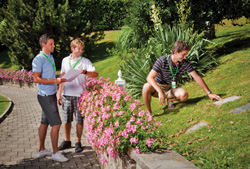 Companies that are interested in teambuilding activities can take part in Foxtrail, an urban travel hunt that also serves as an alternative way to discover the city.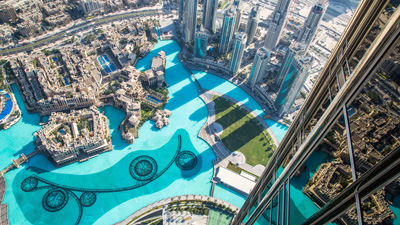

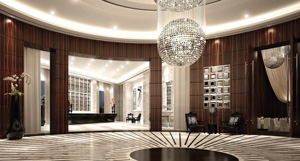 The 580-room Le Meridien Dubai Hotel & Conference Centre offers one of the newest and largest conference and banqueting facilities in Dubai. In line with the country’s vision to welcome 20 million visitors by 2020, it has almost doubled its meeting room capacity with the opening of The Great Ballroom in May. This state-of-the-art venue can accommodate up to 1,500 guests and is supported by 20 additional meeting venues within the hotel.

 The five-star, 275-room Hotel Tentrem Yogyakarta has debuted a new ballroom that boasts a capacity for up to 2,000 guests.
 A new museum celebrating the evolution of transportation modes through the years has opened in Batu, a town some 20km from Malang, East Java.
 The hotel also offers a cosy all-day dining restaurant that is great for casual gatherings, as well as recreational facilities such as an outdoor swimming pool, a private beach, a pool table, a table tennis table, a bonfire pit and a full-service spa.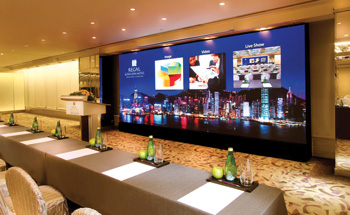

 Flag carrier Cathay Pacific Airways launched new flights to Zurich on March 29 and will further grow its international network with a new service to Düsseldorf on September 1. Meanwhile, sister airline Dragonair has entered into a codeshare agreement with Shenzhen Airlines which had recently added Jinjiang in Fujian to its network. The Hong Kong-Jinjiang service is operated thrice daily.