Asia/Singapore Thursday, 25th December 2025
Page 982

No longer second place

0

They were not top-of-mind before for incentives or meetings, but a crop of ‘second-tier’ destinations across Asia-Pacific are fast becoming the new hot favourites for MICE planners. TTGmice has the list


The spacious ballroom foyer at the National
Convention Centre Canberra


While Canberra holds the title as Australia’s capital city, it is not top of mind for corporate and leisure travellers alike when they consider going Down Under, but this is touted to change in the coming year.

The catalyst is the opening of a new terminal at Canberra Airport in April next year, spurring on the first international flights to the city.

Stephen Byron, CEO of Canberra Airport, described it as a “milestone development”.

Byron said currently, about 7,800 passengers per week travel between Canberra and Asia/Europe via other Australian cities. Singapore contributes 50 per cent of this gateway traffic.

He said: “Singapore is the most obvious hub for us to connect to and we believe this gateway share (from Singapore) can increase by 40 per cent if there is a direct return flight to Canberra.”

More than three-quarters of international visitors to Canberra are VFRs and about 14 per cent are business travellers, according to Tourism Research Australia.

As the city is a largely administrational and government enclave, the current MICE traffic is “mostly driven by the domestic market from government-related meetings and events”, said Stephen Wood, manager, National Convention Centre (NCC) Canberra.

“If we are hosting big meetings involving high international officials, we cannot expect the president to be waiting at the airport transfer lounge. With a direct connection now, it will make our destination much more appealing,” he said.

NCC is the largest purpose-built meetings and events facility in Canberra. This 2,400m2 venue has 15 major spaces across two floors, including the 2,460-seat Royal Theatre, an exhibition hall, a ballroom, theatrettes and workshop rooms.

A Digital Canberra initiative across 12 business cities in June is also enabling NCC delegates enjoy free WiFi – not just in the conference centre, but when they move around the city, from hotels to attractions.

The National Museum Australia, which is another popular venue for events, appeals with its architecture and accompanying mountain, lakeside and city views.

Head of communications and marketing, Karen Dempster, said: “To be located precisely at the spot where our national history resides is an attractive factor for event planners because they can explore the city’s history at the same time.”

The museum’s 5,500m2 Garden of Australian Dreams, an enclosed outdoor area which fits 1,500 pax in a cocktail setting, stands out with its water features and lighting effects, “ideal for any event under the stars”. – Paige Lee Pei Qi

The capital of Sichuan province in southwest China and home of the iconic panda is booming, thanks to factors such as increased presence of Fortune 500 companies in the city and improved airlinks.

Its MICE profile is expected to only grow with the Chengdu Municipal Bureau of Exposition joining ICCA recently, according to Bryan Leong, director of sales and marketing, St Regis Chengdu, which opened in September. As well, the number of MICE professionals should increase quickly, observed Beijing-based Liu Ping, CEO, China Star, who singled out the only MPI and SITE member in Chengdu, Wu Chao, general manager of  STOMICE and founder of Chengdu Strait International Travel Service, as an example.

China Star was among the first to send incentive groups to Chengdu 20 years ago from Hong Kong when direct flights to Chengdu were limited. That has changed. Chengdu is now served by more than 70 regional and international airlines and 32 direct international flights linking the city to Asia, Europe and North America.

“Last year, British Airways launched thrice-weekly direct flights from London, which have since been increased to five times weekly. In June this year, United Airlines started a direct service from San Francisco,” St Regis’ Leong noted.

Chengdu is also the fourth Chinese city to offer a 72-hour visa-free stay to visitors from 51 countries. It is linked by high-speed train to 34 major Chinese cities. To improve travel within the city, its subway system is being expanded from two to seven lines.

Leong said: “There has been a major increase in corporate and incentive business in the last two years due to the nearly 253 Fortune 500 companies being located in the city.” Leong also attributed the growth to lower costs of holding events in Chengdu compared to first-tier cities such as Beijing and Shanghai, the addition of new venues and hotels, and the government’s approval for Chengdu MICE incentives.

Facilities for big conventions and exhibitions in Chengdu include the Century City New International Exhibition Center, Crystal Hall of Century City New International Exhibition Center, New Century Global Center and Western China International Expo Center. The latter is scheduled to open later this year and will be the city’s largest facility.

Hotel inventory will increase by 3,000 to 4,000 rooms, according to Johnny Zhu, managing director, MICE Department, Sichuan CITS, which has been handling MICE groups mainly from Beijing, Shanghai and Hong Kong since 2006.
St Regis joins 16 five-star hotels including Ritz-Carlton, Shangri-La, InterContinental, Sheraton and Kempinski. In 2015, Chengdu is expected to have 30 five-star hotels.

In addition, there are more than 140 hotels above the three-star category.

China Star’s Liu noted that Chengdu hosted 105 international events last year. The city also hosted 53 international exhibitions occupying a total of three million m2 of space last year, an 11 per cent year-on-year increase.

“Personally I feel Chengdu has paid more attention to exhibitions rather than incentives and conventions. I hope this situation will change. What Chengdu needs are government officials who understand incentive travel and conventions,” she said.

“Although the government in Chengdu is paying more attention to the MICE industry, the challenges are quite the same for the whole of China. My personal view is the government must pay more attention to internationalise, professionalise, and evaluate the ROI.

“The industry needs government decisionmakers who understand the business, pass the right messages to the central government and develop policies to (grow) MICE.”

Like Liu, Zhu said Chengdu needs more government support. “Local DMCs are still not as professional compared to the bigger cities in China, and we need the government’s support at tradeshows and roadshows.

“Although MICE business is growing, it is very competitive.” – Caroline Boey


Easiest way to remember Chengdu? It is
home to the iconic panda, which is sure
to bring a smile to delegates


Chennai, the capital city of Tamil Nadu, figures evidently on the global map as an automobile manufacturing hub of south India, which leads its economic growth. Following closely and contributing to a large share of development is the information technology and healthcare sectors, which have resulted in a significant influx of international and domestic travellers.

“Chennai is certainly an emerging destination for MICE. Currently, Chennai attracts more corporate meetings than incentives. Industries such as pharmaceutical, automobile, manufacturing and IT are now considering Chennai as a significant MICE destination,” said Prashant Narayan, COO and head Leisure Travel Inbound Business, Thomas Cook India and TCI.

Added CN Prasad, managing director of Chennai-based Travel Express: “Chennai has now 6,000 star-rated rooms and 1,000 keys are in the pipeline. The international congresses held in Chennai are mainly medical. The incentive market is very limited, rather, we have a number of automobile manufacturing units and  IT-related foreign firms who hold conferences in related subjects.”

According to the Confederation of Indian Industry, Chennai is estimated to grow to a US$100 billion economy by 2025, almost 2.5 times its present size.

The MICE industry of the city gained a boost from the opening of ITC Grand Chola in 2012. The property has 9,290m² of banquet and convention space, with 2,787m² of pillar-less ballroom, among the largest in the country.

“The international associations that organise their conferences in cities like Singapore, Macau or London can now consider Chennai for their events with the opening of ITC Grand Chola. Their Indian chapters can now strongly bid for such events in Chennai,” said Chander Mansharmani, managing director, Alpcord Network Travel & Conferences.

Apart from ITC Grand Chola, Chennai Convention Centre offers a variety of conference and banquet space ranging from 23m2 to 1,858m² that can accommodate 25 to 2,000 delegates.

“Chennai has recently added new hotels which have vast meeting spaces and these venues have been able to host large conferences, corporate meetings and incentives. Airlines see Chennai as a market with great potential, with international players such as Maldivian Airlines launching direct flights. The commissioning of new airport terminals are also expected to drive additional airline segment demand,” said N. Prakash, general manager, Taj Coromandel. The property has a ballroom with 1,672m² of pillarless banquet facilities.

In Asian markets, Chennai has been predominantly attracting Japanese MICE movements. “Being an auto hub, the city of Chennai is hugely attractive to the Japanese market, and the establishment of a Japanese conclave in the outskirts of the city is underway,” observed Prakash.

However, like other Indian cities, infrastructure woes continue to hamper growth. “The main problem is infrastructure like power, water and roads. The Metro Line, which is under construction, is aggravating traffic snarls,” said Prasad.
But he added: “While the venues are now equipped to cater to the specialised needs of the customer, the infrastructure in the city is being looked into, to ensure that Chennai emerges as a key MICE destination in the country.”– Rohit Kaul


Chiang Mai: Incentives and meetings continue to
lead the MICE business

Chiang Mai’s MICE industry has gained strength over the past few years, thanks to the opening of the Chiang Mai International Convention & Exhibition Centre (CMICE) in 2012 and growing business from the region, but the lack of large-size hotels and flight capacity crimps the destination’s potential, industry specialists said.

Incentives and meetings continue to lead the sector in Thailand’s second city, with China, Hong Kong and Taiwan as the major markets, according to Thailand Convention & Exhibition Bureau (TCEB). Chiang Mai’s MICE sector has also so far managed to emerge relatively unscathed from Thailand’s political crisis, which has plagued the country since last October, said Tim Upchurch, MICE manager at Exotissimo Thailand.

“Chiang Mai seems to be more popular this year and into the first half of 2015, especially for corporate conferences and small group incentives,” he said. “There’s high interest from Asian markets, particularly Singapore, although we know that this market is very sensitive to the political situation and we currently evaluate the effects of this.”

Despite the opening of CMICE, one of the region’s largest MICE facilities with 60,000m2 of functional space, the industry still faces a number of challenges, said Kantarath Jirakittirath, CMICE services director.

“There are not enough direct flights to Chiang Mai for big conventions or conferences. Transfering from Bangkok is very inconvenient and there are not enough four and five-star hotels in Chiang Mai (to accommodate delegates, a problem which also affects large incentives groups),” she said, adding that exhibitions also tend to remain small scale as such problems scare off organisers of larger events who are concerned about attracting enough visitors to be profitable.

Pishnu Plaikaew, a TCEB spokesperson, said both the public and private sectors have acknowledged the need for more high-end hotels and other relevant facilities in the city and are acting to improve supply.

“Chiang Mai is developing fast in terms of infrastructure and facilities to meet the demands of MICE travellers from around the world,” he said. “The city, along with strategic counterparts, are working closely to drive the MICE industry to meet growing international demands.”

TCEB and the government put increased focus on the city’s MICE sector under a five-year strategic plan which ended last year. Initiatives included the inauguration of the Chiang Mai as a ‘MICE City’, one of five such destinations in the country where capacity was developed and incentives were offered to lure more MICE business. In addition, last year TCEB signed a memorandum of understanding with Sapporo Convention Bureau in Japan to build better relations between the meetings industry in the two cities.

The bureau is also promoting a number of other cultural attractions around the city, such as Angkhang Royal Agricultural Station and Inthanon Highland Agricultural Extension Station, along with special venues including the Thailand Creative & Design Center Chiang Mai and Lanna Folklife Museum.

Flight connectivity is also likely to improve later this year with Bangkok Airways’ plans to launch more direct flights into Chiang Mai from Yangon, Mandalay, Phuket and Udon Thani. – Greg Lowe


This clean and green city in southern Philippines is wrongly perceived as unsafe and part of conflict areas in certain portions of the autonomous region of Mindanao.

In reality, Davao is very far from the conflict areas and Mindanao has many tourists havens that are equally safe and peaceful, including Siargao, Camiguin, Cagayan de Oro and General Santos.

The underrated destination got a vote of confidence with the opening of the SMX Convention Centre Davao two years ago. It is the biggest privately-owned convention centre outside Manila with a capacity for 4,000 pax.

Hotels followed suit, including the Park Inn By Radisson, Seda Abreeza and Tune Hotel last year, easing a shortage of city accommodation.

Davao is attracting mainly association meetings and national conventions. Plus having a venue for big gatherings, “SMX Davao has become a favourite concert venue for international performers, including Patti Austin, Dionne Warwick, John Ford Coley and Don Moen,” said Dexter Deyto, vice president and general manager, SMX Convention Specialists Corp.

It is now getting into the radar of international events organised by local PCOs, including Ex-Link Management and Marketing Services which will bring the International Beauty, Health and Wellness Expo to Davao next year.

Explained Ex-Link CEO Mitch Ballestero: “Davao is an emerging destination and is now ready to host big events.”

As well, Davao is “looking at post-convention activities focused on eco-adventure and eco-tourism” for which the city is renowned, said tourism assistant secretary Art Boncato.

“We’re now looking at regional corporate meetings and incentives. We had a Davao Cultural and Food Festival and a Philippine product presentation and sales mission in Singapore where MICE was a highlight,” Boncato added.

A second version of the MICE manual, Let’s Meet in Davao (www.micedavao.com), has been published. “We just formed a private sector committee to look at extending citywide incentive to planners,” Boncato said, although he was not able to give more details.

Still, limited accessibility is a hurdle in bringing MICE from Asia. Singapore-based SilkAir is the only foreign carrier flying direct to Davao.

Boncato is holding talks with South Korean airlines to fly direct to Davao. There also are plans to twin Davao with Cebu and other destinations and to package it with Cagayan de Oro.

With limited connecitivity, “Davao is overshadowed by the popularity of Boracay, Cebu and Manila”, said Kennedy Kapulong, manager, Seda Abreeza Hotel. “Other more established locales are more top-of-mind. Cebu is always a top choice for domestic MICE because it offers more connecting flights.”

The new It’s More Fun in the Philippines campaign focusing on specific destinations rather than Philippines as a whole should help improve Davao’s image problem. The campaign Davao Explore. Relax. Repeat. highlights its wealth of eco-adventure, wellness and eco-tourism attractions.

“If you’re here in Davao, you’d see how wrong that perception is,” said Annie Lopez, assistant director of sales, Park Inn By Radisson, pointing to strict law enforcement; 911 integrated emergency response system and accolades Davao has garnered over the years, including as one of the safest cities in the world with the lowest crime rate, the most liveable city, the most child-friendly, the most competitive city for doing business, etc. – Rosa Ocampo


Determined to have a cut of the lucrative MICE business, Taiwan’s Kaohsiung City Government established a Meeting & Event Promotion Office last year, entrusting it with destination promotion and event bidding responsibilities.

Hailing Kaohsiung as a “new MICE star of Asia”, Tseng Wen Sheng, director-general, economic development bureau, Kaohsiung City Government, said: “The city has been attracting small meetings for years, but it is ready to pursue large-scale international meetings now.

“We were also encouraged to establish this office because of the new Kaohsiung Exhibition Center. The city never had a dedicated convention and exhibition centre. This office will help local PCO/PEOs bid for events to fill the new venue.”

Opened in April, the Kaohsiung Exhibition Center features a wave-like design to complement its waterfront location and offers capacity for 1,500 standard booths, a conference hall for 2,000 pax, two conference halls for 800 pax each and 10 meeting rooms for 20 to 40 pax.

It has already hosted two major trade events, the Taiwan International Fastener Show and the Taiwan International Boat Show. This puts the city in good stead to attract more conferences and exhibitions, said Tseng.

The Asian New Bay Area, where the centre sits, will also have other MICE-related facilities that will open progressively over the next two years. They include the Kaohsiung Maritime Cultural & Popular Music Centre, which will boast an outdoor theatre for more than 12,000 pax and nine indoor halls; Dadong Culture & Art Centre, which will offer an 800-seat theatre and a 200-seat music hall, a library, a cruise terminal and hotels.

Tseng said: “Kaohsiung now has a lot more land to develop new hardware for business events. Attractions in the outskirts, now part of the city, will be used in enhancing pre- and post-show tours and incentive experiences.”

Amanda Hsu, project manager of the Meeting & Event Promotion Office, is confident that the new MICE venue will give business event planners and delegates “a new reason to come to Taiwan and visit a new city”.

She said: “It is the only waterfront MICE venue in Taiwan. Some of our conference rooms offer ocean views. Just imagine how refreshing that will be for event delegates.”

While planners are more accustomed to hosting business events in Taipei, some of them are already considering Kaohsiung.

Senior project executive of APAC MICE, Taiwan, Jin Liao, said: “We normally prefer to hold our activities in Taipei because
delegates are more comfortable being in the main city. But it is good to be able to offer a new option.”

Vicky Lin, senior event executive of TW MICE Event & DMC, said Taipei is the usual go-to place for business events since there is no lack of hotels and meeting facilities, so Kaohsiung must develop more supporting infrastructure and build greater awareness to succeed in its MICE ambitions.

Kaohsiung City Government’s Tseng acknowledged more needs to be done. He said: “Kaohsiung has well-equipped MICE facilities now, but software still needs to be improved. For example we need to improve the quality of services and train more MICE professionals in their English communication skills.” – Paige Lee Pei Qi


The new Kaohsiung Exhibition Center – a catalyst


Gili Island: Lombok ‘ideal’ for beach incentives

Lombok is one of 16 cities/islands the Indonesia tourism authority is focusing on for MICE development and promotion.

Bali’s neighbour offers beautiful beaches and small islands that may appeal to planners organising beach resort events.
Indeed, hoteliers and DMCs in Lombok and Gili Trawangan said some of their corporate clients who have organised events in Bali are now looking for a new beach resort destination for their events.

Imam Wahyudi, general manager of Villa Ombak and Ombak Sunset on Gili Trawangan, said: “Some of our regular clients have organised their meetings here. They said it was more effective and fruitful, because the island is self-contained and participants (are therefore a captive audience).”

Ombak Sunset has a ballroom with capacity for 300 pax and other smaller meeting rooms but its private beach can accommodate up to 1,000 pax for a function.

Lombok has also seen the entry of upscale, midscale and economy hotels and they come with meeting rooms with capacity for 100pax to 2,500pax.

As part of the West Nusa Tenggara province, with covers the main island of Sumbawa and as many as 280 tiny islands, Lombok

Awan Aswinabara, president director of A&T Holidays Tour and Travel Lombok, said: “We can do island-hopping events, or have one island just for the group to do outdoor activities and parties, something Bali does not have.”

Lombok is a natural setting for teambuilding and cultural-themed events, said Awan.

“We involve the local people in the programmes. We hire their boats to bring participants to the islands, have them cook the food, and involve them in the teambuilding activities,” Awan said.

However, Lombok still needs to do a lot to catch up with neighbouring Bali or cities like Surabaya and Jogjakarta which have developed the MICE market earlier.

Pacto Convex president director Susilowani Daud said for Lombok to step up to the next level – hosting small regional ASEAN events for example – it must improve its facilities and human resources.

Rizki Handayani, director of MICE and Special Interest Tourism Promotion, Ministry of Tourism and Creative Economy, said the ministry invites regional MICE players to participate at regional and international MICE tradeshows to raise awareness of new destinations among buyers and enable regional players to network, learn what other destinations do and what they can do to meet planners’ needs.

“Unfortunately, only Jakarta and Bali usually participate at the shows. There seems to be a lack of confidence among new destinations to reach out (to regional and international markets),” said Rizki.

Awan acknowledged that Lombok still relies on DMCs in Jakarta or Bali, such as Asian Trails Indonesia and Pacific World Nusantara, for international business.

“I think that is the approach to get regional or international events while Lombok is still developing its infrastructure, facilities and most importantly the human resources to deliver the service. These partnerships have been yielding business, although small compared to the domestic market.”

Through its partnership with Talisman Asia in Bali, for example, A&T has received six incentive groups from France of between 40pax and 60pax each, staying three nights in Lombok.

“We will need to do direct international marketing one day, but as it requires a big budget to do that, we need to consider the right time for it,” Awan said. – Mimi Hudoyo


Penang gets serious about courting business events
Picture by Penang Global Tourism

Efforts by the state government to position Penang as a key business events destination in South-east Asia are continuing, the latest being progress made on the setting up of the Penang International Convention and Exhibition Bureau (PICEB), originally mooted by chief minister Lim Guan Eng in January 2013.

David Hall, senior partner at David Hall & Associates, has been hired to recommend a sustainable funding model and structure for PICEB, as well as potential candidates for a chief operating officer who will head the bureau, which will be a division under Penang Global Tourism.

Adelaide-based David Hall & Associates had provided consultancy for the formation of the Sarawak Convention Bureau.

While the state government is confident PICEB will be set up by this year-end, in all likelihood it will be up-and-running only in 2015, considering the time needed to find the right candidates, for one.

The bureau is timely in the wake of a string of new developments in Penang that are ideal for MICE, including two convention and exhibition centres.

The Subterranean Penang International Convention & Exhibition Centre (SPICE) Arena in Bayan Lepas, formerly the Penang International Sports Arena, completed a RM25 million (US$7.8 million) renovations last year, while construction of the Penang Waterfront Convention Centre (PWCC) at The Light’s commercial precinct will be completed in 2017.

Two big events have already been held at the SPICE Arena on level two, a pillarless space which can accommodate conferences of up to 9,000 pax and which also offers four meeting rooms. These included the V-Con international conference last May with 8,000 delegates from 40 countries, and a two-day conference by Singapore-based Riway International Group with 5,000 delegates last December.

Khairie Yusoff, events sales manager at Shangri-La’s Rasa Sayang Resort & Spa, said: “When large events such as these are held at SPICE Arena, most four- and five-star properties in Penang benefit from room sales. We received 300 roomnight bookings from the V-Con conference, for instance.”

The arena is but one of five components of SPICE. Construction of the other four components, which will include a convention centre, an aquatic centre, 42 lots of retail outlets and a 400-room business hotel, is expected to be completed in 2016.

“The entire development is envisioned as an integrated centre that would feature facilities for a holistic, healthy lifestyle, exchanging of knowledge, culture and information, business activities and sports activities, embracing SP Setia’s development philosophy, Live, Learn, Work and Play,” said Khoo Teck Chong, general manager, SP Setia Property Division (North).

The centrepiece of PWCC, on the other hand, is a 10,000m² column-free, multi-purpose hall that can be subdivided or used as a single space for exhibitions, conventions, corporate events and private functions. It can also be converted into a 9,000-seat arena for world-class concerts. PWCC is developed by IJM Land. Suntec Penang, a subsidiary of Suntec International Singapore, is consultant for its design, marketing and operations.

Penang also has a large inventory of 15,000 rooms, of which four-and five star properties make up 8,000 rooms. By year-end, another 1,240 rooms will open. New hotels opening in the fourth quarter include G Hotel Kelawai with 208 rooms, The Wembley – A St Giles Premier Hotel, Penang, with 415 rooms and Cititel Express Penang with 234 rooms.

With direct air access from neighbouring cities such as Bangkok, Medan, Singapore, Hong Kong, Guangzhou and Taipei, and 150 flights weekly from Kuala Lumpur, Penang Global Tourism is targeting the Asia-Pacific markets with either direct or one-stop access to Penang, particularly sectors it is strong in such as medical and pharmaceutical. Added managing director Ooi Geok Ling: “Once the bureau is set up, it can also identify active associations in Penang and encourage their members to hold meetings and conferences in the state.”

Adam Kamal, a deputy president at the Malaysian Inbound Tourism Association, said the bureau will create more awareness about Penang and compete for business events with other nearby island destinations such as Bali and Phuket. But a challenge for Penang, he said, is a lack of large local restaurants to cater to big business events. He said: “Penang is known for its local delicacies and many delegates want to experience local food in a local setting. We cannot be using a hotel ballroom for the entire duration of the event. The facilities at Gurney Drive also need to be upgraded.” Gurney Drive is a popular seafront promenade and is one of the best places in Penang to savour local hawker fare. – S Puvaneswary


Faced with a shortage of exhibition space for big ticket events, Sri Lanka is aggressively promoting incentive travel – and finding success.

“We are promoting incentive travel vigorously given the shortage of exhibition space in Colombo, a situation that would however be overcome in three years’ time,” said Vipula Wanigasekera, general manager of the state-owned Sri Lanka Convention Bureau (SLCB).

There are just two convention centres in Colombo, the main one, Bandaranaike Memorial International Hall, and the Sri Lanka Exhibition & Convention Centre. Both accommodate not even 300 stalls. There are about 40 to 50 exhibitions a year at both centres.

Aasim Mukthar, general manager of Lanka Exhibition & Conference Services (LECS), the country’s biggest conference and exhibition organiser, said: “We need facilities that can cater to over 350.”

A new facility, the Magam Ruhunupura International Convention Centre, opened in the southernmost town of Hambantota in November 2013 with 1,500 seats and break-out rooms like the Bandaranaike hall, but does not attract as much business as Colombo, due to the distance, even though it is in the vicinity of Sri Lanka’s second international airport located there.

Wanigasekera said three new multi-purpose convention and exhibition centres are coming up in Peliyagoda, just outside Colombo, Katunayake and Negombo, both close to Sri Lanka’s main international airport which is about 30km from Colombo. They each can cater to 2,000-3,000pax for conventions and handle over 350 booths for exhibitions. “When these come on stream we can bid for big international exhibitions,” he said.

Less than 10 per cent of the exhibitions now attract foreigners and even if they do, are targeted at consumers.

LECS’ Mukthar said Sri Lanka should move away from B2C to B2B events. “Many international companies are interested in direct contact with clients (not the general public),” he said.


Fishermen on stilts, a unique
Sri Lankan sight

MICE business has grown nine per cent this year, industry officials said, given an aggressive promotion in Asia and Europe. Wanigasekera said conference traffic comes from Asia-Pacific, incentive groups from Europe and India, and exhibitions from South Asia (mostly India).

This month (October), SLCB is organising a roadshow in Dubai, Abu Dhabi and Oman. “There is a lot of interest in the Middle East and we want to ignite that interest with some good incentive packages to Sri Lanka,” Wanigasekera said.

The bureau recently organised a promotion in Kuala Lumpur and plans to take part in CIBTM in Beijing, again focusing on the incentive market.

“Incentive travel is growing. There is only one way for this segment – up,” noted Chandra Wickramasinghe,
chairman/managing director of Connaisance de Ceylan, which owns hotels and is an inbound travel specialist.

The company recently hosted a group of 132 real estate dealers from France who were taken across the country in six Bell helicopters. “They are all high spenders,” said Wickramasinghe, adding that this month (October), 128 owners of print shops from France are due to arrive on a four to five nights’ tour.

“Incentive travel is going upmarket and our hands are full this year,” he said.

New domestic carriers that fly to many inland destinations, along with new hotels and restaurants catering to a wide range of international taste buds, add to the infrastructure needed to grow incentive travel in Sri Lanka. – Feizal Samath

Snap! The event’s a game

0

Event planners are increasingly recognising the benefits of bringing out the element of fun in meetings and corporate activities through gamification. By S Puvaneswary

Gamification is the latest buzz-word in the business events industry and event organisers are paying attention to ways to best leverage this concept to keep their audiences engaged.

Gartner, Inc, a global information technology research and advisory company, describes gamification as “the use of game design and game mechanics to engage a target audience to change behaviors, learn new skills or engage in innovation”.
In an article published in November 2012, Gartner, Inc predicted that by 2014, 80 per cent of current gamified applications would fail to meet business objectives primarily because of poor design.

“The challenge facing project managers and sponsors responsible for gamification initiatives is the lack of game design talent… Poor game design is one of the key failings of many gamified applications today.” said Brian Burke, research vice president at the firm.

“The focus is on the obvious game mechanics, such as points, badges and leader boards, rather than the more subtle and important design elements, such as balancing competition and collaboration, or defining a meaningful game economy. As a result, in many cases, organisations are simply counting points, slapping meaningless badges on activities and creating gamified applications that are simply not engaging for the target audience,” he added.

“Gamification must be relevant to the clients’ business,” urged Nigel Gaunt, vice president global business at the headquarters of BI Worldwide. “For instance, I would use a game involving cars for clients in the automobile industry.”
Introducing the concept of gamification to Malaysian business event specialists at the Malaysia Convention and Exhibition Bureau’s Malaysia Business Events Week in August, Jason Fox, the author of The Game Changer and a motivation design expert, said meetings could be as engaging as online games if designed well and delegates would pay for good meeting experiences.

Mike van der Vijver, meeting designer of MindMeeting, which specialises in the design of effective programmes for international meetings, and co-author of Into the Heart of Meetings, suggested that debate – regarded as a form of gamification – can be used in events to engage the audience and develop solutions, especially for resolving conflicts.
Familiar with the use of debates in meetings, Eric Chuo, deputy general manager at AOS Conventions & Events, said such activities work well with young professionals and ROI can be measured when the audience votes for the winner through conference mobile apps.

According to Andrea Lee, area director – Kuala Lumpur at Destination Asia, the adoption of gamification in meetings is on the rise among her pharmaceutical clients. She said: “Many clients want us to design more than just a mundane meeting. They want inexpensive solutions to keep the audience attentive as pharmaceutical events tend to be very dry. We use games, especially after lunch as energy levels tend to be low, and the objectives are to entertain and educate the audience. We have used games to help the audience master the spelling of new drugs. Prizes are dangled to encourage participation.”
Gamification can also be used to motivate people towards aspirational goals.

Leon Qiu, client service director at BI Worldwide China, said online gamification is still very new in Asia, with countries receptive to this being China, South Korea and Singapore. He added that mobile and web based gamification is hot because it is fun and engaging for the player, and allows programme owners to easily track user generated data and behaviour.

Gaunt pointed out that gamification need not be a one-off activity. The qualifying period for some game-driven incentives can stretch up to a year, allowing participants to fulfil tasks and earn points towards their final score at the end of the period.

Kuala Lumpur Convention Centre has for some time now incorporated games into its internal meetings and training sessions to motivate and incentivise team members and to keep everyone attentive. An example of what the venue has done is The I-Maze, a hands-on game that challenges teams to discover a secret path to their goals through a series of mazes.

Rohizat Baharum, director of human resource at the venue, told TTGmice: “This problem-solving activity is great as it requires participants to work together and share specific information made available to them, in order to complete a task. It’s also excellent for team bonding as participants almost always begin in a state of confusion, followed by a major learning curve in effective planning, action and decision-making when they are forced to think out-of-the-box to complete the challenge. They also discover the value of common objectives and communication because the activity requires the full participation of all members.”

Sarawak Convention Bureau is also using games to motivate staff to win more  event bids and meet more clients.

However, general manager Chew Chang Guan, warned that competition through gamification could make “players selfish and unwilling to share”.

“Thus we always emphasize on collaboration when we embark on such games,” said Chew.

MICE groups unfazed by protests in Hong Kong

0

HONG Kong’s MICE sector has not been significantly affected by the on-going pro-democracy protests that have paralysed parts of the city over the past week, travel specialists and hoteliers at IT&CMA say.

The Occupy Central demonstrations, which include the occupation of key commercial districts such as Tsim Sha Tsui, Wan Chai and Mong Kok by protestors, spurred a surge in enquires about safety and security but have so far resulted in only a few cancellations, trade sources said.

Anvy Wang, marketing executive at Silvermine Beach Resort, said the property had “one or two cancellations,” adding that the demonstrations had not yet led to properties discounting their room rates.

“We are receiving enquiries, some groups are worried about the situation but they’re generally not cancelling,” said Wang.

One hotelier, speaking on condition of anonymity, said she did not think the demonstrations would last too long. “I don’t think they will have much of an impact on trade. We have had some cancellations on both the MICE and leisure front, but we’re just coming into peak exhibition season, so I don’t think those groups will cancel,” she opined.

Agents bringing groups into the destination said the protests had raised concerns about safety and security.

“Corporate clients want safe destinations,” said Robert Szulc, managing director of Boomerang in Poland. “When they see problems they tend to move. That said we haven’t had any cancellations (for Hong Kong) yet.

“Some clients are calling us wanting to know more about what’s happening. We collect information from official sources, such as the government and the police, and report back to them, so that helps,” he added.

Mario Corrado, associate partner of Offbeat Venues in Belgium which focuses on the Benelux market, said he is still planning to bring a group to Hong Kong in the near future. “I don’t think it will get to the level of serious cancellations,” he said. “My clients haven’t even asked about the situation.”

Quicker immigration clearance, access to unique venues among Japan’s new lures for MICE visitors

0

JAPAN Convention Bureau (JCB) is rolling out a number of measures to boost MICE footfalls as part of the country’s efforts to become a tourism-oriented destination with a targeted arrival of 20 million visitors by 2020.

Among the initiatives is the introduction of fast lanes for VIPs and international travellers attending business events in Japan next year, with Narita International Airport and Kansai International Airport being the first gateways to offer this perk.

The country will also allow “trusted” travellers – frequent visitors to Japan who have been identified by the immigration authorities as posing “low risk” – to use automated gates at the immigration checkpoints.

Akira Ninagawa, executive director of JCB, who spoke to TTGmice e-Weekly during Visit Japan Travel Mart 2014 last week, also revealed that the bureau would identify unique venues and cultural programmes to attract more MICE groups.

Ninagawa said: “Places such as Tokyo National Museum, where we conducted the Japan Night (the opening dinner of Visit Japan Travel Mart 2014), Nijo Castle in Kyoto and Atakemaru (a Samurai ship) cruise round Tokyo Bay are unique venues we would like to introduce to international MICE visitors.”

Meanwhile, traditional art and craft sessions, tea ceremonies and geisha performances are some of the programmes proposed for incentive itineraries.

According to the Japan National Tourism Organisation, Asia contributed 90 per cent of incentive business to Japan last year. Ninagawa shared that Taiwan, South Korea and China are main markets.

Japan has also witnessed an immediate boost in incentive arrivals from Malaysia and Thailand after visa-free facility was granted to citizens of both countries last year. This has encouraged Ninagawa to expect similar growth in MICE arrivals from Indonesia and India which were offered simplified visa procedures at the start of this year.

Incentive footfalls are, however, not tracked in official data and are included as part of business travel arrivals. According to Ninagawa, 79,228 business travellers received support from JNTO in 2013, a 34 per cent rise over 2012.

Visitors for meetings and conventions totalled 250,000 last year.

“Moving forward, we are focusing on conferences and congresses that rotate in Asia-Pacific. We are also introducing new destinations such as Hokkaido and Kyushu,” he added.

South Korea gains popularity

0

SOUTH Korea is emerging as a preferred destination for international MICE buyers as they go in search for “newer” destinations for their clients, who are already familiar with South-east Asian countries like Singapore, Malaysia and Thailand.

Dubbing South Korea a “young destination” for MICE groups from the UAE, Anwar Abu Monassar, director of operations at Abu Dhabi-based The Vision Destination Management, said: “We have already seen some movement from the leisure and business markets to South Korea, but it’s still missing from the MICE side.

“The traditional destinations in Asia are Malaysia, Indonesia, Singapore and Hong Kong, so we see potential in South Korea. It’s coming without a base but we are confident it will grow,” he added.

Having recorded strong leisure demand for South Korea, Asian travel companies, on the other hand, are now keen to grow outbound meeting and incentive interest to the destination too.

Sophiya Travel & Tours Cambodia’s director of tour development, Leng Pagna, said: “We are getting a lot of enquiries for South Korea from our MICE and corporate clients in Cambodia; they have already been to nearby countries like Singapore, Malaysia and Thailand, so South Korea is viewed as a newer destination, just like Taiwan and the US.”

Most of Sophiya’s outbound MICE groups to South Korea are incentives from the Cambodian agriculture and association sectors, averaging around 30 to 35 pax who spend six days in Seoul, Jeju, Nami Island and Sorak Mountain, added Leng.

Sharing similar sentiments, Christina Pakpahan, director of Medan-based Okdo Tour & Travel Service, said: “Malaysia, Singapore and Thailand are close (to Indonesia) and already done, so we are looking for further options in Asia-Pacific like South Korea and Australia. While the Indonesian leisure outbound market is established, MICE traffic to South Korea is growing at about eight to 10 per cent.”

According to Pakpahan, her MICE groups average around 50 to 60 pax from the insurance and government sectors, spending five days to a week combining meetings and incentives in Jeju, Seoul and Busan.

Urging the South Korean authorities to build on the rising wave of interest from Indonesian MICE market, Pakpahan remarked: “We would like to see more roadshows by Korea Tourism Organization and direct (air links with) Indonesia, especially as Medan now has a new airport. Without direct flights to South Korea, we have to transit in Singapore and Kuala Lumpur.”

Sanjeev Tandon

0

Dusit Thani Laguna Phuket has made Sanjeev Tandon its director of sales and marketing. Tandon brings 25 years of international experience in several senior sales and marketing management positions to his new role, and joins the Thai resort from Mövenpick Hotel Al Khobar and Mövenpick Beach Resort Al Khobar.

Jeff Ross

0

Swissôtel Hotels & Resorts has picked Jeff Ross to lead Swissôtel Resort Phuket as general manager. Ross joined the company in 2010 and was last hotel manager at Swissôtel The Stamford, Singapore.

Vincent Lelay

0

Vincent Lelay has taken on the role of cluster general manager of Sofitel So Singapore and The Singapore Resort & Spa Sentosa Singapore. Lelay brings to both properties a wealth of international hotel management experiences which include his role as vice president of hotel operations for Greater China.

Cheryl Ong

0

Cheryl Ong is now director of sales & marketing with Raffles Singapore. She was most recently director of sales & marketing for The St. Regis Singapore.

Arnaud Girodon

0

Arnaud Girodon is now general manager of The Datai Langkawi. He brings a wealth of hospitality experience to this role, having led at some of the region’s luxury hotels and resorts.

Reviews

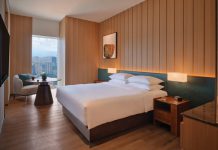
Hyatt Regency Kuala Lumpur at KL Midtown

A polished urban retreat designed for business travellers, Hyatt Regency Kuala Lumpur at KL Midtown combines thoughtful design, seamless service, and exceptional facilities.

A versatile powerhouse

Arena @ Expo, a multipurpose concert hall at the Singapore Expo is a flexible space for high octane concerts and lifestyle events.

Amari Bangkok

The five-star property excels in backing its expansive facilities with seamless service and personalised attention, setting the benchmark for luxury in Bangkok.