


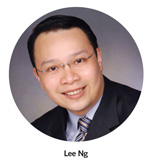
Lee Ng has joined Silka Cheras Kuala Lumpur, Malaysia as general manager. Prior to this, Ng was the complex director of sales & marketing at The Royal Begonia, Sanya. He has also worked with Shangri-La Singapore, Mandarin Oriental Kuala Lumpur and The Ritz-Carlton Kuala Lumpur.
Lee Ng
Clive Edwards
Ayana Resort and Spa Bali has promoted Clive Edwards to general manager, from his previous role as interim general manager of Ayana and Rimba.

Tarik Temucin
The Ritz-Carton, Beijing has promoted Tarik Temucin to general manager from his former position as hotel manager.
Janet M Chan & Erin Proud
Raffles Beijing has announced two key appointments with Janet M Chan as director of sales & marketing, and Erin Proud as director of F&B. In Proud’s new role, she will oversee three signature dining venues. Prior to joining the hotel, Chan was director of sales & marketing at Vomo Resort Fiji. This is her second role with Raffles following her work with Raffles Grand Hotel d’Angkor.
Linly Heng
Linly Heng has been appointed director of sales & marketing of Le Royal Meridien Shanghai and area director of sales & marketing East China, Starwood Hotels & Resorts. She was last director of sales and marketing at Sheraton Sanya Resort.
Andrew Hogg
Tourism Australia has welcomed Andrew Hogg as the new regional general manager – Greater China. Hogg joins the tourism bureau from Qantas Airways, where he was general manager – China.
Large unique venues in Asia
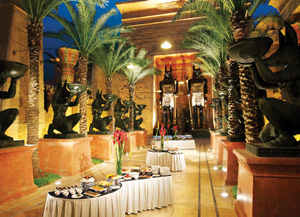
End your search for special venues that can accommodate large gatherings. TTGmice reporters in the region put on their searchlights and come up with this list of large unique venues that will enable you to show off the destination and your hospitality in style

Universal Studios Singapore’s themed areas
Far Far Away (top) and Ancient Eygpt (bottom);

Name of venue
Universal Studios Singapore
Seating capacity
Up to 3,500 pax
Background
The theme park opened in March 2010 and is one of the key attractions at Resorts World Sentosa.
Why it’s unique
This is South-east Asia’s first and only Universal Studios theme park. Event organisers have a wide variety of venues to choose from.
Some of the more popular venues include New York Street, where companies can conduct an evening function at a fully covered space that uses the streetscape of 1950s and 1960s nostalgic New York as backdrop and seats 1,500 pax banquet-style.
The WaterWorld Stunt Show Amphitheatre seats 3,500 pax and is suitable for welcome event, while the special Scavenger Hunt programme has been popular as a company team-building activity.
Who’s been there
Chung Shan Association’s opening ceremony, 2014; Hewlett Packard
Ways to use the venue
The WaterWorld Stunt Show Amphitheatre is ideal as a gathering point for large groups. From there, participants can access a park buy-out encompassing different rides, shows and attractions tailored to the organiser’s needs and budgets. Not only can rides, shows and attractions be chosen, a selection of characters is also available for meet-and-greet events. Special requests ranging from giant LED screens to stage set-ups and performances can also be accommodated by in-house production and technical teams.
Smaller groups preferring a more cosy setting can gather at a certain zone, such as New York Street or New York Harbour with street buffet or butler-style canapés as food options.
The park has also hosted welcome events and opening ceremonies. – Paige Lee Pei Qi

Kai Tak Cruise Terminal

Name of venue
Kai Tak Cruise Terminal
Seating capacity
Up to 3,000 pax, seated, in each of four indoor venues; 960 pax in an additional on-site banquet facility
Background
The cruise terminal is operated by Worldwide Cruise Terminals. It first received cruise ships and held events in 2013, and its construction was fully completed in 2014. Apart from an on-site production kitchen, other F&B venues include a Chinese dim sum restaurant, Hong Kong-style café, western cafe and champagne bar. Events at the Terminal have featured both live and DJ musical performances.
There are 40 weather-protected coach parking bays, 30 lay-bys as well as an indoor parking lot. Valet parking is available. The terminal can also provide a large ferry for over 500 pax to/from Hong Kong Island or elsewhere. Public transportation consists of frequent minibuses to/from Kowloon Bay MTR daily, and weekend/holiday double-decker buses.
Why it’s unique
Located on the runway of the former Kai Tak Airport, the terminal offers 360-degree views of Victoria Harbour. Its unique architecture helps set the stage for any event. Bringing guests to the cruise terminal by ferry will provide them with an unforgettable experience.
Who’s been there
Cruise Shipping Asia Pacific’s reception, 2014; WorldSkills Hong Kong Skills Connect, 2014
Ways to use the venue
The venue is suitable for large gatherings with its substantial F&B options. While in-house catering is available, external catering is also allowed. The terminal can be used for pre- and post-events in conjunction with either a local harbour or high-sea cruise. It is possible to charter a ship for a short incentive cruise departing after a presentation or meeting in the terminal.
……………………………………………………………………………………………………………..
Name of venue
sky100 Events
Seating capacity
50-1,000 pax
Background
Developed by Sun Hung Kai Properties, this adaptable venue is ideal for both small intimate gatherings and large corporate events. It has hosted corporate events since 2012, although the brand, sky100 Events, was established in 2014.
Why it’s unique
Located on the 100th floor within the International Commerce Centre in West Kowloon, the venue is close to first-class shopping, dining, luxurious accommodation and entertainment venues, with convenient transportation access like the MTR and Airport Express. Apart from being the city’s highest venue with a 360-degree view of Hong Kong, its huge space boasts a high ceiling and is pillarless. Flexible canvas dividers allow multiple zoning for a wide range of activities happening at the same time. Clients are also provided with a wide variety of catering options from the venue’s various partners, such as the Ritz Carlton.
Who’s been there
The 35th Asian Racing Conference’s cocktail reception; Sony’s multi-zoning event including a product launch, game experience and cocktail party; Giorgio Armani’s Eccentrico Exhibition and corporate gala dinner
Ways to use the venue
The venue’s unobstructed space can be divided into four different zones, such as a product display area in the north, cocktail party in the east, press conference in the west and gala dinner in the south. It awes delegates with the use of digital devices to create an amazing journey from the lobby all the way up to the deck on the 100th floor. The deck is perfect for incentive groups to enjoy stunning 360-degree views of the city and its world-renowned Victoria Harbour. Cocktail events can also be held up here. – Prudence Lui

Vinpearl Resort Phu Quoc golf course

Name of venue
Vinpearl Resort Phu Quoc
Seating capacity
Up to 1,500 pax from six meeting venues; 700 pax at the biggest ballroom
Background
Opened in November 2014, the resort is operated by Vinpearl, one of Vietnam’s largest hospitality companies with properties in Nha Trang and Danang. It is located on Phu Quoc Island in the Gulf of Thailand, a 45-minute flight from Ho Chi Minh City or 2.5-hour speedboat transfer from Rach Gia.
The integrated resort has 750 rooms for up to 2,000 pax, from the 46m2 entry-level Deluxe rooms to the 144 opulent 615m2 Ocean View Villas. There are six F&B outlets, a spa, swimming pool, fitness centre, 27-hole golf course, on-site amusement park featuring a water park, underwater world and shopping street, as well as recreational activities ranging from trekking in the national park to squid fishing to visits to fish sauce factories on the island.
Why it’s unique
The newest addition to Phu Quoc’s fledging tourism and hospitality scene, the resort is also the largest five-star hotel on the island.
Since March 10, 2014, Phu Quoc Island is the only destination in Vietnam that foreigners can visit for up to 30 days without a visa, a move likely to reduce hassles for big association groups with international delegates.
Air access to this up-and-coming destination is also improving, which saw the launch of direct flights from Singapore and Siem Reap by Vietnam Airlines in 4Q14. Furthermore, the Vietnamese government has announced that a new international cruise terminal will be built at the southern end of Phu Quoc Island, potentially linking the destination to the regional cruise circuit, and paving for corporate incentives.
Who’s been there
Pepsi (400 pax); Vietnam’s Ministry of Industry and Trade (500 pax)
Ways to use the venue
Big meetings can make use of the 870m2 Sunrise Ballroom, which can fit up to 700 pax theatre-style, or the 210m2 Grand Studio for up to 150 pax, in addition to a 750m2 pre-function area. As well, there are five 40-70m2 meeting rooms, with capacity for 20-40 pax.
The resort also offers a diverse range of indoor and outdoor activities for guests, whether it’s parasailing, jet skiing, sailing or kayaking. It has its own private beach and a private island less than two kilometres from the coast, ideal for incentive or teambuilding events. Discovery experiences to other parts of the island like trekking in the nearby national park, visiting a local pepper farm or traditional fish sauce factory are all possible. – Xinyi Liang-Pholsena

Busan Cinema Center

Name of venue
Busan Cinema Center
Seating capacity
Up to 4,000 pax in the biggest theatre
Background
Opened on September 29, 2011, the Busan Cinema Center is owned by Busan Metropolitan City and run by the centre itself. It comprises three buildings.
The outdoor BIFF Theatre, where the Busan International Film Festival’s Opening and Closing ceremonies are held, has 4,000 seats and can stage film screenings, shows and other events.
Cinemountain houses the 841-seat Haneulyeon Theatre that occupies the building’s first to fifth floors, while the seventh to eighth floor is home to Cinema I with 413 seats, Cinema II with 212, and Cinematheque with 212.Double Cone offers a café, visitor centre and information centre on the first floor, while the rest of the building is occupied by restaurants and bars.
Why it’s unique
The centre plays host to the prestigious Busan International Film Festival every October, where the brightest starts of international cinema gather to pay homage to the industry. Planners can choose from the range of theatres, cinemas and restaurants for their events.
Who’s been there
15th Busan Film Critics Association Awards ceremony, 2014Ways to use the venue
The BIFF Theatre is equipped with technology that allows live, simultaneous telecast to the Haneulyeon Theatre and three other cinemas. Meetings with more than 4,000 delegates can ensure that the same content is broadcast to all members for congresses. The availability of screens and stages make it perfect for film screenings and performances to entertain incentive winners. – Hannah Koh

Tycoon, Yokohama

Name of venue
Tycoon
Seating capacity
300 pax seated; 500 pax for standing buffet
Background
This seafood restaurant opened in July 1989 and is operated by Yokohama Skhole Co. It specialises in Oriental cuisine.
Why it’s unique
The building was converted from a warehouse. It features an outdoor terrace where BBQ events can be held in summer. It also has its own pier attached to the restaurant, so guests can enjoy cruising the port of Yokohama.
Who’s been there
4thWorld Union of Wound Healing Societies, 2012Ways to use the venue
On top of easy access to the restaurant, guests can enjoy a 20-minute cruise ride from the pier just next to the Pacifico Yokohama Convention Center. – Kathy Neo

Name of venue
The Forum
Seating capacity
Up to 1,000 pax
Background
Opened end-2014, The Forum is a 2,000m2 MICE venue in the Sky Tower of Solaire Resort and Casino (in Entertainment City, Manila), the flagship property of Philippine-listed firm Bloomberry Resorts Corp. It comprises a column-free ballroom for 1,000 pax (table seating), flexible pre-function area, eight meeting rooms and two boardrooms.
Sky Tower also boasts 312 all-suite hotel tower; 1,760-seat Lyric Theater for concerts and other performances; 2,500m2 luxurious spa and beauty salon; additional VIP gaming areas; and two gaily bedecked restaurants, Waterside Restobar serving Mediterranean and Latin American fares and Oasis Garden Cafe overlooking two waterfalls.
Why it’s unique
The venue is brand new, plush and opulent, with luxury at all corners, including quality table linens, crystals, cutlery and lots of flowers. Novelties include gold-plated ceiling accents, giant chandeliers, art displays and a quirky design.
Solaire’s 11 restaurants are fast gaining popularity for their wide array of gastronomic delights, including a chocolate dessert topped by 24 carat gold leaf.
Who’s been there
National Congress for the Oral Health of Filipino Children, 2015; Philippine Paediatric Dental Society’s 22nd Annual Convention & Induction Ceremony, 2015
Ways to use the venue
The Forum’s main ballroom has a seating capacity for 1,000 and cocktail-style for 1,200. Since it is column free, it can easily be divided into five sections for breakout sessions, smaller functions and simultaneous meetings and workshops.
The ballroom’s opulence and grandeur can be a theme in itself. Full banquet and catering facilities and 11 F&B outlets in the resort means a wide array of food choices for planners.
For smaller groups, Red Lantern restaurant for Chinese cuisine seats up to 240 pax and offers five private rooms, while Oasis boasts with its two-storey waterfall as well as tea and cakes the rave of the town. Additionally, the Lyric Theater, outdoor swimming pool, spa and beauty salon can be incorporated in special incentive programmes. – Rosa Ocampo

Huashan 1914 Creative Park, Taipei

Name of venue
Huashan 1914 Creative Park, Taipei
Seating capacity
Up to 2,000 pax
Background
Huashan 1914 is a multi-purpose park with a renovated building that originally was one of Taiwan’s most significant wine factories. It is a new cultural events platform where many large-scale exhibitions, installations, theatre productions and performances have been held.
Why it’s unique
While it is located in the centre of Taipei City, it has been lauded as a ‘secret base’ for a quiet escape from the busy city with its offer of huge spaces in the warehouses. These bookable spaces find a following with planners of art events, concerts, conferences and exhibitions.
Who’s been there
The International Committee for the Industrial Heritage Congress, 2012; Facebook Asia-Pacific executives meet and dinner party, 2013.
Ways to use the venue
The remodelled, spacious warehouses offer a setting that is both retro and chic, and can fit up to 2,000 pax for conferences, an ideal breakaway from conventional hotels and meeting centres.
Meanwhile, fancy restaurants in this park are ideal for corporates to host dinner parties, such as the Trio Café which offers a beautiful park-side view, and the French VVG (Very Very Good) Thinking restaurant. – Paige Lee Pei Qi

Name of venue
Lavasa International Convention Centre (LICC), Maharashtra
Seating capacity
1,200-1,500 pax theatre-style
Background
The 3,174m2 LICC started operations in May 2010 and is managed by Accor India. It offers technologically advanced equipment like Cisco Telepresence, multi-language interpretation, built-in high-definition cameras for web casting and ceiling-mounted drop down screens accessible at the touch of a button. F&B offerings range from gourmet cuisines by world-class chefs to local delicacies like the Maharashtrian thali.
Why it’s unique
The centre is situated in the first planned hill city of India, Lavasa, spread over 10,000ha of land and designed with the needs of the MICE segment in mind. Within Lavasa, there are various categories of accommodation to fit different budgets, ranging from one-star to serviced apartments to luxurious five-stars.
The venue is situated in serene natural surroundings away from the hustle and bustle of the city. Its glass façade, apart from offering natural light, also offers uninterrupted scenic views of Lavasa. Conference organisers get an option to brand the entire city for the event, starting from the gate of the hill city to other strategic locations within Lavasa.
Who’s been there
World Congress on IVF Technologies; MetLife Insurance incentive dinner
Ways to use the venue
The venue offers small and large halls, outdoor areas and other spaces for meetings, dinner and entertainment. It also has an attached exhibition area. Possible seating arrangements include classroom, cluster, theatre and auditorium style.
Incentive groups can explore picturesque locales of Lavasa and discover a variety of flora and fauna. They can start the day with a walk along the serene nature trails and then enjoy kayaking, angling or jet-skiing. Camping facilities are also available, as are adventure sports like rappelling, rock climbing, jungle treks and zip line at the Xthrill Adventure Academy. – Rohit Kaul

Society Hill’s outdoor space Cherry Avenue, Tianjin

Name of venue
Society Hill Hotels & Conventions, Tianjin (2015 grand opening to be confirmed)
Seating capacity
Up to 3,600 pax
Background
Society Hill, adjacent to the Tianjin South Railway Station, is a 250,000m2 tourism and MICE project being developed by Tianjin National Real Estate Development. It will feature five hotels and a major lifestyle complex comprising a large convention centre with more than 10,000m2of meeting space.Two hotels will open in the grand opening phase – International Convention Centre Hotel Society Hill Tianjin, where 708 of the 1,500 rooms are ready; and the 400-room dusitD2 Society Hill which is looking at 67 per cent group business (MICE).
Why it’s unique
The venue’s proximity to Tianjin South Railway Station means Beijing and Shanghai are 30 minutes and five hours away respectively by high-speed rail.The International Convention Centre Hotel Society Hill Tianjin is a large meeting facility that can accommodate up to 3,600 people. It features a 4,000m2 banquet hall, a 4,000m2 pillarless conference hall and 50 meeting spaces of varying sizes, with the smallest measuring 36m2.Seafood restaurant Roman seats 700 while South-east Asian-themed Bali Bali Restaurant accommodates 160.There is a 20,000m2 Northern Song Dynasty-themed spa and hot springs.
Ways to use the venue
The Venue is well equipped and spacious for hosting large meetings. Its outdoors spaces, such as the Hanging Gardens and Cherry Avenue, also provide a unique backdrop. For incentive groups, Jiayou Spa offers unusual treatments such as an ultra-fine bubble Silk Bath and a Rock Bath using heated natural rock. – Caroline Boey

Simba Hill Gourmet Hall, Pahang, Malaysia

Name of venue
Simba Hill Gourmet Hall at Bukit Gambang Resort City in Gambang, Pahang
Seating capacity
Up to 750 pax in round seating
Background
The venue opened in May 2013 and is operated by Sentoria Themeparks and Resorts. It serves western and local delights as well as vegetarian food.
Why it’s unique
Simba Hill Gourmet Hall is a safari-themed restaurant. A glass wall separates the restaurant from a lions’ enclosure, giving diners a close-up view of three white lions. This is the only place in the east coast region where visitors can view these magnificent rare creatures.
Who’s been there
Iskandar Investment Group’s dinner, 2014
Ways to use the venue
The venue can be used for meetings, with a combination of round and oblong tables for up to 750 pax. A stage can also be set up for speeches, presentations and performances. Clients can also request for audio-visual equipment. Fun-seeking incentive groups can request for special entertainment such as fire eating, magic shows, clown performances, mascot appearances and dance performances.
The restaurant can also accommodate clients’ request for themes other than safari, as well as decorations matching their corporate colours. – S Puvaneswary

Carriageworks, Sydney

Name of venue
Carriageworks, Sydney
Seating capacity
100-800 pax
Background
Opened officially in 2007 but not used to full capacity until recently, Carriageworks offers five unique function spaces each with an urban industrial feel.
Bay 17 is a theatre space for corporate presentations and seats up to 800 pax theatre-style or 1,000 standing for dinner. Bay 19 is for smaller-scale exhibitions, screenings or workshops, with standing capacity of 120. Bay 20 is a contemporary theatre space for live music, screenings, performances, workshops and corporate presentations, seating up to 270. Tracks 8 & 12 are for private dinners, cocktail parties and corporate training, both featuring natural light, high ceilings and large double doors. Capacity here is up to 150 theatre-style for Track 8 and 100 for Track 12.
Fresh Catering is behind the venue’s Cornerstone Bar and Food, designed with two suspended gardens hanging from 10-ton gantry cranes. The restaurant seats 280 pax, and offers casual lunch and dinner menus featuring shared plates and daily specials. The company also handles catering across all Carriageworks spaces.
Why it’s unique
Carriageworks is housed in the old Eveleigh Rail Yards within the emerging Redfern Waterloo precinct, and is developed by the NSW State Government through Arts NSW. The distinctive 19th-century industrial atmosphere of the former railway carriage and blacksmith workshops have been retained, with many heritage iron and brick details.
Who’s been there
ACGA Inaugural Conference, 2013; Mercedes Benz Fashion Week
Ways to use the venue
Because there are five different spaces of varying sizes, Carriageworks is ideal for ‘progressive’ events. Large groups can be split up into five, with events/workshops/dinner courses rotating between differently themed spaces. The acoustics are ideal for live music, and many incentive dinners enjoy performances from musicians and actors. The white walls make the spaces a blank canvas in terms of design – events in the past had opted for everything from lights-off with table candles to red-carpeted floors with chandeliers. – Natasha Dragun
Rebound on the horizon
Chinese MICE groups are starting to favour Malaysia again, with a proper rebound likely once Air China resumes Beijing flights. By S Puvaneswary
The Malaysian government is set to recover lost business from China with visa fee waiver granted to Chinese nationals from February 15 up to December 31, 2015.
KL Tan, general manager of Borneo Trails Tours & Travel in Kota Kinabalu, said the waiver would motivate Chinese corporates and organisers to choose Malaysia as a friendly tourism destination, and that the introduction is timely due to the nationwide Malaysia Year of Festivals campaign (see Need to know, page 35) this year.
“Organisers can time their programmes to coincide with some of the festivals,” he added.
Chinese arrivals had dived following the disappearance of Malaysia Airlines’ (MAS) Beijing-bound MH370 flight on March 8 last year, with 153 Chinese nationals on board.
Minister of Tourism & Culture Malaysia, Mohamed Nazri Abdul Aziz, said the country lost 540,000 Chinese tourists in 2014 due to MAS’ two aircraft tragedies.
Tourism Malaysia and the travel trade are concerned as China had been the largest medium-haul market and third-largest market for Malaysia after Singapore and Indonesia.
Average spend per Chinese tourist in 2013 was RM3,092 (US$973), higher than Singapore (RM2,330), Brunei (RM2,291) and the rest of South-east Asia. It also topped other North Asian markets, followed closely by Japan (RM2,895).
Signs of a rebound in the Chinese business events segment was first noticed in 4Q2014 when Perfect China, a health and wellness company ranked the 10th direct sales company globally, sent 4,000 delegates to Malaysia for an incentive/conference from August 2 to 10.
The event at Kuala Lumpur Convention Centre (KLCC) attracted the most number of delegates, compared with the previous two conventions held there in 2011 and 2012, which attracted 3,200 and 2,200 distributors respectively.
Terry Lee, executive director, Sunflower Holidays and logistics coordinator for the gathering, said: “KLCC’s efforts to engage with its China clients with Mandarin-speaking staff, a Mandarin corporate video and business presentation, and an in-house Chinese kitchen contributed to making the client confident in the venue. And having had two excellent outings here previously, Perfect China was happy to return a third time.”
Lee believes Malaysia’s positioning as one of the most value-for-money destinations for the industry also played a part.
Mint Leong, managing director, Sunflower Holidays, said it is still not easy to convince Chinese MICE organisers to choose Malaysia as other countries are also wooing this market with attractive offers. Due to safety concerns after the two MAS tragedies last year, Leong said some organisers from China avoided taking MAS flights.
Leong added this poses a barrier to attracting high-end MICE business due to limited choices of two foreign full-fledged airlines, China Eastern and Cathay Pacific with direct services.
She said: “High-end corporate clients we target will not consider low-cost airlines, even though there are direct flights.”
However, the good news for the travel trade is that Air China may resume flights from Beijing to Kuala Lumpur in Q4 after it suspended Beijing-Kuala Lumpur flights in 2014. “They have given us strong indications they may return,” said a Malaysia Airports Holdings source.
Yet another challenge was the need for more large convention centres, especially in the main tourist destinations.
Leong said: “Some organisers want to have their main event and dinner at the same venue; it is difficult to find a convention centre with a meeting hall and a space for dining that can each accommodate 5,000 or more people.”
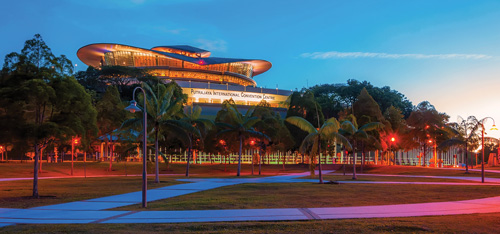
Meanwhile, a short drive from the capital, Putrajaya International Convention Centre (PICC) is gaining popularity.
Winnie Ng, deputy general manager, Pearl Holiday Travel, said its management is “flexible and friendly”. Rates are also competitive, she added, sharing that a one-day conference for 1,000 people at PICC offers substantial savings of almost 40 per cent compared with having the event in Kuala Lumpur.
PICC is targeting a greater share of business events from China and will work with Chinese incentive players to offer dinners and daily live show Fantasy Rainforest from September.
Besides participating at IT&CM China last month, CEO Badlishah Ahmad said PICC will join a roadshow with Malaysia Convention & Exhibition Bureau in August to Shanghai, Beijing, Guangzhou and Chengdu.
A whole new world of MICE options

Entering its 50th year, Resorts World Genting has rejuvenated its offerings, its newest being the exclusive Elite C-Suite Deal for C-level leaders and executives.
Choices for meeting planners include luxury limousine services, reserved car parks, golf games, dining around the resort, gourmet tea break menus and hotel accommodation.
The integrated resort has also seen an inventory increase at the First World Hotel of 1,286 rooms, bringing the First World’s inventory total to 7,345 rooms and that of the resort to 9,858 rooms (including budget, four-star, five-star and two luxury properties, Crockfords and Maxims).
Last December, Horizon 50 was launched. Located within walking distance from Genting International Convention Centre, the facility offers a journey through time, showcasing the birth and growth of Resorts World Genting, presented through projections, background music and special effects. A fly-through video and visual boards also add to the sensorial experience.
Meeting planners will also find an option in a special venue called The Black Box inside Horizon 50.
“With capacity of 50 people and equipped with state-of-the-art audio-visual system, this venue can be used for a private cocktail event, product launch or presentation,” said Stella Sum, assistant vice-president MICE.
Meanwhile, more new offerings scheduled to open in 2016 include 20th Century Fox World theme park and nearby Sky Avenue, which will comprise 165 retail and F&B outlets as well as a cable car station.
Winnie Ng, deputy general manager, Pearl Holiday Travel, said: “The new offerings have created more interest in the destination (Resorts World Genting) and more options for MICE organisers’ itinerary creation. It helps the destination to compete against other integrated resorts in this region. We have pitched the resort to a MICE organiser from China with a meeting and incentive group of 3,000 in 2016. He has done a recce and we are now waiting for his decision.”
Need to know
Three new luxury chalets amid the rainforest

Borneo Rainforest Lodge in Sabah recently opened three new luxury chalets, bringing the total number of chalets to 31. The lodge is nestled in a magnificent setting alongside Danum River that flows through Sabah’s largest protected Lowland Rainforest – Danum Valley Conservation Area with 43,800ha of pristine and undisturbed tropical flora and fauna in eastern Sabah. It opens year round.
Festive twist for MICE
Incorporate special events in conjunction with Malaysia Year of Festivals 2015 (MyFest 2015) campaign to further enhance MICE programmes.
Themed Endless Celebrations, the year-long calendar of events offers more than 200 events related to cultural festivals, arts and music showcases, food promotions, shopping and sports.
Events include Borneo Jazz Festival and World Harvest Festival, both in May; KK Jazz Festival in June; Malaysia Busking Festival in August; Festival of ASEAN Cultural Expressions in October; Malaysia Mask Festival in November; and 1Malaysia Year End Sale throughout November and December.
For a full list of events, visit www.myfest2015.com.my.
MyCEB introduces new campaign and programme
Malaysia Convention & Incentive Bureau (MyCEB) in February launched the Malaysia Like Never Before campaign and Malaysian Twin Deal X programme for corporate meeting and incentive planners worldwide.
Malaysia Like Never Before, tailored to the incentives market, highlights the unique and unheard features of five key Malaysian destinations: Langkawi, George Town, Kuala Lumpur, Mount Kinabalu and Kuching. Though already familiar to regulars of the business events circuit, the campaign has reimagined these destinations, guaranteeing a fresh experience to visitors.
The Malaysia Twin Deal X programme comprising Deal 1 and Deal 2 provides value-added support and incentive rewards for international corporate meeting and incentive groups, depending on the group size.
Business event organisers and planners can visit www.likeneverbefore.my to find out more about these new initiatives. The website also features an event proposal generator to get organisers started on their journey to Malaysia.
Over coffee with… Lindy Wee
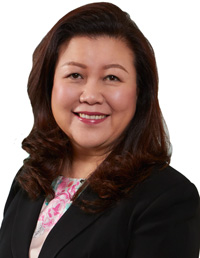
Her love for the exhibitions business started in the 70s when she was a part-time booth assistant. Today, as the new chief executive of Singapore Exhibition Services, Wee talks to Karen Yue about taking the business forward
 Your resume is interesting – you’ve been with Singapore Exhibition Services (SES) since 1983, working through different departments.
Yes, I’ve been in various departments here, spending about seven years in each. That is a long time to learn how each department functions, and to accumulate a wealth of knowledge of this industry.
Prior to that I was temping with SES for a couple of years. In fact, I had my first taste of the exhibitions industry in the 70s when I took on a part-time job in manning a booth at an exhibition. I loved it, and then went on to work at several global exhibition companies like Reed.
Well, I’ve never ventured out of this industry and I sometimes wonder what life is like in other sectors. (Laughs)
From booth assistant to the chief executive of a major exhibition firm. That’s a motivating story for anyone hoping to make a career in exhibitions!
You could say I’ve work my way up the ranks in SES, and this has helped make transiting into my new role a smooth one. I was able to run with issues right away, and my staff didn’t have to pause and explain what was going on.
What was one crucial change in the company you were responsible for?
I was last with the conference department as a conference director. When I joined that department (in 2001), conference was not a main focus of SES because we are an exhibitions company. But I saw an opportunity there as well as the need to grow the conference department.
The industry was evolving then – it still is now – and we needed to provide more than just a marketplace to showcase products and services. We need to bring to the table knowledge and thought leadership, and have a way for policymakers to come together. The conference provides such a platform.
Six months into my role, I asked my conference producers what one must do to keep up with so many topics across so many industry sectors (SES produces exhibitions for the communications, lifestyle, engineering and machinery industries). One of my conference producers was an experienced lady and her advice to me was to devour whitepapers for breakfast. The first whitepaper I devoured was on nanotechnology, a 400-plus-page monster that took me seven mornings to read. It was extremely difficult to understand the technical aspects of certain industries and know it enough to pick out hot topics. You need heartware for this job.
We have a system that separates programme shaping, logistics and marketing. We are clear about what we need to achieve. In our case, our content creation focuses on the buyers, unlike other conference production companies that tend to lean towards vendors, as these are the people who would come into the event as sponsors. I stay away from that. I’ve set a simple mission for the team – all our KPIs are based on the buyers. We will not have a platform that only sells vendors’ products and services. We focus on things that will interest the buyers. If they are willing to pay to attend our conference, we know we are on the right track.
I’m glad to say the conference department is very profitable today. Our conferences are seeing a growing number of attendees, so the department is ready to take things to the next level. We have built a strong foundation.
What’s the next level then?
We want to grow the conferences in the verticals we operate in. For example, the conference topics presented at Food&HotelAsia (FHA) is not as comprehensive as we like it to be.
We aim to grow our conferences by expanding into the breadth of the value chain of the industry our exhibitions operate in. For example, the inaugural Future Factories and Manufacturing Asia conference, which will be held alongside MTA (a precision engineering industry event in April). Future Factories is all about digital factory, and this conference provides industry professionals an avenue to broaden their insights into Asia’s manufacturing industry.
Another example is the new conference on Central Kitchen which is to develop specific segments of the food and hospitality industry. The intention is to repeat these conferences on an annual basis.
Besides growth for the conference department, what other goals have you set for SES as the new chief?
I’ve given myself a double-digit growth for our exhibitions business. Revenue for exhibitions is tied to the sale of square metres. While we could simply grow revenue by operating more shows, I’d rather grow the size of our exhibitions to hit revenue targets. To achieve that, we have to attract more visitors to our shows. We must offer something more than the tradeshows they have in their home country.
Still, SES has grown its portfolio of shows. Years ago Stephen Tan (former chief executive, current chairman), shared with me his visions to expand into Myanmar. SES launched Manufacturing Myanmar and Oil & Gas Myanmar last year and they did great. The country is opening up for business across a spectrum of industries. Will SES be doing more in Myanmar?
We are pacing ourselves. We are not going to rush into Myanmar because first we need to have supporting infrastructure in order to grow our shows. The first Manufacturing Myanmar was held at the Myanmar Convention Centre in Yangon and we used up all available space. There is no room for growth without sufficient physical space.
Going into Myanmar is exciting and we want to be in there, but at a good pace. We will have the second edition of both Manufacturing Myanmar and Oil & Gas Myanmar this year. We will continue to keep Myanmar in our line of sight.
Does other Asian countries appeal to SES? Say, Sri Lanka, where the government is pushing for industrial and commercial growth?
Well, we did get a few offers to go there, and have done a few studies on the viability of expanding into Sri Lanka – in fact one is ongoing. I can tell you now that going into Sri Lanka this year is not a venture I’m ready for.
We’ve got to look at infrastructure. The destination’s infrastructure can pose an extremely large challenge, and by infrastructure I don’t mean just the venue. Machines that are brought into a destination for exhibition purposes will be taxed, never mind that these equipment will leave at the end of the show. Taxes and import duties are tough obstacles for show organisers and exhibitors; they cannot be waived.
Liquor tax is also another issue for us. Say I manage to recruit a big company from Italy or France to come and showcase their wines at a Food&Hotel show in a new destination, but then inform them that there will be a 40 per cent liqour tax. The company will simply say, no thanks, I’m not going there!
Transportation, logistics, the availability and size of convention halls, water and electicity supply, and security are all the things we have to consider before deciding to launch a show in a new destination.
You’ve pointed out how venue capacity can limit a show’s growth. So are there enough venues to support your dream of upsizing existing events?
When the Singapore Expo opened in March 1999 (with six halls), Stephen, who was my boss then, told me, “We need to fill it up”. I thought he was joking. How could we? But we did.
To me, at that time, the Singapore Expo was a world-class development and being able to fill it up would put SES in good standing. You could say the Singapore Expo fired me up. I was then the project director for FHA. So in April that year, FHA became the first show to use up the entire Singapore Expo. And in 2014 we were the first event organiser to fill up all ten halls of Singapore Expo (it was expanded in 2005) with FHA!
Today, we are short on space (for FHA) in Singapore because there are no expansion plans in sight (for the Singapore Expo). In Vietnam, our shows are using up the entire Saigon Exhibition & Convention Centre. It is the same situation in Myanmar.
Surely SES cannot let capacity constraints dull its growth plans. Will hosting your shows in multiple venues work?
Splitting a single event across different floors is not an attractive option because of floor loading issues. Spreading exhibits and visitors across several floors also poses many logistical issues and that is every organiser’s nightmare.
However, splitting a single event across two different exhibition centres is a solution we will consider. In fact, this isn’t new to us. We have done CommunicAsia at Marina Bay Sands and BroadcastAsia at Suntec Singapore (in 2011), with loop shuttle buses running between the two venues. That worked well although we couldn’t please everybody.
You said earlier that this job requires heartware. Has SES been able to attract enthusiatic individuals to support its growth plans? Asia’s service and business events industry is, after all, facing a manpower crunch.
The exhibition industry has been lucky because it is perceived as being glamorous. The job offers plenty of opportunities to travel and to interact with people from everywhere. This isn’t a desk-bound job. These are plus points for young people today.
For us, it is important to attract and retain the elite. It is a challenge to get people to stay. People think, “I’ve been there, done that. What’s next?”. As a company, if we are unable to offer that next level of career growth soon, staff will leave.
However, for the exhibition industry, there’s so much to learn and we need staff to be patient. I’ve been with SES and in this job for 32 years and I’m still learning.
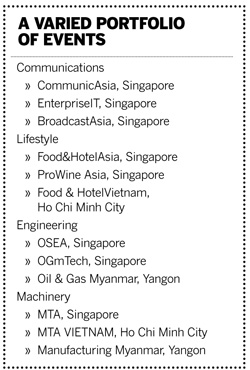
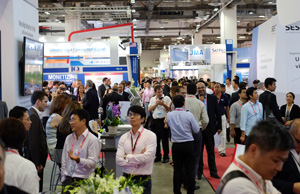 CommunicAsia is Asia’s largest info-communications
technology event. Last year CommunicAsia2014 and
EnterpriseIT2014 attracted over 33,000
international trade attendees throughout four days
More for MICE in Macau


New hotels opening this year are adding accommodation and event capacity to the destination, putting a downward pressure on rates. By Prudence Lui
With monthly gaming revenues down for nine months since June 2014, Macau’s integrated resorts are tuning up their promotional efforts to increase non-gaming revenue, specifically from business event groups.
Hongkong-based Vigor Tours’ manager of Greater China, Coral Wu, told TTGmice that Macau hoteliers have been dangling “generous offers” for MICE groups, such as buy-one-get-one-free ferry tickets.
Wu noted that “these aggressive promotions” started early this year and had intensified in recent months.
“I hardly saw such practices last year,” she said, adding that the Macau Government Tourist Office’s ongoing Incentive Travel Stimulation Program provides additional help for the trade in courting more business event groups.
Although the massive 3,896-room Sheraton Macao Hotel, Cotai Central saw an 80 per cent leap in group business last year over 2013 and hosted 55,000 delegates attending 228 events in 2014, its promotional engine is still revving for more MICE business.
Corinne Janssen, director of sales, associations & sales operations, said: “We have just launched a new MICE offer, 3rd Night Free or Dinner on Us, in partnership with Sands Resorts Cotai Strip Macao to encourage visitors to stay longer in Macau.
“While it is still too soon to say whether big conferences and incentives will get a boost (from this promotion), we have so far generated a lot of interest because it is such a rich offer for MICE delegates.”
The 3rd Night Free or Dinner on Us gives delegates the option to stay an extra day in Macau or enjoy dinner with the hotel’s compliments. To enjoy this offer, planners must contract at least 10 rooms, up to a maximum of 500, for two consecutive nights as well as spend a minimum HK$1,600 (US$206) in banquet F&B per room, per stay. Contracts must be inked before May 31, 2015 for arrivals between April 1 and July 2, and between August 30 and September 30 this year.
Janssen added that Sheraton Macao Hotel, Cotai Central expects to host more than 250 events this year, and that she isn’t too concerned with Macau’s faltering gaming business.
“The property has never been too reliant upon gaming. Since opening, our focus has been on MICE and leisure business,”she explained.
Industry players said the rise in MICE-focused hotel promotions was also a result of increasing competition in the hotel sector, thanks to several new hotel openings this year.
New properties that are set to open for business this year include JW Marriott Hotel Macau, The Ritz-Carlton Macau and The St. Regis Macao, Cotail Central (see Need to know, page 32). These hotels are outfitted with function rooms.
According to Macao Trade and Investment Promotion Institute (IPIM), the destination currently has over 28,000 hotel rooms and 170,000m2 of meeting space.
IPIM informed TTGmice that another 21 hotels are under construction and these will raise Macau’s capacity to over 42,000 rooms in the next few years. These developments also include new meeting spaces and attractions such as a facility for broadway performances at the expanded Galaxy Macau, and Asia’s tallest ferris wheel at 130m at Studio City Macao.
“All these new elements are building Macau up as a perfect destination for MICE and leisure,” said a IPIM spokesperson.
Bruno Simões, CEO of DOC DMC, revealed that last year many large hotels with more than 500 rooms had rejected group bookings from event planners for more than 20 rooms over weekdays.
“Now, all these hotels can give me more than 80 rooms!” he said. “With the new (hotel) openings, competition will definitely increase. I anticipate drops in rates of more than 25 per cent after September 2015. Planners should grab the opportunity to host events in Macau in 2015 and 2016.”
Antony Box, director of sales and marketing, Macau Hong Kong Sales Office, Grand Coloane Resort, said business performance so far this year isn’t strong.
“We are not confident as a hotel that, given the current business climate, things will pick up quickly…at least not in the first half of 2015.
“This may be due to the extra room inventory on the market resulting from the release of casino room blocks and new hotel openings by mid-year. Hotels in Zhuhai are coming in to compete due to extended cross-border opening times.
“I expect competition (among venues/hotels) to worsen with new openings like Studio City and the expansion of Galaxy this year.”
Janssen, however, is taking the hotel boom in her stride, saying the new openings are “coming of age” for Macau and are beneficial to the destination.
“These new attractions give MICE delegates a good reason to keep returning to explore something different. With new room inventory, rates will remain extremely competitive, especially in comparison with other first-tier Asian cities,” she said.
Although MV Destination’s general manager, Clemson Lo, is unimpressed by the ongoing intensified hotel promotions because business events take “years of advanced planning” and will not be boosted by such offers in the short run, he expects to benefit from downward rate pressure brought on by the rise in new room inventory.
Lo expects rate to dip some 10 to 15 percent.
Ideas – A three-day incentive tour of Macau’s key draws
DAY 1
Start the tour in the afternoon with an art and culture excursion. Activities include taichi, fan dance, calligraphy and traditional Chinese arts classes.
Come evening journey into Taipa Village in search of a dining venue that appeals to your taste and budget. The destination offers a variety of restaurants, with Rua do Cunha – a narrow pedestrian street in Taipa Village – in particular offering a slew of souvenir shops, restaurants and dessert shops.
DAY 2
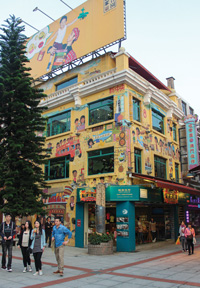
Choose to begin your morning with a slow stroll through the Macau Giant Panda Pavilion at Seac Pai Van Park in Coloane or by feeding the speed demon inside you with a go-kart race at the Coloane Karting Track in Cotai District.
In the afternoon, experience the sights, tastes and sounds of the Historic Centre of Macau, a UNESCO-listed world heritage.
Later, indulge in an authentic Portuguese dinner at the notable Macau Military Club. The venue dates back to 1870 and was reopened as a restaurant in 1995. End the night on a high note by catching the spectacular House of Dancing Water show in the City of Dreams.
DAY 3
Make time for golf at the 19-hole Caesars Golf Macau, located at the southern end of Cotai District. It’s the only semi-private golf course open to both members and visitors in Macau. If golf is not your cup of tea, retreat to the club’s spa where spa treatments are on offer.
Itinerary by Macau Government Tourism Office
Need to Know
Galaxy expands
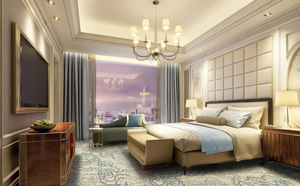
Galaxy Macau integrated resort will throw open the doors to two new hotels on the 27th this month.
JW Marriott Hotel Macau, the brand’s largest property in Asia, offers 1,015 rooms while The Ritz-Carlton Macau has 250 suites.
Both will boost the integrated resort’s MICE appeal with a suite of event spaces. JW Marriott Hotel Macau offers planners more than 2,700m2 of function space including a pillarless Grand Ballroom. The Ritz-Carlton Macau houses a pillarless Grand Ballroom and two meeting rooms.
Improved air access into Macau
Air Macau has increased the frequency of its Osaka and Bangkok services. The carrier now operates daily flights to and from Osaka, and thrice a week to and from the Thai capital.
Air access from mainland Chinese cities are also up. Air China launched a Beijing-Macau route on March 5 while China Southern Airlines has plans to debut a Wuhan-Macau service.
A fine way to arrive
The new TurboJET Premier Plus service, launched on March 1, offers a complimentary door-to-door shuttle service for Premier Grand Class/Premier VIP Cabin passengers travelling from Hong Kong (Sheung Wan) to Macau Maritime Ferry Terminal.
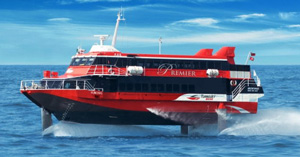 Available on any sailings between 09.00 to 21.00, the shuttle takes guests from Macau Ferry Terminal to any destination in Macau.
To utilise this service, simply book in advance and upon clearing immigration, proceed to the Macau Premier Shuttle Service meeting point in the arrival hall. The service departs 15 minutes after vessel arrival.
More to see and do at Sofitel Macau At Ponte 16
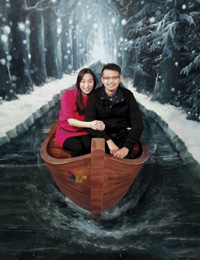 Sofitel Macau At Ponte 16 is partnering Hong Kong 3D Museum to roll out the destination’s first large-scale 3D museum in mid-2015. The 1,500m2 museum will feature more than 150 photography points in six theme zones, offering visitors a chance to pose for interesting photographs with various exhibits and 3D paintings. Sensory elements such as lighting effects, analog sounds and props will up the fun factor.
The hotel’s artistic venture includes a limited-time collection of art pieces by French sculptor Mickaël Obrénovitch. As part of the Le French May festival, the hotel lobby will display five to six spectacular tree trunk sculptures from now until June 30.
The St. Regis to rise soon in Macau
Scheduled to open in 3Q2015, The St. Regis Macao, Cotai Central will add 400 rooms and suites to the mega development by Sands China.
Rooms will range from 53m2 to 477m2 in size, and meeting planners will have access to nine meeting spaces totalling 599m2. The Astor Ballroom can accommodate 350 guests for banquets or 572 pax in a theatre setup.
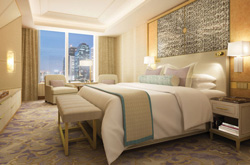 Other facilities at the hotel include the legendary St. Regis Bar and an outdoor pool with 2,457m2 of deck space that houses private cabanas.
The hotel boasts a seamless connection to Sheraton Macao Hotel.
Reviews

The Ritz-Carlton, Bangkok
The newly-opened Ritz-Carlton, Bangkok anchors the One Bangkok development with cosmopolitan elegance. Featuring the city's largest ballroom and a spectacular new penthouse suite, it delivers exceptional hardware and deeply authentic, soulful service for business and leisure travellers alike

Mama Shelter Zurich
Behind the imposing, Brutalist concrete that defines Zurich’s Oerlikon district lies a surprising secret. While its exterior honours the neighbourhood’s industrial roots, stepping inside Mama Shelter reveals a vibrant, neon-soaked world that is a far cry from its rigid shell
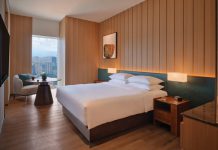
Hyatt Regency Kuala Lumpur at KL Midtown
A polished urban retreat designed for business travellers, Hyatt Regency Kuala Lumpur at KL Midtown combines thoughtful design, seamless service, and exceptional facilities.


