Flexible spaces, latest event technology and a clever dessert concept that encourages busier traffic in the exhibition hall provide additional appeal for this leading human resource event, writes Paige Lee Pei Qi
Over two days in April this year, human resource (HR) professionals gathered at STJobs HR Summit to address the most pressing issues facing their sector.
The event, said to be the busiest and best summit thus far, featured its first-ever “C-suite stream” which saw top managements and HR gurus discuss obstacles encountered by chief decision-makers.
According to Arun Madhok, CEO of Suntec Singapore Convention & Exhibition Centre, the host venue of the summit, a “cohesive yet highly personalised experience for delegates, sponsors and exhibitors” at the high-level meeting was made possible by its “customisable space, cutting edge technology and impeccable service”.
The C-level gathering was held in the comfort of a Suntec Summit Room.
Suntec Singapore’s spacious concourse, which has floor-to-ceiling windows that rise four storeys high, served as a lunch venue for delegates.
Meanwhile, Suntec Singapore’s 12,000m² of exhibition halls on level four were used to host the summit’s exhibition section, and to create three furnished and carpeted conference rooms for more than 1,200 delegates, a plenary hall for 1,800 delegates, and two lunch break areas with buffet lines.
Using the latest in exhibition and conference lighting and movable soundproof walls, Suntec Singapore created specialised areas where delegates were able to immerse themselves in their activities without being disturbed by other simultaneous sessions – this was critical as there were five conference streams taking place next a busy exhibition.
The venue’s culinary team pulled out all stops to provide delegates a memorable dining experience. Besides sumptuous lunch buffets and tea breaks, delegates were treated to a Dessert Safari comprising 27 bite-sized local, traditional and international delicacies spread across nine stations around the exhibition area. Each station had a chef serving up doughnuts, cupcakes, chocolate mousse cones and glutinous rice balls, among others, to the delight of everyone.
The Dessert Safari concept was designed to draw delegates into the exhibition space after lunch and to create an additional incentive for delegates to circulate around the hall and check out the exhibitors, explained Madhok.
As delegates went around the hall in search of their favourite desserts, they encountered various exhibitors and many were seen chatting with sellers and other attendees while they waited for their turn at the dessert stations.
Madhok said: “The Dessert Safari was a big hit with delegates, who devised their own strategies for getting the most out of the delicious spread. Regardless of the strategy, it definitely gave everyone something to talk about.
HAVING completed the joint venture for Global Business Travel (TTG Asia e-Daily, October 24, 2013), American Express Company (AMEX) has announced new members of its executive team, promising to “change the way that business travel operates”.
AMEX and an investor group led by Certares now each have a 50 per cent ownership stake.
The new company provides leading travel solutions, integrating consulting services, proprietary research and end-to-end meetings and events capabilities. Its creation also saw the injection of US$900 million in capital from investors.
Pat Bourke has since been named chief administrative officer, Norma Corio as chief financial officer, and JoAnne Kruse as chief human resources officer.
They join Greg O’Hara, who was appointed chairman of the board, and Bill Glenn who assumes the roles of president and CEO.
Said Glenn: “With our brand heritage, global network and strong capabilities honed over decades of connecting the world through travel, GBT is a leader in our industry…But our industry, like others, must evolve along with the consumerisation and globalisation of modern commerce.
“Whether it’s mobile functionality, dynamic apps or simply easier and faster ways to do business, American Express Global Business Travel now has the resources to further innovate and change the way that business travel operates.”
He added: “With the creation of the joint venture and the infusion of US$900 million of capital from our investors, we now have even greater resources that the marketplace to not only stay ahead of the curve, but to create the curve.”
Political safety, not issues of accessibility or pricing, is the MICE industry’s chief liability today, as the swift impact of Thailand’s latest military intervention shows. By Raini Hamdi
When the Thai army invoked martial law on May 20, followed by a military coup two days later, many Thai hoteliers, DMCs and PCOs, described the move as being “actually good” in as far as its intention to restore peace and order in the country, which has been embroiled in a political stand-off for seven months, goes.
They were at pains to explain there is nothing sinister about a coup in Thailand – after all it’s the country’s 19th – that Bangkok is open, its people going about working, dining, shopping as before. Thai sellers interviewed at IMEX in Frankfurt the day martial law was imposed – the same day the show opened – said they were not surprised at all, although they thought it might be imposed a bit later.
Buyers, on the other hand, said they were shocked.
Clearly there was a gap between how Thai industry members and buyers perceive a military intervention in Thailand. The former sees it as a measure towards certainty. The latter sees it as anything but certain, and uncertainty is the added pressure they can do without.
An Australian buyer who pleaded anonymity asked why shouldn’t she divert a 100-pax incentive she was planning for Bangkok/Phuket in March 2015, a move that would give her peace-of-mind, rather than wait two to three months “for this to be over” – her DMC’s opinion, but her own heart believes that’s uncertain?
“We can divert now as, although planning has started, nothing has been signed. I’m about to confirm it but I’m really hesitant now. It’s far less stressful (to divert now) than being faced with the ups-and-downs of waiting two months before deciding – too hard. It’s probably best to move now,” she said.
Before the news of military intervention, she was also looking at Thailand for events towards the year-end and 2015. “But now I would not feel comfortable selling it to my clients. If something (untoward) happens, they would say, you knew it was a problem, why did you recommend it? It would reflect badly on me,” she explained.
Similarly, UK-based International Data Links Society (IDLS) was looking at Thailand for its conference next year, but communication secretary and director, Emma Jane Taylor, who visited Bangkok last August, said: “For us, due to the current situation, we won’t come to Thailand because a lot of our exhibitors and delegates get nervous about it. We had our conference in Athens in 2012 and because of the riots there, we lost a lot of delegates and exhibitors. I know they are not the same countries. But we would still delay going to Thailand, we’ll probably look at it for 2016.”
Asia, not just Thailand, lost a congress. Thailand would have been the first Asian country to host the IDLS, usually held over three days with between 400 and 600 pax. But the 2015 event would now be held outside Asia as “the other options in the region are quite expensive”, said Taylor.
The “loss of opportunities” as a result of the latest military intervention was what saddened Oriental Events’ executive director Suwat Jirahswakedilok, who came to IMEX with high hopes of future bookings, only to have them dashed right on the first day of the show, when Thai suppliers like him had to convince buyers why they should keep to existing plans – let alone talk of future bookings – as a result of the announcement of martial law.
“The announcement of martial law only made it worse. We’re the appointed agency for the Federation of International Pharmaceutical Congress where we’re expecting some 4,000 to 5,000 pax end-August. We provide the transportation, offsite dinner, pre- and post-conference programme, etc. Though it’s not cancelled, they’ve expressed concern.
“It’s the loss of (business) opportunities for the future that I am sad about. Who’s going to come to Thailand in 2015, 2016, 2017?”
He added: “The Thai conflict is not resolved easily. It has been going on since last November and there have been some casualties on both sides. The rich people who are involved in tourism say they ‘can’t stand it anymore’. But what about the little taxi driver, who is also impacted by it? These are the people who are really suffering.”
Suwat said the best-case scenario is that business will return earliest in the first quarter of 2015, but if the political situation turns ugly as in Syria or Ukraine, “then we’re dead”, he said.
“I have been in the industry for 25 years. I’ve never seen Thailand getting this kind of bad impression,” he said.
“This industry is too sensitive. It’s no longer just about giving good pricing and service. Buyers have a lot of choices. If one destination is down, there is always another to go to.”
Industry suppliers in neighbouring destinations such as Malaysia and Indonesia attest to an immediate spike in enquiries at IMEX from buyers considering to divert their business from Thailand. Jakarta Convention & Exhibition Bureau’s (JCEB) executive director/CEO Indra Sukirno, said it brought back memories of the People Power Revolution in the Philippines in the ’80s, which saw a sudden influx of meetings scheduled for the Philippines in Jakarta. “At the time, Thailand did not have the capacity to take in the last-minute changes. Today, sad though we are for our friends in Thailand, we find ourselves unable sometimes to pick up last-minute business as the domestic business is enough to fill up existing space,” said Sukirno.
However, new and bigger venues are opening in Jakarta, she said.
Joining JCEB at IMEX for the first time were three venues, Balai Sidang Jakarta Convention Center; Jakarta International Expo, which is adding another 30,000m2 to its current 35,000m2; and the new Indonesia International Exhibition and Convention Center offering a space of 100,000m2.
Similarly, Anthony Wong, group managing director of Asian Overland Services Tours & Travel, said there had been “a surge” of enquiries at IMEX from buyers when news of the martial law broke – never mind the coup two days later. “It’s a reality today that political safety, not accessibility, is the key. Look at the Crimea incident for example; the Europeans are boycotting Russia, the Russians are avoiding Europe in favour of South-east Asia – business can shift not just from one country to a neighbouring country but from one continent to another. Accessibility is not an issue because of the number of flights today. And that’s one reason why PCOs are seeing shorter booking lead times than ever – the whole world has become unpredictable,” said Wong.
He added: “I would go to Thailand, I would bring people there. In fact ASEAN must go to Thailand. We understand each other, we know Thailand would not hurt any tourist. I just feel sad that it’s the small vendors who are impacted, not the big boys who have deep pockets.”
Thailand Convention & Exhibition Bureau (TCEB)’s figures for the first half of its 2014 fiscal year (October 2013-March 2014), reflect shifts in European markets to Thailand.
Russia has replaced Germany as its number two European MICE market. Switzerland and Italy have dropped out of the top five, while Poland is now one of the top five MICE markets (see chart).
Incentives were the worst hit from October 2013 to March 2014, registering a decline of 30 per cent. Conventions were up 14 per cent and exhibitions 12 per cent during the period. Overall, Thailand suffered a 3.4 per cent shrinkage of the MICE market for the six months ending March 2014.
TCEB is targeting a lower number of MICE visitors in fiscal 2014, 987,000, compared with 1,013,502 in fiscal 2013. TCEB president Nopparat Maythaveekulchai, in a show of confidence, told TTGmice that the bureau does not intend to revise the target further downwards as a result of the latest military intervention and will stick to its goal of 987,000 visitors but higher-spending ones.
“This is the perfect opportunity to consider Thailand,” he said. “Apart from Bangkok, there are so many other choices.”
To attract quality meetings, he said TCEB is fostering industry-wide acceptance of new ISO standards for energy management, event sustainability, food safety, MICE security and business continuity. The bureau has also developed a Thailand MICE Venue Standard and National Skills Standard for the MICE industry.
At the same time, it is incentivising planners to consider Thailand through new MICE reward schemes, including Meetings Bonus, Conventions Bonus and Business Up 2 U (exhibitions).
MALAYSIA Convention & Exhibition Bureau (MyCEB) is organising the first Business Events Week (BEW) to expose local industry players to key insights, challenges and growth opportunities in the business events arena.
To be held between August 14 and 21 at the Pullman Kuala Lumpur Bangsar, the event will bear the theme Exceeding Expectations to encourage participants to see value in being innovative and to think differently in order to surpass expectations and draw more business to Malaysian shores.
Malaysia’s aim is to lure 2.9 million business event arrivals by 2020 to make up about eight per cent of the 36 million targeted tourist arrivals. Last year, the country welcomed 1.4 million business events arrivals, which translates to 5.2 per cent of total tourist arrivals to Malaysia.
MyCEB CEO, Zulkefli Sharif, said: “The purpose of BEW is to create a platform for all stakeholders of the business events industry to converge, communicate and debate issues that impact on the future growth and sustainability of the business events industry. There will be a series of seminars, workshops, dialogue sessions, expo and networking sessions that engages all levels and segments of the business events industry.”
International speakers slated to attend include Jason Fox, motivation strategy and design expert and author of The Game Changer, and Mike van der Vijver, meeting designer and advisor, trainer and coach in intercultural management.
Both experts will both speak on topics related to innovation.
Delegates will also hear from North American meeting and event planners on how they can best capture business, and listen in on dialogue sessions between the private and public sector on strategies to enable Malaysia to develop and position itself as a leading business events destination globally.
DUANGJITT Resort & Spa, located towards the south of Phuket’s Patong Beach, has rolled out a new convention facility within its 14.6ha premises to raise its appeal as a MICE venue.
“Although we have over 500 rooms, our meeting facilities could only accommodate 100-plus pax previously, hence the management decided to add a new convention hall to the resort with an investment of some 300 million baht (US$9.3 million),” said Duangjitt Resort & Spa’s assistant director of sales, Purimpratch Sukbuayai.
Comprised of three main buildings designed in traditional Thai architectural style, Duangchanok Convention Hall features the 986m2 high-ceilinged Duangchanok Ballroom that can comfortably accommodate 1,200 pax and be divided into three smaller spaces; the 309m2 Duangrada Reception Hall that can host around 300 pax; the Banquet Hall consisting of four breakout rooms (Duangkamol, Duangthip, Duangmanee and Duangkaew) varying between 100m2 and 200m2, plus the 232m2 open-air Duangdao Hall; and three VIP rooms with private restrooms.
“Duangchanok Convention Hall is able to accommodate up to 2,000 pax, making it the biggest MICE venue on Patong Beach,” added Purimpratch. “Construction has already been completed but the facility is still undergoing fine-tuning of its interior systems, with an official opening planned for later this year.”
Soft-opened in late-2013, Duangchanok Convention Hall hosted the 6th Andaman Travel Trade Show in November 2013 as its first event, and has received meeting requests for groups varying between 300 and 400 pax from neighbouring countries like Malaysia and Singapore, Purimpratch shared.
Upcoming groups include a 600-pax group from Thailand’s Charoen Pokphand Group and two 600-pax groups from India in September this year.
Less than 1km away, the newly opened Grand Mercure Phuket Patong also offers a 290m2 Grand M Ballroom accommodating up to 200 guests for sit-down dinners and 300 guests for standing cocktails, plus two meeting rooms of 95m2 and 60m2 each, according to the resort’s assistant director of sales, Nuschanart Ariyakhachorn. The 314-room property will celebrate its grand opening later this month.
DRIVEN by Pattaya’s rising potential as a corporate and meeting destination, Holiday Inn Pattaya is pushing for the growth of its MICE business with the launch of a meeting-oriented wing in August.
Set adjacent to the existing 367-room Bay Tower, the new 200-key Executive Tower will boast a dedicated meeting space, Workshop, on the fourth floor. The retro-inspired, industrial-designed area is outfitted with meeting rooms, a boardroom, an auditorium, a terrace and a media hub along with a dedicated breakout zone.
Apart from the additional 200 rooms and suites each with their own private balconies, the new building will feature a top-floor Executive Club with panoramic views of Pattaya Bay, swimming pools, a kids’ club and a restaurant.
“There continues to be a healthy demand for MICE business into Pattaya, with many telling us they are looking for something different,” Kate Gerits, general manager at Holiday Inn Pattaya.
“The Workshop concept is about bringing the meeting area to life, providing a creative space in which participants feel inspired, and being able to provide flexibility of space all on one level,” she added.
Holiday Inn Pattaya will also form part of the newly launched North Pattaya Alliance (TTGmice e-Weekly, June 30, 2014), a group of seven hotels aiming to raise the district’s appeal as a premier destination for MICE business events and Indian weddings.
SINGAPORE is proudly hanging onto its crown as the world’s foremost city and country for international meetings, titles the city-state is holding for the third and seventh year running respectively.
This is according to the Union of International Associations’ (UIA) 2013 Global Rankings.
UIA reports that some 994 meetings held in Singapore qualified under UIA’s criteria for international meetings – a 4.4 per cent increase over 2012’s 952 – and thereby forming 9.4 per cent of UIA’s database of meetings.
In particular, the Lion City garnered praise for its excellent infrastructure, efficiency, vibrant business ecosystem, knowledge networks and strategic location in Asia.
Second runner-up country, the US, recorded 799 meetings, while the Brussels took second place for top international meetings city with 436 meetings.
Singapore played host to notable events last year such as the IFLA World Library and Information Congress, the 60th Chartered Financial Analyst Institute Annual Conference, the Amway Japan Leadership Achievement Seminar, the World Engineers’ Summit as well as the World Retail Congress Asia Pacific.
Singapore has six world congresses in its pipeline to date – the World Congress on Brain Mapping & Therapeutics 2016 and World Congress of the International Society for Diseases of the Esophagus 2016; the inaugural Asian edition of SpineWeek; the Council for Advancement and Support of Education Asia-Pacific Advancement Conference 2015; the Regional Dermatology Conference 2016; and the Asia Pacific Congress of Hypertension 2017.
Neeta Lachmandas, assistant chief executive of the Singapore Tourism Board (STB), said the MICE industry remained an integral component of Singapore’s tourism sector.
“The overall Economic Impact Analysis (examining the extent to which the MICE industry supports Singapore’s economy) of MICE activities is approximately S$3.7 billion (US$3 billion) or 1.1 per cent of Singapore GDP in 2012. This is an increase from 0.9 per cent of GDP in 2008.
“The Meetings segment contributes the highest proportion at 55.4 per cent of total economic impact. Beyond the direct economic benefits, MICE also contributed in terms of networking opportunities, branding of Singapore and cross-industry skill sharing.”
To further build on Singapore’s strengths as a MICE destination, STB is rolling out a training curriculum based on STB’s Sustainability Guidelines in September this year, in partnership with SACEOS.
RUSSIA’S profile as an exhibitions venue is getting a boost with the appointment of Sergey Alexeev of ExpoForum-International appointed as the incoming president of UFI for 2014/2015.
Welcoming Alexeev’s appointment, currently UFI president Renaud Hamaide of Comexposium/ViParis said: “Sergey brings 30 years of exhibition-related experience to our UFI presidents’ trio! As the first Russian UFI president, he will certainly provide valuable insights for the development of UFI programmes in this country.”
Russia is represented in UFI by 38 members, the third largest number after China and Germany. The country has more than 20 venues offering a minimum of 5,000m2 of indoor exhibition space and a combined total of almost 600,000m2.
This places the country 10th in the world in terms of exhibition infrastructure capacity and UFI ranks Russia 8th for exhibition activity for the three million square metres of net exhibition space rented yearly.
Commented Alexeev: “Joining the UFI presidential trio is a reflection of the prospects and professionalism of the Russian exhibitions industry. Over the past 20 years Russia has taken its place among the world’s exhibition leaders.”
Hamaide will thus take his place in the Triumvirate as outgoing president, while the new current president is Andrés Lopez-Valderrama of Corferias, Colombia.
These appointments will take effect after the 81st UFI Annual Congress in Bogota, Colombia which will be held between October 29 and November 1 this year, for the term 2014-2015.
Alexeev will become president for the 2015/2016 term.
In the meantime, Lopez-Valderrama will lead a UFI that has since welcomed 15 new organisations, bringing membership to 650 in 83 countries, and 28 more audited international exhibitions.
The UFI presidential trio is meant to provide for greater management continuity within the association and enable UFI to represent the exhibition sector in a greater number of international industry events and activities.
Convention centres in Asia have invested in technology improvements to enhance event delivery and delegate experience. TTGmice spotlights a selection of those that have recently powered up
A consortium of researchers led by the National Institute of Water and Atmospheric Research (NIWA) has won the rights to host the 7th International Symposium on Submarine Mass Movements and Their Consequence in Wellington in November 2015.
The bid was made with the support of Tourism New Zealand (TNZ), Positively Wellington Tourism (PWT) and the Conference Assistance Programme (CAP), and will bring an estimated NZ$500,000 (US$435,700) to the country’s economy.
The symposium is expected to attract up to 150 international delegates and speakers from universities, research organisations and the industry.
In a press release, NIWA Marine Geologist and conference convenor Joshu Mountjoy described the event as the “benchmark conference for submarine landslide researchers around the world”.
“New Zealand has a long history of research into submarine slope instability and bringing this conference to New Zealand…offers a great opportunity to showcase our research and unique offshore environment,” added Mountjoy.
TNZ’s international business events manager, Bjoern Spreitzer, said international events such as the symposium provide a huge opportunity to grow the value of visitors to New Zealand.
PWT chief executive, David Perks, added that hosting an international conference of this scale is a real vote of confidence for the city.
“Targeting sectors where the capital excels helped the city succeed in winning this bid. A lot of work goes into ensuring Wellington is seen as an accessible, unique place to do business. Our capital is compact, cultural and cutting edge – perfect for business meetings and it is the smart choice when it comes to hosting domestic and international business events,” said Perks.
Bjoern said: “TNZ has significantly increased its activity in the business events sector in the last few years, and this result is a great example of our focus to work collaboratively with the industry to grow delegate numbers and value.”
TNZ’s management of the CAP has seen the country bid for 39 events over the last financial year, securing nine international events to date.
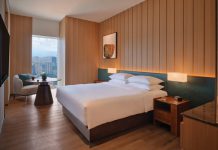
A polished urban retreat designed for business travellers, Hyatt Regency Kuala Lumpur at KL Midtown combines thoughtful design, seamless service, and exceptional facilities.
The five-star property excels in backing its expansive facilities with seamless service and personalised attention, setting the benchmark for luxury in Bangkok.