Asia/Singapore Thursday, 9th April 2026
Page 1042

Catering to Muslim MICE

0
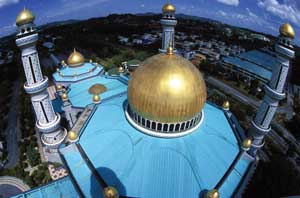
Picture by Brunei Tourism

The Muslim MICE market is growing. The momentum to cater for it is rising, Raini Hamdi reports

Kuoni Group Travel Experts (GTE) now moves as many as 150 Muslim-only tour groups a year from key Asian markets to European destinations and, increasingly, destinations in the Middle East and the US. These are small families, government groups or large MICE movements with up to 1,000 travellers. Kuoni GTE’s head of MICE Sales Asia, Reto Kaufmann, estimates that annual growth could be as high as 30 per cent, with the MICE market increasing fastest.

Kaufmann: sourcing hotels/restaurants that will go the extra mile in catering to large Muslim MICE groups

Last year, the company saw double-digit increases in roomnights booked by group travellers from Indonesia and India, while those from Bangladesh quadrupled. China, Malaysia, the Philippines and Thailand also offer significant numbers of potential Muslim travellers. China, with a Muslim population of 23 million, recorded a six per cent rise in roomnights booked with Kuoni GTE last year.

According to a Pew Research Centre forum, 72 countries today have a million or more Muslim inhabitants and 60 per cent of them live in Asia-Pacific. Catering to Muslim travellers beyond haj and umrah pilgrims seems a no-brainer, with rising disposable income and a younger demographic among them. But that it’s still a novelty shows how fraught it is with challenges.

One of the fundamental challenges lies in a lack of understanding that pork-free is not necessarily halal. “(Muslim) travellers who could accept no-pork meals would go to non-Muslim countries, but those who could not will not,” said Garuda Indonesia Holidays COO, Widjaya Hadinukerto.

Finding halal restaurants and Muslim-friendly facilities remain the fundamental challenge – even in countries such as India, South Korea, Japan, Taiwan, Hong Kong and China which have recognised the importance of Muslim travellers, “only parts of the programme comply with Islamic rules”, said Dannie Soesilo, commissioner of an Indonesian agency, Sakinah Nurhidayah.

Not all countries have halal certification bodies and in fact rely on travel experts to develop halal products, added Widjaya. Accreditation of agencies is therefore becoming important, Widjaya said.

But being halal, like eating organic, can be expensive, and agency heads like Adam Kamal, general manager of Rakyat Travel Malaysia, expressed angst over operators who keep costs down by taking clients to pork-free restaurants whereas his agency uses only certified-halal ones. “Meals at these restaurants are more expensive and may be out of the popular tourist spots. Thus there is additional transportation cost incurred,” Adam said.

Finding halal restaurants that can cater to big groups is a struggle, said Cooper Huang, CEO, Harmony Tours & Travel, Malaysia, who sometimes work with hotel ballrooms but outsource the cooking to chefs from halal restaurants.

Wide open space

The space to cater for Muslim groups is therefore wide open. Last December Kuoni GTE tied up with Crescentrating, a Singapore-based company barely five years old, whose primary business is to help the travel industry cater to Muslim clients through consulting, workshops and market research. It also rates hotels’ halal-friendliness and is now moving to accredit more than 100 travel agencies over the next 12 months. Most of these agencies will be from South-east Asia, the initial target market for the first eight curated Muslim tour packages which the partnership launched in February. The tours cover five European cities, Paris, London, Rome, Berlin and Geneva, and are aimed at Muslim MICE and family groups from Asia and Europe.

“Our rating enables travellers to understand clearly to what degree their needs will be met with respect to availability of halal food, prayer facilities, service during Ramadan and level of non-halal activities and amenities in the hotel (for example, alcohol served in the hotel, separate pool and spa facilities, etc),” said COO, Dany Bolduc.

Asked what criteria it uses to accredit travel agencies, Bolduc said: “Three main criteria: They are an accredited travel agency with the local authority, preferably with IATA membership; have staff who have participated in our training workshop and understand the needs of the Muslim travellers; and sell Muslim travellers only packages that comply with Crescentrating criteria for packages.”

Although Crescentrating has its own portal with booking engine, halaltrip.com, Bolduc said this till now serves individual and small group travel. Over 50 per cent of Muslims travel in family and/or multi-generational groups, which is why it needs Kuoni, he said. “Offering tour packages requires expertise in the logistics of transporting and managing large groups of people; a channel of DMCs who are experts in local sights and attractions, deep relationships with hotels and restaurants that can offer great quality at an affordable price. Kuoni is a world leader in tour packages,” Bolduc explained.

Kuoni in turn needs Crescentrating’s expertise on and commitment to halal travel to further bolster its credibility and value-add among Muslim clients. Added Kaufmann: “Part of it is helping to educate Europe’s travel trade about halal food expectations, family-friendly environments, making allowances for religious practices and gender-related nuances, and that an increasing demand exists.

“We are sourcing hotels and restaurants that can not only meet the needs of large groups of people, but are also willing to go the extra mile and offer added value. European suppliers know that if Kuoni is investing in Muslim-specific tours, we’ve done our homework and there’s a definite market here. We are confident more hotels and restaurants will join the initiative in coming months, so that we have a small number of partners in each of the cities that Asian and Muslim visitors most want to visit.”

Going the extra mile

Kuoni itself goes the extra mile by ensuring, say, itineraries are carefully planned to allow for the regular prayer times that many Muslims continue to observe while away from home. It even works with local Muslim communities to arrange joint prayer sessions or exchanges that can enhance the destination experience.

Asked what he’d wish destinations, airports and other tourism providers would do for halal travel, Bolduc said: “The availability of halal food is critical. Airports need to have halal-certified concessions. Restaurants and food suppliers in destinations would also be well-advised to offer more halal food choices in their establishments.

“Prayer facilities are also important while travelling. Governments have a role to play by raising the awareness of this untapped market to the tourism service sector and encouraging local business to cater to the unique requirements of Muslim travellers.”

In its rankings, Malaysia has consistently ranked as the most Muslim-friendly travel destination under the OIC (Organisation of Islamic Co-operation) category. Kuala Lumpur International Airport was also ranked as the top airport in 2013. For non-OIC countries, Singapore and Thailand’s Suvarnabhumi International Airport were ranked as the top destination and airport, respectively, in 2013.

“This year’s ranking of destinations should be very interesting as a number of countries are recognising the potential of the halal travel sector and making significant in-roads in developing infrastructure and services to attract Muslim travellers,” said Bolduc.
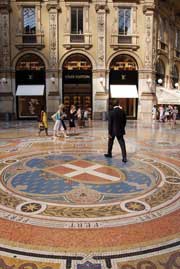
Muslim-friendly destinations stand to benefit from a huge Muslim population with rising disposable income

Japan, for instance, is seeking to create more user-friendly airports for Muslims, with prayer rooms, ablution facilities, halal food, etc, in the lead up to the 2020 Summer Olympics.

Meanwhile, a US$170 million resort built on Islamic principles will open in the Maldives in October. A joint venture between Maldives’ ADK Group and Turkey’s Capris Gold Group, it will offer Muslim-friendly services such as a separate beach for ladies only, certified halal buffet in all restaurants, family-friendly facilities.

Needless to say, no alcohol or pork is sold in this resort.

– See how Kuoni GTE caters to a 600 pax Muslim MICE group to Switzerland in Case Studies: Muslim incentive to Switzerland
Okinawa Convention Center unfazed by higher consumption tax

0

THE impending upward adjustment of Japan’s consumption tax from the current five per cent to eight starting this April is not expected to affect Okinawa Convention Center’s (OCC) business, according to the venue’s MICE coordinator, Naomi Nakaza.

With a long history of 27 years as well as being the biggest convention space in Okinawa, OCC has its source markets from mainland Japan and overseas, especially Taiwan, Hong Kong, China and South Korea.

The centre has a discount policy that has been offering special rates to event organisers, such as 20-70 per cent less for international events with more than 10 attendees, and 10 per cent less for the rental of all OCC facilities for large-scale events.

Nakaza said the discount policy will continue albeit the implementation of the higher consumption tax in the country’s new financial year, but adjustments to the qualifying criteria can be expected, such as a minimum of 20 attendees may be required for events to enjoy the same 20-70 per cent discount.

Asked if OCC would expect business to suffer as a result, she said: “Previously, when the same tax was raised from three to five per cent – and in a short space of time – we did not lose much business.

Therefore this time, we believe we will continue to do well especially with support from our regular customers who believe in our offerings. We also expect that Japan’s economy will improve from now.”

OCC offers 10 conference rooms of varying sizes in two separate buildings, a 2,500m2 exhibition hall and a 1,709-seat theatre hall. Other supporting facilities include dressing rooms for performances and a tatami room for resting.

While maintenance and minor enhancements are regularly carried out in the premises, the centre’s most recent renovation was a massive repair work to its theatre hall following a typhoon that shattered the space’s glass wall, a spectacular stage backdrop that brings in panoramic views of the ocean.

Several of the centre’s conference spaces also boast a feature glass wall with an ocean or garden view, a unique offering that has been drawing event organisers and the wedding market from mainland Japan.

New ACTE council chair retains focus on membership growth

0

AMARNATH Lal Das, general manager-India Travel, Accenture, has taken over from Peter Koh, global travel manager, global sourcing, Standard Chartered Bank, as the Association of Corporate Travel Executives (ACTE) Asia Regional Council chair and is heading a new 10-member council.

While the majority of the council members are corporate travel managers and suppliers based in Singapore, Greely Koch, ACTE executive director, said representatives from more countries in the region such as India, China and Japan were volunteering this year.

Das, who served as a council member for the past two years, said his task was to continue to expand membership in tandem with ACTE’s growth in Asia. According to Koch, Asian membership surged 144 per cent in early-January.

Koh said the Asia Regional Council had stepped up efforts to reach out to growing corporate travel markets such as China and India and emerging ones such as Mongolia and Kazakhstan.

Das added: “Corporate travel management is still a relatively new concept in Asia. Best-practice sharing and imparting technical know-how at ACTE’s (more than 40 annual) events will help members keep up with an environment that is extremely fast-changing, acquire new skill sets, and tap the opportunities with technology advancement in planning the future of travel operation.”

Meanwhile, ACTE is moving its annual conference from Singapore to Hong Kong after 12 years. Despite the move, Benson Tang, ACTE Asia regional director, told TTGmice e-Weekly that Singapore continues to be an important hub for the association.

ACTE will maintain a strong presence in Singapore by participating in the UATP Airlines Distribution Event next week, continue with the one-day ACTE Singapore Executive Forum on April 1 at The Westin Singapore, and host an ACTE cocktail in the fourth quarter, among other activities.

In moving the annual conference to Hong Kong, ACTE has rebranded the former ACTE Asia-Pacific Education Conference to the ACTE Asia Corporate Travel Conference to more accurately reflect the programme content. It will be held on August 6 and 7.

Themed the Future of Corporate Travel in Asia, Tang said the Hong Kong conference was expected to attract more corporate travel managers based in China.

Koh said Hong Kong provided an affordable option to attract attendees from China and added that numbers from Singapore had fallen. The conference usually attracts about 600 participants.

GBTA grows second China conference

0

GBTA forecasts point to China becoming the world’s top corporate travel market by 2016 and its China conference, being held for the second time in Shanghai, is recommended for the country’s state-owned enterprises (SOE).

Jin Jiang International Hotels, an SOE and GBTA’s China conference partner, has paved the way for the Shanghai municipal government to recommend the conference for China’s SOEs, said Welf Ebeling, GBTA vice president, operations, Asia Pacific.

GBTA is expecting 230 participants at its 2014 China conference with a 50:50 buyer-seller ratio, compared to 181 participants in 2013 and a 40:60 buyer-seller ratio.

GBTA has also formed an education partnership with renowned Fudan University and Wang Yonggang will be delivering the second keynote address on Top-level Design, Technology Innovations and Growth of China’s Business Travel Industry.

GBTA president Donna Kelliher’s keynote address is themed Can Business Travel Management be Truly Global?, while Michael McCormick, executive director and COO, will deliver the 2014 H1 GBTA Business Travel Index report, sponsored by VISA.

McCormick said: “Over the past few years, GBTA has expanded its presence across the globe and bringing this conference back to China is a great opportunity to discuss doing business in China from both a local and expatriate viewpoint.”

Ebeling added: “The programme for this year has been designed by a panel of local travel managers and industry experts focusing on the needs of China’s fast growing business travel industry. At the same time having the entire GBTA US Board of Directors participating adds a global perspective and vast international expertise that will benefit all conference attendees.”

Perks for meetings at Hanoi’s Press Club

0

THE Press Club, regarded as one of Hanoi’s most stylish addresses for corporate gatherings, is offering a number of freebies to enhance clients’ event experience.

A free flow of canned fruit juices, soft drinks, beers and mineral water as well as the use of an LCD projector and screen will be provided to groups that book the venue for meetings with lunch from June 1 to August 31 this year.

The Press Club has three function rooms, a private library, an open-air terrace and a board room.

Email info@hanoi-pressclub.com for more details.

Not solely Seoul

0
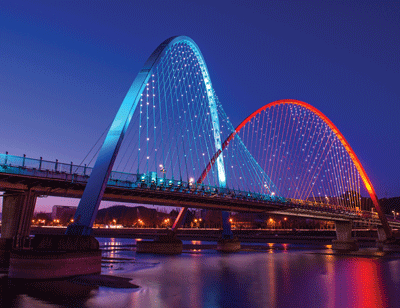
Expo Bridge in lesser-known Daejeon, which is being promoted by the Korea MICE Bureau Picture by prakobkit/123RF.com

Niche industries and booming infrastructure are giving South Korean destinations a chance to welcome MICE business, discovers Hannah Koh

Young, vibrant and heartbreakingly sleek, South Korea’s industries, much like its popstars, are going from strength to strength. The country has been quick to leverage this, along with a boom in infrastructure, to promote MICE beyond the regular destinations.

South Korea hosted 635 international conventions and meetings in 2013, according to UIA. ICCA also found the country to have welcomed 260 meetings in 2013, the 12th largest number in a single country that year. Pointing out these data, Minhong Min, executive director of the Korea MICE Bureau, said: “By any report, we are jumping.”

He said the “number one” factor setting South Korea apart from other meeting destinations is the Korean pop culture wave sweeping across Asia, Europe and the Middle East.

He continued: “Second, we have many newly developed infrastructure. Ten years ago we only had four convention centres. Now we have 14. Regional cities compete with each other to host international events, resulting in a higher level of service. We spent US$20 million in the MICE industry last year.

“All our industries are seeing upward growth, especially the medical sectors and medical association congresses. There’s been a big increase in incentives from China and Asia.

“Our policy is to focus (on promoting destinations) outside Seoul, so we provide incentives for other destinations. Seoul is an Asian hub, but to extend stays in (South) Korea, we are promoting other destinations like Jeju and Busan, both also popular for MICE.”

The bureau also thrusted lesser-known destinations Daejeon, Gunsan, and Incheon’s Songdo City in the spotlight during a recent media fam trip. All three destinations are beneficiaries of a determination to add more space, facilities and hotels for MICE, each with its own niche industry.

Daejeon for one, besides being a major transport hub for its location in the heart of South Korea, is a kind of brain bank for the country with the host of research institutions, high-tech companies and universities that have found a home there.

The major focus of the Daejeon Convention Center (DCC), opened in 2008, is thus on conferences.Angeline Park, manager, convention marketing team, Convention & Visitors Bureau Daejeon, Daejeon International Marketing Enterprise, which runs the convention centre, said over 600 conferences and exhibitions are held at the venue a year, including domestic events.

Some events scheduled for 2015 include Pacific and Asian Society of Minimally Invasive Spinal Surgery, and International Comic Artist Conference.

“We are building an entertainment and F&B complex, to be opened in 2018/2019,” revealed Park. The complex will replace the existing DIME Exhibition Hall adjacent to DCC.

More conferences could also come from neighbouring Sejong, a new town that was constructed to be South Korea’s other administrative capital. From Daejeon, the mega government complex in the new town is only 20 minutes away, said Park.

On the other hand, Gunsan in North Jeolla was a big port city 50-60 years ago, and now has the largest industrial complexes in South Korea, with car production and sustainable energy being two key industries.

The Gunsan Saemangeum Convention Center (GSCO) was launched in July 2014, and has since hosted tradeshows and fairs related mostly to heavy machinery and cars. It is the latest addition to the exhibition hall – large enough for 160 booths – that opened in 2004, and an annex building that began operations in 2007. Renovations of the annex building will start in August to add nine rooms for up to 250 pax each.

Rental rates for exhibition hall and meeting rooms are 30 and 50 per cent lower than other cities, respectively, said Trudy Baek, MICE business team assistant manager, GSCO.

Asked what prompted the decision to build the facility, Baek said: “Gunsan has a good logistics system, and industrial tradeshows would be the next ‘food’ for the local economy. All regional governments (in South Korea) are very interested in MICE.”

The city also saw the181-room Best Western Gunsan open last year.

Meanwhile, a bright spark on Incheon’s horizon is ‘smart city’ Songdo, home to some 450 MNCs, and the G-Tower where the UN has housed a good number of its offices.

Maureen Kim, director of Incheon Convention Visitors Bureau, said: “Songdo is good for international businesses and organisations as it is close to both Japan and China, and we have set up a team to host such events. Our plan is to attract organisations to set up (HQ) in the city and then have them extend invitations to counterparts to hold meetings here.

“Since 2008, we have targetted getting more UN meetings. By end-2013, we had hosted the Green Climate Fund organisation HQ meeting, the Association of World Election Bodies, and World Bank events.”

Kim said having dealt with such large-scale events is an advantage when attracting association business, and the presence of UN organisations and meetings in Incheon is a key differentiation point.

Songdo’s main large-scale venue is Songdo Convensia Convention Center, opened in 2008. Plans are underway to double the space at the centre within the next three years.Some events confirmed in 2015 are the UN Development Cooperation Forum and World Education Forum.

Songdo was also one of the venues that hosted the 2014 Asian Games that took place in Incheon. Sheraton Incheon Hotel and Oakwood Premier Incheon were fully booked out during the event.

Min opined: “Meetings on their own are not attractive anymore and we need to offer something new and different. For instance, during the 95th Lions International Convention in Busan in 2012, (South) Korea provided health checkups, and over 300 delegates signed up even though they had to pay for it. We combined Industry A and Industry B to provide a different service.

“Corporate meetings tend to be small, with less than 100 pax. With the development of South Korean industries, there will be a bigger need for corporate meetings.”

Sheraton Incheon Hotel general manager, Richard Suter, suggested: “South Korea could develop the kaizen idea from Japan (for more MICE business), where there are tours to see how companies work. But obviously that depends on how open the local companies are.”

Ideas

2D1N history tour in Incheon

Day 1

Begin at Donghwa Village and its brightly painted streets depicting popular fairy tales. Photo opportunities abound here.

Then head to Chinatown for the array of food sold along the street. Try the most famous Chinese-Korean dish, jjajangmyeon, after which the history of the black noodles can be learned at Jjajangmyeon Museum.

Next, unwind at South Korea’s first Western-style park, Jayu Park, watched over by a statue of US general Douglas MacArthur, before dropping by Incheon Open Port Museum, a former Japanese bank building, for a deeper understanding of the city’s history. Next is Incheon Art Platform, comprising 13 buildings from the 1930-40s now used as art and design studios, archive centres, and education and performance halls.

End the day at Sinpo market, which dates back to the late 19th-century. Sample its most famous dakgangjeong, a Korean dish of crispy fried chicken coated in a sweet and spicy sauce.

 Day 2

Start off at Wolmido Amusement Park offering various rides and an indoor children’s playground.

Next, head to Wolmi Culture Centre for a taste of traditional Korean life and then to Wolmi Park, once a military base and site of the Incheon Landing Operation during the Korean War. Wolmi Observatory provides scenic views of the area while Korea Emigration History Museum offers insights into the eponymous subject.

Then move on to Yeonan Pier, the starting point for all coastal passenger ships bound for numerous islands in the western sea, and the nearby Incheon Fish Market.

Finally, at Jung-gu District Culture Hall, enjoy nonverbal show Bibap, a mix of beatboxing, a capella, acrobatics and martial arts as two sous chefs clash in a bibimbap cook-off.

Itinerary by Incheon Metropolitan City Department of Tourist Promotion

Need to Know

Dongdaemun Design Plaza

Picture by aomami/123RF.com

Dongdaemun Design Plaza is an otherworldly monolith that rises up sleek and silver in the heart of Seoul’s commercial shopping district. It is the world’s largest 3D asymmetrical architectural structure and conceptualised as Seoul’s epicentre for the design and arts industries. Launched on March 21, 2014 with the 28th Seoul Fashion Week, the plaza is open 24 hours a day. Event spaces include the 4,852m2 Art Hall comprising Art Hall 1 and 2, and the International Conference Hall; the 7,928.5m2 Learning Center; and 8,206.1m2 Design Lab. There is also the Dongdaemun History and Culture Park, and the Design Market public space.

Incheon City Pass

Launched in September last year, the Incheon City Pass is a stored value card that can be used not just in Incheon but also Seoul, Gyeonggi-do, and Busan. Besides offering discounts on dining, attractions, concerts, accommodation and shopping, the card can be used to pay transport fares. Cash refunds for remaining value can be obtained before leaving South Korea. For more information on the pass, visit www.k-pass.co.kr or email kpass@tothepp.com

Gyeong Won Jae Ambassador Hotel

Situated in Songdo Central Park, Gyeong Won Jae Ambassador Hotel, Incheon is a Korean-style traditional hotel that will allow guests to enjoy the tranquility of its surroundings while contemplating the beauty of ancient Korea. The hotel takes its name, Gyeong Won Jae, from Incheon’s former name during the Goryeo Dynasty. Opening this May, it will offer two Presidential Suites, 12 Deluxe Suites, 16 Standard Rooms and a Gyeong Won Roo banquet hall for up to 250 pax.

Songdo Central Park Hotel

Songdo Central Park Hotel, Incheon is a five-star hotel that opened last September across the street from Songdo Central Park. It offers 300 rooms, free Wi-Fi throughout the hotel, a swimming pool and a fitness centre. Event spaces include the Ruby Hall and Emerald Hall for combined capacity of 300 pax, and the Sapphire and Diamond Halls to seat a total of 730 guests. The hotel is 15 minutes’ drive from Songdo Convensia and 35 minutes’ from Incheon International Airport. Email: bqr@cphotel.co.kr

Geumgang Migratory Bird Observatory

The first of its kind in South Korea, the Geumgang Migratory Bird Observatory in Gunsan rotates 360º to provide visitors with views of the Geumgang Estuary, where migratory birds rest in winter. There is also a bird park, museum and incubation experience centre. It is also one of the venues of the annual autumn Gunsan International Migratory Bird Festival, which offers a popular birdwatching tour until end-February. Call (82) 63-1330 (Korean, English, Japanese, Chinese).


Picture by imstocks/123RF.com

Patrick Teng joins Aonia Singapore

0

SINGPOARE-BASED PCO, Aonia, has appointed Patrick Teng as director of meetings & incentives.

Bringing with him more than 10 years of experience in the industry, Teng’s responsibilities include business development, events management and strategic planning.

Prior to joining Aonia, Teng was vice president of a Singapore-based MNC insurance company, where he played the role of a strategic business developer, corporate events designer and overseer of personnel performance.

More knights in shiny armour for Malaysia’s MICE industry

0

MALAYSIA Convention & Exhibition Bureau (MyCEB) has appointed seven new Kesatria – industry leaders who are tasked to elevate Malaysia’s business tourism by helping to identify and encourage peers to bid for and stage international congresses in the destination.

This is the third batch of Kesatria – or knights in the Malay language – appointed under the Kesatria 1Malaysia programme, bringing the total ambassador count to 33.

Zulkefli Sharif, CEO of MyCEB, said: “Our Kesatria 1Malaysia programme has generated 37 successful international business event leads with an economic impact of RM625 million (US$190.5 million) and an estimated attendance of more than 50,000 delegates.

“The success of this programme is reflected in the number of large-scale specialised conferences that have taken place since we started this programme.”

Some of the prestigious events won by the ambassadors include Women Deliver Conference 2013 which generated an estimated RM47.4 million in economic impact to the country, 12th International Congress on Obesity 2014 which is estimated to draw some 3,000 delegates, and XXV International Federation of Surveyors Congress which is also expected to attract some 3,000 delegates in June.

Zulkefli said some of the benefits of serving as a Kesatria include the eligibility for travel assistance for bid activities, invitations to attend networking and special events hosted by MyCEB throughout the year, and being provided with promotional materials to pass on to their international professional contacts that have the potential to stage business events in Malaysia.

Northern Territory’ new ambassador programme brings good leads

0

SIXTEEN active business event bids have resulted since the launch of the NT (Northern Territory) Business Events Ambassador Program last September.

A joint initiative between Tourism NT, Darwin Convention Centres and Alice Springs Convention Centre, the programme was established to increase new business event opportunities for the destination by maximising the extensive networks and marketplace intelligence of selected business and industry professionals.

Scott Lovett, director business events of Tourism NT, told TTGmice e-Weekly that the NT’s ambassador programme “is very different from others in the country which are often focused on medicine”.

“Ours is aligned with the NT’s forte, which is in areas such as economics and social and community development,” Lovett said.

The 16 founding members of the programme hail from the NT’s key industry sectors such as renewable energy, health, tourism, oil and gas, primary industry, finance and business.

Besides helping to promote the NT’s business events capability, Lovett said the ambassador programme is also crucial in the destination’s pursuit of investments.

“Whenever a destination wants to promote investments in specific areas, it is done through dialogue and exchange of ideas at events and conferences. Thus, we encourage our ambassadors to look at their area of work to attract events to the NT,” he added.

When asked for an example of an ambassador who had opened doors for the NT, Lovett said: “Chen Min (chief representative, China Council for Promotions of International Trade) is big on investment and trade, and is our key to China’s trade ministries and government.”

The NT Business Events Ambassador Program runs alongside Tourism NT’s industry familiarisation programmes, which take trade event buyers to industrial facilities that matter to their business.

“We have a very high conversion rate (for event enquiries) when we take people on such familiarisation trips. The destination is important (in the planner’s selection process) but content and learning opportunities (for delegates) are far more crucial,” he said.

Surveyors congress sharpens content to combat loss of audience to meeting technologies

0

THE upcoming International Federation of Surveyors Congress in Kuala Lumpur in June will feature more networking opportunities and see collaboration with multilateral bodies such as the UN Habitat on programme content to raise the event’s appeal among delegates.

Explaining the need for strong programme content, Teo Chee Hai, president of the International Federation of Surveyors, said the average size of conferences today has shrunk compared to five years ago, a direct result of an increased number of conferences around the world and the use of technology to replace face-to-face meetings.

Speaking at the 9th Association Seminar 2014 on Tuesday at Kuala Lumpur Convention Centre, Teo stressed that organisers must give a compelling proposition for delegates to attend the conference by having a very strong content.

He said it was about “delivering value and desired outcomes to constituents”.

Networking opportunities at the International Federation of Surveyors Congress were expanded, for instance, after taking into account that such sessions were important to delegates and a key factor in building attendance. Coffee breaks at the congress will be lengthened to 45 minutes.

The congress will be held at Kuala Lumpur Convention Centre from June 16 to 21 this year. It is expected to welcome 3,000 delegates

Reviews

The Ritz-Carlton, Bangkok

The newly-opened Ritz-Carlton, Bangkok anchors the One Bangkok development with cosmopolitan elegance. Featuring the city's largest ballroom and a spectacular new penthouse suite, it delivers exceptional hardware and deeply authentic, soulful service for business and leisure travellers alike

Mama Shelter Zurich

Behind the imposing, Brutalist concrete that defines Zurich’s Oerlikon district lies a surprising secret. While its exterior honours the neighbourhood’s industrial roots, stepping inside Mama Shelter reveals a vibrant, neon-soaked world that is a far cry from its rigid shell

Hyatt Regency Kuala Lumpur at KL Midtown

A polished urban retreat designed for business travellers, Hyatt Regency Kuala Lumpur at KL Midtown combines thoughtful design, seamless service, and exceptional facilities.