BCD Travel has appointed Stephanie DeNote to the newly created position of senior vice president of travel commerce.
In this role, DeNote will be responsible for the success of BCD’s proprietary Travel Commerce platform and the evolution of its booking and trip management experience for travellers and agents. She will lead an international team of product managers, developers and engineers.
DeNote brings more than 15 years of expertise in the design, development and deployment of traveler and agent point-of-sale products and technology. She joins from a leading TMC where she served as vice president of product management, traveller experience & content. In her previous role, she led the strategy and development of an integrated digital platform and mobile app for travellers and travel arrangers, as well as the supporting agent technology.
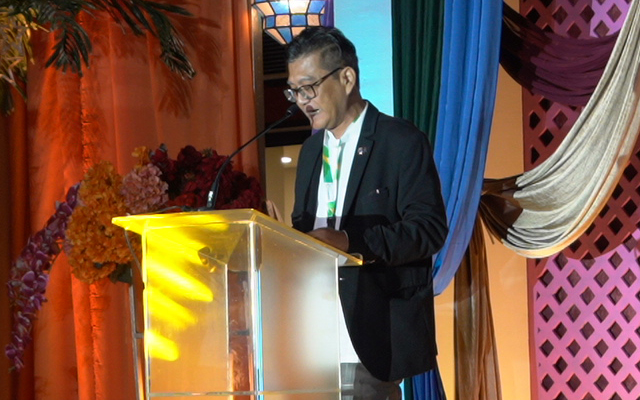
Mulkan Kamaludin, chairman of IVENDO, presenting the survey results
Indonesia’s event industry is experiencing significant losses following government-imposed budget cuts, with 638 events cancelled or postponed, according to a national survey by the Indonesian Event Industry Council (IVENDO).
The survey, conducted between January and February 2025, estimates losses at around US$27 million, with most cancellations affecting key business cities like Jakarta, Bali, Yogyakarta, and the province of West Java.
Mulkan Kamaludin, chairman of IVENDO, presenting the survey results
Government ministries and agencies were behind most cancellations, with 51 per cent affecting meetings, followed by incentive events at 13 per cent, and training sessions at 11 per cent.
Mulkan Kamaludin, chairman of IVENDO aired concerns that if budget cuts persist, the industry would see a sharp decline. This is a contrast to last year’s strong performance, when 8,777 events were held nationwide, generating US$5.4 billion and supporting 8.8 million jobs.
“Events were gaining momentum, but these cuts risk undoing that progress,” he said.
As one of Indonesia’s top business event destinations, Bali has been hit even harder.
Initial findings from IVENDO’s national survey in early 2025 revealed that only five per cent of events in Bali had been postponed, with most clients opting to scale down rather than cancel.
However, a follow-up survey by IVENDO Bali Chapter in March 2025 showed a grimmer picture. Organisers reported an average of five to 10 event cancellations each, affecting around 750 events in just three months. Estimated losses have surged to US$49 million, with more than 85 per cent of event workers suffering a drastic drop in income.
Grace Jeanie, head of IVENDO Bali, stated: “The situation is becoming increasingly difficult. Many event workers and businesses are struggling to survive.”
Industry players in Bali are growing increasingly pessimistic, with 57 per cent of respondents believing the sector will deteriorate further. If the trend continues, losses could reach US$200 million by the end of the year.
With the industry at a crossroads, stakeholders are calling for urgent action to mitigate further economic fallout.
“If budget cuts are necessary, scaling down events is a better alternative to total restriction. The trickle-down effects go beyond event organisers,” Grace said.
She urged the government to reconsider its approach, advocating for policies that ease event permit restrictions, provide low-interest loans, and offer tax relief to struggling businesses.
“These measures would help businesses stay afloat and protect the livelihoods of millions who depend on the event industry,” she added.
Harry Nugraha, CEO of Ego Global Asia, urged businesses to “rethink how we do things”. This includes diversifying income streams and pivoting towards the corporate market by focusing on smaller, high-impact corporate events that bring steady revenue with lower risk.
He opined that hybrid events, AR/VR experiences, and fresh, engaging programming could help attract businesses that are still spending, but with tighter budgets.
Major hotel operators in Indonesia are striving to fill the gap left by the government sector, which contributes between 30 per cent and 40 per cent of business by diversifying market segments.
Haryadi Sukamdani, president of the Indonesia Hotels and Restaurants Association, said that the association, together with the Indonesia Tourism Industry Board, was working hard to have the government change the regulation restricting government agencies from holding events in hotels.
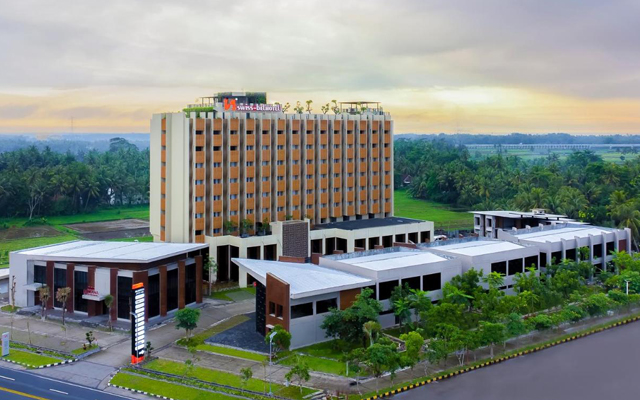
Swiss-Belhotel Airport Yogyakarta pictured
He reminded members to lower their reliance on the segment: “The hospitality industry, particularly our friends in the regional destinations in Indonesia, have been relying heavily on the government sector. We need to balance this moving forward.”
For Swiss-Belhotel International, the government sector is an important part of its overall business. And although the restrictions have had some impact, the company worked closely with its teams and partners to navigate the situation, according to Teresia Wibowo, its regional director of sales and marketing for Indonesia.
“We have always focused on diversifying our offerings to ensure that we can meet the needs of various market segments. While the government sector was an important component, we are exploring other opportunities to fill gaps,” she said.
Meanwhile, Archipelago International has proactively diversified its client base to mitigate the impact of fluctuating government activities, which have shown a gradual decline over the years. The hotel group, whose government market share has ranged from 30 to 40 per cent, had anticipated periodic slowdowns and diversified beyond government contracts.
John Flood, CEO of Archipelago International, told TTGmice: “By appealing to a wider audience, such as corporate clients, families, and FITs, we not only buffer against the effects of potential downturns and create a more resilient revenue stream.”
“For example, we achieved 97 per cent of our budgeted revenue in February, and we expect March to reflect similar results. This period also coincided with Ramadan (typically a slow month), making it difficult to determine how much of our performance is due to that versus actual government cutbacks,” he elaborated.
Santika Indonesia Hotels & Resorts is also focusing on diversifying into and penetrating new markets to compensate for the reduced government business in its properties.
Sudarsana, general manager of business development at Santika Indonesia Hotels & Resorts, said: “The financial sector remains active, as well as the pharmaceutical and healthcare industries. We will organise health-related events to attract participants, particularly in major cities like Jakarta and Surabaya.”
However, he acknowledged that the government regulation has affected overall business, and is hoping that the regulation “would change soon” before price wars occur over the shrinking business events pie.
Sudarsana explained that government restrictions extend beyond direct event bans in hotels, encompassing significant budget cuts across nearly all sectors. This impacts not only government agencies but also related entities like state-owned companies, contractors, and suppliers. Furthermore, recent regional restrictions on holding graduation ceremonies in hotels have closed off another potential revenue stream for their ballrooms.
“From experience, we know that new governments and governors, who took office in February, often take a few months to get organised. With over three million civil servants, it’s essential to hold meetings in hotels, so we are confident that in the next month or two, we will see a return of much of the government business.”
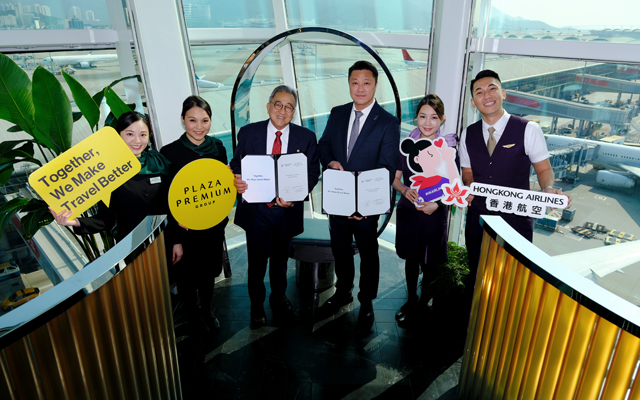
Plaza Premium Group’s Song Hoi See (third from left); and Hong Kong Airlines' Yan Bo (third from right) with the staff from Plaza Premium Group and cabin crew from Hong Kong Airlines
Plaza Premium Group (PPG) and Hong Kong Airlines (HKA) have signed a Memorandum of Understanding (MoU) to enhance cooperation and extend the range of services available to their respective guests.
Under this arrangement, business class passengers and frequent flyer members of Hong Kong Airlines would be eligible to access Plaza Premium Lounges worldwide.
Plaza Premium Group’s Song Hoi See (third from left); and Hong Kong Airlines’ Yan Bo (third from right) with the staff from Plaza Premium Group and cabin crew from Hong Kong Airlines
Currently, HKA operates a network of over 30 destinations across Asia Pacific and North America. PPG operates its flagship Plaza Premium Lounges in over 150 countries worldwide, covering almost all the destinations in HKA’s network. This year, the airline is launching longhaul routes to further expand its network, and Plaza Premium Lounges are already operating at these destinations.
As part of the cooperation in the future, PPG and HKA will also develop integrated benefits on their respective loyalty programmes – Smart Traveller is the digital experience and rewards platform for Plaza Premium Group, in conjunction with Fortune Wings Club, the global loyalty programme for Hong Kong Airlines.
This includes promotions that facilitate the conversion of points on each other’s loyalty programmes. There will also be the opportunity to redeem points accumulated on the Smart Traveller marketplace for HKA’s special offers, including e-vouchers and seasonal promotions.
The two parties also plan to develop marketing campaigns to cross-promote Hong Kong Airlines ticket packages and bundle them with the Smart Traveller’s global programme of services and products.
There will also be an opportunity to jointly develop social impact programmes that will support community-driven initiatives aimed at achieving shared social responsibility goals.
Event brief
The inaugural BorneoCraft Global Expo and Conference 2024 with the theme Globalising Local was aimed at elevating Sarawak’s craft industry on the global stage and boosting the state’s creative economy and cultural heritage.
The event, held from November 27 to December 1, 2024, was organised by the Sarawak Craft Council (SCC) and supported by various ministries, as well as the Malaysia Convention and Exhibition Bureau and Business Events Sarawak.
Place Borneo, the appointed event organiser, was tasked with orchestrating and executing a comprehensive programme to bring the vision of Globalising Local to fruition.
Event highlights
The craft expo component was held outdoors at the Kuching Waterfront area, while the one-day conference component was held at Hilton Kuching on November 29.
The keynote address was delivered by the World Craft Council Asia Pacific region president, Aziz Murtazaev.
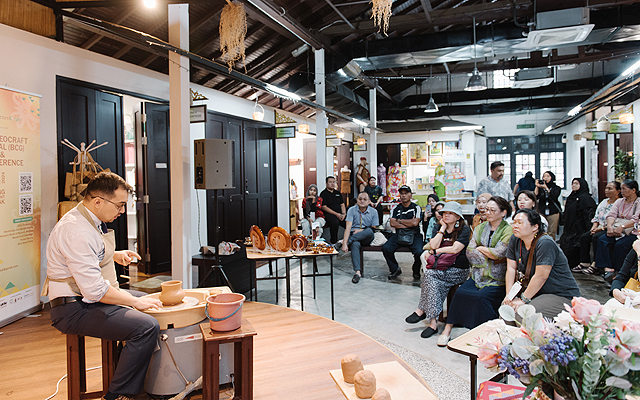
Interactive workshops and masterclasses provided delegates with the opportunity to learn from seasoned professionals and gain deeper insights into various aspects of arts and craft.
The expo attracted around 200 exhibitors, with about half of them hailing from Sarawak, showcasing the state’s vibrant artisanal scene and offering visitors a chance to appreciate and purchase unique, handmade items.
This inaugural event also made history by setting a Malaysia Book of Records achievement for the “largest participation in a bead craft making event, with 274 participants collaborating to create a stunning masterpiece.
Another key highlight was the inaugural MasterCraft Challenge 2024, held on November 30 at the Kuching Waterfront. This three-hour competition was open exclusively to Sarawakians, and it was aimed at uncovering local talent across various craft categories, including carpentry, pottery, beading and sculpting. During the competition, 10 artisans showcased their creativity and skills, where one individual walked away with the coveted title of MasterCrafter and a cash prize of RM5,000 (US$1,128).
Challenges
Place Borneo’s CEO, Mona Abdul Manap, shared: “The main challenge was building the brand of the event from scratch and convincing sponsors, governments, speakers, exhibitors, and participants that this would become an annual event, so they could plan how to be involved in future editions.”
As such, a press conference was held in Malaysia’s capital, Kuala Lumpur, before the event to raise awareness and build anticipation. International media were also flown in to experience the event first-hand and report on it, helping to build awareness of the event internationally.
Event BorneoCraft Global Expo and Conference 2024 Organiser Sarawak Craft Council Venue Kuching Waterfront, Hilton Kuching Date November 27 to December 1, 2024 Attendees 45,778 expo visitors and 552 conference delegates
The Twelve Apostles in Port Campbell National Park pictured
Melbourne is preparing to host its largest ever incentive programme this month, as the first wave of delegates from Amway China’s Leadership Seminar are set to arrive this week.
The event, which includes over 16,000 delegates across six waves, is the largest incentive to ever be held in Australia and the largest outbound incentive from China.
The Twelve Apostles in Port Campbell National Park pictured
Attendees are arriving in Melbourne in groups of between 2,000 and 3,000 people for five days of business seminars, touring experiences and a gala dinner at the Melbourne Showgrounds. It is estimated that the event will generate A$100 million (US$63 million) in economic impact.
The delegates are staying at eight hotels across the city, generating approximately 32,000 hotel room nights. Amway China attendees will also dine at 50 restaurants across Melbourne and Victoria.
A variety of tours will allow delegates to experience the best of the city and the regions, with trips to 20 popular attractions including Sovereign Hill, Healesville Sanctuary, Werribee Zoo, Phillip Island Nature Park, Twelve Apostles, Rochford Winery, Puffing Billy, Melbourne Skydeck, and the National Gallery of Victoria showcasing the many diverse experiences on the city’s doorstep.
Melbourne Convention Bureau successfully bid for the event for Melbourne in 2022, competing against a number of other national and international destinations to secure the highly sought-after incentive programme.
The deadline for hosted buyer applications for Meetings 2025 is approaching, with submissions closing next week.
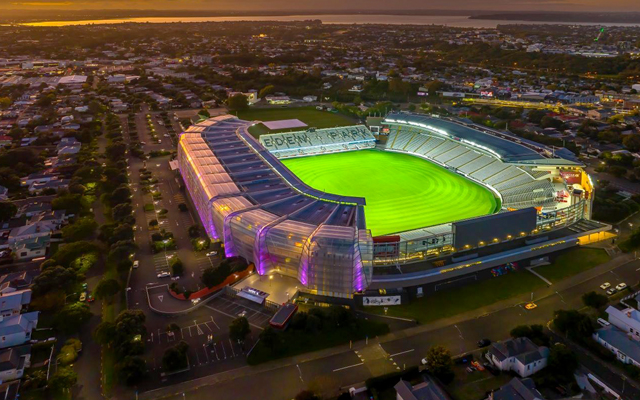
The event is scheduled for June 10 in Tāmaki Makaurau Auckland, inaugurated by a welcome event at Eden Park.
Eden Park in Auckland
Business Events Industry Aotearoa (BEIA) chief executive, Lisa Hopkins, indicated that the two-day event will facilitate an estimated 8,000 pre-scheduled meetings.
“Hosted buyers are guaranteed to come away with new insights, new contacts and excellent business opportunities. Meeting all of New Zealand’s regions from the far north to the deep south under one roof in two days is a phenomenal experience.”
Hopkins added: “There’s a seamless balance of work and social, and a lot of learning for the key decision makers and organisers of business events from Australia and New Zealand, who will enjoy complimentary flights and accommodation as well as other incredible benefits.”
The conclusion of Meetings 2025 will be marked by a celebratory event at the Viaduct Events Centre, with the support of The Events Group, Urban Gourmet, and The Production Agency, followed by the official after-party hosted on the rooftop of QT Auckland.
Now in its 29th year, 500 business event professionals from Australia, New Zealand and international markets are set to meet with over 200 of New Zealand’s top industry suppliers, destinations and operators at MEETINGS 2025.
Hosted buyers receive a customised pre-scheduled appointment diary meeting 30 exhibitors across two days, and a range of pre- and post-familiarisation tour options in Auckland and around the country.
Hosted buyer applications can be made on the MEETINGS 2025 website. Registrations for the MEETINGS day buyer programme open in mid-April.
Craig Davidson is the new CEO of Tourism and Events Queensland (TEQ).
With a 35-year career in hotels, resorts, attractions, and nature-based experiences, Davidson has worked with Southern Pacific Hotel Corporation, Hamilton Island, Voyages Hotels and Resorts, Ardent Leisure Theme Parks, and Journey Beyond.
He has also led Tourism Australia’s Investment Attraction, Aviation Development, and Industry Development team, including Indigenous tourism products, and served on various boards, including six years as a director at Destination Gold Coast.
He brings deep local tourism knowledge combined with extensive national experience. Above all, as a Queenslander, he is passionate about the success of the tourism industry in his home state.
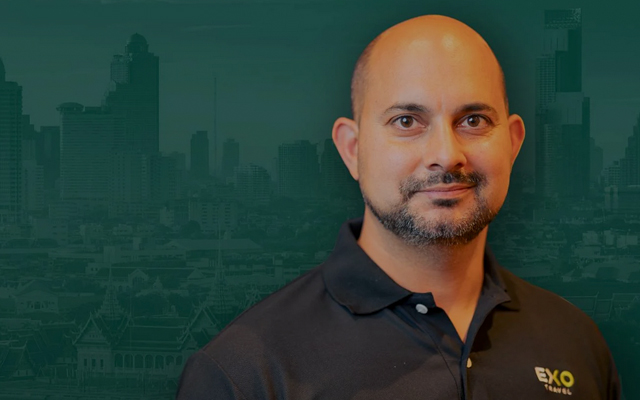
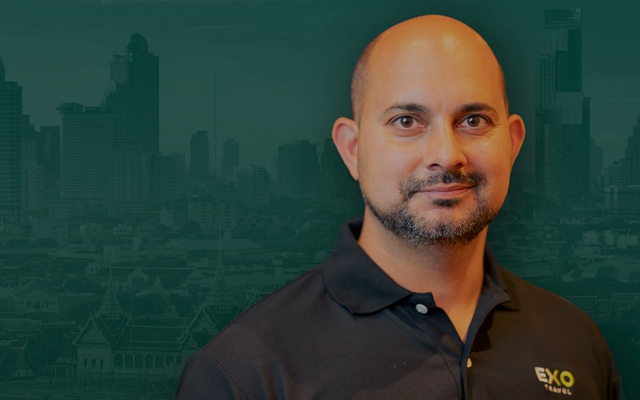
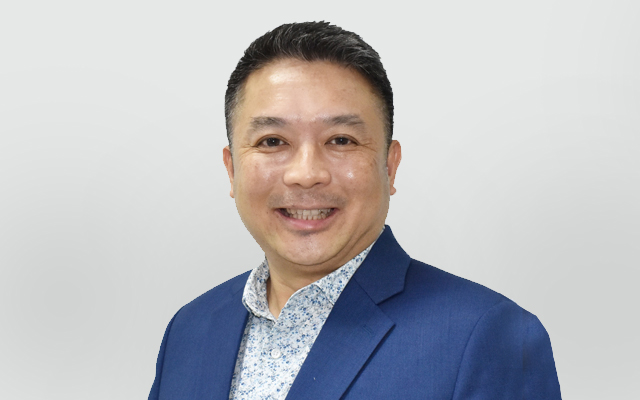
SATS-Creuers Cruise Services (SCCS), the terminal operator of Marina Bay Cruise Centre Singapore (MBCCS), has appointed Gregory Tan as its new CEO. He will oversee the company’s direction, growth, and the daily operations of MBCCS.
Tan was previously SCCS’ chief operating officer and has 15 years of experience in tourism management. With extensive knowledge in aviation ground handling, he has a proven track record of strengthening relationships with key airline clients such as Singapore Airlines, Qantas, and Lufthansa.
Just 10 minutes from Phuket International Airport on the serene northern coast, this 178-key, Bill Bensley-designed resort offers delegates a quiet, tropical paradise steeped in Phuket’s tin-mining heritage
The newly-opened Ritz-Carlton, Bangkok anchors the One Bangkok development with cosmopolitan elegance. Featuring the city's largest ballroom and a spectacular new penthouse suite, it delivers exceptional hardware and deeply authentic, soulful service for business and leisure travellers alike
Behind the imposing, Brutalist concrete that defines Zurich’s Oerlikon district lies a surprising secret. While its exterior honours the neighbourhood’s industrial roots, stepping inside Mama Shelter reveals a vibrant, neon-soaked world that is a far cry from its rigid shell



 His experience and understanding of the market position him to lead the company through its next phase of growth.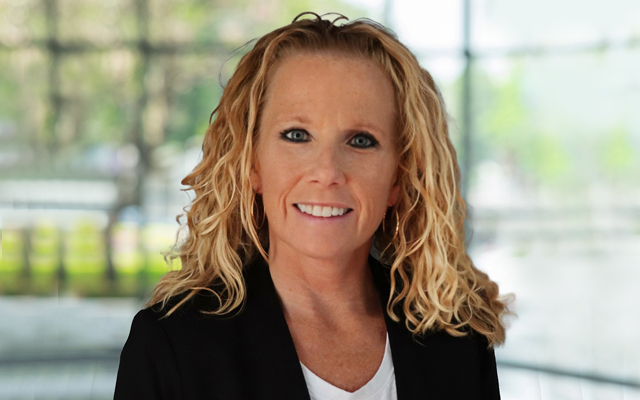


 He has also led Tourism Australia’s Investment Attraction, Aviation Development, and Industry Development team, including Indigenous tourism products, and served on various boards, including six years as a director at Destination Gold Coast.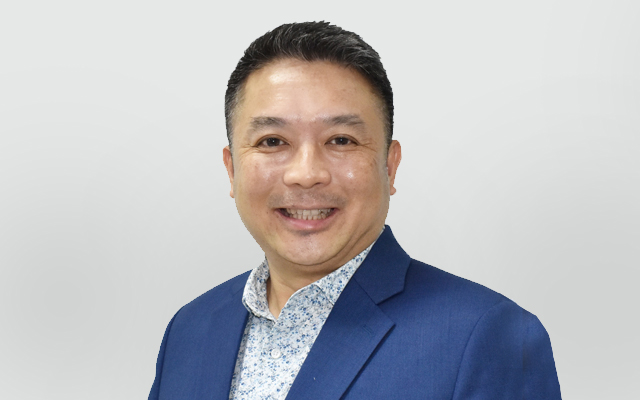
 Tan was previously SCCS’ chief operating officer and has 15 years of experience in tourism management. With extensive knowledge in aviation ground handling, he has a proven track record of strengthening relationships with key airline clients such as Singapore Airlines, Qantas, and Lufthansa.