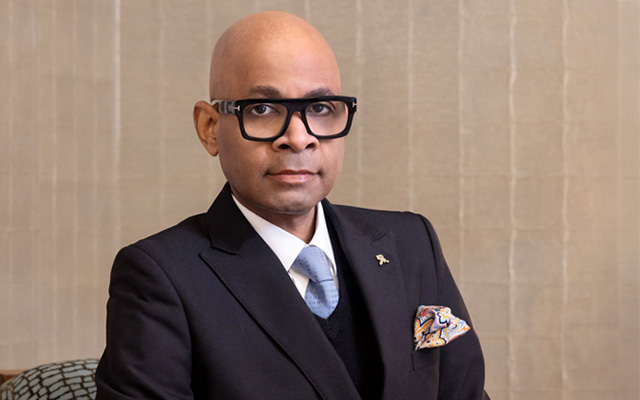
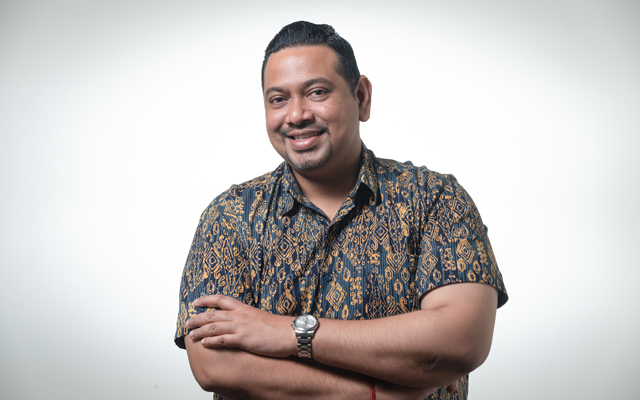
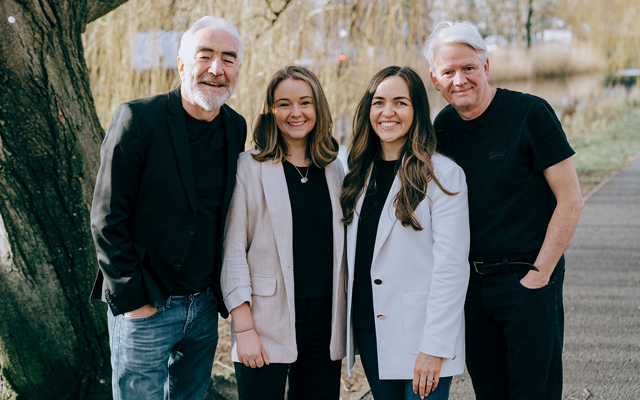
From left: Patrick Delaney; Gráinne NíGhiollágain; Aoife McCrum; and Pádraic Gilligan
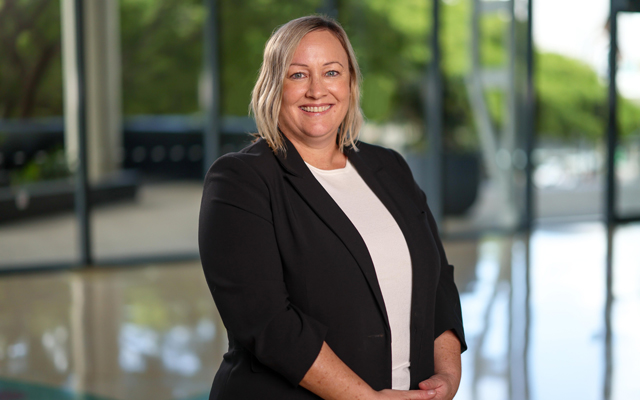
SoolNua, a specialist business events advisory firm based in Ireland, has announced Aoife McCrum and Gráinne Ní Ghiollagáin as its new joint owners and managing partners.
They succeed industry veterans Patrick Delaney and Pádraic Gilligan, who founded the company in 2014.
From left: Patrick Delaney; Gráinne Ní Ghiollágain; Aoife McCrum; and Pádraic Gilligan
McCrum and Ní Ghiollagáin assume leadership of SoolNua, which provides strategic, marketing, and training expertise to a global clientele of destinations, hotels, venues, business events agencies, and associations.
McCrum has been with SoolNua since its launch, playing a key role in developing the company’s brand. Ní Ghiollagáin, who joined SoolNua five years ago, brings a perspective gained from her background as a pharmacist and extensive experience on both the supply and demand sides of the industry.
Founders Delaney and Gilligan will remain connected to SoolNua. Delaney will serve in an advisory capacity, contributing to select projects, while Gilligan will continue to provide strategic direction and mentorship as part of the operational team.
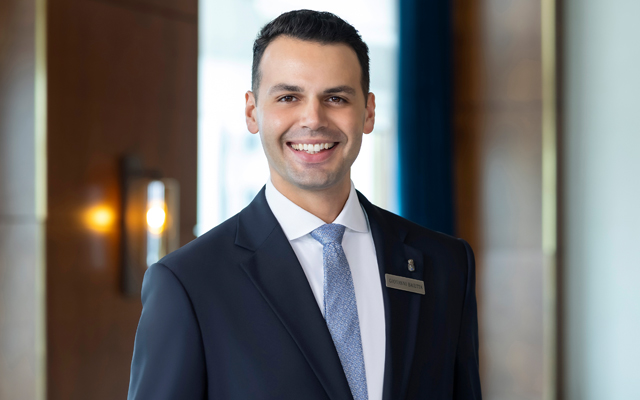
The Ritz-Carlton Jakarta, Pacific Place has welcomed Giovanni Baietta as its new director of F&B.
With over a decade of experience in ultra-luxury hospitality, Giovanni brings a distinguished background in Michelin-star dining, five-star hotels, and globally renowned resorts across Europe, Asia, the Middle East, and Africa.
His expertise includes positions at Lh, Shangri-La Group, Hotel Splendide Royal in Switzerland, Aman Rosa Alpina, and the three-Michelin-star 8 1/2 Otto e Mezzo Bombana in Hong Kong, where he curated a 2,000+ reference wine cellar. He also worked aboard the Venice Simplon-Orient-Express.
Baietta was most recently director adjoint of F&B at La Mamounia, a five-star property in Marrakech.
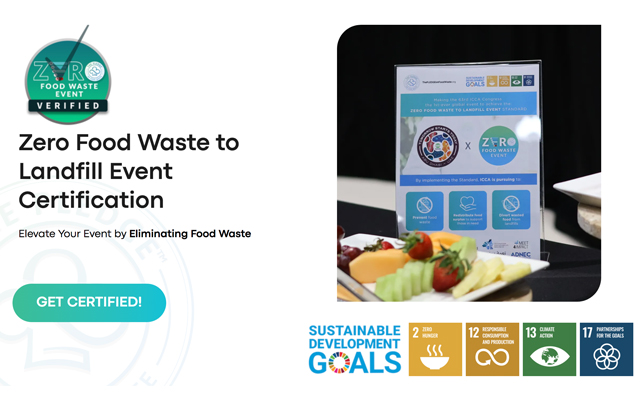
The International Congress and Convention Association (ICCA) has made history by achieving the Zero Food Waste to Landfill Event Standard certification for its 63rd Congress, held in Abu Dhabi from October 20-23, 2024.
This marks the first time a global event has earned this recognition from The Pledge on Food Waste, setting a new benchmark for large-scale gatherings.
ICCA achieves The Pledge on Food Waste
Building on Bangkok Protocol on Sustainable Gastronomy – which was established at the 2023 ICCA Congress in Bangkok – ICCA partnered with ADNEC Centre, Capital Catering, and LightBlue Consulting to minimise food waste during the event. Over 200 staff members received training on best practices, 1,115kg of food were diverted from landfills, 37kg of food were saved, and 928 meals (928 kg CO2 equivalent) were redistributed through Ne’ma (UAE’s National Food Loss and Waste Initiative). LightBlue’s FIT Food Waste Tech tracked an average of just 163 grams of food waste per delegate per meal.
The rigorous certification process involved documenting, measuring, and auditing all waste-related efforts. While the Congress achieved an 87.5 per cent compliance score, some points were deducted in the separation, transformation, and monitoring sub-criteria due to operational challenges. The certification covered food operations at the ADNEC Centre exclusively.
Senthil Gopinath, CEO of ICCA, said: “Sustainability has become a cornerstone of ICCA’s mission, and achieving the Zero Food Waste to Landfill certification for the 63rd ICCA Congress is a proud moment for our community. This milestone reflects our dedication to innovation and raising the bar for the global events industry.”
Ben Lephilibert, co-founder of The Pledge on Food Waste, added that this certification “is a monumental step for the MICE industry”.
By transforming ambition into measurable impact, ICCA has proven that even large-scale events can lead the way in sustainability. We’re proud to have worked with ICCA, ADNEC, and Capital Catering to create a replicable framework that inspires other organizations to adopt similar commitments,” Lephilibert added.
Moving forward, ICCA plans to develop a practical toolkit for food waste prevention in partnership with LightBlue and aims to support the creation of an industry-wide benchmarking system.
Brisbane Convention & Exhibition Centre (BCEC) has appointed Karyn Sutton to the role of communications and marketing manager ahead of the Centre’s 30th anniversary this year.
An accomplished marketing professional, proficient in the field of corporate communication, Sutton’s experience stems from business development and PR roles in international five-star hotels, cruise lines, and more recently, in local government.
Gail Sawyer, the Centre’s marketing & communications manager, is now scaling to part-time at BCEC after 26 years at the helm.
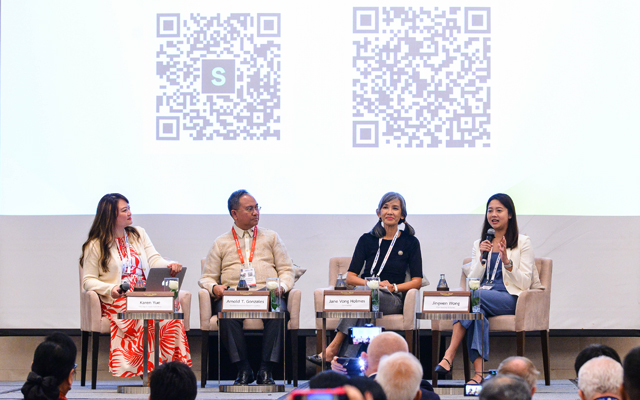
From left: TTG Asia Media’s Karen Yue; Tourism Promotions Board Philippines’ Arnold T Gonzales; FCM Meetings & Events’ Jingwen Wong; and GainingEdge Asia’s Jane Vong-Holmes discuss the future of events at at IT&CM Asia and CTW APAC 2024; photo by Yingyong Unanongrak
As the events industry evolves, it is increasingly defined by three interconnected pillars: People, Planet, and Prosperity. This framework emphasises participant-centric experiences, environmental sustainability, and meaningful economic impact. The future of events lies in their ability to blend immersive engagement with purpose-driven outcomes that resonate on all three fronts.
Today’s events are centred on the participant, moving away from the rigid, compartmentalised formats of the past. Instead, they now embrace open, unconfined spaces that foster immersive, fluid experiences, allowing participants to engage more naturally and organically.
David Barrett, MICE consultant at The Slate and founder of DBC Group, explained: “Ten years ago, events were all content-driven. Today, the approach is participant-first: immersive, personalised, and engaging, with content evolving to meet the needs of the audience.”
Jingwen Wong, meetings & events leader for Southeast Asia and China at FCM Meetings & Events, noted that events are no longer a “one-way delivery”, as attendees now expect active participation and to be “part of the action”.
Modern audiences demand shorter, high-impact sessions that are like “TEDx talks on steroids”, observed Barrett.
“Digital technology has also built a greater community spirit within events, enabling instant updates, photo-sharing, and personalised communication through apps,” he said.
Expectations for wellness and flexibility have also reshaped event formats. Ravi Ganglani, general manager of Avani+ Hua Hin Resort, said: “Gone are the days of sitting for eight to nine hours straight with only a lunch break. We offer a physiotherapist during breaks to teach attendees how to maintain good posture and avoid fatigue throughout the day.”
Inclusive innovations such as decompression rooms featuring low-stimulation environments, flexible mealtimes, resting areas, and all-day snack stations with healthy options, as seen at mega-events like Devcon 7 in Bangkok, reflect the shift toward creating more holistic, participant-driven experiences.
Embracing localisation
Immersive storytelling and local culture are now vital components of event programming, observed business events veterans.
“Integrating storytelling and local culture into our events not only serves to forge a deeper connection with the destination for attendees; it also makes the experience more memorable,” said Arnold T Gonzales, acting head, MICE department, Philippines’ Tourism Promotions Board.
Employing heritage spaces, and showcasing local performances and local fare are no longer mere add-ons – they are an integral part of immersive and authentic business events.
Chiruit Isarangkun Na Ayuthaya, president, Thailand Convention and Exhibition Bureau (TCEB), said there is a focus on developing local experiences that are suitable for business events.
“We have a long list of local experience offerings throughout Thailand, some of which can be used for carbon offsetting,” he added.
Noor Ahmad Hamid, CEO of PATA, emphasised that as destinations compete for major events, the focus on legacy has evolved.
“Legacy now focuses on long-term benefits such as knowledge transfer, job creation, environmental sustainability, and social engagement,” Noor explained.
Peeradorn Kaewlai, associate professor of urban planning at Thammasat University, noted that event legacy needs to be considered from the outset, and integrated into the bidding and planning process.
The global push for sustainability has also revolutionised event management. Today’s events aim to minimise their environmental footprint through net-zero goals, waste reduction, and sustainable practices.
At Thailand Travel Mart Plus 2024, the Tourism Authority of Thailand (TAT) implemented a zero-waste initiative with sorting stations at all side events. Partnering with JW Marriott Khao Lak Resort, surplus food from the event was distributed to local schools.
Similarly, TAT’s Amazing Green Fest in Bangkok showcased innovative waste management practices, such as sorting stations for waste hosted in conjunction with local social enterprise The Geen.
TAT governor Thapanee Kiatpaiboon has also backed a push to elevate local sustainability standards in line with the values of longhaul markets such as Europe and the US.
Leveraging technology for sustainability
AI, virtual reality, and digital tools are now essential in delivering seamless, personalized event experiences, noted FCM Meetings & Events’ Wong. She said: “Today’s attendees expect everything at their fingertips – from the agenda to networking opportunities.”
AI-summary tools such as Gevme’s Snapsight, AI-MCs like those used at Thailand Innovative Meetings Exchange 2024, and AI concierges such as DevAI – integrated into Devcon 7’s event app to answer participant FAQs – demonstrate how technology is reshaping the industry.
Daniel Tjan, director of business innovation at Gevme, whose products include Snapsight, Spark AI, and the Sustainability Hub for Events to support net-zero event planning, said: “Gevme’s AI-driven solutions have transformed event planning and execution. By automating routine tasks and offering real-time insights, our tools allow event professionals to focus on strategic elements, enhancing both engagement and satisfaction. AI-powered content summarisation is setting new standards, delivering more personalised experiences for attendees.”
Tjan predicts that the future of events will increasingly be hybrid. “AI will play a pivotal role in personalising attendee journeys, predicting preferences, and enhancing onsite experiences. Sustainability and inclusivity will also be central, with technology broadening participation and reducing environmental impact,” he said.
Barrett also highlighted the shift from traditional printed signage and build-ups to inbuilt LED screens.
“Tech is here to stay,” he stated, noting how these innovations not only reduce waste but also enhance visual aesthetics.
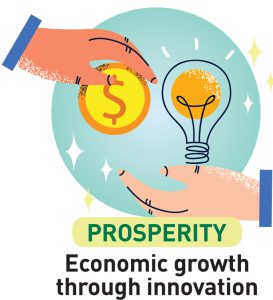
According to Wong, businesses now prioritise time efficiency, which has resulted in a shift from Return on Investment (ROI) to Return on Time (RoT).
“Corporates are selecting events that truly deliver impactful outcomes. It’s no longer about the number of events but about their ability to deliver value in a short span,” Wong elaborated.
The fusion of business with leisure, or bleisure, is another driver of economic growth.
Wallapa Traisorat, CEO and president of Asset World Corporation (AWC), told TTGmice that the group has seen its F&B revenue in Bangkok surge 30 per cent post-Covid due to the growing trend of merging leisure and business. In response, AWC has invested in the new four-storey EA Rooftop complex, which features over 8,200m2 of casual chef’s table experiences for hundreds of guests at a time.
Festivalisation, seen at events like Money 20/20 FinTech or Devcon in Bangkok, combines cultural elements with traditional formats to attract diverse audiences and create memorable experiences.
According to Chiruit, TCEB’s MiceNext strategy aims to create a “festival economy.”
“We are witnessing a transformation in events, blending traditional formats like conferences, tradeshows, meetings, and incentives into dynamic hybrids. Festivals are becoming a cornerstone of the business events industry, redefining boundaries and emphasising experiential engagement. Even conventional exhibitions or business events can adopt a festival-like approach,” he observed.
Upskilling for the future
The digital age has led to industry disruptions; empowered corporate clients with destination knowledge are bypassing traditional intermediaries like local event planners. Direct communication between overseas corporates and DMCs is becoming more commonplace, forcing DMCs to enhance their offerings.
“Planners now expect more from DMCs, as clients arrive well-informed about destinations through online research and AI tools. The pandemic has also compressed event timelines, with 18-month preparations sometimes condensed to just six weeks, pushing planners to deliver quality under tight deadlines,” Barrett noted.
Far-sighted destination leadership knows work must have been done yesterday to prepare business events professionals for today, and have been investing in industry talent development.
Gonzales highlighted the Philippines’ efforts to train local communities: “We’re investing heavily in training programmes for the next generation of professionals, ensuring they can deliver the personalised, tech-enabled experiences that clients now expect.”
The St. Regis Macao has appointed Stuart-Wayne Douglas as general manager.
Douglas began his hotel career in 1996 at the Sheraton Airport Hotel in Fort Lauderdale, Florida. In 1999, he became director of rooms at the Hilton Longboat Key Resort in Florida. He later moved to The Ritz-Carlton Rose Hall in Jamaica, where he served as executive assistant manager starting in 2007. In 2017, he became resident manager of The Ritz-Carlton Jeddah.
Before moving to The St. Regis Macao, Douglas held the position of hotel manager at The St. Regis Shanghai Jingan in China.
South Korea’s Air Busan will no longer allow passengers to keep power banks in luggage stored in overhead cabins – a cautious move following a fire that devastated one of its airplanes last week.
Only bags cleared of power banks and tagged at the boarding gates will be allowed to be stored in overhead cabins
Starting this February 7, all passenger carry-on bags will be inspected at the boarding gates. Those not containing power banks will be tagged and allowed for storage in overhead cabins. This measure will begin on trial routes before being expanded to all flights.
The airline will require power banks to be kept with passengers so overheating, smoke or fire incidents can quickly be dealt with immediately.
Furthermore, crew will undergo additional fire training and aircraft will carry additional fire containment equipment.
Building on last year’s success, what are your projections for 2025?
Last year, we hosted nearly 1,900 events and welcomed around 300,000 international delegates which was a growth of 200 per cent over 2023. These conferences were in sectors like semiconductors, engineering, science, and medical care, due to Penang’s strong manufacturing base.
This growth in 2024 can be attributed in part to increased venue availability, where several properties with meeting facilities opened last year, stimulating interest in hosting events.
The upcoming Penang Waterfront Convention Centre (PWCC), a purpose-built venue capable of hosting both exhibitions and conferences, is expected to further enhance Penang’s MICE appeal when it opens in the 4Q2025.
We anticipate a bumper year for 2025, driven by strengthened air connectivity within the Asia-Pacific region. Direct flights have increased from key markets like China, Indonesia, and Singapore, and we launched our first direct flights from India (Chennai to Penang) in November 2024. Flydubai recently became the first UAE airline to offer direct flights to Penang. We are also actively targeting Eastern European markets to further boost international inbound MICE demand.
As a result of these efforts, we project a 100 per cent increase in international business events delegates in 2025 compared to 2024.
You’ve been working for several years to secure direct air connectivity with India. Now that IndiGo has launched daily flights between Chennai and Penang, what kind of growth in demand from India do you anticipate?
We have been pursuing direct flights to India for nearly seven years. Previously, Indian MICE travellers had to transit in Singapore or Kuala Lumpur to reach Penang, hindering our ability to effectively tap into that market.
Now, with the launch of direct connectivity, we anticipate reaching a much wider audience, including conference organisers and incentive groups. Currently, India accounts for about 10 to 15 per cent of our international MICE arrivals. However, since the introduction of these direct flights, we have seen a surge in inquiries from the Indian market regarding hosting business events in Penang. We are also actively working to secure direct flights from additional Indian cities. By year’s end, we expect India to be among our top five source markets for international MICE arrivals.
Beyond your general outreach efforts, what specific strategies do you use to attract PCOs and event planners?
We maintain a regularly updated database of PCOs and PEOs, keeping them informed about our diverse business events facilities and experiences.
Our convention bureau distinguishes itself through tailored support models, moving beyond a one-size-fits-all approach. We offer customised solutions based on each group’s specific needs. For example, whether an organiser needs DMC support for a 100-person event or assistance with hosting dinners, we connect them with the appropriate resources. We are always available for consultation, providing a range of options and then analysing requirements to deliver the best possible support, even for groups as small as 20.
Furthermore, we regularly organise fam trips for PCOs from various international markets. Our signature event, the Penang International Travel Exchange (PITE), hosts approximately 200 international buyers, primarily meeting planners and PCOs. PITE includes B2B sessions and provides attendees with two days to experience Penang’s wide range of MICE-ready products and experiences.
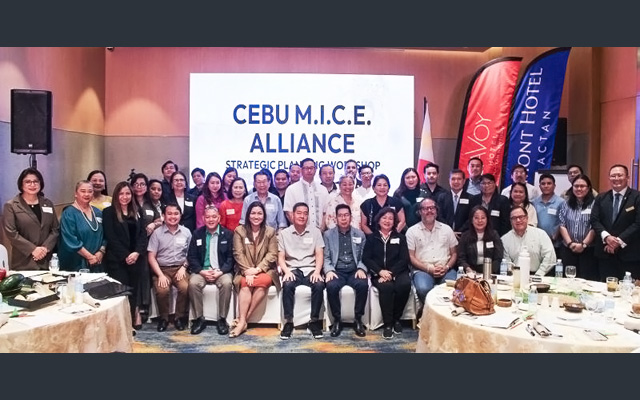
The formal organisation of the Cebu MICE Alliance is underway, to position the province as a world-class destination for both international and domestic events, leveraging its unique selling points.
Initiated by the Cebu Chamber of Commerce and Industry (CCCI) led by its president, Jay Yuvillos, together with other stakeholders, the Alliance held a strategic planning workshop on January 22 facilitated by Octavio Peralta, founder and volunteer CEO of the Philippine Council of Associations and Association Executives (PCAAE).
Cebu MICE Alliance strategic planning workshop
Peralta shared with TTGmice that during the “milestone event”, 53 participants sat down to craft the Alliance’s purpose, mission, vision and core values and provided inputs on objectives, KPIs and targets.
The Alliance’s governance structure was also finalised during the meeting. This included the formation of various working committees for core areas such as marketing, policy advocacy, infrastructure, training and sustainability. Plans are underway for a research-driven MICE Roadmap for Cebu, which will incorporate accurate data and specific targets.
CCCI’s Cebu Business Mobilization unit told TTGmice that the strategic plan will guide the Alliance’s activities which, in the coming months, “will likely focus on capacity-building initiatives, stakeholder engagement, and promotional activities to showcase Cebu’s MICE capabilities”.
Megaworld Hotels and Resorts, a member of Cebu MICE Alliance, is anticipated to play a prominent role in shaping the alliance’s direction. This is important given Cebu’s upcoming hosting of the ASEAN Summit and ASEAN Tourism Forum in 2026. The expertise of Cleofe Albiso, managing director of Megaworld and a key figure in the development of the Iloilo and Boracay MICE Alliances, is expected to be instrumental.
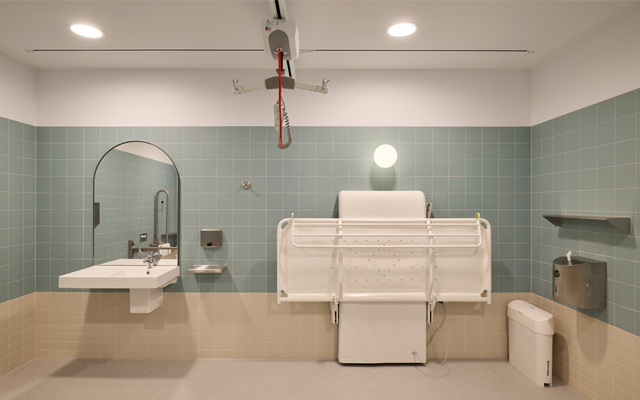
The Melbourne Convention and Exhibition Centre (MCEC) has unveiled its new Changing Places facility, a state-of-the-art bathroom designed to provide accessible and welcoming amenities for visitors with high support needs.
The new facility, a result of collaboration between MCEC, Folk Architects, and the Victorian Government – who provided funding through a Changing Places Grant – incorporates feedback from community members with lived experience to ensure it meets their specific needs.
The design prioritises creating a comfortable and safe environment, featuring warm materials, an inviting colour palette, and soft lighting. Comfortable bench seating for carers enhances the overall experience.
Universal Design principles are evident throughout the space, with fully functional and hygienic fixtures and fittings. These include a height-adjustable adult changing table, a ceiling track hoist system, and a centrally located peninsula toilet.
Strategically located near the Plenary theatre, Goldfields Café, the Exhibition Centre car park, and the surrounding retail and dining precinct, the facility will enable more individuals with profound or multiple disabilities to participate in the diverse range of events hosted at MCEC.
Alongside the new Changing Places facility, the adjoining Parents Room has been upgraded, maintaining a consistently warm and inviting atmosphere throughout both spaces and providing accessible facilities for all ages and abilities.
The opening of the Changing Places facility marks a significant step in the Melbourne Convention and Exhibition Trust’s Accessibility Action Plan, launched last year.
The newly-opened Ritz-Carlton, Bangkok anchors the One Bangkok development with cosmopolitan elegance. Featuring the city's largest ballroom and a spectacular new penthouse suite, it delivers exceptional hardware and deeply authentic, soulful service for business and leisure travellers alike
Behind the imposing, Brutalist concrete that defines Zurich’s Oerlikon district lies a surprising secret. While its exterior honours the neighbourhood’s industrial roots, stepping inside Mama Shelter reveals a vibrant, neon-soaked world that is a far cry from its rigid shell
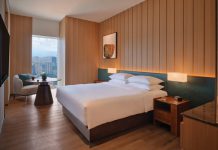
A polished urban retreat designed for business travellers, Hyatt Regency Kuala Lumpur at KL Midtown combines thoughtful design, seamless service, and exceptional facilities.



 Today’s events are centred on the participant, moving away from the rigid, compartmentalised formats of the past. Instead, they now embrace open, unconfined spaces that foster immersive, fluid experiences, allowing participants to engage more naturally and organically.
 According to Wong, businesses now prioritise time efficiency, which has resulted in a shift from Return on Investment (ROI) to Return on Time (RoT).