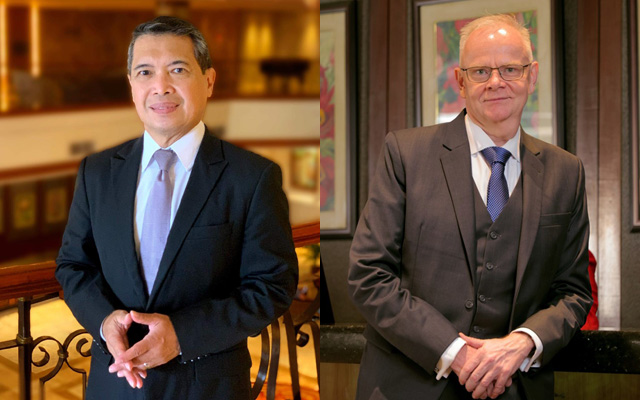
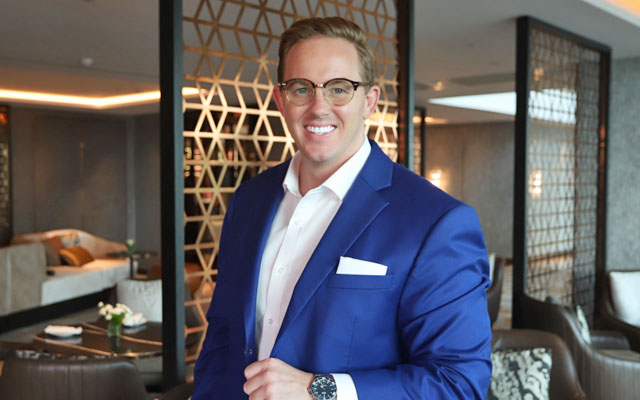
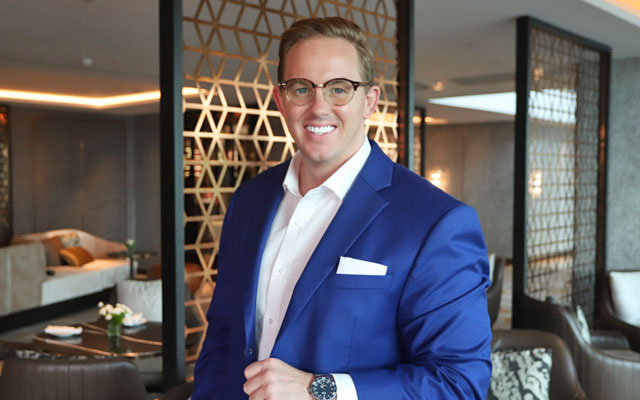
Roel Constantino has joined NUSTAR Resort in Cebu as the general manager of Fili Hotel and the soon-to-open NUSTAR Hotel.
From left: Roel Constantino and Max Huber
He is succeeded by Max Huber, who takes over as general manager of Marco Polo Plaza Cebu. Huber has held key leadership roles in prominent hotels across Asia, including Radisson Blu Wetland Park in Wuxi, China; Grand Sukhumvit in Bangkok; and Hotel Nikko in both Bangkok and Kuala Lumpur.
Thailand’s business events industry posted a remarkable 42 per cent increase in overseas travellers recorded in the 2024 fiscal year (October 2023 – September 2024).
The country welcomed a total of 1.2 million overseas business events travellers, up from 810,000 in 2023, nearly reaching the pre-pandemic record of 1.2 million achieved in 2019, according to the statistics from the Thailand Convention and Exhibition Bureau (TCEB).
An incentive group in Thailand
The top 10 sources of overseas business events travellers came from China, India, Malaysia, Vietnam, Korea, Singapore, Hong Kong, Germany, the US, and Japan. For European markets, Germany, the UK, Russia, France, and Italy were the leading contributors.
The convention sector witnessed the most significant growth – followed by incentive travel, exhibition and meeting – with a staggering 200 per cent increase in delegates compared to 2023.
This success is attributed partly to major events such as the 74th FIFA Congress held in Bangkok – the first time a South-east Asian nation hosted the governing body’s congress – and the ICCA Congress, which achieved a record-breaking attendance of 1,100, making it the largest annual gathering of ICCA ever held in the Asia-Pacific region.
This positive trajectory is expected to continue in 2025, as Thailand gears up to host a series of large-scale international events.
Money 20/20 Asia 2025, a fintech event, will take place in April in Bangkok with an anticipated 5,000 attending delegates representing start-ups, financial bodies and tech enterprises.
International Diabetes Federation World Diabetes Congress 2025, which will also take place in April in Bangkok, aims to advance research in diabetes treatment and push the disease into universal coverage of the public health policy globally. With an expected 10,000 attendance, it will be the first time that this world congress is held in the South-east Asian region.
In the following month of May, the Asia Pacific Life Insurance Congress in Bangkok is expected to attract 10,000 delegates comprising life insurance agents and professional financial consultants.
THAIFEX-Anuga Asia 2025, a tradeshow dedicated to food products and beverages, innovation and technology, will also be happening in May in Bangkok. It is expected to attract 85,000 participants.
Chiruit Isarangkun Na Ayuthaya, president of TCEB stated that the aim is to achieve higher, where the target is now 1.4 million overseas business events travellers in the 2025 fiscal year.
Thiago Araujo has joined BCD Meetings & Events (BCD M&E) as global sustainability director.
Araujo will lead the company’s global sustainability strategy by aligning all operations with its environmental and social goals, driving climate urgency initiatives, advancing sustainable partnerships, delivering comprehensive training and adopting sustainability into the organisational culture.
He brings more than 15 years of professional experience at the intersection of sustainability, business development and strategic leadership. His previous roles include sustainability manager at Volvo Group, project and account director at GL Events, and engagement specialist at the Rio 2016 Olympic Games, where he led impactful sustainability initiatives.
Based in France, Araujo reports directly to BCD M&E’s senior vice president, people & culture, Audrey Lambert. He will also work closely with BCD’s overarching sustainability department and BCD’s consulting division Advito to champion sustainability across the organisation.
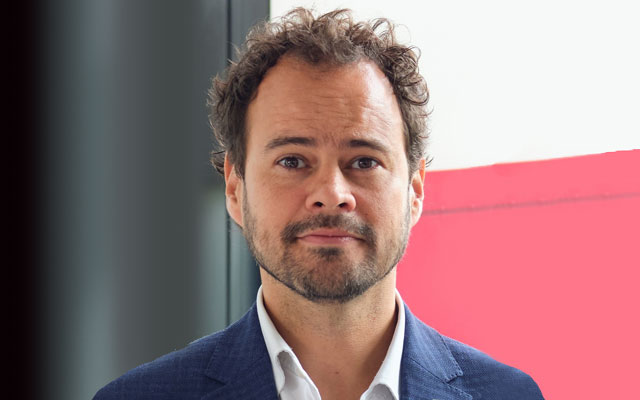
Marco Polo Hotels – Hong Kong has appointed Dawn Zhao as the new area director of sales and marketing for its three Hong Kong properties: Marco Polo Hongkong Hotel, Gateway Hotel, and Prince Hotel.
With more than 15 years of experience in senior sales and marketing roles, Zhao has held key positions at companies like Rosewood Hotel Group, Marriott International, Hyatt Hotels & Resorts, Disney Resorts, and IHG Hotels & Resorts.
In her new role, she will oversee sales and marketing efforts across the three hotels, driving innovative campaigns, optimising sales strategies, and guiding teams to meet strategic objectives.
Following a strong recovery this year, the outlook for South Korea’s business events industry continues to shine bright.
The strong momentum in business this year was established by several prominent events, such as the Asia Oceania Geosciences Society 2024 21st Annual Meeting in June, which welcomed 3,300 attendees; the 37th International Geological Congress, which attracted 6,000 delegates in August; and Nuskin Global Live East, which drew in 6,500 delegates in September.
View of Busan
Looking ahead to 2025, The Korea MICE Bureau expects another year of growth. The country already has a plump pipeline of important world gatherings –APEC Summit Meeting in Gyeongju; the 20th Intelligent Transport System Asia-Pacific Forum in Suwon City, which will gather around 2,500 participants from approximately 20 countries; and the 40th International Society for Animal Genetics Conference in Daejeon, expected to attract 1,000 participants from 40 countries.
Korea MICE Bureau and Korea Tourism Organization (KTO), which the former reports to, are determined to continue the country’s winning streak by emphasising South Korea’s array of unique venues and immersive experiences that can be found across many cultural attractions.
In 2020, KTO and Korea MICE Bureau established the Korea Unique Venue programme to do exactly that. From just 39 venues at the start, Korea Unique Venue now features 52 qualified special venues – all with their own charm and representation of the region they call home.
By selecting venues that reflect South Korea’s charm and spirit, business event delegates can experience both traditional and modern Korean culture, nature, and the arts.
“Unlike standard convention centres and hotels, these unique venues offer distinctive appeal, enabling international meeting planners to create innovative and diverse MICE events,” explained a bureau representative.
Unique venues new to the programme include P.ARK, a cultural complex that is ideal for exhibitions and other cultural events,Sky 31 Convention, and The National Gugak Center in Seoul; Busan X the Sky, an observatory that overlooks downtown Busan and Haeundae Beach; and Sejahtera Forest RCE located in Tongyeong city, designated as a sustainable development education centre by UN University, a UN-affiliated organisation.
The Korea MICE Bureau is particularly keen to attract corporate meetings and incentive groups from industries such as finance, IT, and healthcare. In the coming new year, the bureau plans to develop relevant courses that will allow attendees from these industry sectors to experience South Korea’s advanced technology and innovation firsthand.
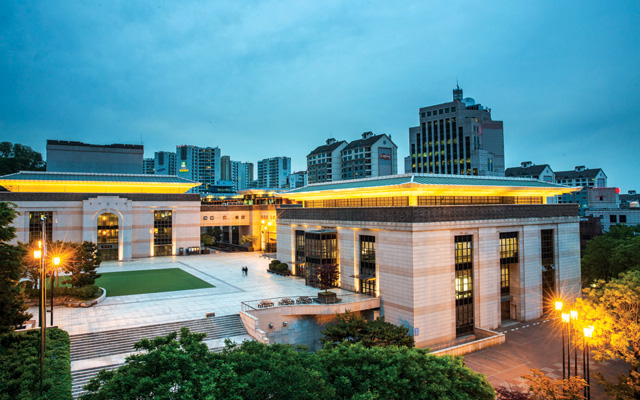
The National Gugak Center in Seoul
Event organisers considering South Korea can check with KTO on available support schemes.
There is a support programme for corporate meetings and incentive travel programmes. To be eligible, the group size must be a minimum 10 pax, and attendees must stay for at least two nights in the country.
Support range cuts across five grades, with each offering different extent of assistance.
Customised support is also available for groups of 201 to 500 participants (Grade 3).
For larger group sizes of 501 to 2,000(Grade 2) and 2,001 and more (Grade 1), event organisers will be granted additional subvention to enhance their attendees’ stay in South Korea. The support scheme is subject to change on an annual basis.
APAC Risk Committee members discuss strategies to improve corporate traveller safety
The APAC Risk Committee of the Global Business Travel Association (GBTA), which formed a small group following the September 2023 Singapore conference, has expanded from seven to 11 members.
GBTA APAC regional director, Elle Ng-Darmawan, told TTGmice there was high interest among corporate travel buyers to join when the call was made for applications to be reviewed.
APAC Risk Committee members discuss strategies to improve corporate traveller safety
Ng-Darmawan said the APAC Risk Committee comprises a high proportion of eight buyers and three suppliers.
Among the committee’s first projects was a Travel Risk Management 101 for Travel Managers and Procurement Professionals webinar held on December 12, 2024.
Committee co-chair Rebecca Malzacher, vice president, marketing and product, International SOS, shared that members were spread across the region in China, Singapore, Australia and India.
Another committee member, Victor Lim, global travel leader, Ingka Group (IKEA), gave pointers on a case study of a Swedish colleague who travelled to Shanghai and suffered a stroke, where the “template is still being used” today.
Fellow speaker Dean Fowles, unit head – travel, Asian Development Bank, said “many things can be preventable and mitigation is key”, adding that “there is (now) heightened awareness and travellers are more receptive”.
Speakers further highlighted the absence of inherent safety culture in certain industries, and the critical role of duty of care in equipping travellers to navigate unfamiliar environments. They asserted that such measures are essential to safeguarding the company’s brand image.
Beyond logistics, Fowles suggested engaging the local team, as not all countries or companies have documented legislation or are at different stages of the process.
International SOS security director Noriko Takasaki, noted that as every traveller is different so is the person’s risk profile. “Increasingly, nationality has become a risk profile because of geopolitics,” she said.
Craig G. Stark, medical director, Crisis24, advised pre-screening travellers going on a long trip to update them on medical advice, equip them with a medicine kit when they cannot access medical care and enforce a seal-belt use policy.
Practical tips the speakers offered ranged from blacklisting hotels with poor room-entry operating procedures, to female travellers carrying a door-stopper, to better preparation and clear directions being set.
Fowles noted the partnership between the travel, health and security departments is “crucial in risk management”.
Just as important, Lim commented, is to collect feedback, in particular negative experiences, while Stark raised the question of following up on how a traveller’s medical history and the treatment received overseas.
Malzacher announced part two of the risk management webinar series will be organised in early 2025.
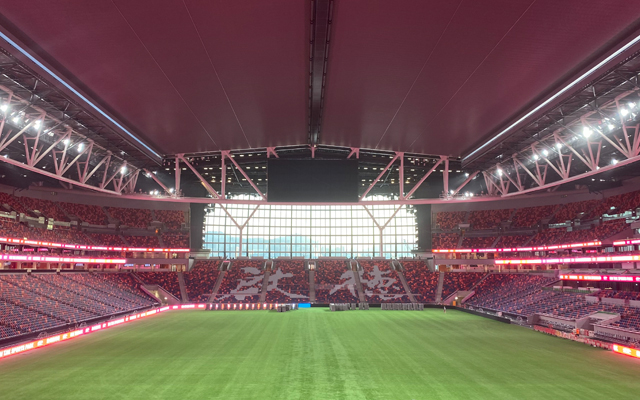
The Chinese characters "Kai Tak" celebrate the district's rich heritage
A new era of sports and entertainment is set to dawn in Hong Kong with the unveiling of the interior of the 50,000-seat Kai Tak Stadium.
This state-of-the-art venue, poised to redefine the city’s sporting and entertainment landscape, is slated to open in 1H2025.
The Chinese characters “Kai Tak” celebrate the district’s rich heritage
The Kai Tak Stadium boasts a retractable roof and a dedicated stage pocket, making it ideal for hosting a wide range of world-class events, from sporting spectacles to spectacular performances. The South Deck Terrace offers an event platform that immerses spectators in the action.
The stadium’s glass curtain wall also provides panoramic views of Victoria Harbour, while the vibrant seating displays the Chinese characters “Kai Tak”, celebrating the rich heritage of the district.
The stadium’s turf system will support top-level football and rugby, while also adapting to various sports and entertainment experiences.
Kai Tak Sports Park is more than just a stadium, encompassing a comprehensive sports and entertainment complex. The complex will include the Kai Tak Arena, a multipurpose indoor sports centre with 10,000 seats, featuring 80 per cent retractable seating for flexibility; Kai Tak Youth Sports Ground, a sports ground with capacity of 5,000 seats and featuring nine running tracks; and Kai Tak Mall, featuring over 65,000m2 of retail and F&B facilities.
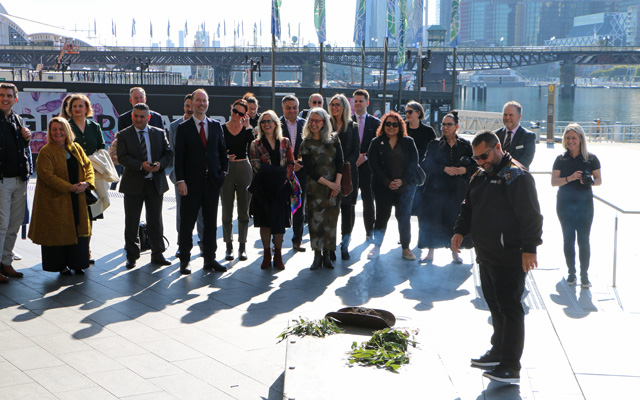
Connect with community partners to embed cultural experiences unique to place into events
Residing on Gadigal Country on the shores of Sydney’s harbour in a place where First Nations communities have gathered for centuries to share stories and experiences, ICC Sydney’s team offers opportunities to activate sustainable, inclusive and accessible event practices that leave a lasting and positive legacy for the community in which it operates.
Through ICC Sydney’s Legacy Program, event organisers can open their events with an Acknowledgement or Welcome to Country, connect with Country through a Smoking Ceremony, inspire attendees with a live cultural performance, incorporate indigenous ingredients into the menu, discover the ancient heritage of the local area with Aunty Margret Campbell, discover a First Nations businesses to supply event needs and engage First Nations artists to create artwork and graphic design elements.
Choose a venue that priorities sustainable event practices
To understand the carbon footprint of an event, organisers can request venues to assist with reporting metrics such as waste, water and energy if they wish to undertake post-event sustainability reporting.
ICC Sydney has supported many local and international associations and businesses to meet their CSR objectives through events. For example, the International Council on Monuments and Sites General Assembly partnered with EarthCheck to undertake its EventCheck assessment, reviewing the carbon footprint of the event. Aligning with ICC Sydney, the venue emissions accounted for just five per cent of total event emissions, an impressively minimal impact due to the venue’s existing sustainable infrastructure and operations.
Swapping out certain items with a ‘greener’ alternative need not be a more expensive endeavour either. By making more informed decisions around F&B, organisers can actively reduce food waste. ICC Sydney’s culinary team has worked hard to curate a menu with many carbon-friendly options itemised. This takes the guesswork out of a greener menu design.
Strengthen the local community through social impact strategies
Organisers can also drive the social impact of events by connecting to community partners and charities that are as dedicated to making a difference.
A unique way that ICC Sydney’s supports the local community is through edible centrepieces which are an innovative, community-driven service that drives support for the residents at Matthew Talbot Hostel, a service caring for men experiencing homelessness run by the St. Vincent De Paul Society New South Wales.
With 7.3 million tonnes of food waste ending up in Australia’s landfill each year, ICC Sydney’s edible centrepieces initiative reduces waste but helps give back to those most in need. Edible centrepieces allow clients to replace floral arrangements with table centrepieces created from seasonal fruits, vegetables and herbs, sourced from the venue’s New South Wales-based network of suppliers. These unique arrangements can be displayed in complimentary recycled vases.
Post-event, the ICC Sydney Culinary Services team uses the produce to donate nutritious meals and last year, edible centrepieces selected by ICC Sydney’s clients provided 480 meals for people in need.
Organisers can donate leftover event materials to ICC Sydney’s list of charity partners, including Youth Off The Streets, an organisation dedicated to supporting vulnerable young people and families; Pyrmont Cares, which supports people in need with furniture; Variety, a charity that supports disadvantaged children; or St Vincent de Paul – that supports the homeless.
Spark productivity and innovation by fostering connections for the next generation
Event organisers are encouraged to include the next generation of professionals at events.
For example, ICC Sydney has established connections with the local academic and startup ecosystem and can foster the inclusion of students and emerging leaders from technology, finance and healthcare industries and specialities. Backed by their research delivered with McCrindle, it is clear that Gen Z is twice as likely to volunteer than Baby Boomers, and event organisers can inspire Gen Z through volunteering, education and networking opportunities.
To tap into the rich and diverse startup ecosystem in Sydney, ICC Sydney’s partners at the Sydney School of Entrepreneurship, Sydney Startup Hub, UTS Startups and New South Wales Tech Central can help inject greater creative inspiration, transformational opportunities, problem-solving, and insights into events.
Create accessible events where everyone can experience a sense of belonging
Beyond ramps and accessible facilities in the venue, it is the personal touch that makes all the difference. Whether it is a warm welcome no matter your gender or nationality, an understanding of how busy environments can impact neurodivergent guests, or just making sure that a vegetarian meal is as delicious and well presented as other proteins, event organisers can create inclusion for delegates. After all, everyone benefits from diverse participation in events. It allows for greater exploration of industry intelligence, more robust discussion and better decision-making.
Elevate your event by including emerging local musicians and creative talent
Young creatives today face a landscape fraught with challenges, from the rapid rise of AI to the streaming revolution that often undervalues their work. It is essential to recognise these hurdles, as they can stifle innovation and passion.
Including local musicians and artists at in-person events enriches our society by fostering creativity, enhancing cultural understanding, and driving community cohesion.
The story of The Pico Group could well be any budding entrepreneur’s motivational case study. From its founding days in 1969, when the Singapore company established itself as a trusty exhibition contractor for show owners and organisers, Pico is now a specialist in brand activation and experience with a global reach.
Reminiscing Pico’s rise through the past 55 years with TTGmice, chairman Lawrence Chia joked that it would be a challenge to capture the company’s milestones across almost six decades in a single conversation.
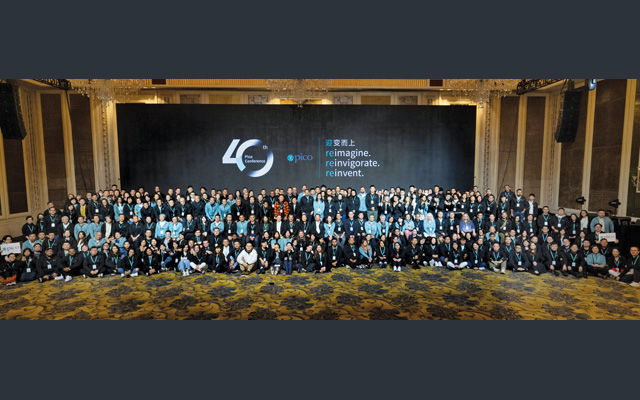
The 40th Pico Group International Conference brought staff from all regions together
Yet, he delivered. He traced Pico’s evolution in the 70s and 80s, when it expanded from its home base Singapore to South-east Asia and then Hong Kong.
“That move was driven by the customer,” said Chia.
“We were servicing a couple of organisers in Singapore, and when they decided to expand their tradeshows into other countries, they asked if we would go with them. We have an open mindset, and with the Singapore market being so small compared to others, we welcomed the invitation.”
Pico’s expansion momentum was further fuelled by China’s opening to global trade in the early 80s.
“We saw that as China opened up, there would be a lot of MNCs from Europe and the US that would want to enter China. So, we sent out our international marketing team to those regions to talk to potential customers,” Chia recalled, adding that a boom in China’s telecommunications and automotive industries put wind in Pico’s sails.
This expansion triggered the start of a series of service evolutions. Instead of just servicing the event organiser, Pico invested in creative personnel and solutions for event participants and exhibitors.
Pico provided a comprehensive range of integrated services for the opening and closing ceremonies at the 25th Arabian Gulf Cup
As the 90s arrived, Pico found itself again riding on its customers’ continued global expansion.
“Our relationship with our customers clearly transformed in the 90s because many of them wanted us to help them with their events and establish their brand not only in Asia but also Europe, Africa, the Middle East and many other regions and countries. During this time, in the early 90s, we also set up our office in Dubai,” said Chia.
“Through such projects, we got to understand our customers’ brands better, and realised that we were only just touching a small part of their overall marketing budget. A lot of money was being spent on event marketing, such as roadshows and launches. That led us to look at opportunities to support our customers in marketing.”
In the 90s, Pico upped its game and transformed into an international company playing in the event marketing space. This allowed it to move beyond tradeshows and take on projects with showrooms, museums, theme parks and more.
With an ability to take on a new clientele, Pico was inspired to reassess its business in the early 2000s.
Chia told TTGmice: “We realised we had been doing a lot of things that were ultimately to assist our customers in creating an integrated brand experience. So, we decided that we should refresh the brand and reposition Pico as a brand activation agency and focus on everything that delivers an integrated brand experience on face-to-face platforms.”
Thus, he ushered his team into a new era that established the company’s brand positioning in “Total Brand Activation and Integrated Brand Experience”.
The move also meant greater attention being paid to new communications technology to allow it to better compete with “a whole new set of competitors that possessed a tech background”.
Chia said in the new digital age, Pico had to compete with firms like IBM, Cisco and Intel for certain projects.
Pico’s campaign for Archer Aviation leveraged the power of Usher’s Super Bowl Halftime Show to maximise media coverage
A look through the company’s website discloses an impressive collection of project case studies that range from virtual art presentations to trade exhibitions.
Pico’s investment in digital transformation turned out to be a blessing when Covid-19 hit the events industry and forced face-to-face engagements to shift online.
“We were well prepared during the pandemic because we were three or four years ahead. We did projects that originated in China but were executed in Dubai and managed by the team in Singapore – and they were entirely virtual,” Chia recalled.
A good example was the Singapore Maritime Week 2021, which went hybrid for the first time to unite industry experts during the pandemic.
Pico Singapore was entrusted with hybrid event management, content creation, and media planning. The team helped raise event awareness and drove sign-ups, and most importantly, connected physical events with a virtual platform that facilitated face-to-face discussions and networking.
When asked if courage and foresight were Pico’s secret sauce to success, Chia said an “entrepreneurial spirit and a can-do attitude” were just as crucial.
“We never say no. We always look for ways to solve a problem. If the client asks us to do something that we had never tried before, we will make it our mission to provide a solution,” he remarked.
Chia told TTGmice that Pico’s success did not come without missteps.
He shared: “In life and in business, there is always failure. One has to maintain an entrepreneurship mindset and passion. We try, we fall, but we must always stand up and do it again.”
Looking ahead, Chia sees stability in Pico’s specialisation in integrated brand experience and face-to-face interaction, but pointed out that efforts are needed to stay abreast of new technology that can be applied online and offline.
“We have to keep embracing new technology, and new ways of interacting on social media. We have to be open to new products and platforms that will allow us to create the best brand experience activation for our customers,” he concluded.
Today, Pico employs 2,500 people full-time across 36 cities worldwide – or 3,500 including contract staff.
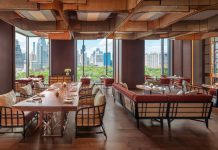
The newly-opened Ritz-Carlton, Bangkok anchors the One Bangkok development with cosmopolitan elegance. Featuring the city's largest ballroom and a spectacular new penthouse suite, it delivers exceptional hardware and deeply authentic, soulful service for business and leisure travellers alike
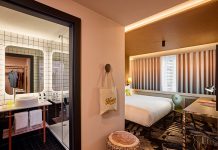
Behind the imposing, Brutalist concrete that defines Zurich’s Oerlikon district lies a surprising secret. While its exterior honours the neighbourhood’s industrial roots, stepping inside Mama Shelter reveals a vibrant, neon-soaked world that is a far cry from its rigid shell
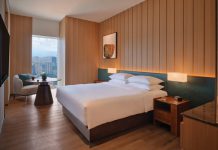
A polished urban retreat designed for business travellers, Hyatt Regency Kuala Lumpur at KL Midtown combines thoughtful design, seamless service, and exceptional facilities.



 He spent the past eight years honing his skills in the Maldives, where he recently served as resort manager at One & Only Reethi Rah, Maldives.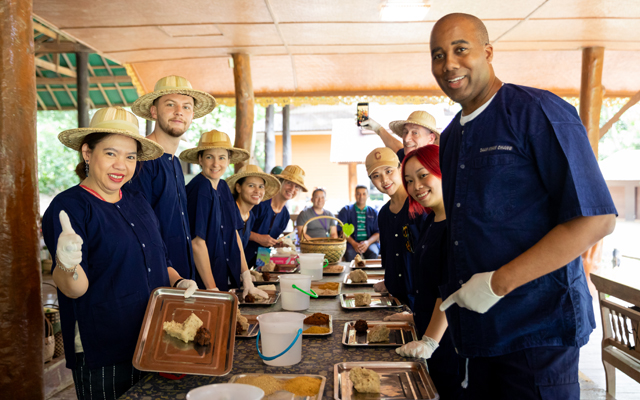

 In her new role, she will oversee sales and marketing efforts across the three hotels, driving innovative campaigns, optimising sales strategies, and guiding teams to meet strategic objectives.