In light of growing concerns about sustainable tourism, business event organisers and planners are evaluating the long-term effects their programmes have on host destinations and communities.
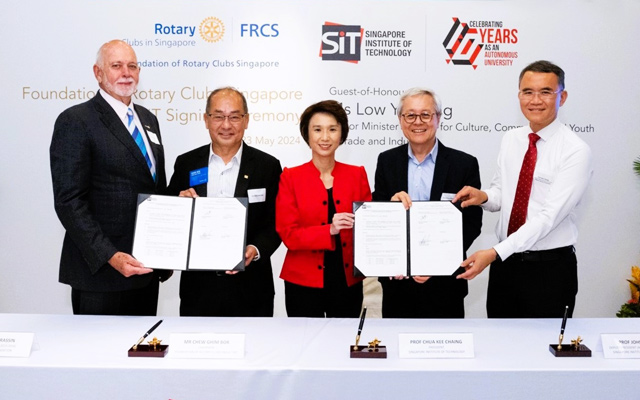
When Singapore hosted the 14,000-pax Rotary International Convention in May, the Foundation of Rotary Clubs Singapore (FRCS) pledged S$680,000 (US$530,043) over three years to a new Mangrove Conservatory set up by the Singapore Institute of Technology (SIT).
SIT-FRCS Mangrove Conservatory signing ceremony
The Conservatory will focus on preserving genetically diverse mangroves and reintroducing lost species, serving as a hub for knowledge, innovation and test-bedding efforts.
For example, SIT staff and students will conduct experiments and simulations to identify mangroves that can help Singapore and the region address global warming and rising sea levels, increase biodiversity and maximise carbon sequestration. The facility will also be open to the public, and SIT will also collaborate with Rotary Clubs to engage the community, particularly the youth.
“The establishment of the Conservatory is a huge opportunity for us to make a lasting impact on the world and community around us, by helping to mitigate effects of climate change and maximise carbon sequestration,” said Chew Ghim Bok, board of directors, Rotary International, and 2024 Rotary International Convention organising committee chair.
In Malaysia, Sarawak is the first state to focus on legacy impact as a sustainable method of measuring the value of business events.
Books Build Legacy is a CSR programme by Business Events Sarawak (BESarawak) to enhance educational opportunities for rural communities. It partners with local, national and international associations and organisations so that rural children have access to resources to succeed academically and beyond.
“Since the launch of Books Build Legacy in 2022, we have collected 15,000 books. We’ve drawn support not just from business event planners, but also organisations beyond our usual network and members of the public,” said Amelia Roziman, CEO of BESarawak.
“This transforms the CSR into a cross-industry partnership programme that is easily adopted, adaptable to any event, and guarantees a strong impact on the rural community.”
She cited the Singapore Association for Continuing Education (SACE) team-building and retreat in Miri and Mulu this March.
Inspired by tribal principles of unity, the 39-pax SACE group donated more than 200 books to Batu Bungan National School, reaffirming its mission to empower communities and shape a more promising future for all.
Songkhla’s (pictured) proximity and shared border with Malaysia make it a prime inbound market
Songkhla, designated a MICE City by the Thailand Convention and Exhibition Bureau (TCEB) in 2020, saw its development in the business events sector disrupted by the pandemic.
Today, industry players are now revitalising efforts to bolster the province’s capabilities in hosting international business events, spurred by increasing interest from Malaysian companies due to the province’s proximity and shared border with Malaysia.
Songkhla’s (pictured) proximity and shared border with Malaysia make it a prime inbound market
In recent months, Songkhla’s local administration has ramped up collaboration with key stakeholders, including the Hat Yai Songkhla Hotel Association, Songkhla Chamber of Commerce, TCEB, and the Thai Consulate in Penang.
As part of this initiative, Songkhla hosted the Songkhla MICE City Roadshow in Ipoh and Penang on May 14-15, 2024, to raise awareness of Songkhla’s business tourism potential among Malaysian companies, government offices, and travel agencies.
Earlier in August 2024, Songkhla concluded the Songkhla MICE Bazaar 2024, an event supported by TCEB, the Tourism Authority of Thailand (TAT), the Songkhla Provincial Office of Economic Development, and other local organisations. This event highlighted the province’s capacity to host large-scale business events while emphasising its significant economic potential.
Looking ahead, Songkhla is hosting a major industry event titled Unlocking Global Potential: The Future of Songkhla Exhibitions, from today (September 30) until October 2, 2024, at the 60th Anniversary of His Majesty the King’s Accession to the Throne International Convention Center in Hat Yai.
“Currently there are many local entrepreneurs interested in tapping the international MICE market, but they still lack the awareness and tools of how to do so,” explained Tieamjai Boonyanak, association manager of Thailand Exhibition Association, the event’s organiser.
“The roadshow will feature case studies of three successful international events held in Hat Yai – the 13th World HAPEX (Halal Tourism, Hospitality & Wellness), the Southern Innovation and Technology Expo (SITE), and the Healthy Living and Innovation Expo. Attendees will learn valuable lessons on attracting international buyers and exhibitors, enabling them to capitalise on opportunities in the global MICE industry,” she elaborated.
Japan’s affordability, thanks to the weaker yen, has significantly boosted its appeal as a business events destination. This, combined with the country’s unique cultural experiences and novelty, makes it an attractive choice for corporate groups.
Enrique Illarina, group reservation officer at U-Travel Services in the Philippines, pointed out: “We have many outbound clients, and one of the destinations catching their attention is Japan. They are specifically looking for teambuilding activities in Japan.
Tokyo (pictured) is a top choice for corporates
David G S Powell, managing director of Asia Ability – a consultant for creative teambuilding that works with destinations throughout Asia-Pacific – also stated that the agency is noticing that clients are “more open” to Japan as a destination now that prices are more accessible. Tokyo, in particular, is a top choice for corporate groups and conferences.
“We’re seeing increased interest in Japan because of the currency. Last time, Japan was always perceived as an expensive place, but clients now are more open to it,” he shared.
Powell also noted that Japan stands out because many Asia-Pacific headquarters, such as those in Singapore or Hong Kong, do not frequently visit Japan for business.
“We find that meeting and MICE groups prefer destinations where they don’t often go for business.
“For instance, companies from Malaysia or Thailand going to Singapore for a MICE event isn’t that appealing because they already go there for business. Japan, on the other hand, remains a unique and interesting destination for many,” he opined.
Global business travel and events prices appear to be moderating following the dramatic increases seen in recent years, according to the 2025 Global Business Travel Forecast, published by CWT, the business travel and meetings specialist, and the Global Business Travel Association (GBTA).
The forecast further reveals that while costs will continue to rise, the pace of these increases will be notably slower through 2024 and into 2025. This reflects a stabilisation in market conditions and a more balanced growth trajectory, according to the report, which uses anonymised data generated by CWT and GBTA, with publicly available industry information, and econometric and statistical modelling developed by the Avrio Institute.
Prices for business trips and events worldwide are stabilising after a surge in recent years
“While the past few years have seen significant volatility in travel costs, our latest data suggests a period of relative stability is on the horizon,” said Patrick Andersen, CWT’s president & CEO. “Businesses can expect to navigate a more predictable pricing environment through 2024 and 2025, allowing for better budget planning and cost management. However, price regularity is fragile. The focus on geopolitical factors, inflationary pressures and ESG concerns remains critical.”
Suzanne Neufang, CEO of GBTA, added: “The research shows that while a more stable period for travel costs is likely, businesses should remain vigilant to evolving pricing dynamics influenced by global trends. The next few years will require a strategic approach that balances cost management with sustainability, innovation, and responsiveness to market changes. At GBTA, our goal is to empower travel buyers and suppliers with the knowledge they need to adapt their strategies effectively in this shifting landscape.”
Air
In 2023, the global average ticket price (ATP) was US$688, representing a slight decline of -1.6% from the previous year.
Europe, Middle East, and Africa (EMEA) recorded an ATP of US$785 last year, the highest of any region. North America (NORAM) was the region that saw the steepest growth rate, with the ATP climbing +4.3% to US$777. Conversely, the ATP in Asia-Pacific (APAC) slumped -7% in 2023 to US$488, following a meteoric post-pandemic rise the year before.
Demand for flights remains strong globally. A record 5 billion air passengers are expected in 2024, according to IATA, surpassing the 4.5 billion peak in 2019. Meanwhile supply chain constraints such as aircraft production issues and delays, as well as a focus on profitability, will also keep prices high.
The forecast indicates global ATP will increase to US$701 (+1.9%) in 2024 and US$705 (+0.6%) in 2025. NORAM is expected to record the sharpest increase globally this year with the ATP reaching US$804 (+3.5%), followed by US$808 (+0.5%) in 2025. The ATP in Latin America (LATAM) is forecast to climb to US$673 (+2.6%) in 2024, and US$684 (+1.6%) in 2025.
In EMEA, the ATP is projected to increase to US$797 (+1.5%) in 2024 and $808 (+1.4%) in 2025, reflecting moderate growth amidst inflationary pressures. For APAC, the ATP is expected to rise to US$677 (+2.3%) in 2024, and to $688 (+1.6%) in 2025 as the region continues to ramp up intra-regional travel.
Hotel
The global average daily room rate (ADR) rose +3.9% in 2023 to US$158, after a +30% rise in 2022. LATAM saw the biggest pricing gains in 2023, with the ADR increasing +10.7% to US$93. APAC was not far behind, recording an ADR increase of +7.4% to US$131.
Occupancy levels recovered to pre-pandemic levels in some markets, while the benefits from group business travel for meetings and events. However, there is still a lack of new hotel supply. These factors will continue to support elevated prices, with the global ADR forecast to +2.5% to US$162 in 2024 and a further +1.9% to US$165 in 2025.
ADRs in LATAM are projected to climb to US$102 (+9.7%) in 2024 and US$110 (+7.8%) in 2025, owing to various factors including healthy domestic and intraregional travel demand and broader inflation trends in the region. The ADR growth in APAC is expected to cool, reaching US$136 (+3.8%) this year and US$139 (+2.2%) next year. Smaller increases are anticipated in EMEA and NORAM as leisure demand softens.
Ground transportation
Car rental companies are offering greater versatility, including airport and railway transfers, as well as one-way intercity transfers. Meanwhile, the cost of buying and operating cars is easing, and fleet concerns have stabilised, so suppliers are keeping rates in check, to stimulate demand.
Global car rental prices rose +3% to US$44.30 per day in 2023. LATAM saw the most pronounced increase, with prices shooting up +14.2% to an average of US$35.30 per day. NORAM and EMEA saw more modest increases, with prices rising to US$55.60 per day (+1.3%) and $48.80 per day (+2.5%), respectively.
Looking ahead, global price growth in 2024 will likely be tempered, slowing to +2.5%, with an average daily rate of US$45.40. A similar growth rate of +2.4% is predicted for global rates in 2025, with prices rising to $46.50. LATAM is forecast to continue seeing sharp price gains of +11% in 2024 and +7.9% in 2025. On the flipside, APAC car rental rates are trending downwards, with prices expected to drop significantly by -6.8% in 2024, followed by a further -3.4% reduction in 2025.
Meetings and events
The meetings and events sector has rebounded strongly post-pandemic, with heightened demand for in-person engagements. In 2023, the average daily cost per attendee fell to US$155, down from US$160 in 2022, representing a -3.1% decline. This decrease can be attributed to a shift in the types of meetings being held. Many organisations opted for smaller, more business-focused meetings, often without costly incentive components, to manage budgets more effectively. This focus on cost control, including selecting more affordable venues and destinations, helped offset rising accommodation and F&B prices.
Looking forward, the average daily cost per attendee is projected to increase to US$162 in 2024, a +4.5% rise from 2023, and to approximately US$169 in 2025, an additional +4.3% increase. This upward trend reflects the sector’s continued recovery and growing appetite for larger and more complex in-person events. As organisations anticipate rising costs, they are advised to plan with a 12-month horizon and consolidate travel and meetings spend to enhance negotiating leverage.
Marking a decade of insights
To commemorate this 10th edition of the Global Business Travel Forecast, CWT and GBTA have also produced a special supplement to the report, which will be released in the coming weeks.
The supplement envisions three potential trajectories for the future of business travel – Base, Boom, and Bust – between now and 2040. It predicts how key megatrends such as technological advancements, demographic shifts, sustainability pressures, and geopolitical volatility, will shape the way how business travel is viewed, managed, and experienced in these three distinct scenarios. It also provides strategic recommendations for navigating these changes, emphasising how organisations can adapt to emerging challenges and opportunities in the evolving business travel landscape.
UFI, The Global Association of the Exhibition Industry, has selected Chris Skeith as the organisation’s next CEO, taking over from Kai Hattendorf on January 1, 2025.
Skeith will join UFI from the AEO (Association of Event Organisers), the an association for organisers of events in the UK and internationally, where he has served as the organisation’s CEO since 2014.
Skeith started his career in media auditing at the Audit Bureau of Circulations, where he later led on the development of their auditing products for the events sector.
In 2006, he moved to the Events Industry Alliance (EIA), overseeing the merger of AEC & BECA to form ESSA (Event Supplier & Services Association). In 2010, he became director of ESSA’s sister association, AEV (Association of Event Venues), driving venue engagement through numerous special interest groups before moving on to AEO in 2014.
He continues to be a director of EIA, which represents the sector to government and regulators.
New Zealand Business Events Awards 2024 celebrated 40 industry leaders and academics
On September 26, 2024, Tourism New Zealand honoured 40 top conference champions – who have successfully bid for and secured high-profile events in the past year – at a ceremony held at Mantells Tāmaki Drive in Auckland.
The 31 international conferences won through Tourism New Zealand’s Conference Assistance Programme are expected to attract more than 19,500 delegates and deliver an estimated NZ$48.7 million (US$30.6 million) to New Zealand’s economy.
New Zealand Business Events Awards 2024 celebrated 40 industry leaders and academics
Tourism New Zealand’s chief executive, René de Monchy, said: “The knowledge, influence and passion of these people play an integral part in attracting events to our shores. These conferences not only enrich our visitor economy, but our universities, our innovation hubs, our key sectors, and our communities…
“Through these events, we’ll hold important conversations at a global level about the treatment of cancer in indigenous communities, the protection of native plant species, and the application of remote sensing technologies to benefit society. New Zealand will play a leading role in shaping the future of these industries, thanks to these conferences and their champions.
He added: “We hope more conference champions are inspired to step up and help build this pipeline of valuable events.”
Business events and international conference delegates play an important role in supporting Tourism New Zealand’s four-year strategy of growing international tourism by NZ$5 billion, with 70 per cent (NZ$3.5 billion) of that coming from visitors in the off-peak.
Business events are heavily weighted towards the off-peak, with 83 per cent of international delegates arriving between March and November last year, compared to 62 per cent of holidaymakers, de Monchy said.
Guests can interact with the sumo wrestlers. Photo credit: Sumo Hall Hirakuza Osaka
The Sumo Hall Hirakuza Osaka is offering business event participants the opportunity to watch and interact with professional sumo wrestlers.
Custom-designed as a sumo entertainment hall, the facility presents Japan’s historic national sport through a contemporary show combining elements of video, light and sound. Performances are presented entirely in English twice daily (18.00 and 21.00), with seating for 180 pax.
Guests can interact with the sumo wrestlers. Photo credit: Sumo Hall Hirakuza Osaka
The show duration is approximately 60 minutes and includes an opening act, an introduction to sumo, the main bout, an interactive sumo experience and a commemorative photo. Ticket prices range from ¥9,500 (US$67) to ¥16,000, and include a bento box and drink. Vegan or halal bento boxes are available for a ¥2,000 surcharge.
Alternatively, event organisers can opt for sumo wrestlers from the Sumo Hall to perform at their events, such as gala dinners and welcome receptions. Each experience would comprise displays of sumo culture, demonstrations, bouts, interactive experiences and commemorative photos from ¥500,000.
Sumo Hall Hirakuza Osaka is located at Namba Parks in central Osaka, about a 45-minute drive from Kansai International Airport.
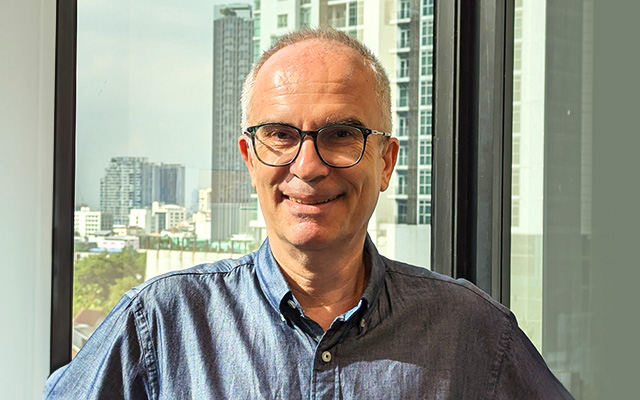
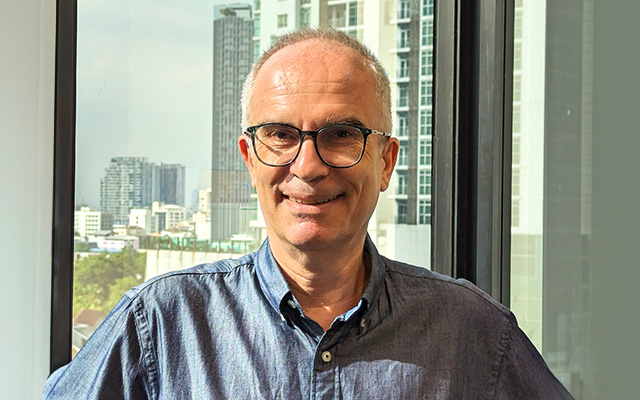
Discova Thailand has appointed Peter Weibel as its new country manager.
In his new role, Weibel will be responsible for overseeing all aspects of Discova Thailand’s operations, including product development, sales, operations, accounting, and client services.
With over 30 years of experience in the Thai tourism sector, his diverse background and expertise across all segments and departments of the destination management business make him a valuable asset to the company.
Lufthansa Group has named Felipe Bonifatti as vice president Asia Pacific & Joint Ventures East.
Bringing over three decades of experience to his new role, Bonifatti will be based in the Lufthansa Group regional headquarters of Singapore, and will lead all commercial activities, including Joint Venture sales, in Asia-Pacific region from November 1.
He is fluent in German, English, Portuguese and Spanish.
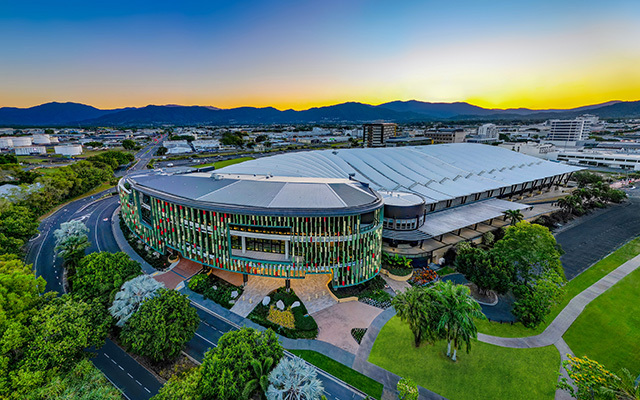
The Cairns Convention Centre has been selected to host the 2025 Australian and New Zealand College of Anaesthetists (ANZCA) Annual Scientific Meeting (ASM) from May 2-6, 2025.
The event, supported by the Queensland government, is expected to attract leading experts in anaesthesia, perioperative medicine, and pain medicine from around the world. Delegates will engage in a comprehensive programme featuring local, national, and international speakers, along with workshops to support members’ skills and Continuing Professional Development requirements.
Aerial view of Cairns Convention Centre
The Conference will also highlight the work of regional fellows operating in remote areas. By showcasing their experiences and innovative solutions, the Conference aims to shed light on their critical role in delivering high-quality healthcare in under-resourced regions, and promote discussions on improving support for medical practitioners in these locations.
In addition to the scientific sessions, the 2025 ANZCA ASM will offer social events at some of Cairns’ iconic venues, providing delegates with opportunities for networking and relaxation.
Sustainability will be one of the key themes for the Conference and is inherently at the forefront of ANZCA’s initiatives. Anaesthetists are adopting sustainable practices by minimising gas wastage, using less harmful gases, and promoting the recycling and reuse of equipment. Moreover, since 2016, the College has eliminated items like satchels, bottled water, and paper-based tickets, and has collaborated with venues to ensure sustainable catering practices.
The Cairns Convention Centre was chosen partly for its sustainability initiatives and use of local producers, helping to reduce food mileage. The venue also features a sunscreen façade, rainwater storage, EV charging stations, and energy-efficient lights and fans.
Just 10 minutes from Phuket International Airport on the serene northern coast, this 178-key, Bill Bensley-designed resort offers delegates a quiet, tropical paradise steeped in Phuket’s tin-mining heritage
The newly-opened Ritz-Carlton, Bangkok anchors the One Bangkok development with cosmopolitan elegance. Featuring the city's largest ballroom and a spectacular new penthouse suite, it delivers exceptional hardware and deeply authentic, soulful service for business and leisure travellers alike
Behind the imposing, Brutalist concrete that defines Zurich’s Oerlikon district lies a surprising secret. While its exterior honours the neighbourhood’s industrial roots, stepping inside Mama Shelter reveals a vibrant, neon-soaked world that is a far cry from its rigid shell









 With over 30 years of experience in the Thai tourism sector, his diverse background and expertise across all segments and departments of the destination management business make him a valuable asset to the company.
 He is fluent in German, English, Portuguese and Spanish.