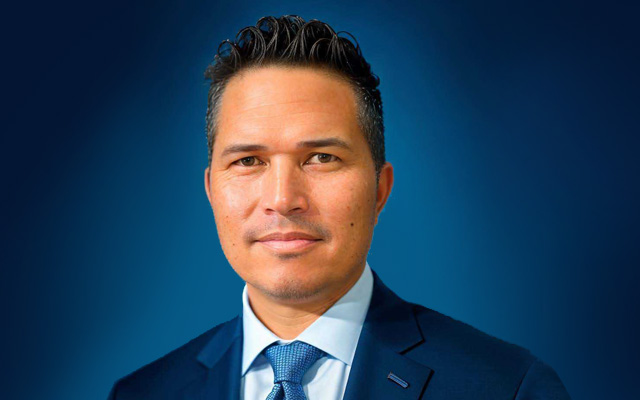
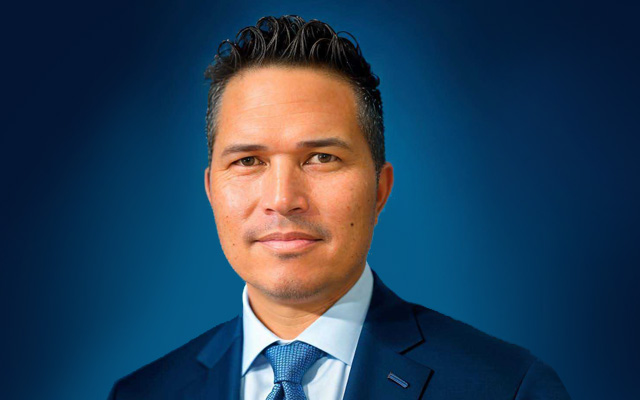
Chad Grospe has been appointed as vice president and managing director, Asia-Pacific for Royal Caribbean International (RCI).
He has been with RCI since 2017 and most recently led the international marketing team, supporting efforts across the Asia-Pacific, Australia and New Zealand, Europe, the Middle East and Africa, Latin America, and the Caribbean.
With his vision, deep industry knowledge, and proven experience working across international markets at RCI, Grospe will lead the team to continue the growth and success of the company.
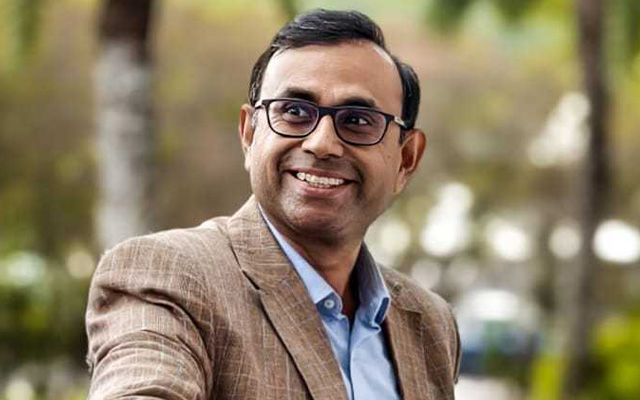
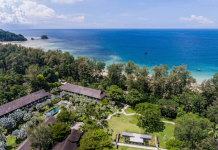
The Danna Langkawi Resort & Beach Villas has named Aditya Shamsher Malla as its new general manager.
With over three decades of extensive experience in the hospitality industry, Malla brings a strong commitment to excellence to the team at The Danna.
He has worked with brands like Oberoi Hotels & Resorts, Taj Luxury Hotels, Shangri-La, Hyatt Regency, The Westin, Marriot International, and Hilton, and most recently served as the general manager in Indonesia, transitioning it to full service following acquisition and conversion from Accor.
2023 and 2024 revenues expected to grow by 20% and 17% on average globally year on year
The exhibition industry will achieve record revenues globally in 2024, moving beyond the post-pandemic recovery that was achieved at the end of 2023 on average. Moreover, 2023 and 2024 revenues are expected to grow by 20% and 17% year-on-year respectively.
This is according to UFI’s 33rd edition of its flagship Global Exhibition Barometer report.
2023 and 2024 revenues are expected to grow by 20% and 17% on average globally year on year
“This edition of UFI’s flagship Barometer research confirms our early data from January that 2024 will be a record year for industry revenues globally. This edition shows how this growth translates into new jobs in our sector, as well as in expansion plans from the majority of businesses – aiming both at new business activities, as well as new geographies. Against a complex global backdrop, the global exhibition industry is bullish about its short and mid-term prospects”, commented Kai Hattendorf, managing director and CEO at UFI.
“The barometer also shows how 19 key exhibition markets and regions match up both against their respective regions and the global averages. We have expanded this reporting further to make this data more easily accessible. There is no other research in this industry that allows for such level of comparison.”
Operations
Globally, the level of operations in 1H2024 has picked up for half of the companies (four out of 10 in Asia-Pacific, Central & South America and the Middle East & Africa; and 6 out of 10 in Europe and North America) while it was qualified as “normal” for one in three.
This trend will continue in the coming year with, on average, a percentage of companies reporting an increased activity ranging from 59% in North America to 50% in Asia-Pacific, 49% in the Middle East and Africa, and 48% in Central & South America and Europe, respectively.
Turnover and operating profits
Revenues increased by 20% on average in 2023, and this trend is expected to continue. In 2024, revenues are expected to grow again by an average of 17% year-on-year.
These general trends vary from one country to another. Revenues from 2023 compared to 2022 vary from 143% in Malaysia, 139% in Thailand, 132% in Argentina and the USA, to 105% in Spain, 103% in Brazil and 101% in Australia.
Revenues from 2024 compared to 2023 vary from 148% in Colombia, 138% in Brazil, 123% in the UAE, 106% in Germany, 105% in China and 98% in France.
In terms of operating profits for 2023, 61% of the companies declare an annual increase of more than 10%, and 27% declare a stable one. The same total of 88% applies to the 2024 operating profits, with 47% planning an annual increase of more than 10% and 39% a stable one.
The highest proportion of companies expecting an annual profit increase of more than 10% are in Malaysia (100%), Spain (83%) and Thailand (75%) for 2023, and Brazil (82%), the UK (69%) and Malaysia (58%) for 2024.
Workforce development
Globally, 48% of companies declare that they plan to increase their staff numbers, while another 48% declare that they will keep current staff numbers stable.
The highest proportion of companies planning to add staff are identified in Malaysia (91%), Brazil (75%) and the UAE (73%).
Most important business issues
This edition does not show significant changes when compared to the previous edition of the Barometer released six months ago.
The most pressing business issue is “State of the economy in home market” (22% of answers globally – same as six months ago – and the main issue in all regions, except the Middle East and Africa, where it ranks second).
Overall, “Global economic developments” come in as the second most important issue globally (15% of answers, compared to 17% six months ago), followed by “Geopolitical challenges” (14%, and the top issue for the Middle East and Africa) and “Competition from within the exhibition industry” (14%).
“Internal management challenges” (11%), “Sustainability / Climate” (9%) and “Impact of digitalisation” (6%) follow.
An analysis by industry segment (organiser, venue only and service provider) shows no differences regarding the most pressing issue (“State of the economy in home market”), but the second and third ones vary: “Global economic developments” (17%) and “Geopolitical challenges” (16%) for organisers; “Competition from within the exhibition industry” (18%) and “Sustainability / Climate” (13%) for venues; “Competition from within the exhibition industry” (19%) and “Global economic developments” (15%) for service providers.
Current strategic priorities
In all regions, a large majority of companies intend to develop new activities, either in the classic range of exhibition industry activities (venue/organiser/services), outside of the current product portfolios, or in both areas: 69% in Asia-Pacific, 74% in North America, 75% in Central & South America, 83% in Europe and 84% in the Middle East & Africa.
In terms of geographic expansion, 43% of companies declare an intention to develop operations in new countries and regions.
Generative AI applications
Globally, there is an overwhelming consensus that AI will affect the industry, with 90% of companies stating this.
The areas expected to be most affected by the development of AI are the same in all regions: “Sales, Marketing and Customer Relations” (83% globally), “Research & Development” (82%) and “Event Production” (69%). These are precisely the areas where generative AI applications are already mostly used, and in all regions (39%, 38%, and 28% globally, respectively).
This latest edition of UFI’s bi-annual industry report concluded in July 2024 and includes data from 453 companies in 68 countries and regions.
The study also includes outlooks and analysis for 19 focus countries and regions – Argentina, Australia, Brazil, China, Colombia, France, Germany, Greece, India, Italy, Malaysia, Mexico, Saudi Arabia, South Africa, Spain, Thailand, UAE, UK, and the US – as well as five additional aggregated regional zones.
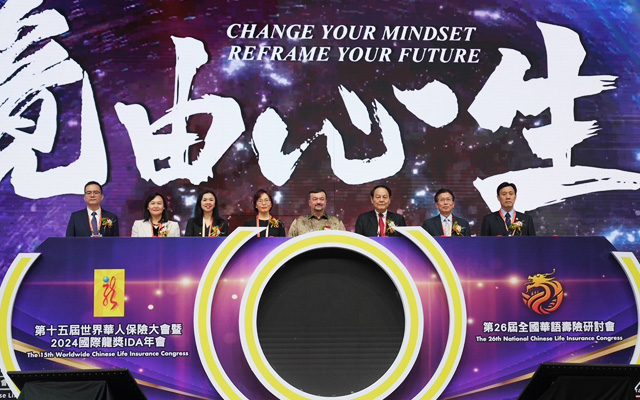
For 28 years, the Congress has been dedicated to creating a platform for the Chinese financial insurance industry
The 15th Worldwide Chinese Life Insurance Congress and the 2024 International Dragon Award (IDA) Annual Conference in Kuala Lumpur, Malaysia, concluded with a record-breaking attendance of nearly 11,000 delegates from 17 countries.
Held at the Malaysia International Trade and Exhibition Centre from August 9-12, 2024, the event marked a significant milestone for the insurance industry.
For 28 years, the Congress has been dedicated to creating a platform for the Chinese financial insurance industry
The congress, organised by IMM International and supported by the Malaysian government, brought together industry leaders, experts, and delegates for four days of knowledge sharing and networking. The event also featured the 26th National Chinese Life Insurance Congress, which saw participants from Malaysia and Singapore join in.
The conference featured nearly 120 speakers who shared insights and best practices to drive the future of the financial insurance sector forward. After which, the IDA Awards Ceremony recognised 23,093 outstanding individuals and organisations in the industry.
Malaysia’s visa-free entry policy for Chinese citizens contributed to the strong turnout, with 4,800 delegates from China attending the event. The congress highlighted the country’s growing prominence as a regional hub for the insurance industry.
Malaysia’s prime minister Anwar Ibrahim, and the minister of tourism, arts and culture, Tiong King Sing, attended the opening ceremony and Dragon Night Awards Ceremony, underscoring the government’s support for the event.
Malaysia has hosted the congress and IDA conference three times, with the most recent event being in 2013, which drew approximately 5,000 delegates. The inaugural event took place in Langkawi in 1998.
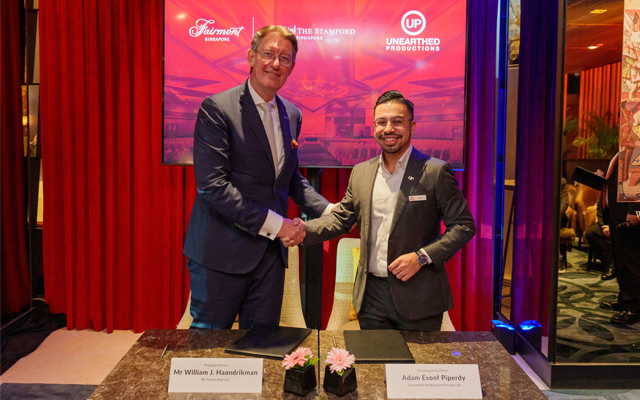
Unearthed Productions partners Fairmont Singapore & Swissôtel The Stamford for tech-driven events
Unearthed Productions has joined forces with Fairmont Singapore & Swissôtel The Stamford, home to the Raffles City Convention Centre (RCCC).
This collaboration aims to elevate event experiences by combining Unearthed Productions’ cutting-edge audio, video, and lighting (AVL) solutions with the hotels’ renowned infrastructure and hospitality.
Unearthed Productions partners with Fairmont Singapore & Swissôtel The Stamford for tech-driven events
Throughout 2024, RCCC and the SKAI suites at Swissôtel The Stamford will undergo a transformation, featuring high-definition LED video walls and AI-powered smart meeting solutions. Unearthed Productions will also provide its creative expertise and production capabilities to help event planners design dynamic showcases that leverage these cutting-edge technologies.
The partnership is a key component of RCCC’s vision to become Asia Pacific’s leading business events venue. By integrating advanced AVL technology into its ballrooms and meeting rooms, RCCC will offer event planners unparalleled capabilities to create immersive and engaging events.
The Tokyo Convention & Visitors Bureau (TCVB) has announced that the city has been selected to host the 41st World Veterinary Association Congress (WVAC 2026).
The event will take place at the Tokyo International Forum from April 21-24, 2026, attracting an estimated 6,000 veterinary professionals from 70 countries and regions. This will be the second time Japan has hosted the congress, with a previous event held in Yokohama in 1995.
Tokyo’s Shinjuku at dusk
WVAC is a global platform for discussing advancements in veterinary medicine and promoting the “One Health” concept, which emphasises the interconnectedness of human, animal, and environmental health.
The successful bid was attributed to a strong proposal submitted by the Japan Veterinary Medical Association (JVMA) and Japan’s established reputation in veterinary science. The Tokyo Metropolitan Government and TCVB provided financial and in-kind support throughout the bidding process, contributing significantly to the win.
TCVB will continue to collaborate with JVMA to ensure the successful execution of WVAC 2026.
BCD Meetings & Events (BCD M&E) has launched its annual Sustainability Guide, an in-depth resource that reveals best practices and emerging trends in the meetings and events industry.
The guide explores challenges to sustainability, from cost and travel to politics. It explores environmental regulations and offers practical solutions for more sustainable meetings and events. The guide also highlights the industry’s approach to sustainability beyond environmental initiatives –encompassing social and economic change through areas like diversity, equity, and inclusion (DE&I) and health and wellbeing.
The 2024 Global Sustainability Guide highlights the challenges and opportunities meeting planners, suppliers, vendors, and destinations face in adopting sustainable practices
“There is an obvious and ongoing need to go further in implementing sustainability practices within the meetings and events industry, driven by the global focus on climate change and tightening regulations on carbon emissions,” said Bruce Morgan, global president, BCD M&E.
“The scale of this challenge can, at times, be overwhelming. By thinking forward and embracing the myriad of best practices available to our industry, we not only mitigate risks but also unlock significant opportunities for positive change,” he added.
The Kuala Lumpur Convention Centre (the Centre) has promoted Tiffany Chung to director of sales and marketing.
Chung, who most recently was the Centre’s deputy director of sales, takes over from Ravindran Sathiamoorthy, who has been the Centre’s director of sales since 2020 and has retired after 18 years of service.
In this new role, Chung will be responsible for developing and implementing sales strategies, managing new product development, driving business development and revenue growth, overseeing marketing campaigns, as well as talent development and management.
Chung brings a wealth of experience to this role, having held key positions in the business events industry for over 20 years. She first joined the Centre in 2013 as exhibition floor manager, following which she took on the role of exhibition sales manager before being promoted to the head of sales in 2017.
Before joining the Centre, she had stints with the National Tech Association of Malaysia, and Reed Exhibitions.
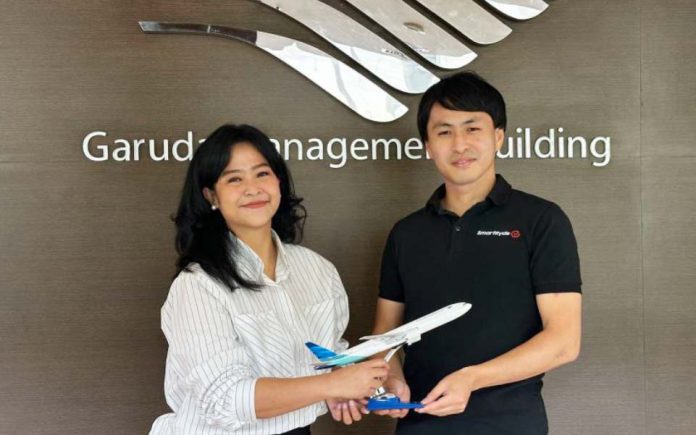
Garuda Indonesia and private airport transfer specialist have joined hands to offer a seamless pre- and post-flight land transport support at selected airports and destinations served by the airline.
Ifran Setiaputra, president & CEO of Garuda Indonesia, said the collaboration is a part of the airline’s effort to deliver added value for its customers, especially in providing premium services through a range of alternatives for airport transportation.
Garuda Indonesia passengers can now easily book private airport transfers provided by SmartRyde
“In addition to offering safe and convenient air connectivity services, providing exclusive pick-up and drop-off services is an essential step that we are focusing on to further enhance our pasenger’s travel comfort. This initiative represents our commitment to provide a seamless travel experience from pre-flight, in-flight, to post-flight,” Ifran elaborated.
Sota Kimura, CEO and founder of SmartRyde said: “This partnership represents a major milestone for SmartRyde as we incorporate air and ground transportation together and provide a seamless travel experience to our mutual customers. SmartRyde aims to elevate the ancillary products for the aviation industry by offering pre-booked private airport transfers to travelers globally.”
The new airport transfer service is available to book on the FlyGaruda app, at up to 48 hours prior to arrival time. It is currently available to travellers in Australia’s Sydney and Melbourne, Thailand’s Bangkok, Japan’s Haneda and Narita, South Korea’s Incheon, the Netherlands’ Amsterdam, Malaysia’s Kuala Lumpur, and Singapore.
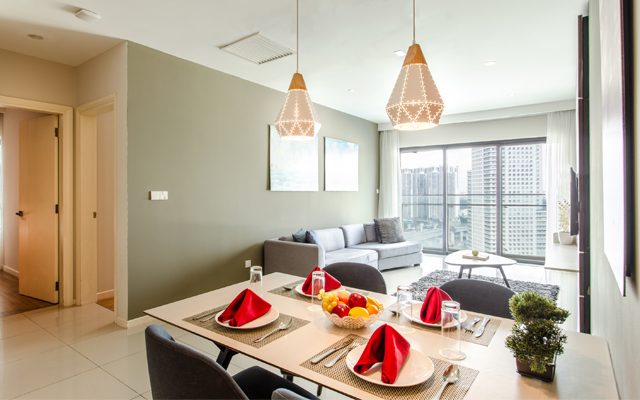
Onyx Hospitality Group has opened the Shama Suasana Johor Bahru, marking the debut of the first Shama hotel and serviced apartment in Malaysia.
The property offers 87 suites ranging from one- to three-bedroom suites, all of which offer modern amenities such as fully-equipped kitchens, separate living and dining areas, high-speed Wi-Fi, smart TVs, and premium bedding.
Two-bedroom suite
It stands adjacent to Zenith Mall, and a five-minute walk away to the Rapid Transport System.
Shama Suasana Johor Bahru also offers facilities such as a state-of-the-art fitness centre, an outdoor swimming pool with panoramic city views, a residents’ lounge, meeting rooms equipped with the latest technology, and 24-hour security and concierge services.
Malaysia is also the first country, outside of Thailand, to host all three Onyx Hospitality Group brands: Amari, Ozo, and Shama.
Just 10 minutes from Phuket International Airport on the serene northern coast, this 178-key, Bill Bensley-designed resort offers delegates a quiet, tropical paradise steeped in Phuket’s tin-mining heritage
The newly-opened Ritz-Carlton, Bangkok anchors the One Bangkok development with cosmopolitan elegance. Featuring the city's largest ballroom and a spectacular new penthouse suite, it delivers exceptional hardware and deeply authentic, soulful service for business and leisure travellers alike
Behind the imposing, Brutalist concrete that defines Zurich’s Oerlikon district lies a surprising secret. While its exterior honours the neighbourhood’s industrial roots, stepping inside Mama Shelter reveals a vibrant, neon-soaked world that is a far cry from its rigid shell



 With his vision, deep industry knowledge, and proven experience working across international markets at RCI, Grospe will lead the team to continue the growth and success of the company.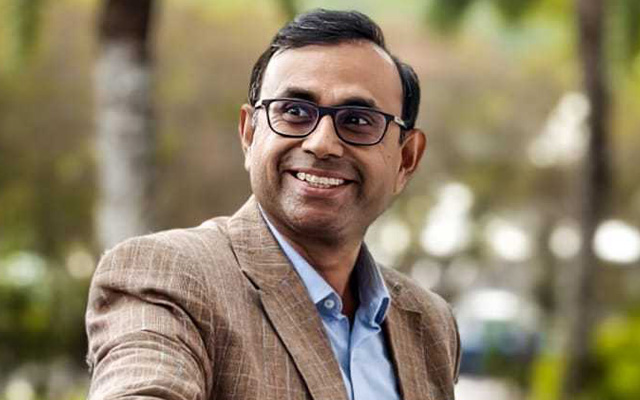
 He has worked with brands like Oberoi Hotels & Resorts, Taj Luxury Hotels, Shangri-La, Hyatt Regency, The Westin, Marriot International, and Hilton, and most recently served as the general manager in Indonesia, transitioning it to full service following acquisition and conversion from Accor.








Garuda Indonesia and private airport transfer specialist have joined hands to offer a seamless pre- and post-flight land transport support at selected airports and destinations served by the airline.
Ifran Setiaputra, president & CEO of Garuda Indonesia, said the collaboration is a part of the airline’s effort to deliver added value for its customers, especially in providing premium services through a range of alternatives for airport transportation.
“In addition to offering safe and convenient air connectivity services, providing exclusive pick-up and drop-off services is an essential step that we are focusing on to further enhance our pasenger’s travel comfort. This initiative represents our commitment to provide a seamless travel experience from pre-flight, in-flight, to post-flight,” Ifran elaborated.
Sota Kimura, CEO and founder of SmartRyde said: “This partnership represents a major milestone for SmartRyde as we incorporate air and ground transportation together and provide a seamless travel experience to our mutual customers. SmartRyde aims to elevate the ancillary products for the aviation industry by offering pre-booked private airport transfers to travelers globally.”
The new airport transfer service is available to book on the FlyGaruda app, at up to 48 hours prior to arrival time. It is currently available to travellers in Australia’s Sydney and Melbourne, Thailand’s Bangkok, Japan’s Haneda and Narita, South Korea’s Incheon, the Netherlands’ Amsterdam, Malaysia’s Kuala Lumpur, and Singapore.