Pan Pacific Hotels Group (PPHG) has unveiled Every Meeting Matters, a global business events campaign following a series of group-wide asset enhancements to its meeting and event spaces.
The repositioning targets a shifting demographic, with Millennials and Gen Z now accounting for over 40 per cent of conference participants. This cohort is driving demand for tech-enabled, wellness-focused, and environmentally responsible event formats.
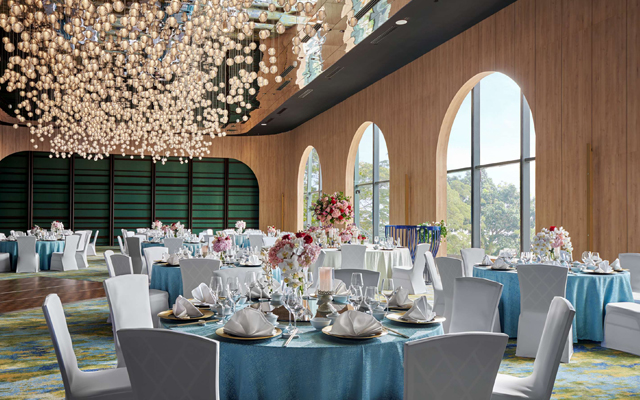
Parkroyal Collection Kuala Lumpur’s ballroom
“Anticipating this post-pandemic shift, we have strengthened our MICE capabilities across our portfolio, from investing in upgraded event spaces to enhancing service delivery and technology,” said Choe Peng Sum, CEO of PPHG.
Strategic investments include the full revitalisation of the 2,500m2 convention floor at Pan Pacific Perth – the city’s largest – and upgrades to the William Pickering Ballroom at Parkroyal Collection Pickering, Singapore.
PPHG’s updated strategy focuses on three core pillars: technology, wellness, and sustainability. The approach integrates high-speed connectivity, immersive LED walls, and infrastructure for seamless hybrid collaboration, while prioritising attendee health through nutritious menus, movement breaks, and spaces designed with natural daylight. To meet increasing mandates in corporate RFPs, the strategy also incorporates carbon-conscious event design, responsible sourcing, and a reduction in single-use items.
“Today’s meeting planners are looking for more than functional venues. They want spaces that inspire creativity, technology that enables seamless collaboration, and experiences that support wellbeing and sustainability.
“Our MICE strategy is centred on delivering experiences that combine all these aspects in a seamless manner. Whether it’s wellness-inspired breaks, advanced hybrid meeting capabilities or locally sourced culinary experiences, we aim to help organisers create meetings that are both productive and memorable,” said Celine Du, chief commercial and marketing officer at PPHG.
The new Airalo for Business feature reduces travel connectivity friction for both business travellers and enterprises
Airalo has launched a self-purchase feature for its corporate solution, Airalo for Business, marking an industry first that allows employees to buy eSIMs directly using corporate or personal cards.
The new decentralised billing function, integrated into the Airalo for Business suite, aims to eliminate the administrative bottleneck of manual eSIM assignments. By toggling to a new “Business Mode” within the app, registered employees can purchase connectivity instantly upon arrival abroad, with transactions automatically syncing to the company’s partner platform.
The new Airalo for Business feature reduces travel connectivity friction for both business travellers and enterprises
“Airalo for Business was engineered to ensure teams remain connected without interruption; it is only logical that the payment experience be as seamless as the connectivity itself,” said Stephanie Kazalac, product director for partner experience at Airalo.
The update is designed to accommodate diverse corporate expense policies. For organisations, the “hands-off” management model applies corporate discounts automatically and provides real-time visibility into data usage without subscription fees or minimum spend requirements. The platform also maintains enterprise-grade security, including SOC 2 Type II compliance and SSO integrations.
From left: Laissez-Faire Catering’s David Quinn; Simply Seated’s Belinda Porra; and AV1’s Nigel Mintern
Laissez-Faire Catering, AV1, and Simply Seated have launched a new collaborative delivery model for large-scale incentive programmes.
The partnership follows the successful execution of a five-day Sydney experience for 500 international guests from Premier Financial Alliance.
From left: Laissez-Faire Catering’s David Quinn; Simply Seated’s Belinda Porra; and AV1’s Nigel Mintern
The collective approach was established during the programme’s conceptual phase, covering venue engagement, experience design, and delivery across multiple iconic locations. These include Sydney Town Hall, Luna Park, and Carriageworks. At Watersedge, the team executed a full venue transformation featuring a noodle market, neon disco, and speakeasy lounge.
Sara Flaksbard, general manager of Laissez-Faire Catering, noted that early alignment was critical: “This wasn’t about delivering events in isolation. By joining forces from the beginning, we were able to bring the client’s vision to life in a much more cohesive and impactful way.”
Nigel Mintern, managing director of AV1, added that the integrated model allowed the team to push creative boundaries.
Belinda Porra, Founder of Simply Seated, emphasised the bespoke nature of the project, stating that venues were “transformed beyond themselves”, providing guests with a unique experience unlikely to be replicated.
The programme was led by global planner Carol Ann Payne-Johnson, president of The Travel Corner, Inc.
“I’ve been producing events around the world for 38 years, and this became one of the most supported and fascinating programs I’ve ever delivered,” Payne-Johnson said. “The level of collaboration was exceptional, and the result was truly world-class.”
Following this landmark delivery, the three companies will continue to offer this unified model for future major events and international incentive programmes.
The Asia Pacific Incentives and Meetings Event (AIME) 2026 is projected to generate a record A$425 million (US$292 million) in business transactions over the next 12 months.
Independent post-show research confirms the figure follows the event’s successful run from February 9 to 11 at the Melbourne Convention and Exhibition Centre (MCEC).
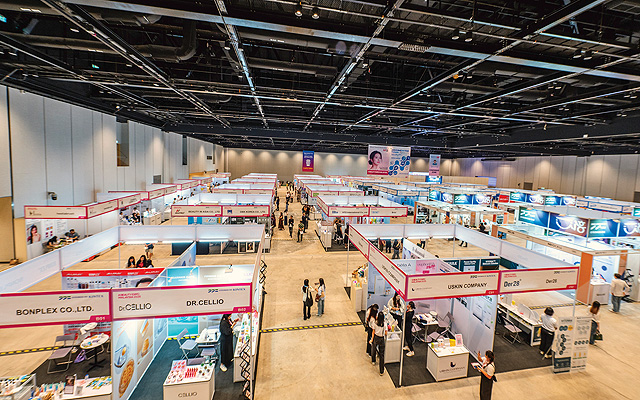
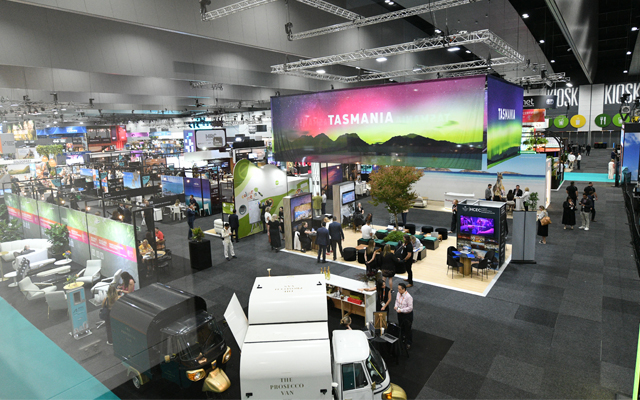
AIME 2026 showfloor
The record-breaking results were driven by a curated matching process that paired 1,500 vetted buyers with 765 exhibitors from 36 countries. Utilising AI-powered scheduling and human expertise, the show facilitated over 25,000 pre-scheduled meetings for more than 5,000 global attendees.
Attendee satisfaction significantly outperformed industry benchmarks. The exhibitor Net Promoter Score (NPS) reached 32.6, tripling the industry standard of 9.6, while the visitor NPS hit 59.4, nearly doubling the 30.6 benchmark.
Talk2 Media & Events’ CEO, Matt Pearce, said: “The projected $425 million in business shows the value of those meetings and the role AIME plays in supporting destinations, venues and suppliers across the Asia Pacific region.”
Melbourne Convention Bureau CEO Julia Swanson added: “The ongoing success of AIME reflects the strength of our local business events industry as well as the capacity for Melbourne to host large-scale trade shows that draw exhibitors and buyers from around the world and generate record-breaking amounts of business.”
As the first major exhibition on the international business events calendar, AIME has already confirmed its return to the MCEC for February 15 to 17, 2027, and February 14 to 16, 2028.
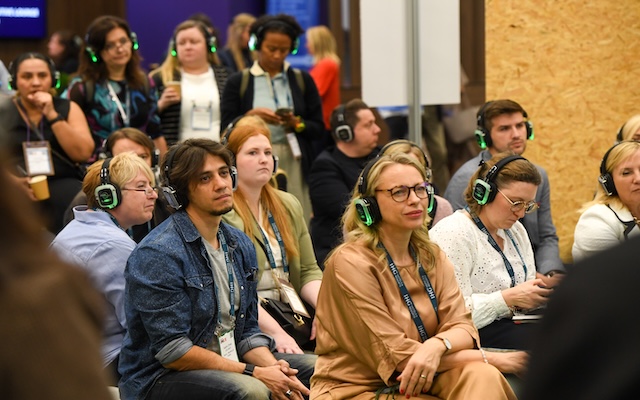
Delegates at the Inspiration Hub, home to IMEX Frankfurt education sessions
IMEX Frankfurt has released the first details of its education programme, held from May 19 to 21, 2026. This year’s focus is a learning line-up designed to meet the industry exactly where it is today – and where it is poised to thrive in the future.
The programme is rooted in real-world examples and shaped by the here and now as Tahira Endean, IMEX’s head of programming, explains: “The world keeps shifting – AI tools and mindsets are reshaping workflows, sustainability requirements are hardening into policy and attendees are arriving with expectations that didn’t exist five, or even three years ago!
“This year’s programme is a direct response to those realities. Not around where the industry has been, but where it is right now, and where it’s heading.”
The full schedule of 11 tracks will be live online in April and planners can mix and match across the tracks to build the learning journey that’s right for them.
Four new tracks will be introduced this year – here is a sneak peek.
Four new tracks to explore at IMEX Frankfurt 2026
1.Designing for Human Needs: This track looks at how to unlock human potential by creating environments where everyone can thrive. With 15 to 20 per cent of the global population estimated to be neurodivergent, inclusive design is one of the topics planned.
A stage director also offers their own take on experience design, using theatrical principles to map the emotional arc of an event; while a session introducing a ‘Joy Meter’ invites planners to measure not just data but emotional uplift – demonstrating how delight can drive both engagement andbottom-line results.
2.Design Matters: This track is rooted in the new IMEX Talking Point, celebrating design as the ultimate differentiator. At the sessions, including show-and-tell tours around the exhibition floor, participants will discover tangible examples of how thoughtful design helps organisations, brands and events stand out and stay memorable. And with the Frankfurt RheinMain region – home to IMEX Frankfurt – named World Design Capital 2026, the focus could not be more timely.
3.Regenerative Design: With ESG reporting now compulsory for many European organisations, practitioners will share the highs and the lows of their sustainability strategies.
They will unpack real-world examples of circular design in action – from material reuse and waste reduction to supplier collaboration and legacy planning – showing how regenerative thinking and practicalities can strengthen an event rather than simply minimise its impact.
4.Tech-enabled Futures: Building on the strong demand for tech and AI learning at last year’s show, this track goes beyond the hype to focus on practical tools, skills and applications that genuinely deliver results.
Industry experts will show planners how to make smart use of their existing ecosystem, consolidating their tech stack and identifying overlapping tools. There is also a deep dive into scams and deepfakes, with advice on how to protect individuals and organisations in a world of fake RFPs, cloned identities and increasingly sophisticated digital threats.
Practical and purposeful education programme
Tahira Endean, IMEX’s head of Programming, shares the thought behind designing this year’s programme to ensure it remains relevant
IMEX Frankfurt’s 11 track learning programme balances practical professional development with the personal skills now needed to stay resilient and inspired.
Endean explains: “The industry is balancing the pressure to stay current with tools, trends and compliance alongside the equally urgent need to protect well-being and stay connected to purpose.
“Our tracks reflect this reality: some such as Advanced Event Logistics elevate core skills, while others create space for more human aspects, such as Health and Wellbeing, Leadership and Culture. Each track delivers something tangible – a toolkit, framework, or practice that can be implemented, or a network of people doing similar work who understand the specific challenges.”
Many education sessions offer points toward Certified Meeting Professional (CMP) accreditation, are also CSEP (Certified Special Event Professional) Approved, and ICCASkills accredited.
Find out more about the IMEX Frankfurt education tracks. The full programme goes live online in April. IMEX Frankfurt takes place from May 19 to 21, 2026. Registration is free.
Hosted by Te Wānanga Aronui o Tāmaki Makaurau Auckland University of Technology (AUT) alongside iwi manaaki (local tribe) Ngāti Whātua Ōrākei, the World Indigenous Peoples’ Conference on Education (WIPCE) 2025 brought together 3,800 delegates from more than 40 countries.
Participants shared knowledge, culture and ideas, exploring how indigenous worldviews can shape education systems that honour traditional knowledge alongside contemporary innovation.
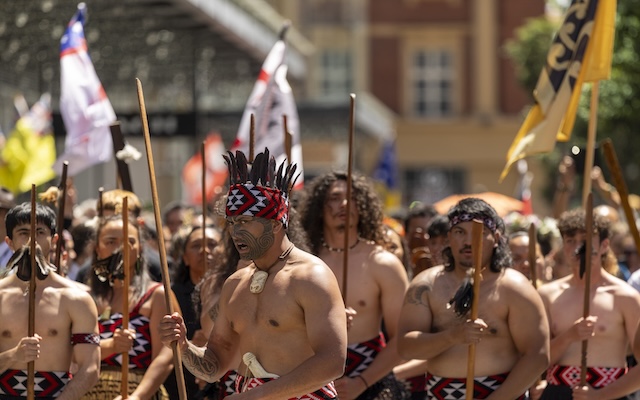
Tāmaki Makaurau Auckland is the world’s largest Māori and Polynesian city, and the programme wove Indigenous culture throughout – from the official pōwhiri welcome to bilingual wayfinding across key venue the Aotea Centre, to Te Ao Pūtahi Festival, a free public celebration of Indigenous culture and performance staged in Aotea Square.
Dr Noe Noe Wong‑Wilson, WIPCE International Council chair, said: “Tāmaki Makaurau stood out as host for WIPCE because we knew we would be welcomed warmly by the Māori community. We knew it would be a good place for all of us to convene to exchange knowledge with Indigenous communities from around the world.”
Content demonstrates global learning, local leadership
Presentations at the conference ranged from ancestral science and climate action to digital innovation and community wellbeing.
As home to two of New Zealand’s largest universities, Auckland offered fertile ground for cross‑cultural dialogue and research exchange. Delegates also connected with the region’s growing innovation and technology ecosystem, where Indigenous-led thinking increasingly shapes sustainable design, digital storytelling, and environmental management.
WIPCE 2025 keynote speaker Associate Professor Mere Skerrett said: “Tāmaki Makaurau Auckland is a great place to have conversations about science, technology and innovation because it is a melting pot of all sorts of different people.”
Showcasing Auckland’s conference capability
Auckland turned into a living classroom at WIPCE 2025 with many stories of place, ancestry and innovation
“The real success of WIPCE being in Tāmaki Makaurau is the city’s ability to host an event of this scale – nearly 4,000 people. Tāmaki Makaurau delivered,” said Professor Meihana Durie, WIPCE 2025 co‑chair.
Auckland served as a living classroom in the event programme, with delegates immersed in experiences that shared stories of place, ancestry and innovation. Highlights included the All Blacks Experience, waka hourua sailing on Te Waitematā Harbour, a visit to Te Ihu o Mataoho Māori village, and an Indigenous culinary experience at Ōrākei Marae.
Auckland’s accessibility, walkability and seamless visitor experience made a strong impression.
Dr Noe Noe Wong‑Wilson noted: “It’s easy to get to Auckland from around the world and once you arrive here, the airport is only minutes away from the conference venue. Our delegates really enjoyed themselves. Auckland is an absolutely beautiful city, surrounded by water, with lovely architecture, and is energised by people and the nightlife. The Aotea Centre is a jewel for Auckland, and our delegates found it easy to access from whichever hotel they were staying in.”
WIPCE sets legacy in motion
WIPCE 2025 delivered immediate economic benefits, with 3,800 delegates generating more than 16,600 visitor nights and an estimated $8.275 million in regional economic impact. But its lasting value lies in strengthened global networks in Indigenous education, research and policy.
The conference deepened connections between Auckland-based academics, iwi and international Indigenous institutions, and amplified Māori and Pacific leadership within Aotearoa New Zealand’s education sector.
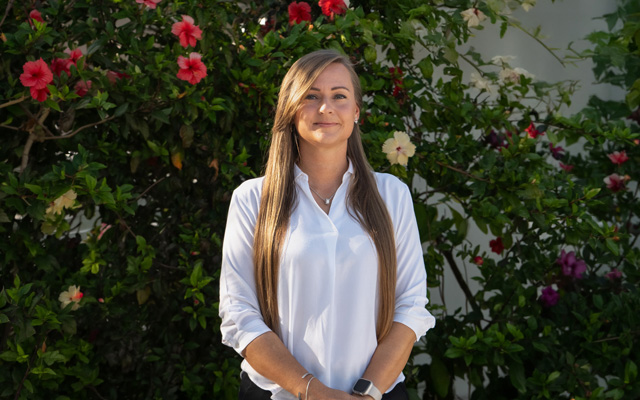
Kuda Villingili Resort Maldives has promoted Krisztina Vaszjunyina to resort manager.
She has been with the resort since 2021, joining as director of rooms and later serving as director of operations, where she oversaw daily operations and multiple departments.
She has more than 15 years of experience, including roles at Cheval Blanc Randheli and Anassa Hotel.
Supawan: business events will still carry on; photo by Kiat Chua
The Thailand Convention and Exhibition Bureau (TCEB) held its largest-ever overseas MICE roadshow in Singapore yesterday (March 26), aiming to reach a milestone of one million Singaporean business events travellers by the end-2026.
This target marks a significant leap from the current annual average of 50,000 to 60,000 visitors from the island nation.
Supawan: business events will still carry on; photo by TCEB
To achieve this, TCEB shone the spotlight on secondary destinations, and the roadshow delegation included first-time exhibitors from Khon Kaen, Nakhon Ratchasima (Khao Yai), and Udon Thani – the latter of which is set to host the International Horticultural Expo 2026 (November 2026 to March 2027). The event is expected to draw four million visitors and will eventually benefit from high-speed rail links connecting the region with Singapore.
During a media roundtable, Supanich Thiansing, TCEB’s director of meetings and incentives, also shared that while the annual Thailand Incentive and Meeting Exchange showcase (June 19 to 24, 2026) will be held in Bangkok, the subsequent buyer familiarisation trip will be hosted in Khao Lak – a new destination – for the first time.
TCEB also highlighted two key strategic initiatives, led by the First Time Ever Campaign. This new programme provides dedicated support for conventions being held in Thailand for the first time, as well as for organisers opting for cities outside of Greater Bangkok. This is complemented by the ongoing Meet Well Campaign, which offers incentive groups access to 155 service providers across 10 categories, with a particular focus on the high-growth luxury wellness sector.
Addressing rising energy costs and its potential to disrupt industry momentum, TCEB’s president Supawan Teerarat noted: “We hope that we can control these pricings in the next two or three months, but beyond that, it will be a big challenge (for the sector).”
While the Thai government is currently managing consumer costs, TCEB is positioning Thailand’s infrastructure as a hedge against logistical inflation.
Within Bangkok, the bureau is heavily promoting the use of the rail system (MRT and BTS) to connect delegates with major venues like Bangkok International Trade & Exhibition Centre, IMPACT Exhibition and Convention Center, and Queen Sirikit National Convention Center. Rail-connected venues allow international delegates to bypass traffic congestion and rising coach costs.
However, Supawan noted that smaller, emerging destinations are already facing difficulties with larger passenger coaches. Due to government-mandated fuel allocations, she has observed a shift toward smaller vehicles – a trend she believes signals that the future of the trade will increasingly revolve around smaller groups and corporate meetings.
Regarding regional stability, Supawan noted that South-east Asia remains a “safe zone” for global commerce. While geopolitical tensions have impacted traditional hubs in the Middle East, Thailand is seeing a surge in interest.
“Business has to go on,” Supawan said, pointing to the upcoming Money20/20 Asia conference in Bangkok as an indicator of the market’s resilience. “I have spoken with the organisers, and they have a full line-up of speakers and a strong outlook for attendance. People want to participate because they recognise that face-to-face interaction is still the only way to conduct real business.”
To date, TCEB reports no major cancellations of large-scale international events, with high-profile gatherings such as Gastech 2026 in September, and the IMF-World Bank Group Annual Meetings in October, remaining firmly on the calendar.
The global events industry is entering a high-growth phase with the arrival of several new convention centres in Asia-Pacific designed for a new era of connectivity.
From the New Zealand International Convention Centre to the Penang Waterfront Convention Centre, these landmarks aim to set new benchmarks in spatial versatility, technological infrastructure, and ESG-led design. We profile seven latest openings poised to reshape the international exhibition market.
K-Brand Week 2025 at Penang Waterfront Convention Centre
Penang Waterfront Convention Centre
The Penang Waterfront Convention Centre (PWCC), opened in October 2025, is the largest convention and exhibition facility in the northern region of Peninsular Malaysia.
Situated within The Light City integrated development on Penang Island, the centre benefits from its vibrant surroundings, including The Waterfront Shoppes with 302 retail outlets, a waterfront promenade, and two international hotels, JdV by Hyatt and Galaxy Minyoun, offering a combined 459 rooms for convenient delegate access.
Developed by IJM Perennial Development and managed by KinMalaysia Management, PWCC delivers extensive event space designed for flexibility and scale.
“From the outset, PWCC was planned as a venue that could cater to everything from large-scale exhibitions to highly customised conferences, with flexibility built into every layer of the design,” said KinMalaysia Management’s CEO, Dominic Oh.
Its five exhibition halls span 7,318m² of column-free space, accommodating international exhibitions, tradeshows, and large conferences. The halls support up to 6,000 guests in banquet configuration or 10,000 in theatre-style seating, allowing organisers to tailor layouts to diverse event requirements.
PWCC currently offers 10 conference rooms, with nine additional rooms underway. Once completed, the 19 rooms will provide a total of 1,895m² of meeting space designed to host up to 1,000 delegates, across multiple breakout sessions.
The Le Grand Bleu Terrace – which can accommodate up to 3,000 people – provides an elevated venue for cocktail receptions and dinners, featuring panoramic sea views, and the Penang Bridge as a dramatic backdrop.
In terms of technology, high-speed connectivity and modern technical systems ensure organisers have access to reliable solutions for exhibitions, conferences, and hybrid event needs.
PWCC is also equipped with a Building Management System that semi-automates lighting and air-conditioning operations to ensure optimal energy use during event and non-event periods. Other sustainability features include solar panel installations to power cooling system operations, and a rainwater harvesting system to support landscape irrigation.
Oh shared: “Sustainability and operational efficiency are integral to how the venue is run, from energy management to long-term cost optimisation. We focus on balancing operational performance with responsible venue management.”
Upcoming events include the Penang Autoshow 2026, MedHealth Pharma Expo 2026, Smart Kiddies Expo 2026, and MyAnaesthesia 2026. – S Puvaneswary
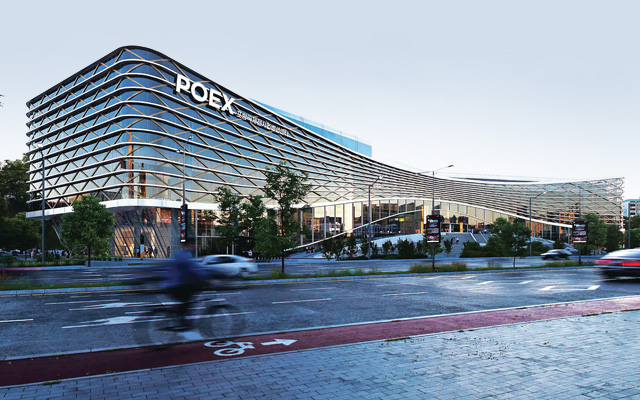
An artist’s impression of the Pohang International Exhibition Convention Center
Pohang International Exhibition and Convention Center
Known for decades as the grey industrial backbone of South Korea, the seaside city of Pohang is undergoing a transformation. With the scheduled 2027 opening of POEX, the city is signalling its evolution into a sustainable business events hub that leverages its industrial DNA.
The five-storey POEX is being built near the beach, connecting directly to Duho Park and offering delegates views of the East Sea. Its second floor houses a 7,183m² Exhibition Hall with a 14-metre ceiling height, capable of accommodating up to 10,000 visitors.
For plenary sessions, the fourth floor offers a 2,128m² Grand Convention Hall with a 2,000-person capacity, complemented by a suite of 11 meeting rooms across the third and fourth floors that seat between 60 and 220 attendees. The facility is further supported by a rooftop restaurant, an observatory, and a parking infrastructure designed for 838 vehicles.
POEX plans to leverage Pohang’s status as Korea’s “Battery Capital” – home to industry giants like POSCO and EcoPro – to bridge the gap between heavy manufacturing and eco-friendly innovation through specialised technical seminars and industrial tours.
The facility also solves a long-standing capacity issue for the city’s academic sector. While world-class researchers at POSTECH university were previously limited to small-scale hotel venues, they can now scale their high-level international conferences to host up to 2,000 attendees at the new centre.
Pohang is also aiming to become a green policy leader through the World Green Growth Forum (WGGF), a flagship event that successfully debuted in May 2025. This summit gathers global leaders from organisations like the Global Green Growth Institute and industry giants such as POSCO to discuss carbon neutrality and industrial transition. With WGGF 2026 already scheduled for July, the city plans to move this annual summit to POEX upon its 2027 completion.
POEX’s green credentials will be exemplified by its hosting of the 2027 ICLEI (Local Governments for Sustainability) World Congress, a global summit focused on carbon-neutral urban development. This prestigious event marks a turning point for the city as it demonstrates how industrial infrastructure can coexist with nature, specifically through the centre’s integration with Yeongildae Beach, and the “GreenWay” urban forest network.
To support the upcoming convention centre, Pohang is expanding its hospitality infrastructure with over 1,000 new rooms in the pipeline. This includes a 200-room four-star luxury hotel at the Yeongildae Waterfront opening alongside POEX in 2027, followed by a 300-room property in Hwanho Park by 2028, and a 150-room hotel in the former Pohang Station District by 2030. – Rachel AJ Lee
Just 10 minutes from Phuket International Airport on the serene northern coast, this 178-key, Bill Bensley-designed resort offers delegates a quiet, tropical paradise steeped in Phuket’s tin-mining heritage
The newly-opened Ritz-Carlton, Bangkok anchors the One Bangkok development with cosmopolitan elegance. Featuring the city's largest ballroom and a spectacular new penthouse suite, it delivers exceptional hardware and deeply authentic, soulful service for business and leisure travellers alike
Behind the imposing, Brutalist concrete that defines Zurich’s Oerlikon district lies a surprising secret. While its exterior honours the neighbourhood’s industrial roots, stepping inside Mama Shelter reveals a vibrant, neon-soaked world that is a far cry from its rigid shell



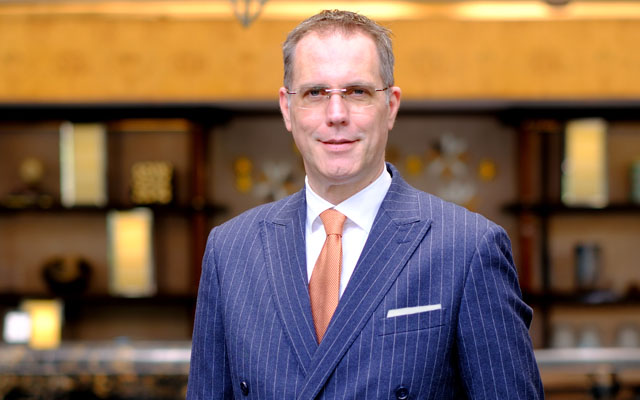
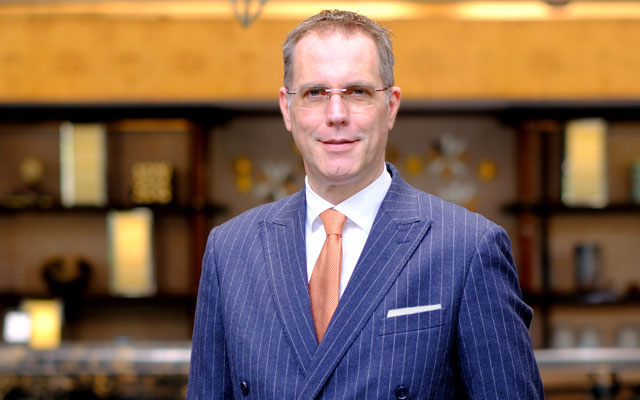 He joins from senior roles with IHG, Wyndham and Rosewood, where he led hotel openings, repositioning and operational performance.



 She has more than 15 years of experience, including roles at Cheval Blanc Randheli and Anassa Hotel.