Organisers envision the initiative evolving into a permanent platform for sustainability dialogue within the business events sector
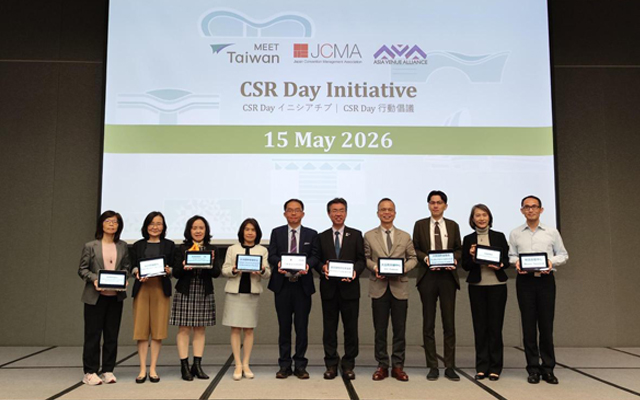
Meet Taiwan, Japan Convention Management Association, and Asia Venue Alliance (AVA) have successfully executed their joint CSR Day initiative, marking a milestone in greening the regional events industry.
Announced earlier in March, the partnership sought to synchronise sustainability efforts across Asian convention and exhibition centres, transforming high-level net-zero commitments into tangible community actions.
Organisers envision the initiative evolving into a permanent platform for sustainability dialogue within the business events sector
The initiative culminated on May 15, 2026, as venues across the continent carried out a variety of sustainability and engagement activities. These actions ranged from practical visitor incentives – such as rewards for using reusable cups – to the hosting of local community performances within venue spaces.
The objective was to move beyond high-level policy, creating visible, impact-driven results that resonated with both event attendees and local residents.
The rollout followed a Sustainability Venue Collaboration Meeting, where stakeholders from Taiwan and Japan shared practical strategies for energy efficiency and waste management.
Notable participating venues from Taiwan included ICC Tainan, Taipei International Convention Center, and Kaohsiung Exhibition Center; alongside Japan’s Pacifico Yokohama, and Osaka International Convention Center.
The dialogue was further bolstered by virtual participation from the Joint Meetings Industry Council, and several AVA members, including Setia SPICE Convention Centre (Malaysia), Ariyana Convention Centre Danang (Vietnam), Borneo Convention Centre Kuching (Malaysia), and Bali Nusa Dua Convention Center (Indonesia).
Health-related risks and transportation incidents rank as top concerns for business travellers worldwide
Transportation incidents and health-related risks rank as top concerns for business travellers worldwide, according to BCD Travel’s Research & Intelligence’s survey of 1,284 business travellers conducted last November.
Crime and natural disasters followed as other top worries, each cited by roughly one-third of respondents. The results are part of BCD’s latest report on changing attitudes toward travel risk management (TRM).
Health-related risks and transportation incidents rank as top concerns for business travellers worldwide
Transportation and health risks dominate concerns
Transportation accidents are the leading fear, cited by 37% of travellers, followed closely by health emergencies at 35%. Over the past year, 8% of those surveyed experienced an incident that required company support, with weather-related events accounting for almost a quarter of those cases.
Hotels and ground transport perceived as safe options
Regardless of these concerns, travellers still express confidence using managed travel options.
Most travellers (86%) feel safe when staying at hotels included in their corporate travel programme. Ground transportation, including ride-hailing services and traditional taxis are viewed favourably and considered safe by over 70% of respondents.
Persistent gaps in traveller awareness still remain
Despite trust in managed travel options, the survey reveals persistent gaps in traveller awareness and preparedness. Even though many organisations offer access to safety information through booking and risk management apps, travellers remain unsure where to find safety resources.
Nearly one-third of travellers do not know where to locate company safety information, and over a quarter turn to alternative sources during an incident. About 30% are unsure whom to contact in an emergency, and 18% hesitate to seek help because they are uncertain whether their situation was serious enough.
Employer engagement is key when mitigating risks
To close these gaps, employer engagement plays a critical role in mitigating risk. According to BCD’s 2026 Travel Outlook report, a broad range of heightened risks persist for business travellers including extreme weather, regional tensions, disease risk and more.
These concerns are already influencing behavioir: 11% of travellers responded that safety concerns prompted them to cancel their trip. Of those surveyed, 66% rate company support during risk incidents as high or very high; only seven per cent report minimal or no support. Common employer resources include flexible travel options, 24/7 emergency support, risk alerts and company phones with roaming. The most desired resource is pre-trip destination information (30%), which 38% says is currently available to them.
Over half of respondents believe their company’s safety measures are evolving to address new risks, while 9% disagree, and 35% are uncertain. While 27% of travellers are satisfied with their employers’ travel safety policies and do not believe improvements are needed, an equal share of travellers have voiced they want better communication.
FCM Consulting has launched the Travel Impact Index, a sophisticated assessment framework designed to help travel managers articulate the strategic value of managed travel programmes beyond simple cost-savings.
While professional confidence remains high – with recent Institute of Travel Management research noting that 84 per cent of travel professionals feel their roles are secure – practitioners are facing unprecedented pressure to justify travel spend in the face of AI-driven automation and global geopolitical volatility.
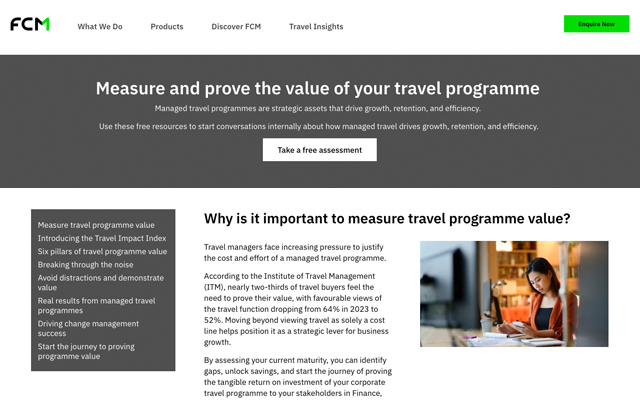
Screenshot of FCM’s website
The structured framework evaluates programme strength across five key pillars Governance and Risk Management; Data Visibility; Supplier Strategy; Stakeholder Engagement; and Behavioural Influence.
“Automation and accessible data can give the impression that managed travel is straightforward and easily reduced to price,” said Jo Lloyd, global head of customer management and consulting at FCM. “The real value lies in the oversight, risk management, and judgments that sit behind the transactions.”
Rather than focusing strictly on procurement savings, the Index encourages senior leadership to quantify often-overlooked metrics, such as avoided corporate liabilities, reduced traveller friction, and the specific business outcomes enabled by face-to-face connectivity.
Lloyd added: “If the business understands the value of the travel programme, it will invest in it. The Travel Impact Index helps travel leaders present their programme in terms that senior decision-makers recognise.”
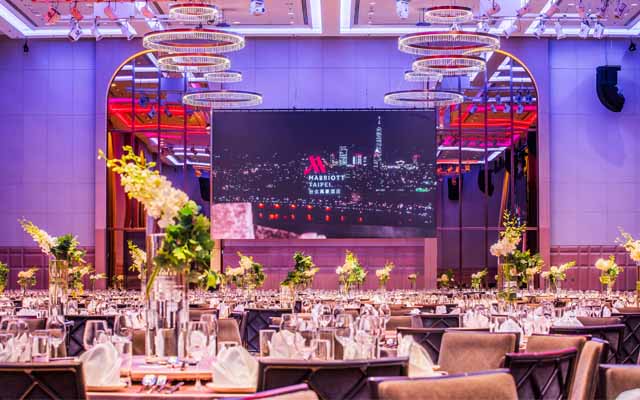
The upgraded AV and staging systems in Taipei Marriott Hotel
Taipei Marriott Hotel has unveiled Taiwan’s first built-in sliding LED display system, part of a multi-million-dollar upgrade to its Grand Ballroom.
The 1,260m2 pillar-free venue now features two centrally installed sliding screens capable of near-4K resolution, allowing for flexible stage configurations and seamless content segmentation.
The upgraded AV and staging systems in Taipei Marriott Hotel
This visual overhaul is paired with a Bose progressive directivity array speaker system to ensure consistent audio coverage across the 9.9m-high space.
By integrating in-house staging, lighting, and sound expertise, the hotel has transitioned into a one-stop production partner for the more than 1,000 corporate events it hosts annually.
The global events industry is entering a high-growth phase with the arrival of several new convention centres in Asia-Pacific designed for a new era of connectivity.
From the New Zealand International Convention Centre to the Penang Waterfront Convention Centre, these landmarks aim to set new benchmarks in spatial versatility, technological infrastructure, and ESG-led design. We profile seven latest openings poised to reshape the international exhibition market.
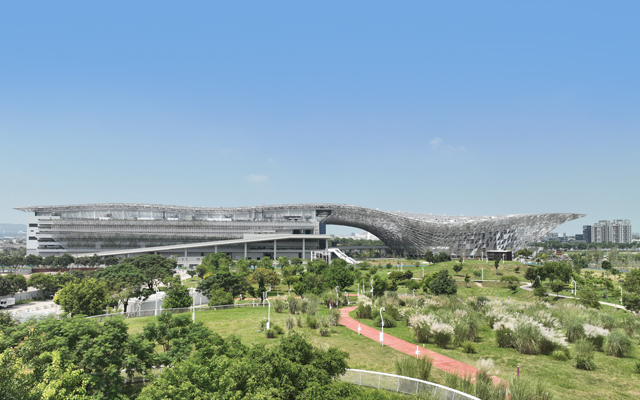
Taichung International Convention and Exhibition Center is set within a landscaped urban park
Taichung International Convention and Exhibition Center
As the industrial heart of Taiwan, Taichung serves as the primary base for clusters in machine tools, optoelectronics, aerospace, bicycles, and hand tools. To capitalise on this concentration of “Made in Taiwan” manufacturing, the Taiwan External Trade Development Council (TAITRA) chose Taichung as the location for its first major convention and exhibition hub outside of Taipei. The result is the Taichung International Convention and Exhibition Center (TICEC), which officially entered trial operations in late 2025.
In addition, TICEC was designed to bridge the gap between tradeshows and production, by allowing international buyers to visit an exhibition, and tour a nearby factory within the same day.
The complex is divided into two primary structures – Exhibition Hall and Convention Center – spanning a total usable area of nearly 39,000m². This scale allows for up to 1,633 standard booths, with the flexibility to host gatherings ranging from 30 to 10,000 participants. Key spaces include the C101 Conference Room, which seats 3,000 people and can be subdivided into six independent meeting rooms.
To support the modern requirement for hybrid programming, the centre is equipped with high-speed fibre optic networks and venue-wide Wi-Fi. The infrastructure is built to ensure virtual participants can engage seamlessly with on-site attendees through high-specification audiovisual systems, including simultaneous interpretation and LED video walls.
This operation is led by a veteran management team from TAITRA’s Taipei venues, ensuring that international operational standards are applied to every facet of the venue, from security to catering.
Sustainability was a core component of the venue’s development. TICEC holds the Diamond-level Certificate for Green Building, and Diamond-level Candidate Certification for Building Carbon Footprint. Its environmental features include a rooftop solar array of 4,945 panels that powers the equivalent of 600 households annually, and a condensate recycling system that recovers 480 cubic metres of water monthly for irrigation. Additionally, the complex incorporates 200,000 plants that absorb approximately 140 tons of carbon dioxide every year.
Following its 2025 debut, the centre’s 2026 calendar is already heavily booked.TICEC’s director, Kevin Wu, confirmed that over 50 exhibitions – such as the Taiwan International Machine Tool Show, and Taichung Industrial Automation Exhibition 2026 – have been secured. Altogether, an estimated 350 events, including conferences and corporate functions, and three million visitors are expected in the first full 12 months of operation. – Rachel AJ Lee
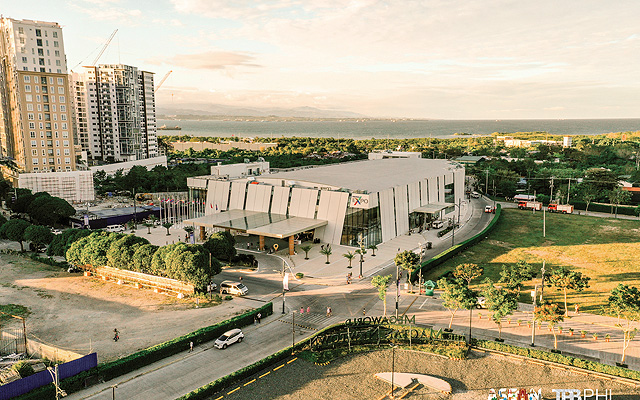
Mactan Expo hosted the ASEAN Tourism Forum 2026 in January
Mactan Expo
Mactan Expo officially opened in January 2026 and is the largest purpose-built convention facility in Mactan, Cebu.
Located at the heart of Megaworld’s 30-hectare Mactan Newtown in Lapu-Lapu City, the two-storey venue anchors business events within a fully master-planned township that integrates business, hospitality, lifestyle and beachfront components.
According to a spokesperson from Mactan Expo, the venue was conceived to place meetings and conventions at the intersection of accessibility and resort-style appeal.
“Just 15 minutes from Mactan-Cebu International Airport, delegates can arrive with ease and move seamlessly into the township, where the 550-room Mercure Mactan Cebu and the 546-room Savoy Hotel Mactan Newtown offer accommodation within walking distance of the venue.
“A wide range of dining and leisure options at Mactan Newtown Beach further adds an island dimension to the business events experience,” the spokesperson said.
The venue features a 2,600m² main hall that can host up to 1,850 guests in a banquet setup, complemented by a 1,426m² pre-function area, three VIP rooms, high-speed connectivity, a dedicated service kitchen, and in-house catering with local, international, and halal selections. The mezzanine level adds two breakout rooms, a pre-function space, and an open-air balcony ideal for networking and socials.
Built in compliance with the Philippine Green Building Code, Mactan Expo incorporates rainwater harvesting, energy-efficient lighting and a materials recovery facility designed to support on-site waste segregation, ensuring proper handling and preparation of municipal solid waste for collection and recycling.
Major events that have already been held at Mactan include the ASEAN Tourism Forum and Megaworld Hotels & Resorts Sales & Marketing Conference, with the former marking the venue’s first regional event. Upcoming events include ASEAN Summit in May, and Ironman 70.3 in August. – S Puvaneswary
Sindhorn Kempinski Hotel Bangkok has appointed Thaddaeus Weiss as general manager, overseeing both the hotel and The Residences at Sindhorn Kempinski.
Weiss returns to the property after previously serving as hotel manager from 2021 to 2024 and being part of the pre-opening team. He most recently held the role of hotel manager at The Apurva Kempinski Bali, where he oversaw multiple divisions and operations.
The Philippine Council of Associations and Association Executives (PCAAE) has debuted a new short-form podcast designed to elevate discourse and practice across the association community.
The initiative, led by Octavio Peralta, founder and volunteer CEO of the PCAAE, and produced in partnership with Membes, an Australian association management system solutions provider, is named Association Matters: Conversations on Governance, Leadership and Impact. It will serve as a platform for practical conversations with association leaders, executives, and practitioners who are shaping how associations operate and evolve in the Philippines and beyond.
Octavio Peralta, founder and volunteer CEO of the PCAAE, has created a podcast to bring practical content to association leaders, executives, and practitioners
Peralta said: “The rationale for launching the podcast is both timely and strategic. Association leaders today are navigating a rapidly changing environment, shifting member expectations, digital transformation, volunteer engagement challenges, sustainability concerns, and increasing scrutiny of governance practices. At the same time, learning preferences are evolving. Leaders seek concise, relevant, and on-demand content that fits into busy professional lives. With a focused 10-minute format, Association Matters responds directly to this need by distilling insights that are immediately applicable and grounded in real experience.”
Each episode will explore practical themes central to association excellence, including governance frameworks, the board-secretariat partnership, strategic planning, volunteer leadership, financial stewardship, collaboration, and the future of associations.
The podcast has so far featured conversations with Rizchelle Sampang-Manaog, executive director of the CFA Society Philippines, and Enrique I Florencio, secretary general of the Association of Development Financing Institutions in Asia and the Pacific.
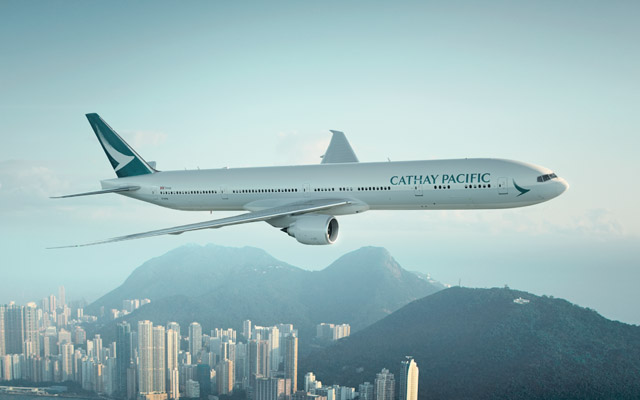
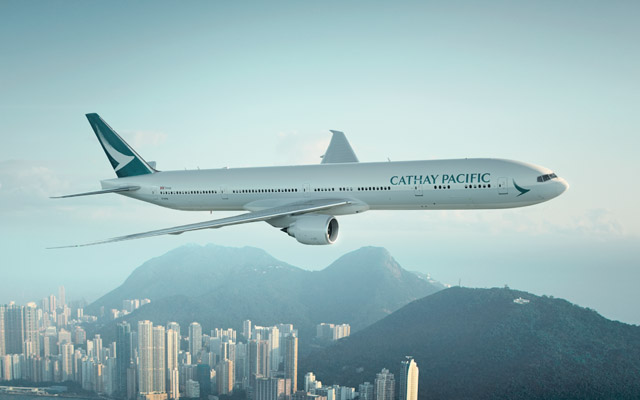
Airlines around the world have announced further adjustments to their flight schedule as the US-Israel-Iran war escalates.
Cathay Pacific said on March 18 that it would cancel its Dubai and Riyadh passenger flights up to and including April 30. Affected travellers are offered the flexibility to rebook, reroute or cancel their tickets.
Cathay Pacific is among several airlines that have extended suspension of flights to and from the Middle East
Scoot announced on March 17 more affected flights between Singapore and Jeddah – these would be suspended until March 28. Its full-service sister, Singapore Airlines, has also extended cancellations of its Singapore-Dubai flights to March 28.
Japan Airlines has suspended its Tokyo-Doha flights until March 31 and Doha-Tokyo flights until April 1.
Lufthansa Group has extended the suspension of its flights to and from Dubai until March 28. These flights were previously cancelled through March 15. At the same time, all airlines of the group will suspend flights to and from Abu Dhabi, Amman and Erbi until March 28; to and from Beirut until March 28; to and from Tel Aviv until April 9; to and from Riyadh until April 5; and to and from Tehran until April 30.
Latest updates from Emirates, Etihad and Qatar Airways show that they will continue to operate a limited flight schedule so as to ensure the safety and security of passengers and crew.
Etihad said “services will operate only once all safety criteria are met”.
The Middle East conflict is costing the travel and tourism industry. The World Travel & Tourism Council said earlier this week that international visitor spend is estimated to be falling by at least US$600 million per day while disruptions to air travel, traveller confidence and regional connectivity are affecting tourism demand across the region.
India's LPG shortage worsens due to Middle East supply disruptions
India’s business events sector is feeling the heat of a commercial LPG shortage, with venue operators flagging rising overheads and logistical strain on high-volume catering.
While events proceed as planned for now, LPG supply volatility is forcing hotels and organisers into a defensive crouch, particularly regarding F&B logistics and cost-sensitive catering, industry stakeholders say.
India’s LPG shortage worsens due to Middle East supply disruptions
Pradeep Shetty, vice president, Federation of Hotel & Restaurant Associations of India, and spokesperson for Hotel And Restaurant Association (Western India), said operational continuity is at risk for large-scale events, as the gas shortage begins to hit high-volume kitchens that rely on a uninterrupted supply.
“Hospitality players are reassessing their capacity for large events, with organisers now seeking catering assurances before booking. We’re seeing a shift toward scaled-down guest lists, simplified menus, and more compact formats. In cases of extreme supply uncertainty, some events are even being rescheduled,” said Shetty.
“The shortage is directly hitting the bottom line. Many hotels are pivoting to electric or induction-based cooking, which adds significant operational expense. Simultaneously, this uncertainty is triggering business losses as events are either postponed or scaled down,” he added.
Arindam C Bahel, general manager of The Fern Brentwood Resort, Mussoorie, said the shortage has led to more strategic kitchen planning and operational adjustments at the property level.
“We have streamlined menus for large MICE events, focusing on dishes that offer execution efficiency without compromising the guest experience. There is now a greater emphasis on pre-preparation, batch cooking, and the selective use of live counters,” said Bahel.
While no major disruptions have been reported at the property so far, he acknowledged that the situation has increased operational pressure.
“There have been instances where supply timing was uncertain, so teams have had to maintain buffer stock and coordinate more closely with vendors,” he explained.
Bahel also confirmed a rise in operating costs driven by higher LPG prices, investment in alternative equipment, and inefficiencies arising from staggered cooking processes. “Margins are under pressure, but our priority remains maintaining service quality,” he emphasised.
The qualification strengthens capability across New Zealand’s business events sector
Enrolments have opened for Te Haeata, the New Zealand Certificate in Business Events Level 4, marking the arrival of the country’s first nationally-recognised qualification for the sector.
Announced by minister for tourism and hospitality, Louise Upston, at the Business Events Industry Aotearoa (BEIA) Annual Conference, the programme was developed to meet industry demand for a structured, practical workforce development pathway.
The qualification strengthens capability across New Zealand’s business events sector
The qualification is a collaborative effort between BEIA, ServiceIQ, Grow Tourism, and various industry leaders to ensure the curriculum aligns with the specific needs of the conference, incentive, and exhibition sectors.
The programme combines on-the-job learning with flexible online delivery, allowing participants to build specialised skills while remaining active in the workforce.
Under New Zealand Qualifications Authority’s oversight, ServiceIQ will manage programme delivery, assessment, and certification, while BEIA’s education programme manager, Claire Steele, will lead industry engagement to ensure the course remains relevant to evolving sector needs.
BEIA chief executive, Lisa Hopkins, described the programme as a vital investment in the industry’s future, noting that it addresses critical workforce priorities such as skills shortages and succession planning.
“Te Haeata provides a structured pathway for people entering or progressing within the business events sector to grow their knowledge and understanding, while helping employers develop the skills and capability required to support industry growth.”
Just 10 minutes from Phuket International Airport on the serene northern coast, this 178-key, Bill Bensley-designed resort offers delegates a quiet, tropical paradise steeped in Phuket’s tin-mining heritage
The newly-opened Ritz-Carlton, Bangkok anchors the One Bangkok development with cosmopolitan elegance. Featuring the city's largest ballroom and a spectacular new penthouse suite, it delivers exceptional hardware and deeply authentic, soulful service for business and leisure travellers alike
Behind the imposing, Brutalist concrete that defines Zurich’s Oerlikon district lies a surprising secret. While its exterior honours the neighbourhood’s industrial roots, stepping inside Mama Shelter reveals a vibrant, neon-soaked world that is a far cry from its rigid shell




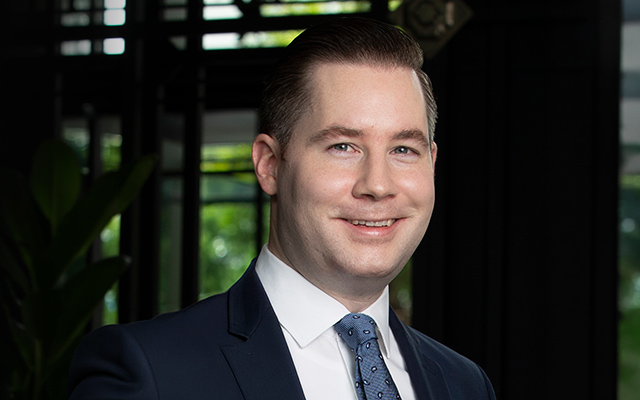
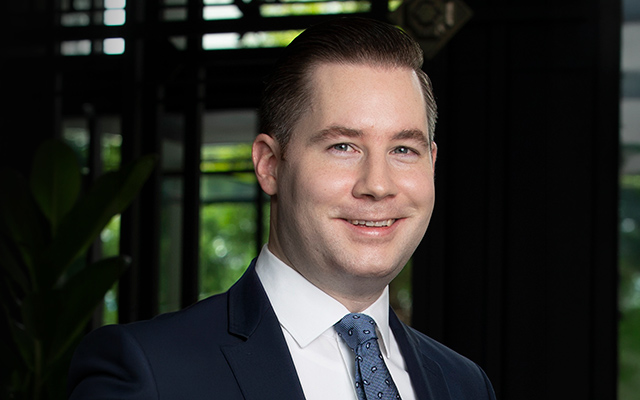 Weiss returns to the property after previously serving as hotel manager from 2021 to 2024 and being part of the pre-opening team. He most recently held the role of hotel manager at The Apurva Kempinski Bali, where he oversaw multiple divisions and operations.