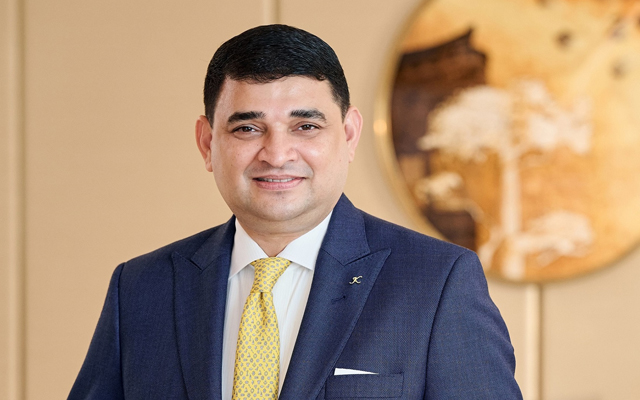
You are no stranger to Kuala Lumpur Convention Centre, having been with the venue since 2017. How has the transition to the role of general manager been?
Well, it has only been a month since I officially stepped into my new role but the transition has been smooth so far. Being closely involved in many different areas of the centre’s operations, service delivery and building management over the last six years has helped me settle into my present duties quite seamlessly.
I am fortunate to have a very supportive and capable team that has been a great strength to me since joining the centre. My team mates are experienced, dedicated, display a great show of camaraderie, and ever willing to go above and beyond what is required of them.
I also had the opportunity to forge good working relationship with our clientele, industry colleagues and with our Kuala Lumpur City Centre precinct partners whose backing has been integral in the centre’s long-track record of success.
What are your priorities?
I am focused on ensuring the centre continues to deliver valuable impact and legacy to the city and the people of Kuala Lumpur and Malaysia. Moving forward, we, like everyone else, are dealing with many global challenges such as a shortage of skilled staff in the hospitality sector, rising operating costs and disruptions to supply chains. Navigating these challenges will be key to ensuring we continue to deliver a great venue and value proposition that meets our clients’ needs.
The world continues to evolve around the way we live, work and do business, how we manage relationships and deliver services and, to meet these changes is exciting and something I look forward to working on with my team.
My present priorities are around setting a change trajectory for the centre and our team to ensure we stay current and maintain our attractiveness as a sought after venue destination in Malaysia and globally.
What improvements are you making in operations?
With rising cost around utilities, food and staff, I am working on managing and enhancing our cost containment methods. We will be looking at pushing our digital transformation further across different levels of operations to improve efficiencies in offsetting these increasing costs.
We are also taking the opportunity to revisit all our offerings and client engagement touch points in various stages, from site-visits to planning, and event delivery to post-event follow-ups. We are seeing a higher response rate in our customer feedback, with majority of them indicating a very high level of satisfaction in our packages, space, and services. We are proud of our client’s post-event appraisal, and will be evaluating further requirements for future improvements based on these comments.
What new investments and initiatives are being considered?
Event formats are evolving with more focus on the inclusion of small collaborative-style spaces. So, we are looking at reconfiguring parts of the venue where organisers can provide enhanced and differentiated event experiences to their delegates.
Behind the scenes, we are also expanding our technical services to be a one-stop-hub to ease all aspects of the technical production for our clients.
Being equipped with the largest food production kitchen in Malaysia that comes with an award-winning culinary team, we are also growing our food and beverage offerings and services. We have already delivered hospitality services to a number of large sporting events and are looking forward to this aspect of the business growing further.
We are working together with the Kuala Lumpur City Centre Precinct and our Business Events Alliance (KLCCBEA) partners to create a sustainable meetings destination for our guests to meet, dine, stay and play responsibly. Facilitated by URBANICE Malaysia, a KLCCBEA Symposium was held late last year, to define, chart and develop a long-term plan to help create a sustainable KLCC precinct for Business Events, aligned to Malaysia Sustainable Development Goal (SDG) Cities and the country’s Shared Prosperity Vision 2030.
In your opinion, what are the current challenges facing the business events industry in Malaysia and what should be done?
Post-pandemic, we, as the rest of the industry, are faced with multitude of global economic challenges such as continued supply chain disruption, the ripple effects of the war in Europe, fluctuating dollar and pound sterling, rising cost of energy and food prices, among others.
But, one of the more serious issues is around human resources. The lack of experienced workforce, higher demand for compensation packages, work-life balance and/or similar are real and will be on our back for a while.
We are a people industry but we seem to be lacking the people to drive the future growth of our sector. As business momentum picks up, we need to find healthy solutions to ensure the long-term sustainability of our industry. Whether by tweaking our hiring policies with clauses that bring real value and benefit to our staff or creating new pathways for our working culture to evolve with more intrinsic values, we have to act now.
A prolonged challenge that we continue to face in Malaysia is the global industry’s perception that Malaysia is not geared for large international events. Contrary to this, our venues and event supply chains are well-positioned to cater to events of all sizes and profiles. Malaysia has demonstrated this over the years by successfully delivering some the world’s biggest events. There are many venues here, with a wide range of accommodation options, ready and willing to host international events, and combined with our experience supply chain, English being widely-spoken, affordability and the value-for-money, the reality is far from the market perception.
There is also a lack of awareness and understanding of the value of business events in Malaysia. (Our industry) needs a strong recognition as an economic driver that is complementary to all industries, trades and academic sectors.
Our regional neighbours have started to recognise the value of business events and its significance in rebuilding economic prosperity and social well-being, and have put in place strategies that will lead to winning more international events. But, in Malaysia, we are still lacking strategic direction and policies to further develop the industry as an economic driver, employment provider, and a legacy builder.
Business events, as a critical vehicle of nation building agenda, must move in tandem with strategic economic policies. This is where we see a critical need for the private and public sector to work closely together, with more open dialogues and opportunities for collaboration, to change perceptions and showcase Malaysia’s unique attractiveness and its compelling value as the preferred business events destination in the region. We need a more cohesive national strategy stemmed from a unified and objective approach to realise the full potential of the industry and for the supply chain and the wider community to reap its true benefits.
As a market leader and an advocate for the industry, we are always committed to advancing Malaysia’s business events industry. We are open and looking forward to be part of these conversations with the relevant parties, and hope that more efforts will be mobilised to elevate and enhance our competitiveness and position in the region.


She has over 20 years of experience with the Cathay Pacific Group, and was previously general manager inflight service delivery.


Prior to joining Brij Hotels, he served as the director of sales and marketing for the Gujarat region at The Leela Palace Hotels and Resorts.


Business Events Industry Aotearoa’s (BEIA) 27th MEETINGS 2023 this June 21 and 22 is gunning for the Toitū net carbon-zero certification as a Certified Event Operation – an achievement that will make the edition the most sustainable yet.
BEIA chief executive, Lisa Hopkins expressed excitement over this commitment as well as the pursuit of further sustainability goals for MEETINGS 2023.
“As the business events industry’s peak body, it is our role to lead the way in sustainability practices and make them core to everything we do,” she said in a press statement.
“Working with Toitū to achieve this certification means all emissions associated with the planning and operations of MEETINGS 2023 will be measured, audited in alignment with strict world-leading criteria, and then offset via quality assessed carbon credits.
“Not only will this show our exhibitors and buyers we are committed to reducing environmental impact, but also it will give us the platform to work towards continual reduction of carbon emissions for MEETINGS year-on-year,” Hopkins added.
MEETINGS 2023’s sustainability efforts include a sensible venue selection. It will be held at Tākina Wellington Convention and Exhibition Centre, which holds a 5-Star Green Design certification from the New Zealand Green Building Council. Features of Tākina include high performance double glazing, automatically controlled LED lighting, heat pumps to reduce fossil fuels, ventilation and water efficient fittings and rainwater harvesting, energy efficiency signage options, and environmentally-friendly materials sourced from sustainable forestry.
Other initiatives for MEETINGS 2023 include carbon-offsetting hosted buyers air travel with Air New Zealand’s FlyNeutral programme, reducing printed material, eliminating satchels, and partnering with local charities Kibosh Food Rescue, Gillies McIndoe Research and Wellington Zoo to make donations on behalf of every hosted buyer.
“We know our 200 plus hosted buyers, who come from far and wide across New Zealand and Australia, are the lifeblood of MEETINGS. We also know that getting here comes at a cost to the environment, so BEIA will be offsetting carbon emissions from all hosted buyer flights from Australia and around New Zealand,” she said.
Hopkins acknowledged that successful sustainability initiatives require collaborative efforts, and is therefore encouraging event participants to play their part in reducing footprint.
Exhibitors can help by offsetting carbon emissions from travel and freight to Wellington if possible, using sustainable packaging, reducing waste from one-time items by creating reusable generic signage or digital signage options, and bringing reusable coffee cups and water bottles.
“We are also encouraging exhibitors to use sustainable, eco-friendly and biodegradable giveaway items, and arrange for plants used on stands to be donated or re-planted,” she said.
Hosted buyers can make a difference by bringing reusable coffee cups, water bottles, and bags, and by using the MEETINGS App, recycling name badges, walking to the venue if staying locally, and choosing one of three charities for BEIA to donate to.