


Singapore Tourism Board’s refreshed campaign to drive tourism growth
Singapore Tourism Board (STB) will be refreshing its Passion Made Possible (PMP) campaign, which is expected to be the impetus to maintain the momentum of tourism recovery.
During the Travel Industry Conference on April 5, STB chief executive Keith Tan expressed confidence “we can sustain the momentum of growth” based on the destination having “already crossed over 2.9 million visitors in 1Q2023, each staying an average of 3.97 days”.
Sharing more details on PMP 2.0, Chang Chee Pey, assistant chief executive, marketing group, told TTG Asia a review of the marketing strategy had been done in 2021 – in consultation with experts in travel, tourism, and marketing – to “future-proof Singapore’s desirability as a destination and support our longer-term tourism strategy”.
“With rapidly evolving consumer behaviour, Singapore must remain well-positioned to cater to the needs of future travellers,” Chang added.
STB’s refreshed marketing strategy is to tell a great Singapore story by “sharpening this narrative” and giving strong reasons for travellers to visit based on six propositions, namely World’s Best MICE City, Culinary Capital, Family Playground, Twice the Fun, City that Connects, and Travel Well.
Chang explained: “Each of these six positionings is supported by a mix of products and experiences. They have the most potential to grow visitor arrivals, as well as impact visitor spend and length of stay in Singapore.
“The positionings will be rolled out progressively, with the World’s Best MICE City positioning campaign set to launch later this year. More details on the other positionings will be available at a later stage.”
Elaborating on the MICE positioning, Chang noted: “We want Singapore to be recognised globally for the strong fundamentals that make us a key MICE hub, such as our strategic location, vibrant business culture, excellent infrastructure, stable governance, and stellar track record in delivering high-quality events.”
As for Culinary Capital, the vision is for Singapore to be known as a world-class food destination that constantly innovates.
“We want to be recognised for our distinctive local cuisine and diverse dining scene, helmed by reputable bars and restaurants with talented bartenders and chefs. Singapore will host the World’s 50 Best Bars 2023 later this year, which will be held in Asia for the first time. We also had a strong showing in Asia’s 50 Best Restaurants for 2023, with nine restaurants making the cut and eleven bars in Asia’s 50 Best Bars 2022,” he added.
Chang pointed out that Singapore is one of the world’s safest and cleanest cities, coupled with world-class and diverse family-friendly attractions and experiences, citing Disney Cruise Line homeporting a new Disney Cruise ship in Singapore exclusively for five years, as an endorsement of the Family Playground status.
Twice the Fun will aim to deliver “an exciting city that offers year-round leisure events, entertainment, retail, and nightlife experiences that appeal to Early Careers” by curating and developing “a range of attractive tourism and lifestyle offerings that appeal to travellers across ages, interests and passions”.
In addition, STB will maintain a full calendar of events, such as world-class sports, arts, culture, and food, on top of Singapore’s exciting nightlife including outdoor cinemas and night admissions to museums, to add vibrancy to the garden city.
City that Connects will promote Singapore as a multi-cultural hub and a global city with excellent connectivity to Asia and the rest of the world, in particular to South-east Asia, while Travel Well aims to have Singapore become a sustainable city and urban wellness haven.
Chang observed: “Earlier this year, we were certified under the GSTC (Global Sustainable Tourism Council) Destination Criteria, which affirms that Singapore is on the right track to become a sustainable urban destination, where large experiences come with small footprints.
“In wellness, we will establish Singapore as a destination that provides holistic well-being and accessible must-do experiences that leave visitors feeling better than when they arrived. For both sustainability and wellness, we will continue to invest in new products and experiences.”
Tokyo offers carbon footprint calculator for events
Tokyo Convention & Visitors Bureau (TVCB) has created a carbon footprint calculator to support the creation and delivery of more sustainable events in the Japanese capital.
Released by Business Events Tokyo, TCVB’s one-stop shop for meeting and events planners as well as organisers bidding to host international business events in Tokyo, the tool is designed to help event organisers understand the environmental impact of holding their business event in Tokyo.
The user follows seven steps, including inputting primary data, to show how much carbon dioxide would be emitted by holding their planned event, both in total and per attendee.
Summarised and detailed reports can be downloaded when the calculation is completed, allowing the user to decide on how to proceed with the event planning and delivery in order to be more sustainable. Users can also share the reports with attendees and prospective attendees – another feature designed to raise awareness of the importance of greener events.
TCVB is encouraging meeting organisers to use the tool “to observe how much CO2 emission an event will cause and to take action to manage a more sustainable event,” the organisation said in a statement.
“We are aware that holding business events has environmental impacts, but we also understand and promote the importance of people meeting in person and sharing the excitement of gathering in one place,” said Kazuko Toda, senior director of Business Events Tokyo.
“We often hear from organisers and meeting planners that they are aware of the importance of paying attention to sustainability but they do now know where to start. We hope this tool will be a springboard for organisers and the local industry to start thinking about what they can change from what they have been doing until now and to be more conscious about the environment,” she added.
Andaz Bali, Hyatt Regency Bali welcomes new MD
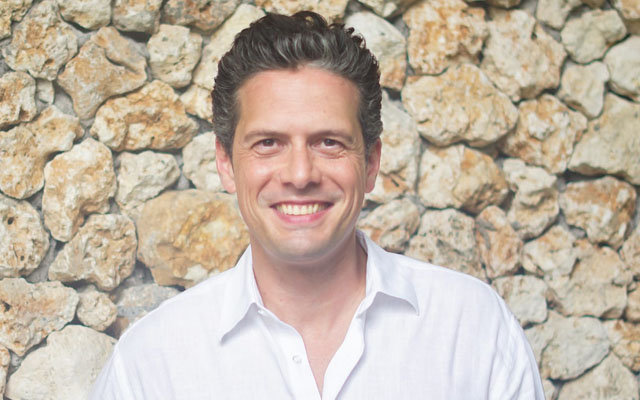
Hervé Mazella has been appointed as managing director of both Hyatt resorts in Sanur – Andaz Bali and Hyatt Regency Bali.
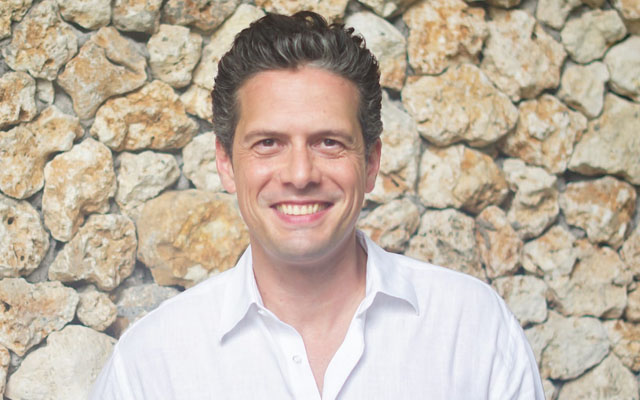 In his new role, he will oversee the operations of both properties, comprising a total of 512 rooms, seven restaurants and nine meeting rooms.
Prior to joining Andaz Bali and Hyatt Regency Bali, he was general manager of Park Hyatt Tokyo from 2016 to 2022.
Hilton ramps up sustainability targets and initiatives in Asia-Pacific
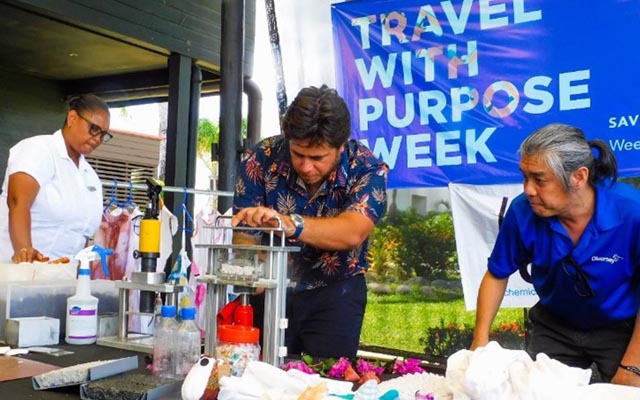
Hilton continues to advance towards meeting key sustainability targets by reinforcing Travel with Purpose efforts in Asia-Pacific.
Published in 2022, the Travel with Purpose report details its latest progress as the company works to meet its global 2030 environmental, social and governance (ESG) goals.
To date, the company has managed to cut carbon emission intensity by 44 per cent, water intensity by 38 per cent, and landfill waste by 58 per cent among hotels globally.
Hilton has created more than 677,359 learning and career growth opportunities against its five million commitments and positively impacted 2.8 million community members through local support, disaster relief efforts and economic opportunities; as well as invested in two Fifth Wall’s climate technology funds that aim to decarbonise the global real estate sector, according to the report.
Through its Meet with Purpose programme, customers have the ability to offset their event’s carbon emissions and invest in a portfolio of carbon reduction projects through its partner ClimeCo. With the Meeting Impact Calculator, customers can now choose to make their meetings carbon neutral.
In response to the global trends which showed 86 per cent of travellers want to travel more sustainably, Hilton now offers on-site EV chargers for guests in over 110 hotels across Asia-Pacific as of December 2022. As a result, Hilton Zhoushan, China’s newly-installed charging stations, for example, have already reduced vehicle emissions by 60 tonnes.
Food waste reduction is also a significant part of Hilton’s effort – Conrad Centennial Singapore, for instance, reduces food waste by procuring often-discarded “ugly vegetables”, as well as plant-based eggs and meats for their menus.
Hilton has also partnered with Winnow to leverage AI technology to help chefs accurately pinpoint food waste streams to cut costs and tailor purchasing decisions in select hotels across Asia-Pacific. To date, seven properties in Japan have implemented such technology.
Through partnership with international cleaning and sanitation company, Diversey Inc., Hilton gives discarded linen from hotels a new life. Curtains, uniforms, bed sheets and tablecloths are turned into products that are sewn, designed and sold by local communities across the region. Plastic is also recycled into gravel, and charcoal is replaced by discarded coffee grounds as a cleaner alternative.
The release of the 2022 Travel with Purpose report corresponds with the release of the inaugural Hilton Global Foundation Impact Report, which highlights the positive global impact of US$2.3 million donated in 2022 to organisations working to build a healthy, sustainable planet and resilient communities for future generations.
Some examples of regional projects include the Punlaan School in the Philippines, which sponsors scholarships and programmes for underprivileged young women, focusing on hospitality and culinary arts while equipping them with job and life skills; and the ROLE Foundation in Indonesia that provides young, marginalised women with a six-month residential programme consisting of hospitality skills training, crucial life skills and confidence building activities.
In Malaysia, Hilton supports the Kechara Soup Kitchen which supplies food aid distributions to homeless, marginalised and poverty-stricken families; the China Foundation for Rural Development in China works to alleviate poverty in China through hospitality education, cultural exchanges, social media skills and other trainings; and the Ocean Conservancy in Australia, together with its partners, create evidence-based solutions for a healthy ocean.
To date, the Hilton Global Foundation has awarded over US$8 million in grants, donated over 8.1 million kilograms of food to communities in need, meaningfully impacted over 6.7 million people, and restored over 91,054 hectares of land.
Eye on a changing travel landscape
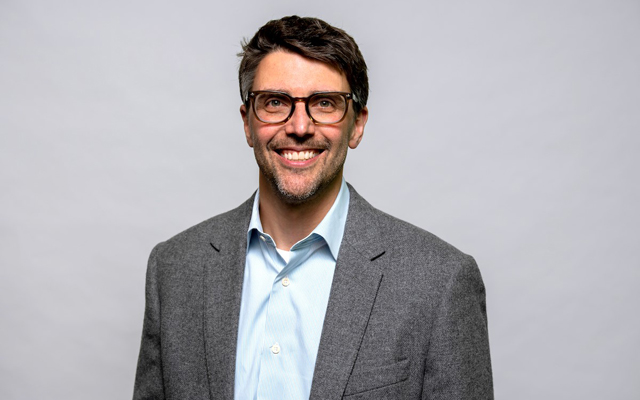
 If the liberation of Asia for travel was the main theme for 2022, what would the theme for 2023 likely be?
I see three elements that will define the travel landscape for 2023.
First, the nature of travel is more defined now – it has become more purposeful.
People back on the road first are those that are the front-end revenue drivers, who manage customer relationships and drive sales through networking at conferences.
In fact, a study by Deloitte last year found that the number one reason for business travel was specifically for networking.
We are also witnessing permanent structural change in how people travel for internal purposes, like staff meetings and training. I don’t think these trips are ever going to return for a couple for reasons – there has been a clear acknowledgment that virtual meeting technology is good enough for such purposes, and corporates won’t want to travel as much now that they are also balancing sustainability objectives.
Corporates have to decide what are the trips that deliver the most value for them and how to do more of that, while taking advantage of savings from reduced internal travel.
Two, there is an intense rise in sustainability objectives. In every corporate RFP, there are questions on what CWT can do to help them meet their sustainability objectives, types of analytical capability and sustainability reporting we offer, whether our travel counsellors and electronic point-of-sales tools have the capability to display carbon footprint implications so that travellers make better decisions, etc.
Sustainability used to be lip-service pre-pandemic, but it is now a true priority.
Three, there is a strong focus on diversity, equity, and inclusion (DEI). To what degree do we, as a travel community, contribute to very broad DEI goals? This is also in every RFP we get now – what are our policies around DEI; what are we doing to hire and promote a more diverse workforce; what are we doing to provide a psychologically safe environment for our communities; and what degree do our tools contribute to their DEI objectives.
AT CWT, our profile tools now include gender-neutrality options. We provide guidance to travel counsellors who speak to real people on the other end of the phone, to ensure they capture the right pronouns, for instance. We are also working with our partners to ensure that our LGBTQ+ travellers are alerted to risk factors in specific destinations (destinations that are more sensitive to LGBTQ+ individuals).
Travel ROI was already attracting scrutiny pre-pandemic. But what does the current, even more intense scrutiny mean for travel suppliers, like CWT, that need business to return?
Hey, our cash register rings every time a customer makes a trip. So, you’d think that we would want to promote more trips, yes?
I think there are plenty of opportunities for the travel ecosystem to thrive even if people are not travelling as much now and going forward.
CWT promotes a business model that states a certain amount of revenue that is associated with trips, but also a certain amount of revenue that is associated with the consulting and intelligence that we bring to the table.
The value that we create is less about the booking or transaction. We don’t just facilitate a trip. We help to craft travel policy, identify additional opportunities for corporate savings, etc.
So, I am a lot less concerned about the economics of what that (reduced travel) looks like for us.
In terms of impact on the supply chain, well, we now have a smaller supply chain. Most airlines have reduced their capacity since 2019, and yet they are enjoying some of the highest prices ever.
Furthermore, Covid has created a massive surge in leisure travel. There is pent-up demand for corporate travel but leisure travel tops that and the return of the Chinese outbound market now will (only drive even more leisure travel volume).
Will the move towards more sustainable and purposeful travel objectives shrink the travel industry? No, I don’t think that will ever happen.
You spoke of delivering value that is less defined by the number of transactions. Is that why CWT has started a shift towards a subscription fee model?
The legacy transaction-based fee structure in this industry has existed far too long. Other industries have evolved their pricing model, and the subscription pricing is a very mature model in the software-as-a-service world.
We get consistent feedback from customers that our pricing schedule is very complex. There is an extra fee for every little thing we do for the customer.
We know we can change this. Simplicity is just one objective; we also want to achieve predictability for the customer.
(With the subscription model) we can agree with customers that they would do this much of travel volume over a period and provide them with a bundle. We would review the exchange and make changes on the fly. This will allow customers to do their own budgeting and reduce a massive amount of administration, especially for global corporates that have to reconcile all the different fees and currencies.
We are now bringing this model to the market. We don’t just change en masse. Customers still have a choice. The adoption rate is probably under 20 per cent across the world right now, because few customers want a pricing or procurement change mid-contract. Together, we will evaluate if the subscription model makes sense for each client at renewal.
The subscription model is gaining traction here in Asia-Pacific. In March, we announced that Chinese biopharmaceutical company Antengene Corporation became the first customer in this region to adopt our subscription model.
We are in 2Q now. Air capacity is returning but airfares in Asia continue to stay higher than pre-pandemic times, unlike what we’ve been told to expect. How is this affecting earlier projections for business travel and events?
We had a lot of conversations about this in 4Q2022, when people were preparing their travel budgets for the New Year.
At that time, there was a clear dampening of demand compared to the massive growth seen in the first three quarters of the year. We think a lot of that had to do with the realisation that travel was still really expensive as corporates neared the end of their budget.
Corporates cannot control prices, but they can control the type and frequency of trips they make. Corporates will implement stricter oversight procedures to ensure that approved trips are the ones that deliver the greatest value.
In this regard, we are seeing a decline in one-day trips. At the same time, trips are getting longer and a little more complex. Trips were no longer point-to-point but covering a few more cities for greater productivity. This is called trip-batching.
Trip-batching is a trend that appears to have gained momentum during the pandemic. Complicated and expensive Covid testing and quarantine requirements prompted travellers to visit multiple cities in one go to make the trip worth the cost and hassle.
CWT’s booking data showed that in 2019, there was an almost even split between simple, point-to-point trips and itineraries with multiple stops – but, in 2021, more than two-thirds of business trips were multi-destination. While the proportion of multi-city trips dropped to 56 per cent in 2022 as travel restrictions have been lifted, it still remained above pre-pandemic levels.
As a result of trip-batching, the length of hotel stay has gone up – from an average of 2.3 days in 2021 to over three days now.
Cutting out one-day trip and the practice of trip-batching seem to be the answer to corporates’ desire for more responsible travel.
From both a sustainability standpoint and an ROI standpoint, it is clear that one-day trips had to go.
With sustainability becoming a bigger priority, there’s a good chance we will continue to see more multi-destination trips than we did pre-pandemic. The idea of carbon budgets, similar to spend budgets, is gaining traction. So, a traveller based in New York who is planning meetings in London, Paris and Amsterdam, and who now has to be very judicious with his carbon emissions, may look to combine those meetings into a single trip and do some of that travel by train or car, instead of flying back and forth.
With trip productivity being so critical, are you seeing the trend of blended travel staying strong?
Yes, more now than pre-pandemic. More and more corporates are trying to assess better ways to manage blended travel and to use it to attract and retain talent.
The dispersed workforce has a lot to do with the rise in blended travel. There are so many corporates that have developed flexibility around where one works. It is common for one to be working in a certain city this week or month, and another the next. That lends to blended travel opportunities for the employee.
It is interesting to see that the dispersed workforce has an even bigger impact on events. What do corporates look to do post-lockdown? They want to energise their team, and are bringing their people together through events.
The dispersed workforce is also creating the rise of small meetings. Corporates are seeing the need to co-locate a small group of staff that are based in different places for a short period of time to accelerate productivity on a specific project. The groups are small, perhaps four or five people, and for a day or two.
We anticipate such demand to spike, and are creating technology within the MyCWT platform to allow customers to not only book their trip but also a meeting room and F&B package at the hotel for small events with no more than 10 people.
PATA begins quests for new CEO

PATA is on the hunt for its next CEO, following the exit of its former head, Liz Ortiguera, in February.
 Applications can be submitted until May 5, 2023 at 17.00 (Indochina time).
Information on the application process is available on the PATA Career page.
The Executive Board has appointed a Selection Committee to assist in reviewing applications, developing a shortlist, and interviewing final candidates. The Selection Committee shall put forth their recommendations to the PATA Executive Board for endorsement and final approval.
The whole process is expected to be completed no later than mid-July this year.
UFI works Net Zero Carbon Events campaign from the ground up
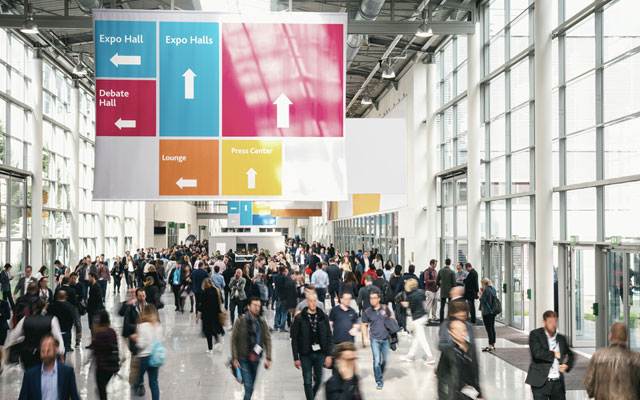
Apart from counting on existing supporters in Asia to spread the Net Zero Carbon Events (NZCE) campaign message, UFI – the Global Association of the Exhibitions is taking a “unique collective approach” to the value-chain of events.
Christian Duart, UFI research manager responsible for all sustainability research and initiatives, said: “UFI has been highly active (in NZCE) since COP26, supported by a substantial worldwide PR and social media programme.”
Duart, who is also secretary of the sustainable development committee, added the NZCE message was being delivered in editorials, via social media and UFI managing director/CEO Kai Hattendorf speaking about the pledge and campaign at conferences.
“The specific NZCE initiative that focuses on the impact of environment has also set up work streams to cover Venue Energy, Food, Production and Waste, Logistics, Travel and Accommodation, Measurement and Carbon Offsetting,” he told TTGmice.
The groups are developing guidelines on the best approach to implement the roadmap, and UFI is, on behalf of the NZCE task force, running the “Measurement” work stream that will define the standard methodologies, metrics and industry coefficients.
Duart added: “In the meantime, the NZCE campaign has produced a range of resources to help them to move forward. These are all free to download. They include a Quick Guide To Getting Started, NZCE Roadmap 2022 Executive Summary and NZCE ROADMAP 2022 Full Report.”
UFI, which has been active for a while around sustainability issues, is collecting best practices via an annual award scheme, he noted.
While UFI had not yet targeted exhibiting companies as such, Duart commented that it is being approached by organisers as well as venues and service providers for their respective services, in order to take part in the reduction of emissions.
“We shall see fast progress there in the coming year,” he opined.
Visa application ease fuels Indian event recovery for Australia
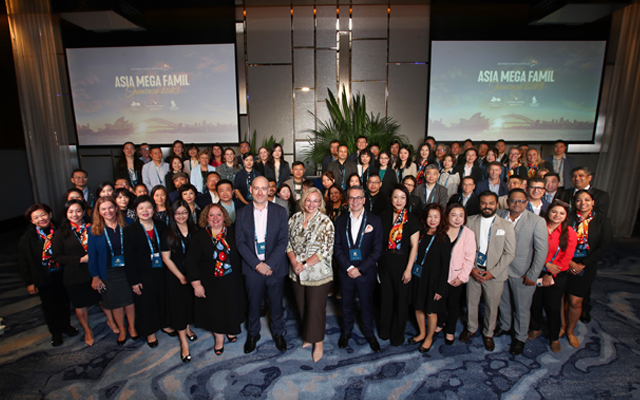
Despite pricier airfares to Australia, Indian business event planners say clients are still clamouring for corporate incentive trips to the land Down Under.
Planners told TTGmice that airfares to Australia have gone up 30 to 40 per cent compared to pre-pandemic times.
Yet, Nirav Desai, head – domestic and international MICE business, WE Events, said “future demand for Australia is looking healthy”, with strongest interest emanating from banking, insurance and pharmaceutical industries.
“At present we have three to four queries of 200 pax each from corporates considering Australia as a destination, said Desai.
He pointed to Australia’s quick visa processing system for giving the destination an edge over European alternatives.
Desai is a one of eight Indian planners who attended the recent Business Events Australia (BEA) Asia Mega Famil Showcase.
“Even though airfares have gone up, this is not a deterrent for insurance, banking and pharmaceutical companies which were not badly affected by the pandemic,” said Sajin Nawshad, director, Akbar Holidays, who added that pent-up travel demand is also helping to grow Indian outbound numbers to Australia.
“Australia has been proactive in its visa processing system for MICE travellers while visa delays in many European countries are creating a challenge (for Indian groups). We expect to close a few MICE groups that will travel to Australia later this year,” shared Bindeshwari Prasad, associate vice president of FCM Travel Solutions India.
Another participant, who requested for anonymity, told TTGmice that his company closed a 900-pax incentive group that would visit Melbourne in July 2023.
He noted a “huge increase in incentive movement to Australia” this year. While his company handled some 15 corporate events to Australia in 2019, he expects the numbers to double this year.
Like his peers, Australia has become both a big hit and easy sell due to the trusty visa processing system for business travellers.
Frasers Hospitality hits 25-year mark
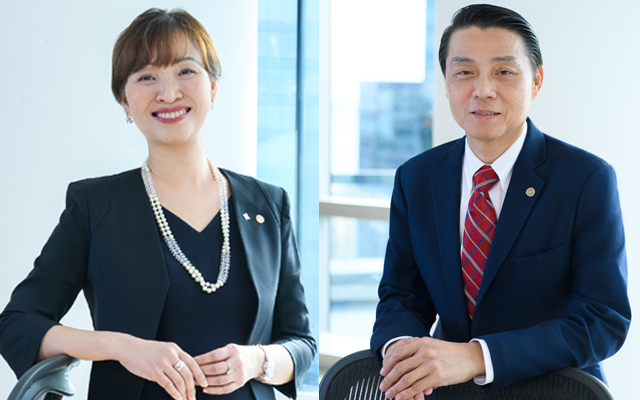
Frasers Hospitality is celebrating its 25 years in business this year with plans for continued strategic growth, comprising inventory expansion and product innovation.
Mark Chan, chief operating officer, Frasers Hospitality, shared that more properties are set to open in South-east Asia and China, across key, economically vibrant first and second-tier cities.
Investment in product innovation through technology will be centred on consumer touch points, such as cloud-based technology, deployment of robots and contactless check-in.
“With the pandemic well behind us and international borders fully reopened, a whole new world awaits and Frasers Hospitality is well-positioned to anticipate and meet the changing needs of the extended-stay market,” said chief executive officer Eu Chin Fen.
Looking ahead, Eu said there has been a “major shift” in demand for long-stay accommodation.
“Remote working is now commonplace, while attitudes towards home ownership have changed among millennials and the next generation. Purposeful living – which allows like-minded individuals to network – is the new ideal, and so too is the concept of flexible leasing, fast outpacing the conventional practice of long-term rental,” she detailed.
She added: “We anticipate a new lifestyle, where individuals seek out spaces that allow them to grow and live life to the fullest, with a healthy balance of work and self-fulfilment. Frasers Hospitality is always looking at enhancing our products and services to align with this ethos.
“In fact, with new developments in store, our next journey will be an exciting one that we can’t wait to embark on as we write the next chapter of Frasers Hospitality.”
To commemorate this milestone, Frasers Hospitality has planned a year-long campaign marked by free stays and other activities to highlight its achievements as a global Singapore brand. A highlight of the anniversary celebrations is a giveaway of 300 free stays.
Reviews

The Ritz-Carlton, Bangkok
The newly-opened Ritz-Carlton, Bangkok anchors the One Bangkok development with cosmopolitan elegance. Featuring the city's largest ballroom and a spectacular new penthouse suite, it delivers exceptional hardware and deeply authentic, soulful service for business and leisure travellers alike

Mama Shelter Zurich
Behind the imposing, Brutalist concrete that defines Zurich’s Oerlikon district lies a surprising secret. While its exterior honours the neighbourhood’s industrial roots, stepping inside Mama Shelter reveals a vibrant, neon-soaked world that is a far cry from its rigid shell

Hyatt Regency Kuala Lumpur at KL Midtown
A polished urban retreat designed for business travellers, Hyatt Regency Kuala Lumpur at KL Midtown combines thoughtful design, seamless service, and exceptional facilities.


Event brief
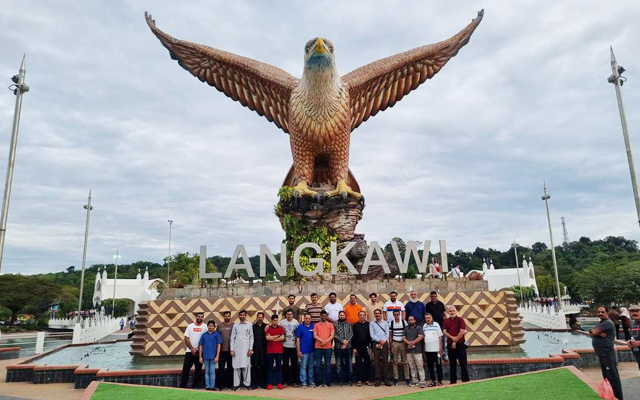
Kuala Lumpur-based DMC, Universal Holidays Travel and Tourism, planned and executed an incentive travel programme to Langkawi and Kuala Lumpur for 250 qualifiers of a manufacturing company from Pakistan. The trip, held from January 26 to February 2, coincided with the Chinese New Year festive season in Malaysia, which also happened to be a peak travel season for both domestic and international travel.
Event highlights
Delegates connected at Kuala Lumpur International Airport Terminal 1 on a domestic flight to Langkawi. There, they spent three days, enjoying nature-based attractions such as a private guided tour of the mangroves and a cable car ride from the foothill of the Machinchang mountain to the Top Station, 708m above sea level.
On their third day, delegates participated in water sports on Chenang Beach. A private session was arranged with local operators so that delegates could enjoy parasailing and riding a jet ski.
Zahira Tahir, founder and CEO, Universal Holidays Travel and Tourism, said for many delegates, it was their first time parasailing or jet skiing.
Universal Holidays erected a marquee on the public beach where delegates could rest and hide from the blazing sun.
Next stop, Kuala Lumpur, where delegates visited the KL Tower Observation Deck for an aerial view of the city and surroundings, and the famous Petronas Twin Towers. They also went on a city tour and spent half a day enjoying the rides and thrills at Sunway Lagoon Theme Park.
One of the activity highlights was a private race at Sepang International Go-Kart circuit. It was the attraction’s first private race for an international corporate group. The full-day event included prize presentation and an on-site lunch.
As a grand finale, the group was hosted to a gala dinner with live musical performances at JW Marriott Hotel Kuala Lumpur a day prior to departure.
Challenges
Securing seats for 250 people to fly from Kuala Lumpur to Langkawi during the domestic travel peak season was a challenge. The group had to be split up, flying on three different airlines.
Sourcing for restaurants in Langkawi large enough to accommodate everyone was another challenge. Options were further limited as some of the large restaurants were closed for holidays, while others in operation had manpower constraints.
Universal Holidays eventually persuaded a few large restaurants to reopen just for the group. This came at a higher cost, as the restaurants had to pay extra for labour.
Zahira recalled that restaurants in Langkawi also relied on the mainland for vegetables, meat and even canned drinks in large quantities. She shared: “At the last minute, I wanted to change a chicken dish to mutton, but the restaurant manager said this could not be done as they would need more time to source for the meat from mainland Kedah.”
Event Incentive travel for a manufacturing company from Karachi
Organiser Universal Holidays Travel and Tourism
Destinations Langkawi and Kuala Lumpur
Dates January 26 to February 2
Attendance 250