


Taking the plunge
Event brief
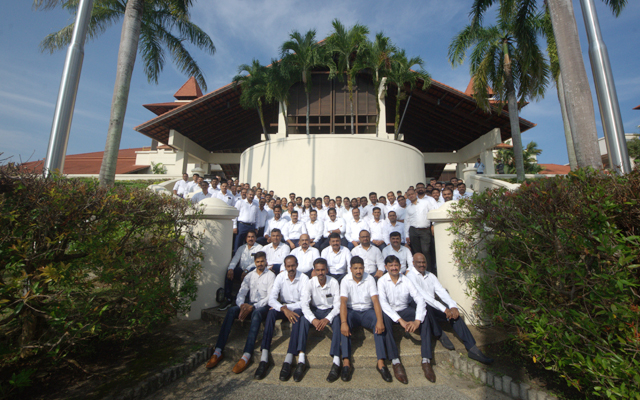
A Bengaluru-based incentive house was looking for a suitable destination in South-east Asia for its client, an automobile distributor from Bengaluru, which wanted to conduct an overseas meeting and incentive programme for its top achievers.
Sabah Tourism Board, together with Destination Explore, a DMC based in Kuala Lumpur, managed to convince the incentive house that Sabah’s state capital, Kota Kinabalu, had much to offer and would readily welcome them. It helped that the clients were keen to visit Sabah, and explore a new destination.
While the Indian market is the second largest medium-haul market for Malaysia pre-pandemic, Indian tourists mainly visited Peninsular Malaysia, and not East Malaysia.
Event highlights
On the first day in Kota Kinabalu, delegates visited Mari Mari Cultural Village, which offers glimpses into the lives and lifestyles of the five major ethnic groups in Sabah – Dusun, Rungus, Lumdayeh, Bajau and Murut – by showcasing each group’s distinctive houses, costumes and traditional skills.
The group also learnt how Sabahans cooked with bamboo shoots, learnt to play traditional games such as congkak (a type of board game) and watched a cultural dance performance.
The second day comprised a half-day meeting at Sutera Magellan Resort followed by lunch and a two-hour city tour. The day ended with a gala dinner and awards recognition ceremony held at the resort.
On the morning of the third day, delegates were treated to water sports activities such as jet skiing, parasailing, banana boat rides and snorkelling at Tunku Abdul Rahman Marine Park. The itinerary for the day wrapped up with a leisurely sunset dinner cruise.
The next day, they took a local flight to Kuala Lumpur and checked in at Sheraton Imperial Hotel, and were taken out for city sightseeing.
On their fifth day in Malaysia, delegates went on a day trip to Resorts World Genting to enjoy the cool air, theme park, shopping, where some even tried their luck at the casinos.
The incentive trip ended on the sixth day, when delegates flew back to India.
Challenges
There were a number of challenges while the delegates were in Kota Kinabalu. For instance, Destination Explore had trouble finding restaurants that could cater to the palates of the South Indian delegates as the few available served only North Indian cuisine and were too small.
Also, Sutera Magellan Resort, where the delegates were staying, did not have Indian food in their breakfast offerings. This is not unusual for hotels in Sabah as Indian tourists to the state were few.
Overcoming these challenges, Ganneesh Ramaa, vice president, Destination Explore, recalled: “We settled for a North Indian restaurant facing the Waterfront. The owner was flexible and was willing to create a special South Indian menu for the group and include popular dishes such as sambar and Indian curd. They also liaised with a neighbouring restaurant and pub to use their seating facilities.”
Ganneesh also reached out to the F&B director at Sutera Magellan Resort who agreed to have a special Indian station so the group could enjoy a South Indian breakfast at the hotel.
A request for a garland of flowers to be placed on the standing brass lamps for the lighting of the lamps ceremony was made in the late evening of the eve of the event. Ganneesh rushed to the Hindu temple in Kota Kinabalu and after some persuasion, managed to obtain one to be delivered to the hotel early on the day of the group’s arrival.
Another challenge was not being able to get sufficient airline seats for the group to travel together. Thus, the group had to be split with some travelling on Malaysia Airlines from Bengaluru to Kuala Lumpur, while others travelled on IndiGo from Chennai to Kuala Lumpur.
Batik Air mounted special charter flights to take the group from Kuala Lumpur to Kota Kinabalu on April 14, and later, on April 19, to take them back to Kuala Lumpur.
Event A meeting and incentive for an automobile distributor from Bengaluru
Organiser Destination Explore
Destinations Kota Kinabalu and Kuala Lumpur
Dates April 14-19, 2023
Attendance 100
Pan Pacific Orchard makes its debut
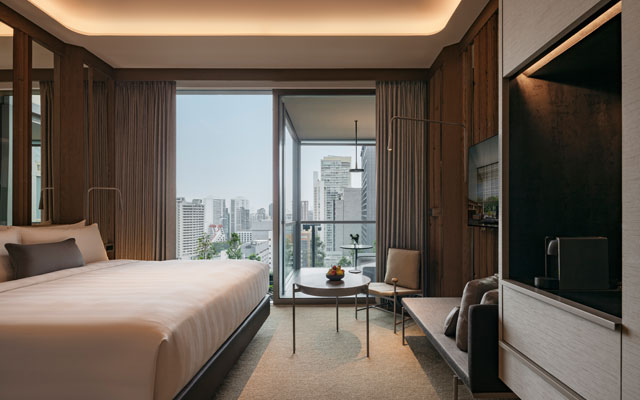
Pan Pacific Hotels Group has opened its latest flagship property, the Pan Pacific Orchard, Singapore.
Event planners looking for a venue high up in the clouds will be interested in the pillarless 600m2 Claymore Ballroom featuring a panoramic LED video wall, and natural daylight filtering in from floor-to-ceiling windows. With a total capacity of 420 people, Claymore Ballroom opens out to the outdoor terrace for al fresco receptions.
The 23-storey hotel offers 347 rooms and suites, all of which feature 400-thread count cotton bedding and bath amenities by the French house Diptyque. Encouraging guests to adopt sustainable practices are in-room filtered water dispensers; and reusable bottles made with ocean-bound material will also be available in the room.
Sustainability also runs throughout the property, with its terraced greenery occupying over 200 per cent of the hotel’s land area, brimming with 14,000m2 of foliage and water features, a high-ceiling open-air lobby and energy-saving features like rainwater collection, solar panel technology and a bio-digester system.
Club guests will also have access to the 130-seater Pacific Club Lounge within the Garden Terrace. Fitted with custom-designed furnishings and counters topped in Italy-treated leathered marble, Pacific Club Lounge presents a private retreat with indoor and outdoor alfresco spaces, overlooking the landscaped lawns and cabanas of the Garden Terrace.
Pan Pacific Orchard will soon launch the Atelier-in-Residence programme, where the property will host limited-edition made-in-Singapore brands that celebrate craft and innovation. Housed on the 11th floor, brands will be given the freedom to create their own programming that could range from workshops to exhibitions and talks.
F&B options on-site include signature restaurant Mosella, which offers Mediterranean cuisine with a Peruvian twist; and the Florette bar, which features an extensive list of champagnes paired with fresh oysters.
Dan Ruff helms as CEO of Belmond
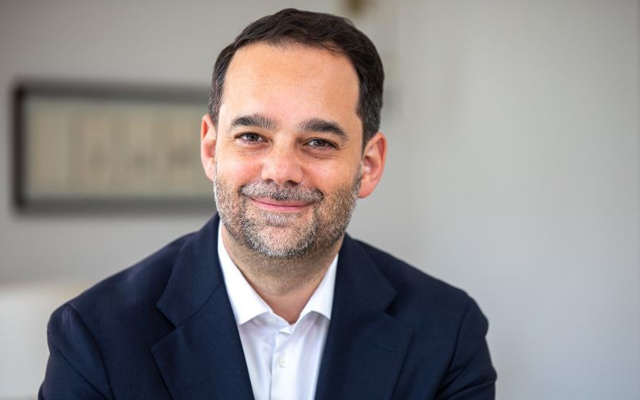
Belmond has named Dan Ruff as its new chief executive officer with effect from July 1. He will succeed Roeland Vos, who has been at the helm of the company for the past eight years.
Ruff has over 20 years of experience in the hospitality industry, and is currently the chief operating officer of Belmond, a position he’s held since 2018.
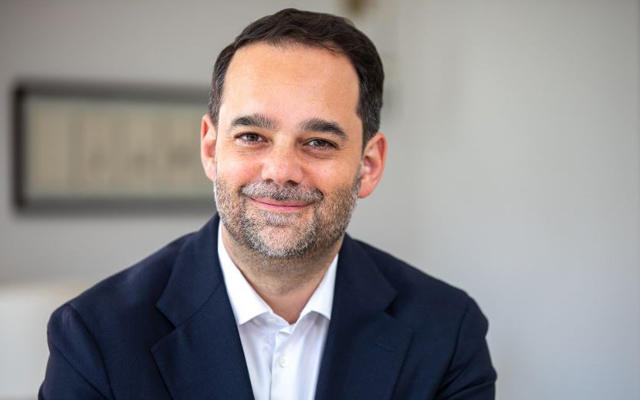 Prior to joining Belmond, he held senior roles at Starwood Hotels & Resorts and Wyndham Hotel Group across operations, asset management, and mergers & acquisitions, and served on the Supervisory Board of Design Hotels AG.
Star Alliance names Theo Panagiotoulias as CEO
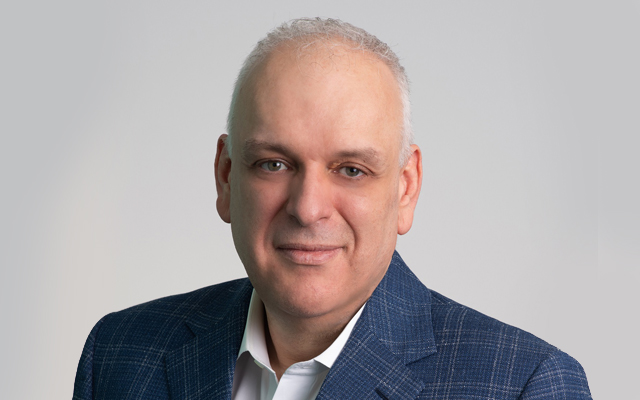
Theo Panagiotoulias has been appointed as Star Alliance next chief executive officer.
With more than 25 years of commercial and operational expertise in the airline and travel industry, Panagiotoulias has worked in Australia, China, Japan, Singapore and the US.
 He joins Star Alliance from Hawaiian Airlines, where he was senior vice president for global sales and alliances since 2014.
A perfect balance

Tailor-making international events and adding a personal touch with a dose of local flavour are winning ingredients to lure business travellers to the shores of Phu Quoc in Vietnam.
The opening of a raft of major international hotel brands in the last few years, coupled with a rise in the bleisure trend, have positioned Phu Quoc and its bounty of white beaches and growing attractions as a leader in Vietnam’s business travel landscape.

One of the island’s most recent players, Regent Phu Quoc, opened its doors in April 2022 and has noted an uptick in demand for small international groups seeking to host luxury events. In response, the property has curated a series of packages that can be tailored to groups’ individual needs.
These include sailing out to the hidden bays and untouched islands of Phu Quoc on Serenity, Regent Phu Quoc’s private catamaran, and visiting the Regent Taste Studio, an interactive dining experience featuring talent from the fields of art, fashion and food.
This trend sits in line with the predictions included in Amex’s 2023 Global Meetings and Events Forecast, which saw small meetings and events increase by 25 per cent, with an increased desire for unique experiences.
In addition, the report noted an increase in industry demand regarding sustainability, with more organisations seeking destinations that promote sustainability and sustainably certified venues.
This is an element the luxury InterContinental Phu Quoc Long Beach Resort is incorporating into activities, and sees as a key component when it comes to attracting international events, whether large or small.
Bastien Pucheu, cluster director of sales and marketing at both properties, told TTGmice that the InterContinental Phu Quoc Long Beach Resort offers CSR activities that can be incorporated meaningfully into any event.

He added that “traditional teambuilding activities and the implementation of sustainability actions, such as reduction of electricity consumption and single usage plastic”, were also created.
Regardless of the size of the event, Pucheu pointed out that “personalisation is key, and is our main motto at both properties”.
The continued development of the island is also throwing it at the forefront of Vietnam’s business travel offerings. In addition to hotels well-equipped with conference and meeting facilities, other attractions are opening.
For example in April 2021, Vingroup opened the Phu Quoc United Centre Entertainment and Resort Complex.
The integrated resort offers a range of accommodations ranging from the Vinpearl Resort & Spa Phu Quoc to the Sheraton Phu Quoc Resort; Vietnam’s largest theme park VinWonders Phu Quoc; 18-hole Vinpearl Golf; and Grand World Shopping Town; and five-star business events facilities at Vinpearl Convention Centre.

It is also extremely easy to visit. As part of the Vietnamese government incentives to draw more international business to the island, visitors of all nationalities can enter on a 30-day free visa.
Winston Gong, general manager of Crowne Plaza Phu Quoc Starbay, said the property is also tapping into the personalisation trend, offering tailored events and a series of curated incentive packages.
In addition, it is making itself and its services more accessible to key markets by strengthening marketing and promotional activities.
“We are increasing visibility and brand recognition by intensifying promotional activities on prominent digital platforms that are popular in target markets,” said Gong.
“Our team does extensive research and identifies potential target markets to learn about their needs, insights, and expectations when looking for event venues.”
He added that incorporating popular elements of local culture into meetings and events helps make packages more attractive to international markets.
Gong noted: “Local cuisine, for example, is a great attraction. Authentic Vietnamese dishes, complemented with traditional dishes from delegates’ home countries, help ease them into their activities.”
Indian planners urge Nepal to unlock its MICE potential
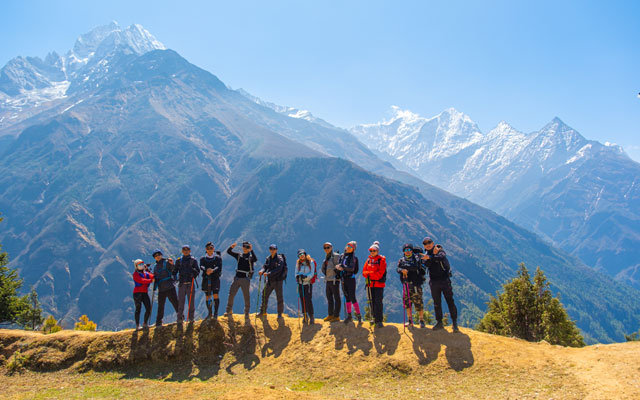
According to several Indian business events planners, Nepal has the potential to attract corporate incentive groups from India, but is unable to do so due to the lack of awareness about event venues, limited direct air links, and the absence of marketing promotions.
“Nepal has unique natural and cultural attractions, including the Himalayas, rich history, and diverse traditions, which can be marketed effectively to target Indian incentive groups. The focus of Nepal in India has been majorly on attracting leisure and FIT tourists. There is a need to create awareness about various venues available in destinations like Kathmandu and Pokhara for MICE activities,” said Anup Tarafdar, managing director, Eventex.
Tarafdar is part of a contingent of the Network of Indian MICE Agents (NIMA) who were in Pokhara, Nepal to attend the PATA Annual Summit & Adventure Mart 2023. On June 2, NIMA held a meeting with representatives from Nepal Tourism Board to discuss how Nepal can be promoted as a MICE destination to Indian corporate groups.
“The way neighbouring South-east Asian destinations have been able to attract Indian MICE groups; Nepal has a similar opportunity. There is a need to promote Nepal as a MICE destination in India and create awareness about various MICE products existing in the country,” noted Nitash Kumar Tiwari, director, Neeti Events & Holidays.
According to Puneet Saxena, founder & director, Navyush Travel Experience, Nepal is well-positioned to attract Indian incentive groups considering there are no visa requirements and where Indian cuisine can be easily found.
“Procuring visas for large incentive groups can be a cumbersome process, but for Nepal there is no such challenge. In terms of air connectivity, Nepal needs to (build more direct connections with) large Indian cities, and increase its frequencies to existing destinations,” added Saxena.
At present, Nepal Airlines operates direct flights to three Indian cities – New Delhi, Mumbai and Bengaluru. Vistara and Air India operate direct flights between New Delhi and Kathmandu, while IndiGo connects Kathmandu directly to New Delhi and Mumbai.
India is Nepal’s leading source market for international tourist arrivals, where Nepal welcomed 254,150 Indian tourists in 2019.
Singapore to host inaugural audiovisual exhibition this month

The first-ever edition of Pro Integration Future Asia (PIFA), a professional audiovisual and entertainment lighting (AVL) technologies exhibition and conference, will be held from June 26-28, 2023, at the Marina Bay Sands Expo & Convention Centre in Singapore.
Launched by Montgomery Asia, with the Professional Audio Visual & Lighting Integration Association of Singapore (AVLIAS) as its strategic partner and Singapore Tourism Board as a supporter, PIFA2023 will host nearly 100 exhibiting companies from 10 participating countries.
With the theme Accelerating Digital Transformation: The Future of Work, Education, and Entertainment, PIFA2023 highlights the digital transformation wave South-east Asia is experiencing across industries.
The three-day conference will feature nine panel discussions led by over 30 industry experts such as Cisco Asia Pacific Japan & China’s managing director Sandeep Mehra, and AP Media’s CEO Nick Tan.
There will also be 18 classroom sessions by Unearthed Productions, on topics such as Creating with AI: New Approaches for Generating Content and Art; Why Acoustics in Audio Visual Installations?; Integration of Unified Communications & Collaborations Design and Technology to Support Rapid Changes in Classrooms; and A Comprehensive System for EdTech, among others.
Aside from the exhibition grounds, other notable experiences include a collaboration between C&R Interior and AVLIAS on a hybrid workplace arrangement; a showcase by Oceanus Media Global using state-of-the-art projection mapping technology; and extended reality (XR) production.
The global professional audiovisual industry is estimated to grow by US$113.26 billion from 2022 to 2027, with Asia Pacific set to contribute a significant 41 per cent during this period. South-east Asia, in particular, is among the fastest-growing regions in the world, with the digital economy and tourism identified as key industries for driving economic growth in 2023.
Tākina officially opens in Wellington
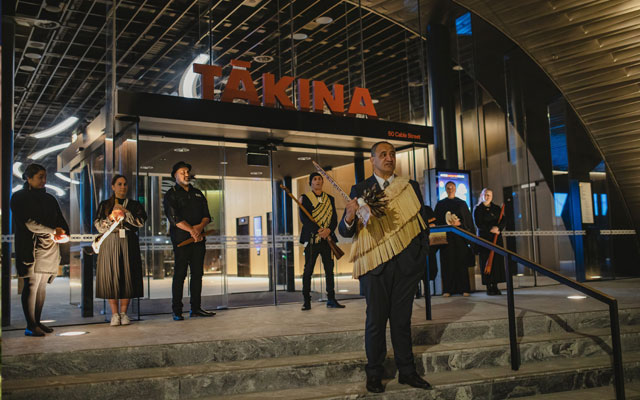
Wellington has officially opened its new conference and exhibition centre, Tākina, with more than 50 multi-day conferences already booked for the first year.
The venue in New Zealand’s capital city was officially opened with a morning blessing by Taranaki Whānui, the traditional Māori guardians of the Wellington Harbour and associated lands.
Later that evening, there was a celebration which was attended by more than 700 guests including mana whenua (local Māori), dignitaries, key stakeholders and clients, who were treated to entertainment by WearableArt (WOW), Connections Pasifika Choir, and Ngati Poneke Young Māori Club.
The first official event, the Festival for the Future, takes place on June 8-9, 2023, while the first public exhibition taking place at Tākina is Jurassic World by Brickman, which will run from June 3 to Oct 16, 2023.
Located in the heart of the capital’s cultural precinct, opposite Wellington’s waterfront, Tākina is expected to have huge positive flow-on effects for the city’s hospitality, accommodation, and retail businesses, providing 372 direct jobs and NZ$45 million (US$27.2 million) a year in estimated economic impact to Wellington.
David Perks, general manager of Tākina Commercial Development for Wellington City Council, said: “Tākina will increase Wellington’s opportunity to host international conferences at a scale the city has not previously been able to.”
Tākina incorporates 10,000m2 of flexible conferencing space over two levels, with capacity for plenaries up to 1,600. The ground floor exhibition gallery, at 1,280m2, is the largest in New Zealand.
It is owned by the Wellington City Council and operated by local team Tākina Events, which manages the event spaces of both Tākina and neighbouring national museum Te Papa Tongarewa.
Queensland inspires next generation with a career in tourism and hospitality
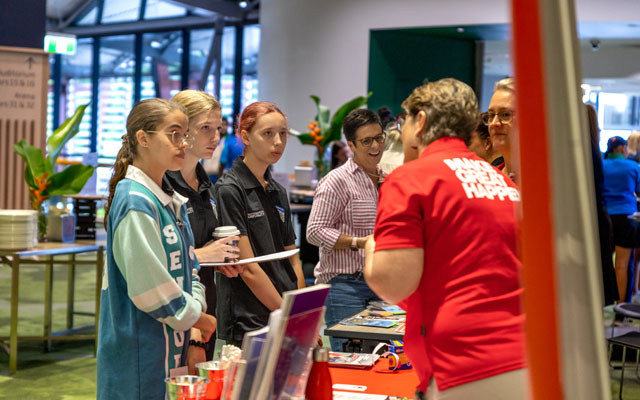
Over 100 high school students from across Far North Queensland were given an insight into the workings of the tourism and hospitality industries at a recent Queensland Tourism Industry Roadshow at the Cairns Convention Centre.
The roadshow is part of a travelling series from Queensland Tourism Industry Council (QTIC) which commenced in 2021, to introduce ‘school leavers’ to the scope of possibilities when choosing a career in tourism.
The day’s programme at Cairns Convention Centre included a cooking class with Cairns Convention Centre executive chef David Hart, a mixology masterclass with Lyres’ non-alcohol spirits global brand ambassador Jeremy Shipley, a tourism hub with exhibitors offering career and course advice, as well as a panel discussion with industry leaders.
Benjamin Boudaud, culinary services director at the Cairns Convention Centre, said the roadshow was a great opportunity to showcase the wide variety of opportunities available in the tourism industry.
“We need to attract new talent and people to the industry as we continue to rebuild and recover and a platform such as this allows us to share our passion while giving students a better understanding of the event industry.
“This event has allowed students to see first-hand there is so much more to an event than just the food and drink – there are the uniforms, rosters, the need to keep things clean, tidy and functioning. Then there is also the relationship we have with our clients, sales and audiovisual, there is a lot to it,” he added.
Reviews
The Slate Phuket
Just 10 minutes from Phuket International Airport on the serene northern coast, this 178-key, Bill Bensley-designed resort offers delegates a quiet, tropical paradise steeped in Phuket’s tin-mining heritage

The Ritz-Carlton, Bangkok
The newly-opened Ritz-Carlton, Bangkok anchors the One Bangkok development with cosmopolitan elegance. Featuring the city's largest ballroom and a spectacular new penthouse suite, it delivers exceptional hardware and deeply authentic, soulful service for business and leisure travellers alike

Mama Shelter Zurich
Behind the imposing, Brutalist concrete that defines Zurich’s Oerlikon district lies a surprising secret. While its exterior honours the neighbourhood’s industrial roots, stepping inside Mama Shelter reveals a vibrant, neon-soaked world that is a far cry from its rigid shell


How has Japan’s MICE industry changed since the pandemic?
One of the biggest changes is that clients have been downsizing MICE events because of various reasons, such as guests’ reservations toward travel, companies implementing stricter regulations around in-person attendance or business trips, and reduced budgets and resources. Many clients entertain options of semi-hybrid now, so clients can be more selective about whom they invite in person.
Another reason for downsized events has been some clients’ lingering reservations about crowded places. Clients with local teams in Japan and elsewhere in Asia can be particularly reserved because many of these countries only just removed the last of their Covid restrictions. People are still wearing masks and avoiding crowded places, but now that the pandemic has been downgraded to the same level as influenza in Japan as of May 8, we expect that this attitude will change slowly.
We’re also seeing that meeting and incentive budgets went up a little bit because the yen is weak, but unfortunately, hotel prices also went up by around 20 to 30 per cent, so it doesn’t leave a lot of room for other things we’d like them to experience. A meeting or an incentive is not just about the meetings, hotel rooms and banquet halls. We want them to experience Japan’s culture as well, but they don’t really have the budget for that.
What are some of your priorities for some of the hats you wear now?
My priority is to align ourselves with the government’s plans to make Japan one of the leading tourist destinations in the world. And we want to position ourselves as the number one go-to agency in Japan for our target clients – for having a high understanding of our clients’ needs and wishes; providing seamless services from coordinating unique meetings and events; producing exclusive and tailor-made experiences and teambuilding activities; and seamless hospitality programmes and itineraries.
Right now, we’re operationalising to spearhead a travel system transformation that will make Japan as easy and available to them (clients) as possible. Our vision is beyond that of a travel agent.
Could you share your business approach? How are you aiming to be more progressive in a traditional society, yet keeping certain cultural traditions?
We want our content to be as authentic as possible, so we don’t change traditions but rather understand the essence of them and ensure we’re presenting it and storytelling it in a way that translates to the client’s culture. It’s about delivering the key messages that you want the client to take away. If you give them too much information, it may not translate (well). Breaking it down and delivering the message in a way that resonates with them is the key to making Japan’s culture accessible.
What are some of the MICE trends you currently see in Japan and Asia-Pacific?
One of the trends we’re seeing is sustainability. It’s been a hot topic for a while now but has gained relevance since before the pandemic. We’d never suggest activities that would be unsustainable – we prioritise what is locally sustainable. It’s what we live and breathe – preserving Japan’s culture is something the whole company is based around. In many ways, Japan is sustainable anyway, we eat seasonally, and we’re very local in the way we do things.
Recently, for meetings and incentives especially, we’re seeing clients specifically requesting EV cars, locally sourced food, sustainable lodgings and local employees.
Another trend is wellness. Compared to pre-pandemic, everyone is much more cautious about the well-being of their employees and clients now. We’re including a lot more wellness programmes, content and activities for them, whether it’s morning bike rides, night walks to the temple, meditation or more wellness-orientated foods. People realise after the pandemic that their health and well-being are so important, so I think this is likely to be an ongoing trend.
On that note of wellness tourism, I am a member of the Global Wellness Institute’s wellness tourism initiative. Wellness tourism still isn’t clearly defined around the world, but Asia is a very strong market that can sell it. Japan’s contribution is hot springs and Zen spirituality among many others. I think Asian countries can collaborate, learn from each other, and be proactive in implementing some of these wellness solutions for meetings and incentives. I can envisage working together with other countries to do multi-country retreats with, say, South Korea or China. People who travel from as far away as Europe aren’t going to visit just one destination. They will go to two or three. Wellness is a good theme to tie them together.
What are the current challenges facing Japan’s MICE industry and what should be done?
There aren’t enough planners in Japan. It’s one of the challenges the government recognises and is trying to put more effort into. Planners need to be able to communicate with clients – and that’s not just about speaking English, but understanding what their needs are and translating that to the locals here, because the mentality is so different. That’s one of the challenges; training them and empowering them, so that they can produce content to match the needs of the client – instead of the other way around, where the planners are selling only what is offered or available.
Because of overtourism in the urban areas, there’s a drive to bring more meetings and incentives to some of the rural areas. How do we train those locals outside of urban areas to cater to these meetings and incentives? We at Luxurique are working with local municipalities, artisans, and venues to help train them and to empower them to think outside the box, to cater to the unique needs of all of our MICE clients.
How do you move groups out to these rural areas?
The government still thinks it’s about logistics – which of course it is, in part – so they’re building Shinkansen train stations, such as the new Fukui station opening next year. These stations are key to putting these locations on the map.
A lot of Japanese people think if you don’t have a lot of hotel rooms then you can’t put a destination on the map for inbound clients. I don’t think that’s true because a lot of meetings and incentives post-Covid are smaller – say 10 or 20 people – and a lot of smaller hotels or ryokans are more reasonably priced and allow groups to be in a unique, rural setting that offers local experiences.
We want to advocate for these rural locations and change the mentality of rural suppliers by convincing them that their ryokan of 50 rooms is actually perfect for a meeting, incentive or board meeting. Typically, in Japan, when people hear MICE, they think of a huge convention with 50,000 people, but there’s a lot more meetings and incentives compared to conventions. You don’t need a banquet hall that seats thousands of people to be able to do an incentive.
I think some of these rural areas are the perfect location for an off-site executive board meeting, teambuilding (session) or incentive. They’re so beautiful and so local and you get something so different and inspiring that it’s actually much, much better, but they can’t sell it that way because they don’t know it.
What is your business outlook for 2H2023 and 2024? Is the pace of recovery what you expected, do you think it’ll pick up even further?
Because of the cautiousness of Japan, we only really opened our borders on October 11, 2022. I’d say the recovery is at 60 per cent, but the demand is at about 300 per cent from pre-Covid. It’s picking up extremely rapidly with new requests coming in every day. The turnaround time has changed since pre-Covid.
In the past, we’d have had six months to a year’s notice, because people were planning two years ahead, but because planning has been stalled for so long, sometimes we’re getting requests coming in only around six weeks out. It means our staff have to be able to respond to much shorter lead times.
You are the chairman of Japan MICE Association. Could you share what are your plans moving forward?
One of the things we’re working on is training. The Japan MICE Association is not meant for large institutions, it’s for smaller, rural local entities that need support. We’re working on training programmes, like free webinars.
Smaller entities often aren’t able to represent themselves, so they are re-represented by a large travel agency in Japan, which is never ideal. We hope that these training programmes help them understand the needs of foreign clients and how they can answer these needs without having to be represented by larger travel agencies. They can sell for themselves and stand up for what they really, truly represent.