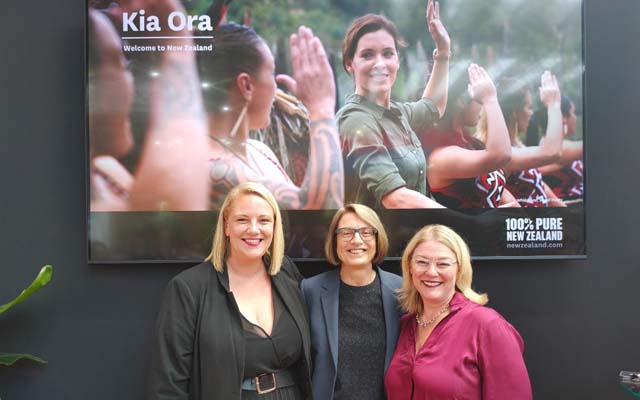
From left: NZICC’s Prue Daly; The Conference Company’s Jan Tonkin; and IAPCO’s Sarah Markey-Hamm
The New Zealand International Convention Centre (NZICC) has partnered with the International Association for Professional Congress Organisers (IAPCO) to develop a multi-year leadership programme.
The Next Generation Leaders Programme will be designed specifically for IAPCO Members in the Asia-Pacific region, and delivered through a series of online education workshops organised by NZICC and the IAPCO Training Academy.
From left: NZICC’s Prue Daly; The Conference Company’s Jan Tonkin; and IAPCO’s Sarah Markey-Hamm
Applications for the Next Generation Leaders Programme will open in late May, with the NZICC planning to run the first workshop in July 2023.
One participant each year will also secure a coveted scholarship, named after former IAPCO President, The Conference Company founder and New Zealand industry stalwart Jan Tonkin, to attend IAPCO’s Annual Meeting and General Assembly alongside senior leaders within the global business events community.
Sarah Markey-Hamm, IAPCO’s president, said: “Without Jan’s involvement with IAPCO our association would not be in the place that it is in today. She lives and breathes the business event sector and has been instrumental in developing the IAPCO education programmes over the last 15 years. Her wisdom and counsel are cherished and freely given when asked. Even though her formal involvement with IAPCO Council has concluded she remains a strong contributor to the educational content across IAPCO’s products whilst serving on Faculty. It’s an honour that she has agreed to lend her name to the scholarship programme in our region.
“We’re anticipating strong interest from our Asia Pacific members. The online format of the workshops has opened up this opportunity to a vast audience. I’m excited to see the impact of this programme and the benefits it will bring to the participants involved and to the wider business and professional events industry in New Zealand and beyond.”
NZICC, in the heart of Tāmaki Makaurau Auckland, New Zealand’s largest city, has already secured a number of large international conferences. The World Indigenous Peoples Conference on Education has been confirmed as one of the first to use NZICC facilities in November 2025. The conference will see 3,000 international visitors welcomed to the city, delivering an estimated economic impact of more than NZ$6 million (US$3.6 million).
Gregg: PHOTO CAPTION:
Several new initiatives were introduced, and industry connections that will benefit SITE members were spotlighted
The Society for Incentive Travel Excellence (SITE) will be launching the 2023 Incentive Travel Index survey, in partnership with the Incentive Research Foundation (IRF) this year, as well as readies a 2024-26 strategic plan.
These were some of the updates that Annette Gregg, CEO of SITE and SITE Foundation, revealed at IMEX Frankfurt last week.
Several new initiatives were introduced, and industry connections that will benefit SITE members were spotlighted by Gregg (pictured) at the press conference
Gregg also announced a handful of refreshed, renewed and new industry partnerships with the likes of Meeting Professionals International, Destinations International, and Financial & Insurance Conference Professionals.
Participants at the press conference also got to preview results from SITE Foundation’s latest in-house research project, Participant inSITEs.
As SITE readies a 2024-26 strategic plan, its membership base is the largest it has been since the pandemic.
This year, members will receive access to online, on-demand versions of SITE’s Certified Incentive Specialist and Certified Incentive Travel Professional certification exams, and shared content through different industry partnerships and on a newly-launched members-only education platform on SITE’s own website.
Participants were also given a rundown of upcoming SITE events, which include an Executive Summit taking place in Zimbabwe this June, SITE Classic this August in Mexico, and a November International Board of Directors meeting that will be held in Egypt. Gregg also highlighted the formation of the newest SITE chapter, SITE Arabia.
“These destinations stand out as excellent emerging incentive travel locales,” said Gregg. “It’s always special to bring the insights and expertise of our community to exchange new ideas and best practices with in-country experts and educate all SITE members about what’s on offer in new destinations.”
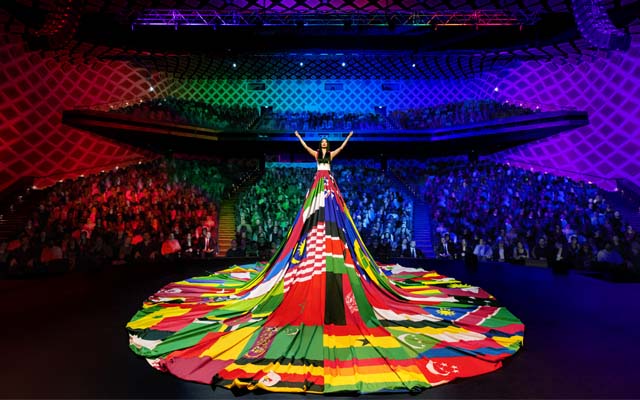
Model Suzy Wrong wears the Amsterdam Rainbow Dress in Darling Harbour Theatre at ICC Sydney. Photo: Daniel Boud
International Convention Centre Sydney (ICC Sydney) has launched its Accessible and Inclusive Events Guide, providing guidance and resources for event planners to help organise events that cater to everyone.
From an inventory of physical accessibility features at the venue, to advice on creating a welcoming experience for people of all abilities, the guide delivers on ICC Sydney’s Diversity and Inclusion Strategy and exemplifies its broader mission to provide accessible, equitable and inclusive events.
Model Suzy Wrong wears the Amsterdam Rainbow Dress in Darling Harbour Theatre at ICC Sydney. Photo: Daniel Boud
The new guide for event organisers complements the information and services provided to venue delegates via an accessible format on ICC Sydney’s website.
CEO of ICC Sydney and group director – convention centres, ASM Global (APAC), Geoff Donaghy, said: “At ICC Sydney, our ambition to be More Than A Venue carries through to our diversity, accessibility and inclusion approach. Attendees of every walk of life have the right to feel respected and valued, and we recognise the powerful role our customer service plays in this.
“Our aspiration to create the most accessible and inclusive environment for events means that every visitor feels welcome and can participate — and our new Accessible and Inclusive Events Guide, corporate culture and state-of-the-art amenities support event organisers to deliver this.”
Around 1.3 billion people worldwide experience disability today, and one in five Australians. On par with the broader Australian population according to the Australian Bureau of Statistics 2021 census data, approximately 5.5 per cent of all visitors to ICC Sydney’s live entertainment events require increased accessibility provisions.
Across ICC Sydney venues, physical amenities include low gradient, step-free access across all three interconnected venues – Convention Centre, Exhibition Centre and Aware Super Theatre; sensory-friendly rooms; accessible toilets; wheelchair-accessible parenting rooms; induction loop hearing augmentation system; and Braille on room door signage.
Australia’s largest disability-related event is the Sydney Disability Connection Expo, and its founder River Night said the Expo was ready to resume its place as the best-attended and most inclusive event in Australia.
“The support from the whole team at ICC Sydney has been exemplary. From event management services to logistics and exhibitor services, the venue team has been a real contributor to the successful planning of the most accessible and inclusive Sydney Disability Connection Expo. We look forward to providing an unparalleled platform for visitors to engage with disability service providers at this exceptional event.”
ICC Sydney Director of Human Resources, Luke Fleming said: “Our diversity strategy is aligned with the ASM Global ACTS framework and spans five key focus areas: Able @ Work, First Nations, Generation Success, LGBTQIA+, New Australians and Parents and Carers.
“As an employer of choice, we strive for visibility across these areas in our workforce and this, in turn, has ensured the successful delivery of events including the recent Sydney WorldPride Human Rights Conference, Premier’s Gala Concerts for Seniors, and the Source Kids Disability Expo.”
PCMA, the global association for business events professionals, and Singapore-based event technology firm, Gevme are leading Project Spark, a complimentary research and educational initiative to uncover the impact of generative artificial intelligence (AI) on the business events industry.
Now in its first phase, Project Spark is being tested for various practical applications within the scope of business events to understand its impact on workforce productivity.
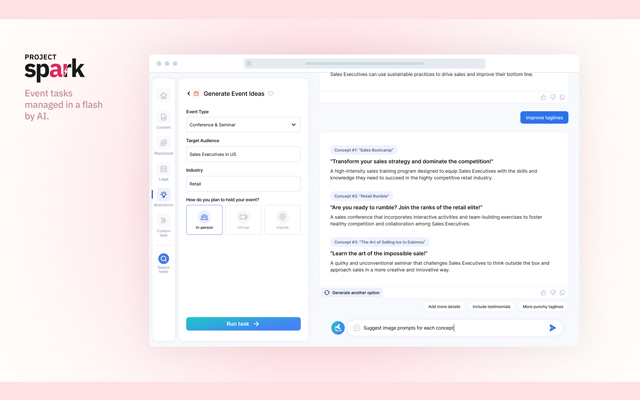
A screenshot from Project Spark
It can currently perform some 20 tasks, including fleshing out an event agenda; writing social media posts or summarising key takeaway based on published content like a video presentation; developing interview questions; writing speakers’ bios based on available notes. It also has an option of customised tasks.
During a system demonstration, PCMA managing director, APAC, Florence Chua, told TTGmice that Project Spark is built on several language models and its user interface is designed to guide instructive prompts that will result in better outcomes.
In trailing its event agenda writing capability, a set of prompts including name, objective and format of event as well as the number of attendees were placed in. Within seconds, Project Spark was able to generate a detailed agenda, complete with session timings, potential keynote and presentation topics, and ice-breaker ideas.
Project Spark is offering limited access now and is open to everyone. Those that are keen to trial the system can join the waitlist at http://sparkit.ai.
PCMA’s president and CEO, Sherrif Karamat, said in a press statement last week that “AI in the business events industry is just beginning”, and industry professionals need to come together to understand its power.
“We believe business events are about creating social and economic transformation. Properly channelled, AI has the potential to empower each of us to accelerate innovation and progress for our audiences, our businesses, and our careers,” he said.
“Project Spark is the starting point to explore, together, the challenge of adopting new AI technology and better understand how disruptive technology will enhance the power of the human connections our industry creates,” added Gevme CEO, Veemal Gungadin. “AI isn’t out to take jobs from event professionals, but to boost their skills. It makes tough tasks simpler and turns ordinary work into something special.”
Participants at PCMA Labs in Hong Kong, Singapore and Sydney, starting June, will get guided hands-on experience with Project Spark. Limited spots are available, with priority given to PCMA members.
The progress of Project Spark will be shared on June 26 during PCMA’s Educon in Montreal, Canada.
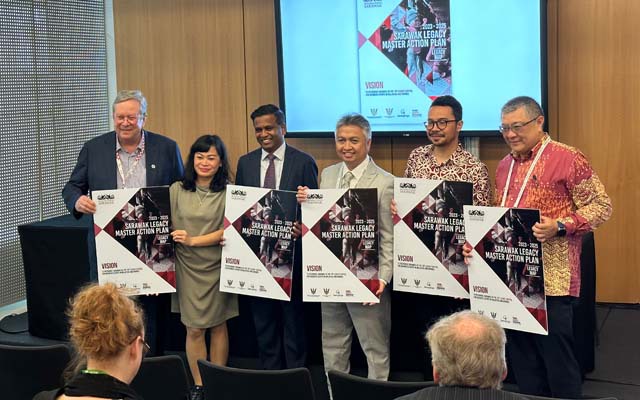
From left: GainingEdge’s Gary Grimmer; BESarawak’s Amelia Roziman; ICCA’s Senthil Gopinath; Minister of tourism, creative industry and performing arts of Sarawak Snowdan Lawan; Consul General of Malaysia’s Farzamie Sarkawie; and Malaysian Association of Convention & Exhibition Organisers & Suppliers' Francis Teo
Business Events Sarawak formally launched the Legacy Impact Master Action Plan (Legacy MAP) 2023-2025 at IMEX Frankfurt last week.
The Legacy MAP is a course of action for the next three years developed by Business Events Sarawak (BESarawak) alongside the Sarawak Government and consultancy group, GainingEdge, to define and drive decisions about hosting business events in Sarawak. It aims to leverage the relationship between business events and legacy impact, and optimise this to contribute to Sarawak’s Post Covid-19 Development Strategy (PCDS) 2030 goals.
From left: GainingEdge’s Gary Grimmer; BESarawak’s Amelia Roziman; ICCA’s Senthil Gopinath; Minister of tourism, creative industry and performing arts of Sarawak Snowdan Lawan; Consul General of Malaysia’s Farzamie Sarkawie; and Malaysian Association of Convention & Exhibition Organisers & Suppliers’ Francis Teo
With the business events industry one of the six key priority sectors under tourism in Sarawak’s PCDS 2030, the Legacy MAP is designed to support the key outcomes sought by the strategy which are economic prosperity, social inclusion and environmental sustainability, while helping business event planners create greater value when designing event programmes.
To achieve the greatest impact, Sarawak will actively seek events that align with PCDS 2030 and prioritise those under the strategy’s six economic sectors (manufacturing, mining, agriculture, forestry, tourism and services) and seven enabling sectors (digital, innovation, education, infrastructure, utilities, transport and renewable energy).
Sarawak’s deputy minister for Tourism, Creative Industry and Performing Arts, Snowdan Lawan, said: “The Legacy MAP is closely aligned with the government’s development policies. Therefore, we are positioning business events as a frontline sector to facilitate strategic collaborations and open a host of economic and social opportunities. Legacy impact is Sarawak’s unique value proposition to the world and we believe that this transformative thinking will allow the industry to enjoy greater returns on both objectives and investments.”
The Legacy MAP changes the traditional narrative about business events only contributing to Sarawak’s economy via delegate numbers and expenses. Instead, it cements the new narrative that business events – with the vast knowledge, connections and innovations it carries – can contribute to the five core legacy pillars of sectoral growth, community development, environmental sustainability and good governance on top of economic impact.
A national survey conducted by BESarawak last year indicated that 93 per cent of respondents from Malaysia’s business events industry viewed legacy as a positive move to add greater value to business events.
Amelia Roziman, CEO, BESarawak, said: “We have expanded our economic-based business model to include legacy because it is more sustainable as years go by. Every stakeholder group in the business events ecosystem has unique areas of interests and influence and the Legacy MAP is going to speak directly to their needs and how they can impact Sarawak’s legacy goals as well as their event goals. We aim to create value for both sides of the table – business event planners and Sarawak’s local communities.”
The Langham, Gold Coast has released a new MICE offer for their corporate and business clientele as the events industry in the Gold Coast picks up.
The limited-time offer, Celebrate a New Way to Meet, includes several complimentary add-ons for event planners and companies that are planning to hold events at the hotel. Events must be booked before August 31, 2023, and be held before July 31, 2024.
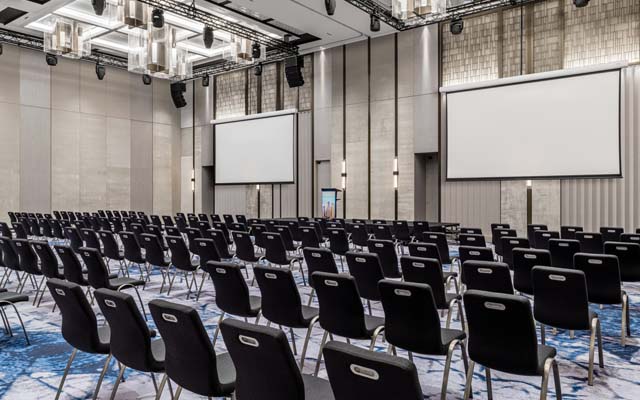
Diamond Ballroom in a theatre set-up
Up to there complimentary benefits can be enjoyed per booking, which include two complimentary upgrades to Junior Ocean Suites; complimentary arrival tea & coffee or infused water, in conjunction with a full or half-day package; complimentary 30-minute, three pieces of pre-dinner canapes for a gala dinner; and 10 per cent discount on audiovisual equipment spend.
Organisers will also receive a choice of a voucher for Chuan Spa valued at A$220 (US$144), or a voucher for a one-night stay in a Superior Room.
The Travel Agents Association of India (TAAI) is organising its 68th annual convention in Colombo, Sri Lanka from July 6 to 9. The convention is likely to draw about 400 to 500 delegates, including media representatives.
The event is supported by the Sri Lanka Tourism Promotion Bureau and the Sri Lanka Association of Inbound Tour Operators.
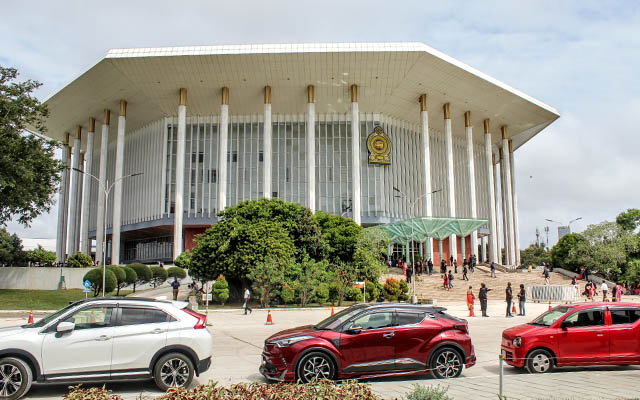
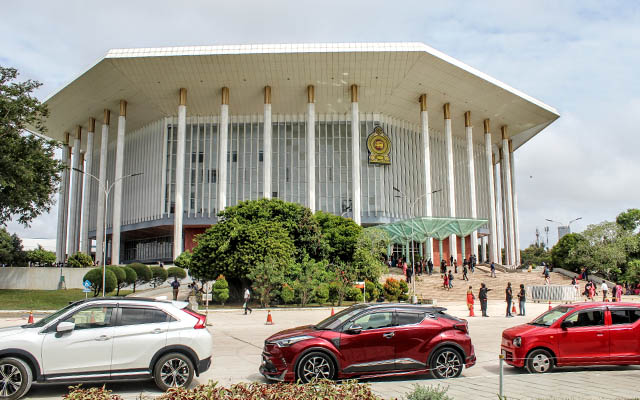
TAAI’s annual convention will be held at Bandaranaike Memorial International Conference Hall in Colombo, Sri Lanka (Photo: VSimage)
The opening ceremony of the convention will take place at Bandaranaike Memorial International Conference Hall while business sessions will be conducted in two hotels – Cinnamon Grand Colombo and Shangri-La Colombo.
The theme of the convention is Transcending Borders, Transforming Lives and will focus on promoting regional tourism besides positioning Sri Lanka as a preferred destination among Indian outbound travellers.
“Sri Lanka’s tourism industry has been resilient in spite of the economic challenges. India has now once again become the number one international source market for Sri Lanka and we hope that the island nation will receive more Indian tourists post our convention,” said TAAI’s president Jyoti Mayal at a virtual media conference on the event.
Sri Lanka received 19,915 Indian tourists in April alone, and 66,347 Indian tourists between January and April 2023.
India follows after Russia as Sri Lanka’s second biggest source market.
Apart from the convention, TAAI will be organising pre- and post-fam tours covering destinations including Bentota, Galle and Kandy. TAAI has partnered with four airlines including Sri Lankan Airlines, Air India, IndiGo and Vistara, to offer special round trip fares for its attendees, with prices ranging from 16,000 rupees (US$194) to 30,000 rupees.
“We want to promote experiential travel to Sri Lanka from India. These fam tours will help our members to understand different products on the same lines that they can promote among their clients,” added Mayal.
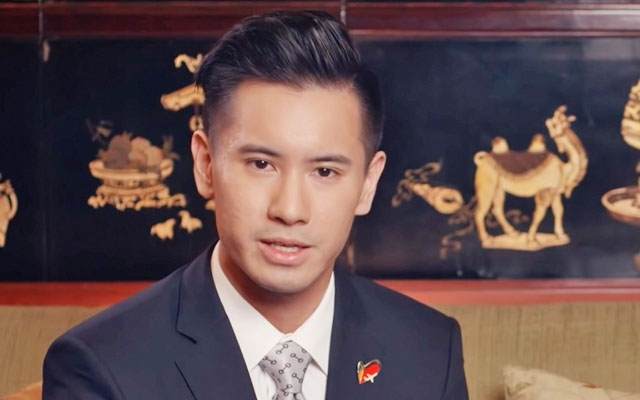
PAL Holdings, the parent company of Philippine Airlines, has appointed Lucio Tan III as its president.
He takes over the post from his grandfather Lucio C. Tan and will continue to provide stability and ensure the company forges ahead with a collaborative and cohesive approach in serving the best interests of its customers.
He has held a number of positions in the family’s business empire over the years, including vice president of PAL Holdings in 2021, and president and chief operating officer of Tanduay Distillers in 2019.
Although companies are more price sensitive to event entertainment post-lockdown, planners find that in general, budgets can be worked around to meet expectations.
Instead, other important factors have come to the fore in the selection of event entertainment – community tie-back, a large dose of interaction, and the ultimate goal of the business gathering.
Careful considerations
Budgets have tightened in the current environment, forcing clients to carefully consider their event entertainment selection.
Christo Alexander, general manager (Asia) of SongDivision, has seen more requests with tighter budgets and unrealistic expectations. His company uses the science of music and the art of engagement to engage people and create teams.
But he is relieved that the pendulum has also swung the other way.
“Apathy would be a good word to describe entertainment in the corporate realm before Covid, because event planners thought they could just get a good band to entertain and if needed, they would add a show-stopper element,” said Alexander.
“But now, I feel everything’s been stepped up a level and event planners are thinking more deeply about what entertainment can bring to their corporate events,” he continued.
Global Travel’s head of events, Timothy Teo, too, finds that the right choice of entertainment with a “strong link or message” can be justified, even if budgets are constrained. For instance, general meetings are observed to favour a “big opening number such as an upbeat dance performance” to energise the crowd.
Teo added that there are “always budget-friendly alternatives” for every type of entertainment, but cautioned that showmanship and professionalism may be compromised.
Global Travel brings indigenous acts to client events
Community tie-back and interactive entertainment
Stakeholders say clients feel that having at least one piece of local entertainment is pivotal to the success of the event.
Alexis Lhoyer, co-founder & chief business officer of Chab Events, has observed that providing access to “meaningful, authentic experiences relevant to the destination” is even more important these days.
He relayed an example of how a recent incentive trip in Bali organised by Chab Events saw 500 guests interacting with underprivileged children from various schools and orphanages around the island to craft angklungs, an Indonesian musical instrument consisting of four bamboo tubes suspended in a bamboo frame.
“After guests had built their instruments, everyone came together to create a 15-minute performance, under the guidance of a local singer. The instruments were then donated to the local schools. It was a magical moment of interaction, and all guests loved the authentic experience,” Lhoyer shared.
Similarly, Teo observed: “Incentive trips usually seek to discover the culture of the country, and entertainment that is unique to the destination, and/or has a strong cultural tie-back are much preferred.”
Michelle Sargent, director, Australia & New Zealand, CWT Meetings & Events agrees, saying that clients seek out local entertainment “to feel a connection to the destination they are visiting”.
She pointed out: “One of our clients who organised an event in Fiji chose to support local non-profit organisations such as women’s groups and local choirs to entertain guests at the welcome functions.”
Experiential entertainment is another consideration these days.
Chab Events
SongDivision’s work with PricewaterhouseCoopers (PwC), for example, saw them host six onboarding events for new recruits last year as part of PwC’s introduction to their corporate culture. Called the UN-Conference, these were deemed so successful there are plans for a repeat with four events from July 2023.
“At these events with PwC, we went really deep with the organising committee, organising morning raves, doing sonic acupuncture, music-led meditation and the gala band. The music was spread out and was the main thread that held these conferences together,” said Alexander, who added that clients and their guests have gone beyond wanting to just watch a show.
Sargent concurred: “Experiential music agencies like Rock And Roll Team Building and SongDivision are proving very popular for both teambuilding activities and entertainment. No matter the type of event or age group, music seems to be the one component that can help groups connect instantly.”
She shared examples of how a recent group travelling to Nashville decided to conduct a songwriting challenge for their guests at the Johnny Cash Museum. Meanwhile in Australia, the Bangarra Dance Theatre group is a popular choice for welcome events, as indigenous dancers provide guests with a feel for the destination and its cultural past.
Over in South-east Asia, Sargent observed that entertainment takes a more dynamic approach with water drummers and traditional fire twirling displays.
Event entertainment possibilities arranged by CWT
The Big Picture
To ensure that the corporate message is conveyed clearly, event planners first need to understand the goals of the client and their events.
“Too often, event companies are briefed on the entertainment portion, but miss the big picture. By understanding the bigger picture, (event planners like us) can push our creativity to craft our themes, and design entertainment and décor that will support and enhance those goals,” opined Lhoyer.
SongDivision’s Alexander also noted that company videos are becoming almost cinematic entertainment pieces, using music to create emotional connections to corporate messaging.
More companies in Asia are also getting staff to perform for each other, so as to foster a sense of belonging which eventually retains talents.
Having a selection of music with lyrics that tie in with the messages and paired with video content can also help enhance an attendee’s experience at any corporate event.
Teo elaborated: “For example, a theme like Beyond Boundaries could offer a visual experience of the vast wonders of the world through open fields, a fjord, the great oceans, up through the cosmos, and so on. These images, with the right selection of music, will play with the audience’s emotions and get that message across subtly and subliminally.”
Further emphasising the power of music, Sargent said: “Having your guests leave with a song that is associated with the event is a wonderful way to ensure the memories of the event would live on. – Additional reporting by Adelaine Ng
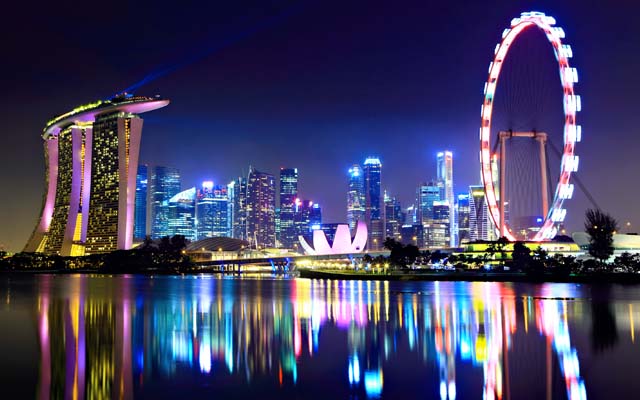
Singapore is Cvent's top meeting destination for 2023, and Singapore hotels feature prominently in the top 10 meeting hotels in APAC
Singapore has taken the top spot on Cvent’s list of Top 10 Meeting Destinations for Asia Pacific.
The other destinations that made the list, in running order, are Sydney, Bangkok, Seoul, Melbourne, Tokyo, Bali, Kuala Lumpur, Gold Coast, and Phuket.
Singapore (pictured) is Cvent’s top meeting destination for 2023, and Singapore hotels feature prominently in the top 10 meeting hotels in APAC
As pandemic restrictions eased and travel resumed, many destinations across Asia Pacific witnessed an influx of international visitors and regional tourism boards worked diligently to promote their cities and attract these travellers to their locales. With tourism to the region continuing to grow, pursuing strategic partnerships, unveiling of new tourist attractions, and embracing technology to reach a broader audience have been topping the agenda for tourism boards in the region.
The strong market revival in Asia Pacific also prompted hotels to launch new properties, invest in renovations and continue expanding their footprint to better accommodate travellers and groups.
When comparing this year’s rankings to 2019, newcomers to the Top 10 include Fairmont Singapore (#1), Conrad Centennial Singapore (#4), Swissôtel The Stamford Singapore (#5) and InterContinental Singapore (#6). Hotels that prioritise state-of-the-art meeting facilities are also prominently featured in the Top 10, demonstrating the enduring worth of such investments in attracting MICE business.
The Top 10 Meeting Hotels in Asia Pacific are, in running order, Fairmont Singapore, Hyatt Regency Sydney, Shangri-La Singapore, Conrad Centennial Singapore, Swissôtel The Stamford Singapore, InterContinental Singapore, Pan Pacific Singapore, Hilton Singapore Orchard, PARKROYAL COLLECTION, Singapore, and JW Marriott Hotel Singapore South Beach/
These lists – which also include regional rankings for North America, Europe, and the Middle East & Africa – were compiled based on sourcing activity through the Cvent Supplier Network, one of the world’s largest venue-sourcing platforms.
This is the first time Cvent has published the annual lists since the pandemic upended the meetings and events industry in early 2020.
To view all Cvent Top Meeting Destinations and Cvent Top Meeting Hotels worldwide, click here.
Just 10 minutes from Phuket International Airport on the serene northern coast, this 178-key, Bill Bensley-designed resort offers delegates a quiet, tropical paradise steeped in Phuket’s tin-mining heritage
The newly-opened Ritz-Carlton, Bangkok anchors the One Bangkok development with cosmopolitan elegance. Featuring the city's largest ballroom and a spectacular new penthouse suite, it delivers exceptional hardware and deeply authentic, soulful service for business and leisure travellers alike
Behind the imposing, Brutalist concrete that defines Zurich’s Oerlikon district lies a surprising secret. While its exterior honours the neighbourhood’s industrial roots, stepping inside Mama Shelter reveals a vibrant, neon-soaked world that is a far cry from its rigid shell




 He has held a number of positions in the family’s business empire over the years, including vice president of PAL Holdings in 2021, and president and chief operating officer of Tanduay Distillers in 2019.
 Careful considerations