Brought to you by Yokohama Convention & Visitors Bureau
Walking the sustainability talk
The sustainability focus on travel and events has intensified and trickled down the supply chain, putting pressure on businesses to support clients’ responsible objectives, noted speakers on a panel at IT&CM Asia and CTW Asia-Pacific in October.
Emphasising the importance of sustainability and scope of focus at Accenture Solutions, Amarnath Lal Das, vice president – India of travel, meeting & events, said: “Sustainability spans environmental, social and governance issues. We have made sustainability one of our greatest responsibilities, not just because it’s the right thing to do, but also because we believe that it is one of the most powerful forces for change in our generation.”

Accenture started its sustainability journey in 2012, and in the space of travel and events, its efforts have moved past the elimination of single-use plastics and cutlery. It has its own system to digitise invoices to reduce paper usage, and is developing a booking tool that will identify carbon emissions based on the fuel efficiency of the aircraft used by Accenture travellers. The booking tool will be an improvement on the current system, which provides emissions information post-trip.
Das said the booking tool would be ready by 2025.
A similar approach is taken with hotel suppliers, where Accenture travellers can identify their carbon emissions from their accommodation choice, based on the hotel’s design and sustainability programmes.
In general, Accenture requires its suppliers to respond to a set of questionnaires that looks into their sustainability programmes.
When asked by panel moderator, Karen Yue, group editor of TTG Asia Media, if Accenture have had to disqualify travel suppliers that failed to align with the company’s own sustainability goals, Das said “leeway is given to those who just started their sustainability journey”.
He also emphasised a supportive approach, where Accenture looks at helping suppliers to catch up on responsible actions.
For example, should a potential airline supplier fall short of Accenture’s sustainable requirements now, it would consider the airline’s future plans to acquire fuel-efficient aircraft and how it intends to optimise passenger load to reduce carbon emissions.
Supplier support
The pressure on businesses to be sustainable is real and strong.
Brayden Lai, senior business development manager at South Pole, a Swiss carbon finance consultancy, noted that more companies are getting serious about their climate strategy. 2021 saw a 29 per cent increase in the number of companies in Asia-Pacific reporting through CDP – an international non-profit organisation that runs a global disclosure system for investors, companies, cities, states and regions to manage their environmental impacts – compared to 2020, and a more than five-fold growth from fewer than 700 companies in 2016. One-third (32 per cent) were first-time responders, demonstrating a growing momentum among businesses towards embedding transparent environmental disclosure in their operations.
The report shows that climate action has risen to the C-suite level, with almost all respondents (98 per cent) having management-level oversight for climate-related issues. Three-quarters (76 per cent) of companies reported having a process for identifying, assessing and responding to climate-related risks and opportunities.
“Companies now regard sustainability efforts as a way to engage consumers who are highly aware of environmental issues. Many are starting to disclose their carbon emissions and environmental impact,” said Lai.
Currently, South Pole’s website lists many major global firms across industries as its clients. Within the travel and tourism industry, South Pole supports Hilton and FCM Travel Solutions.
With Hilton, South Pole helps to facilitate carbon-neutral meetings at the group’s hotels. Hilton calculates emissions from onsite meetings and events, and takes part in South Pole’s offsetting projects.
With FCM Travel Solutions, South Pole provides clients of the corporate travel agency with insights into their carbon emissions and facilitates carbon-offsetting through its projects.
Lai told TTGmice that there is a “huge interest in this because business travel contributes to Scope 3 emissions, which is more challenging for companies to track”.
Chooleng Goh, general manager, The Athenee Hotel, a Luxury Collection Hotel, has seen sustainability practices reigning as the “number one question” among event clients.
“Once we share our sustainability story, it’s a 99 per cent done deal. Some clients don’t even need to see our spaces or look at our service (to decide on us),” she said.
Located in Bangkok, The Athenee Hotel is an active campaigner for environmental sustainability, and is the first hotel in the world to be certified ISO 20121 for event sustainability management systems.
A major milestone in its sustainability journey is the purchasing of organic rice directly from Thai farmers. This keeps costs low for the hotel and provides a sustainable livelihood for over 700 keeps. On Goh’s agenda now is the move towards electric vehicles, and the installation of charging stations.
To help clients make responsible travel choices, travel-related organisations like SAP Concur and Amadeus have partnered CHOOOSE, a climate-tech company that integrates climate action options into the customer experience.
SAP Concur and CHOOOSE launched this year the CHOOOSE Climate App, which automates flight-related carbon emission measuring and reporting, and allows companies to address unavoidable emissions by supporting verified, high-impact climate solutions, such as carbon removal, offsetting projects, and Sustainable Aviation Fuel.
Over at Amadeus, CHOOOSE’s technology is used to provide emissions calculations across the entire travel journey – rail or air travel, accommodation, and ground transportation – built upon industry standard frameworks. The collaboration also offers trade buyers access to a marketplace of solutions aimed at reducing or eliminating climate change.

Concrete climate actions
Barbara Ewals, executive director with Initiative for Global Resilience (i4gr), said “it’s great to see that everyone has more sustainable intentions now, which pushes the corporate side”.
“This, in turn, pushes the government to enact more policies for corporates to be more intentional (in their sustainability efforts,” she added.
The Bangkok-based social enterprise supports leaders in creating large-scale and lasting social change by facilitating and advancing solutions to global challenges through multi-stakeholder partnerships, and the sharing of knowledge and best practices, via position papers, forums, and the media.
Ewals believes in influencing sustainable practices with personal experience and flexibility, instead of “force-feeding” values.
Citing an example, she pointed to i4gr’s F&B approach at a series of global meetings on sustainable food and agriculture, where it was one of the content providers. i4gr intentionally designed vegetarian meals for delegates. The arrangement was a success in Asia, Europe and North America.
“But when we went to Brazil, there were vehement protests, (as the locals insisted on) their right to their meat!” she recalled with a chuckle.
A compromise was reached, with a vegetarian offering only on the last day. The outcome was encouraging, as the attendees “were pleasantly surprised that vegetarian options were edible”.
“This is an incremental change,” said Ewals, adding that the positive experience could influence some of the 300 Brazilians in attendance to make an intentional change to their future event menus.
As for relying on carbon offset programmes, Ewals spoke bluntly against potential scams, where organisations sold credits to protect national parks – trees cannot be felled easily in these areas, so credits are meaningless.
Instead of buying credits to get to net-zero somewhere in the future, she urged companies to take action now to reduce their emissions.
Agreeing, Goh said her hotel provides options for clients to minimise their event footprint from the get-go. Such options include reducing food waste through the hotel’s work with the Scholars of Sustenance Foundation where excess food is donated, or by repurposing unused ingredients.
When asked what more could the travel and events industry do to contribute to a sustainable and resilient world, Ewals suggested establishing cross-industry partnerships.
For example, hotels and resorts could work more closely with a landscape architecture association on responsible design.
“We need to stop (staying in) our own silos and engage other like-minded associations,” Ewals encouraged.
She also advised corporates to drop the term CSR (corporate social responsibility), because it is “self-serving”. Instead, she suggested adopting the terms “stakeholder engagement” or “community engagement” because they inspire more meaningful work.
As for Goh, she underlined the need to consider sustainable actions in the long run.
“Instead of a one-off donation to a youth orphanage, it is better to provide them with education and take them on as young future trainees and educate them.
“Same for the rice farmers. They do not want one-off donations; they want to have a sustainable livelihood and to continue farming for the next 10, 20 or 30 years,” she said. – additional reporting by Karen Yue
Yokohama: Setting the Stage for a New Era of Conferences and Conventions

Open for business
The cosmopolitan city of Yokohama was one of the first places in Japan to welcome back international delegates to conferences as travel restrictions were eased in mid-2022. The precedent for this action was set all the way back in 1859 when Yokohama became one of the first Japanese ports to open to international trade. A positive attitude toward open exchange is very much encoded in the city’s DNA.
This openness was in full display at the recent 8th Asian Congress of Dietetics (ACD 2022), held August 19–21, 2022. Speakers and delegates from across Asia gathered to discuss sustainable schemes and ideas for improving global dietary health.
Sustainability in practice
To complement the topics explored at the conference, Yokohama Convention & Visitors Bureau (YCVB) offered several cultural programs promoting wellness. These experiences and workshops were held in the Exhibition Hall alongside booths and presentation sessions, making them a seamless part of the ACD 2022 conference.
One of YCVB’s flagship programs is its mobile tearoom concept. A Japanese tearoom can be erected almost anywhere in less than an hour, taking the traditional tea ceremony direct to international delegates. The tearoom is crafted using miyadaiku woodworking, which is a protected skill that is inscribed on UNESCO’s Representative List of Intangible Cultural Heritage of Humanity. Miyadaiku-built shrines and temples can be found all over Yokohama, and bringing that culture into the hall was an instant hit with international participants at the conference. The tearoom’s relaxing atmosphere combined with a serving of freshly whisked Japanese tea and a local Yokohama confection was the perfect way for participants to become reinvigorated, enabling them to return to the conference renewed.
Yoga workshops were also held in the hall during the conference, offering people the opportunity to re-center and relax while looking out over Yokohama’s scenic harbor from the comfort of the venue. Available at most conferences, the workshops require no prior experience, and the movements are performed entirely from a seated position, which makes them suitable for people of different physical abilities. They also include useful techniques that participants can use to stay relaxed yet focused throughout a conference.
These kinds of workshops are designed to provide restful breaks for attendees and reinforce the themes of the conference, as well as spotlight Yokohama’s own achievements toward sustainability.

Support as needed
YCVB ensures robust but unobtrusive countermeasures against COVID-19 throughout its venues, and can connect organizers with language support and other services as needed. It also supports conference organizers in fulfilling their own sustainability goals. With programs like Yokohama’s Next Generation Project to empower young researchers, and with the city’s support of the Zero Hunger Challenge, which incorporates sustainable development at the structural level of a conference, an organizer’s priorities can be easily incorporated.
Ultimately, YCVB is committed to providing the support needed to make every convention and conference a success. As we navigate back to in-person events, with YCVB you can take safety, security, and personalized support for granted. But beyond that, by placing a high priority on the needs and theme of each conference, YCVB reminds us of what we have been missing out on during our time apart.
YCVB’s team offers tailor-made consultations for events, conventions, and conferences big and small. Make Yokohama your Destination City.
Asian airlines welcome China’s easing travel restrictions but no schedule changes expected
Asian airline executives have reacted positively to China’s decision to ease inbound travel procedures, but said the announcement would not trigger immediate changes to their flight schedules.
“It is always encouraging to get updates like this, especially from China which is a big market for Malaysia. We are hopeful that the reopening momentum will continue,” Izham Ismail, group CEO of Malaysia Airlines, told TTG Asia.

Malaysia Airlines currently flies twice a week to Guangzhou with a limited capacity, and has long redirected operations elsewhere in response to China’s steely travel restrictions.
As rescheduling flights requires time and careful planning, Izham said Malaysia Airlines would “stick to our plans”.
“We normally plan our capacity every summer and winter season, and the next change would only come in March 2023. Even if China reopens tomorrow, it is not possible for us to redirect our flights there,” he explained.
“However, the next season will coincide with our optimistic projection that China will resume international travel in 2Q2023,” he said.
Some airlines are also choosing to hold their horses for now, as the restriction updates are regarded as too slight to inspire a spike in travel interest.
“While this is a step in the right direction, it is still not enough to move the needle for a major reinstatement of flight capacity at the moment,” opined Mayur Patel, head of Asia, OAG Aviation.
When asked if Thai Airways International would bring forward its intended commencement of services to China’s Shanghai and Guangzhou, Korakot Chatasingha, chief commercial officer of Thai Airways International, would only say that “as long as China retains its quarantine requirement for inbound travellers, it will not convince people to resume their travel back to the country”.
The Thai flag carrier currently has 68 aircraft in operation this year, across THAI and THAI Smile, with two aircraft ready for activation to China when the time is right.
Japan Airlines (JAL) will not respond to China’s Friday announcement with flight changes too, but only because it has maxed out its slots to the country.
JAL, which used to operate 98 flights a week to China pre-Covid, has just announced 15 flights to the country last week, including the resumption of services to critical cities Shanghai and Beijing.
Ross Leggett, JAL’s executive officer and deputy senior vice president – route marketing, international relations and alliance, told TTG Asia: “If we could, we’d fly more to China but flight capacity into China is not our decision to make. The Chinese government still tells us which routes and how many we can fly. We’ve already gone from the five-one rule to 15 flights.”
Although China’s travel updates are minute compared to most part of the world, where barriers to travel have largely been dismantled, Leggett said “any (reopening decision) will stimulate more traffic, especially for Japanese business people looking to go to China”.
Agreeing, Subhas Menon, director general of the Association of Asia Pacific Airlines, said airlines could consider reinstating flights to “interesting and important” Chinese metropolises, like Beijing, Shanghai and Guangzhou, where travellers would be willing to undertake a five-day quarantine and three-day home isolation just to reconnect with important business partners.
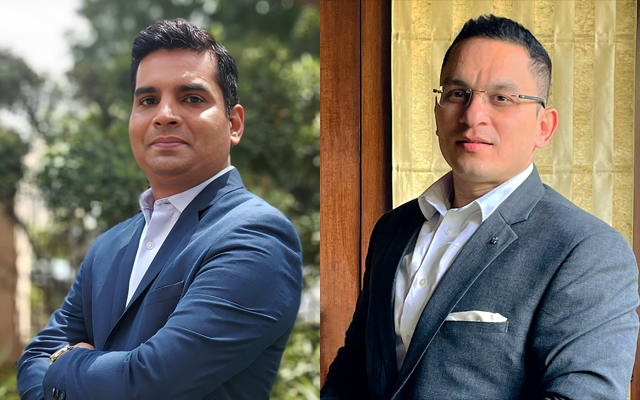
Daniel Kerr joins Chatrium Grand Bangkok as GM
Daniel Kerr has been named general manager of Chatrium Grand Bangkok.
The British national brings with him more than two decades of hospitality experience across Asia-Pacific, having gained experience with Hyatt, Langham Hotels International, and Ovolo Hotels Group.
He joins Chatrium Grand Bangkok from his last role as general manager for Starbucks Indonesia, where he launched Starbucks Reserve Dewata in Bali, the world’s first Starbucks concept store and the largest Starbucks Reserve in the Asia-Pacific.
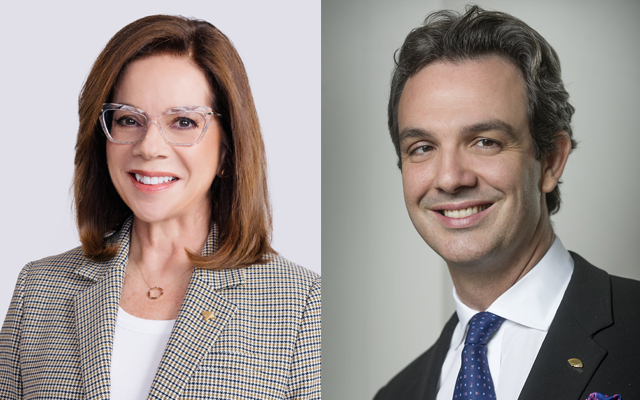
Katerina Giannouka leads Jumeirah Group as CEO
Katerina Giannouka has been appointed as the new CEO of Jumeirah Group, effective December 2022.

A recognised professional in the international hospitality industry, Giannouka joins Jumeirah Group from Radisson Hotel Group, where she had served as president Asia Pacific since 2017.
She brings with her 20 years of experience in business leadership, operations, hotel development, asset management and strategic advisory.
Ada Jian helms INNSiDE by Meliá Kuala Lumpur Cheras
Meliá Hotels International has appointed Ada Jian as general manager for the new INNSiDE by Meliá Kuala Lumpur Cheras, which opens in 4Q2022.

She possesses over two decades of hospitality experience throughout China, beginning with a front office role in 2001 at Hyatt Regency Xi’an China. She then spent eight years with Sofitel, before joining Meliá Hotels International in 2014.
At Meliá, Jian held roles at Gran Meliá Xian and INNSiDE by Meliá Zhengzhou, as well as worked for the corporate team where she was senior area director of operations Asia-Pacific covering 47 hotels in the region.
Asian sellers confident in the region’s appeal due to strong Greenback
Asia’s key business events destinations, bar a muted China and Hong Kong presence, were at IMEX America (October 11-13) in larger numbers, compared to the show’s May edition in Frankfurt.
During the tradeshow in Las Vegas, buying domestically dominated. And while Asian booths were less busy, those TTGmice spoke to affirmed corporates and meetings groups were eyeing the region, albeit in smaller group sizes.

The US is one of the top markets for Singapore’s World Express (WE) with Darren Tan, its managing director, sharing with TTGmice that he had “good leads” and sees “growth and potential”, despite Asia lagging behind other parts of the world in opening up.
Tan, who also made sales calls in the US, commented life and the travel market were back to normal, and the strong US dollar was a plus, but recession fears created some “pullback”.
“The US was good for us in 2022, and 2023 is also looking decent,” he commented, adding that corporate meetings were doing better than incentives. Group sizes were below 100 people, and niche demand was from higher-level educational and special interest groups.
Noor Ahmad Hamid, chief operating officer, Malaysia Convention and Exhibition Bureau (MyCEB), also noted the strong US Dollar has made Malaysia and other Asian destinations more appealing to the US market. As such, he expects corporate and incentive enquiries to materialise in early 2023.
He added: “The association and exhibition sectors will work differently, based on the content of the association meeting and exhibition’s value proposition. We are anticipating growth for these two segments as Malaysia is a very attractive destination in terms of value for money due to the strong US dollar.
“There are a lot of enquiries and we need to work quickly on this increasing demand.”
To smoothen the entry process, one of MyCEB’s initiatives includes a Business Events Special Lane for arriving delegates, on top of providing financial support. MyCEB also includes sustainability, legacy and inclusivity in all of its business events activities, which Noor indicated that “many planners from the US find meaningful”.
Taiwan-based DMC K&A International, which sent a representative to IMEX America to test waters, said activity was slow and North Asia, in general, was “not receiving MICE (enquiries) yet”.
K&A founder and president Kitty Wong pointed to inflation, changes in flight schedules, and the conflict in Ukraine were reasons why association meeting delegates were not travelling.
Adelaide Convention Bureau rebrands to Business Events Adelaide
After 48 years, Adelaide Convention Bureau has been rebranded and repositioned to Business Events Adelaide.
CEO Damien Kitto said in a press release that the new name better reflects what the organisation does and removes the ambiguity of it being erroneously related to tourism and major events, or, as has sometimes been the case, being seen as only interested in bidding for conventions.

“Business Events Adelaide is first and foremost an economic driver for Adelaide and South Australia,” he said. “Business events fill hotel rooms, venues, restaurants etc but our valued business delegates spend three times more each day (A$632; US$412) than a tourist or a major events visitor and that is an important differentiation. They also leave a strong economic tail from their visit.”
“These delegates are focused on returning home with tangible business results from their time with us, be it from knowledge transfer, research collaborations or business partnerships. And such economic results from business events deliver strong advantages for South Australia. Our new name far better recognises that effort, especially for the array of companies located in our globally recognised innovation districts,” said Kitto.
Kitto said Business Events Adelaide with its strong economic growth ethos, would continue as an independent not-for-profit economic driver using its strong capabilities. It will attract, across the broad sector, business events including; meetings, conventions, conferences, exhibitions, seminars, symposiums and corporate incentives.
“We deliver a high 40:1 ROI and last financial year we secured A$254 million for the South Australian economy. This was achieved despite the constraints of Covid and our small but highly effective team looks forward to bettering these numbers each year from now on,” he said.
The rebranding also reflects how the national business event sector is being positioned.
“Most of our interstate organisations have also moved away from being titled bureaux,” said Kitto.
Tokyo’s Haneda Airport gets a new hotel and MICE complex
Tokyo’s Haneda Airport will see the launch of a new mega hotel, comprising business events and leisure facilities, come January 2023.
Haneda Airport Garden will be directly connected to the airport’s international terminal and cater for both leisure and business events visitors, according to its developer Sumitomo Realty and Development Company.
It will operate 1,717 rooms and suites across two hotels (Villa Fontaine Grand and Villa Fontaine Premier), making it the largest airport hotel of its kind in Japan. Of those accommodations, 160 rooms are classified as luxury.
Meeting facilities include an event hall of 2,400m2, a 1,000m2 atrium with a 13-metre high ceiling and a range of conference rooms and banquet rooms, some of which can accommodate up to 1,000 pax.
The complex will also feature a shopping centre with some 60 retail stores, 30 F&B options ranging from a 280-seat restaurant to food courts, an open-air bath with views of Mount Fuji and a bus terminal for easy access to central Tokyo, regional cities and tourist attractions.
“The facility is designed to meet the diverse needs of the world’s travellers by combining the concepts of hospitality, community and convenience as Haneda Airport becomes a 24-hour international hub airport,” said a Sumitomo Realty and Development spokesperson.
In the long term, Haneda Airport Garden will “contribute to the growth of the Haneda Airport area into one of the world’s most advanced business areas and to the sustainable development of the local community,” the spokesperson continued.
Bookings are already being taken, with some hotel rooms and facilities available from December 21. The grand opening of the complex is scheduled for January 2023, almost three years after its planned opening, which was postponed since April 2020 due to the Covid-19 pandemic.


As part of its aggressive expansion to improve passenger service and experience in South-east Asia, the Plaza Premium Group has launched at Clark International Airport a Plaza Premium Lounge, ALLWAYS bespoke Meet & Assist Services, and TGM Root98 dining outlet.
On level three of Clark’s international departure terminal, the Lounge is suitable for passengers’ layover, with pay-per-use shower, VIP Meet & Greet service, in-lounge flight information and smoking room.
It also serves as the Business Class lounge of Philippine Airlines, Emirates and Qatar Airways.
Plaza Premium Group regional general manager (South-east Asia), Steven Lim, also disclosed plans to have an airport VIP Lounge where departing passengers will be picked up by limo straight to check-in and immigration, bypassing the main terminal. They will then get to rest at the VIP Lounge while waiting for their flight.
Also by next year, an Aerobar overlooking Mount Pinatubo will take shape at the airport’s international departure terminal.
The group, which already has an 11-key airport transit hotel Aerotel and a Plaza Premium Lounge each at the domestic and international terminals of Cebu Mactan International Airport, is also in discussion to have a Plaza Premium Lounge at Manila’s Ninoy Aquino International Airport (NAIA).
Lim said Plaza Premium Group’s global expansion picked up speed during the pandemic, growing from 170-plus lounges pre-Covid to 250 today.
He said that within a month, the group will open its first mega lounge – “a lounge within a lounge” – in Terminal 1 of Jakarta’s international airport. The lounge can hold 700 pax at once, and will contain the Singapore Airlines Lounge that the group will also manage.
A similar “lounge within a lounge” will be launched at Kuala Lumpur International Airport by 1Q2023. It will feature both Plaza Premium Lounge and Plaza Premium First for first class passengers.
Elsewhere in South-east Asia, Lim said the company is looking to expand in Vietnam and Cambodia where it already has a presence, particularly to operate in Ho Chi Minh Airport when it is ready in three years’ time and a new airport in Phnom Penh. It is also keen to enter Laos and Brunei.