Singapore Airlines (SIA) has rolled out complimentary unlimited in-flight Wi-Fi for all Business Class customers, as well as its PPS Club members and PPS Club supplementary card holders.
This makes SIA one of the first airlines to offer complimentary unlimited Wi-Fi across its passenger network for its Suites, First Class, and Business Class customers, as well as PPS Club members.
Singapore Airlines’ KrisFlyer members can now enjoy complimentary in-flight Wi-Fi
In addition, KrisFlyer members now enjoy free three-hour Wi-Fi plans when travelling in Premium Economy Class, and free two-hour Wi-Fi plans when travelling in Economy Class.
Customers who are not KrisFlyer members, and members who may have consumed their complimentary plans, can choose from SIA’s new Wi-Fi price plans ranging from US$3.99 for one hour, to US$15.99 for the entire flight.
Previously, Business Class customers and PPS Club members enjoyed 100MB worth of complimentary in-flight Wi-Fi. KrisFlyer members travelling in Premium Economy Class and Economy Class were offered a two-hour complimentary inflight Wi-Fi plan that was optimised for text-only messaging services.
Diverse flavours, quality local produce and inclusive options are integral to MCEC's 2023 menu
Melbourne Convention and Exhibition Centre (MCEC) has unveiled its 2023 menu – reflecting a commitment to celebrate the city and deliver an extraordinary culinary experience for every guest, every time.
Highlights include the use of native ingredients, such as wattleseed, lemon myrtle, macadamia and Kakadu plum, which combine beautifully with local, fresh, seasonal produce. Healthy, vegan, vegetarian and gluten-friendly choices and alcoholic and non-alcoholic drink options are integral to every menu.
Diverse flavours, quality local produce and inclusive options are integral to MCEC’s 2023 menu
MCEC’s executive chef, Peter Haycroft, stated: “We create food that showcases the many flavours and ingredients available on our doorstep.”
“Supporting home-grown is very important to us. Our 2023 menu showcases the many riches on offer, from High Country pork and Mt Macedon duck to Great Ocean Road cheese, Yarra Valley caviar and Warragul greens. And 90 per cent of our beverage menu is sourced from Victoria’s winemakers, breweries and distilleries.
“Sourcing produce locally and growing herbs, citrus and flowers on-site delivers outstanding ingredients and also helps reduce our carbon footprint.”
The new website collaboration tool enables event organisers to create better, fit-for-purpose websites more quickly
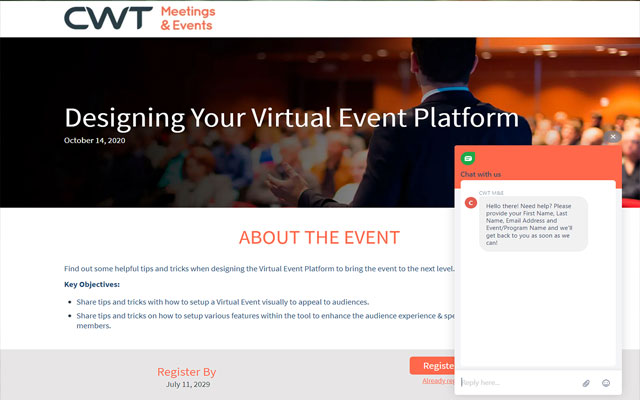
CWT Meetings & Events has introduced two new solutions to help event organisers create a better attendee experience – a website collaboration tool that streamlines the process of designing event websites, and chat support for event attendees.
The design and building of an event website are usually laborious for all involved, with a lot of time spent providing feedback, email and phone communications, and difficulty in tracking and storing changes.
The new website collaboration tool enables event organisers to create better, fit-for-purpose websites more quickly
The new online website collaboration tool aims to streamline this process, where a client can look at a web page on their screen, mark up the changes and share them with the CWT M&E team at the click of a button. Change requests and task statuses are more easily understood, and actions are readily assigned among those working on the project.
This will help to increase efficiency and create a better experience for the client, and free up time for CWT M&E’s web buildings to be more creative and consultative. During a pilot roll-out last year with one of CWT M&E’s global tech clients, the tool helped cut down the time to build event websites by as much as 30 per cent.
CWT M&E has also added live chat support to its portfolio of attendee engagement and management services. The chat service can be integrated into the event website, providing attendees with another channel to obtain assistance with their travel arrangements, registration, and other requests, as well as technical support for virtual and hybrid events.
Both the website collaboration tool and chat support are included in CWT M&E’s standard event planning and management service and are available to customers worldwide at no additional cost.
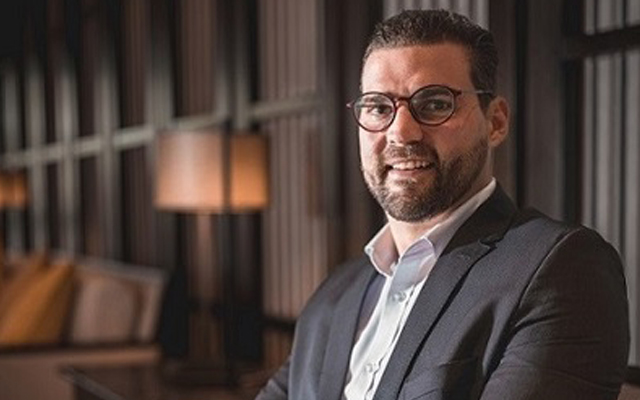
Anantara Riverside Bangkok Resort has appointed Michael Robinson as general manager.
In his new role, Michael will oversee all operations of the property, including accommodation, F&B, river cruise, spa, as well as meeting and event facilities.
The New Zealand national joins Anantara Riverside Bangkok from FCC Angkor by Avani in Siem Reap, where he worked as general manager from 2020.
From left: Freed Group's Kenneth Lee; Connexus Travel's Eric Lau; and Freed Group's Abel Zhao
FreeD Group, a digital and smart merchandising solutions company, has acquired Hong Kong-headquartered travel management company Connexus Travel (formerly Swire Travel).
Since its inception in 2015, FreeD has been connecting platforms, brands, and service providers to their customers with enhanced digital capabilities through its proprietary SAAS solutions, as well as services like end-to-end artificial intelligence digital transformation, smart merchandising, and smart marketing. The company operates in more than 10 markets worldwide, serving more than 200 high-profile clients and partners such as Samsung, China Mobile, China Life Insurance, Google, FIFA World Cup, BMW and Hyundai Card.
From left: FreeD Group’s Kenneth Lee; Connexus Travel’s Eric Lau; and FreeD Group’s Abel Zhao
Meanwhile, Connexus Travel, established in 1948, was the first travel agent registered in Hong Kong and now operates in Hong Kong, Beijing and Shanghai, specialising in corporate, leisure and business events, offering a full range of travel services and digital booking applications.
Abel Zhao, co-founder and CEO of FreeD Group, said there is “tremendous growth potential” for Connexus Travel.
“The positive outcomes we envisage include business opportunities spanning travel services, e-commerce, marketing services and brand loyalty programmes, all of which will be underpinned by a comprehensive range of digitalised services and solutions. Ultimately, we anticipate Connexus Travel to follow in the footsteps of FreeD Group and transform into a global brand.”
Eric Lau, general manager of Connexus Travel, added: “This acquisition will accelerate the digital transformation of our products through new signature customer-facing travel applications, which will include the provision of new user experiences and efficiencies for our corporate travellers.”
He added that the acquisition will also help Connexus expand its services outside of Hong Kong and China, and into the markets where FreeD Group currently operates.
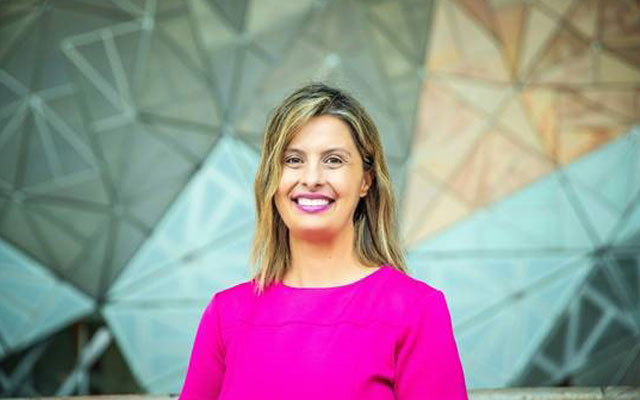
Northern Territory Major Events Company (NTMEC) has hired Suzana Bishop as the organisation’s new CEO, taking over from Tim Watsford.
Bishop brings with her 25 years of experience in the tourism and events industry. For the past four years, she led a comprehensive portfolio of events in Victoria as chief experience officer at Federation Square. Some of the event organisations she has worked with also include the Melbourne Convention and Exhibition Centre (MCEC), The Australian Grand Prix and The Royal Melbourne Show.
She has also served in various task forces and boards over the years, notably the Victorian Tourism Industry Council, Canberra International Music Festival Board, Port of Echuca, and Meetings and Events of Australia Board.
IHG Hotels & Resorts has appointed Patrick Finn as vice president, development for South-east Asia and Korea.
Based in Singapore, Finn will join the South-east Asia and Korea Leadership Team to spearhead strategic growth initiatives and oversee the expansion of the group’s brands in the region.
He brings more than 20 years’ hotel development experience to his new role. Most recently, Finn worked for Hyatt Hotels Corporation and was responsible for leading the company’s development function across Asia-Pacific.
Tokyo: a destination that blends old, new, and future
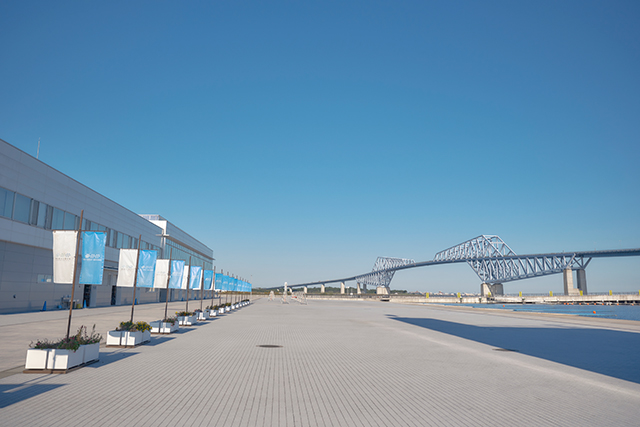
In 2021, Japan successfully hosted the Tokyo 2020 Olympic and Paralympic Games under unprecedented conditions, in part thanks to the stringent hygiene and safety standards routinely applied to events in Japan. While the Games have come and gone, the legacy lives on, with Tokyo now regenerating Games’ venues like the Sea Forest Waterway into unique locations available for business events. The host of rowing and canoeing events in 2021, this 67-ha bayside venue can now be flexibly used for a variety of purposes, from team-building rowing sessions to open-air cocktail parties on a 444-sqm wooden deck, which comes with fresh sea breezes and close-up views of the Tokyo Gate Bridge. Even events with fireworks or taiko drumming are possible, as this huge open-air space is neighbored mostly by water.
1 of 2
Sea Forest Waterway can now be flexibly used for a variety of purposes
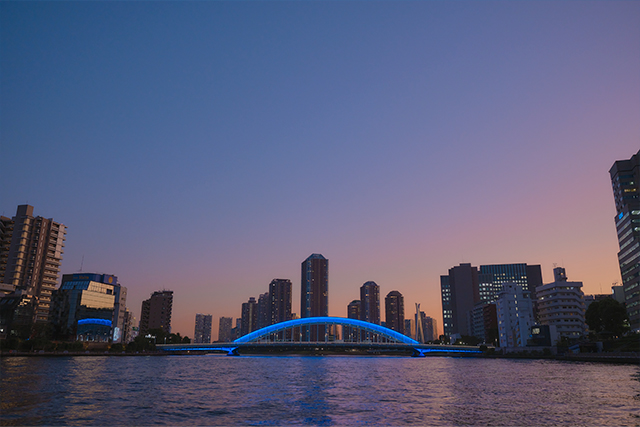
The Eitai Bridge and Tokyo's night skyline
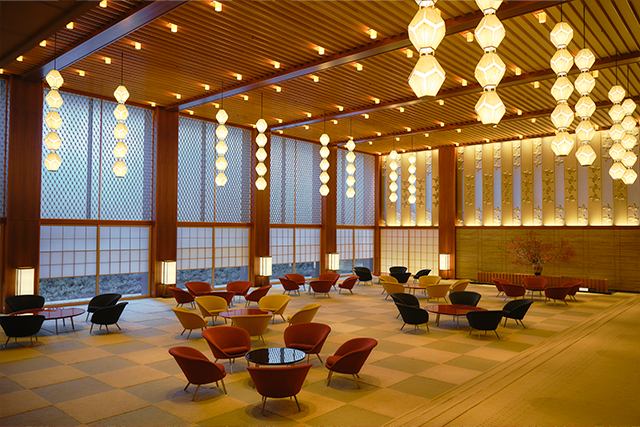
Away from the bayside, in the bustling center of the city, business event planners will find even more venues delivering unique settings and experiences, while also striving to operate toward the UN’s Sustainable Development Goals. That includes The Okura Tokyo, a leading event venue since the early-1960s, when it held the first post-war international conference in Japan. Reopened in 2019 after a three-year reconstruction project—with improved environmental credentials such as reduced CO2 emissions, in-house water recycling and leftover disposal systems—the five-star hotel-venue has 19 banquet rooms that can cater to a wide variety of needs. The centerpiece, the 1,968-sqm Heian Room, is an example of how Tokyo seamlessly fuses traditional and contemporary elements, with expansive wall décor inspired by an ancient collection of Japanese poetry, but also state-of-the-art technology behind the scenes.
For business event planners increasingly mindful of the SDGs and a venue’s social impact, The Okura Tokyo is also involved with numerous community projects around Japan, including supporting children’s education in Fukushima. They also display and sell Fukushima and other regions’ crafts at the hotel.
1 of 3
The Heian room at The Okura Tokyo
The iconic lobby of The Okura Tokyo
Happo-en's enchanting Edo-era garden
The same can be said for another top Tokyo venue, Happo-en, a sprawling Edo-era (1603-1867) garden with teahouses, restaurants, and slick meeting and convention facilities that blend traditional and contemporary design sensibilities. While that makes Happo-en one of Tokyo’s most distinctive venues, their Sustainable Action initiatives add to their credentials, whether that’s supporting local farmers across Japan or their ongoing relationship with an agricultural high school in Fukushima. Happo-en has taken on an advisory role in developing and marketing amazake, a sweet non-alcoholic beverage, made from Global GAP-certified rice grown by the students.
Tokyo also offers a variety of chances to take a break from business. Taking to the waters of Tokyo Bay for a night cruise is one option that delivers a new perspective on Tokyo, as the city’s high-rise center reflects onto the water. Many operators run tours in large yakatabune houseboats, which takes leisurely trips around Tokyo’s old waterways and bay, as guests enjoy refreshments along with incredible city views.
Fukushima: explore traditional culture and unspoiled nature
For a post-convention tour, there are many areas on Tokyo’s doorstep that offer unforgettable cultural experiences, but Fukushima Prefecture adds extra value with its combination of pristine nature, samurai culture, and even innovation. And it’s easy to access just by taking a bullet train 75 minutes to Koriyama in central Fukushima, from where local transport networks spread out across the region.
1 of 3
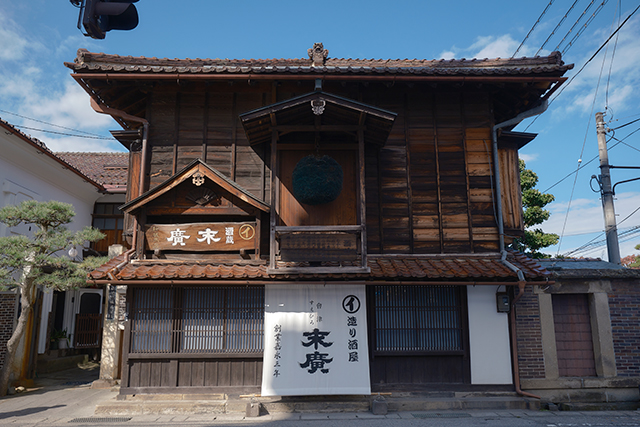
Historic building of Suehiro sake brewery
Nisshinkan, a former samurai training school in Aizu, Fukushima
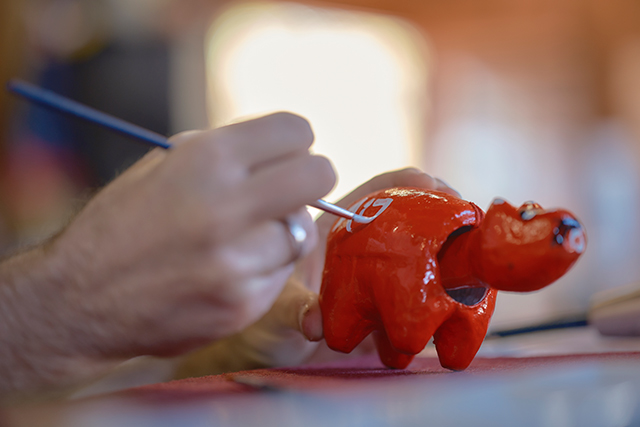
A hands-on experience painting Akabeko folk toy at Nisshinkan in Aizu, Fukushima
A good starting point is the castle town of Aizu-Wakamatsu, a traditional counterpoint to ultra-modern central Tokyo. To call out just some of the experiences for group tours here, you could schedule a visit to the vast Nisshinkan complex—a meticulous reconstruction of Aizu’s former samurai training school—to learn about the region’s samurai roots, try Japanese archery (kyudo) or paint local crafts like Akabeko and Okiagari Koboshi dolls. You could stop by the castle, tour the historic Suehiro sake brewery, or explore the old stores and restaurants along the historic Nanokamachi Street.
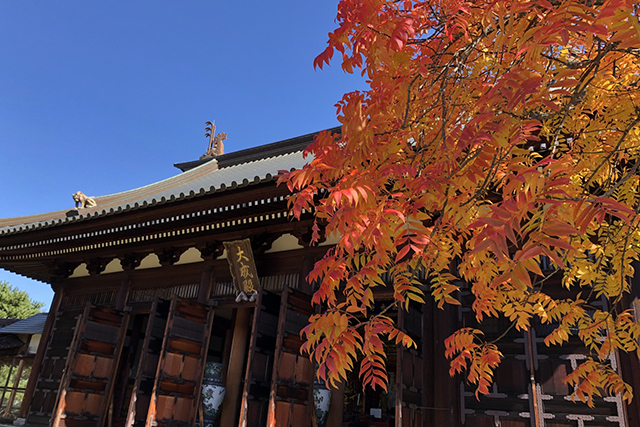
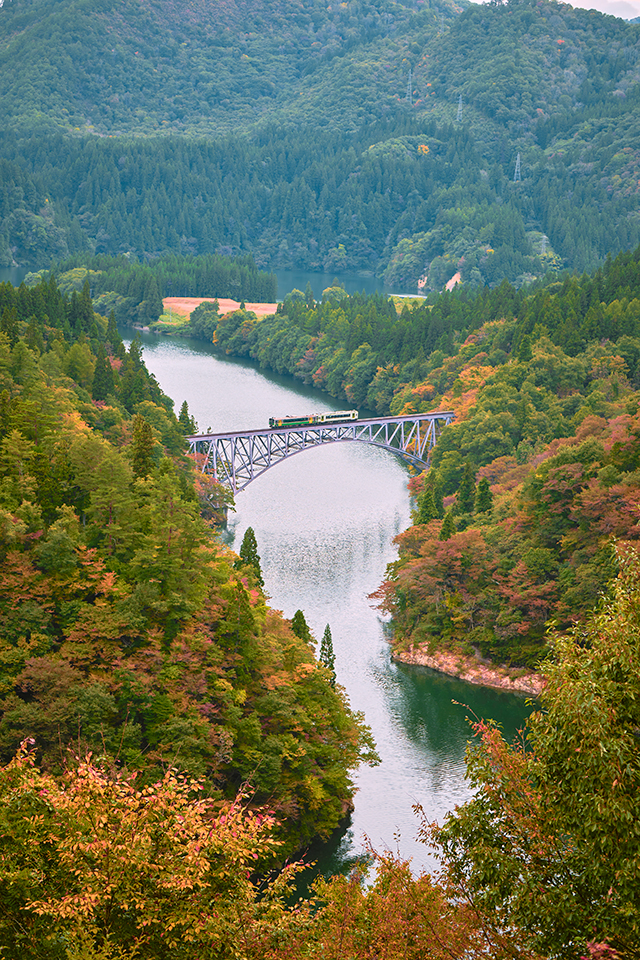
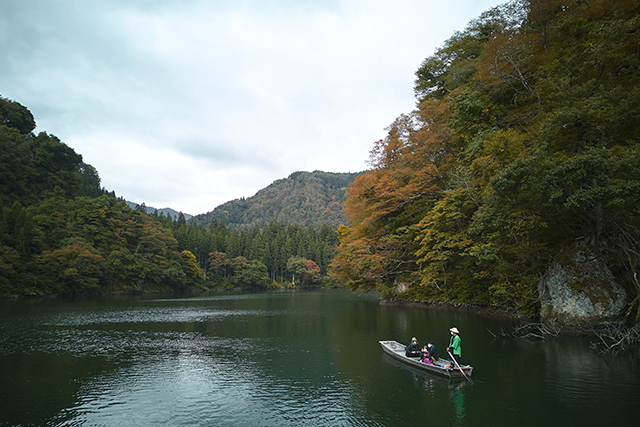
From Aizu-Wakamatsu, another option for a post-convention experience is to tour sites located along the Tadami rail line, which fully reopened in October 2022 after a decade of storm-damage repairs on a number of its scenic bridges. From the train window travelers can soak up the sights of rural Japan, but it’s also possible to stop for a traditional boat ride on the Tadami River or visit the picturesque Enzo-ji Temple. Back in Aizu-Wakamatsu, another experience could be to stay at one of the traditional ryokan inns and soak in the hot-spring baths in the city’s Higashiyama Onsen area.
1 of 3
Tadami line fully reopened in October 2022
Mugenkyo boat ride on the Tadami River in Fukushima
Tsuchiyu Onsen, the SDGs-conscious traditional hot-spring town in Fukushima
Learning from Fukushima’s regeneration
Just over 40 miles northeast of Aizu, Tsuchiyu Onsen is another traditional hot-spring area with ryokan inns. Tsuchiyu, however, also gives business event planners the possibility of adding an educational element to a business events journey, by visiting the town’s 400 kW binary geothermal power plant to learn how Tsuchiyu Onsen is working toward a more sustainable future. Suited to groups of up to 15 people, a tour here can include a visit to the outdoor plant to hear how the town is hoping to eventually power itself fully with clean energy (it currently sells the energy to fund school buses and the promotion of local crafts, among other things) and have local businesses set SDG targets. Elsewhere in the town, business event groups could try painting the local kokeshi dolls, have a dip in a hot-spring bath, or sample artisanal produce like hard cider.
Seventy miles southeast, on Fukushima’s coast, are more venues that can add an educational element to a business events-related tour, with several locations connected to the region’s recovery – all elements that are part of Fukushima’s forward-thinking Hope Tourism initiative. A tour here could start at NARREC, a research institute supporting the decommissioning of the damaged Fukushima Daiichi Nuclear Power Station and restoration of Fukushima as a core center for remote control technology development. Able to receive tours of up to 45 people, visitors can see mock-up test buildings where cutting-edge robots are tested, but also take an impressive VR journey into a nuclear reactor.
A VR journey into a nuclear reactor at NARREC
A short drive away, two related stops also suited to groups of up to 45, could be the Ruins of Ukedo Elementary School and the Great East Japan Earthquake and Nuclear Disaster Memorial Museum. While the remains of the school serve as a poignant memorial to the disaster, the museum pays respect to the victims while also documenting how the disasters unfolded, future disaster mitigation, and how Fukushima is regenerating, in part as a technology hub.
Put it all together and Fukushima and Tokyo combine the best elements of old Japan, new Japan, and future Japan to deliver an ever-evolving array of options for business event planners, merging state-of-the-art venues, stunning nature, and inspiring educational opportunities for a truly unique business event experience.
To find out how Tokyo can bring value to your next business event, visit businesseventstokyo.org
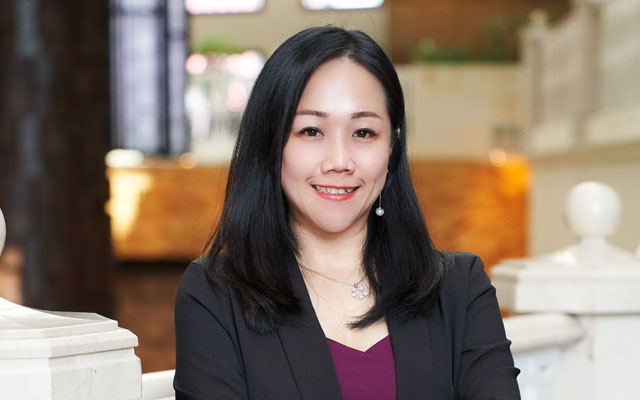
Karen Saw has been promoted to country manager Malaysia, where she will take the lead in driving Tourism Australia’s local market strategy.
In her new role, Saw is responsible for aligning the marketing and promotion of Australian tourism in Malaysia with Tourism Australia’s strategy, driving tactical conversion with aviation and distribution partners to target leisure consumers and business events opportunities, as well as working closely with key stakeholders to develop products and experiences that drive tourism growth into Australia from Malaysia.
She joined Tourism Australia in 2009, and was most recently business development manager.
Kuala Lumpur Convention Centre’s talented team takes pride in delivering customisable end-to-end solutions and services to suit clients’ specific requirements and budgets
Kuala Lumpur Convention Centre’s team delivers customisable end-to-end solutions and services to suit clients’ requirements and budgets
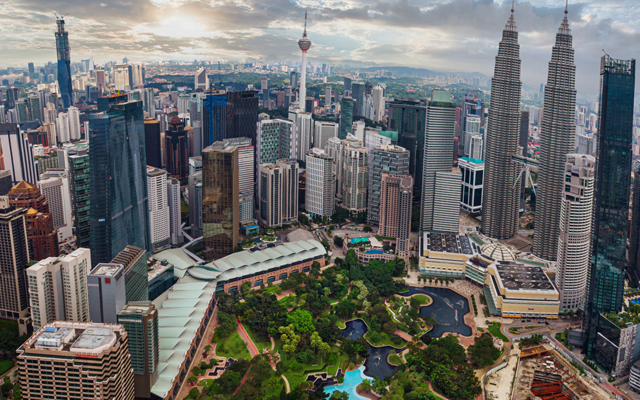
Strategically located in the heart of the distinctive Kuala Lumpur City Centre (KLCC) precinct – a 100-acre ‘city within a city’ development for work, play, shop, visit and live, the Kuala Lumpur Convention Centre presents the ideal business events partner for corporate organisers and planners.
Overlooking the relaxing 50-acre KLCC park and the iconic Petronas Twin Towers, Malaysia’s premier purpose-built facility can also cater to all their needs with its suite of innovative end-to-end solutions and services.
Additionally, its strategic location and flexible partnership approach, combined with Malaysia’s accessibility and airline connectivity, experienced and knowledgeable supply chain, great value for money proposition, warm and friendly community, cultural diversity and English language proficiency, also enable the centre to be a choice destination for visitors, business events attendees and meeting planners alike.
The KLCC precinct infrastructure also offers excellent accessibility and connectivity, including numerous tourist attractions, as well as over 25,000 hotel rooms that make great value accommodation choices and all within a comfortable five- to 10-minute walk via covered air-conditioned walkways from the facility.
Revamped, enhanced offerings for selection What’s more – the Kuala Lumpur Convention Centre has recently enhanced its corporate offerings, including the daily conference and meeting solution packages, which have been optimised to create unique experiences for guests and peace of mind for event organisers.
These new bundles provide the perfect opportunity for new and repeat clients to rediscover the centre and Malaysia’s famed hospitality.
As part of the enhancement, the centre’s award-winning culinary team has also revamped their menus with inventive cuisine that distinctively showcases ‘Malaysia on a Plate’, while catering to different palates from around the world.
Designed to create personal connections with guests through a unique fusion of Malaysia’s multicultural cuisine and international flavours, these tailored ‘glocal’ menus and unique five-star banqueting capabilities to suit any occasion – big or bespoke – aim to take diners on an immersive gastronomic journey.
Besides, the centre’s award-winning TenOnCall offering (a comprehensive solution for short-lead meetings) is also extending its meeting experiences beyond the normal 9-to-6 grind.
Clients can enjoy the sunset, while sipping on specially-crafted tipples and savouring canapes at AfterSix
Clients can now enjoy TenOnCall’s updated AfterSix package, an all-inclusive enhanced experience in the centre’s open central atrium on Level 4, with spectacular views of the KLCC park and Petronas Twin Towers.
At AfterSix, clients can choose to conclude their work day or stay with a two to three-hour cocktail treat, while enjoying the sunset, sipping on specially-crafted mocktails and cocktails and savouring delicious canapes.
Stellar track record With over 15 years of successfully delivering world-class events, the Kuala Lumpur Convention Centre’s client-centric philosophy and flexible collaborative approach make it the choice business events partner for any event, including international, regional and national conventions, tradeshows, consumer exhibitions, meetings and events, entertainment line-ups, intimate private functions and more.
The centre’s talented team also takes pride in delivering seamless, customisable end-to-end solutions and services, ranging from conceptualisation and event design to event production and execution, that are tailored to suit clients’ specific event and budgetary requirements.
Keen to work with your perfect business events partner in Malaysia? For more information on Kuala Lumpur Convention Centre’s exclusive launch deals, enhanced offerings and packages, visit www.klccconventioncentre.com
Just 10 minutes from Phuket International Airport on the serene northern coast, this 178-key, Bill Bensley-designed resort offers delegates a quiet, tropical paradise steeped in Phuket’s tin-mining heritage
The newly-opened Ritz-Carlton, Bangkok anchors the One Bangkok development with cosmopolitan elegance. Featuring the city's largest ballroom and a spectacular new penthouse suite, it delivers exceptional hardware and deeply authentic, soulful service for business and leisure travellers alike
Behind the imposing, Brutalist concrete that defines Zurich’s Oerlikon district lies a surprising secret. While its exterior honours the neighbourhood’s industrial roots, stepping inside Mama Shelter reveals a vibrant, neon-soaked world that is a far cry from its rigid shell







 The New Zealand national joins Anantara Riverside Bangkok from FCC Angkor by Avani in Siem Reap, where he worked as general manager from 2020.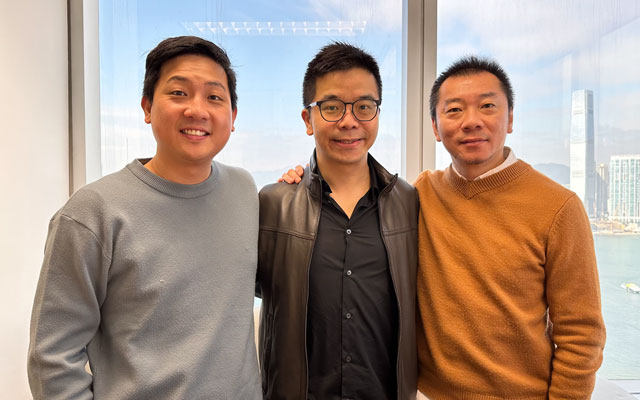
 He brings more than 20 years’ hotel development experience to his new role. Most recently, Finn worked for Hyatt Hotels Corporation and was responsible for leading the company’s development function across Asia-Pacific.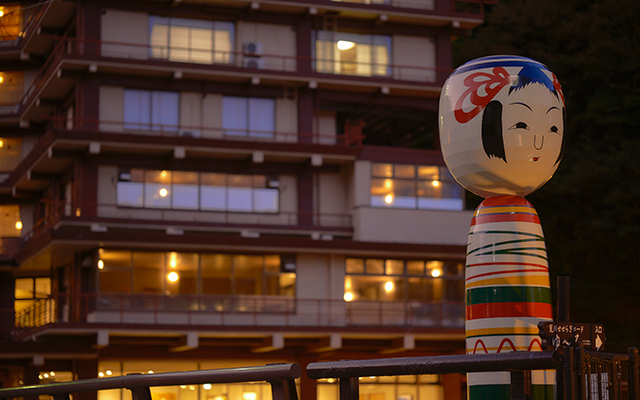





 She joined Tourism Australia in 2009, and was most recently business development manager.