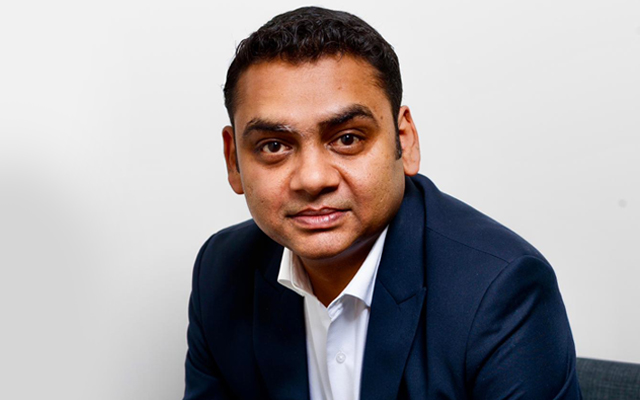
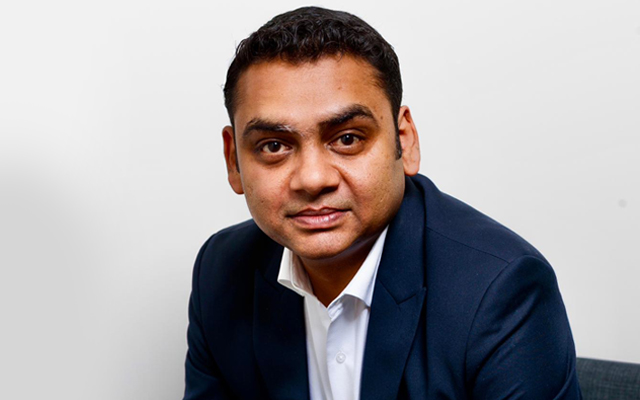
La Vie Hotels & Resorts has appointed Shankar Sreekumar as its head of South & South-east Asia.
Based at La Vie’s regional office in Bangkok, Thailand, Shankar brings with him almost two-decades of experience in the hospitality industry, having held numerous operations-focused roles.
He was most recently director of IHG’s centre of excellence, new hotels, AMEA.
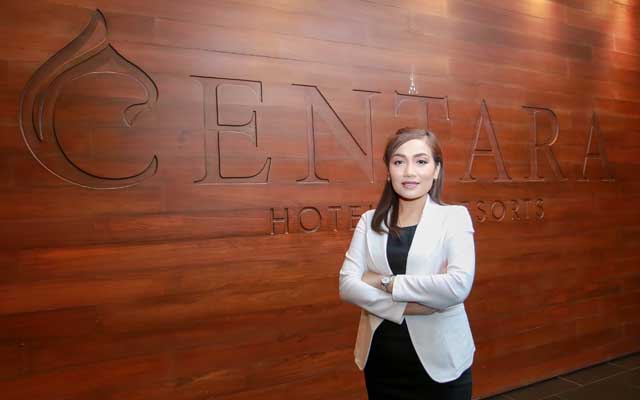
Centara Hotels & Resorts has appointed Rutjiret Ananphong as general manager of Centara Ubon.
Having been a part of Centara Ubon’s pre-opening team since August 2022, she will continue to oversee and direct all aspects of operations when the hotel officially opens next year.
Bringing with her over 20 years of experience, she was previously general manager of COSI Krabi Ao Nang Beach.
There is light at the end of the pandemic tunnel for Hong Kong (pictured)
Business events stakeholders in Hong Kong have hailed the government’s decision to relax entry restrictions good news, having done away with the city’s 0+3 quarantine arrangements on December 14.
However, many other Covid-related limitations and rules are still in place, continuing to pose a challenge for stakeholders to sell the destination to overseas buyers.
There is light at the end of the pandemic tunnel for Hong Kong (pictured)
According to Hong Kong Convention and Exhibition Centre (Management)’s managing director, Monica Lee-Müller, this relaxation in measures is an important step the business events industry has been waiting for.
Similarly, general manager of DMC Momentous Asia Travel & Events, Doris Lam, called the relaxation “good news”.
Having just returned from IBTM World, Lam shared that her European clients have shown interest in visiting Hong Kong, but she does not have any solid leads on groups with intention to travel.
As such, she does not expect a surge in visitors over the next few months, and remains hopeful that in time, all Covid-related restrictions will be completely lifted.
Right now, her focus is on developing “new and interesting products”, as well as updating their lists as some attractions, like the Jumbo Floating Restaurant, no longer exist.
Hong Kong Exhibition & Convention Industry Association’s chairman, Stuart Bailey, called the removal of the Amber code restriction a “big step forward that will help with the resumption of MICE activity”, and expects the convention and exhibition sectors to rebound by mid-2023.
“However, there are still some hurdles to overcome. Issues that remain are the testing regime that remains in place for arrivals, and another test on day two. If found positive, visitors are quarantined to their hotel rooms for five days and cannot leave the city,” Bailey explained.
The other major issue is the prolonged closure of China’s border, where many trade exhibitions in Hong Kong are reliant on Chinese participants.
Still, Bailey remains optimistic that solutions can be found in due time, as the association is closely working with the government to remove the last remaining obstacles.
For Katerina Tam, director of International Conference Consultants, she expects business events groups to return to Hong Kong from 2Q2023. However, one “stumbling block” is that banquet group sizes are still limited, which she hopes to see it relaxed soon.
Rounding up the Travel Spark by TTG’s 2022 video series is an episode centred on the Philippines’ festivals and tourism developments.
Arnold T Gonzales, acting head of the MICE department, Tourism Promotions Board Philippines, fronts the episode. Not only does he detail the Philippines’ rich cultural tapestry and unique festivals that provide memorable discoveries for travellers, he also sheds light on the various new developments for tourism and business events taking shape across the Philippines, and introduces the support system in place for investors keen to play a part in the country’s tourism progress.
Travel Spark by TTG is a programme that aims to spark off travel and events ideas. Past episodes can be found on the TTG Asia Media channel.
The Asian Federation of Exhibition and Convention Associations (AFECA) will hold its 2023 AGM in Bangkok next November, in a gathering that will span four days including a full Experience Day focused on presenting some of Bangkok’s newest and most meaningful experiences to business events decision-makers.
The event will be hosted by the Thailand Convention and Exhibition Bureau (TCEB) and supported by a host of critical local agencies and organisations including the Bangkok Metropolitan Administration, Thailand Incentive and Convention Association, Thai Exhibition Association, Airports of Thailand, Thai Hotels Association and Thai Airways.
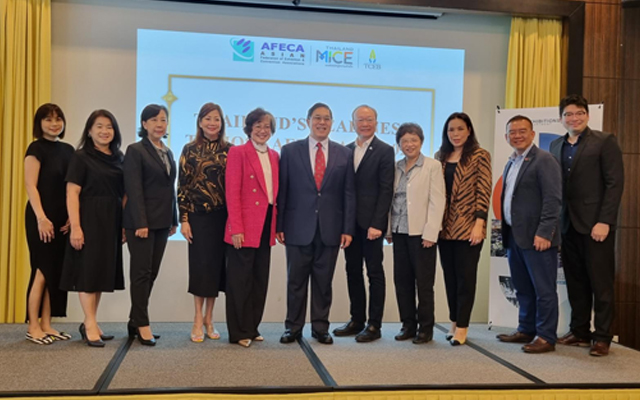
AFECA leadership and TCEB representatives are joined by Thailand ambassador to Singapore, Chutintorn Gongsakdi (centre), at the announcement of AFECA’s 2023 AGM
In a private event today announcing the 2023 AGM, the federation’s president, Vincent Lim, who also leads the Malaysian Association of Convention & Exhibition Organisers and Suppliers, said the meeting would be AFECA’s first face-to-face gathering since the start of the pandemic. Members have so far only been connecting online.
“We are delighted for Thailand to be the host for AFECA’s 2023 AGM, as it has always been an important business events destination in Asia and is at the forefront of (South-east Asian) MICE development. With TCEB’s support, the 2023 AGM will be a platform for MICE leaders and industry players to continue to raise the profile of Asian MICE industry on the global stage,” said Lim.
In an interview with TTGmice, TCEB’s Nichapa Yoswee, senior vice president – strategic marketing and business development said that while AFECA will determine the content of 2023 AGM, her bureau will support the full programme for it to establish a varied and lasting legacy for Thailand and Asia’s business events industry.
To this end, TCEB has proposed the inclusion of the inaugural Asia MICE Forum within the four-day event. According to Nichapa, the Asia MICE Forum is an evolved Thailand MICE Forum that will provide a platform for dialogue between private and public sector players for the greater good of the region’s business events industry. There will be business matching opportunities, presentation of new industry initiatives, and recognition of top performing Thai business events industry players through awards.
She also revealed intentions to launch Asia20 within the AFECA meeting, a by-invite conference that will bring high-level industry stakeholders and government agency representatives up to speed on important issues such as industry standards, new technology, sustainable practices and collaboration.
“We want content at the 2023 AGM to give attendees a glimpse of the future and inspire them to rethink the structure of the events ecosystem in their own country. We want government agencies to take home an understanding of what must be done to establish a healthy and supportive ecosystem that will further grow the region’s business events industry,” she emphasised.
Acknowledging the vast ambitions of the event, Nichapa said: “We want the AFECA meeting to be the sort of event that will change the future of our industry for the better – that’s the legacy we intend for it to leave behind.”
Nichapa added that the 2023 AGM is one of the “multiplier events” that her bureau is keen to bring to Thailand. She explained that such events involve decision-makers with the power to spin off even more valuable business activities that will benefit the industries they represent as well as the national economy.
Exact dates for the meeting are still being deliberated, and Bangkok’s hosting of the 62nd annual ICCA Congress in the same month, from November 12 to 15, will be taken into account.
While two major association meetings in November would result in a buzzing period for Bangkok’s hospitality industry, Nichapa does not think that resources would be stretched.
“Bangkok has a wide variety of hotel accommodation across price and service points. In terms of manpower needs, I expect the many graduates of our MICE Academy will step up to support the meetings. Students who are still on course could join one of the various events as supporting staff, and earn valuable real-life lessons about the business as well as gain important contacts along the way,” she told TTGmice.
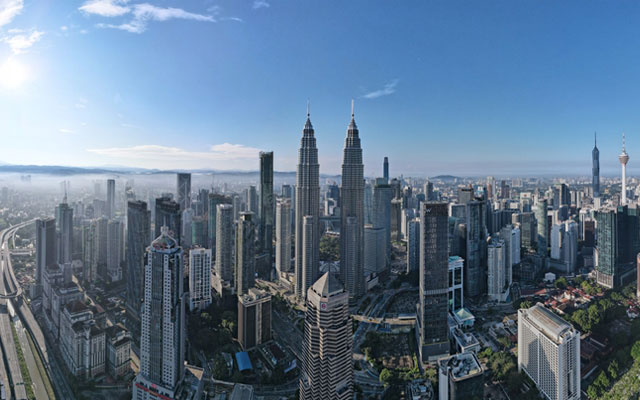
UFI’s annual gathering returns to Malaysia (pictured) next year
UFI, the Global Association of the Exhibition Industry, will hold its 16th UFI Asia-Pacific Conference in Kuala Lumpur, Malaysia from March 2-3, 2023.
Open to all exhibition industry professionals, this is the first time since March 2019 that the UFI Asia Pacific Conference is back as an in-person event.
UFI’s annual gathering returns to Malaysia (pictured) next year
The UFI Asia Pacific Conference features two days of content, networking and learning. There will be plenty of hot topics to discuss as the Asia exhibition industry looks to shake-off the damage from Covid-19 and begins to work towards recovery and growth.
Over 300 delegates from 22 countries and regions attended the 2019 edition of the UFI Asia-Pacific Conference in Tokyo, making it the biggest of its kind in the event’s history.
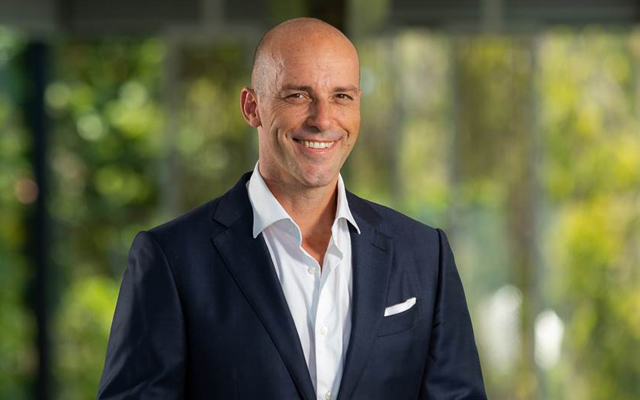
Ernesto Osuna Lopez is the general manager for the first Gran Melia resort in South-east Asia in 2023 – he will oversee both the flagship Gran Meliá Nha Trang and Meliá Nha Trang, a sister property that will open by 2025.
Drawing on two decades of experience in hotel management, Lopez joined Meliá Hotels International in 2011 to oversee Melia Buenavista in Cuba as general manager. He also led the grand opening of Meliá Koh Samui in 2020.
Lopez was previously based in Mexico serving in executive roles at The Westin Resort & Spa and Excellence Playa Mujeres, both in Cancun.
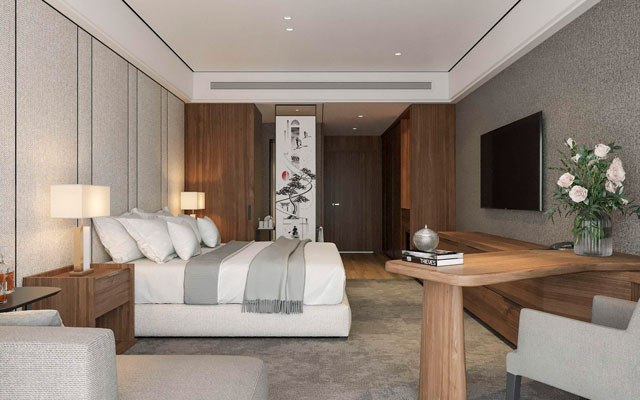
Frasers Hospitality has expanded its footprint in Vietnam with the launch of Modena by Fraser Vinh Yen, the first internationally branded serviced apartment in the city, Vinh Yen, the city capital of Vinh Phuc.
Scheduled to open in 4Q2023, the 97-unit mid-scale serviced apartment property is designed to cater to business travellers on extended stay. There are four rooms types available from studios without kitchenettes (32m2-33m2) to two-bedroom apartments (81m2-84m2).
Modena by Fraser Vinh Yen will feature smart facilities such as automated check-in kiosks, and tech-enhanced meeting and conference facilities. The property will also be fitted with a swimming pool, fitness centre and an in-house café.
Vinh Phuc is home to more than 400 Foreign Direct Investment enterprises and has some 100,000 workers, including expatriates. Vinh Phuc is 50 mins away from Hanoi’s city centre and a 45-min drive from Noi Bai International Airport.
Modena by Fraser Vinh Yen is the ninth property under this brand, since it was launched in China in 2009. There are now six properties in China such as Modena by Fraser Nanjing, and another two in Thailand.
Thailand and Japan enhance MICE cooperation efforts
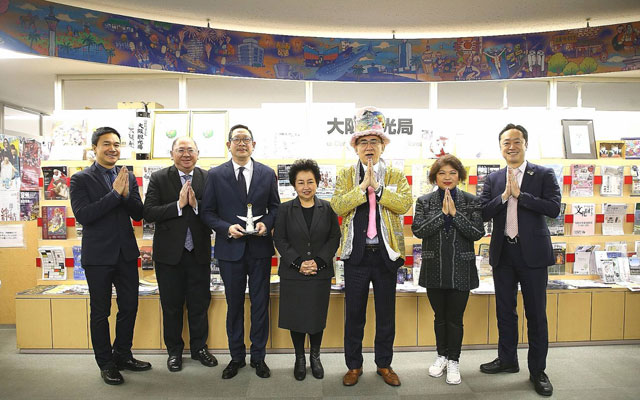
The Thailand Convention and Exhibition Bureau (TCEB) and the Osaka Convention & Tourism Bureau (OCTB) have signed a five-year MoU to develop and strengthen both countries’ business events sectors.
The cooperation will cover the exchange of delegations to share information and experience in the fields of business events development, management, promotion and human resources development.
Thailand and Japan enhance MICE cooperation efforts
Both bureaus will also provide assistance to each other to promote and attract business events, especially in all kinds of tradeshows, and will coordinate with their respective government departments to organise study trips for Thailand and Japan to find opportunities for cooperation.
The MoU also covers co-organising opportunities for foreign agencies and mass-media representatives to introduce the respective business events potential of Bangkok and Osaka; as well as the sharing of business events training courses, curriculum and programmes.
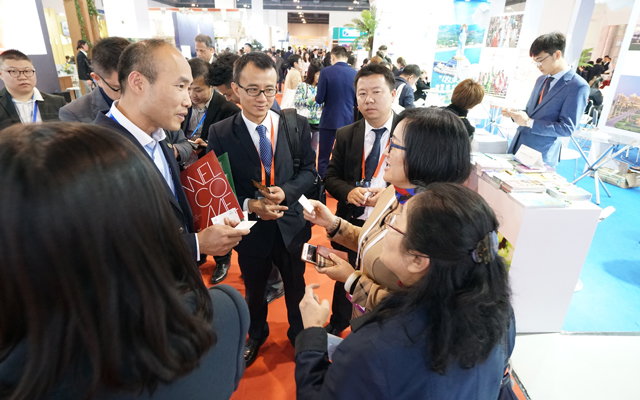
Organisers of IT&CM China and CTW China, TTG Asia Media and China-based CTG MICE Service Company Limited, have opened buyer and exhibitior registrations for next year’s show.
The three-day in-person event will be held from March 21-23, 2023, at The Anandi Hotel and Spa Shanghai, followed by an online networking and conference segment on April 11-12, 2023.
A pre-pandemic edition of IT&CM China
Due to Covid-related restrictions, hosting is available for China-based buyers outside of Shanghai only.
International business events, associations and corporate buyers are welcome to participate remotely in both the table-top exhibition meets in Shanghai, as well as the virtual networking event.
Just 10 minutes from Phuket International Airport on the serene northern coast, this 178-key, Bill Bensley-designed resort offers delegates a quiet, tropical paradise steeped in Phuket’s tin-mining heritage
The newly-opened Ritz-Carlton, Bangkok anchors the One Bangkok development with cosmopolitan elegance. Featuring the city's largest ballroom and a spectacular new penthouse suite, it delivers exceptional hardware and deeply authentic, soulful service for business and leisure travellers alike
Behind the imposing, Brutalist concrete that defines Zurich’s Oerlikon district lies a surprising secret. While its exterior honours the neighbourhood’s industrial roots, stepping inside Mama Shelter reveals a vibrant, neon-soaked world that is a far cry from its rigid shell



 He was most recently director of IHG’s centre of excellence, new hotels, AMEA.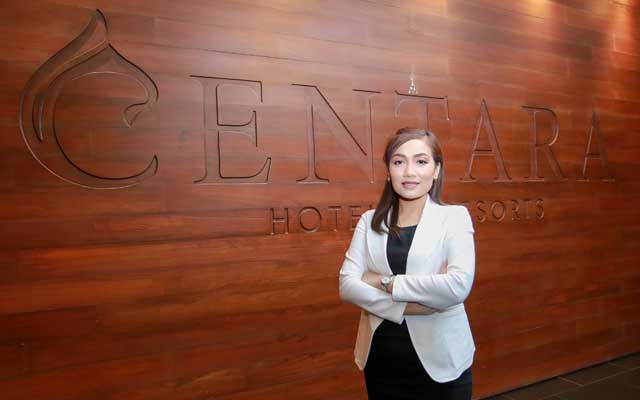
 Bringing with her over 20 years of experience, she was previously general manager of COSI Krabi Ao Nang Beach.


 Lopez was previously based in Mexico serving in executive roles at The Westin Resort & Spa and Excellence Playa Mujeres, both in Cancun.