
Asia/Singapore Sunday, 28th June 2026
Page 360

Health and safety remain top concern for APAC corporate travellers: SAP Concur

0
Almost two-thirds of Asia Pacific respondents view concerns from Covid-19 as a top threat to business travel, while flexibility is seen as vital for sustainability

SAP Concur has released new research that finds Asia-Pacific (APAC) corporate travellers are concerned about the continuing health and safety threats from Covid-19, even as they retain high interest in travelling and seek steps to ensure greener travel.

The survey polled 1,050 business travellers in Singapore, Malaysia, China, Hong Kong, Taiwan, Japan, India, South Korea, Australia, and New Zealand.

Almost two-thirds of Asia Pacific respondents view concerns from Covid-19 as a top threat to business travel, while flexibility is seen as vital for sustainability

While business travel is returning at a steady pace, the effects of the unprecedented health crisis can still be felt, especially in APAC. Health and safety remain a top concern for APAC business travellers (63%, as compared to 52% globally), significantly higher than the next most common concern for APAC – uncertainty around changing travel policies (25%).

Nearly two in five APAC business travellers (38%) indicated that the trip itself – rather than the pre- or post-trip stages – is now the most stressful stage of travel, including ensuring their personal safety and health. This is an increase of four per cent from 34% in 2021.

APAC business travellers continue to expect flexible arrangements to protect their health and safety while travelling, which remains largely unchanged from 2021. Protecting their health and safety includes selecting their preferred mode of travel (49%, as compared to 43% in 2021) and accommodation (49%, same as 2021).

Having more control over the trip’s schedule is considered to be critical for APAC business travellers’ well-being. More than two in five (43%) expect their company to allow them to decide how long their trip will be (compared to 38% globally). Similarly, 41% deem it essential to have the ability to book travel directly through supplier websites to protect their health and safety (compared to 37% globally), and 39% expect to be able to change travel plans without repercussions.

“Corporate travel is essential and growing, carrying with it ample opportunities to drive business outcomes and relationships,” said Matthew Goss, senior vice president & general manager, Asia Pacific Japan and Greater China, SAP Concur. “It’s interesting that APAC employees seem to be more concerned about health and safety than other markets in the world. Organisations here that haven’t put in place travel policies and technologies to safeguard employee health and safety, or ensure travel flexibility, should act soon.”

Other notable findings from the study include:

Interest in travel is high, despite concerns
While Covid-19 concerns are still on the minds of many APAC travellers, a vast majority retain a high interest in travel. Overall, 98% of APAC business travellers are willing to get back out on the road, on par with last year’s 99%, despite any concerns they may have.

However, in APAC, the percentage who are very willing to travel has dropped 15 percentage points, from 63% last year to 48% this year.

APAC business travellers also want options to make travel more relaxing and scheduling less stressful.

Nearly half (48%) say they’d want the ability to choose higher category transportation and accommodation options to take a position with more travel (compared to 40% globally), and 37% want the ability to book their travel directly on supplier websites (compared 31% globally).

Flexibilty is vital for sustainability
Sustainability is also increasingly becoming a priority for many business travellers. An overwhelming 95% of APAC business travellers are looking to take their own steps to ensure greener travel over the next 12 months.

About 43% of the APAC business travellers surveyed plan to combine nearby trips into one longer trip while prioritising alternatives to air travel, such as car or rail (37%), and using public transportation (36%).

As much as 27% of the APAC business travellers surveyed are willing to risk repercussions with their organisation by refusing non-sustainable travel.

At the same time, APAC business travellers are looking to their companies to take strides towards sustainable travel:

Nearly all of the respondents (96%) felt that it is important for sustainability information to be provided to them in their business travel options.

More than half (54%) indicated that having visual indicators of the environmental impact is extremely important to them.

The study shows that a willingness to heed travellers’ desire for continued flexibility to ensure their health and safety will be important for companies as they return to pre-pandemic levels of travel.

“There will be substantial evolutions to the corporate travel landscape as countries enter a new phase of the pandemic,” said Goss. “Automation technologies may help firms run better in such an environment by improving their travel planning and visibility – employee experience, compliance, and cost control can all be improved, and importantly in recent times, sustainability goals can be effectively managed and delivered upon.”

The full whitepaper can be found here.
The Fuji Speedway Hotel, Unbound Collection by Hyatt

0
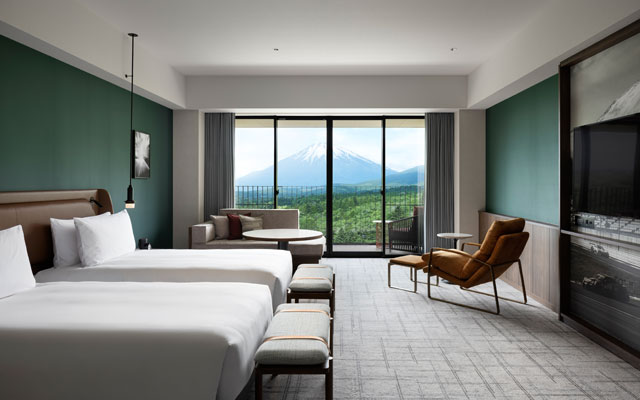
Deluxe twin

Rooms
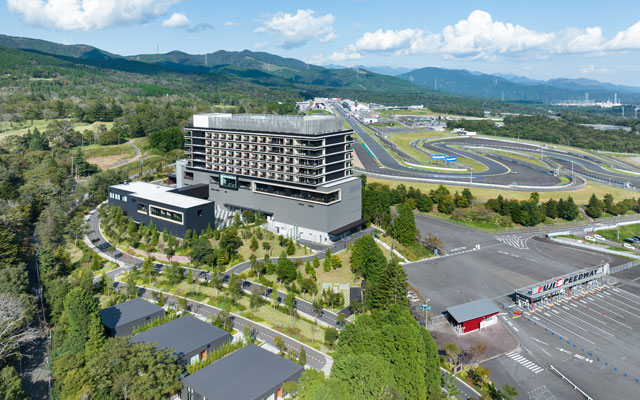
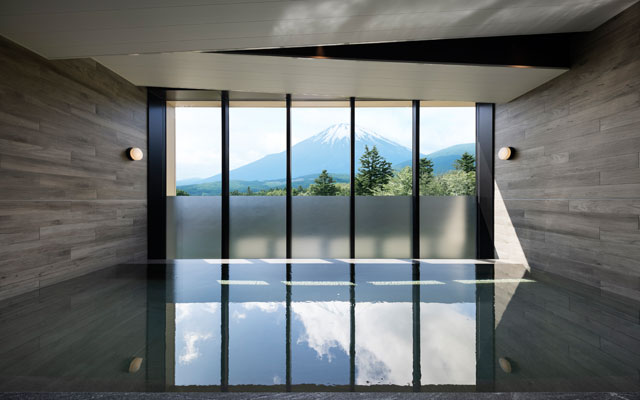
The hotel has just 120 rooms, from the generous 43m2 standard room all the way up to six stylish 91m2 suites, all of which either offer unobstructed views of the final bend into the home straight of the neighbouring race track or the equally impressive profile of Mount Fuji.

Every room features floor-to-ceiling windows and a private balcony from which to enjoy the action on the track or the serenity of Japan’s most famous natural landmark.

The beds are expansive and difficult to leave, as are the en suite bathrooms, with deep tubs and rainforest showers. With a little bit of neck-craning from the comfort of my bath, it was even possible to catch glimpses of action on the track.

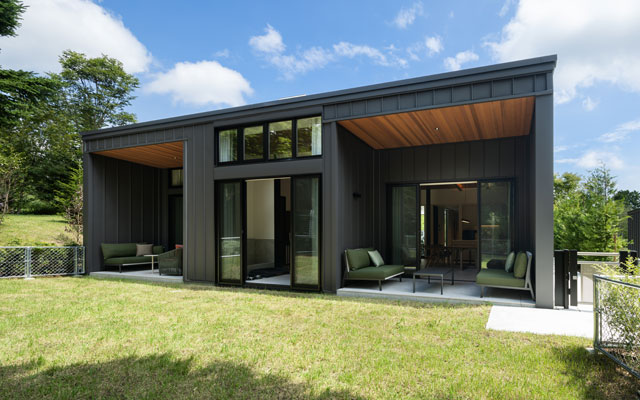
The top tier of accommodation is the five villas, where each 143m2 has the capacity for four adults and two children. This would be the ultimate luxury for a company’s top winners, or VVIP guests, especially those travelling with their families.

MICE facilities
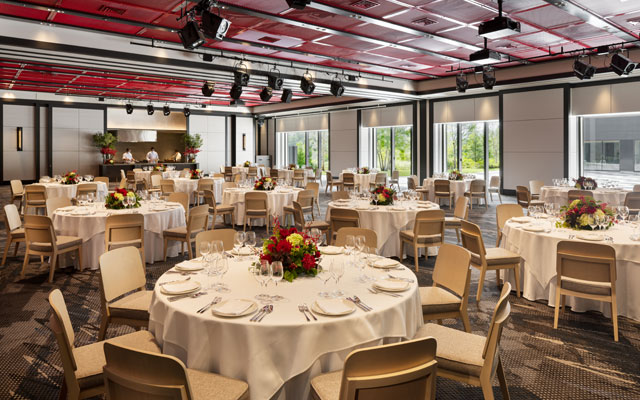
Known as THE CIRCUIT, the 400m2 ballroom can be partitioned into two and enjoys both a show kitchen and a VIP room. With a banquet capacity of 200 and up to 310 participants in a theatre layout, it also gives opens out onto a vast patio – with an appropriately black-and-white chequered floor design – that is ideal for displaying vehicles.

Continuing with the hotel-wide automobile theme, THE PIT meeting room has 120m2 of space that can accommodate up to 60 people attending a reception, but also has screens that can be prepped for conferences or similar gatherings.

Immediately outside the main entrances to both spaces is the ground floor of the Fuji Motorsports Museum, a unique repository of some of the world’s earliest racing vehicles, dating from the late 19th century, to the latest state-of-the-art machines. These include a stately Bentley in British racing green, a bare metal Porsche, a tiny Datsun that amazingly completed the 17,000km Around Australia rally in 1958, and other sleek and powerful cars that have competed at Le Mans.

Other facilities
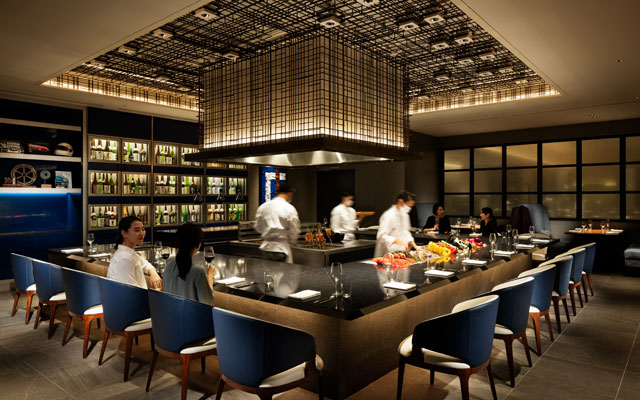
The Robata OYAMA restaurant – take a close look at that logo and you will see the racing connection – prides itself on utilising seasonal specialities, but do not miss the yakitori selection. While yakitori is generally considered an unsophisticated contribution to Japanese cuisine, it is taken to a new level here. The restaurant also serves an excellent selection of wines and beers, including a one-off collaboration with a local brewery to produce the Fuji Speedway Hotel beer.

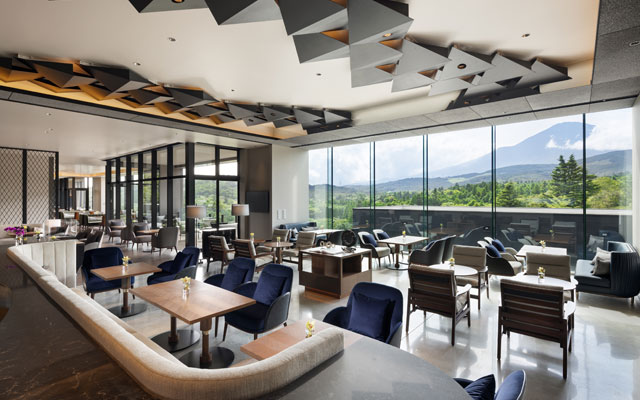
The TROFEO Lounge, which is Italian for trophy, serves as an all-day lounge with stunning views of Mount Fuji. BAR 4563 is named after the length of the Fuji Speedway track, and has a striking communal table in the shape of a Formula One car as its centrepiece, as well as scale models of dozens of racing cars on its walls. The bar also has a private den with a capacity of 13 for more private corporate meetings and discussions.

As for recreational facilities, the Omika Wellness & Spa has his-and-hers onsen that taps into naturally heated water from 1,500m2 below the hotel, while the spa has six treatment rooms, including two couples’ rooms with views up to Mount Fuji.

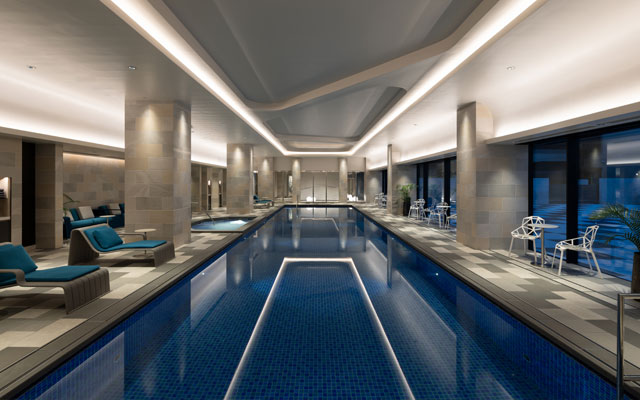
There is also a 20m-long indoor pool that has vehicle-inspired art installations and a jet bath, while the gym is equipped with the very latest cardio equipment. The piece de resistance? A professional-level driving simulator that gives the driver a choice of 300 cars to try out at Fuji Speedway.

Service
Impeccable from pulling up at the impressive entrance to the all-too-soon departure. Nothing was too much trouble and the staff at Robata OYAMA, the bar and the spa went to great lengths to ensure that everything was just so.

Verdict
For an organisation in the automobile space – or anyone who simply enjoys cars or motorcycles that go very, very fast – this is without a doubt the place in Japan to stay. The collaboration with the Fuji Motorsports Museum only adds to the allure for any petrolhead. But it is also a good deal more than that, as Hyatt’s first Unbound property in Japan and a marker for what this brand is all about.

No. of rooms 120
Contact details
Tel: +81 550 20 1234
https://www.hyatt.com/en-US/hotel/japan/fuji-speedway-hotel/fswub

SLH welcomes Martin Rinck to its executive board

0

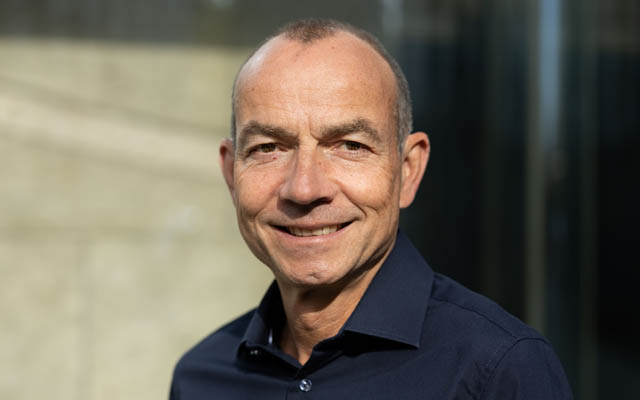
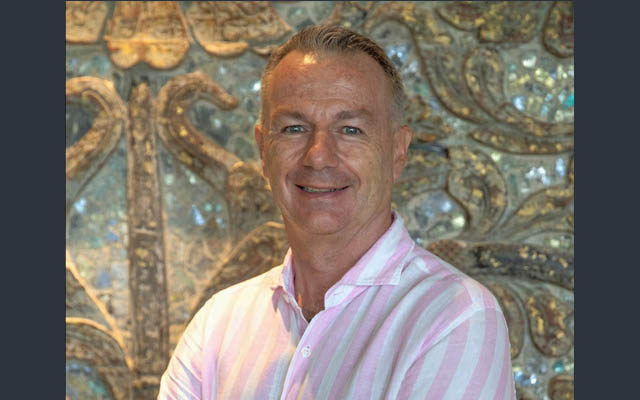
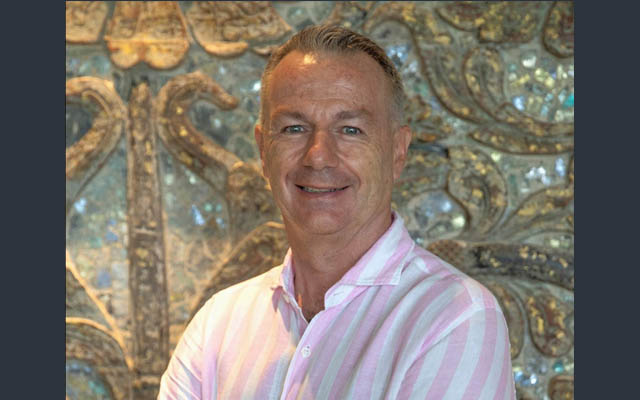
Martin Rinck has been appointed to the executive board by Small Luxury Hotels of the World (SLH).

In this role, he will support SLH’s strategic vision and growth plan for SLH, along with their continued expansion of independently owned and operated properties.

As a seasoned hospitality executive with over 35 years of global experience in strategy, operations, business development, P&L and brand management, he has held leadership positions at some of the world’s largest hospitality companies and brings with him extensive business, talent, and stakeholder management expertise.

Most recently, he was the executive vice president and chief brand officer at Hilton, where he led a portfolio of 18 brands across 6,500 hotels globally, developing and executing the enterprise portfolio strategy, and leading multiple ESG initiatives for the company.

JW Marriott Khao Lak launches refurbished ballroom

0

JW Marriott Khao Lak Resort & Spa has unveiled its refreshed ballroom, part of an 18-month-long renovation and expansion of the Thailand resort.

The JW Grand Ballroom offers 758m2 of event space, good for 810 attendees across of range of events such as gala dinners and corporate conventions. Offering lots of natural light and fully-equipped with the latest audiovisual technology, the ballroom can be further divided into three separate spaces for more intimate events. The inviting pre-function area can also host exhibitions.

In total, JW Marriott Khao Lak Resort & Spa now features over 9,300m2 of indoor and outdoor event meeting space, including seven function rooms, such as the compact 12-guest Griffin Boardroom.

In addition to indoor venues, creative set-ups and personalised activities can also be arranged in the resort’s outdoor spaces, including the Infinity Lawn and the beach, which would work for cocktail receptions to beachfront dinners.

The refreshed JW Marriott Khao Lak Resort & Spa now offers an expanded inventory of 420 rooms, suites and villas, 11 restaurants and bars, and leisure facilities including South-east Asia’s longest swimming pool.

JW Marriott Khao Lak Resort & Spa is located one hour’s drive north of Phuket International Airport.

BCD Travel hires new VP sustainability

0

Travel management company BCD Travel appointed Olivia Ruggles-Brise to the role of vice president of sustainability.

In this new role, Ruggles-Brise will play an integral role in aligning and driving initiatives throughout BCD’s six sustainability focus areas. She will also engage with key stakeholders, partners and groups within the industry, using strategic collaboration to ensure continued progress for sustainability.

She reports directly to April Bridgeman, senior vice president at BCD Travel and managing director of Advito.

Ruggles-Brise joins BCD with more than 20 years of experience. She was previously director for Greenview, a consulting and research firm that supports hospitality organisations in designing environmental, social and governance sustainability strategies.

Prior to that, she spent a decade at the World Travel & Tourism Council where she oversaw the organisation’s policy, strategy and sustainability work.

Avani+ Luang Prabang appoints new executive chef

0

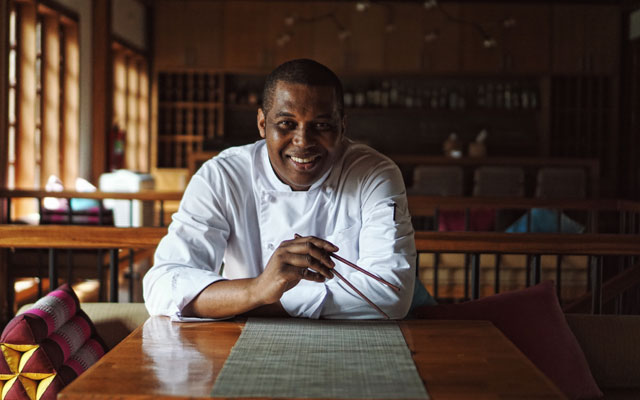
Marcus Freminot has recently taken on the role of executive chef at the Avani+ Luang Prabang Hotel in Laos.

In this new role, Freminot will oversee the launch of a new menu at Avani+ Luang Prabang’s Main Street Bar and Grill, as well as curate dining concepts for Mekong Kingdoms, a series of luxury river cruises from Laos to Thailand.

He possesses over eight years of experience in a career that has taken him from the Seychelles to Oman.

Brice Borin helms Pimalai Resort & Spa

0

Pimalai Resort & Spa in Thailand has appointed Brice Borin as its new general manager.

The respected hotelier has almost 30 years of experience in the hospitality industry, having started out as an executive chef and gradually taking on more senior executive roles from F&B manager to director of F&B, resident manager, hotel manager, and eventually, general manager.

He was recently the complex general manager of the Mövenpick Cam Ranh Resort, Vietnam, which he helped to successfully launch in 2019 and kept open throughout the pandemic.

Jeju CVB shifts its focus to international markets

0
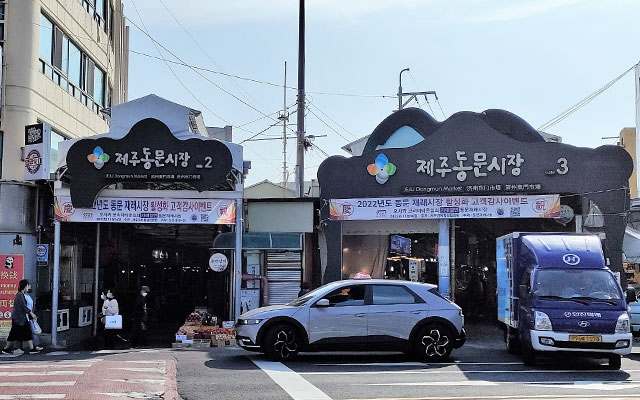
The Jeju Dongmun Market is a hotspot for overseas tourists. Photo: Gerardine Donough-Tan

Jeju Convention & Visitors Bureau (CVB) is finalising its detailed post-pandemic business events strategy for 2023, but the South Korean destination has already started reaching out to international conferences and foreign incentive groups.

While the local South Korean market and north-east Asia have been its main catchment area, the CVB is now considering markets with “good potential”.

The Jeju Dongmun Market is a hotspot for overseas tourists. Photo: Gerardine Donough-Tan

“South-east Asia such as Singapore, Malaysia and Thailand will be the target of marketing in the near future. To do so, the issue of direct flights and visas will have to be resolved, and we’re trying to do that,” said Kwanghee Lee, manager of the planning & admin team with Jeju CVB.

Currently, there are direct flights from China, Japan, Singapore and Thailand, but more should be reinstated to pre-Covid-19 levels in due time, expects Jeju CVB.

Lee also pointed to a rise in interest from Muslim tourists, and the CVB is currently in the process of “understanding Muslim culture to properly cater to their needs and interests”.

Lee said Jeju Island suits groups of all sizes, with many attractions and activities on offer, as well as various accommodation options, and typical incentive itineraries last for four days and three nights.

Financial support is also available for qualifying conferences, corporate meetings and incentive tours.

Lee added that the CVB has 17 specially-designated tourist attractions called Unique Venues, where among these are a museum, folk village, gardens, theme parks and resorts. These were chosen to provide experiences and impressions beyond standard business events.

This month, the 59th Orient and Southeast Asian Lions Forum will be heading to Jeju from November 24-27, where the event is projected to attract more than 7,000 overseas participants. It will be held at International Convention Center Jeju and Lotte Hotel Jeju.

Another five-star hotel with meeting space includes the 1,600-room Grand Hyatt Jeju, where a spokesperson shared there have been increased enquiries from event organisers.

Ascott receives GSTC-recognised standard status, launches sustainability framework

0

The Ascott Limited (Ascott) has received the conferment of Recognised Standard by the Global Sustainable Tourism Council (GSTC), one of the first hospitality groups to be accorded this status, for its adoption of the GSTC Industry Criteria.

Marking this milestone, Ascott has unveiled Ascott CARES, a sustainability framework that aligns its growth strategy with environmental, social and governance (ESG) considerations alongside GSTC Criteria. The framework is centred around five pillars representing the acronym CARES – Community, Alliance, Respect, Environment and Supply Chain.

Ascott’s new sustainability framework aligns its growth strategy with ESG considerations alongside GSTC Criteria

“As both an owner and an operator, Ascott has the ability to design a strategy that integrates purposeful sustainability goals with financial objectives. We have a strong position that allows us to influence and manage properties throughout their entire real estate lifecycle, beginning from the investment stage, to design stage, right through to operations,” said Beh Siew Kim, chief financial & sustainability officer, lodging, CapitaLand Investment and managing director, Vietnam, Cambodia, Myanmar, Japan and Korea, The Ascott Limited.

“The need for us to accelerate our sustainability initiatives stems from the wider crisis of climate change. The built environment is a key contributor to the climate change crisis and there is much work to be done. As a key player in the lodging industry, every stakeholder has a part to play.”

Having evolved from a hygiene and safety programme that was first introduced in May 2020, Ascott CARES has since been strengthened to extend the culture of care and hospitality to the community and environments within which it operates through its business and across its supply chain as part of its sustainability framework.

Ascott CARES is aligned with CapitaLand’s Sustainability Master Plan pillars and will be rolled out across all of Ascott’s managed and branded properties. Alongside the new framework, Ascott has also announced its supporting targets which will be progressively achieved from 2023, with target completion by 2030.

Driving effective implementation of the sustainability programme, Ascott has taken further steps to establish a robust sustainability governance structure that fosters cross-collaboration between regional leaders and Ascott’s Sustainability Leadership Council (SLC).

Co-led by Ascott’s CEO, Kevin Goh, and Beh, Ascott’s SLC exercises oversight of sustainability and climate risks, and determines the strategy and goals for the company. These strategies are driven by the corporate sustainability team, in collaboration with regional and property leaders who facilitate the execution of programmes within the local market.

“Responsible stewardship is key to corporate governance, and a sound governance structure will ensure we remain focused in our efforts. Sustainability has been a key priority for all our stakeholders and will continue to play an integral part in our business and growth strategy,” said Beh.

Tākina on track for June opening; installs cutting-edge AV technology

0
Tākina's main plenary hall

Wellington’s brand-new convention centre, Tākina, is currently working with local AV design and installation specialists Futureworks and Lighthaus Limited to install state-of-the-art audio and visual technology.

The internal technical fit-out of the building has already begun, and a variety of soft-launch events have been scheduled. This provides the opportunity to thoroughly test, tune and focus the AV and lighting systems in real-world situations, well before the first official events in early June 2023.

Tākina’s main plenary hall

The proposed installation includes hi-spec 20,000-lumens laser projectors for impactful onscreen visual display, energy efficient long-life LED stage, room lighting fixtures, and mounted pre-tuned PA systems.

A highly specialised hearing assistance system has also been factored in, allowing attendees to connect their personal devices to the Wi-Fi and easily select an appropriate channel and volume level. This installation will cover the main and peripheral function spaces without the time, cost, and labour associated with installing and removing such systems on a per-event basis, making for a highly cost-effective model for clients.

Soon-to-open Tākina will offer over 10,000m2 of flexible meeting and events space over two floors that can cater for up to 1,600 in its main plenary space.

Reviews

The Slate Phuket

Just 10 minutes from Phuket International Airport on the serene northern coast, this 178-key, Bill Bensley-designed resort offers delegates a quiet, tropical paradise steeped in Phuket’s tin-mining heritage

The Ritz-Carlton, Bangkok

The newly-opened Ritz-Carlton, Bangkok anchors the One Bangkok development with cosmopolitan elegance. Featuring the city's largest ballroom and a spectacular new penthouse suite, it delivers exceptional hardware and deeply authentic, soulful service for business and leisure travellers alike

Mama Shelter Zurich

Behind the imposing, Brutalist concrete that defines Zurich’s Oerlikon district lies a surprising secret. While its exterior honours the neighbourhood’s industrial roots, stepping inside Mama Shelter reveals a vibrant, neon-soaked world that is a far cry from its rigid shell