The Pleasuredome is set on the lawn of Brisbane Powerhouse
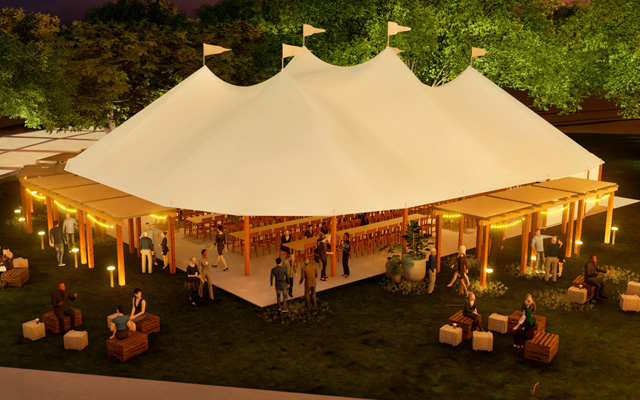
The Pleasuredome marquee is the newest event space to grace the Brisbane Powerhouse in Queensland.
Offering 400m2 of event space within, the ivory sailcloth marquee accommodates up to 360 seated guests in long table feasting or theatre mode, and 500 standing.
The Pleasuredome is set on the lawn of Brisbane Powerhouse
Located under Moreton Bay Figs and overlooking the Brisbane River, the event space is surrounded by another 350m2 of lawn, as well as additional Nordic-inspired tents to suit events of all sizes.
The Pleasuredome features full-service bars and alfresco lounging zones to ensure a quality experience, and remain in place 10 months of the year for private and corporate events.
Brisbane Powerhouse’s calendar will also be filled with outdoor events such as a walk-in kaleidoscope of mirrors, a dome of pleasures, a year-round cinema under the stars, and a night market that fuses art, food and culture.
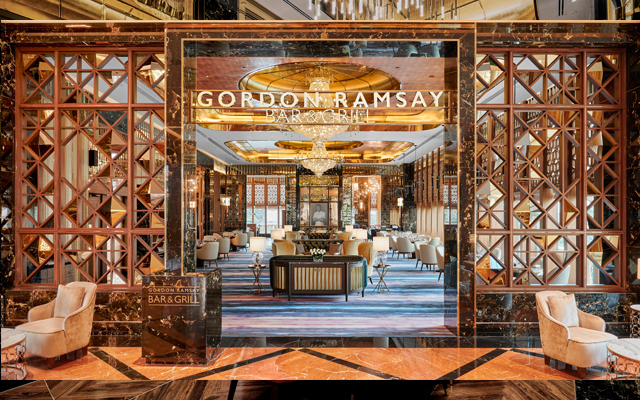
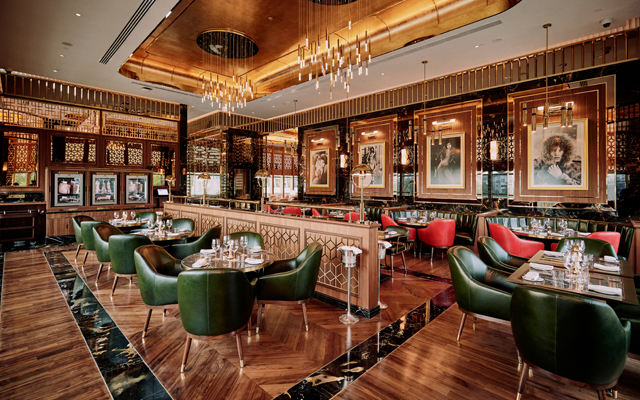
Gordon Ramsay Bar & Grill, the new signature restaurant at Sunway City Kuala Lumpur, has opened its three private dining rooms – 8 Mayfair, 10 Soho and 12 Chelsea – for intimate corporate events and functions.
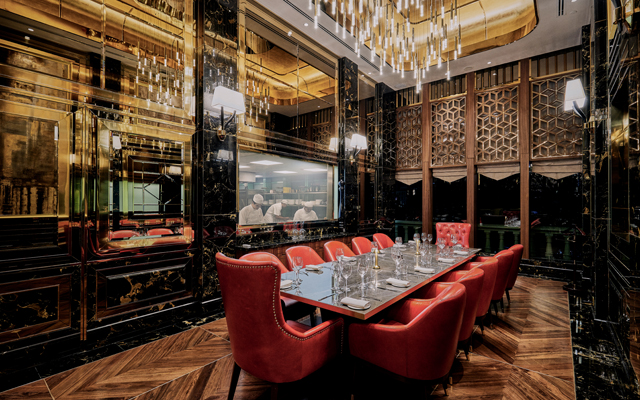
8 Mayfair is named after London’s most exclusive district, which became a playground for affluent aristocrats in the 17th century and is currently home to luxury hotels, elegant bars, elite clubs and restaurants, including the first Gordon Ramsay Bar & Grill. This chic private room is a haven for eight guests to unwind in style and savour sublime culinary experiences, with refined leather armchairs, floor-to-ceiling windows and even a direct path to a wine cellar.
Gordon Ramsay Bar & Grill
1 of 8
Facade
8 Mayfair
12 Chelsea
Main Dining Room
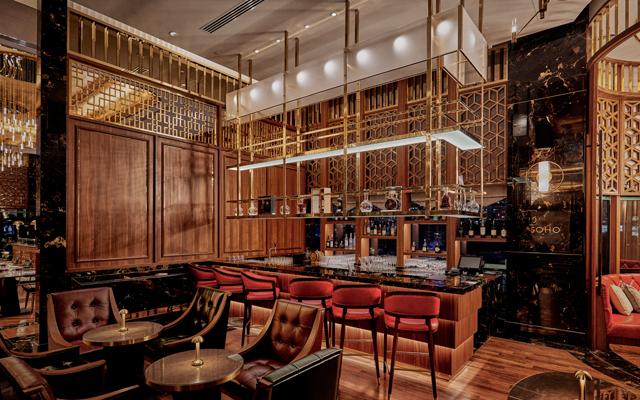
Bar
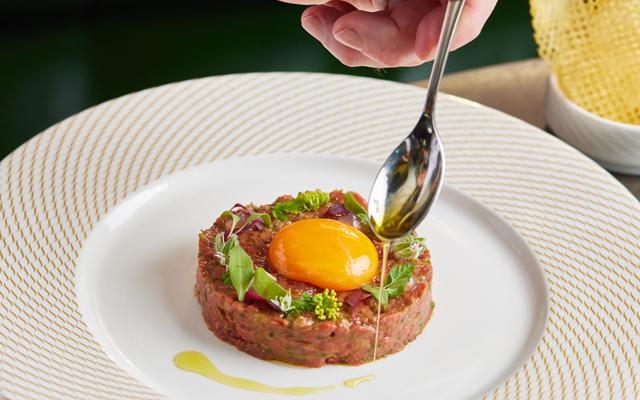
Aged Steak Tartare
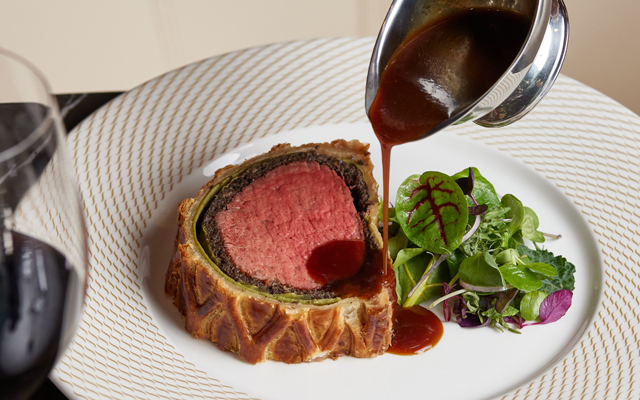
Beef Wellington
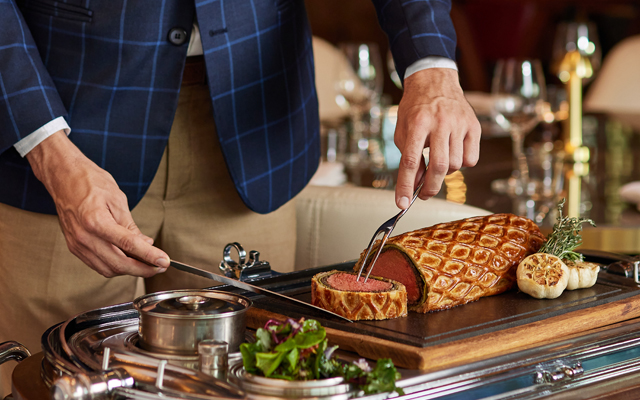
Carving the Beef Wellington
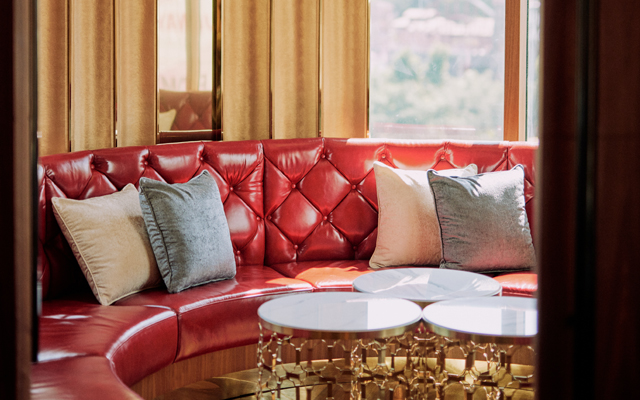
10 Soho reflects the upbeat ambience of London’s Soho district, which was originally a fashionable district for the city’s upper class and has transformed into a vibrant entertainment district. Diverse, fun-loving and always buzzing, Soho is the UK capital’s beating pulse with glittering bars and trendy restaurants, just moments from the famous theatres of the West End. With its social red leather sofas, 10 Soho can welcome 10 diners for fine cuisine and cool cocktails.
12 Chelsea is named after the upmarket London district which is home to Gordon Ramsay Bar & Grill and Restaurant Gordon Ramsay, the chef’s eponymous three-star Michelin restaurant. An artistic community in the 19th century, this west London borough now features many of London’s most fashionable boutiques along King’s Road. 12 Chelsea will greet guests with freshly baked Chelsea buns and offers front-row seats to the talented chefs’ kitchen theatrics.
Each of these three venues can be hired for private lunches and dinners, with a selection of customised dining menus and additional options to personalise each function. For extraordinary events, guests can order celebration cakes, decorations, bouquets of flowers, handcrafted signature drinks by an expert mixologist, bottles of wine and recommendations by a professional sommelier. Customers will also be able to work alongside the restaurant manager and head chef to create truly unforgettable occasions.
For grander gatherings, the main restaurant can be hired out for breakfast, lunch or dinner, and the chic lounge and bar area is available to hire for one-, two- or three-hour canapé and cocktail sessions.
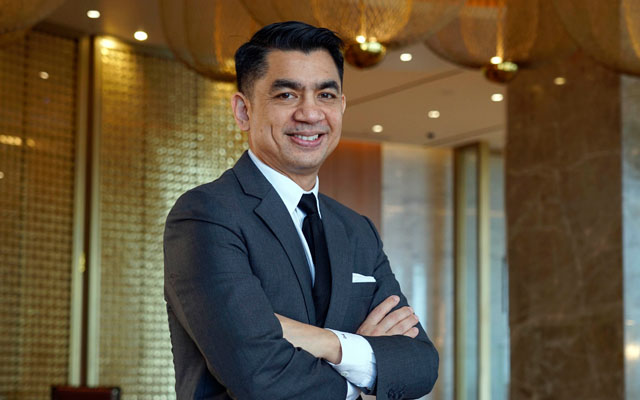
Paolo Campillo takes on the role as general manager at Cebu’s first integrated resort, the NUSTAR Resort and Casino, where he led the opening of Fili Hotel.
Amassing nearly 30 years of experience in the hospitality industry, he joins NUSTAR from Parkroyal on Beach Road in Singapore where he was also general manager and pioneered several initiatives on customer service and engagement, propelled through digital efforts and solutions during his time in Singapore and Malaysia.
Albeit different from its bright city light cousins, the Northern Territory (NT) hopes to lure corporate explorers back by combining the pristine and the ancient, providing a completely different Australian encounter to Sydney, Melbourne or the Gold Coast.
A key selling point is the state’s naturally adventurous side, which makes perfect sense when it offers a roam through Australia’s largest national park, the UNESCO World Heritage-listed Kakadu covering nearly 20,000km2 and is home to ancient rock art, unique flora and fauna and a rich cultural heritage that traces back more than 65,000 years.
Jim Jim Falls is located within the UNESCO World Heritage-listed Kakadu National Park. Photo credit: Tourism NT/@helloemilie
And that is just a hint of what is available, with more products appearing in the pipeline to enhance the NT experience.
“Small group incentive options are found NT-wide with high-end lodges, corporate retreats and glamping experiences offering access to unique wilderness environments and nature-based experiences in the Darwin region and nearby Kakadu National Park, as well as in central Australia including Uluru,” said Rebecca McCaig, director of NT Business Events.
“New accommodation offerings among these include the 10 premium eco-tents – The Drovers Dream – at Kings Creek Station, west of Alice Springs, and six luxe suites at Finniss River Lodge, located on a working cattle property approximately 90 minutes from Darwin,” she continued.
Spared most of Australia’s long shutdowns, business events in the NT navigated different border restrictions, and kept operating during much of the pandemic.
Even when only virtual events were feasible, McCaig said the NT Business events team engaged event planners with indigenous Dot-Painting workshops, where art materials were shipped to planners prior to connecting an Aboriginal artist with the group online.
Another group enjoyed a virtual yoga session with yoga mats sent in advance to planners, with the sights and sounds of Uluru forming a calming and peaceful backdrop.
“Planners tell us the NT has strong appeal for international incentives, especially for well-travelled groups who have ‘done’ so many of the more traditional global destinations,” said McCaig.
“There’s a genuine connection between people and place in the NT, and the opportunity to engage in unique and meaningful activities which are just not available elsewhere in the world,” she continued.
Fortunately, delegates do not have to travel the expansive breadth of NT to experience some of its best.
Darwin Convention Centre’s outdoor gala dinner
With a firm goal to play bat on the international events stage and a keen eye on the north in Asia to grow its economic future, there has been plenty of work in recent years to meet and exceed the expectations of event planners right within the city centre.
For instance, the Darwin Convention Centre (DCC) revisited its F&B menu to offer its signature, multi-sensory and award-winning Seven Seasons culinary journey, inspired by the Larrakia people who are the traditional owners of the Darwin region.
Under the guidance of DCC’s general manager, Peter Savoff, DCC was announced the best business event venue at the Australian Tourism Awards for 2021.
Savoff highlights that one of the unique propositions DCC is able to offer planners is a “guarantee” of a gala dinner outside under the open night sky.
“Most convention centres would do most of their F&B catering within the walls of the centre. But because we have such perfect weather during our high season, which is also our dry season, it’s no trouble for us to (offer that experience for up to) 750 people under the stars,” he elaborated.
Appreciating the uncertainty of the current times, Savoff also recognised that flexibility would be high on the priority list for many event planners.
“Large business events are an expensive business, so we need to make organisers feel they are not risking everything financially if an event is postponed due to instant government changes, in reaction to any potential spikes in the pandemic,” he said.
“We are also agreeing to hire space based on lower historical contracted delegate numbers, allowing organisers to mitigate their risk. However, we are already seeing evidence that originally lower number contracted events have the capacity to even double in size in the final months and weeks leading up to the event launch date, which is very encouraging,” he observed.
It’s also easy to see why the NT is intent on building its business relationships with Asia.
Both McCaig and Savoff point out the close proximity means flight durations are much shorter for Asian visitors headed to Darwin than to Sydney or Melbourne. More importantly, the NT sees its economic future in its northern neighbours.
As noted by Savoff: “To our south, we have a population of 25 million (but) in the same radius to our north, we have a population of 350 million. So the NT government and DCC are in unanimous agreement that the future of our economy is in our South-east Asian neighbours.
“We were very much on a trajectory of growth prior to Covid and we are now going back to Singapore (where we previously had representation), looking to renew those contracts,” he said.
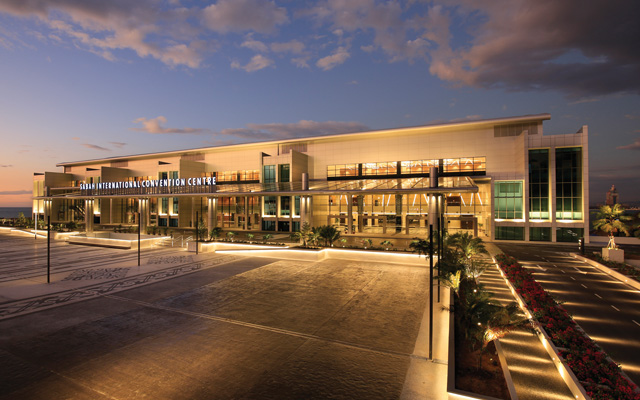
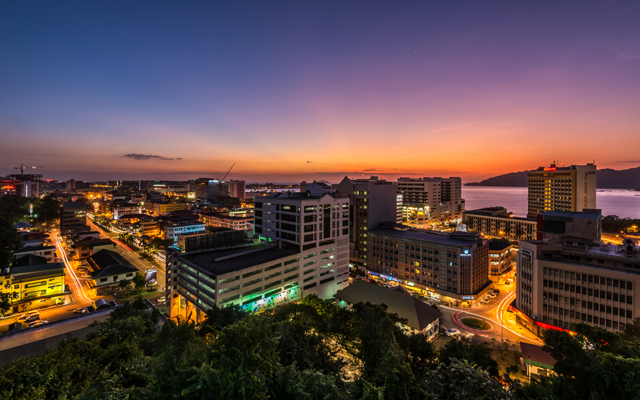
Sabah International Convention Centre (SICC) is the game-changer which paved the way for Sabah Tourism to expand into the business events market.
The largest waterfront purpose-built convention, exhibition and entertainment facility in East Malaysia houses a gross built-up of 60,504m2 on a six-hectare site, with a total function space of 153,197m2.
The multifunctional complex with its well-designed floor plan is suited for a wide range of gatherings – from international conventions and trade shows, world-class performing arts and live music events, wedding banquets to seminars and workshops.
Sabah's unique appeal
1 of 5
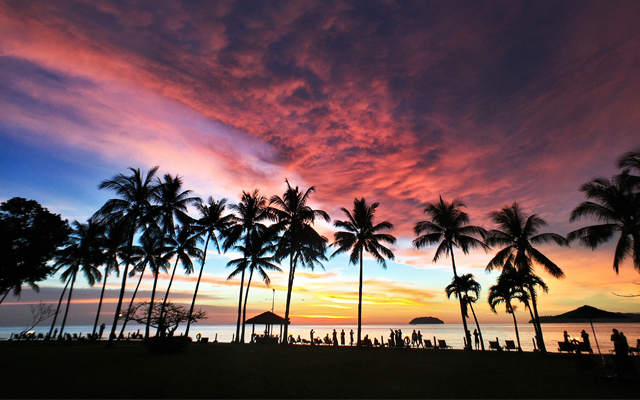
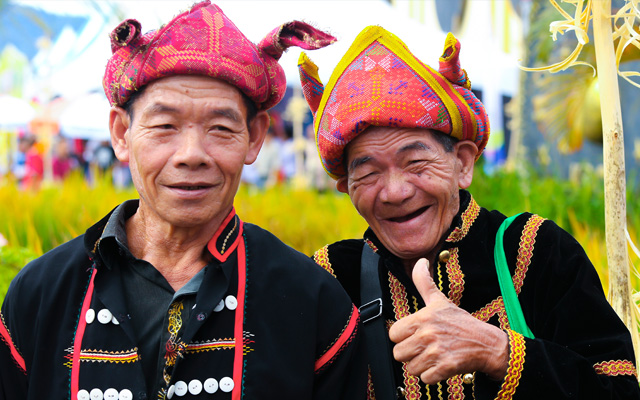
Sabah’s growing popularity as an incentive and meeting destination is largely attributed to its people and geographic location
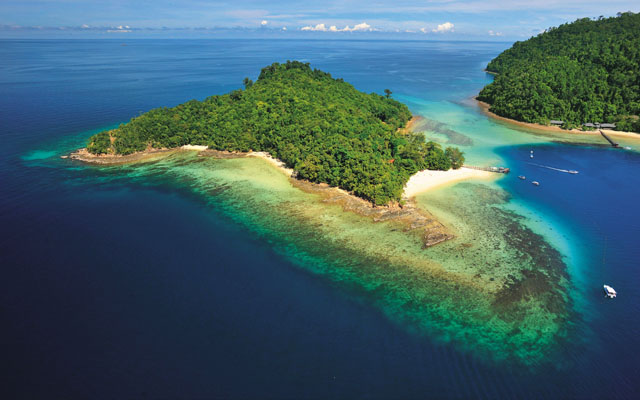
The Malaysian state boasts beautiful idyllic islands
Sabah is known for its virgin rainforest
Renowned for its charming hospitality, many ethnic groups live harmoniously there, offering a glimpse of a unique cultural tapestry
To prepare industry players with the necessary skillsets, a Congress Certification Programme 2.0 Advance Masterclass was recently launched
Hardware must be complemented by relevant soft skills too.
To prepare industry players with the necessary skills and know-how needed from bidding to pitching, digital marketing, event technology and digital event strategies, a Congress Certification Programme 2.0 Advance Masterclass was recently launched where Sabah Tourism Board (STB) aims to train 200 people by 2025.
To support Sabah’s business events industry growth and ecosystem, STB is also subsidising an advanced class for the previous participants of the Congress Certification Programme.
Since 2020, Sabah has also supported and approved about 50 business events under the ‘Sabah, BE here for you’ initiative for events happening up to 2023.
According to state assistant tourism, culture, and environment minister, Joniston Bangkuai, who is also STB chairman, there is growing interest from business event organisers to stage big expositions, bolstering the state’s status as a preferred location for trade shows.
Come this October, Sabah will welcome the Borneo Bird Festival, as well as the Asian Pan-Pacific Society for Paediatric Gastroenterology, Hepatology and Nutrition Conference which is expected to attract 1000 attendees.
Sabah will also play host to the prestigious World Tourism Conference (WTC) 2022 from November 28 – 30.
An exclusive triennial event organised by Malaysia with the cooperation of UNWTO, some 700 international and domestic delegates are expected to attend, including tourism ministers, government senior officials, academicians and key leaders from the industry globally.
Held in Kota Kinabalu over 12 years ago, choosing Sabah to host WTC for the second time signifies the commitment of the state government to drive the tourism sector there.
Asia Dive Expo 2023 (ADEX 2023) is also slated to debut in Sabah next year and the event will position Sabah effectively as the ultimate dive destination, both in the region and globally.
Besides, ADEX 2023 also offers the opportunity for the Sabah dive industry and enthusiasts to participate in knowledge transfer and increase the service standards of the said industry.
Sabah’s burgeoning popularity as an incentive and meeting destination is also largely attributed to its people and geographic location. Renowned for its charming hospitality, over 30 ethnic groups live harmoniously there, offering a glimpse of a unique cultural tapestry.
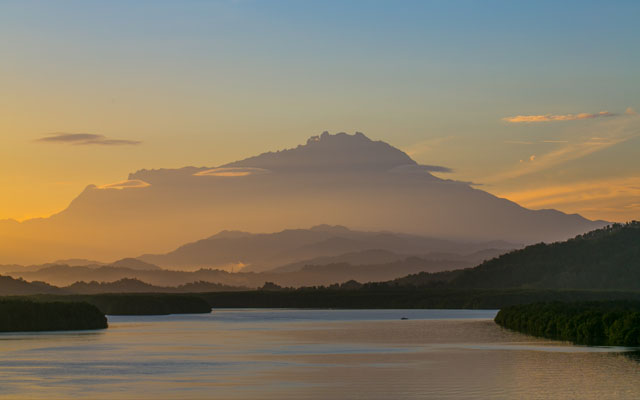
Nestled in the north of Borneo Island, Sabah stands out for its exoticness, rich heritage and food for adventurous tastebuds, on top of its virgin rainforest, beautiful idyllic islands, as well as world-class conservation and wildlife sanctuaries.
Joniston said previously: “The continuous promotion of Sabah as a preferred destination not only for leisure but business travelling, especially during the pandemic, has been progressing well. This can be seen with the reopening of direct routes from major international cities and it bodes well for our hopes of a full recovery sooner than expected.”
Since the reopening of Malaysia’s border on April 1 this year, Sabah has flights coming from Singapore, South Korea, Manila, Bandar Seri Begawan, Brunei and Thailand.
Interested to organise your next business event in Sabah?
Find out more about the incentive support for business event organisers and learn how to maximise the potential of corporate events here.
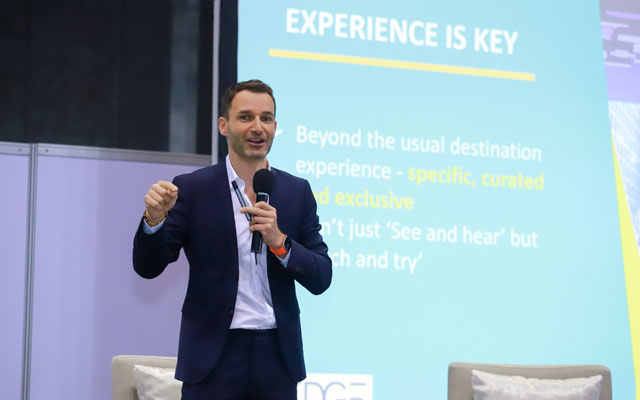
Mathias Posch, president & chairman of International Conference Services, at the Meetings After Covid – How Conferences Have Changed
Although the lifting of travel restrictions has seen a rise in European and US association in-person meetings in 2022, the way these conferences are held has changed, as trends point towards the need for more purposeful conferences, and the continuity of hybrid events.
This was shared by Mathias Posch, president & chairman of International Conference Services, at the Meetings After Covid – How Conferences Have Changed And What’s In Store For The Future conference, at IT&CM Asia last month.
Mathias Posch speaking at the Meetings After Covid – How Conferences Have Changed event at IT&CM Asia
“With live conferences back, people want to attend live conferences, while attendance for virtual conferences is decreasing,” he stated.
However, the higher cost of travel, as well as prevalent travel restrictions in China and certain destinations up until recently, has impacted the number of attendees travelling overseas for international conferences.
“China is a huge market that we are missing this year,” Posch lamented.
One trend he noticed was that hybrid meetings will stay, although they may become more complex.
This is because that is no “single hybrid solution”. For instance, presentations can be done live, and recorded for those not at the session. There are also livestreams, where the audience and conference are in two different locations, but this is more “complex and expensive”.
This preference stems from two years of working from home, which has affected the meeting model.
“People are used to getting content online. The expectation, to whatever is presented live will also be made available online, is probably even higher,” he elaborated.
Quoting a 2019 medical conference survey, Posch said that 80 per cent of the respondents expected content to be posted online after the meeting.
Given this observation, Posch encouraged organisers to ensure conferences are more purposeful so that people would be more inclined to attend.
Aside from the content, Posch suggested adding components such as organising tours related to the delegate’s field of expertise, like providing earthquake scientists with an opportunity to visit ground zero; or arranging for speakers to give community talks, such as a health specialist giving a lecture at a hospital.
Posch also suggested that event organisers provide lounges and breakout areas for specific kinds of interests where delegates can mingle with like-minded counterparts, as opposed to mingling at a welcome party.
Moving forward into 2023, Posch predicted that the ongoing Ukraine-Russia war, shortage in manpower, and inflation will impact how organisers are going to run meetings.
“For example, the war in Ukraine affects where we can hold a conference. It does not just affect the conflict zones, but goes beyond that,” he stressed.
He related how the European Society of Medical Ontology had to cancel their meeting in Prague three weeks before the event because the conference centre had to be turned into a refugee camp for displaced Ukrainians.
ICCA's Waikin Wong. and Tourism New Zealand's Leonie Ashford celebrate the scholarship partnership at the Business Events Industry Aotearoa Conference in sunny Hawke’s Bay
Tourism New Zealand has partnered with ICCA (International Congress & Convention Association) to offer 10 new scholarships for the ICCASkills certification programme, to support the future of the country’s business events industry.
Tourism New Zealand will share costs with the scholarship recipient’s employer, offering five scholarships for the Certified International Convention Specialist (CICS) course for newcomers to the industry; and five scholarships for the Certified International Convention Executive (CICE) course, aimed at providing professional development to those with a minimum of three years in a management role.
ICCA’s Waikin Wong. and Tourism New Zealand’s Leonie Ashford celebrate the scholarship partnership at the Business Events Industry Aotearoa Conference in sunny Hawke’s Bay
The in-depth curriculum has been developed by industry experts, including business leaders, academics and ICCA members, and is delivered through on-site and online learning environments.
Tourism New Zealand general manager NZ & business events, Bjoern Spreitzer, commented: “New Zealand has invested in amazing new infrastructure and activities for the business events sector, and we need to recruit and retain the best talent to staff them. Business events are all about people – it makes sense to support the industry by investing in people.
“Encouraging professional development ensures the expertise of our people is recognised at a global level and helps to elevate New Zealand’s event standards.”
Bookings and spending continue to recover, and international travel narrows
the gap on domestic travel, while economic concerns eclipse Covid-19
According to the October 2022 Business Travel Recovery Poll released by the Global Business Travel Association (GBTA), business travel will continue to bounce back, with a strong outlook set for 2023.
“We continue to see progress as business travel makes its way back to being a US$1.4 trillion global industry, pre-pandemic. It is also important to understand the context of global business travel’s recovery. Asia is still opening its borders, international business travel, in general, started picking up only earlier this year across the globe, and the U.S. has only permitted unrestricted travel since June,” said Suzanne Neufang, CEO, GBTA.
“Even as this latest poll shows economic considerations have eclipsed Covid-19 concerns, the industry is showing positive indicators and sentiment for 2023, a strong sign as business travel continues to come back over time,” she said.
Bookings and spending continue to recover, and international travel narrows the gap on domestic travel, while economic concerns eclipse Covid-19
Here are some of the key takeaways from the October GBTA Business Travel Recovery Poll:
Business travel volume continues to rebound when tracking recovery to 2019 pre-pandemic levels.
On average, travel managers estimate their company’s domestic business travel volume is back to 63% and international business travel is back to 50% of their 2019 pre-pandemic levels. In addition, 26% of respondents estimate their international business travel volume has recovered to more than 70% of their company’s pre-pandemic levels.
Economic considerations have eclipsed Covid concerns for the industry, but a majority of companies are not limiting their business travel specifically due to economic concerns.
When asked to choose among factors that are more likely to limit business travel next year, 80% of travel suppliers say economic conditions while only 4% cited Covid-19.
However, 75% of travel buyers surveyed say their company had no immediate plans to limit business travel because of economic concerns. One-third (30%) say their company is unlikely to limit business travel, while 45% say they are taking a wait-and-see approach but are not seriously considering limiting business travel at this point due to economic concerns.
Domestic travel recovery leads in terms of recovery, but international travel is closing the gap.
Currently, 86% of survey respondents say non-essential domestic business travel is sometimes or usually allowed at their company. Additionally, 74% say the same for non-essential international business travel.
By far, business travel respondents expect more recovery and growth for 2023 compared to this year.
Over three-fourths (78%) of travel managers expect the number of business trips taken by employees at their company will be higher or much higher in 2023 versus 2022.
Among travel suppliers, 85% expect the number of bookings by corporate clients will be higher or much higher in 2023. Additionally, 80% of suppliers expect travel spending by corporate clients will be higher or much higher in 2023 year over year.
Over 65% of travel managers are optimistic that their company will conduct more internal travel and external travel. Internal travel was defined as meetings with colleagues or working at other company office locations, while external travel examples are trips for sales meetings and conference travel.
Tracking the business travel impact of remote work and blended travel
GBTA also continues to follow how evolving developments related to the future of work and changing workforces might play out in the global business travel landscape.
The industry does not expect new ways of working to significantly impact business travel.
The industry is embracing remote work models (88%), as 68% of respondents say their company has a hybrid approach where employees are expected to report to the office on some days and 20% indicate their company is working “full-time remote.” An additional 12% say they are “full-time in-office.”
Of those with a hybrid or full-time remote work policy, 72% of respondents do not expect flexibility to work from home will impact the number of business trips taken by their employees. Additionally, 14% expect it will lead to more business travel while an identical per cent expect it will lead to less business travel.
How companies are approaching employee remote work and blended / “bleisure” travel.
For companies that allow hybrid or fully remote work, 44% say employees are allowed to work for extended periods outside of the city, state, or province where they are typically based. This also includes 22% that even allow employees to work for an extended period outside of their home-base country.
Some companies even reimburse employees for costs or expenses while working remotely – 27% of respondents say their company does reimburse, while most do not (42%) or leave it to the manager’s discretion (25%).
Many travel managers report they are seeing a rise in the desire for blended or “bleisure” travel among employees. Two in five travel managers (41%) have seen an increase in employees asking for blended travel, whereby they combine a business trip with a vacation or leisure component.
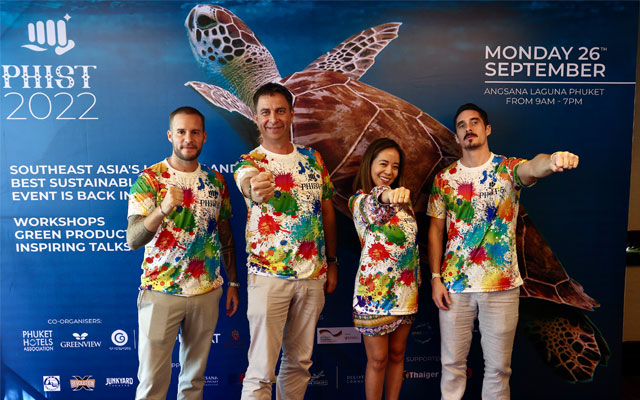
From left: Invest Islands'Kevin Deisser; Phuket Hotels Association's Bjorn Courage; South Palms Resort's Hope Uy; and Greenview's Eric Ricaurte
The fifth annual PHIST (Phuket Hotels for Islands Sustaining Tourism) forum was held on September 26 at the ACES Angsana Laguna Phuket Resort, where 500 delegates from across South-east Asia met in person.
The theme of this year’s PHIST was Muay Thai, the high-energy, culturally-rich sport of Thai boxing. Muay Thai fighters from Australia, Brazil, Thailand and the US faced off in the main hall of ACES on Monday in a series of “super fights”.
From left: Invest Islands’Kevin Deisser; Phuket Hotels Association’s Bjorn Courage; South Palms Resort’s Hope Uy; and Greenview’s Eric Ricaurte
Following these physical battles, keynote speakers delivered verbal blows as they provided unique insights on the critical issues facing the industry, including community tourism, green operations, ocean health, destination management, post-Covid trends and more.
There was also a series of expert-led workshops focused on practical subjects such as Green Finance for Hotels, Zero Waste and Materials for Sustainable Tourism, and a Green Expo presented a selection of innovative, eco-friendly products from approximately 30 exhibitors.
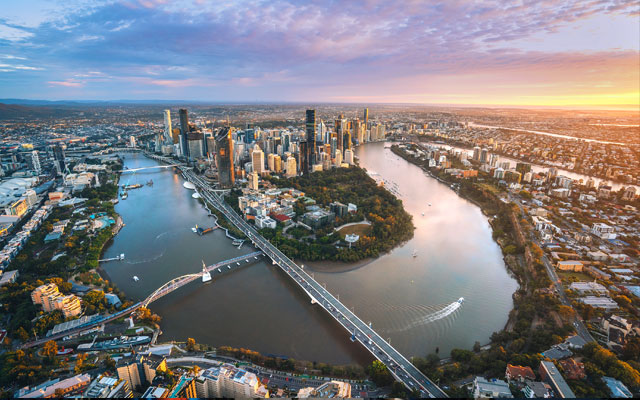
The International AIDS Society Conference on HIV Science (IAS 2023) has selected Brisbane as the host city for its HIV Sciences conference.
Taking place at the Brisbane Convention & Exhibition Centre (BCEC) in July 2023, organisers are forecasting that 6,000 delegates – two-thirds of whom will travel to Queensland from overseas – will be attending the five-day event. In total, the event will contribute A$36.8 million (US$23.3 million) to the state’s economic recovery.
Conference events were important to Queensland’s visitor economy; Brisbane pictured
The team at the BCEC together with local host organisation ASHM (Australasian Society for HIV, Viral Hepatitis and Sexual Health Medicine) submitted the successful bid to host the 2023 Conference, with strong support from the Queensland Government, through Queensland Health and Tourism and Events Queensland, Tourism Australia and Brisbane Economic Development Agency.
Hosting the conference in Australia would be an accelerator for the country to reach its goal of achieving the virtual elimination of HIV transmission by 2025. It will also focus attention on the HIV epidemic in the Asia Pacific region, bringing an important spotlight to the region’s most vulnerable communities.
Just 10 minutes from Phuket International Airport on the serene northern coast, this 178-key, Bill Bensley-designed resort offers delegates a quiet, tropical paradise steeped in Phuket’s tin-mining heritage
The newly-opened Ritz-Carlton, Bangkok anchors the One Bangkok development with cosmopolitan elegance. Featuring the city's largest ballroom and a spectacular new penthouse suite, it delivers exceptional hardware and deeply authentic, soulful service for business and leisure travellers alike
Behind the imposing, Brutalist concrete that defines Zurich’s Oerlikon district lies a surprising secret. While its exterior honours the neighbourhood’s industrial roots, stepping inside Mama Shelter reveals a vibrant, neon-soaked world that is a far cry from its rigid shell



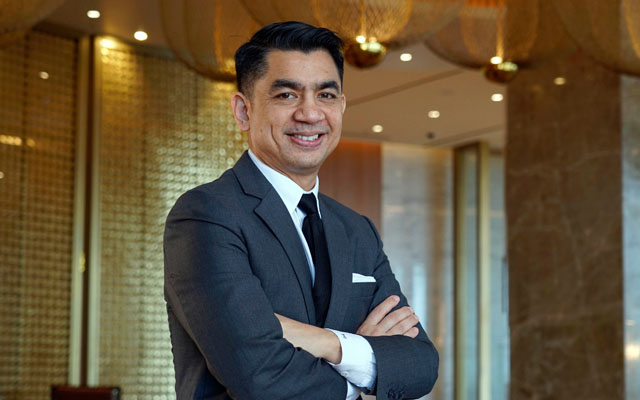 Amassing nearly 30 years of experience in the hospitality industry, he joins NUSTAR from Parkroyal on Beach Road in Singapore where he was also general manager and pioneered several initiatives on customer service and engagement, propelled through digital efforts and solutions during his time in Singapore and Malaysia.