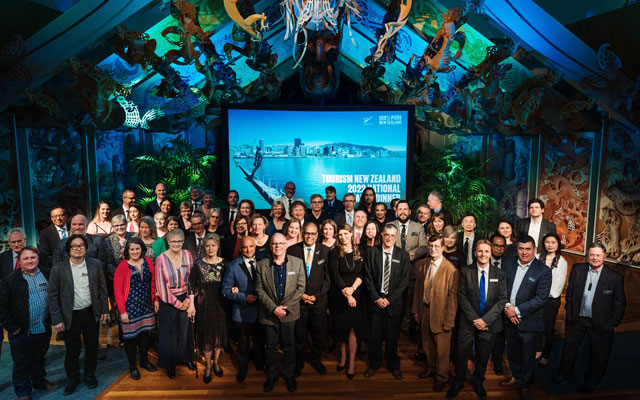
The Tourism New Zealand Business Events National Awards, held at the national museum Te Papa Tongarewa in Wellington on September 27, recognised the contribution of 61 key New Zealand industry leaders and academics.
Working in sectors ranging from robotics to pest management, cybersecurity to autism research, these experts in their field worked alongside Tourism New Zealand and its convention bureau partners to secure high-profile conference wins for the country.
Tourism New Zealand’s chief executive René de Monchy said: “The hard work of these influential and talented individuals plays an integral part in attracting these events to our shores. In the last financial year alone, New Zealand won 34 conferences, estimated to be worth NZ$41.6 million (US$23.3 million) to our local economy.
“Business events are extremely important to New Zealand’s tourism industry – attracting high-quality visitors to New Zealand. Conferences provide an opportunity to share knowledge, forge business relationships, and showcase local talent, tourism experiences and our unique culture.”
Tourism New Zealand will also plant a native tree in honour of each of the National Awards recipients through environmental charity Project Crimson’s Trees That Count programme.
Tourism New Zealand’s Conference Assistance Programme is available to any association or organisation, including universities, that wants to bid to host an international conference in New Zealand with a minimum of 200 international delegates.
SAP Concur has appointed Carl Jones as managing director for South-east Asia (SEA).
In this role, Jones will lead a multinational cross-functional team with sales, pre-sales, client success and cloud channel partnerships, ensuring alignment for all SEA projects within SAP Concur. He will be responsible for all client-facing commercial opportunities in the region.
Jones will also represent SAP Concur on corporate initiatives such as Climate 21, SAP’s global sustainability programme, an initiative to build analytical and transactional capabilities into SAP’s core business applications, to help customers both understand and minimise the carbon footprint of their products and operations.
Earlier this year, he was appointed to the Global Business Travel Association Global Sustainability Committee as vice-chair, representing the region’s interest in advancing standards and solutions to improve the sustainability performance of business travel across all three ESG pillars (Environmental, Social, Governance).
Most recently, Jones was the regional vice president, head of strategy, Asia Pacific and Greater China. In total, he has over two decades of experience in the industry, and has held various regional leadership roles in Asia Pacific countries, including Singapore and Thailand.
Prior to SAP Concur, he was vice president, global client management and global business consulting Asia Pacific with American Express Global Business Travel.
In today’s world of over 400 cruise ships and the ever-expanding river ship industry, how do you navigate such complicated waters and pick the right vessel for your purpose?
Worldwide Cruise Associates can help you select the right ship at the right price.
Founded in 1989, Worldwide’s mission has always been client-centric and participant-driven.
With over 30 years of experience in the MICE industry, the independent outsource and resource company locate, negotiate, contract and operate full ship charters, corporate and incentive groups, lifestyle cruises, product launches, sporting events on behalf of clients.
The team has personally sailed on hundreds of ships in order to give you first-hand knowledge of the ships, operators, along with their strengths and weaknesses.
Worldwide’s services also include use of its operations department to aid clients with the cruise programmes, shore tours and transfers – offering guidance from programme inception until the final guest walks off the ship.
It’s like having a full-blown cruise line purchasing department and operations division at your fingertips at no extra cost.
Worldwide can also assist you with a customised product and help with the ship selection, contract negotiations, and operational delivery tailored to your business needs.
With over a thousand successful groups and charters, and tens of thousands of satisfied participants, Worldwide is confident in its ability to provide the best product at the best price.
Why choose Worldwide:
Save you money on contract negotiations
Save you time with its vast knowledge and relationships industry-wide
Offer an unbiased recommendation from hundreds of ships available
Provide dedicated account manager
Assist in operations and programming
Ready to plan your spectacular event at sea?
Find out why Worldwide is the global leader in outsource cruise purchasing for the past 30 years here.
To discuss an unique experience tailored to your objectives, contact: Steve Bloss
Co-Founder, President Global Sales
Worldwide Cruise Associates Contact: +1 954-452 8800 ext 226
Email: sbloss@cruiseco.com
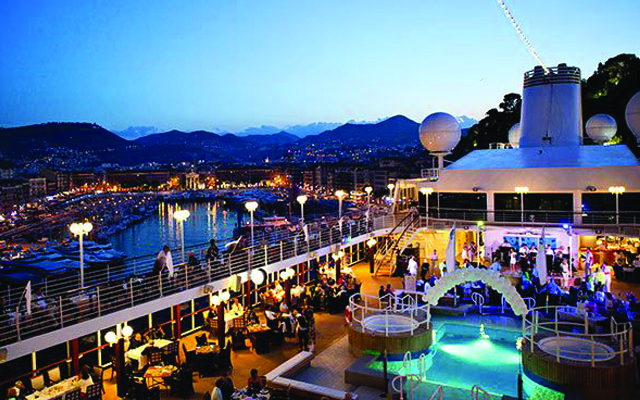
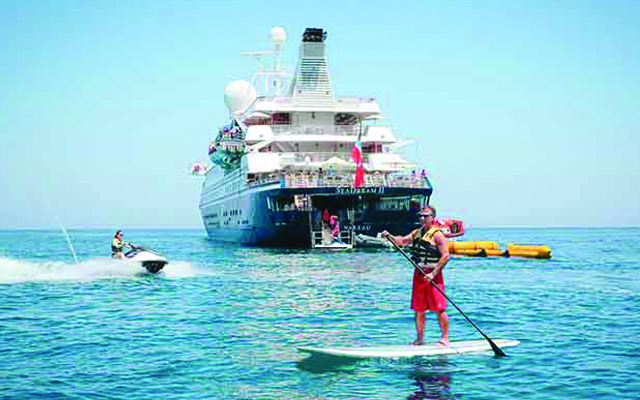
Worldwide also represents the 3 award-winning brands (above), complete with 28 best-in-class ships.
For assistance with ship selection, contact: Neil Brody Senior Director, Charters, Meetings & Incentives Norwegian Cruise Line Holdings Ltd. Email: nbrodie@nclcorp.com
www.nclhltd.com
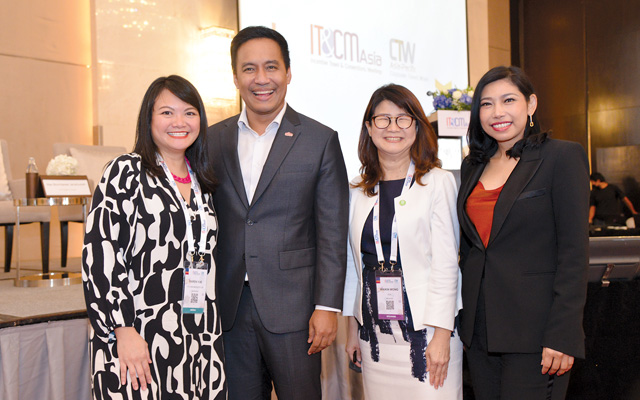
From left: TTG Asia Media’s Karen Yue; SITE Thailand Chapter’s Max Boontawee Jantasuwan; ICCA’s Waikin Wong; and TCEB’s Supanich Thiansing were panellists at the opening keynote session at IT&CM Asia
The persistence of “phygital” events, wellness embedded in business event programmes, and inclusivity are three trends that will shape the business events industry moving forward.
These pointers were identified by Chiruit Isarangkun Na Ayuthaya, president of Thailand Convention & Exhibition Bureau (TCEB), during the opening keynote address at IT&CM Asia 2022 last week.
From left: TTG Asia Media’s Karen Yue; SITE Thailand Chapter’s Max Boontawee Jantasuwan; ICCA’s Waikin Wong; and TCEB’s Supanich Thiansing were panellists at the opening keynote session at IT&CM Asia
The first, “phygital” events – which is a blend of physical and digital events – will soon become the norm, Chiruit opined, as organisers strive to create meaningful and immersive experiences.
Digitalisation can also help to expand the audience reach, while contributing to event safety management, he pointed out.
The second trend is the incorporation of wellness into meetings to avoid delegate fatigue and help them to digest information easily. This comes as health and wellness considerations have intensified during the pandemic.
The third trend is inclusivity, which requires events to be accessible for all, “across diverse cultures and backgrounds, regardless of their physical or intellectual limitations”, Chiruit elaborated.
The application of inclusivity in the business events environment also requires the redesigning of programmes and activities to contribute to the livelihoods of the local community.
On this note, Chiruit encouraged planners to think of ways to establish “measurable legacies for the local communities”.
The keynote address was followed by a panel discussion which touched on the revival of the business events industry.
While panellists Max Boontawee Jantasuwan, president, SITE Thailand Chapter; Supanich Thiansing, director of meetings and incentives department, TCEB; and Waikin Wong, regional director Asia Pacific, ICCA all agreed that business events have rebounded strongly and swiftly, obstacles in human resource have placed a glass ceiling on recovery potential.
Illustrating the acuteness of the manpower crunch, Max shared that some SITE Thailand Chapter members have had to turn down business due to staff shortages. He acknowledged that manpower woes are affecting the industry at large, and not just Thailand.
Challenges in staff retention are another reality, he said, adding that the industry must find ways to keep staff loyal and motivated by providing a more conducive work environment that also benefits the business.
Max recommended that talents can be drawn to the industry by emphasising the critical role business events play in national economic health.
Both Supanich and Wong pointed out that the provision of training and upskilling programmes, as well as opportunities for career growth, will also help to attract young talents into the industry.
Howl’s Moving Castle replica at Studio Ghibli’s first theme park (Photo credit: Studio Ghibli)
Japan and Taiwan are experiencing strong interest among corporates and incentive travel planners, buoyed by recent reopening announcements.
Greatly encouraged by the positive response from Indonesia, Singapore, Malaysia, South Korea and the Philippines prior, exhibitors from Nagoya and Fukuoka at IT&CM Asia 2022 were excited to showcase their new offerings to attendees ahead of its full reopening.
Howl’s Moving Castle replica at Studio Ghibli’s first theme park (Photo credit: Studio Ghibli)
Rie Furuhashi, assistant manager, convention marketing, Nayoga Convention & Visitors Bureau told TTGmice that one key attraction will be the much-anticipated opening of Studio Ghibli’s first theme park on November 1, 2022.
Located near Nagoya, a two-hour train ride from Tokyo, the world-first houses many whimsical attractions adapted from the studio’s most beloved anime hits.
Furuhashi is also optimistic about Nagoya’s future business events prospects as the upcoming super train, SCMaglev, will shorten the ride from Tokyo to Nagoya to 40 minutes. Touted as the fastest train ever built, it is currently under construction.
Sayaka Kashiwabara, assistant manager, Fukuoka Convention & Visitors Bureau, highlighted the new entertainment attraction, Boss E.Zo Fukuoka, as an ideal itinerary addition for incentive groups.
The seven-storey landmark offers many teambonding opportunities with features such as a rooftop rail coaster and climbing facility, virtual gaming experience, and interactive forest art museum, teamLab Forest Fukuoka.
Meanwhile, the Marine Messe Fukuoka Hall B and Hakata International Exhibition Hall & Conference Center are new venue options.
For Taiwan, the destination has resumed visa-free entry for travellers from countries it currently shares diplomatic ties with, although it currently maintains its three-day quarantine requirement.
Cindy Chen, director of Taiwan Tourism Bureau based in Bangkok, said that currently, she is receiving keen interest mainly from Thailand, Malaysia and Vietnam.
Corporates are enthusiastic about Taiwan because compared to Europe or Japan, they can enjoy “more luxurious accommodation and higher quality services” with the same budgets.
Moving forward, Taiwan’s strategy is to help visitors rediscover the destination through more immersive and meaningful experiences instead.
Chen added: “We are repackaging existing tourism hotspots, for example, Alishan and Penghu, making sure visitors can dine, stay, explore, and shop with ease. We are also looking for unique narratives around these attractions to share so tourists can explore (these locations) in-depth.”
With new Covid-19 infections falling to an all-time low over the last two months, the South Korean government has fully lifted outdoor mask mandates today.
Mask-wearing in outdoor public spaces is no longer required in South Korea
Prior to this, mask-wearing was still required at outdoor gatherings involving 50 or more people.
According to news reports, the government has expressed intentions to progressively ease low-risk restrictions, subject to the guidance of experts.
For now, the country’s mask mandate will remain for indoor environment, due to possible risks of seasonal influenza and other infectious diseases, said officials.
Asia continues to hold the interest of European buyers at IT&CM Asia 2022, thanks to its verdant nature landscapes, diverse culture, affordability, as well as safety and security post-lockdown.
Tomasz Dutkiewicz, CEO of Poland-based Amplifica, told TTGmice: “The first destination that (Polish companies) pick for incentive trips beyond Europe is Asia.
Dutkiewicz: positive demand from European markets
“The region is affordable, and is much cheaper than Africa or South America, and offers quality experiences, culture, nature, and is also safe.”
Another European buyer present at IT&CM Asia 2022 who requested anonymity shared that she has noticed a renewed interest in South-east Asia post-lockdown for the same reasons.
“With budgets being the same as pre-Covid, Asia’s affordability on the ground is a big draw,” she said, adding that beach destinations are favoured over cities.
Meanwhile, Dutkiewicz shared that he has already arranged for groups to visit Sri Lanka, India, and Bali in Indonesia. These groups are smaller in size, between 10 to 15 participants. Pre-pandemic, groups used to be larger he observed, ranging from between 50 to 70 people.
He added that Asia is benefitting at the moment as corporates still “wanted to get out” and travel, but unfortunately, the situation in Europe was not favourable due to the ongoing Ukraine-Russia war.
Mihai Luca, director of Travel Smart Info, Romania, shared that his clients were rather inclined towards holding incentive trips in Asia even before lockdowns were over, with clients were asking “when Thailand would open”.
Before borders in Asia reopened, he sent European clients to African countries like Kenya and South Africa, as these were the first to welcome travellers.
One challenge to grapple with now, Luca lamented, is the massive airfare hikes that “shocked” corporates during the planning stages.
However, companies still “need” to send their staff on incentive trips to keep them motivated, after two years of being stuck at home. – Additional reporting by S Puvaneswary
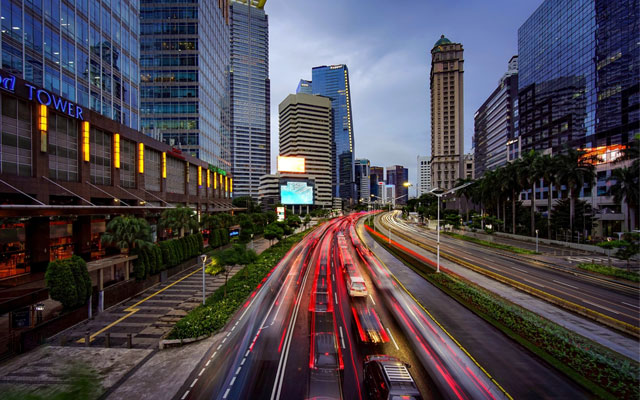
The Jakarta city government is expanding its business events marketing efforts by creating a bid fund to bring events to the city, and actively participating in international tradeshows.
For instance, the Jakarta Provincial Government participated in IMEX Frankfurt and IT&CM Asia tradeshows as a standalone exhibitor to highlight its fresh offerings.
Jakarta (pictured) introduces initiatives to bring in more business events
Hari Wibowo, head of marketing & attraction of the Jakarta Tourism & Creative Economy Office, shared with TTGmice: “Jakarta has been actively developing MICE facilities and infrastructure (over the last few years). We have a new Jakarta International Stadium with a total capacity of up to 82,000. We have parks that can take outdoor events, and new event spaces like the Candi Bentar Hall in Ancol.
“Planners can also host their events on the islands (in northern Jakarta) as some resorts in Pulau Seribu are now open for business events. Pantara Island, for example, has hosted a number of international meetings.”
Other new infrastructure includes toll roads connecting the city to surrounding provinces, as well as the further development of the LRT and MRT networks.
The city government has also set a budget of 10 billion rupiah (US$676,000) to support event organisers to bid for and host events.
“We encourage MICE players to create and bring events to Jakarta. We provide financial support such as bidding for events, hosting dinners, as well as subsidising venues,” he said.
An independent Curating Board – comprising of the Creative Economic and Jakarta Art Council committees – has been set up to assess and decide on the value of support.
“We invite MICE players to submit their proposals, which the board will decide upon,” Hari encouraged.
Earlier in August, Jakarta hosted the Urban 20 Mayors Summit as part of the G20 Indonesia Presidency, and will soon host the 33rd International Publishers Association World Congress on November 10-12.
Ghufron, assistant director of Convention Services, Jakarta Convention Center, welcomed the initiatives and stressed that it was important to market and promote Jakarta to help the industry recover quicker.
He added that it is imperative for the government to be present at international B2B tradeshows to raise its profile on the world stage.
Corporate travel for 2023 is looking less optimistic, as budgets are expected to stagnate due to geopolitical tensions, translating to fewer trips
Corporate travel buyers, now coping with sky-high airfares and hotel rates, the continuing threat of inflation, unresolved supply and demand issues, and geopolitics, are bracing for a difficult 2023.
New hotel RFP rates, according to one buyer in the finance sector, are 10 per cent higher, airfares have increased while corporate discounts have been reduced.
Corporate travel for 2023 is looking less optimistic, as budgets are expected to stagnate due to geopolitical tensions, translating to fewer trips
For instance, several hotel rates in Europe have jumped from 300 euros (US$300) to 900 euros due to revenge travel, the buyer shared.
He also cited the Singapore-Shanghai business class airfare increasing to S$5,000 (US$3,536), and flying to New York now costs S$15,000.
“Our approach to the higher costs is if the budget is there, we cannot be too strict with policies. Our trip limits have gone up a bit to retain employees to help build back the business,” he pointed out.
A CTM in the pharmaceutical sector said since restrictions were lifted, corporate travel has rebounded with “lots of business development” taking place.
Similarly, the CTM also noted that “prices have gone through the roof”, but if an employee has to travel, he will still travel if the budget is there.
However, it was up to a traveller’s “personal consideration regarding a destination” to go on a business trip or not.
According to another CTM in the pharmaceutical sector, the travel budget not consumed in the last two years allowed “travel (to happen) as per normal this year when borders opened”.
She continued: “But we have to tighten up in 2023 as the business outlook is not very optimistic. Business is still recovering and next year’s travel budget, which we are working on now, will dictate how much staff can travel.
“The company is conservative and with the possibility of a drop in sales due to a patent loss, the budget for next year will be flat at best,” she shared.
Benson Tang, executive director, corporate travel, Informa Markets (IM), also believes there would be a recession in 2023.
IM’s convention and exhibition events in the region, he said, have been affected due to lower buyer demand caused by strained US-China political and trade ties, and China’s Covid-19 policy.
Tang, who is also executive director of Corporate Travel Community, said profitability depended on the revival of corporate travel and the ability of buyers, in particular those from China, to attend events and tradeshows around the world.
He cited the cancellation of an aviation event in Shanghai, which moved to Doha due to China’s Covid-19 rules, and noted that “premiums for underwriting events are expensive and there are many exclusion clauses”.
Earlier this year, IM also announced the temporary relocation of its Jewellery and Gem World (JGW) from Hong Kong to Singapore due to the former’s border restrictions.
Despite the relocation, Tang shared that many China-based buyers are still unable to attend JGW, which is taking place September 27-30 at the Singapore Expo.
ASEAN has issued a statement ahead of World Tourism Day to emphasise the region’s tourism recovery, with hotel searches, occupancy rates and travel confidence rising.
According to ASEAN, tourism growth is already “on the incline” in 4Q2022. Quoting UNWTO’s Tourism Recovery Tracker, ASEAN also pointed to a 28 per cent year-to-date increase in South-east Asia hotel searches as well as a 57 per cent increase in occupancy rates.
The World’s 50 Most Beautiful Countries by Forbes finds Wayag Island, Raja Ampat in Indonesia the most beautiful place on earth
Overall travel sentiment has also risen by an impressive 40 per cent year-to-date, and it is expected to increase as more Covid-19 vaccines become available across the globe and variants of Covid-19 become milder. ASEAN noted that this progression has led to easing of the regions’ pandemic-related border restrictions.
ASEAN said “the pandemic should serve as an impetus and opportunity for the sector to…build forward better – by designing and building a more sustainable tourism sector that would underpin its resilience, which should no longer be taken for granted”.
“The vision is for tourism in ASEAN to emerge more sustainable and resilient following the crisis induced by Covid-19, with more focus on environmental conservation and climate friendly policies, as well as on the critical socio-cultural impacts of the tourism sector in the region,” noted ASEAN in its statement.
The association also spotlights the region’s tourism tagline, A Destination for Every Dream, as it recalls South-east Asia’s blend of “perfect experiences”.
It said: “No other tourism region offers a unified destination so close in the distance and rich in culture, historical sites, varying cuisines, natural landscapes, ecotourism, modern metropolises, and adventure activities.”
Five of the ASEAN member states were listed in Forbes’s recent article, The World’s 50 Most Beautiful Countries, based on their inherent natural beauty and the availability of nature-based activities for guests and natives.
The article listed Indonesia first out of 50 destinations, and Raja Ampat Island in particular as the most beautiful place on earth.
The Philippines ranked 17th on the list; Malaysia at 24th; Thailand at 38th; and Myanmar at 41st.
Just 10 minutes from Phuket International Airport on the serene northern coast, this 178-key, Bill Bensley-designed resort offers delegates a quiet, tropical paradise steeped in Phuket’s tin-mining heritage
The newly-opened Ritz-Carlton, Bangkok anchors the One Bangkok development with cosmopolitan elegance. Featuring the city's largest ballroom and a spectacular new penthouse suite, it delivers exceptional hardware and deeply authentic, soulful service for business and leisure travellers alike
Behind the imposing, Brutalist concrete that defines Zurich’s Oerlikon district lies a surprising secret. While its exterior honours the neighbourhood’s industrial roots, stepping inside Mama Shelter reveals a vibrant, neon-soaked world that is a far cry from its rigid shell






















The persistence of “phygital” events, wellness embedded in business event programmes, and inclusivity are three trends that will shape the business events industry moving forward.
These pointers were identified by Chiruit Isarangkun Na Ayuthaya, president of Thailand Convention & Exhibition Bureau (TCEB), during the opening keynote address at IT&CM Asia 2022 last week.
The first, “phygital” events – which is a blend of physical and digital events – will soon become the norm, Chiruit opined, as organisers strive to create meaningful and immersive experiences.
Digitalisation can also help to expand the audience reach, while contributing to event safety management, he pointed out.
The second trend is the incorporation of wellness into meetings to avoid delegate fatigue and help them to digest information easily. This comes as health and wellness considerations have intensified during the pandemic.
The third trend is inclusivity, which requires events to be accessible for all, “across diverse cultures and backgrounds, regardless of their physical or intellectual limitations”, Chiruit elaborated.
The application of inclusivity in the business events environment also requires the redesigning of programmes and activities to contribute to the livelihoods of the local community.
On this note, Chiruit encouraged planners to think of ways to establish “measurable legacies for the local communities”.
The keynote address was followed by a panel discussion which touched on the revival of the business events industry.
While panellists Max Boontawee Jantasuwan, president, SITE Thailand Chapter; Supanich Thiansing, director of meetings and incentives department, TCEB; and Waikin Wong, regional director Asia Pacific, ICCA all agreed that business events have rebounded strongly and swiftly, obstacles in human resource have placed a glass ceiling on recovery potential.
Illustrating the acuteness of the manpower crunch, Max shared that some SITE Thailand Chapter members have had to turn down business due to staff shortages. He acknowledged that manpower woes are affecting the industry at large, and not just Thailand.
Challenges in staff retention are another reality, he said, adding that the industry must find ways to keep staff loyal and motivated by providing a more conducive work environment that also benefits the business.
Max recommended that talents can be drawn to the industry by emphasising the critical role business events play in national economic health.
Both Supanich and Wong pointed out that the provision of training and upskilling programmes, as well as opportunities for career growth, will also help to attract young talents into the industry.