



Asia’s incentive appeal continues to rise

Asia continues to hold the interest of European buyers at IT&CM Asia 2022, thanks to its verdant nature landscapes, diverse culture, affordability, as well as safety and security post-lockdown.
Tomasz Dutkiewicz, CEO of Poland-based Amplifica, told TTGmice: “The first destination that (Polish companies) pick for incentive trips beyond Europe is Asia.

“The region is affordable, and is much cheaper than Africa or South America, and offers quality experiences, culture, nature, and is also safe.”
Another European buyer present at IT&CM Asia 2022 who requested anonymity shared that she has noticed a renewed interest in South-east Asia post-lockdown for the same reasons.
“With budgets being the same as pre-Covid, Asia’s affordability on the ground is a big draw,” she said, adding that beach destinations are favoured over cities.
Meanwhile, Dutkiewicz shared that he has already arranged for groups to visit Sri Lanka, India, and Bali in Indonesia. These groups are smaller in size, between 10 to 15 participants. Pre-pandemic, groups used to be larger he observed, ranging from between 50 to 70 people.
He added that Asia is benefitting at the moment as corporates still “wanted to get out” and travel, but unfortunately, the situation in Europe was not favourable due to the ongoing Ukraine-Russia war.
Mihai Luca, director of Travel Smart Info, Romania, shared that his clients were rather inclined towards holding incentive trips in Asia even before lockdowns were over, with clients were asking “when Thailand would open”.
Before borders in Asia reopened, he sent European clients to African countries like Kenya and South Africa, as these were the first to welcome travellers.
One challenge to grapple with now, Luca lamented, is the massive airfare hikes that “shocked” corporates during the planning stages.
However, companies still “need” to send their staff on incentive trips to keep them motivated, after two years of being stuck at home. – Additional reporting by S Puvaneswary
Jakarta steps up marketing efforts to entice MICE events
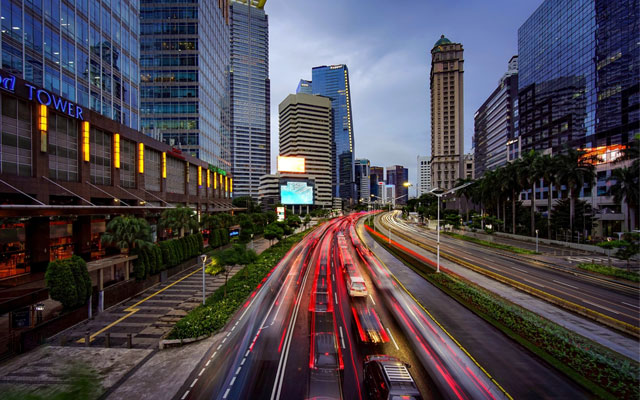
The Jakarta city government is expanding its business events marketing efforts by creating a bid fund to bring events to the city, and actively participating in international tradeshows.
For instance, the Jakarta Provincial Government participated in IMEX Frankfurt and IT&CM Asia tradeshows as a standalone exhibitor to highlight its fresh offerings.
Hari Wibowo, head of marketing & attraction of the Jakarta Tourism & Creative Economy Office, shared with TTGmice: “Jakarta has been actively developing MICE facilities and infrastructure (over the last few years). We have a new Jakarta International Stadium with a total capacity of up to 82,000. We have parks that can take outdoor events, and new event spaces like the Candi Bentar Hall in Ancol.
“Planners can also host their events on the islands (in northern Jakarta) as some resorts in Pulau Seribu are now open for business events. Pantara Island, for example, has hosted a number of international meetings.”
Other new infrastructure includes toll roads connecting the city to surrounding provinces, as well as the further development of the LRT and MRT networks.
The city government has also set a budget of 10 billion rupiah (US$676,000) to support event organisers to bid for and host events.
“We encourage MICE players to create and bring events to Jakarta. We provide financial support such as bidding for events, hosting dinners, as well as subsidising venues,” he said.
An independent Curating Board – comprising of the Creative Economic and Jakarta Art Council committees – has been set up to assess and decide on the value of support.
“We invite MICE players to submit their proposals, which the board will decide upon,” Hari encouraged.
Earlier in August, Jakarta hosted the Urban 20 Mayors Summit as part of the G20 Indonesia Presidency, and will soon host the 33rd International Publishers Association World Congress on November 10-12.
Ghufron, assistant director of Convention Services, Jakarta Convention Center, welcomed the initiatives and stressed that it was important to market and promote Jakarta to help the industry recover quicker.
He added that it is imperative for the government to be present at international B2B tradeshows to raise its profile on the world stage.
Corporate travel for 2023 faces headwinds

Corporate travel buyers, now coping with sky-high airfares and hotel rates, the continuing threat of inflation, unresolved supply and demand issues, and geopolitics, are bracing for a difficult 2023.
New hotel RFP rates, according to one buyer in the finance sector, are 10 per cent higher, airfares have increased while corporate discounts have been reduced.
For instance, several hotel rates in Europe have jumped from 300 euros (US$300) to 900 euros due to revenge travel, the buyer shared.
He also cited the Singapore-Shanghai business class airfare increasing to S$5,000 (US$3,536), and flying to New York now costs S$15,000.
“Our approach to the higher costs is if the budget is there, we cannot be too strict with policies. Our trip limits have gone up a bit to retain employees to help build back the business,” he pointed out.
A CTM in the pharmaceutical sector said since restrictions were lifted, corporate travel has rebounded with “lots of business development” taking place.
Similarly, the CTM also noted that “prices have gone through the roof”, but if an employee has to travel, he will still travel if the budget is there.
However, it was up to a traveller’s “personal consideration regarding a destination” to go on a business trip or not.
According to another CTM in the pharmaceutical sector, the travel budget not consumed in the last two years allowed “travel (to happen) as per normal this year when borders opened”.
She continued: “But we have to tighten up in 2023 as the business outlook is not very optimistic. Business is still recovering and next year’s travel budget, which we are working on now, will dictate how much staff can travel.
“The company is conservative and with the possibility of a drop in sales due to a patent loss, the budget for next year will be flat at best,” she shared.
Benson Tang, executive director, corporate travel, Informa Markets (IM), also believes there would be a recession in 2023.
IM’s convention and exhibition events in the region, he said, have been affected due to lower buyer demand caused by strained US-China political and trade ties, and China’s Covid-19 policy.
Tang, who is also executive director of Corporate Travel Community, said profitability depended on the revival of corporate travel and the ability of buyers, in particular those from China, to attend events and tradeshows around the world.
He cited the cancellation of an aviation event in Shanghai, which moved to Doha due to China’s Covid-19 rules, and noted that “premiums for underwriting events are expensive and there are many exclusion clauses”.
Earlier this year, IM also announced the temporary relocation of its Jewellery and Gem World (JGW) from Hong Kong to Singapore due to the former’s border restrictions.
Despite the relocation, Tang shared that many China-based buyers are still unable to attend JGW, which is taking place September 27-30 at the Singapore Expo.
ASEAN casts bright tourism outlook on World Tourism Day

ASEAN has issued a statement ahead of World Tourism Day to emphasise the region’s tourism recovery, with hotel searches, occupancy rates and travel confidence rising.
According to ASEAN, tourism growth is already “on the incline” in 4Q2022. Quoting UNWTO’s Tourism Recovery Tracker, ASEAN also pointed to a 28 per cent year-to-date increase in South-east Asia hotel searches as well as a 57 per cent increase in occupancy rates.
Overall travel sentiment has also risen by an impressive 40 per cent year-to-date, and it is expected to increase as more Covid-19 vaccines become available across the globe and variants of Covid-19 become milder. ASEAN noted that this progression has led to easing of the regions’ pandemic-related border restrictions.
ASEAN said “the pandemic should serve as an impetus and opportunity for the sector to…build forward better – by designing and building a more sustainable tourism sector that would underpin its resilience, which should no longer be taken for granted”.
“The vision is for tourism in ASEAN to emerge more sustainable and resilient following the crisis induced by Covid-19, with more focus on environmental conservation and climate friendly policies, as well as on the critical socio-cultural impacts of the tourism sector in the region,” noted ASEAN in its statement.
The association also spotlights the region’s tourism tagline, A Destination for Every Dream, as it recalls South-east Asia’s blend of “perfect experiences”.
It said: “No other tourism region offers a unified destination so close in the distance and rich in culture, historical sites, varying cuisines, natural landscapes, ecotourism, modern metropolises, and adventure activities.”
Five of the ASEAN member states were listed in Forbes’s recent article, The World’s 50 Most Beautiful Countries, based on their inherent natural beauty and the availability of nature-based activities for guests and natives.
The article listed Indonesia first out of 50 destinations, and Raja Ampat Island in particular as the most beautiful place on earth.
The Philippines ranked 17th on the list; Malaysia at 24th; Thailand at 38th; and Myanmar at 41st.
The Reverie Saigon promotes Marcelo Geraldini to executive chef

The Reverie Saigon has appointed Marcelo Geraldini as its new executive chef.
The Brazilian-born chef now oversees all of the hotel’s F&B options, ranging from the recently-launched Italian fine dining restaurant Da Vittorio Saigon to The Royal Pavilion, known for its dim sum. He first joined The Reverie Saigon as executive sous chef in 2017.
Geraldini’s sharpened his knives at one-Michelin-star restaurant, The Hardwood Arms in London, as well as at other highly-respected restaurants in England, and his hometown of Sao Paulo.
He first arrived in Vietnam in 2016 and played an active role in several restaurant pre-openings and renovation projects for WMC Group, the management company of The Reverie Saigon.
TTG Travel Awards’ 31st edition celebrates 41 top achievers
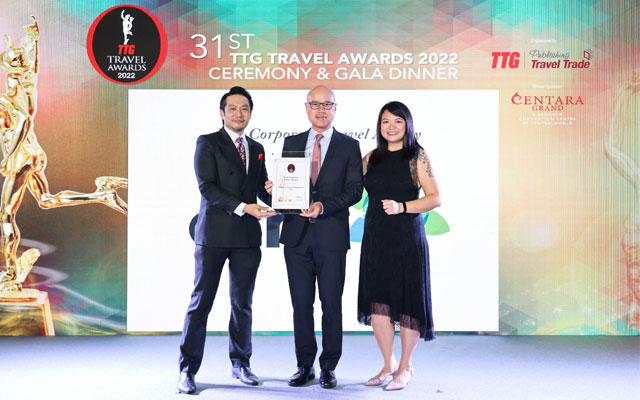
Following a two-year hiatus due to the pandemic, the annual TTG Travel Awards returned yesterday evening with its 31st edition that commemorated 41 exceptional travel and tourism players across Asia-Pacific.
This year, Corporate Travel Management Asia broke CWT’s eight-year winning streak, swooping in to clinch the Best Corporate Travel Agency award. Other BT-MICE recipients that successfully defended their titles include Centara Grand & Bangkok Convention Centre at CentralWorld (Best Meetings & Conventions Hotel), and Cvent (Best Events Technology Provider).
Industry veterans Resorts World at Sentosa (Best Integrated Resort) and Frasers Hospitality (Best Serviced Residence Operator) also earned consecutive wins of their titles. Other winners include Anantara Desaru Coast Resort & Villas (Best Beach Resort), Qatar Airways (Best Full Service Carrier) and Parkroyal Collection Pickering, Singapore (Best City Hotel -Singapore).
Amid fierce competition, 11 awardees marked their resurgence. Having previously been awarded in 2015, both Grand Hyatt Macau and Thailand Convention & Exhibition Bureau made an incredible comeback in their respective categories – Best City Hotel – Macau, and Best Convention & Exhibition Bureau, respectively.
The Outstanding Achievement Awards category – the only non-voting segment of the awards, with winners determined by TTG’s editorial team for their remarkable contributions to the industry – recognised the Philippines as Destination of the Year; Tourism Australia for the Best Travel Marketing Effort awards; and Accor for the Most Sustainable Travel Company award.
The gala event was held at Centara Grand at CentralWorld, and coincided with IT&CM Asia and CTW Asia-Pacific double-bill event in Bangkok from September 20-22.
Japan removes visa and arrival cap, welcomes individual tourists once again

Japan will resume visa-free entry for individual travellers from October 11, announced prime minister Fumio Kishida yesterday in New York. This brings the country’s border rules close to pre-pandemic norms for the first time after nearly two and a half years of strict Covid-19 restrictions.
Kishida was in New York for the United Nations General Assembly when he made the long-awaited announcement.
In addition, Japan will remove the cap on the number of people entering the country, which is currently capped at 50,000.
The government also hopes to boost the economy through inbound tourism by launching a nationwide travel discount programme starting from October 11.
Kishida hopes that people will utilise the programme to “support the travel, entertainment and other industries that have been struggling during the coronavirus pandemic”.
To date, there are no updates made on vaccine or testing requirements.
TCEB encourages organisers to give new MICE cities a chance
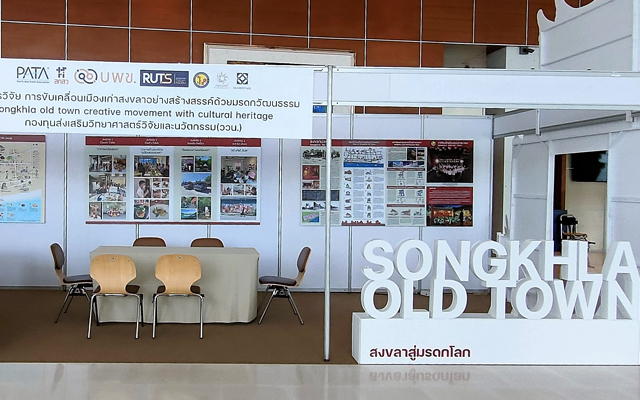
Thailand’s 10 MICE Cities are all geared up to host both domestic and international business events, but some cities like Bangkok and Phuket remain more popular than others.
This year, two up-and-coming cities have come to the fore – Khon Kaen, in the medical and palaeontological fields, and Songkhla, which recently hosted the PATA Destination Marketing Forum 2022 and will welcome a bioscience conference in December.
Designated MICE Cities must meet eight hosting criteria: accessibility; support programme from the city or city package; a variety of attractions beyond meeting activities; accommodation and amenities; venues and facilities; image and reputation; environment and hospitality; and risk, safety and security.
“For some factors, Thailand Convention and Exhibition Bureau (TCEB) can support the destinations directly, such as upskilling services, standardisation and promotion.
But we must also influence the government to support certain factors like infrastructure, an international airport and more budget support,” said Supawan Teerarat, senior vice president – development and innovation, TCEB.
She said TCEB supports cities in bidding and when won, the organisation will also help to promote and develop the business events.
“Bringing national and international MICE events to the destination will promote and increase the reputation of the city to the world, and uplift our Thai entrepreneurs to learn new knowledge, and innovation and technology,” she noted.
Some planners, however, have cited challenges in some locations. These include insufficient flights and poor international connections; limited hotel, venue and restaurant choices of international standard; and a shortage of skilled staff who understand business events.
Kris Srisatin, founder and managing director, Stream Events Asia, commented: “Khon Kaen is now well-known for exhibitions – both international and domestic – and corporate meetings.
“For Songkhla, after hosting PATA this year, it has found interest with new facilities, activities and products as well as community-based tourism. It is suitable for neighbouring (markets) Malaysia and Singapore, as well as domestic MICE groups.”
Sumate Sudasna, managing director, Conference & Destination Management, said: “Programmes go to destinations that appeal; those that lack the right ingredients will not attract planners.
“That is why destinations need to develop indigenous elements which could be of interest in terms of history, culture, produce, arts and crafts, nature and community. Of course, accessibility and accommodation are prerequisites,” he said.
Greater Mekong Subregion prioritises sustainable tourism

In order to secure a solid tourism rebound and stimulate the Greater Mekong Subregion (GMS) economy at the same time, developing a sustainable tourism sector is crucial.
Catherine Germier-Hamel, chief executive of Destination Mekong (DM), said in the wake of the pandemic, the organisation is focused on promoting a more sustainable way of assessing, measuring and monitoring the success of tourism destinations, experiences and practices.
Germier-Hamel shared: “It is true that communities need economic security and viability, but they also need social, cultural, and environmental sustainability. All positive impacts from tourism need to be better distributed all throughout the region.”
As a membership organisation, DM goes beyond national tourism bodies to offer innovative thematic and interest-based focus. As the region builds back after the pandemic, the marketing organisation also plays a crucial role in promoting the region on domestic, inter-regional and international levels.
“As the core purpose of DM is to champion sustainable and inclusive tourism in the region, we represent and coordinate with the private sector to generate value, impact, and opportunities for all, keeping in mind the well-being of local communities,” she added.
To help push tourism rebound within the GMS, DM is curating a raft of programmes that benefit micro and small tourism businesses in particular, as these businesses are the ones that form the backbone of the industry.
Germier-Hamel told TTGmice: “Through our bottom-up approach, we intend to provide smaller suppliers with supportive networks and collaborative frameworks in order to strengthen their independence and resilience, since they usually do not need large national programmes and schemes to thrive.”
In addition, DM is helping to build resilience within the tourism industry by promoting cooperation that benefits not only its members, but also micro-businesses, SMEs and social enterprises.
“We hope that larger organisations internationally, as well as development agencies, can see the potential we have to foster sustainable and inclusive growth in the region and leverage the transformative power of tourism both for residents and visitors,” noted Germier-Hamel.
Another element key to a strong tourism rebound is through collaboration with the private sector.
“We believe there is a very large potential to strengthen the region, if all efforts are coordinated and steered in the same direction and leveraged through concerted action.”
Reviews
The Slate Phuket
Just 10 minutes from Phuket International Airport on the serene northern coast, this 178-key, Bill Bensley-designed resort offers delegates a quiet, tropical paradise steeped in Phuket’s tin-mining heritage

The Ritz-Carlton, Bangkok
The newly-opened Ritz-Carlton, Bangkok anchors the One Bangkok development with cosmopolitan elegance. Featuring the city's largest ballroom and a spectacular new penthouse suite, it delivers exceptional hardware and deeply authentic, soulful service for business and leisure travellers alike

Mama Shelter Zurich
Behind the imposing, Brutalist concrete that defines Zurich’s Oerlikon district lies a surprising secret. While its exterior honours the neighbourhood’s industrial roots, stepping inside Mama Shelter reveals a vibrant, neon-soaked world that is a far cry from its rigid shell


With new Covid-19 infections falling to an all-time low over the last two months, the South Korean government has fully lifted outdoor mask mandates today.
Prior to this, mask-wearing was still required at outdoor gatherings involving 50 or more people.
According to news reports, the government has expressed intentions to progressively ease low-risk restrictions, subject to the guidance of experts.
For now, the country’s mask mandate will remain for indoor environment, due to possible risks of seasonal influenza and other infectious diseases, said officials.