Japan’s convention bureaus are working to increase the number of in-person attendees at their conferences even as key stakeholders in the country’s business events industry encourage greater uptake of technology for hybrid events in the short- and medium-term.
Japan hosted 3,620 international conferences in 2019, attended by almost two million people, but only 222 in 2020 – mostly in January and February before Covid-19 was declared a global pandemic.
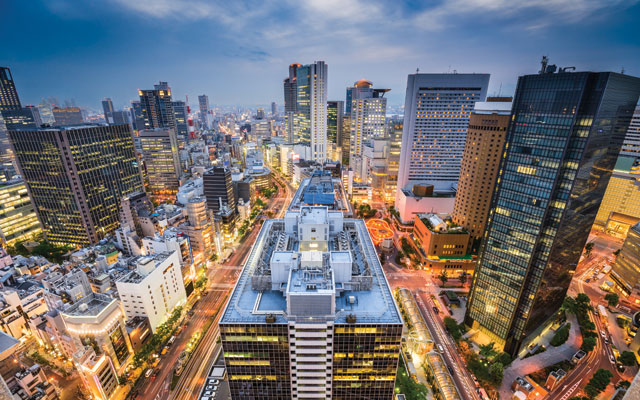
Japan had only 222 international conferences in 2020, and city CVBs are working hard to rebuild in-person meetings; Osaka pictured
With Japan adopting a slow approach to the return of inbound visitors, the country’s Council of Stakeholders for the Resumption and Development of Safe MICE has predicted a continued push for hybrid events and made recommendations to host cities to improve hybrid capabilities while encouraging more in-person attendance from overseas participants.
Asako Shiomi, a spokesperson of the Osaka Convention and Tourism Bureau, said: “We need to try harder to attract on-site attendees, otherwise we will lose the economic impact of MICE.”
She added that the bureau “is now making a new MICE strategy based on the current situation”.
Hironobu Fujimura, director of Business Events Tokyo at the Tokyo Convention & Visitors Bureau (TCVB), said it is “vital for Tokyo to attract large numbers of in-person participants when holding conferences in a hybrid format”.
To achieve this, TCVB will continue to develop engaging experiences and content for Tokyo to appeal to participants and increase in-person participation,” he shared.
However, TCVB expects hybrid events “to dominate for the time being,” he said, adding that a new Tokyo Metropolitan Government subsidy programme for hybrid conferences, which covers expenses for equipment related to live-streaming and recording, is “a driving force in encouraging the hybrid format for conferences”.
Although most destinations are expecting to reach or surpass their 2019 business event revenue by 2023, according to a recent survey of business events venues in three continents by the International Association of Conference Centers, Japan’s business events industry is expecting a slower recovery, perhaps with rebound in 2024 or 2025.
Careful efforts to bring back large-scale events safely amid a pandemic have earned Singapore a vote of confidence from many an event owner, paving the way for a strong return of international business gatherings.
High-profile pilot events that put Singapore’s Covid-safe protocols to the test were instrumental in the city’s success story, and they include Bloomberg New Economy Forum, Milken Institute Asia Summit, and the 50th St Gallen Symposium.
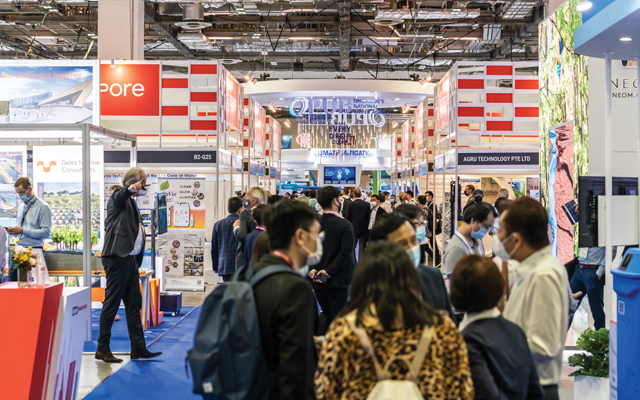
Singapore International Water Week 2022 enjoyed busy show grounds
That sterling track record, along with several positive factors, such as streamlined Covid-19 safe measures for travel and events as well as returning flight capacity, has led Poh Chi Chuan, executive director, exhibitions & conferences with the Singapore Tourism Board (STB), to find recovery swifter than expected.
In fact, Poh expects a full recovery of Singapore’s business events performance in two to three years.
“We have had an encouraging start to 2022, welcoming more than 150 events attended by over 37,000 event delegates in the first three months. To date, at least 66 international events have been lined up for the rest of 2022, with many more event organisers in the advanced stages of confirming Singapore as a destination for their events.
“This is a clear reflection of event organisers’ trust in our vibrant business culture, stable governance, and excellent infrastructure,” remarked Poh.
Notable events held so far include the Singapore Airshow 2022 in February; Singapore International Water Week and CleanEnviro Summit Singapore in April; TFWA Asia Pacific Live in May; and Global Health Security Conference 2022 in June. Coming up in the remaining months are Milken Institute Asia Summit 2022 in September and Singapore Fintech Festival in November.
At Constellar, which develops its own events and manages Singapore Expo and Max Atria, confirmed venue bookings are at 60 per cent of pre-Covid levels in 2019 for 2H2022 alone.
Sands Expo and Convention Centre is also seeing busy months this year, carrying on from an active 2021 when it hosted over 870 events.
It is not just the mega venues that are celebrating the business rebound; business hotels with function spaces are singing too.
Since opening in February this year, Hilton Singapore Orchard, which boasts 16 event venues, has hosted many residential meetings and corporate socials. General manager Cedric Nubul revealed that these are performing 60 per cent above expectations.
“We expect to continue seeing a ramp up of large events almost every month with the easing of social distancing and travel restrictions,” he said.
Indeed, Singapore is on a roll, evident in the “huge increase in requests for site inspections by event organisers to visit Singapore to prepare for upcoming events,” revealed Poh.
As large events make a comeback, STB’s chief executive Keith Tan emphasised that the value of these gatherings be appreciated based on thought leadership, breadth and range of the companies represented, and their outcome, instead of the attendee count.
“Business events, especially high-quality ones, bring companies from around the world to Singapore, creating a marketplace for Singapore’s own companies that would not exist otherwise. Our MICE strategies do not just serve tourism outcomes, but also larger economic outcomes, placing Singapore at the heart of business flows. (These would be) flow of ideas and talents,” he detailed.
For example, the Singapore Airshow brings world aviation leaders and players together, providing a platform for the exchange of ideas and strategies to advance the interests of the global aerospace and defence industry. It also reinforces the city-state’s stature as a trusted aerospace and aviation hub.
Similarly, the Singapore FinTech Festival, which draws fintech innovators, technopreneurs, policymakers, financial industry leaders, investors and academics from around the world, enables an exchange of ideas for a more financially inclusive and sustainable world and boosts Singapore’s reputation as a global fintech hub.
Tan told TTGmice that attention is on events that complement Singapore’s strengths and are aligned with economic strategies and critical sectors, such as sustainability, urban solutions, food security, energy security, fintech and advanced manufacturing.
To do that, STB works with various government agencies to attract relevant industry associations to be headquartered in the city-state. The presence of these professional headquarters “creates critical mass and ideas in these areas”.
Amid bullish business sentiments lie recognition of obstacles in the city-state’s road to recovery. These include an absent market giant China, labour crunch, and short booking lead times.
When asked how big of a shadow does an absent China cast over Singapore, which is looking to grow her position as the global-Asia node for business tourism, Richard Ireland, CEO of Clarion Events Asia, said: “China and Hong Kong are in the top 10 source markets for MICE in Singapore, so any absence will be felt. However, there are also very strong source markets that are fully open, be they in South-east Asia, India, Australia, Europe or the US. And these markets (are eager) to come to Singapore (to do business).”
In response to the same question, Poh said Singapore attracts event attendees that are keen to do business with the whole of Asia and the rest of the world.
While STB does not expect a major uptick in Chinese business travel arrivals in the immediate term, Poh said China remains an important visitor source market for Singapore.
“To prepare for the eventual resumption of travel from China, we have continued with our MICE marketing efforts to build affinity for Singapore and maintain destination mindshare among Chinese event organisers and potential event attendees,” he added.
Meanwhile, the labour intensive nature of the events industry presents a talent challenge as business gains pace. Cognisant of this long-standing issue that has only intensified during the pandemic, STB has programmes with partners like the National Trades Union Congress to facilitate job matching for job seekers to get them back into the industry.
Ong Wee Min, vice president of sales and MICE, Marina Bay Sands (MBS), said: “The imbalance between market demand and supply for the same pool of workers, especially in F&B, and changing mindsets (of talents) due to Covid-19 have all contributed to the manpower issue.
“We have been actively hiring even before the pandemic, and we continue to do so today, especially for our key service departments such as hotel operations, F&B and security, as well as functions under corporate, meetings and attractions. We also continue to invest in our team members through upskilling so that they have the relevant skillsets for our industry today and in the future.”
MBS’ business events team is now armed with a Digital Event Strategist certification, allowing them to cope with an increasingly digital workplace.
Short lead times and a very cautious booking stance are other common laments among Singapore venue operators.
Ang Chee Chiang, senior vice president, centre management, Constellar, elaborated: “We’ve seen a significant increase in enquiries and demand for venue space since restrictions were lifted in April 2022, (but) event organisers and exhibitors are still taking a cautious approach for the rest of 2022 as they have a shorter runway to organise and increase event take-up rate while (considering) resource challenges such as inventory and manpower.”
With changes to travel and health regulations still a possibility, event organisers targeting an international audience have chosen to commit only to minimal space requirements in their venue bookings, with additional space on standby to enable capacity adjustments closer to the event, shared Ang.
Turkish Airlines has launched a new programme, Co2mission, on August 1 to offset the carbon emissions caused by flights – from business trips by the company’s personnel, to allowing the environmentally-conscious customers to fly with peace of mind.
With numerous portfolio options for carbon offset such as renewable energy and forestation, passengers can choose to balance out the emissions of their flight by contributing their desired amount to the project portfolio of their choice and purchasing an emission reduction certification accredited by United Nations.
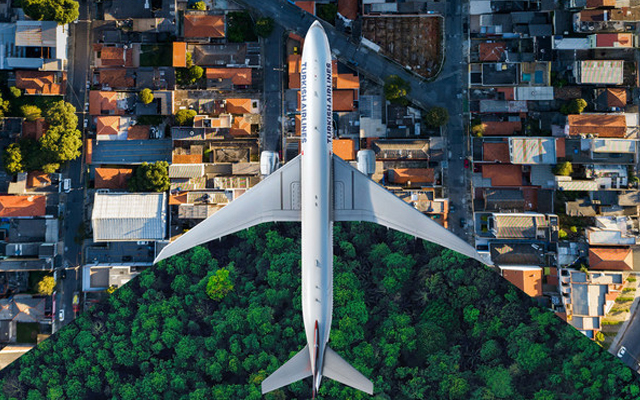
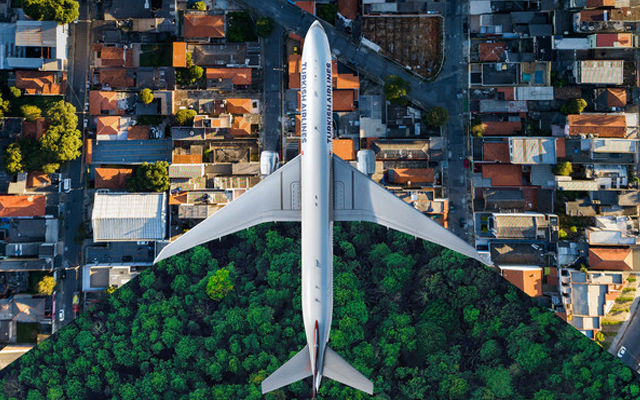
Turkish Airlines’ new Co2mission programme provides carbon offset options like renewable energy and forestation
The passenger contributions will be used to support the projects accredited by Verified Carbon Standard (VCS) and Gold Standard.
Passengers are able to complete their carbon offset process, regardless of which airline they travelled with – all they require is their flight date information along with arrival-departure stations.
Using the platform, the carbon offset amount is calculated with the International Civil Aviation Organization (ICAO) methodology, which considers route length, aircraft type, fuel consumption and numerous other factors.
Ahmet Bolat, chairman of the board and executive committee, Turkish Airlines, stated: “We are continuing to take the initiative to combat climate change, which stands at the forefront of today’s global problems.
“The projects supported by the carbon offset programme will also show our heartfelt commitment to United Nations Sustainable Development Goals. The decision to implement this programme is the result of our desire to conduct all our operations responsibly.”
The platform is available through Turkish Airlines’ website or directly through the Co2mission website.
The three-day hotel quarantine order for all overseas arrivals into Hong Kong will officially start on August 12, announced the city authorities this afternoon.
The decision was supposed to have been made on August 5, but was disrupted by a system glitch, said sources.
Travellers entering Hong Kong will serve a three-day hotel quarantine from August 12
The current arrival requirement calls for a seven-day hotel quarantine. From this Friday, people entering Hong Kong will only serve three days in a Designated Hotels for Quarantine (DHQ) property, followed by four days of medical surveillance.
Travellers who get an all-clear health report at the end of their DHQ will be given a yellow code on their LeaveHomeSafe app, permitting them to use public transport services and enter certain public facilities such as malls and their work places. However, they will need to continue to provide a daily negative ART/RAT result throughout their four-day medical surveillance, and refrain from entering high-risk establishments such as restaurants, bars and entertainment venues during this period.
A spokesperson of Cathay Pacific welcomed the decision.
“We are asking the government to urgently provide a clear roadmap showing the complete removal of all Covid-related restrictions for aircrew and passengers as soon as it is feasible to protect Hong Kong’s international aviation hub status,” he said.
Other tourism stakeholders are urging the same, saying that Hong Kong’s tourism recovery can only truly begin with quarantine-free arrivals.
Destination China’s general manager and co-founder, Gunther Homerlein, told TTGmice in an interview: “The first question we get from our customers is when quarantine will be removed. When we say we don’t know, it is the end of the conversation. We will not get any return of business until Hong Kong ends the quarantine requirement, like the rest of the world.”
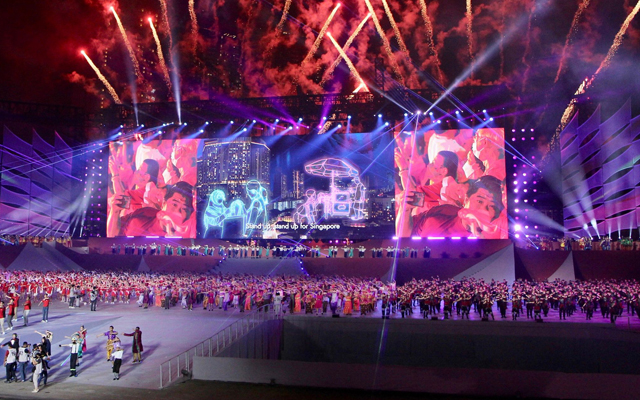
TTGmice, with its editorial headquarters in Singapore, will take a break for the public holiday on Tuesday, August 9, in recognition of the country’s 57th National Day.
TTGmice e-Weekly online news bulletin will resume on Thursday, August 11.
Happy National Day in advance to all Singaporean readers!
A show preview in July. Photo credit: NDP Peeps Facebook
Recent announcements of year-end international events in Hong Kong, such as the Global Financial Leaders’ Investment Summit and Cathay Pacific/HSBC Hong Kong Sevens, have ignited optimism among travel trade players in the city’s reopening for tourism.
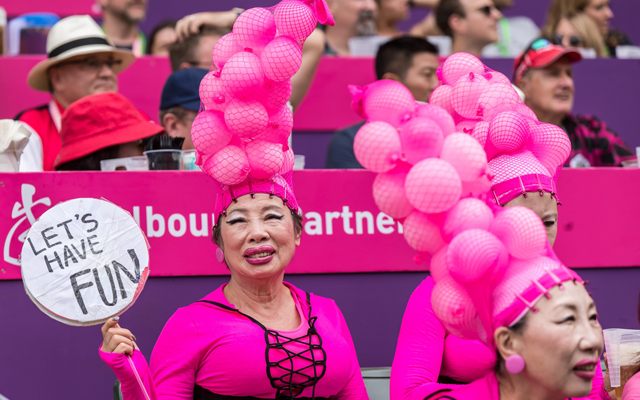
The Hong Kong Rugby Union (HKRU) said a week ago that the Cathay Pacific/HSBC HK Sevens will resume on November 4 to 6, 2022. It was last held in Hong Kong in 2019.
The Cathay Pacific/HSBC HK Sevens was last held in July 2019
Although there is just a little more than three months to prepare for the sporting event, HKRU chairman Patrick Donovan is confident that the tournament would be a special one. Communications with all stakeholders have kicked off, and more details on the event as well as ticketing will soon be available.
The Cathay Pacific/HSBC HK Sevens will follow on from the November 1 and 2 financial summit organised by Hong Kong Monetary Authority. The two-day event seeks to attract global financial representatives from China and international financial institutions, which will help to re-establish Hong Kong’s position as a global financial hub.
Charlotte Travel’s CEO, Jackie Harris, said the announcements were “encouraging”, and the return of such international events could be a “watershed moment” for Hong Kong.
Larry Lo, CEO Asia for Corporate Travel Management, underlined the importance of international events to Hong Kong’s travel and tourism industry, as such gatherings fuel the creation of local jobs, stimulate the local economy, support tourism operators, and showcase the region to an international audience.
“After a period of lockdown, (having) an international sporting event in Hong Kong is a positive step in the right direction, and sends the right message that we are on the path to reopening,” remarked Lo, who expressed hopes of seeing a concrete roadmap from the government that outlines the destination’s strategy to rebuild inbound business.
Lo said the removal of travel restrictions is crucial for the rugby event to score a stronger attendance, beyond the presence of sporting officials and media representatives.
He said: “Hong Kong is a major transit hub for many travellers and an event like this might encourage some to stay for a night or two before continuing onwards to their final destination.”
Meanwhile, positivity around Hong Kong’s reopening has also translated into improved outbound travel business, noted Harris. Charlotte Travel is seeing more clients returning to frequent travels, and taking up longer itineraries to make the most of their time abroad before returning to Hong Kong.
ICCA’s latest Destination Performance Index (DPI) has identified the US as the top performing country for association meetings, based on high scores for four of the six indicators – planned events, virtual events, digitalisation, and business continuation.
The DPI, which adopts a new methodology for a more accurate view of association meetings performance following pandemic disruptions, now examines 8,000 international events scheduled for 2021, based on six performance indicators – planned, unaffected, virtual, hybrid, digitalisation, and business continuation. When combined, the indicators represent the overall DPI, highlighting how destinations have performed with regard to winning the original bid, Covid policies, adaptability, and technological capabilities to convert on-site events into virtual/hybrid formats.
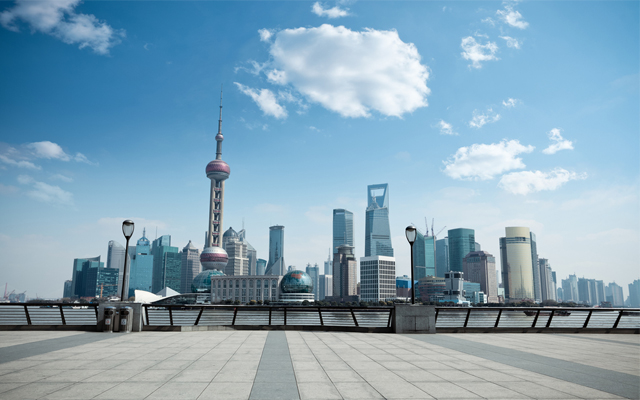
China is the top country for hybrid meetings in ICCA’s latest Destination Performance Index; Shanghai pictured
The US had 512 planned meetings, 32 unaffected meetings, 268 virtual meetings, 54 hybrid meetings, 322 digital meetings and 352 in terms of business continuation.
Breaking down the rankings by each performance indicators, the US, Spain and Japan are the top three for planned events; Spain, US and Germany for unaffected events; US, UK and Japan for virtual meetings; China, Japan and South Korea for hybrid meetings; US, Japan and Spain for digitalisation of meetings; and US, Spain and German for business continuation.
Top performers by individual indicators
The DPI noted that Europe was a strong performer as an association meeting destination during the pandemic. Seventy per cent of the top 20 countries and 80 per cent of the top 20 cities are European. Denmark and Greece replaced Argentina and Brazil in the top 20 countries for meetings. Austria made the biggest jump, from 16th to 11th place. Italy claimed fifth place from the UK. Spain jumped two spots since 2019 to become the second meeting destination globally.
Facing stricter Covid policies than many other meeting destinations worldwide, China Japan, and South Korea embraced new technologies to go hybrid. In fact, due to their high number of hybrid meetings, the South Korea replaced the Netherlands in the top 10 country destinations.
Among destination cities, Montreal (19th) and Dubai (21st) were both outliers within their respective regions. Montreal was the only North American city in the top 20. Dubai ranked first for unaffected meetings and was the only Middle Eastern city represented in the six individual top 20 rankings. Meanwhile, Budapest, Porto, and Stockholm are all newcomers to the top 20 DPI for cities.
Nine enquiry mission members from the Bureau International des Expositions (BIE), the governing body of World Expos, landed in Thailand last week to evaluate the Phuket’s candidacy to host Expo 2028 Phuket Thailand.
The mission is a critical step in the selection process of a host city.
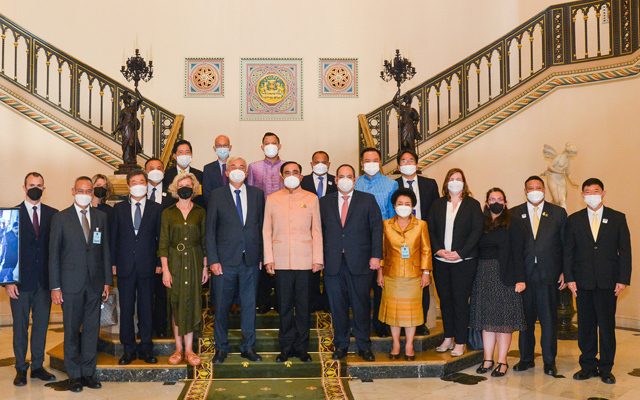
Thailand welcomed nine enquiry mission members from the Bureau International des Expositions (BIE) for an inspection of Phuket’s candidacy to host Expo 2028 Phuket Thailand
Should Phuket be selected, the island would be the first city in South-east Asia to host the high profile global event. The theme, Future of Life: Living in Harmony, Sharing Prosperity, has been proposed, and the event would be held from March 20 to June 17, 2028 on a 22.56-hectare site on Mai Khao Beach.
Thailand Convention and Exhibition Bureau (TCEB) has projected a minimum of seven million expo visitors and a revenue of 50 billion baht (US$1.4 billion) for Thailand. The event is also recognised as an opportunity to raise the quality of life for residents of the province by accelerating infrastructural development for transport, healthcare, and tourism.
Chiruit Isarangkun Na Ayuthaya, President of TCEB, stated that BIE’s key priority is in post-expo area development. As such, TCEB is highlighting that the facilities built for Expo 2028 Phuket will be re-developed into the World Medical and Wellness Center with provisions for public-private partnerships in healthcare and wellness, education, and sustainable living.
“The Expo will benefit not only the city of Phuket but also other provinces on the Andaman coast and Thailand. The Expo is expected to generate 110,000 jobs, increase Thailand’s gross domestic product by 39.357 billion baht, and raise tax revenues by 9.512 billion baht. The Thai government is projecting a return-on-investment of 900 per cent,” he said in a press statement.
“Most importantly, Expo 2028 Phuket Thailand will spotlight Thailand and Phuket as a world-class destination and promote health and wellness tourism. We have started to prepare for our second country presentation in November when we hope to convince BIE of Phuket’s global appeal,” he added.
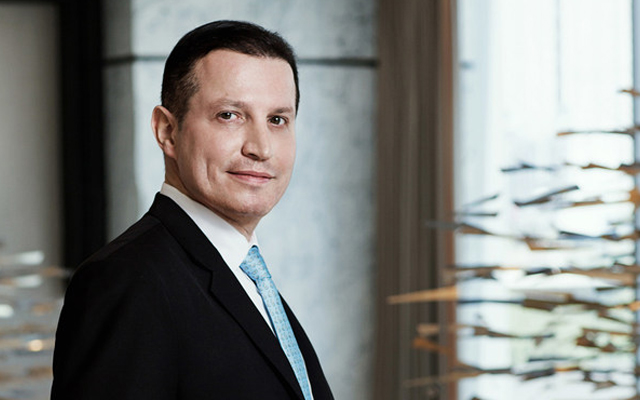
Michael Ganster has been appointed general manager of Niccolo Changsha, part of the Hong Kong SAR-based Wharf Hotels.
Ganster will oversee the hotel’s business operations, identify future property development and growth opportunities, as well as develop and curate authentic Changsha experiences.
Previously the general manager of Niccolo Chengdu, Ganster hails from Austria and has over 20 years of luxury hospitality experience in Europe, North America, the Middle East, and Asia.
The annual What About Kuching Festival (WAK2022) will break out of its two-year pandemic-induced hiatus with a fourth edition this October.
Endorsed and supported by the Ministry of Tourism, Creative Industry and Performing Arts Sarawak, WAK2022 has seen strong support from potential programme collaborators.
WAK2022 is a community-driven festival of the arts, culture and lifestyle of the people of Kuching and Sarawak; pictured The Possibility 2.0 Magic Show & Workshop by The Cartisan
Donald Tan, founding festival director of the WAK festival series, said: “At the close of proposal submission on July 31, WAK2022 received 69 proposals from 59 different collaborators covering 111 events of various genres including music, theatre, dance, arts and crafts, gastronomy, literary and culture, and not forgetting sporting events and eco-based adventure activities.
“We are very pumped up to see the amount of support we are getting, not only in terms of numbers but also the very high, world-class quality genres. We will now be closely engaging all collaborators to discuss further details and tighten the loose ends so we are all fully ready.”
WAK2022 is expected to bring a variety of events and activities to Kuching throughout October, making the Malaysian city and the larger Sarawak state even more exciting for visitors.
The final line-up will be announced in September.
Tan hopes WAK2022 will entice visitors who had missed out on some of Sarawak’s most iconic events earlier in the year, such as the Rainforest World Music Festival and Borneo Jazz Festival.
“WAK2022 will be your best opportunity to experience and be immersed in our rich culture and heritage, while satisfying your craving for musical, theatre and fine arts performances as we present both the old and the new. Gastronomy will be a big part of the festival too,” he added.
Just 10 minutes from Phuket International Airport on the serene northern coast, this 178-key, Bill Bensley-designed resort offers delegates a quiet, tropical paradise steeped in Phuket’s tin-mining heritage
The newly-opened Ritz-Carlton, Bangkok anchors the One Bangkok development with cosmopolitan elegance. Featuring the city's largest ballroom and a spectacular new penthouse suite, it delivers exceptional hardware and deeply authentic, soulful service for business and leisure travellers alike
Behind the imposing, Brutalist concrete that defines Zurich’s Oerlikon district lies a surprising secret. While its exterior honours the neighbourhood’s industrial roots, stepping inside Mama Shelter reveals a vibrant, neon-soaked world that is a far cry from its rigid shell





 Previously the general manager of Niccolo Chengdu, Ganster hails from Austria and has over 20 years of luxury hospitality experience in Europe, North America, the Middle East, and Asia.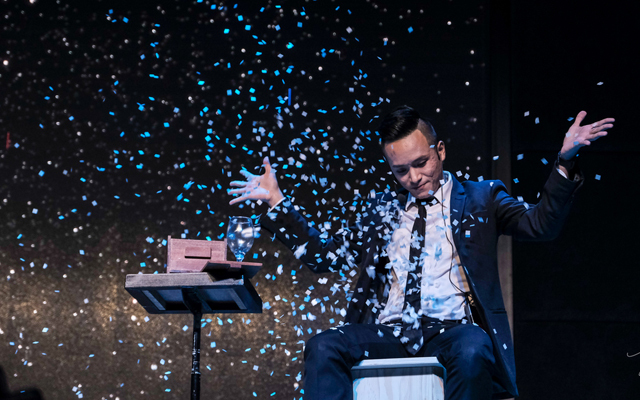






The three-day hotel quarantine order for all overseas arrivals into Hong Kong will officially start on August 12, announced the city authorities this afternoon.
The decision was supposed to have been made on August 5, but was disrupted by a system glitch, said sources.
The current arrival requirement calls for a seven-day hotel quarantine. From this Friday, people entering Hong Kong will only serve three days in a Designated Hotels for Quarantine (DHQ) property, followed by four days of medical surveillance.
Travellers who get an all-clear health report at the end of their DHQ will be given a yellow code on their LeaveHomeSafe app, permitting them to use public transport services and enter certain public facilities such as malls and their work places. However, they will need to continue to provide a daily negative ART/RAT result throughout their four-day medical surveillance, and refrain from entering high-risk establishments such as restaurants, bars and entertainment venues during this period.
A spokesperson of Cathay Pacific welcomed the decision.
“We are asking the government to urgently provide a clear roadmap showing the complete removal of all Covid-related restrictions for aircrew and passengers as soon as it is feasible to protect Hong Kong’s international aviation hub status,” he said.
Other tourism stakeholders are urging the same, saying that Hong Kong’s tourism recovery can only truly begin with quarantine-free arrivals.
Destination China’s general manager and co-founder, Gunther Homerlein, told TTGmice in an interview: “The first question we get from our customers is when quarantine will be removed. When we say we don’t know, it is the end of the conversation. We will not get any return of business until Hong Kong ends the quarantine requirement, like the rest of the world.”