


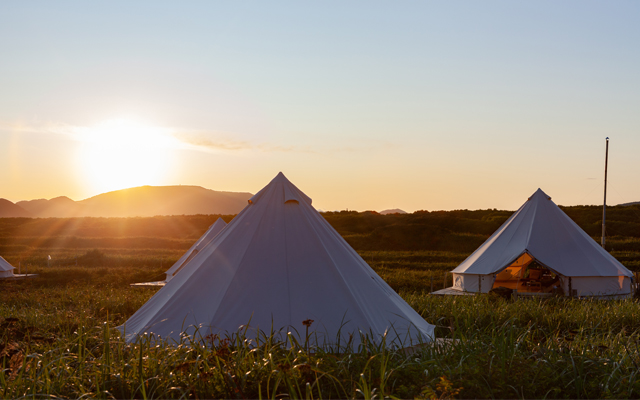
China’s corporates are riding on the rising popularity of glamping to organise scaled-down marketing events and product launches in less restrictive outdoor settings compared to indoor venues.
Violet Wang, managing director of Realm and former China head of Pacific World, said there was huge glamping demand for incentives and corporate meetings from car manufacturing, finance and luxury brand companies for groups of up to 400 participants.
Wang continued: “Prices can range from RMB2,000 (US$119) to RMB15,000 per night per person and these programmes are short, comprising one night in an indoor venue and one night outdoor with hiking in a national park.”
Alexander Glos, CEO, China i2i Group, which provides B2B and B2C tourism-related services, noted desert locations in northern and north-western China offered lots of different experiences from horseback riding and farm visits, to campfires and night astronomy, which were attractive to urbanites.
Glamping, Wang pointed out, is also giving undiscovered second- and third-tier cities with less developed infrastructure a fillip in attracting event groups.
Meanwhile, numbers at glamping sites remain intimate.
Sam Braybon, director, Bespoke Travel Company, said: “Most of them are really small with perhaps 10 or 15 tents which book up really, really early in the high season, like what we saw in spring and autumn.”
But while it would be quite hard to secure inventory, Braybon said it was possible for a corporate to take over an entire glamping site for a retreat, for example.
To meet demand, Wang said five glamping projects were being developed close to Shanghai in “natural spaces” and would be ready in two years’ time.








 He then joined the Sheraton Jeddah Hotel in Saudi Arabia as director of F&B in 2012 and subsequently moved to the flagship properties at Sheraton Grand Sydney Hyde Park in Australia and W Bangkok in Thailand.

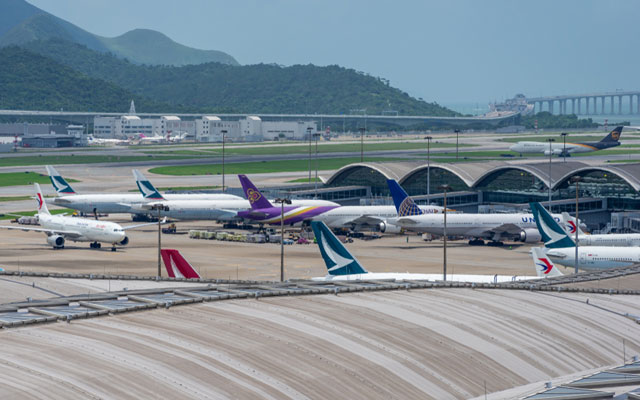






Hong Kong’s authorities will heed science and temporarily lift the city’s flight suspension mechanism from today, choosing to rely on an extra PCR test for arriving travellers to deter the import of Covid-19 infections.
According to a statement from the government, the move is supported by initial statistics and scientific analysis that showed it is more effective to deter Covid-19 transmission through more frequent nucleic acid testing on arriving passengers than flight bans.
Travellers arriving into Hong Kong from July 8 will have to undergo a PCR test on the third day of their quarantine.
The move also takes into consideration the surge in arrivals as students return home for their summer holidays.
Hong Kong’s flight suspension mechanism has been an unpopular one, as it puts both travellers and airlines in a difficult position. The mechanism punishes an airline with a five-day flight route ban when at least five passengers – or five per cent of travellers, whichever is higher – are tested positive for Covid-19 upon arrival in Hong Kong.
Miramar Travel’s general manager, Alex Lee welcomed the move. He said: “This mechanism not only affected incoming traffic but also appetite of outbound travel as clients are worried about cost and time from having to rebook tickets and secure quarantine hotels if they failed to fly back as scheduled. Therefore, scrapping this mechanism may spur the resumption of flight services and frequency. This is turn will make airfares more affordable.”
Wing Wong, managing director of W Travel, predicts a ramp up in flight capacity following the suspension of the flight ban.
“I expect the first wave of arrivals to comprise students returning from overseas and domestic helpers in next eight weeks, followed by businessmen, travellers here to visit relatives, and holidaymakers. My key concern now is for our supply of quarantine hotels to meet demand,” he added.